Cholelithiasis
(Gallstones)
Done by :- Hamad Emad Thuhayr
Supervisor by :- Dr. Osman Habeeb Bashir
2st BGM

SOEPLE 1
Contents
 SOEPEL
 Anatomy
 Introduction of Cholelithiasis
 Characteristics and composition
 Clinical features
 Pathophysiology
 Diagnosis and investigations
 Treatment
 References
SOEPEL
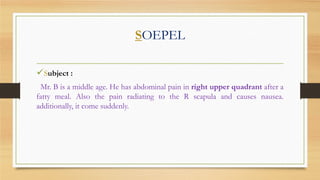
Subject :
Mr. B is a middle age. He has abdominal pain in right upper quadrant after a
fatty meal. Also the pain radiating to the R scapula and causes nausea.
additionally, it come suddenly.
SOEPEL
 Object: General examination & Abdominal examination
 Evaluation (DD): Biliary disease, Inflamed or perforated duodenal ulcer, Hepatitis and
Cholelithiasis.
 Plan: Hematology ;- Cbc, Lft, Rft, Blood sugars f/pp or random, Coagulation
profile. Radiology ;- USG abdomen.
 Elaboration: Cholecystectomy.
 Learning goals: Cholelithiasis (Gallstones).
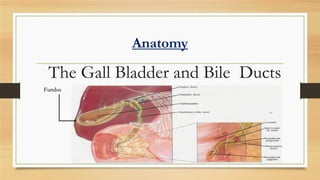
Anatomy

The Gall Bladder and Bile Ducts
Fundus
INTRODUCTION
 Definition.
 CHOLELITHIASIS refers to presence or formation of gallstones in the gallbladder
or bile ducts.






Gallstones are the most common biliary stones.
Overall prevalence of gallstones of 7.9% in men and 16.6% in women
In Acute Cholecystitis gallstones are present in about 95% of cases -calculous cholecystitis.
The exact incidence of acute Cholecystitis among patients who harbor gallstones is not known
but in about 20% of patients who enter a hospital for biliary tract disease have acute
cholecystitis.
Characteristics and composition
1. CHOLESTEROL STONES –
- . Cholesterol gallstones usually contain >50% cholesterol monohydrate plus an
admixture of calcium salts, bile pigments, and proteins
2. PIGMENT STONES
 Composed almost entirely of calcium bilirubinate. They are mostly small,
black and multiple. Some are hard and coral like, others are soft and really
concretions of sludge rather than stones.Two types
 Hemolysis and liver disease are associated with the black stones;
the brown, earthy stones more frequently are formed outside the gallbladder and
often are associated with bacterial infections of the biliary tract
Cont….
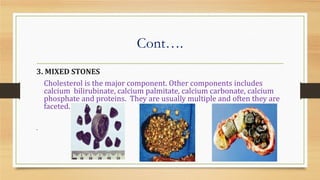
3. MIXED STONES
Cholesterol is the major component. Other components includes
calcium bilirubinate, calcium palmitate, calcium carbonate, calcium
phosphate and proteins. They are usually multiple and often they are
faceted.
.
Clinical features
Gallstones may cause no signs or symptoms. If a gallstone lodges in a duct and
causes a blockage, signs and symptoms may result, such as:

 Sudden and rapidly intensifying pain in the upper right portion of your abdomen
 Sudden and rapidly intensifying pain in the center of your abdomen, just below your
breastbone

 Back pain between your shoulder blades
 Pain in your right shoulder
Pathophysiology
• Cholesterol gallstones develop when bile contains too much cholesterol and
not enough bile salts.

• ncomplete and infrequent emptying of the gallbladder may cause the bile to
become overconcentrated and contribute to gallstone formation.

• the presence of proteins in the liver and bile that either promote or inhibit
cholesterol crystallization into gallstones.

• increased levels of the hormone estrogen.
Diagnosis and investigations
 Ultrasound
Most sensitive and specific test for gallstones

 Computerized tomography (CT) scan

May show gallstones or complications, such as infection and rupture of GB or bile ducts

 Cholescintigraphy (HIDA scan)

Used to diagnose abnormal contraction of gallbladder or obstruction of bile ducts

 Endoscopic retrograde cholangiopancreatography (ERCP)
Used to locate and remove stones in bile ducts

 Blood tests

Performed to look for signs of infection, obstruction, pancreatitis, or jaundice
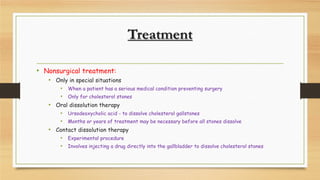
Treatment
• Nonsurgical treatment:
• Only in special situations
• When a patient has a serious medical condition preventing surgery
• Only for cholesterol stones
• Oral dissolution therapy
• Ursodeoxycholic acid - to dissolve cholesterol gallstones
• Months or years of treatment may be necessary before all stones dissolve
• Contact dissolution therapy
• Experimental procedure
• Involves injecting a drug directly into the gallbladder to dissolve cholesterol stones
Cont….
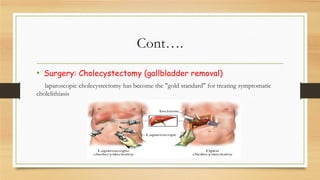
• Surgery: Cholecystectomy (gallbladder removal)
laparoscopic cholecystectomy has become the "gold standard" for treating symptomatic
cholelithiasis
Cont….
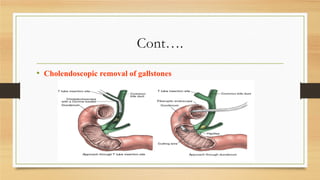
• Cholendoscopic removal of gallstones
Cont….
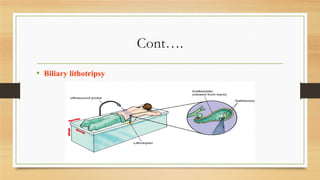
• Biliary lithotripsy
Conclusion
The bile play a major role in the excretion of cholesterol & absorption
of fat sol Vit.
Alteration of bile composition lead to the formation of GS .
Finally GB hypomotility & bile stasis promote GS formation .
Refferences
• Oxford Handbook of Clinical Medicine
• www.wikipedia.org
• www.emedicinehealth.com

Gallstone presentation

  • 1.
    Cholelithiasis (Gallstones) Done by :-Hamad Emad Thuhayr Supervisor by :- Dr. Osman Habeeb Bashir 2st BGM SOEPLE 1
  • 2.
    Contents  SOEPEL  Anatomy Introduction of Cholelithiasis  Characteristics and composition  Clinical features  Pathophysiology  Diagnosis and investigations  Treatment  References
  • 3.
    SOEPEL Subject : Mr. Bis a middle age. He has abdominal pain in right upper quadrant after a fatty meal. Also the pain radiating to the R scapula and causes nausea. additionally, it come suddenly.
  • 4.
    SOEPEL  Object: Generalexamination & Abdominal examination  Evaluation (DD): Biliary disease, Inflamed or perforated duodenal ulcer, Hepatitis and Cholelithiasis.  Plan: Hematology ;- Cbc, Lft, Rft, Blood sugars f/pp or random, Coagulation profile. Radiology ;- USG abdomen.  Elaboration: Cholecystectomy.  Learning goals: Cholelithiasis (Gallstones).
  • 5.
    Anatomy The Gall Bladderand Bile Ducts Fundus
  • 6.
    INTRODUCTION  Definition.  CHOLELITHIASISrefers to presence or formation of gallstones in the gallbladder or bile ducts.     Gallstones are the most common biliary stones. Overall prevalence of gallstones of 7.9% in men and 16.6% in women In Acute Cholecystitis gallstones are present in about 95% of cases -calculous cholecystitis. The exact incidence of acute Cholecystitis among patients who harbor gallstones is not known but in about 20% of patients who enter a hospital for biliary tract disease have acute cholecystitis.
  • 7.
    Characteristics and composition 1.CHOLESTEROL STONES – - . Cholesterol gallstones usually contain >50% cholesterol monohydrate plus an admixture of calcium salts, bile pigments, and proteins 2. PIGMENT STONES  Composed almost entirely of calcium bilirubinate. They are mostly small, black and multiple. Some are hard and coral like, others are soft and really concretions of sludge rather than stones.Two types  Hemolysis and liver disease are associated with the black stones; the brown, earthy stones more frequently are formed outside the gallbladder and often are associated with bacterial infections of the biliary tract
  • 8.
    Cont…. 3. MIXED STONES Cholesterolis the major component. Other components includes calcium bilirubinate, calcium palmitate, calcium carbonate, calcium phosphate and proteins. They are usually multiple and often they are faceted. .
  • 9.
    Clinical features Gallstones maycause no signs or symptoms. If a gallstone lodges in a duct and causes a blockage, signs and symptoms may result, such as:  Sudden and rapidly intensifying pain in the upper right portion of your abdomen  Sudden and rapidly intensifying pain in the center of your abdomen, just below your breastbone  Back pain between your shoulder blades  Pain in your right shoulder
  • 10.
    Pathophysiology • Cholesterol gallstonesdevelop when bile contains too much cholesterol and not enough bile salts. • ncomplete and infrequent emptying of the gallbladder may cause the bile to become overconcentrated and contribute to gallstone formation. • the presence of proteins in the liver and bile that either promote or inhibit cholesterol crystallization into gallstones. • increased levels of the hormone estrogen.
  • 11.
    Diagnosis and investigations Ultrasound Most sensitive and specific test for gallstones  Computerized tomography (CT) scan May show gallstones or complications, such as infection and rupture of GB or bile ducts  Cholescintigraphy (HIDA scan) Used to diagnose abnormal contraction of gallbladder or obstruction of bile ducts  Endoscopic retrograde cholangiopancreatography (ERCP) Used to locate and remove stones in bile ducts  Blood tests Performed to look for signs of infection, obstruction, pancreatitis, or jaundice
  • 12.
    Treatment • Nonsurgical treatment: •Only in special situations • When a patient has a serious medical condition preventing surgery • Only for cholesterol stones • Oral dissolution therapy • Ursodeoxycholic acid - to dissolve cholesterol gallstones • Months or years of treatment may be necessary before all stones dissolve • Contact dissolution therapy • Experimental procedure • Involves injecting a drug directly into the gallbladder to dissolve cholesterol stones
  • 13.
    Cont…. • Surgery: Cholecystectomy(gallbladder removal) laparoscopic cholecystectomy has become the "gold standard" for treating symptomatic cholelithiasis
  • 14.
  • 15.
  • 16.
    Conclusion The bile playa major role in the excretion of cholesterol & absorption of fat sol Vit. Alteration of bile composition lead to the formation of GS . Finally GB hypomotility & bile stasis promote GS formation .
  • 17.
    Refferences • Oxford Handbookof Clinical Medicine • www.wikipedia.org • www.emedicinehealth.com