Classification of Fungi
Introduction
• fungus [pl., fungi; Latin fungus, mushroom] to include
eucaryotic, spore-bearing organisms with absorptive
nutrition, no chlorophyll, and that reproduce sexually and
asexually.
• Scientists who study fungi are mycologists
• the scientific discipline dealing with fungi is called mycology.
• The study of fungal toxins and their effects is called
mycotoxicology,
• The diseases caused by fungi in animals are known as
mycoses [s., mycosis].
• The five-kingdom systemplaces the fungi in the kingdom
Fungi
• According to the universal phylogenetic tree, fungi are
members of the domain Eucarya
Distribution
• Fungi are primarily terrestrial organisms, although a
few are freshwateror marine.
• Many are pathogenic and infect plants and animals.
• Fungi also form beneficial relationships with other
organisms. For example, about three-fourths of all
vascular plants form associations (called mycorrhizae)
between their roots and fungi.
• Fungi also are found in the upper portions of many
plants. These endophytic fungi affect plant
reproduction and palatability to herbivores.
• Lichens are associations of fungi and either algae or
cyanobacteria.
Importance
• About 90,000 fungal species have been described; however,
some estimates of total numbers suggest that 1.5 million
species may exist.
• Fungi are important to humans in both beneficial and harmful
ways.
• With bacteria and a few other groups of heterotrophic
organisms, fungi act as decomposers, a role of enormous
significance. They degrade complex organic materials in the
environment to simple organic compounds and inorganic
molecules. In this way carbon, nitrogen, phosphorus, and other
critical constituents of dead organisms are released and made
available for living organisms
• However, fungi are the major cause of plant diseases
Importance
• Over 5,000 species attack economically valuable crops and
garden plants and also many wild plants.
• In like manner many diseases of animals and humans are caused
by fungi.
• Fungi, especially the yeasts, are essential to many industrial
processes involving fermentation Examples include the making
of bread, wine, and beer.
• Fungi also play a major role in the preparation of some cheeses,
soy sauce, and sufu; in the commercial production of many
organic acids (citric, gallic) and certain drugs (ergometrine,
cortisone); and in the manufacture of many antibiotics
(penicillin, griseofulvin) and the immunosuppressive drug
cyclosporine.
• In addition, fungi are important research tools in the study of
fundamental biological processes. Cytologists, geneticists,
biochemists, biophysicists, and microbiologists regularly use
fungi in their research. Based on this research the yeast
Saccharomyces cerevisiae is the best understood eucaryotic cell.
Morphology
➢ The body or vegetative structure of
a fungus is called a thallus [pl.,
thalli].
➢It varies in complexity and size,
ranging from the single-cell
microscopic yeasts to multicellular
molds, macroscopic puffballs, and
mushrooms.
➢ The fungal cell usually is encased in
a cell wall of chitin. Chitin is a strong
but flexible nitrogen-containing
polysaccharide consisting of N-
acetylglucosamine residues
Yeast Morphology
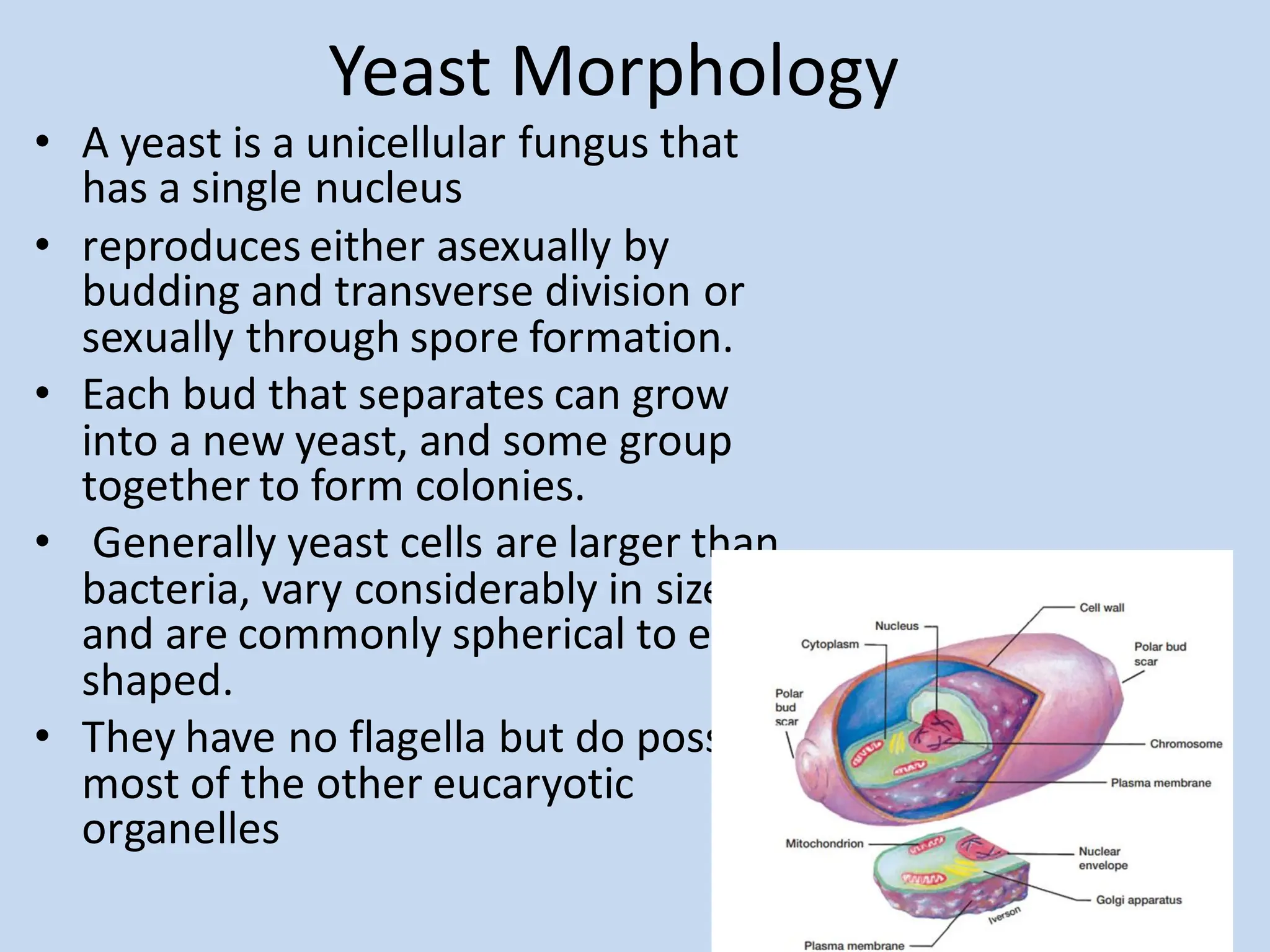
• A yeast is a unicellular fungus that
has a single nucleus
• reproduces either asexually by
budding and transverse division or
sexually through spore formation.
• Each bud that separates can grow
into a new yeast, and some group
together to form colonies.
• Generally yeast cells are larger than
bacteria, vary considerably in size,
and are commonly spherical to egg
shaped.
• They have no flagella but do possess
most of the other eucaryotic
organelles
Molds
• A mold consists of long, branched,
threadlike filaments of cells called
hyphae that form a mycelium , a tangled
mass or tissuelike aggregation
• In some fungi, protoplasm streams
through hyphae, uninterrupted by cross
walls. These hyphae are called
coenocytic
• The hyphae of other fungi have cross
walls called septa [s., septum] with
either a single pore or multiple pores
that permit cytoplasmic streaming.
These hyphae are termed septate.
• Hyphae are composed of an outer cell
wall and an inner lumen, which contains
the cytosol and organelles .
• A plasma membrane surrounds the
cytoplasm and lies next to the cell wall
Dimorphic Fungi
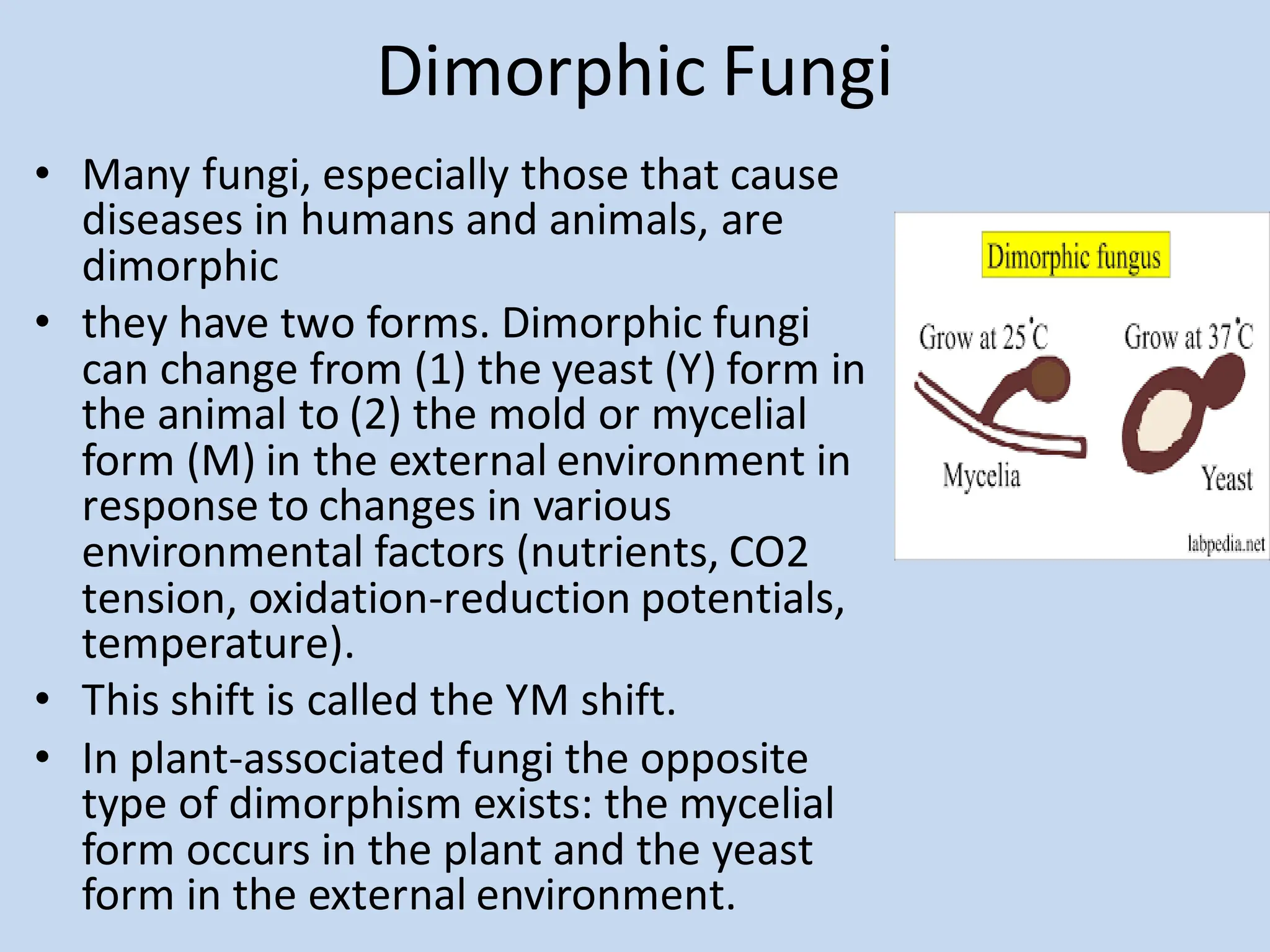
• Many fungi, especially those that cause
diseases in humans and animals, are
dimorphic
• they have two forms. Dimorphic fungi
can change from (1) the yeast (Y) form in
the animal to (2) the mold or mycelial
form (M) in the external environment in
response to changes in various
environmental factors (nutrients, CO2
tension, oxidation-reduction potentials,
temperature).
• This shift is called the YM shift.
• In plant-associated fungi the opposite
type of dimorphism exists: the mycelial
form occurs in the plant and the yeast
form in the external environment.
Nutrition
• Fungi grow best in dark, moist habitats, but they are found
wherever organic material is available.
• Most fungi are saprophytes,securing their nutrients from dead
organic material.
• Like many bacteria, fungi release hydrolytic exoenzymes that digest
external substrates.
• They then absorb the soluble products. They are
chemoorganoheterotrophs and use organic compounds as a source
of carbon, electrons, and energy.
• Glycogen is the primary storage polysaccharide in fungi. Most fungi
use carbohydrates (preferably glucose or maltose) and nitrogenous
compounds to synthesize their own amino acids and proteins.
• Fungi usually are aerobic.
• Some yeasts, however, are facultatively anaerobic and can obtain
energy by fermentation, such as in the production of ethyl alcohol
from glucose.
• Obligately anaerobic fungi are found in the rumen of cattle.
Reproduction
• can be either asexual or sexual.
• Asexual reproduction is accomplished in several
ways:
• A parent cell can divide into two daughter cells
by central constriction and formation of a new
cell wall
• Somatic vegetative cells may bud to produce new
organisms. This is very common in the yeasts.
• The most common method of asexual
reproduction is spore production. Asexual spore
formation occurs in an individual fungus through
mitosis and subsequent cell division.
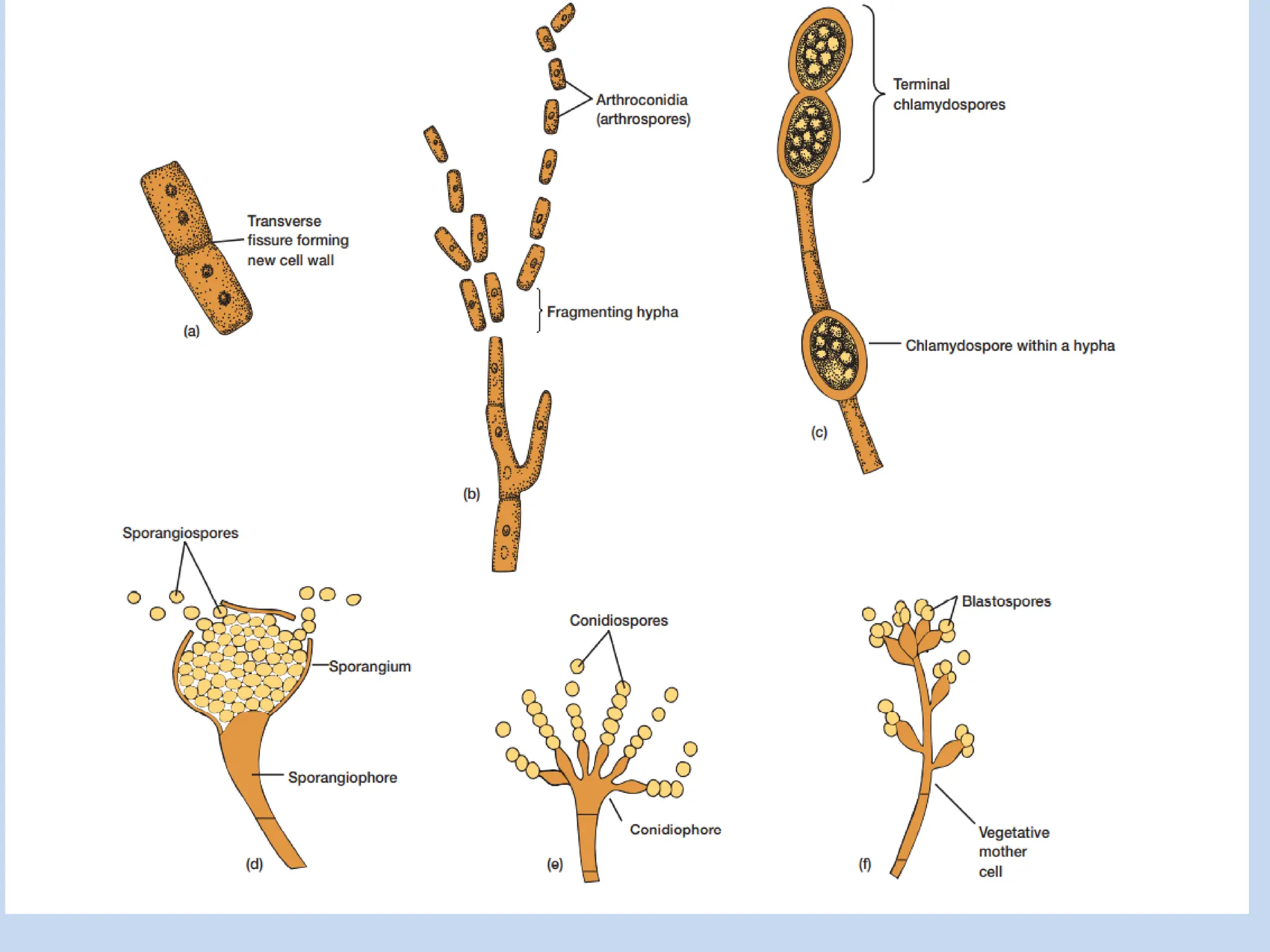
Asexual Spores Types
• A hypha can fragment (by the separation of hyphae
through splitting of the cell wall or septum) to form
cells that behave as spores. These cells are called
arthroconidia or arthrospores
• If the cells are surrounded by a thick wall before
separation, they are called chlamydospores
• If the spores develop within a sac [sporangium; pl.,
sporangia] at a hyphal tip, they are called
sporangiospores
• If the spores are not enclosed in a sac but produced at
the tips or sides of the hypha, they are termed
conidiospores
• Spores produced from a vegetative mother cell by
budding are called blastospores.
Sexual Reproduction
• involves the union of compatible nuclei.
• Some fungal species are self-fertilizing and produce sexually
compatible gametes on the same mycelium (homothallic).
• Other species require outcrossing between different but sexually
compatible mycelia (heterothallic).
• Depending on the species, sexual fusion may occur between
haploid gametes, gamete-producing bodies called gametangia, or
hyphae.
• Sometimes both the cytoplasm and haploid nuclei fuse immediately
to produce the diploid zygote.
• Usually, however, there is a delay between cytoplasmic and nuclear
fusion.
• This produces a dikaryotic stage in which cells contain two
separate haploid nuclei, one from each parent
• After a period of dikaryotic existence, the two nuclei fuse. This
sexual reproduction yields spores.
Sexual Spores
• in the zygomycetes the zygote develops into a
zygospore
• in the ascomycetes, an ascospore
• in the basidomycetes; a basidiospore
• Fungal spores are important for several reasons.
• The size, shape, color, and number of spores are useful
in the identification of fungal species.
• The spores are often small and light; they can remain
suspended in air for long periods. Thus they frequently
aid in fungal dissemination, a significant factor that
explains the wide distribution of many fungi.
• Fungal spores often spread by adhering to the bodies
of insects and other animals.
• The bright colors and fluffy textures of many molds
often are due to their aerial hyphae and spores.
Classification of fungi
• The traditional taxonomic scheme used by mycologists
classifies the fungi into four divisions
• based primarily on variations in sexual reproduction.
(In mycology a division is equivalent to a phylum in
animal classification schemes.)
• Division Ascomycota
• Division Zygomycota
• Division Basidiomycota
• Deuteromycota (Fungi Imperfecti)
Division Zygomycota
➢The division Zygomycota contains the fungi called
zygomycetes.
➢Most live on decaying plant and animal matter in the
soil; a few are parasites of plants, insects, animals,
and humans.
➢The hyphae of zygomycetes are coenocytic, with
many haploid nuclei.
➢Asexual spores, usually wind dispersed, develop in
sporangia at the tips of aerial hyphae.
➢Sexual reproduction produces tough, thickwalled
zygotes called zygospores that can remain dormant
when the environment is too harsh for growth of the
fungus.
Rhizopus stolonifer
• The bread mold
• This fungus grows on the surface of moist,
carbohydrate-rich foods, such as breads,
fruits, and vegetables.
• On breads, for example, Rhizopus’s
hyphae rapidly cover the surface. Special
hyphae called rhizoids extend into the
bread, and absorb nutrients
• Other hyphae (stolons)become erect,
then arch back into the substratum
forming new rhizoids.
• Still others remain erect and produce at
their tips asexual sporangia filled with the
black spores, giving the mold its
characteristic color. Each spore, when
liberated, can start a new mycelium
Life Cycle of Rhizopus
➢ Rhizopus usuallyreproduces asexually,but if food becomes scarce or environmental
conditionsunfavorable,it begins sexual reproduction.
➢ Sexual reproduction requires compatiblestrains of opposite mating types
➢ These have traditionallybeen labeled and strainsbecause they are not morphologically
distinguishableasmale and female.
➢ When the two mating strainsare close, hormones are producedthat cause their hyphae
to form projectionscalled progametangia [Greek pro, before], and then mature
gametangia.
➢ After fusion of the gametangia,the nuclei of the two gametes fuse, forming a zygote.
➢ The zygote developsa thick, rough, black coat and becomes a dormant zygospore.
➢ Meiosis often occurs at the time of germination;the zygospore then splitsopen and
produces a hyphathat bears an asexual sporangium and the cycle begins anew.
Importance
• Rhizopus is used in Indonesia to produce a food
called tempeh from boiled, skinless soybeans.
• Another zygomycete (Mucor spp.) is used with
soybeans in the Orient to make a cheese called
sufu.
• Others are employed in the commercial
preparation of some anesthetics, birth control
agents, industrial alcohols, meat tenderizers, and
the yellow coloring used in margarine and butter
substitutes
Division Ascomycota
➢ contains the fungi called
ascomycetes, commonly known
as the sac fungi.
➢ Many species are quite familiar
and economically important
➢ For example, most of the red,
brown, and blue-green molds
that cause food spoilage are
ascomycetes.
➢ The powdery mildews that attack
plant leaves and the fungi that
cause chestnut blight and Dutch
elm disease are ascomycetes.
➢ Many yeasts as well as edible
morels and truffles are
ascomycetes.
➢ The pink bread mold Neurospora
crassa, also an ascomycete, has
been a most important research
tool in genetics and biochemistry
Division Ascomycota
• Many ascomycetes are parasites on higher plants.
Claviceps purpurea parasitizes rye and other
grasses, causing the disease ergot.
• Ergotism, the toxic condition in humans and
animals who eat grain infected with the fungus, is
often accompanied by gangrene, psychotic
delusions, nervous spasms, abortion, and
convulsions.
• During the Middle Ages ergotism, then known as
St. Anthony’s fire, killed thousands of people.
• The pharmacological activities of ergot are due to
its active ingredient, lysergic acid diethylamide
(LSD).
• In controlled dosages ergot can be used to induce
labor, lower blood pressure, and ease migraine
headaches.
Ascomycota
• The ascomycetes are named for
their characteristic reproductive
structure, the saclike ascus [pl., asci;
Greek askos,sac].
• The mycelium of the ascomycetes is
composed of septate hyphae.
• Asexual reproduction is common in
the ascomycetes and takes place by
way of conidiospores
Ascomycota Sexual Reproduction
• Sexual reproduction in the ascomycetes always involves
the formation of an ascus containing two or more haploid
ascospores
• In the more complex ascomycetes, ascus formation is
preceded by the development of special ascogenous
hyphae into which pairs of nuclei migrate
• One nucleus of each pair originates from a “male”
mycelium (antheridium) or cell and the other from a
“female” organ or cell (ascogonium) that has fused with it.
• As the ascogenous hyphae grow, the paired nuclei divide
so that there is one pair of nuclei in each cell.
• After the ascogenous hyphae have matured, nuclear
fusion occurs at the hyphal tips in the ascus mother cells
• The diploid zygote nucleus then undergoes
meiosis, and the resulting four haploid nuclei
divide mitotically again to produce a row of eight
nuclei in each developing ascus.
• These nuclei are walled off from one another.
Thousands of asci may be packed together in a
cup- or flask-shaped ascocarp
• When the ascospores mature, they often are
released from the asci with great force.
• Upon reaching a suitable environment, the
ascospores germinate and start the cycle anew.
Yeast
• Although the term yeast is used in a general
sense to refer to all unicellular fungi that
reproduce asexually by either budding or binary
fission
• many yeast genera are classified specifically
within the ascomycetes because of their sexual
reproduction
• Yeasts are present in both terrestrial and aquatic
habitats in which a suitable carbon source is
available.
Basidiomycota (Club Fungi)
smuts
Jelly fungus rust
Shelf fungi
stinkhorns
Basidiomycota
puffballs
toadstools
mushroom
Bird’s nest fungi
Basidimycota
• Basidiomycetes are named for
their characteristic structure
or cell, the basidium, that is
involved in sexual
reproduction
• A basidium is produced at the
tip of hyphae and normally is
club shaped.
• Two or more basidiospores
are produced by the basidium,
and basidia may be held
within fruiting bodies called
basidiocarps.
Importance
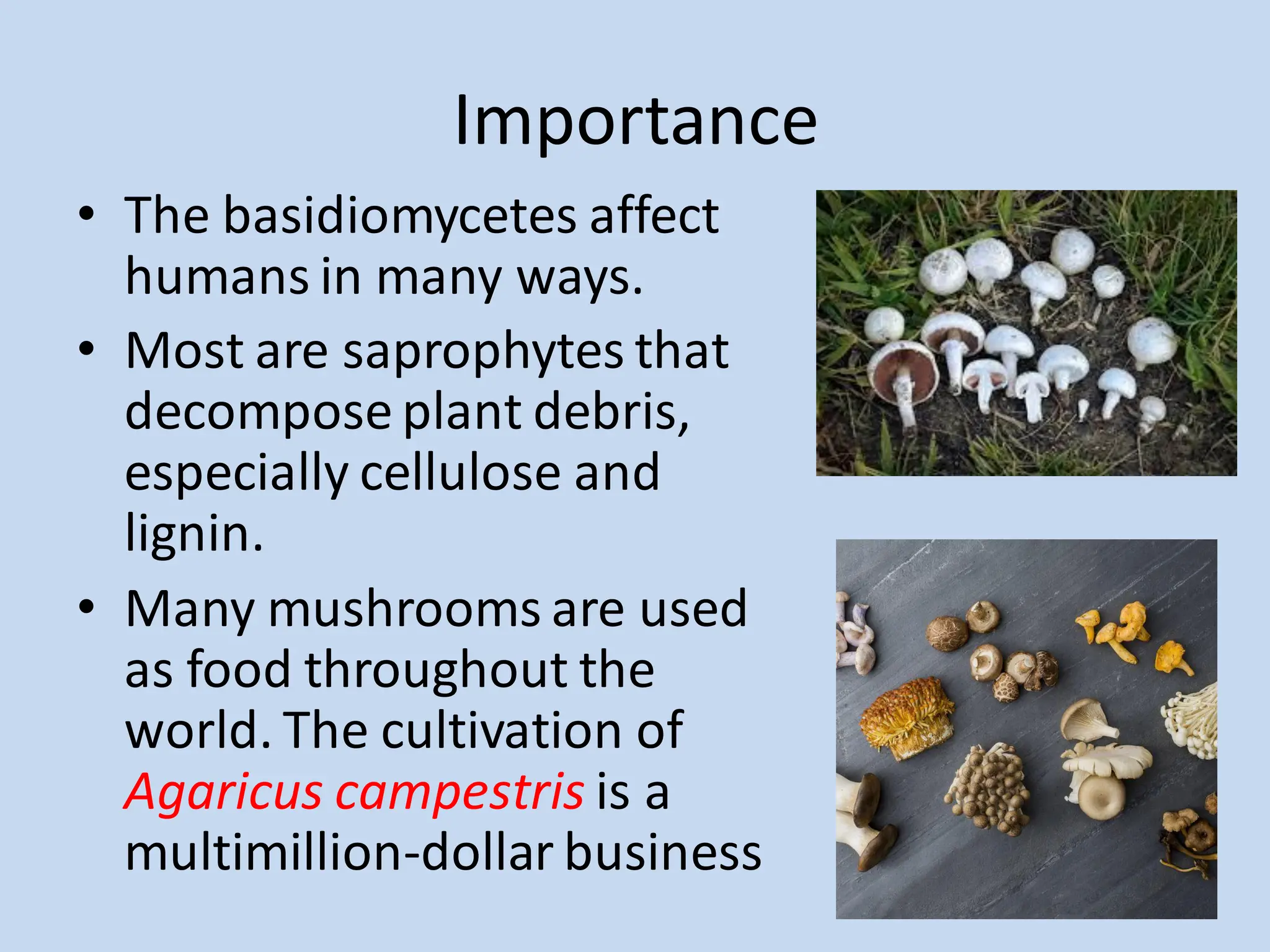
• The basidiomycetes affect
humans in many ways.
• Most are saprophytes that
decompose plant debris,
especially cellulose and
lignin.
• Many mushrooms are used
as food throughout the
world. The cultivation of
Agaricus campestris is a
multimillion-dollar business
Importance
• Many mushrooms produce specific
alkaloids that act as either poisons or
hallucinogens.
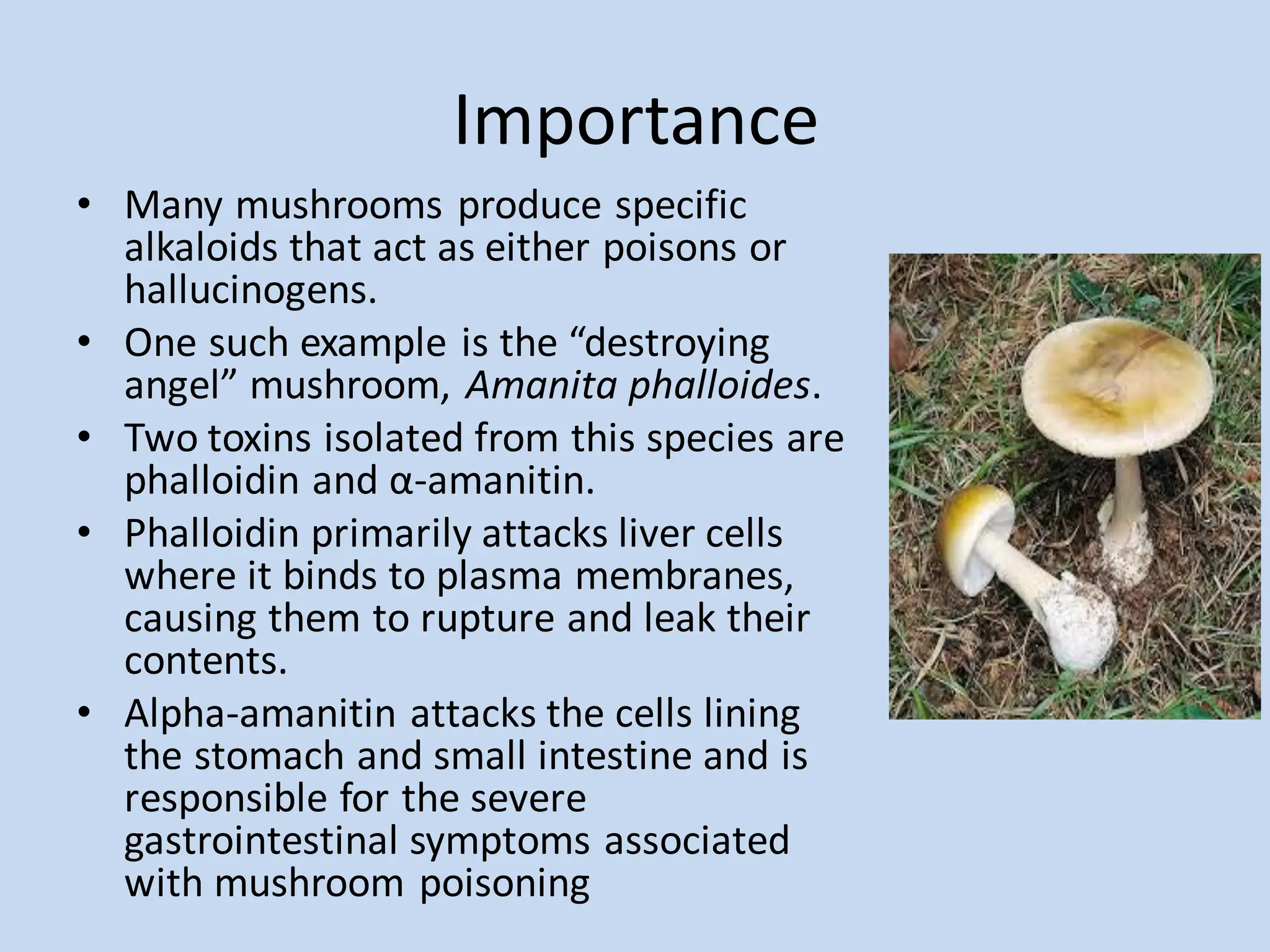
• One such example is the “destroying
angel” mushroom, Amanita phalloides.
• Two toxins isolated from this species are
phalloidin and α-amanitin.
• Phalloidin primarily attacks liver cells
where it binds to plasma membranes,
causing them to rupture and leak their
contents.
• Alpha-amanitin attacks the cells lining
the stomach and small intestine and is
responsible for the severe
gastrointestinal symptoms associated
with mushroom poisoning
Importance
• The basidiomycete Cryptococcus neoformans is
an important human pathogen. It produces the
disease called cryptococcosis, a systemic infection
primarily involving the lungs and central nervous
system.
• Other basidiomycetes, the smuts and rusts, are
virulent plant pathogens that cause extensive
damage to cereal crops; millions of dollars worth
of crops are destroyed annually.
• In these fungi, large basidiocarps are not formed.
Instead the small basidia arise from hyphae at the
surface of the host plant. The mycelia grow either
intra- or extracellularly in plant tissue.
Division Deuteromycota
• To a large degree, classical fungal taxonomy is
based on specific patterns of sexual reproduction.
• When a fungus lacks the sexual phase (perfect
stage), or if this phase has not been observed, it
is placed within the division Deuteromycota,
commonly called the Fungi Imperfecti or
deuteromycetes (“secondary fungi”).
• Once a perfect stage is observed, the fungus is
transferred to its proper division.
• Molecular systematics places the Deuteromycota
among their closest relatives in the Eumycota
Deuteromycota
• Most Fungi Imperfecti are terrestrial, with only a few
being reported from freshwaterand marine habitats.
• The majority are either saprophytes or parasites of
plants.
• A few are parasitic on other fungi.
• Many imperfect fungi directly affect human welfare.
• Several are human pathogens, causing such diseases as
athlete’s foot, ringworm, and histoplasmosis
• The chemical activities of many Fungi Imperfecti are
important industrially.
• For example, some species of Penicillium synthesize
the well-known antibiotics penicillin and griseofulvin.
• Other species give characteristic aromas to cheeses
such as Gor gonzola, Camembert, and Roquefort.
Deuteroycota
• Different species of Aspergillus are used to
ferment soy sauce and to manufacture citric,
gluconic, and gallic acids.
• Aspergillus flavus and A. parasiticus produce
secondary metabolites, called aflatoxins, that are
highly toxic and carcinogenic to animals and
humans
• Another group of fungal toxins, the
trichothecenes, are strong inhibitors of protein
synthesis in eucaryotic cells.
Flagellated Lower fungi
• Division Chytridiomycota
• Division Myxomycota
• Division Acrasiomycota
• Division Oomycota
Chytridiomycota
• This division contains one class, Chytridiomycetes, and
its members are known familiarly as the chytrids.
• These are simple terrestrial and aquatic fungi that
reproduce asexually by forming motile zoospores with
single, posterior, whiplash flagella.
• The entire organism is microscopic in size and may
consist of a single cell, a small multinucleate mass, or a
true mycelium.
• Usually chitin is the major constituent of chytrid cell
walls.
• Chytrids are thought to have been derived from a
protozoan ancestor having similar flagellation.
• When sexual reproduction occurs, it results in a zygote
that generally becomes a resting spore or sporangium.
• Some can grow saprophytically on dead organic matter;
others are parasites of algae other true fungi, and
terrestrial and aquatic plants.
• Species such as Allomyces are used in the study of
morphogenesis
Division Myxomycota
• Division Myxomycota (Acellular Slime
Molds)
• Under appropriate conditions plasmodial
(acellular) slime molds exist as streaming
masses of colorful protoplasm that creep
along in an amoeboid fashion over moist,
rotting logs, leaves, and other organic
matter.
• Feeding is by phagocytosis.
• Because this streaming mass lacks cell
walls, it is called a plasmodium
Life Cycle
• The plasmodium contains many nuclei, and as the organism grows,
the diploid nuclei divide repeatedly.
• When the plasmodium matures or when food and/or moisture are
scarce, it moves into a lighted area and develops delicate ornate
fruiting bodies
• As the fruiting bodies mature, they form spores with cellulose walls
that are resistant to environmental extremes.
• The spores germinate in the presence of adequate moisture to
release either nonflagellated amoeboid myxamoebae or flagellated
swarm cells.
• Initially the myxamoebae or swarm cells feed and are haploid
• eventually they fuse to form a diploid zygote.
• The zygote feeds, grows, and multiplies its nuclei through
synchronous mitotic division to form the multinucleate
plasmodium.
Division Acrasiomycota
• (Cellular Slime Molds)
• The vegetative stage of cellular slime molds consists
of individual amoeboid cells termed myxamoebae
• The myxamoebae feed phagocytically on bacteria and
yeasts.
• When food is plentiful, they divide repeatedly by
mitosis and cytokinesis, producing new daughter
myxamoebae.
• As their food supply is exhausted, the myxamoebae
begin to secrete cyclic adenosine monophosphate
(cAMP). This attracts other myxamoebae that move
toward the cAMP chemotactic source and in turn
secrete more cAMP.
Acrasiomycota
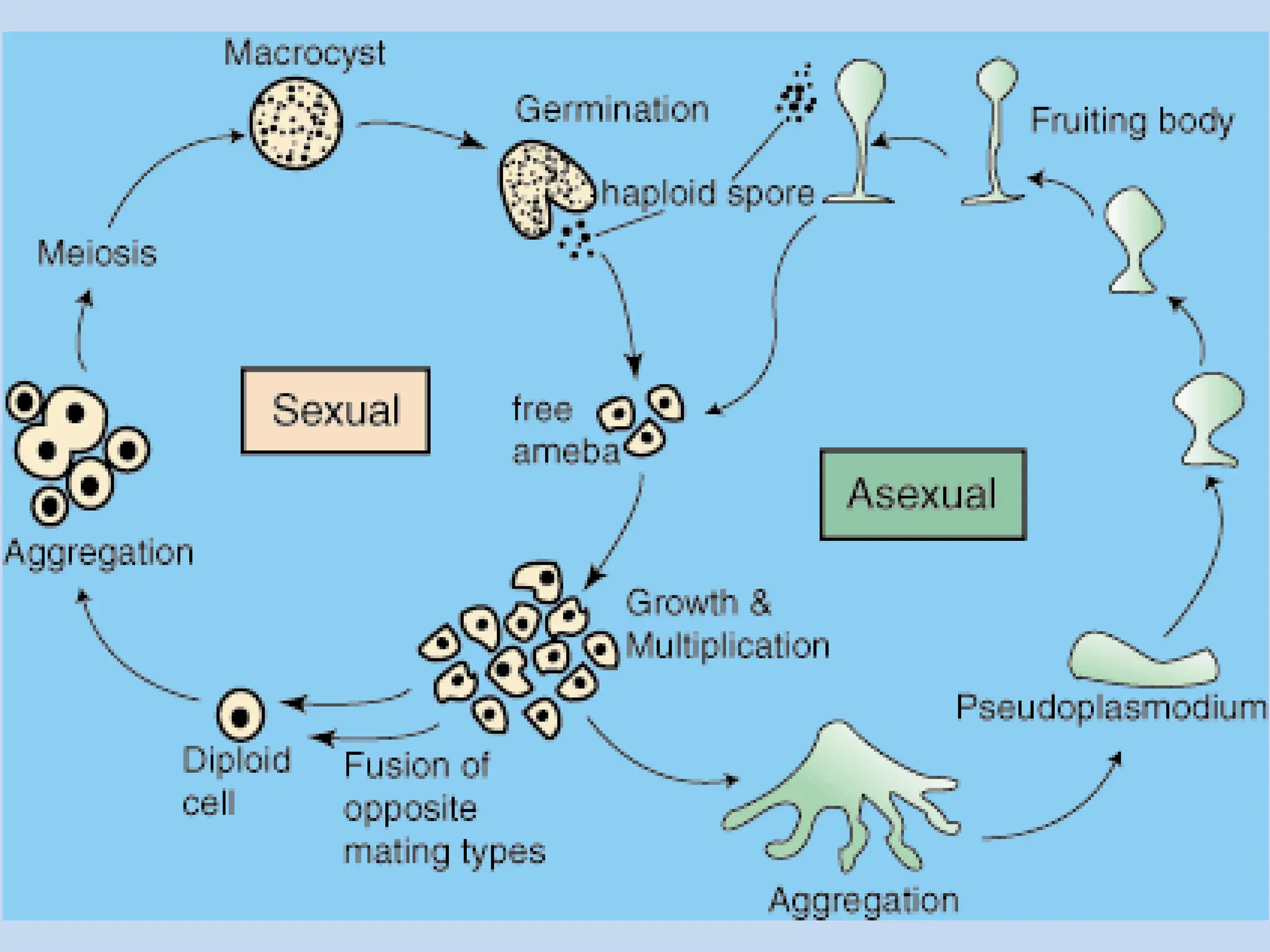
• When the individual myxamoebae aggregate they form a
sluglike pseudoplasmodium
• The pseudoplasmodium may move around as a unit for a
while, leaving a slime trail, but it eventually becomes
sedentary.
• In the culmination of the asexual phase, pseudoplasmodial
cells begin to differentiate into prestalk cells and prespore
cells
• A fruiting body called a sorus or sorocarp forms and
matures and then produces spores
• The spores are eventually released, and when conditions
become favorable, they germinate to release haploid
amoebae and repeat the cycle.
Division Oomycota
• Members of the division Oomycota are
collectively known as oomycetes or water
molds.
• Oomycetes resemble true fungi only in
appearance, consisting of finely branched
filaments called hyphae.
• However, oomycetes have cell walls of
cellulose, whereas the walls of most fungi are
made of chitin.
• Oomycetes are also unlike the true fungi in
that they have tubular mitochondrial cristae.
• Oomycota means “egg fungi,” a reference to
the mode of sexual reproduction in water
molds
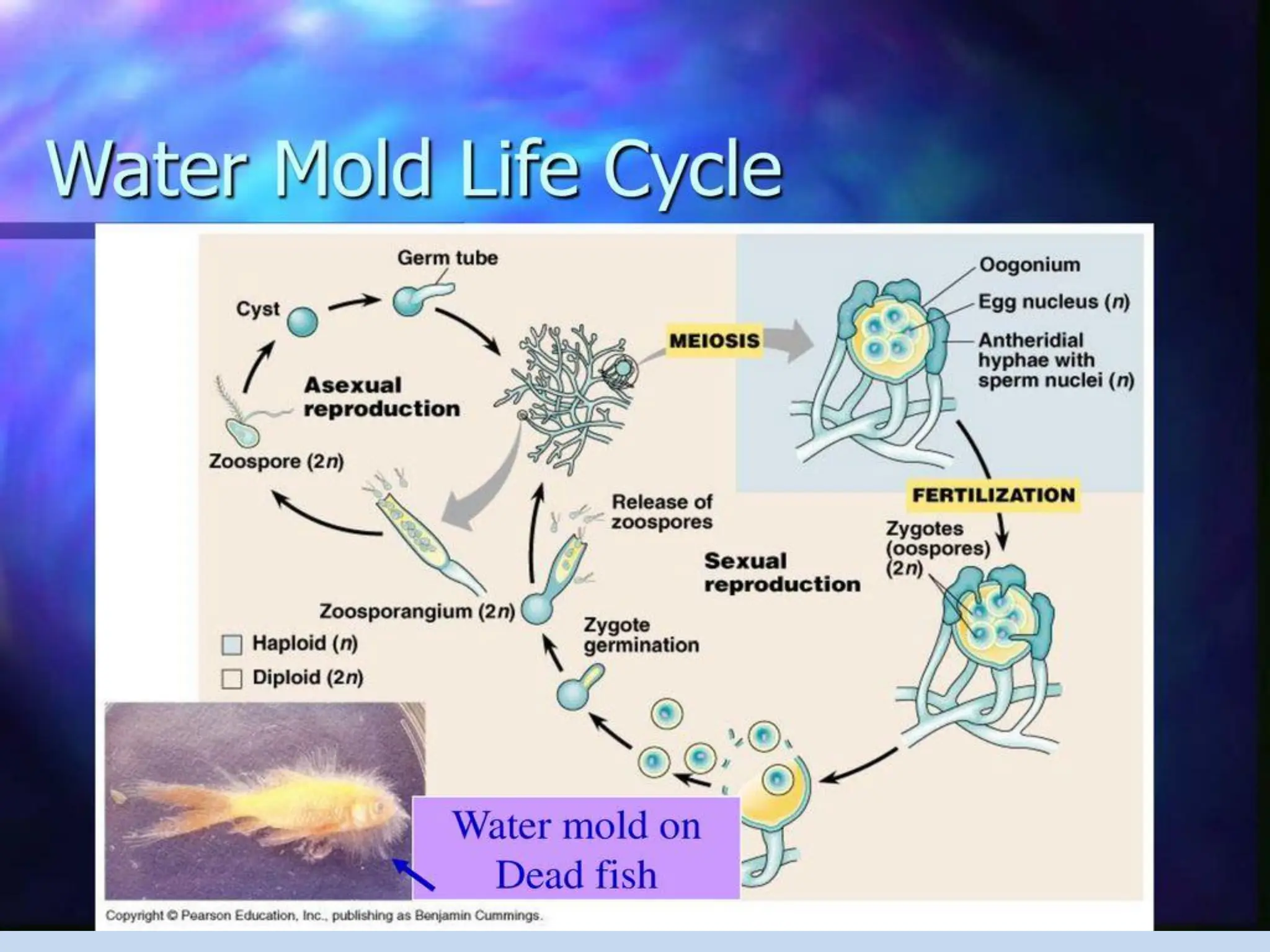
Division Oomycota
• A relatively large egg cell (oogonium) is
fertilized by either a sperm cell or a smaller
antheridium to produce a zygote.
• When the zygote germinates, it forms asexual
zoospores that bear flagella.
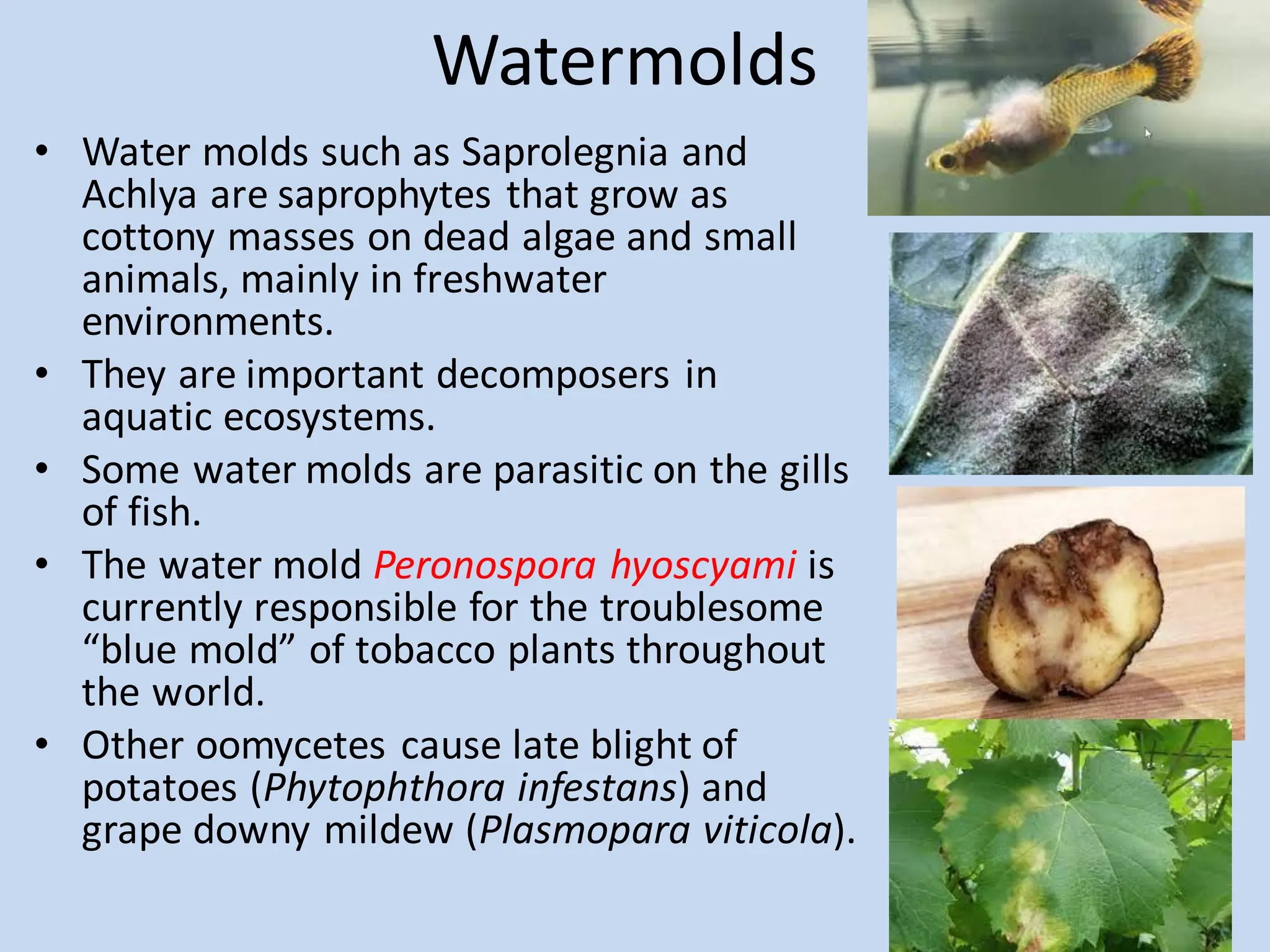
Watermolds
• Water molds such as Saprolegnia and
Achlya are saprophytes that grow as
cottony masses on dead algae and small
animals, mainly in freshwater
environments.
• They are important decomposers in
aquatic ecosystems.
• Some water molds are parasitic on the gills
of fish.
• The water mold Peronospora hyoscyami is
currently responsible for the troublesome
“blue mold” of tobacco plants throughout
the world.
• Other oomycetes cause late blight of
potatoes (Phytophthora infestans) and
grape downy mildew (Plasmopara viticola).

Fungi classification pdf ................

  • 1.
  • 2.
    Introduction • fungus [pl.,fungi; Latin fungus, mushroom] to include eucaryotic, spore-bearing organisms with absorptive nutrition, no chlorophyll, and that reproduce sexually and asexually. • Scientists who study fungi are mycologists • the scientific discipline dealing with fungi is called mycology. • The study of fungal toxins and their effects is called mycotoxicology, • The diseases caused by fungi in animals are known as mycoses [s., mycosis]. • The five-kingdom systemplaces the fungi in the kingdom Fungi • According to the universal phylogenetic tree, fungi are members of the domain Eucarya
  • 3.
    Distribution • Fungi areprimarily terrestrial organisms, although a few are freshwateror marine. • Many are pathogenic and infect plants and animals. • Fungi also form beneficial relationships with other organisms. For example, about three-fourths of all vascular plants form associations (called mycorrhizae) between their roots and fungi. • Fungi also are found in the upper portions of many plants. These endophytic fungi affect plant reproduction and palatability to herbivores. • Lichens are associations of fungi and either algae or cyanobacteria.
  • 4.
    Importance • About 90,000fungal species have been described; however, some estimates of total numbers suggest that 1.5 million species may exist. • Fungi are important to humans in both beneficial and harmful ways. • With bacteria and a few other groups of heterotrophic organisms, fungi act as decomposers, a role of enormous significance. They degrade complex organic materials in the environment to simple organic compounds and inorganic molecules. In this way carbon, nitrogen, phosphorus, and other critical constituents of dead organisms are released and made available for living organisms • However, fungi are the major cause of plant diseases
  • 5.
    Importance • Over 5,000species attack economically valuable crops and garden plants and also many wild plants. • In like manner many diseases of animals and humans are caused by fungi. • Fungi, especially the yeasts, are essential to many industrial processes involving fermentation Examples include the making of bread, wine, and beer. • Fungi also play a major role in the preparation of some cheeses, soy sauce, and sufu; in the commercial production of many organic acids (citric, gallic) and certain drugs (ergometrine, cortisone); and in the manufacture of many antibiotics (penicillin, griseofulvin) and the immunosuppressive drug cyclosporine. • In addition, fungi are important research tools in the study of fundamental biological processes. Cytologists, geneticists, biochemists, biophysicists, and microbiologists regularly use fungi in their research. Based on this research the yeast Saccharomyces cerevisiae is the best understood eucaryotic cell.
  • 6.
    Morphology ➢ The bodyor vegetative structure of a fungus is called a thallus [pl., thalli]. ➢It varies in complexity and size, ranging from the single-cell microscopic yeasts to multicellular molds, macroscopic puffballs, and mushrooms. ➢ The fungal cell usually is encased in a cell wall of chitin. Chitin is a strong but flexible nitrogen-containing polysaccharide consisting of N- acetylglucosamine residues
  • 7.
    Yeast Morphology • Ayeast is a unicellular fungus that has a single nucleus • reproduces either asexually by budding and transverse division or sexually through spore formation. • Each bud that separates can grow into a new yeast, and some group together to form colonies. • Generally yeast cells are larger than bacteria, vary considerably in size, and are commonly spherical to egg shaped. • They have no flagella but do possess most of the other eucaryotic organelles
  • 8.
    Molds • A moldconsists of long, branched, threadlike filaments of cells called hyphae that form a mycelium , a tangled mass or tissuelike aggregation • In some fungi, protoplasm streams through hyphae, uninterrupted by cross walls. These hyphae are called coenocytic • The hyphae of other fungi have cross walls called septa [s., septum] with either a single pore or multiple pores that permit cytoplasmic streaming. These hyphae are termed septate. • Hyphae are composed of an outer cell wall and an inner lumen, which contains the cytosol and organelles . • A plasma membrane surrounds the cytoplasm and lies next to the cell wall
  • 9.
    Dimorphic Fungi • Manyfungi, especially those that cause diseases in humans and animals, are dimorphic • they have two forms. Dimorphic fungi can change from (1) the yeast (Y) form in the animal to (2) the mold or mycelial form (M) in the external environment in response to changes in various environmental factors (nutrients, CO2 tension, oxidation-reduction potentials, temperature). • This shift is called the YM shift. • In plant-associated fungi the opposite type of dimorphism exists: the mycelial form occurs in the plant and the yeast form in the external environment.
  • 10.
    Nutrition • Fungi growbest in dark, moist habitats, but they are found wherever organic material is available. • Most fungi are saprophytes,securing their nutrients from dead organic material. • Like many bacteria, fungi release hydrolytic exoenzymes that digest external substrates. • They then absorb the soluble products. They are chemoorganoheterotrophs and use organic compounds as a source of carbon, electrons, and energy. • Glycogen is the primary storage polysaccharide in fungi. Most fungi use carbohydrates (preferably glucose or maltose) and nitrogenous compounds to synthesize their own amino acids and proteins. • Fungi usually are aerobic. • Some yeasts, however, are facultatively anaerobic and can obtain energy by fermentation, such as in the production of ethyl alcohol from glucose. • Obligately anaerobic fungi are found in the rumen of cattle.
  • 11.
    Reproduction • can beeither asexual or sexual. • Asexual reproduction is accomplished in several ways: • A parent cell can divide into two daughter cells by central constriction and formation of a new cell wall • Somatic vegetative cells may bud to produce new organisms. This is very common in the yeasts. • The most common method of asexual reproduction is spore production. Asexual spore formation occurs in an individual fungus through mitosis and subsequent cell division.
  • 12.
    Asexual Spores Types •A hypha can fragment (by the separation of hyphae through splitting of the cell wall or septum) to form cells that behave as spores. These cells are called arthroconidia or arthrospores • If the cells are surrounded by a thick wall before separation, they are called chlamydospores • If the spores develop within a sac [sporangium; pl., sporangia] at a hyphal tip, they are called sporangiospores • If the spores are not enclosed in a sac but produced at the tips or sides of the hypha, they are termed conidiospores • Spores produced from a vegetative mother cell by budding are called blastospores.
  • 14.
    Sexual Reproduction • involvesthe union of compatible nuclei. • Some fungal species are self-fertilizing and produce sexually compatible gametes on the same mycelium (homothallic). • Other species require outcrossing between different but sexually compatible mycelia (heterothallic). • Depending on the species, sexual fusion may occur between haploid gametes, gamete-producing bodies called gametangia, or hyphae. • Sometimes both the cytoplasm and haploid nuclei fuse immediately to produce the diploid zygote. • Usually, however, there is a delay between cytoplasmic and nuclear fusion. • This produces a dikaryotic stage in which cells contain two separate haploid nuclei, one from each parent • After a period of dikaryotic existence, the two nuclei fuse. This sexual reproduction yields spores.
  • 16.
    Sexual Spores • inthe zygomycetes the zygote develops into a zygospore • in the ascomycetes, an ascospore • in the basidomycetes; a basidiospore • Fungal spores are important for several reasons. • The size, shape, color, and number of spores are useful in the identification of fungal species. • The spores are often small and light; they can remain suspended in air for long periods. Thus they frequently aid in fungal dissemination, a significant factor that explains the wide distribution of many fungi. • Fungal spores often spread by adhering to the bodies of insects and other animals. • The bright colors and fluffy textures of many molds often are due to their aerial hyphae and spores.
  • 17.
    Classification of fungi •The traditional taxonomic scheme used by mycologists classifies the fungi into four divisions • based primarily on variations in sexual reproduction. (In mycology a division is equivalent to a phylum in animal classification schemes.) • Division Ascomycota • Division Zygomycota • Division Basidiomycota • Deuteromycota (Fungi Imperfecti)
  • 18.
    Division Zygomycota ➢The divisionZygomycota contains the fungi called zygomycetes. ➢Most live on decaying plant and animal matter in the soil; a few are parasites of plants, insects, animals, and humans. ➢The hyphae of zygomycetes are coenocytic, with many haploid nuclei. ➢Asexual spores, usually wind dispersed, develop in sporangia at the tips of aerial hyphae. ➢Sexual reproduction produces tough, thickwalled zygotes called zygospores that can remain dormant when the environment is too harsh for growth of the fungus.
  • 19.
    Rhizopus stolonifer • Thebread mold • This fungus grows on the surface of moist, carbohydrate-rich foods, such as breads, fruits, and vegetables. • On breads, for example, Rhizopus’s hyphae rapidly cover the surface. Special hyphae called rhizoids extend into the bread, and absorb nutrients • Other hyphae (stolons)become erect, then arch back into the substratum forming new rhizoids. • Still others remain erect and produce at their tips asexual sporangia filled with the black spores, giving the mold its characteristic color. Each spore, when liberated, can start a new mycelium
  • 20.
    Life Cycle ofRhizopus ➢ Rhizopus usuallyreproduces asexually,but if food becomes scarce or environmental conditionsunfavorable,it begins sexual reproduction. ➢ Sexual reproduction requires compatiblestrains of opposite mating types ➢ These have traditionallybeen labeled and strainsbecause they are not morphologically distinguishableasmale and female. ➢ When the two mating strainsare close, hormones are producedthat cause their hyphae to form projectionscalled progametangia [Greek pro, before], and then mature gametangia. ➢ After fusion of the gametangia,the nuclei of the two gametes fuse, forming a zygote. ➢ The zygote developsa thick, rough, black coat and becomes a dormant zygospore. ➢ Meiosis often occurs at the time of germination;the zygospore then splitsopen and produces a hyphathat bears an asexual sporangium and the cycle begins anew.
  • 22.
    Importance • Rhizopus isused in Indonesia to produce a food called tempeh from boiled, skinless soybeans. • Another zygomycete (Mucor spp.) is used with soybeans in the Orient to make a cheese called sufu. • Others are employed in the commercial preparation of some anesthetics, birth control agents, industrial alcohols, meat tenderizers, and the yellow coloring used in margarine and butter substitutes
  • 23.
    Division Ascomycota ➢ containsthe fungi called ascomycetes, commonly known as the sac fungi. ➢ Many species are quite familiar and economically important ➢ For example, most of the red, brown, and blue-green molds that cause food spoilage are ascomycetes. ➢ The powdery mildews that attack plant leaves and the fungi that cause chestnut blight and Dutch elm disease are ascomycetes. ➢ Many yeasts as well as edible morels and truffles are ascomycetes. ➢ The pink bread mold Neurospora crassa, also an ascomycete, has been a most important research tool in genetics and biochemistry
  • 24.
    Division Ascomycota • Manyascomycetes are parasites on higher plants. Claviceps purpurea parasitizes rye and other grasses, causing the disease ergot. • Ergotism, the toxic condition in humans and animals who eat grain infected with the fungus, is often accompanied by gangrene, psychotic delusions, nervous spasms, abortion, and convulsions. • During the Middle Ages ergotism, then known as St. Anthony’s fire, killed thousands of people. • The pharmacological activities of ergot are due to its active ingredient, lysergic acid diethylamide (LSD). • In controlled dosages ergot can be used to induce labor, lower blood pressure, and ease migraine headaches.
  • 25.
    Ascomycota • The ascomycetesare named for their characteristic reproductive structure, the saclike ascus [pl., asci; Greek askos,sac]. • The mycelium of the ascomycetes is composed of septate hyphae. • Asexual reproduction is common in the ascomycetes and takes place by way of conidiospores
  • 26.
    Ascomycota Sexual Reproduction •Sexual reproduction in the ascomycetes always involves the formation of an ascus containing two or more haploid ascospores • In the more complex ascomycetes, ascus formation is preceded by the development of special ascogenous hyphae into which pairs of nuclei migrate • One nucleus of each pair originates from a “male” mycelium (antheridium) or cell and the other from a “female” organ or cell (ascogonium) that has fused with it. • As the ascogenous hyphae grow, the paired nuclei divide so that there is one pair of nuclei in each cell. • After the ascogenous hyphae have matured, nuclear fusion occurs at the hyphal tips in the ascus mother cells
  • 27.
    • The diploidzygote nucleus then undergoes meiosis, and the resulting four haploid nuclei divide mitotically again to produce a row of eight nuclei in each developing ascus. • These nuclei are walled off from one another. Thousands of asci may be packed together in a cup- or flask-shaped ascocarp • When the ascospores mature, they often are released from the asci with great force. • Upon reaching a suitable environment, the ascospores germinate and start the cycle anew.
  • 30.
    Yeast • Although theterm yeast is used in a general sense to refer to all unicellular fungi that reproduce asexually by either budding or binary fission • many yeast genera are classified specifically within the ascomycetes because of their sexual reproduction • Yeasts are present in both terrestrial and aquatic habitats in which a suitable carbon source is available.
  • 32.
    Basidiomycota (Club Fungi) smuts Jellyfungus rust Shelf fungi stinkhorns
  • 33.
  • 34.
    Basidimycota • Basidiomycetes arenamed for their characteristic structure or cell, the basidium, that is involved in sexual reproduction • A basidium is produced at the tip of hyphae and normally is club shaped. • Two or more basidiospores are produced by the basidium, and basidia may be held within fruiting bodies called basidiocarps.
  • 35.
    Importance • The basidiomycetesaffect humans in many ways. • Most are saprophytes that decompose plant debris, especially cellulose and lignin. • Many mushrooms are used as food throughout the world. The cultivation of Agaricus campestris is a multimillion-dollar business
  • 36.
    Importance • Many mushroomsproduce specific alkaloids that act as either poisons or hallucinogens. • One such example is the “destroying angel” mushroom, Amanita phalloides. • Two toxins isolated from this species are phalloidin and α-amanitin. • Phalloidin primarily attacks liver cells where it binds to plasma membranes, causing them to rupture and leak their contents. • Alpha-amanitin attacks the cells lining the stomach and small intestine and is responsible for the severe gastrointestinal symptoms associated with mushroom poisoning
  • 37.
    Importance • The basidiomyceteCryptococcus neoformans is an important human pathogen. It produces the disease called cryptococcosis, a systemic infection primarily involving the lungs and central nervous system. • Other basidiomycetes, the smuts and rusts, are virulent plant pathogens that cause extensive damage to cereal crops; millions of dollars worth of crops are destroyed annually. • In these fungi, large basidiocarps are not formed. Instead the small basidia arise from hyphae at the surface of the host plant. The mycelia grow either intra- or extracellularly in plant tissue.
  • 39.
    Division Deuteromycota • Toa large degree, classical fungal taxonomy is based on specific patterns of sexual reproduction. • When a fungus lacks the sexual phase (perfect stage), or if this phase has not been observed, it is placed within the division Deuteromycota, commonly called the Fungi Imperfecti or deuteromycetes (“secondary fungi”). • Once a perfect stage is observed, the fungus is transferred to its proper division. • Molecular systematics places the Deuteromycota among their closest relatives in the Eumycota
  • 40.
    Deuteromycota • Most FungiImperfecti are terrestrial, with only a few being reported from freshwaterand marine habitats. • The majority are either saprophytes or parasites of plants. • A few are parasitic on other fungi. • Many imperfect fungi directly affect human welfare. • Several are human pathogens, causing such diseases as athlete’s foot, ringworm, and histoplasmosis • The chemical activities of many Fungi Imperfecti are important industrially. • For example, some species of Penicillium synthesize the well-known antibiotics penicillin and griseofulvin. • Other species give characteristic aromas to cheeses such as Gor gonzola, Camembert, and Roquefort.
  • 41.
    Deuteroycota • Different speciesof Aspergillus are used to ferment soy sauce and to manufacture citric, gluconic, and gallic acids. • Aspergillus flavus and A. parasiticus produce secondary metabolites, called aflatoxins, that are highly toxic and carcinogenic to animals and humans • Another group of fungal toxins, the trichothecenes, are strong inhibitors of protein synthesis in eucaryotic cells.
  • 42.
    Flagellated Lower fungi •Division Chytridiomycota • Division Myxomycota • Division Acrasiomycota • Division Oomycota
  • 43.
    Chytridiomycota • This divisioncontains one class, Chytridiomycetes, and its members are known familiarly as the chytrids. • These are simple terrestrial and aquatic fungi that reproduce asexually by forming motile zoospores with single, posterior, whiplash flagella. • The entire organism is microscopic in size and may consist of a single cell, a small multinucleate mass, or a true mycelium. • Usually chitin is the major constituent of chytrid cell walls. • Chytrids are thought to have been derived from a protozoan ancestor having similar flagellation. • When sexual reproduction occurs, it results in a zygote that generally becomes a resting spore or sporangium. • Some can grow saprophytically on dead organic matter; others are parasites of algae other true fungi, and terrestrial and aquatic plants. • Species such as Allomyces are used in the study of morphogenesis
  • 44.
    Division Myxomycota • DivisionMyxomycota (Acellular Slime Molds) • Under appropriate conditions plasmodial (acellular) slime molds exist as streaming masses of colorful protoplasm that creep along in an amoeboid fashion over moist, rotting logs, leaves, and other organic matter. • Feeding is by phagocytosis. • Because this streaming mass lacks cell walls, it is called a plasmodium
  • 45.
    Life Cycle • Theplasmodium contains many nuclei, and as the organism grows, the diploid nuclei divide repeatedly. • When the plasmodium matures or when food and/or moisture are scarce, it moves into a lighted area and develops delicate ornate fruiting bodies • As the fruiting bodies mature, they form spores with cellulose walls that are resistant to environmental extremes. • The spores germinate in the presence of adequate moisture to release either nonflagellated amoeboid myxamoebae or flagellated swarm cells. • Initially the myxamoebae or swarm cells feed and are haploid • eventually they fuse to form a diploid zygote. • The zygote feeds, grows, and multiplies its nuclei through synchronous mitotic division to form the multinucleate plasmodium.
  • 47.
    Division Acrasiomycota • (CellularSlime Molds) • The vegetative stage of cellular slime molds consists of individual amoeboid cells termed myxamoebae • The myxamoebae feed phagocytically on bacteria and yeasts. • When food is plentiful, they divide repeatedly by mitosis and cytokinesis, producing new daughter myxamoebae. • As their food supply is exhausted, the myxamoebae begin to secrete cyclic adenosine monophosphate (cAMP). This attracts other myxamoebae that move toward the cAMP chemotactic source and in turn secrete more cAMP.
  • 48.
    Acrasiomycota • When theindividual myxamoebae aggregate they form a sluglike pseudoplasmodium • The pseudoplasmodium may move around as a unit for a while, leaving a slime trail, but it eventually becomes sedentary. • In the culmination of the asexual phase, pseudoplasmodial cells begin to differentiate into prestalk cells and prespore cells • A fruiting body called a sorus or sorocarp forms and matures and then produces spores • The spores are eventually released, and when conditions become favorable, they germinate to release haploid amoebae and repeat the cycle.
  • 51.
    Division Oomycota • Membersof the division Oomycota are collectively known as oomycetes or water molds. • Oomycetes resemble true fungi only in appearance, consisting of finely branched filaments called hyphae. • However, oomycetes have cell walls of cellulose, whereas the walls of most fungi are made of chitin. • Oomycetes are also unlike the true fungi in that they have tubular mitochondrial cristae. • Oomycota means “egg fungi,” a reference to the mode of sexual reproduction in water molds
  • 52.
    Division Oomycota • Arelatively large egg cell (oogonium) is fertilized by either a sperm cell or a smaller antheridium to produce a zygote. • When the zygote germinates, it forms asexual zoospores that bear flagella.
  • 54.
    Watermolds • Water moldssuch as Saprolegnia and Achlya are saprophytes that grow as cottony masses on dead algae and small animals, mainly in freshwater environments. • They are important decomposers in aquatic ecosystems. • Some water molds are parasitic on the gills of fish. • The water mold Peronospora hyoscyami is currently responsible for the troublesome “blue mold” of tobacco plants throughout the world. • Other oomycetes cause late blight of potatoes (Phytophthora infestans) and grape downy mildew (Plasmopara viticola).