Archaea
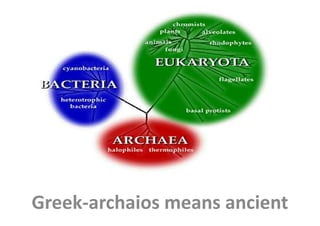
Greek-archaios means ancient
Introduction
• Diverse group
• Gram Positive or Gram Negative
• Spherical, lobed, rod-shaped, spiral, cubodial,
triangular, plate shaped, irregularly shaped,
• Pleomorphic
• Present as a single cells, or aggregates / filaments
• Multiplication- binary fission, fragmentation and
other mechanisms
• Physiologically diverse-aerobic, facultative
anaerobes, strictly anaerobes
• Chemolithoautotroph, organotroph
• Psychrophiles, mesophiles and hyperthermophiles
(can grow above 1000 c)
Ecology
• They live in an extreme environment
• Area with very high or low temperature, PH
• Area with high salt concentration
• Area with high concentration of methane
• Area with no oxygen (anoxic)
Volcanic eruptions
Amazing Geyser Landscape in
Nevada
the vivid red brine (teaming with halophilic
archaebacteria) of Owens
Halophiles in sea
Great Salt Lake of Utah
methanogens may thrive in hot springs
Archaeal Cell Wall
• Lack muramic acid and D- amino acids
• Eg. methanogens have peudomurein (a
peptidoglycan like polymer that is cross-linked
with L-amino acids
• Some contain a complex carbohydrate similar to
chondroitin sulfate of animal connective tissue
• Hyperthermophile and methanogens have proten
cell wall
Archaeal membrane
• Branched chain hydrocarbon attached to glycerol
by ether
• Thermophile archaea have long tetraether in their
cell membrane. Also pentacyclic rings in HC of
some (help maintain the delicate liquid crystalline
balance of membrane of membrane at high
temperature)
• Other lipids- polar phospholipid, sulfolipid,
glycolipid.
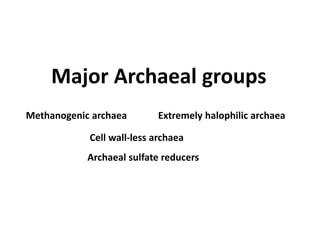
Major Archaeal groups
Methanogenic archaea
Archaeal sulfate reducers
Extremely halophilic archaea
Cell wall-less archaea
Methanogenic Archaea
• Strict anaerobes
• Produces methane as a major metabolic end
product
• Convert sulfur to hydrogen sulphide wth no energy
production
• They possess co-enzyme M, factor 420/430,
methanopterin
• Eg. Metanobacterim, Methanococcus,
Methanomicrobium, Methanosarcina
Archaeal sulfate reducers
• Irregular gram-negative coccoid cells
• Strictly anaerobe and extremely thermophilic
• Hydrogen sulfide is formed from thiosulfate and
sulfate
• Heterotrophic in nature, autotrophic growth with
thiosulfate and hydrogen
• Forms traces of methane
• Possess factor 420 and methanopterin
• Eg. Archeoglobus
Extremely halophilic archaea
• Rods, cocci, irregular shaped (pyramid, cube etc)
• Stain gram-positive and gram-negative
• Chemoorganoheterotroph
• Lack peptidogycan
• Most spp. require sodium chloride (> or =15M)
• Mostly produce bright red colonies
• Some unpigmented
• Neutrophilic to alkalophilic
• Generally mesophilic, one sp. is thermophilic
• Possess bacteriorhodopsin and halorhodopsin (
and can use light energy to produce ATP
Cell wall-less Archaea
• Pleomorphic cell lacking cell wall
• Thermoacidophilic and chemoorganotrophic
• Facultaive anaerobes
• Mannose-rich glycoprotein and a lipoglycan
Extremely thermophilic elementary sulfur
• Gram negative rods, filaments or cocci
• Obligatory thermophile (70-1100 c)
• Usually strictly anaerobe, some are aerobic and
facultative
• Acidophilic and neutrophilic
• Autotrophic or heterotrophic
• Reduction of sulfur to hydrogen sulfide –
anaerobically and hydrogen sulfide or elemental
sulfur oxidized to sulfuric acid aerobically
• eg. Desulfurococcus, Sulfolobus, Thermococcus
Economic Importance
• Thermophiles grow in heated water and soil rich in
elemental sulfur and these environment are scattered
all over the world. Eg. Sulfur rich hot springs in
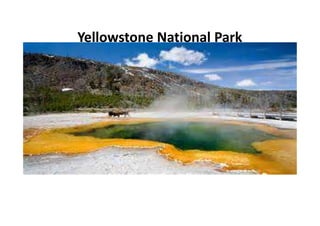
Yellowstone National Park
• Methanogens produce methane using sewage sludge,
which is a clean burning fuel(pollution free energy)
• Methane production can contribute to global warming
• Halophiles are used in the production of many salted
food products, including soysauce
• Thermoplasma oxidizes iron sulfide (in piles of coal
mines) to sulfuric acid. As a result piles become hot
and acidic
Yellowstone National Park

Archaea

  • 1.
  • 2.
    Introduction • Diverse group •Gram Positive or Gram Negative • Spherical, lobed, rod-shaped, spiral, cubodial, triangular, plate shaped, irregularly shaped, • Pleomorphic • Present as a single cells, or aggregates / filaments • Multiplication- binary fission, fragmentation and other mechanisms • Physiologically diverse-aerobic, facultative anaerobes, strictly anaerobes
  • 3.
    • Chemolithoautotroph, organotroph •Psychrophiles, mesophiles and hyperthermophiles (can grow above 1000 c)
  • 4.
    Ecology • They livein an extreme environment • Area with very high or low temperature, PH • Area with high salt concentration • Area with high concentration of methane • Area with no oxygen (anoxic)
  • 5.
  • 6.
  • 7.
    the vivid redbrine (teaming with halophilic archaebacteria) of Owens
  • 8.
  • 9.
  • 10.
    methanogens may thrivein hot springs
  • 11.
    Archaeal Cell Wall •Lack muramic acid and D- amino acids • Eg. methanogens have peudomurein (a peptidoglycan like polymer that is cross-linked with L-amino acids • Some contain a complex carbohydrate similar to chondroitin sulfate of animal connective tissue • Hyperthermophile and methanogens have proten cell wall
  • 12.
    Archaeal membrane • Branchedchain hydrocarbon attached to glycerol by ether • Thermophile archaea have long tetraether in their cell membrane. Also pentacyclic rings in HC of some (help maintain the delicate liquid crystalline balance of membrane of membrane at high temperature) • Other lipids- polar phospholipid, sulfolipid, glycolipid.
  • 13.
    Major Archaeal groups Methanogenicarchaea Archaeal sulfate reducers Extremely halophilic archaea Cell wall-less archaea
  • 14.
    Methanogenic Archaea • Strictanaerobes • Produces methane as a major metabolic end product • Convert sulfur to hydrogen sulphide wth no energy production • They possess co-enzyme M, factor 420/430, methanopterin • Eg. Metanobacterim, Methanococcus, Methanomicrobium, Methanosarcina
  • 15.
    Archaeal sulfate reducers •Irregular gram-negative coccoid cells • Strictly anaerobe and extremely thermophilic • Hydrogen sulfide is formed from thiosulfate and sulfate • Heterotrophic in nature, autotrophic growth with thiosulfate and hydrogen • Forms traces of methane • Possess factor 420 and methanopterin • Eg. Archeoglobus
  • 17.
    Extremely halophilic archaea •Rods, cocci, irregular shaped (pyramid, cube etc) • Stain gram-positive and gram-negative • Chemoorganoheterotroph • Lack peptidogycan • Most spp. require sodium chloride (> or =15M) • Mostly produce bright red colonies • Some unpigmented • Neutrophilic to alkalophilic • Generally mesophilic, one sp. is thermophilic • Possess bacteriorhodopsin and halorhodopsin ( and can use light energy to produce ATP
  • 18.
    Cell wall-less Archaea •Pleomorphic cell lacking cell wall • Thermoacidophilic and chemoorganotrophic • Facultaive anaerobes • Mannose-rich glycoprotein and a lipoglycan
  • 19.
    Extremely thermophilic elementarysulfur • Gram negative rods, filaments or cocci • Obligatory thermophile (70-1100 c) • Usually strictly anaerobe, some are aerobic and facultative • Acidophilic and neutrophilic • Autotrophic or heterotrophic • Reduction of sulfur to hydrogen sulfide – anaerobically and hydrogen sulfide or elemental sulfur oxidized to sulfuric acid aerobically • eg. Desulfurococcus, Sulfolobus, Thermococcus
  • 20.
    Economic Importance • Thermophilesgrow in heated water and soil rich in elemental sulfur and these environment are scattered all over the world. Eg. Sulfur rich hot springs in Yellowstone National Park • Methanogens produce methane using sewage sludge, which is a clean burning fuel(pollution free energy) • Methane production can contribute to global warming • Halophiles are used in the production of many salted food products, including soysauce • Thermoplasma oxidizes iron sulfide (in piles of coal mines) to sulfuric acid. As a result piles become hot and acidic
  • 21.