Download as PDF, PPTX

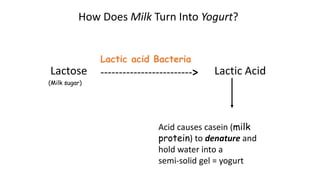


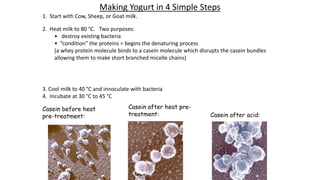


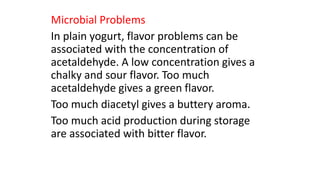


The document discusses the microbiology of fermented foods like yogurt. It begins by describing the composition of milk and how heating milk and adding lactic acid bacteria cultures like Lactobacillus bulgaricus and Streptococcus thermophilus causes the milk proteins and sugars to ferment, producing yogurt. These bacteria grow symbiotically, with one species creating an environment for the other to thrive. The fermentation process turns milk sugar into lactic acid, causing the milk to thicken into a yogurt consistency. Precise temperature and time controls are needed during incubation to ensure the proper growth of bacteria and flavor development.


![Human Reproduction [ Reproductive System ] Notes @irfanullah_mehar Irfanullah...](https://cdn.slidesharecdn.com/ss_thumbnails/humanreproductionreproductivesystemnotesirfanullahmeharirfanullahmeharjanantantra-260111172350-56e85778-thumbnail.jpg?width=640&height=640&fit=bounds)


