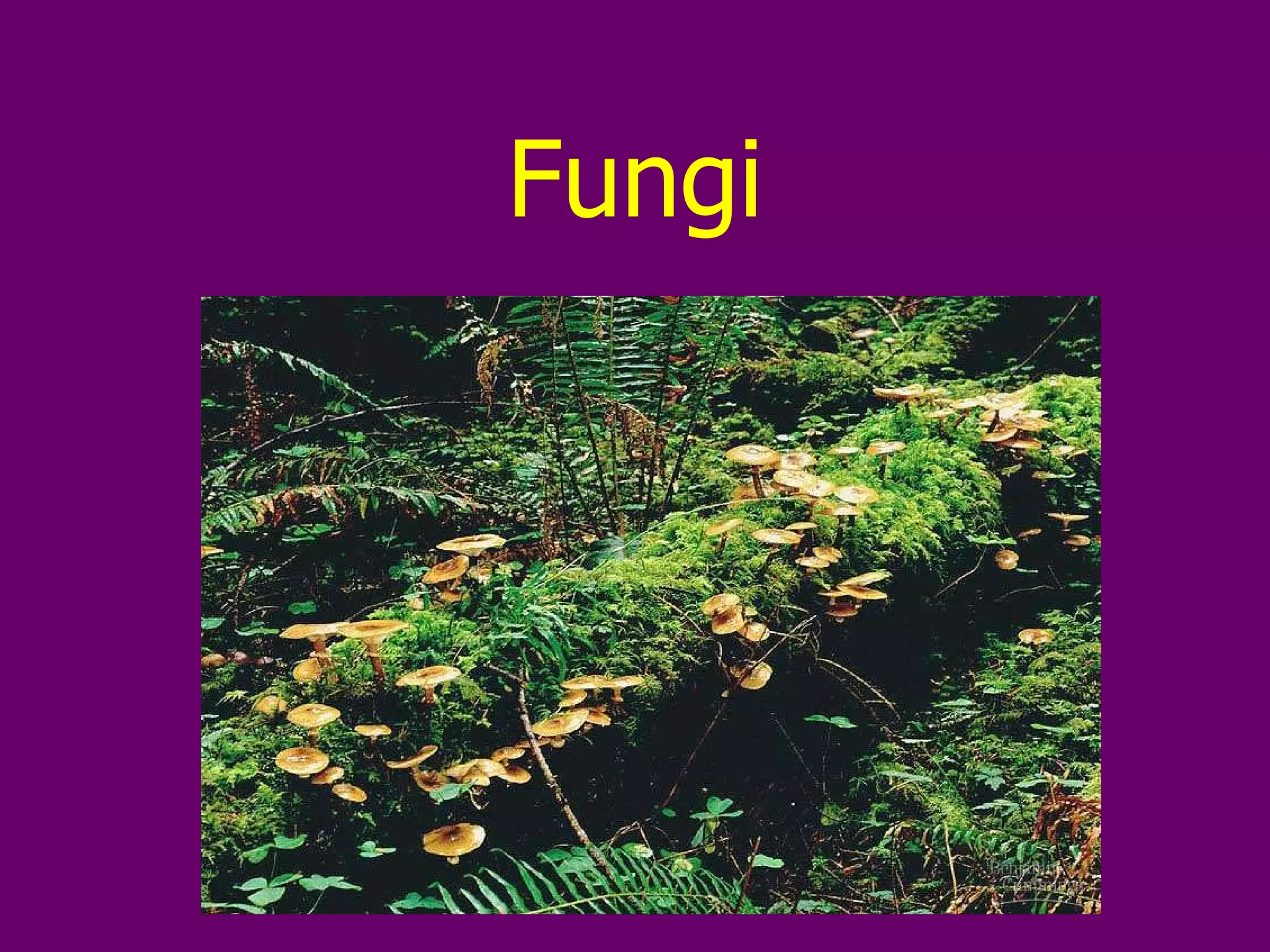
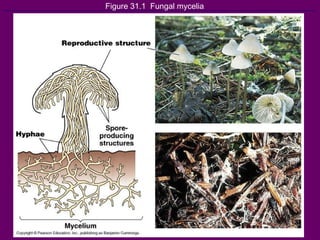
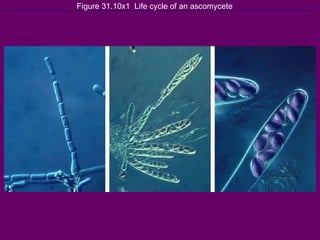
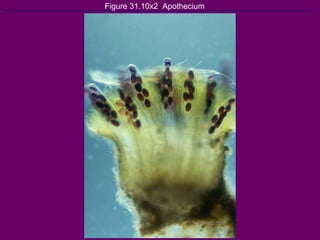
- Fungi are eukaryotic organisms that absorb nutrients from their environment and differ from plants in their nutritional mode and lack of chlorophyll. They exist primarily as filamentous hyphae that branch and form a mycelium.
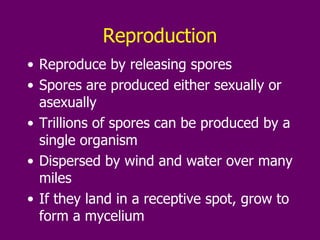
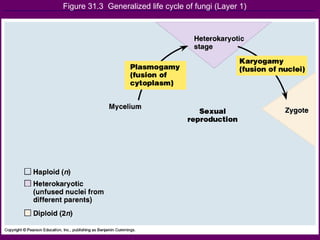
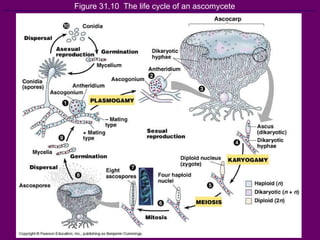
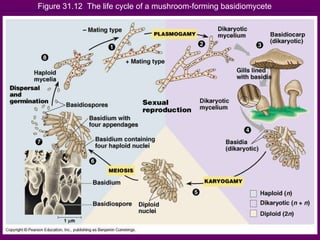
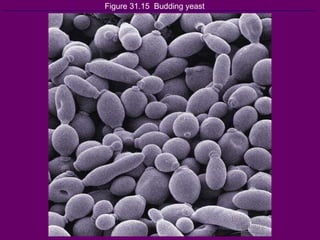
- Fungi reproduce both sexually through spores or asexually through budding. Their filamentous structure and absorptive nutrition allow them to serve important ecological roles as decomposers, parasites, and mutualists with other organisms like plants.
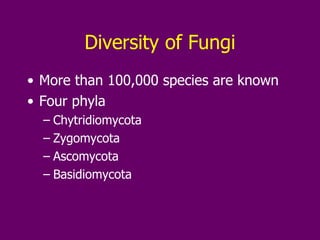
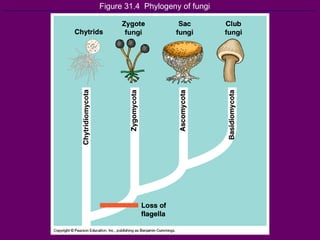
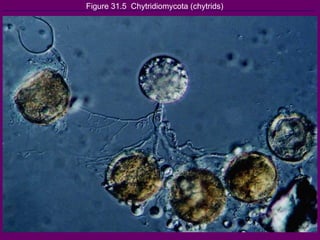
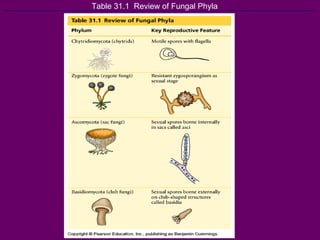
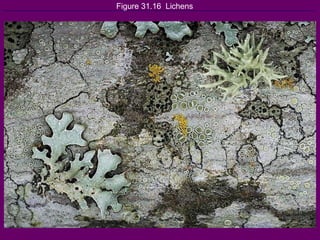
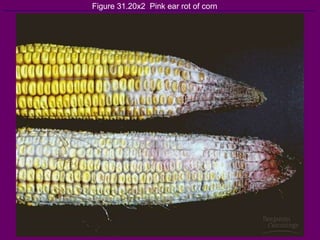
- There are over 100,000 known fungal species divided among several phyla. Many fungi play vital roles in ecosystems through nutrient cycling, though some are important pathogens of plants and humans.