FRAME
MEASUREMENTS
AND MARKINGS
OPTOM FASLU MUHAMMED
 Familiarity with frame measurements and
how they are marked is essential to proper
ordering of prescription glasses.
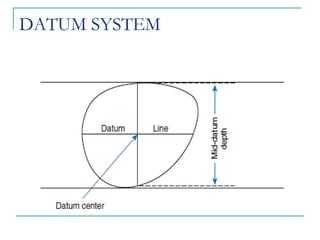
DATUM SYSTEM
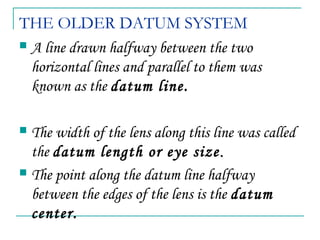
THE OLDER DATUM SYSTEM
 A line drawn halfway between the two
horizontal lines and parallel to them was
known as the datum line.
 The width of the lens along this line was called
the datum length or eye size.
 The point along the datum line halfway
between the edges of the lens is the datum
center.
 The depth of the lens measured as the vertical
depth through the datum center, was the mid-
datum depth.
 The datum system preceded the currently used
boxing
THE BOXING SYSTEM
THE BOXING SYSTEM
 Geometric Center
The center of the lens is the point on the
horizontal midline halfway between the two
lens-bordering vertical lines. It is known as the
geometric center or boxing center of the edged
lens.
 This term does not imply anything about the
optical positioning of the lens
Size
 The size of the lens then is the length and
depth of the box containing the lens.
 The horizontal length is now commonly
referred to as the eye size when referring to
the frame and the lens size when referring to
the lenses. Both are measured in millimeters.
 They are referring primarily to the horizontal
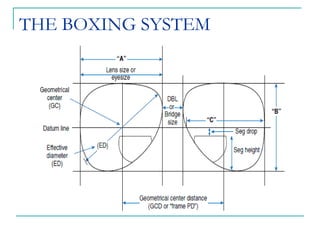
measure of the lens, denoted by the letter
“A”.
 The letter “B” denotes the vertical measure of
the box enclosing the lens.
 The letter “C” refers to the width of the lens
itself along the horizontal midline.
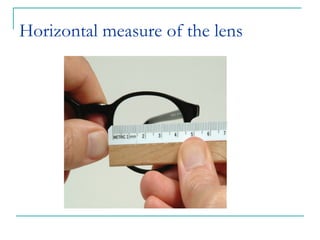
Horizontal measure of the lens
Effective Diameter
 The effective diameter of a lens is found by
doubling the distance from the geometric
center of the lens to the apex of the lens
bevel farthest from it.
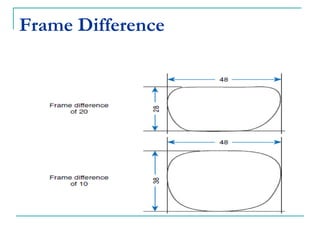
Frame Difference
 The difference between the horizontal and
the vertical measurements is known as the
frame difference and Is measured in
millimeters.
 Frame difference is sometimes referred to as
lens difference.
Frame Difference
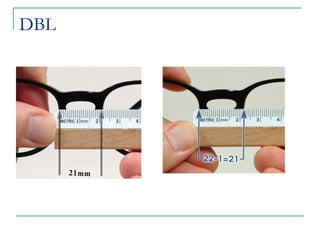
Distance Between Lenses (DBL) or Bridge
Size
 The DBL is the distance between the two
boxes when both lenses are boxed off in the
frame.
 This distance is measured in millimeters.
DBL
Geometric Center Distance (GCD)
 The distance between the two geometric
centers of the lenses is known as the
geometric center distance (GCD).
 Or the geometric center distance can be
calculated by simply adding the eye size to
the DBL.The result is the same.
 The GCD is also known by three other
names:
1. Distance between centers (DBC)
2. Frame center distance
3. Frame PD
 The term frame PD is commonly
used in dispensing, but has no relationship to
the wearer’s inter pupillary distance or
distance between pupil centers.
Seg Height
 When specifying bifocal or trifocal segment
height, the reference points are given in
millimeters as either
(l) The distance below or above the
horizontal midline (called seg drop or seg
raise)
(2) the distance from the lower line of the
boxing system rectangle enclosing the lens
shape (called seg height).
TEMPLE LENGTH
 Most temples are currently marked with the
total, or overall, temple length. Temple
lengths are expressed in millimeters.
Overall Temple Length
 The overall temple length is the distance from
the center of the center barrel screw hole to
the posterior end of the temple, measured
along the center of the temple.
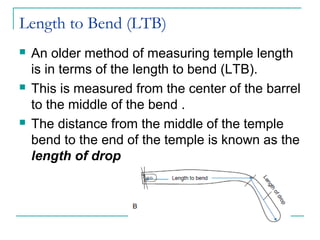
Length to Bend (LTB)
 An older method of measuring temple length
is in terms of the length to bend (LTB).
 This is measured from the center of the barrel
to the middle of the bend .
 The distance from the middle of the temple
bend to the end of the temple is known as the
length of drop
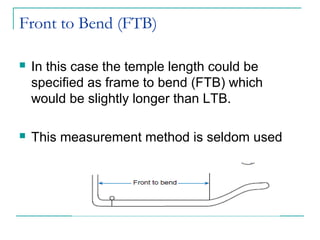
Front to Bend (FTB)
 In this case the temple length could be
specified as frame to bend (FTB) which
would be slightly longer than LTB.
 This measurement method is seldom used
FRAME MARKINGS
 Most frames are marked according to size
with three measurements: eye size, DBL,
and temple length.
 Metal frames that are manufactured from
“rolled gold” are also marked as to the
amount of gold found in the frame.
Eye Size and DBL
 When a frame marking such as 50 □20 is
seen, it means that the eye size is 50 mm
and the distance between lenses is 20 mm.
 The box - the eye size is measured
according to the boxing method.
 The eye size and DBL are sometimes simply
marked 50-20 or 50/20.
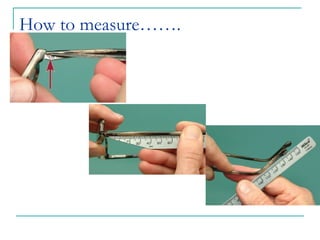
How to measure…….
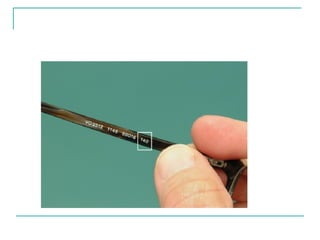
Location of Markings
plastic frame
 Printed on the inside of the nose pad, or on
the upper outer section of the eye wire.
 Back side of the end piece, and the temple
must be folded closed to find it.
 On one end piece and the DBL on the other.
Metal frames
Eye size and DBL are usually on the inside of
the bridge or on the temples.
Frame Manufacturer Name, Color, and
Country of Origin
 Frames should also be marked as to country
of origin, manufacturer, and frame name.
Many frame manufacturers use a number
rather than a name.
 Consulting a frame reference catalog or
database will help.
Safety Frame Markings
 Frames that are suitable for use as safety
glasses must have “Z87” or “Z87-2” and the
name or logo of the manufacturer stamped
on the frame front and on both temples.
Gold Classifications for Metal Frames
With Substantial Gold Content
 Metal frames may not have any gold or any
significant amount of gold in the frame.
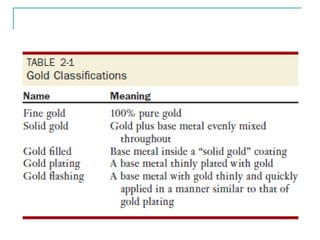
 Gold or part-gold articles can be classified as
fine gold, solid gold, gold filled, or having gold
plating or gold flashing.
 The karat system is used to determine the
amount of gold present
Frame measurementsand markings

Frame measurementsand markings

  • 1.
  • 2.
     Familiarity withframe measurements and how they are marked is essential to proper ordering of prescription glasses.
  • 3.
  • 4.
    THE OLDER DATUMSYSTEM  A line drawn halfway between the two horizontal lines and parallel to them was known as the datum line.  The width of the lens along this line was called the datum length or eye size.  The point along the datum line halfway between the edges of the lens is the datum center.
  • 5.
     The depthof the lens measured as the vertical depth through the datum center, was the mid- datum depth.  The datum system preceded the currently used boxing
  • 6.
  • 7.
    THE BOXING SYSTEM Geometric Center The center of the lens is the point on the horizontal midline halfway between the two lens-bordering vertical lines. It is known as the geometric center or boxing center of the edged lens.  This term does not imply anything about the optical positioning of the lens
  • 8.
    Size  The sizeof the lens then is the length and depth of the box containing the lens.  The horizontal length is now commonly referred to as the eye size when referring to the frame and the lens size when referring to the lenses. Both are measured in millimeters.
  • 9.
     They arereferring primarily to the horizontal measure of the lens, denoted by the letter “A”.  The letter “B” denotes the vertical measure of the box enclosing the lens.  The letter “C” refers to the width of the lens itself along the horizontal midline.
  • 10.
  • 11.
    Effective Diameter  Theeffective diameter of a lens is found by doubling the distance from the geometric center of the lens to the apex of the lens bevel farthest from it.
  • 12.
    Frame Difference  Thedifference between the horizontal and the vertical measurements is known as the frame difference and Is measured in millimeters.  Frame difference is sometimes referred to as lens difference.
  • 13.
  • 14.
    Distance Between Lenses(DBL) or Bridge Size  The DBL is the distance between the two boxes when both lenses are boxed off in the frame.  This distance is measured in millimeters.
  • 15.
  • 16.
    Geometric Center Distance(GCD)  The distance between the two geometric centers of the lenses is known as the geometric center distance (GCD).  Or the geometric center distance can be calculated by simply adding the eye size to the DBL.The result is the same.
  • 17.
     The GCDis also known by three other names: 1. Distance between centers (DBC) 2. Frame center distance 3. Frame PD  The term frame PD is commonly used in dispensing, but has no relationship to the wearer’s inter pupillary distance or distance between pupil centers.
  • 18.
    Seg Height  Whenspecifying bifocal or trifocal segment height, the reference points are given in millimeters as either (l) The distance below or above the horizontal midline (called seg drop or seg raise) (2) the distance from the lower line of the boxing system rectangle enclosing the lens shape (called seg height).
  • 19.
    TEMPLE LENGTH  Mosttemples are currently marked with the total, or overall, temple length. Temple lengths are expressed in millimeters.
  • 20.
    Overall Temple Length The overall temple length is the distance from the center of the center barrel screw hole to the posterior end of the temple, measured along the center of the temple.
  • 21.
    Length to Bend(LTB)  An older method of measuring temple length is in terms of the length to bend (LTB).  This is measured from the center of the barrel to the middle of the bend .  The distance from the middle of the temple bend to the end of the temple is known as the length of drop
  • 22.
    Front to Bend(FTB)  In this case the temple length could be specified as frame to bend (FTB) which would be slightly longer than LTB.  This measurement method is seldom used
  • 23.
    FRAME MARKINGS  Mostframes are marked according to size with three measurements: eye size, DBL, and temple length.  Metal frames that are manufactured from “rolled gold” are also marked as to the amount of gold found in the frame.
  • 24.
    Eye Size andDBL  When a frame marking such as 50 □20 is seen, it means that the eye size is 50 mm and the distance between lenses is 20 mm.  The box - the eye size is measured according to the boxing method.  The eye size and DBL are sometimes simply marked 50-20 or 50/20.
  • 26.
  • 27.
    Location of Markings plasticframe  Printed on the inside of the nose pad, or on the upper outer section of the eye wire.  Back side of the end piece, and the temple must be folded closed to find it.  On one end piece and the DBL on the other.
  • 28.
    Metal frames Eye sizeand DBL are usually on the inside of the bridge or on the temples.
  • 29.
    Frame Manufacturer Name,Color, and Country of Origin  Frames should also be marked as to country of origin, manufacturer, and frame name. Many frame manufacturers use a number rather than a name.  Consulting a frame reference catalog or database will help.
  • 30.
    Safety Frame Markings Frames that are suitable for use as safety glasses must have “Z87” or “Z87-2” and the name or logo of the manufacturer stamped on the frame front and on both temples.
  • 31.
    Gold Classifications forMetal Frames With Substantial Gold Content  Metal frames may not have any gold or any significant amount of gold in the frame.  Gold or part-gold articles can be classified as fine gold, solid gold, gold filled, or having gold plating or gold flashing.  The karat system is used to determine the amount of gold present