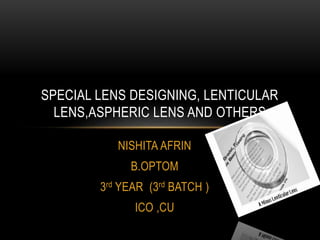
SPECIAL LENS DESIGNING, LENTICULAR 
LENS,ASPHERIC LENS AND OTHERS 
NISHITA AFRIN 
B.OPTOM 
3rd YEAR (3rd BATCH ) 
ICO ,CU
INTRODUCTION 
• Before a lens can be constructed it must be , designed .That 
is to say , the radii of curvature of the surfaces, the thickness, 
the air spaces, the diameters of the various components and 
the types of glass to be used must all be determined and 
specified 
LENS DESIGNING PARAMETERS – 
-surface curvature 
- optical indices 
- number of elements 
- spacing of elements
• DEGREE OF FREEDOM – 
- Focal lengths 
- magnification 
- physical constraints like weight
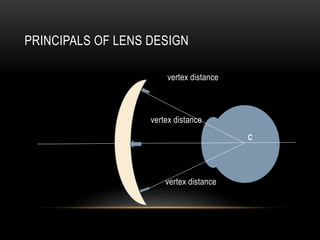
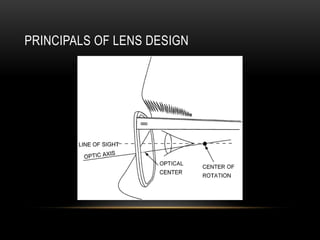
PRINCIPALS OF LENS DESIGN 
vertex distance 
vertex distance 
vertex distance 
C
PRINCIPALS OF LENS DESIGN
LENS VARIABLES 
• The number of lenses per aperture 
• The index of refraction 
• Lens thickness 
• Vertex distance 
• Lens form
SPECIAL LENS DESIGNING 
• Any prescriptions above +8.00 D and above -15.00 D require 
Special lens designs to provide optimal visual acuity and cosmesis. 
Special lenses- 1. ASPHERIC LENSES 
2. LENTICULAR MINUS LENS 
3. LENTICULAR PLUS LENS 
4. MULTIDROP LENSES 
5.MYODISC 
6. FRESNEL PRISM 
7. FRESNEL LENS
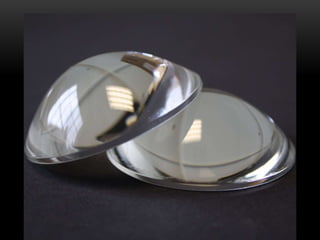
ASPHERIC LENSES 
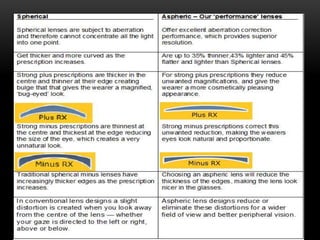
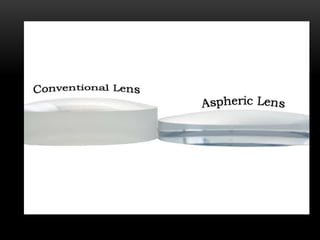
A spheric lens surface is regular , like the surface 
of a ball or sphere. That surface has one specific 
radius of curvature .An aspheric lens surface 
changes shape. It does not have the same radius 
of curvature over the entire surface
• The “asphericity” is achieved by flattening the 
periphery of the front surface in plus lens and by 
steepening the periphery of the front surface in 
minus lens and/or by flattening the periphery of 
the back surface to reduce the edge thickness. 
29 October 2014 10
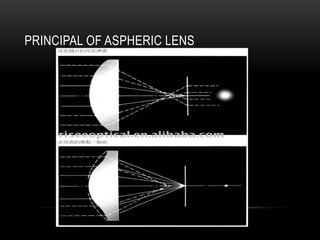
PRINCIPAL OF ASPHERIC LENS
WHY WE NEED TO CHOOSE ASPHERIC LENSES 
• CHOOSING A FLATTER BASE CURVE WILL 
MAKE THE LENS LOOK LESS BULBOUS & 
ALSO REDUCE THE 
MAGNIFICATION.COSMETICALLY, THE LENS 
LOOK MUCH. 
• THEY ARE EASILY RETAINED IN THE FRAME 
AS WELL. 
29 October 2014 12
FITTING GUIDELINES FOR ASPHERIC 
• Use monocular IPD 
• Measure MRP heights in the conventional manner 
.Then subtract 1 mm for each 2 mm of pantoscopic 
tilt 
• Remember that the laboratory cannot grind prism 
for decentration with aspheric lenses. Moving the 
optical center away from the center of the aspheric 
zone will destroy any aspheric optical advantage.
HIGH PLUS LENS DESIGN 
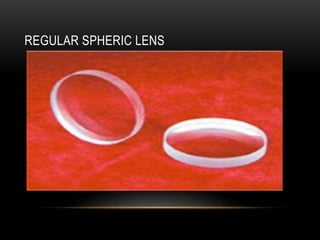
• Regular spheric lenses 
• Lenticulars plus design 
• Multidrop lenses
REGULAR SPHERIC LENS
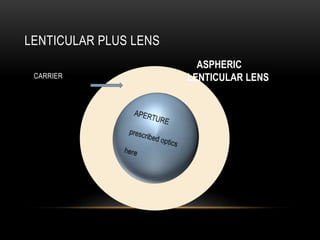
LENTICULAR PLUS LENS 
CARRIER 
ASPHERIC 
LENTICULAR LENS
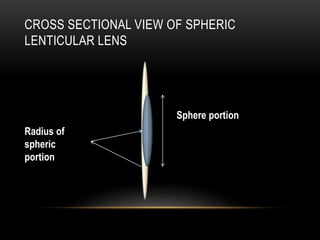
CROSS SECTIONAL VIEW OF SPHERIC 
LENTICULAR LENS 
Sphere portion 
Radius of 
spheric 
portion
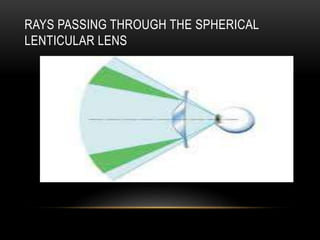
RAYS PASSING THROUGH THE SPHERICAL 
LENTICULAR LENS
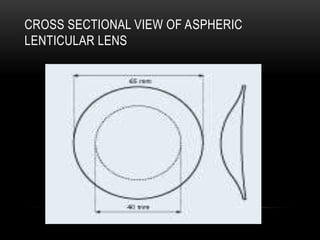
CROSS SECTIONAL VIEW OF ASPHERIC 
LENTICULAR LENS
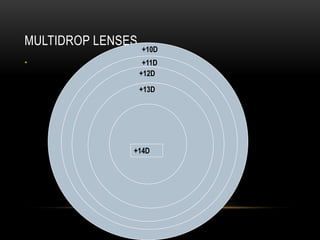
MULTIDROP LENSES 
• 
+10D 
+11D 
+12D 
+13D 
+14D
HIGH MINUS LENS DESIGN 
• LENTICULAR MINUS LENS DESIGNS 
• THE MYODISC 
• THE YOUNGER BLENDED MYODISC 
• MINUS LENTICULAR
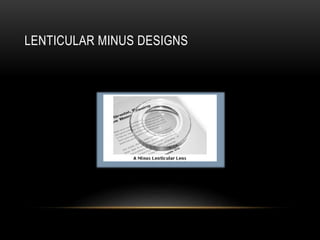
LENTICULAR MINUS DESIGNS
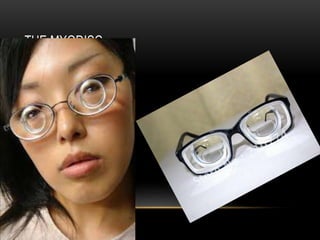
THE MYODISC
MINUS LENTICULAR 
• Made with minus lens 
• Carrier is not plano but in plus power 
• Outer edge will be thin down due to plus 
power
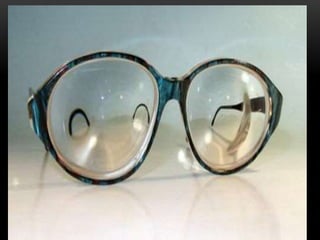
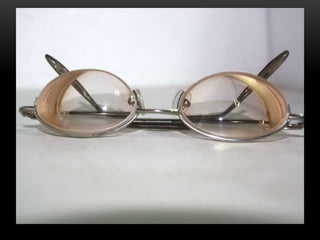
THE YOUNGER BLENDED MYODISC 
• Less work in laboratory 
• erases line between bowl and carrier 
• Known as blended myodisc 
• There are two options -..
REFERENCES 
1. CLINICAL OPTICS BY TROY E.FANNIN AND 
THEODORE GROSVENOR 
2. SYSTEM FOR OPHTHALMIC DISPENSING BY 
CLIFFORD W.BROOKS AND IRVIN M.BORISH 
3. WEBSITES
Special lens designing

Special lens designing

  • 1.
    SPECIAL LENS DESIGNING,LENTICULAR LENS,ASPHERIC LENS AND OTHERS NISHITA AFRIN B.OPTOM 3rd YEAR (3rd BATCH ) ICO ,CU
  • 2.
    INTRODUCTION • Beforea lens can be constructed it must be , designed .That is to say , the radii of curvature of the surfaces, the thickness, the air spaces, the diameters of the various components and the types of glass to be used must all be determined and specified LENS DESIGNING PARAMETERS – -surface curvature - optical indices - number of elements - spacing of elements
  • 3.
    • DEGREE OFFREEDOM – - Focal lengths - magnification - physical constraints like weight
  • 4.
    PRINCIPALS OF LENSDESIGN vertex distance vertex distance vertex distance C
  • 5.
  • 6.
    LENS VARIABLES •The number of lenses per aperture • The index of refraction • Lens thickness • Vertex distance • Lens form
  • 7.
    SPECIAL LENS DESIGNING • Any prescriptions above +8.00 D and above -15.00 D require Special lens designs to provide optimal visual acuity and cosmesis. Special lenses- 1. ASPHERIC LENSES 2. LENTICULAR MINUS LENS 3. LENTICULAR PLUS LENS 4. MULTIDROP LENSES 5.MYODISC 6. FRESNEL PRISM 7. FRESNEL LENS
  • 8.
    ASPHERIC LENSES Aspheric lens surface is regular , like the surface of a ball or sphere. That surface has one specific radius of curvature .An aspheric lens surface changes shape. It does not have the same radius of curvature over the entire surface
  • 10.
    • The “asphericity”is achieved by flattening the periphery of the front surface in plus lens and by steepening the periphery of the front surface in minus lens and/or by flattening the periphery of the back surface to reduce the edge thickness. 29 October 2014 10
  • 11.
  • 12.
    WHY WE NEEDTO CHOOSE ASPHERIC LENSES • CHOOSING A FLATTER BASE CURVE WILL MAKE THE LENS LOOK LESS BULBOUS & ALSO REDUCE THE MAGNIFICATION.COSMETICALLY, THE LENS LOOK MUCH. • THEY ARE EASILY RETAINED IN THE FRAME AS WELL. 29 October 2014 12
  • 13.
    FITTING GUIDELINES FORASPHERIC • Use monocular IPD • Measure MRP heights in the conventional manner .Then subtract 1 mm for each 2 mm of pantoscopic tilt • Remember that the laboratory cannot grind prism for decentration with aspheric lenses. Moving the optical center away from the center of the aspheric zone will destroy any aspheric optical advantage.
  • 16.
    HIGH PLUS LENSDESIGN • Regular spheric lenses • Lenticulars plus design • Multidrop lenses
  • 17.
  • 18.
    LENTICULAR PLUS LENS CARRIER ASPHERIC LENTICULAR LENS
  • 19.
    CROSS SECTIONAL VIEWOF SPHERIC LENTICULAR LENS Sphere portion Radius of spheric portion
  • 20.
    RAYS PASSING THROUGHTHE SPHERICAL LENTICULAR LENS
  • 21.
    CROSS SECTIONAL VIEWOF ASPHERIC LENTICULAR LENS
  • 22.
    MULTIDROP LENSES • +10D +11D +12D +13D +14D
  • 23.
    HIGH MINUS LENSDESIGN • LENTICULAR MINUS LENS DESIGNS • THE MYODISC • THE YOUNGER BLENDED MYODISC • MINUS LENTICULAR
  • 24.
  • 25.
  • 26.
    MINUS LENTICULAR •Made with minus lens • Carrier is not plano but in plus power • Outer edge will be thin down due to plus power
  • 27.
    THE YOUNGER BLENDEDMYODISC • Less work in laboratory • erases line between bowl and carrier • Known as blended myodisc • There are two options -..
  • 31.
    REFERENCES 1. CLINICALOPTICS BY TROY E.FANNIN AND THEODORE GROSVENOR 2. SYSTEM FOR OPHTHALMIC DISPENSING BY CLIFFORD W.BROOKS AND IRVIN M.BORISH 3. WEBSITES