Mayuri Mohite
B.Optometry
 Familiarity with Frame measurements and
frame markings is essential to proper
ordering of prescription glasses.
 The previously used datum system for
measuring lenses was established as a system
of reference points for frames and lenses so
that placement of lens optical centers and
bifocal segment heights would be consistent.
 Horizontal lines were drawn at the highest
and lowest edges of the lens
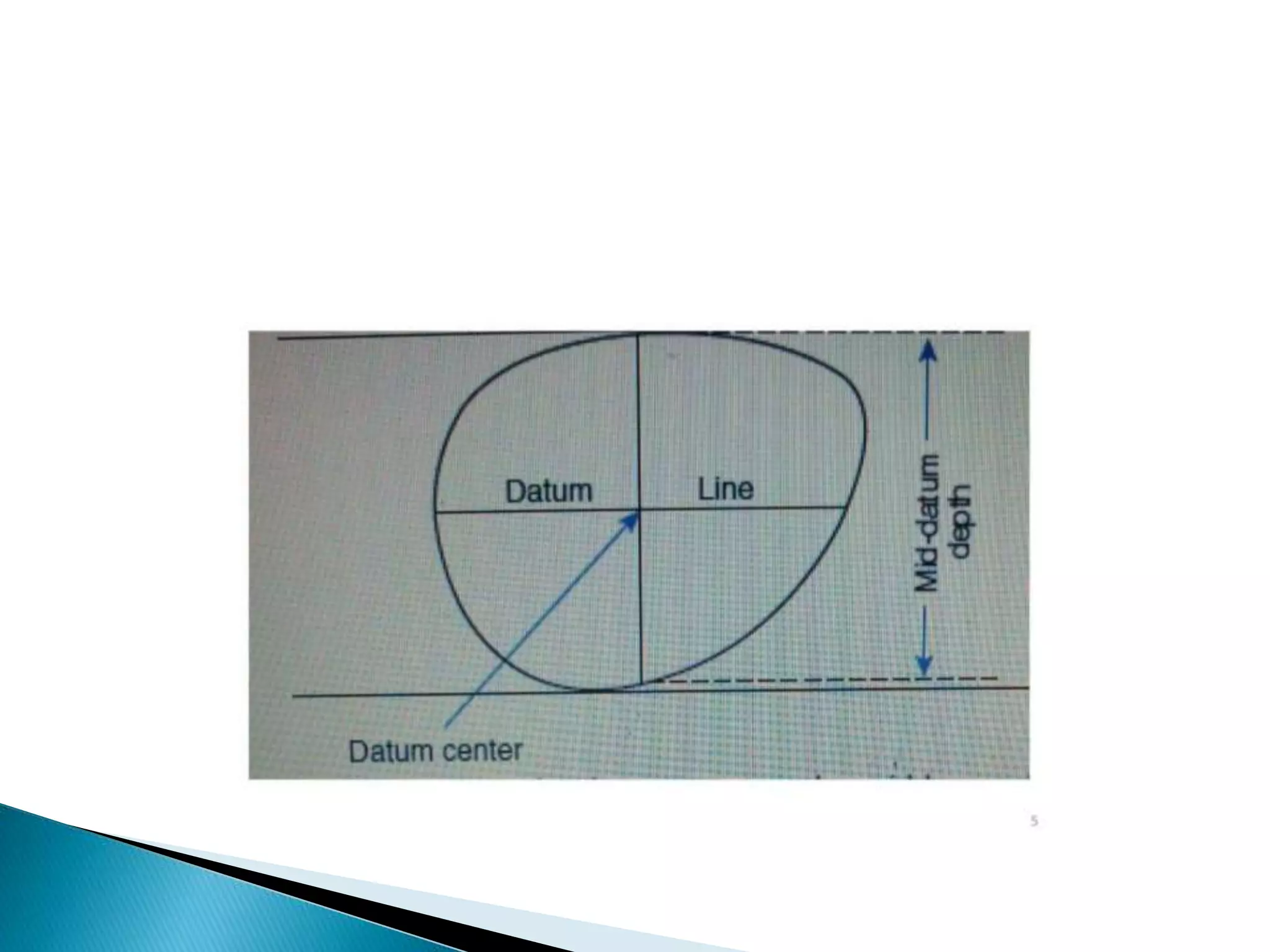
 A line drawn halfway between the two
horizontal lines and parallel to them was
known as the datum line.
 The width of the lens along this line was
called the datum length or eye size.
 The point along the datum line halfway
between the edges of the lens is the datum
center.
 The depth of the lens, measured as the
vertical depth through the datum center, was
the mid-datum depth.
 A horizontal line halfway between the top
and bottom of the lens.
 In the boxing system, this line is more
commonly referred to as the horizontal
midline or the 180degree line.
 The center of the lens is the point on the
horizontal midline halfway between the two
lens-bordering vertical lines.
 It is known as the geometric center or
boxing center of the edged lens.
 This term does not imply anything about the
optical positioning of the lens.
 The size of the lens is the length and depth
of the box containing the lens.
 The Horizontal length is now commonly
referred to as the eye size when referring to
the frame
 and lens size when referring to the lenses.
 Both are measured in millimeters.
 They refer primarily to the horizontal
measure of the lens, denoted by the letter
“A”.
 The letter “B” denotes the vertical measure of
the box enclosing the lens.
 The letter “C” refers to the width of the lens
itself along the horizontal midline.
 To measure the horizontal dimension of a frame, the
measurement begins at the inside of the groove on
one side and extends across the lens opening to the
farthest part of the groove on the other.
 We cannot see the inside of the groove when looking
from the front.
 This means we can estimate where it will be and hold
the ruler so that the zero point is at the position of
the left-hand side of the groove. Then we need to
read the ruler at the position where the groove will be
on the right.
 If the opening itself is measured, then about ½ mm
per side needs to be added to the measure to allow
for the depth of the groove.
 The effective diameter is found by doubling
the distance from the geometric centre of the
lens to the apex of the lens bevel farthest
from it.
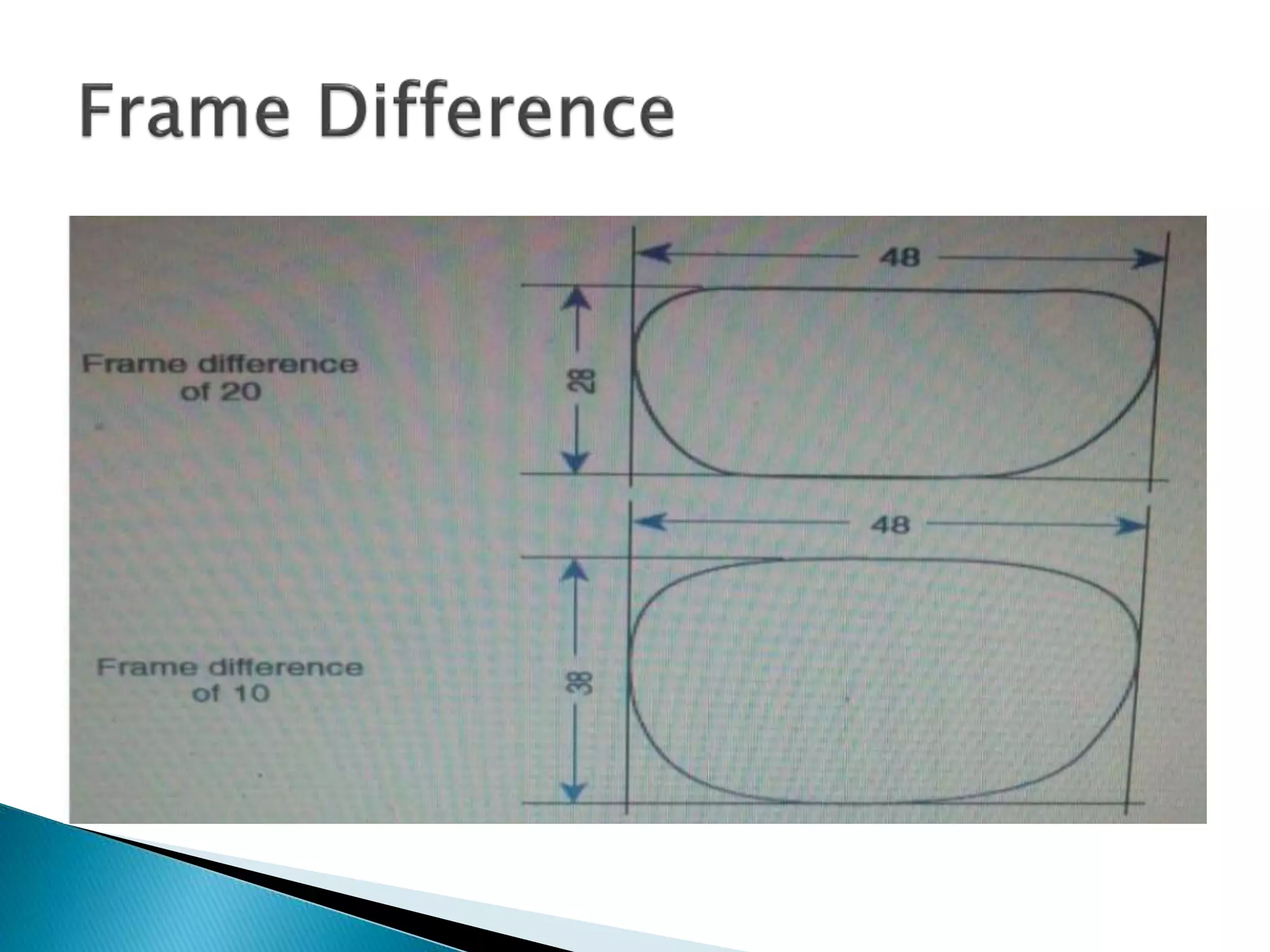
 The difference between the horizontal and
the vertical measurements is known as frame
difference and measured in millimeters.
 Frame difference is sometimes referred to as
lens difference.
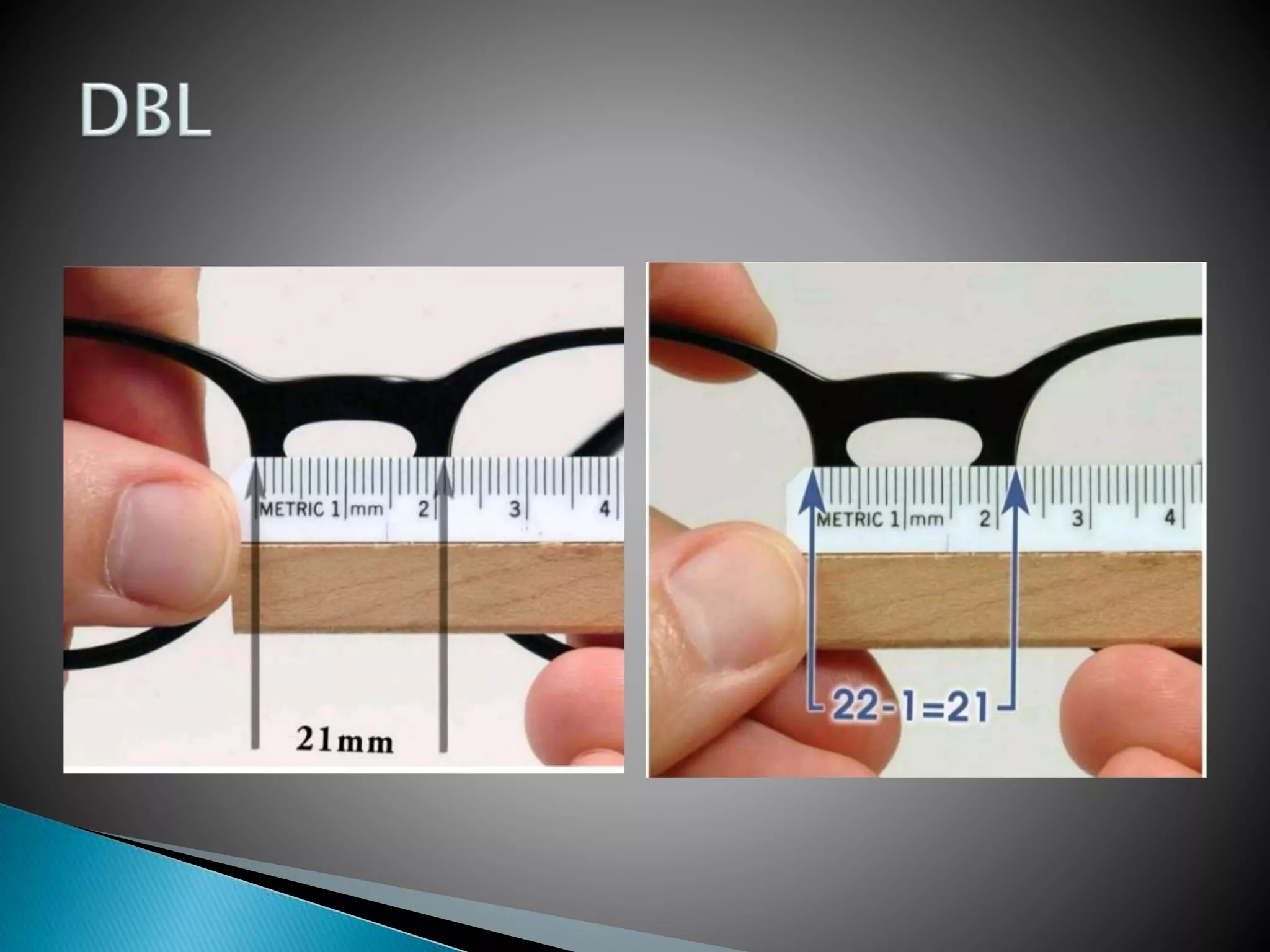
 The DBL is the distance between the two boxes when
both lenses are boxed off in the frame.
 This distance is measured in millimeters.
 The DBL or bridge size is measured on the frame as
the distance from the inside nasal eyewire grooves
across the bridge area at its narrowest point.
 When measuring the bridge size, we cannot see the
inside of the groove and must estimate its location.
 If the measurement is made from lens opening to
lens opening, then approximately ½ mm per groove
must be subtracted from the measure depending
upon the depth of the groove.
 The Distance Between the two geometric
centers of the lens is known as the geometric
center distance (GCD)
OR
 The geometric center distance can be
calculated by simply adding the eye size to
the DBL . The result is the same .
 The GCD is also known by three other names
:
1) Distance between centers (DBC)
2) Frames center distance
3) Frame PD
 The term frame PD is commonly
use in dispensing, but has no relationship to
the wearer’s inner pupillary distance or
distance between pupil centres.
 When specifying bifocal or trifocal segment
height, the reference points are given in
millimeters as either
 The distance below or above the horizontal
midline.( called seg drop or seg raise)
 The distance from the lower line of the
boxing system rectangle enclosing the lens
shape (called seg height)
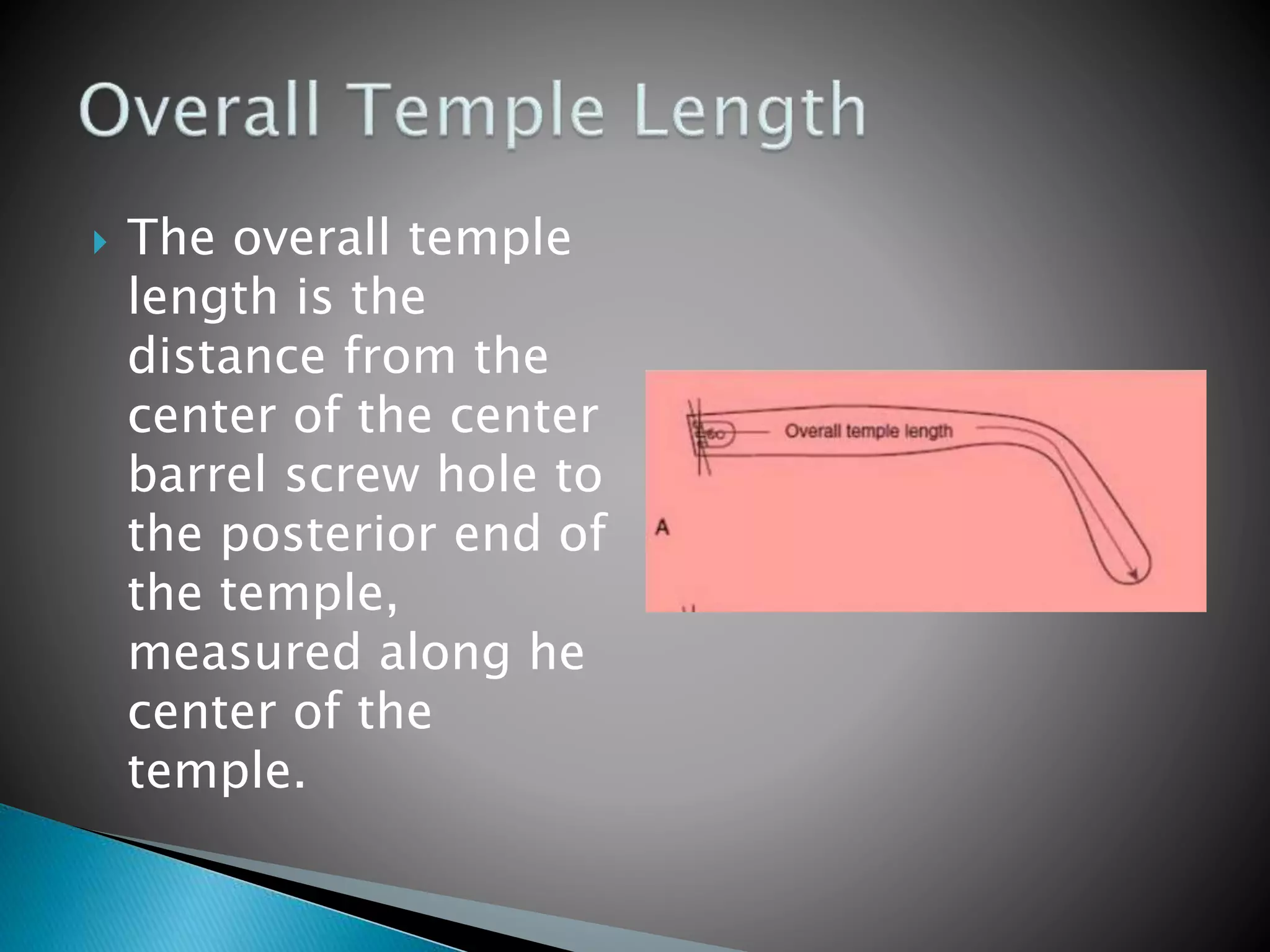
 Most temples are currently marked with the
total, or overall temple length. Temple
lengths are expressed in millimeters.
 The overall temple
length is the
distance from the
center of the center
barrel screw hole to
the posterior end of
the temple,
measured along he
center of the
temple.
 An older method of
measuring temple
length is in terms of
the length to bend
(LTB)
 This is measured from
the center of the barrel
to the middle of the
bend.
 The distance from the
middle of the temple
bend to the end of the
temple is known as
length of drop.
 In this case the
temple length could
be specified as
frame to bend (FTB)
which would be
slightly longer than
LTB
 This measurement
method is seldom
used.
 Most frames are marked according to the size
with three measurements: eye size, DBL, and
temple length.
 Metal frames that are manufactured from
‘rolled gold’ are also marked as to the
amount of gold found in the frame.
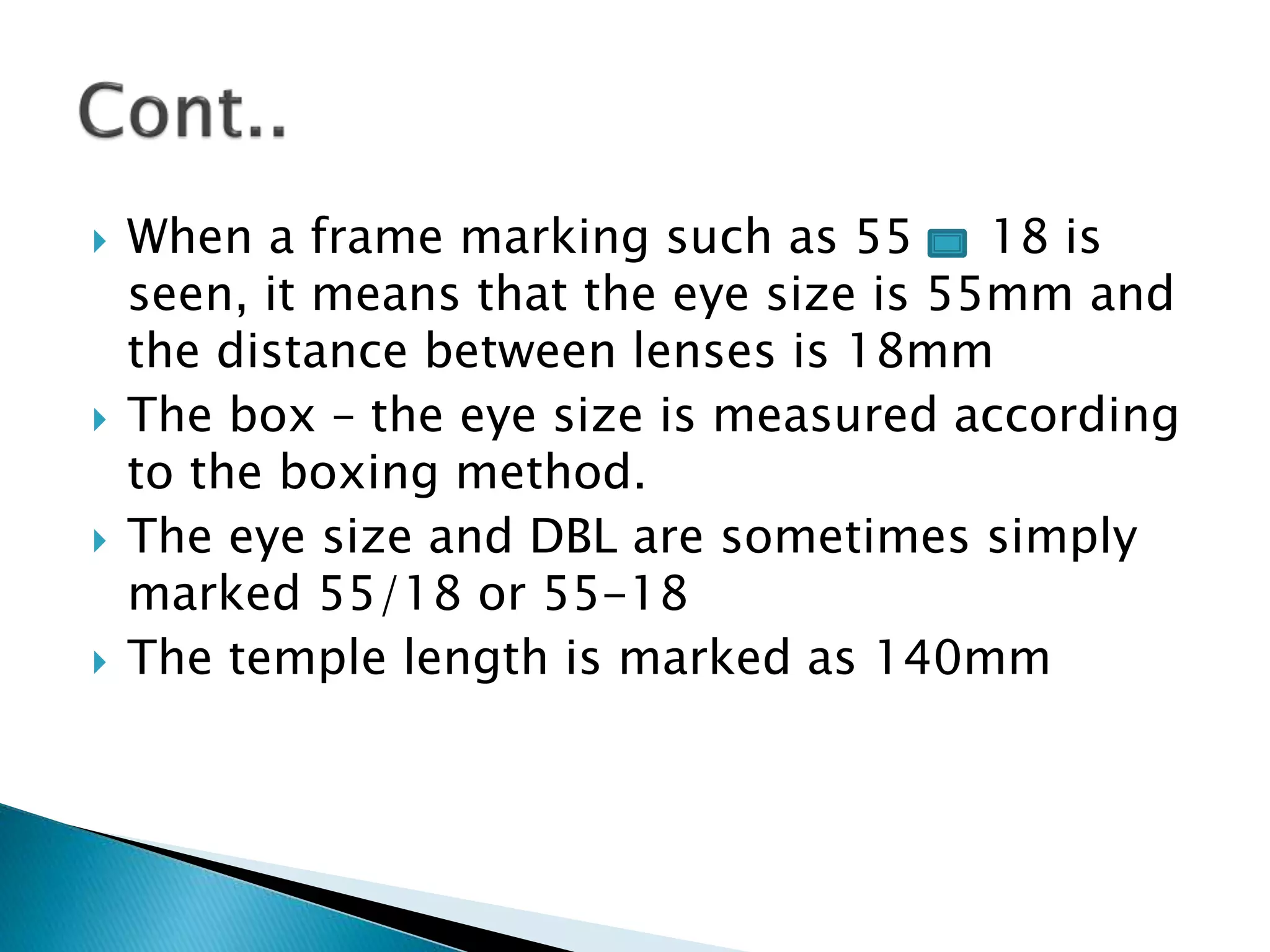
 When a frame marking such as 55 18 is
seen, it means that the eye size is 55mm and
the distance between lenses is 18mm
 The box – the eye size is measured according
to the boxing method.
 The eye size and DBL are sometimes simply
marked 55/18 or 55-18
 The temple length is marked as 140mm
 1. ____ A a. 2 × (longest radius)
 2. ____ B b. vertical boxing dimension
 3. ____ ED c. A + DBL
 4. ____ GCD d. eye size
e. C
Q 1. A frame has the following dimensions:
A = 51
B = 47
C = 49.5
DBL = 19
Seg drop (distance below the horizontal midline) = 4
mm
What is the seg height?
 a. 19.5 mm
 b. 20 mm
 c. 21.5 mm
 d. 23.5 mm
 e. none of the above
Q 2. The larger the frame difference, the __________ the
lens shape.
 a. rounder
 b. more squared off
 c. narrower
 d. wider (i.e., deeper)
Q3. If a frame’s dimensions are A = 50 and C = 48, with a
frame difference of 8, what is B?
 a. 58 mm
 b. 56 mm
 c. 52 mm
 d. 46 mm
 e. 42 mm
Q5. What is the geometric center distance of a
frame marked 5217?
 a. 52
 b. 60.5
 c. 69
 d. 72
 e. equal to the person’s PD
 THANKYOU

Frame measurements

  • 1.
  • 2.
     Familiarity withFrame measurements and frame markings is essential to proper ordering of prescription glasses.
  • 3.
     The previouslyused datum system for measuring lenses was established as a system of reference points for frames and lenses so that placement of lens optical centers and bifocal segment heights would be consistent.  Horizontal lines were drawn at the highest and lowest edges of the lens
  • 5.
     A linedrawn halfway between the two horizontal lines and parallel to them was known as the datum line.  The width of the lens along this line was called the datum length or eye size.  The point along the datum line halfway between the edges of the lens is the datum center.  The depth of the lens, measured as the vertical depth through the datum center, was the mid-datum depth.
  • 7.
     A horizontalline halfway between the top and bottom of the lens.  In the boxing system, this line is more commonly referred to as the horizontal midline or the 180degree line.
  • 8.
     The centerof the lens is the point on the horizontal midline halfway between the two lens-bordering vertical lines.  It is known as the geometric center or boxing center of the edged lens.  This term does not imply anything about the optical positioning of the lens.
  • 9.
     The sizeof the lens is the length and depth of the box containing the lens.  The Horizontal length is now commonly referred to as the eye size when referring to the frame  and lens size when referring to the lenses.  Both are measured in millimeters.
  • 10.
     They referprimarily to the horizontal measure of the lens, denoted by the letter “A”.  The letter “B” denotes the vertical measure of the box enclosing the lens.  The letter “C” refers to the width of the lens itself along the horizontal midline.
  • 11.
     To measurethe horizontal dimension of a frame, the measurement begins at the inside of the groove on one side and extends across the lens opening to the farthest part of the groove on the other.  We cannot see the inside of the groove when looking from the front.  This means we can estimate where it will be and hold the ruler so that the zero point is at the position of the left-hand side of the groove. Then we need to read the ruler at the position where the groove will be on the right.  If the opening itself is measured, then about ½ mm per side needs to be added to the measure to allow for the depth of the groove.
  • 13.
     The effectivediameter is found by doubling the distance from the geometric centre of the lens to the apex of the lens bevel farthest from it.
  • 14.
     The differencebetween the horizontal and the vertical measurements is known as frame difference and measured in millimeters.  Frame difference is sometimes referred to as lens difference.
  • 16.
     The DBLis the distance between the two boxes when both lenses are boxed off in the frame.  This distance is measured in millimeters.  The DBL or bridge size is measured on the frame as the distance from the inside nasal eyewire grooves across the bridge area at its narrowest point.  When measuring the bridge size, we cannot see the inside of the groove and must estimate its location.  If the measurement is made from lens opening to lens opening, then approximately ½ mm per groove must be subtracted from the measure depending upon the depth of the groove.
  • 18.
     The DistanceBetween the two geometric centers of the lens is known as the geometric center distance (GCD) OR  The geometric center distance can be calculated by simply adding the eye size to the DBL . The result is the same .
  • 19.
     The GCDis also known by three other names : 1) Distance between centers (DBC) 2) Frames center distance 3) Frame PD  The term frame PD is commonly use in dispensing, but has no relationship to the wearer’s inner pupillary distance or distance between pupil centres.
  • 20.
     When specifyingbifocal or trifocal segment height, the reference points are given in millimeters as either  The distance below or above the horizontal midline.( called seg drop or seg raise)  The distance from the lower line of the boxing system rectangle enclosing the lens shape (called seg height)
  • 21.
     Most templesare currently marked with the total, or overall temple length. Temple lengths are expressed in millimeters.
  • 22.
     The overalltemple length is the distance from the center of the center barrel screw hole to the posterior end of the temple, measured along he center of the temple.
  • 23.
     An oldermethod of measuring temple length is in terms of the length to bend (LTB)  This is measured from the center of the barrel to the middle of the bend.  The distance from the middle of the temple bend to the end of the temple is known as length of drop.
  • 24.
     In thiscase the temple length could be specified as frame to bend (FTB) which would be slightly longer than LTB  This measurement method is seldom used.
  • 26.
     Most framesare marked according to the size with three measurements: eye size, DBL, and temple length.  Metal frames that are manufactured from ‘rolled gold’ are also marked as to the amount of gold found in the frame.
  • 27.
     When aframe marking such as 55 18 is seen, it means that the eye size is 55mm and the distance between lenses is 18mm  The box – the eye size is measured according to the boxing method.  The eye size and DBL are sometimes simply marked 55/18 or 55-18  The temple length is marked as 140mm
  • 28.
     1. ____A a. 2 × (longest radius)  2. ____ B b. vertical boxing dimension  3. ____ ED c. A + DBL  4. ____ GCD d. eye size e. C
  • 29.
    Q 1. Aframe has the following dimensions: A = 51 B = 47 C = 49.5 DBL = 19 Seg drop (distance below the horizontal midline) = 4 mm What is the seg height?  a. 19.5 mm  b. 20 mm  c. 21.5 mm  d. 23.5 mm  e. none of the above
  • 30.
    Q 2. Thelarger the frame difference, the __________ the lens shape.  a. rounder  b. more squared off  c. narrower  d. wider (i.e., deeper) Q3. If a frame’s dimensions are A = 50 and C = 48, with a frame difference of 8, what is B?  a. 58 mm  b. 56 mm  c. 52 mm  d. 46 mm  e. 42 mm
  • 31.
    Q5. What isthe geometric center distance of a frame marked 5217?  a. 52  b. 60.5  c. 69  d. 72  e. equal to the person’s PD
  • 32.