L.D. COLLEGE OFL.D. COLLEGE OF
ENGINEERINGENGINEERING
SUBJECT : EME
SUBJECT CODE :
2110006
Four StrokeFour Stroke
Diesel EngineDiesel Engine
INDEXINDEX
 Introduction
 Working of Four stroke Diesel Engine
 Different strokes
Suction stroke
Compression stroke
Power or Expansion stroke
Exhaust stroke
INTRODUCTION:INTRODUCTION:
Rudolf Christian Karl
Diesel was born in Paris,
France in 1858.
He was a German
inventor and Mechanical
Engineer, famous for the
invention of the Diesel
Engine.
WORKING OF FOURWORKING OF FOUR
STROKE DIESELSTROKE DIESEL
ENGINE:ENGINE:
DIESEL CYCLE:DIESEL CYCLE:
The diesel engines work on the
principle of Diesel cycle, also called
constant pressure heat addition cycle
shown in figure.
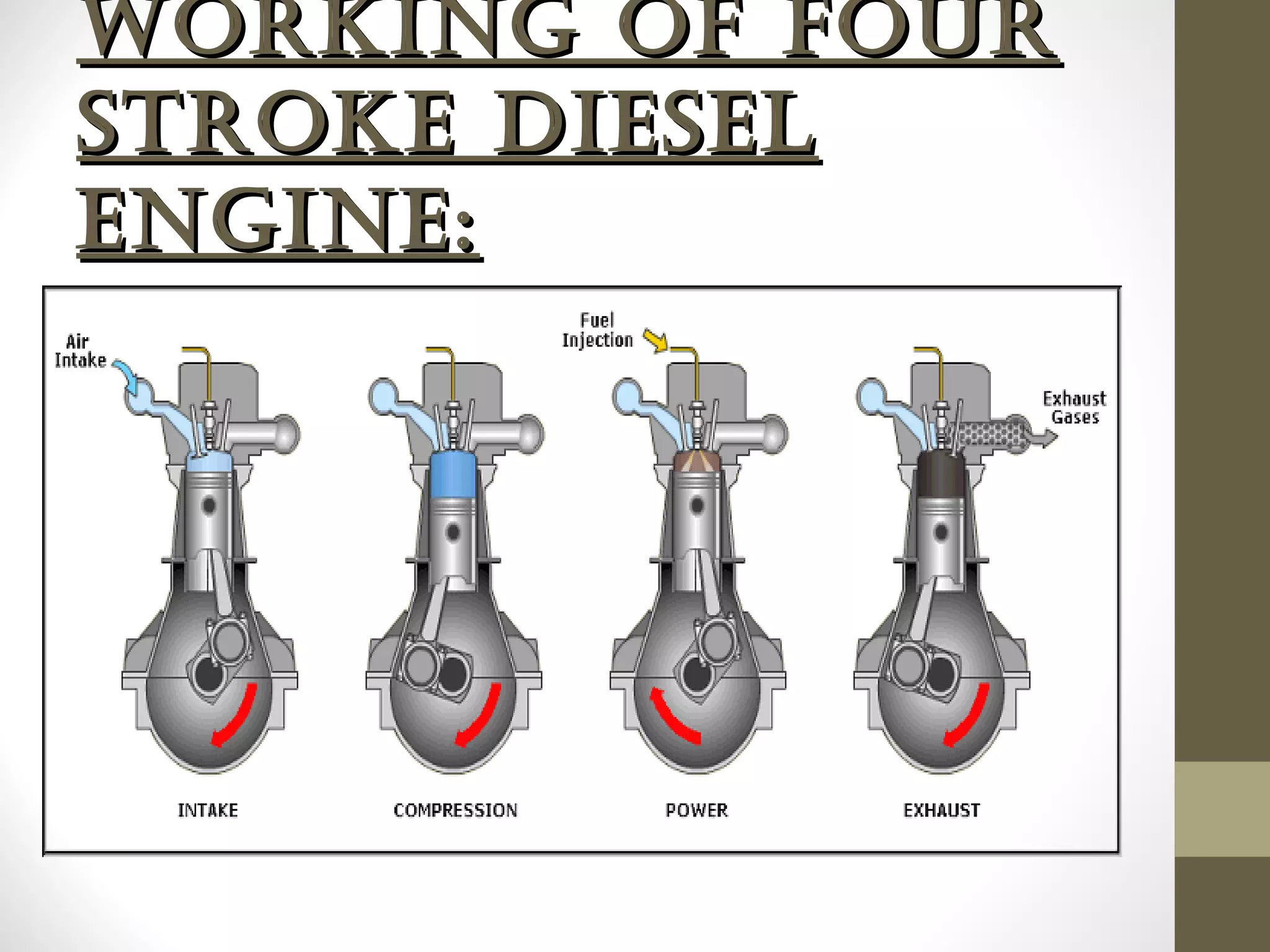
 The four stroke diesel engine cycle
also consists of suction,
compression, power and exhaust
strokes.
 The basic construction of a four
stroke diesel engine is same as that
of four stroke petrol engine, expect
instead of spark plug, a fuel injector
is mounted in its place.
 A fuel pump supplies the fuel oil to
the injector at higher pressure.
SUCTION STROKE:SUCTION STROKE:
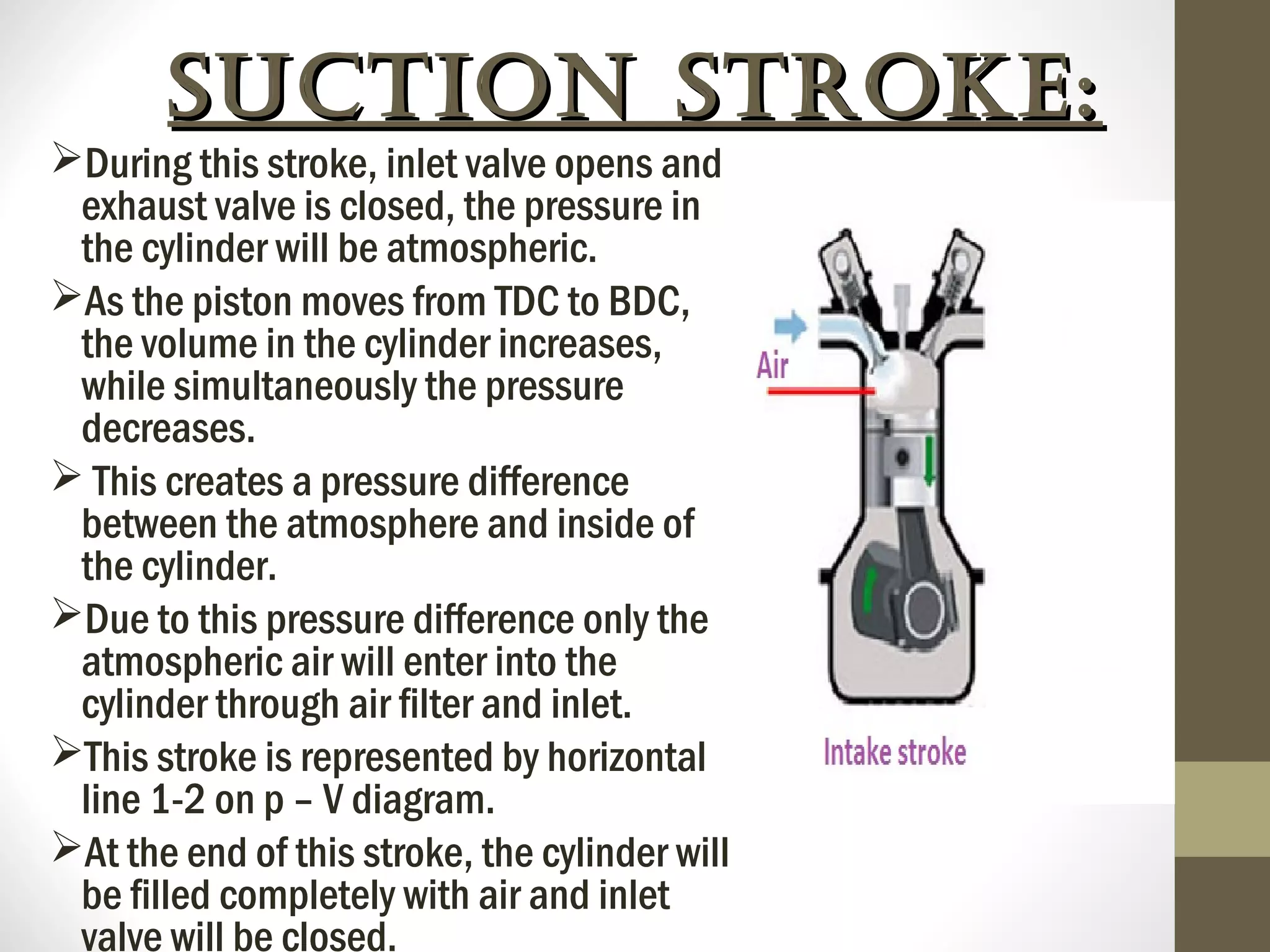
During this stroke, inlet valve opens and
exhaust valve is closed, the pressure in
the cylinder will be atmospheric.
As the piston moves from TDC to BDC,
the volume in the cylinder increases,
while simultaneously the pressure
decreases.
 This creates a pressure difference
between the atmosphere and inside of
the cylinder.
Due to this pressure difference only the
atmospheric air will enter into the
cylinder through air filter and inlet.
This stroke is represented by horizontal
line 1-2 on p – V diagram.
At the end of this stroke, the cylinder will
be filled completely with air and inlet
valve will be closed.
COMPRESSIONCOMPRESSION
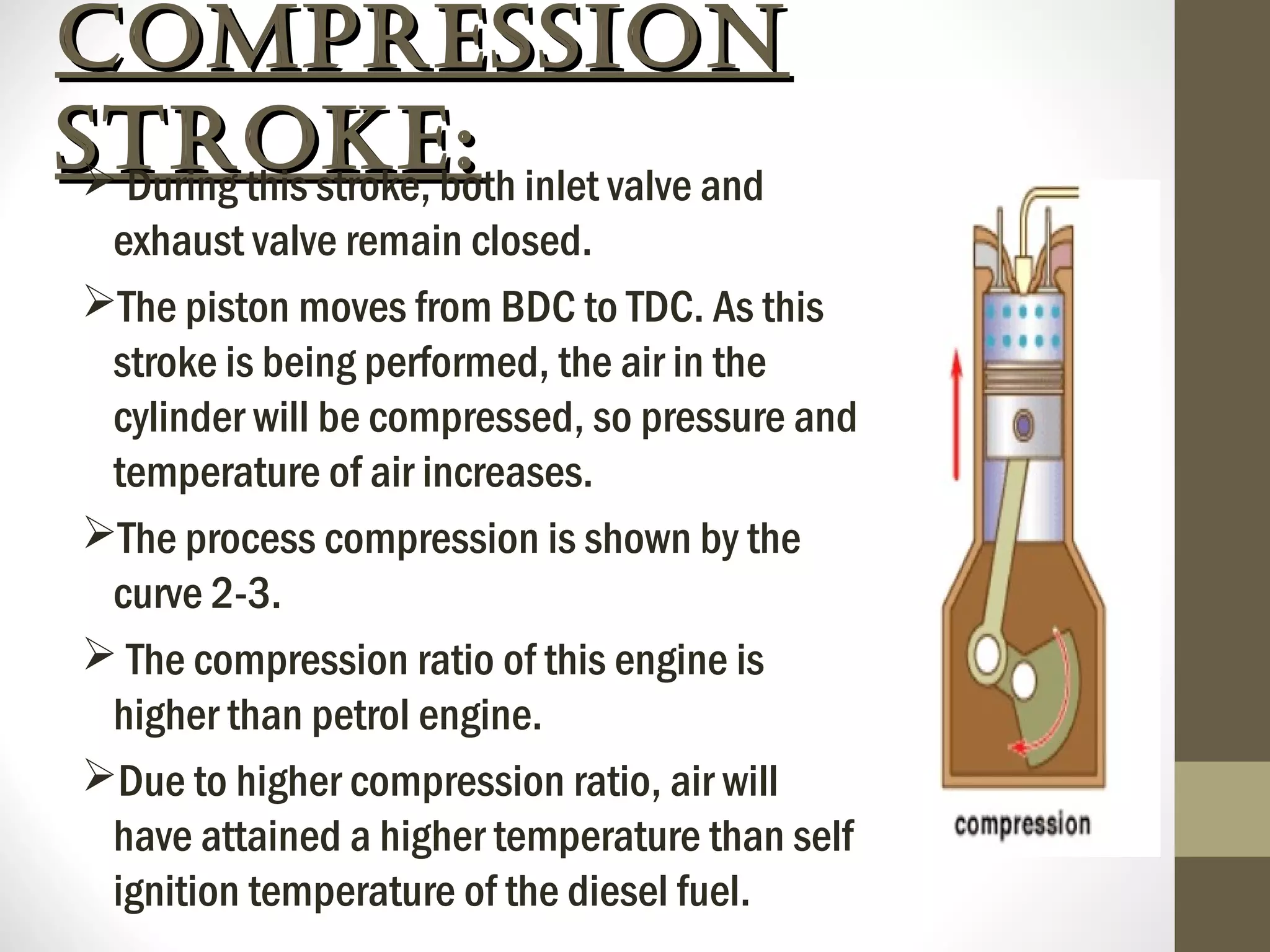
STROKE:STROKE: During this stroke, both inlet valve and
exhaust valve remain closed.
The piston moves from BDC to TDC. As this
stroke is being performed, the air in the
cylinder will be compressed, so pressure and
temperature of air increases.
The process compression is shown by the
curve 2-3.
 The compression ratio of this engine is
higher than petrol engine.
Due to higher compression ratio, air will
have attained a higher temperature than self
ignition temperature of the diesel fuel.
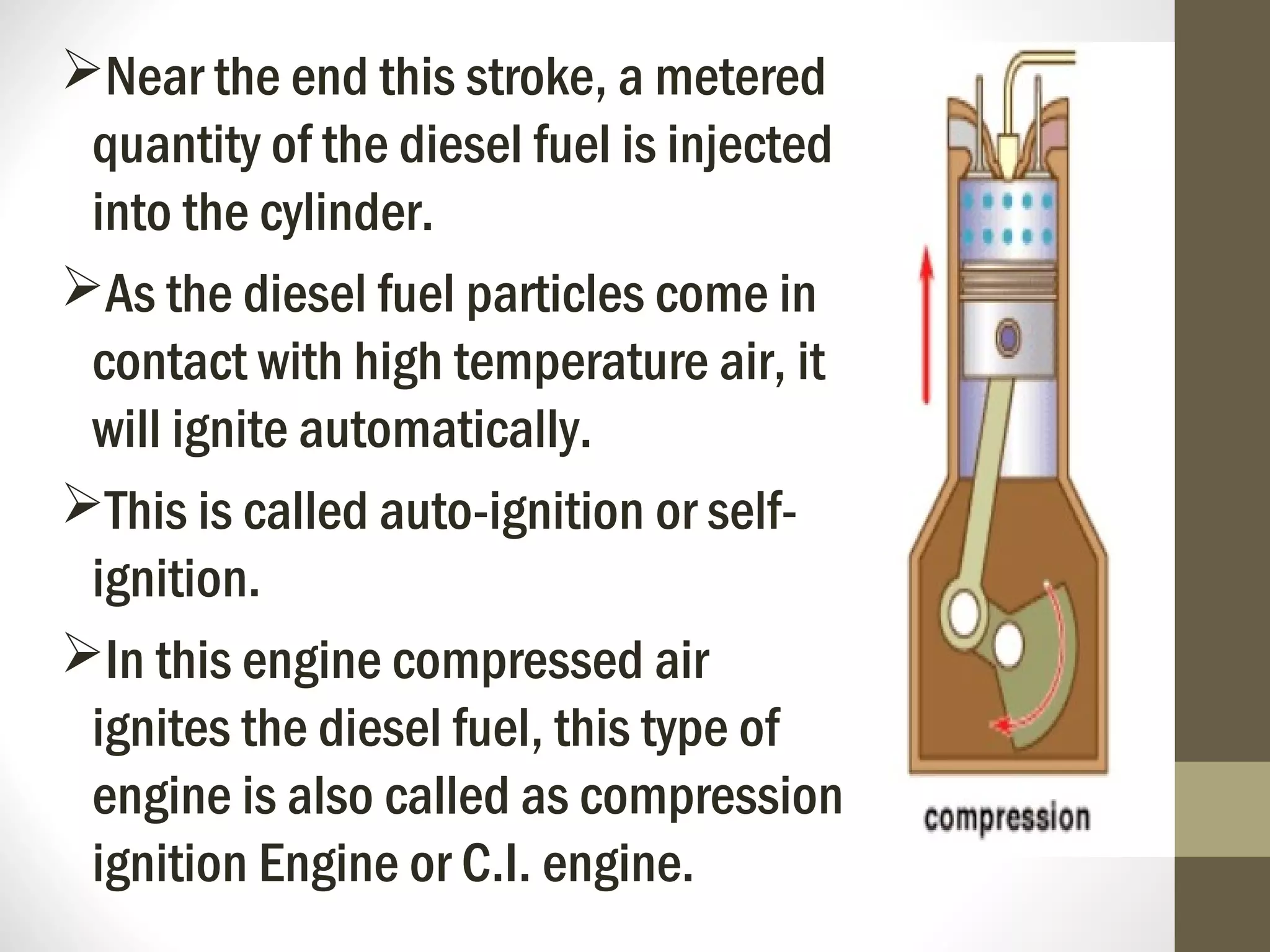
Near the end this stroke, a metered
quantity of the diesel fuel is injected
into the cylinder.
As the diesel fuel particles come in
contact with high temperature air, it
will ignite automatically.
This is called auto-ignition or self-
ignition.
In this engine compressed air
ignites the diesel fuel, this type of
engine is also called as compression
ignition Engine or C.I. engine.
POWER OR EXPANSIONPOWER OR EXPANSION
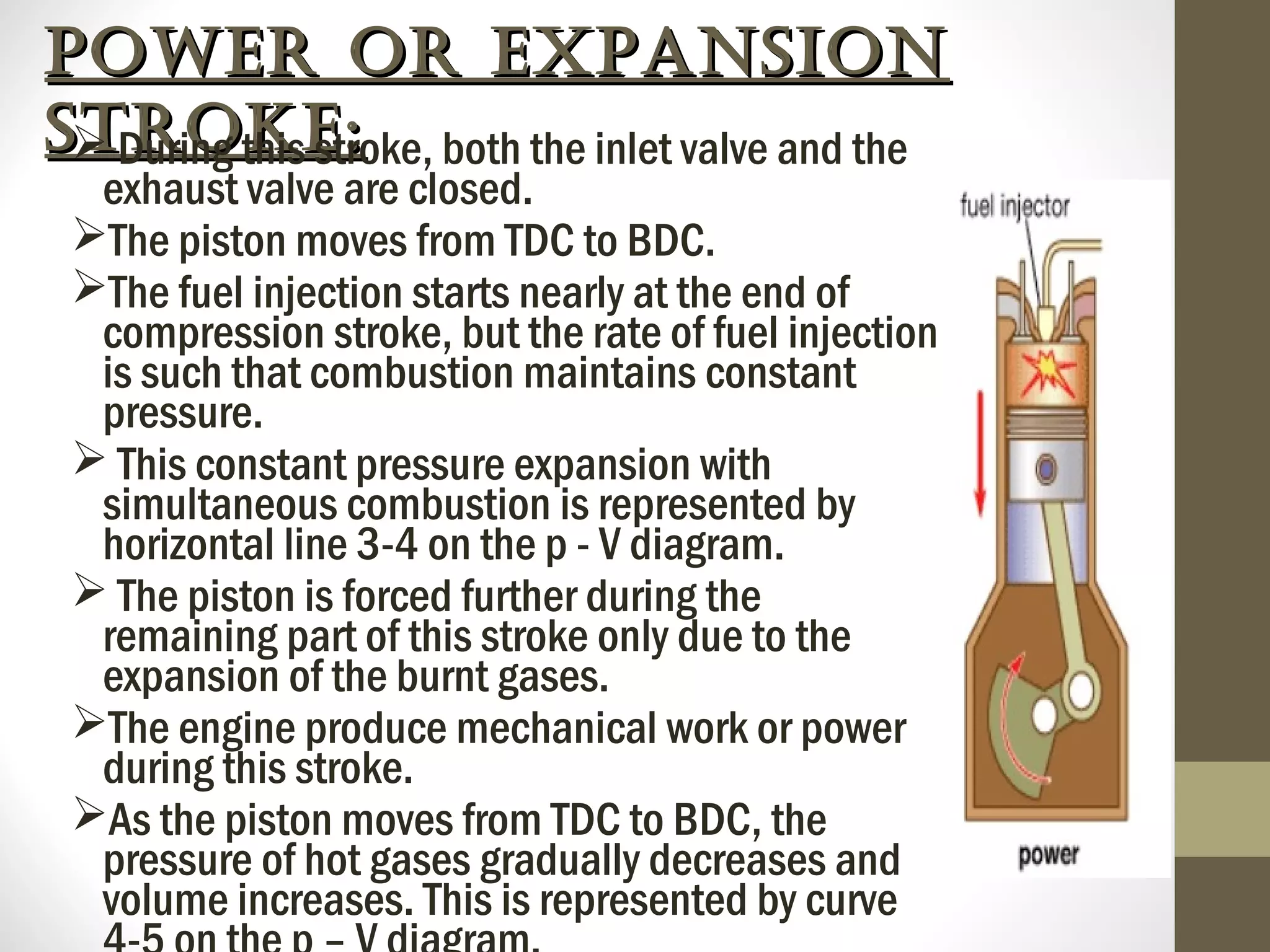
STROKE:STROKE: During this stroke, both the inlet valve and the
exhaust valve are closed.
The piston moves from TDC to BDC.
The fuel injection starts nearly at the end of
compression stroke, but the rate of fuel injection
is such that combustion maintains constant
pressure.
 This constant pressure expansion with
simultaneous combustion is represented by
horizontal line 3-4 on the p - V diagram.
 The piston is forced further during the
remaining part of this stroke only due to the
expansion of the burnt gases.
The engine produce mechanical work or power
during this stroke.
As the piston moves from TDC to BDC, the
pressure of hot gases gradually decreases and
volume increases. This is represented by curve
EXHAUST STROKE:EXHAUST STROKE:
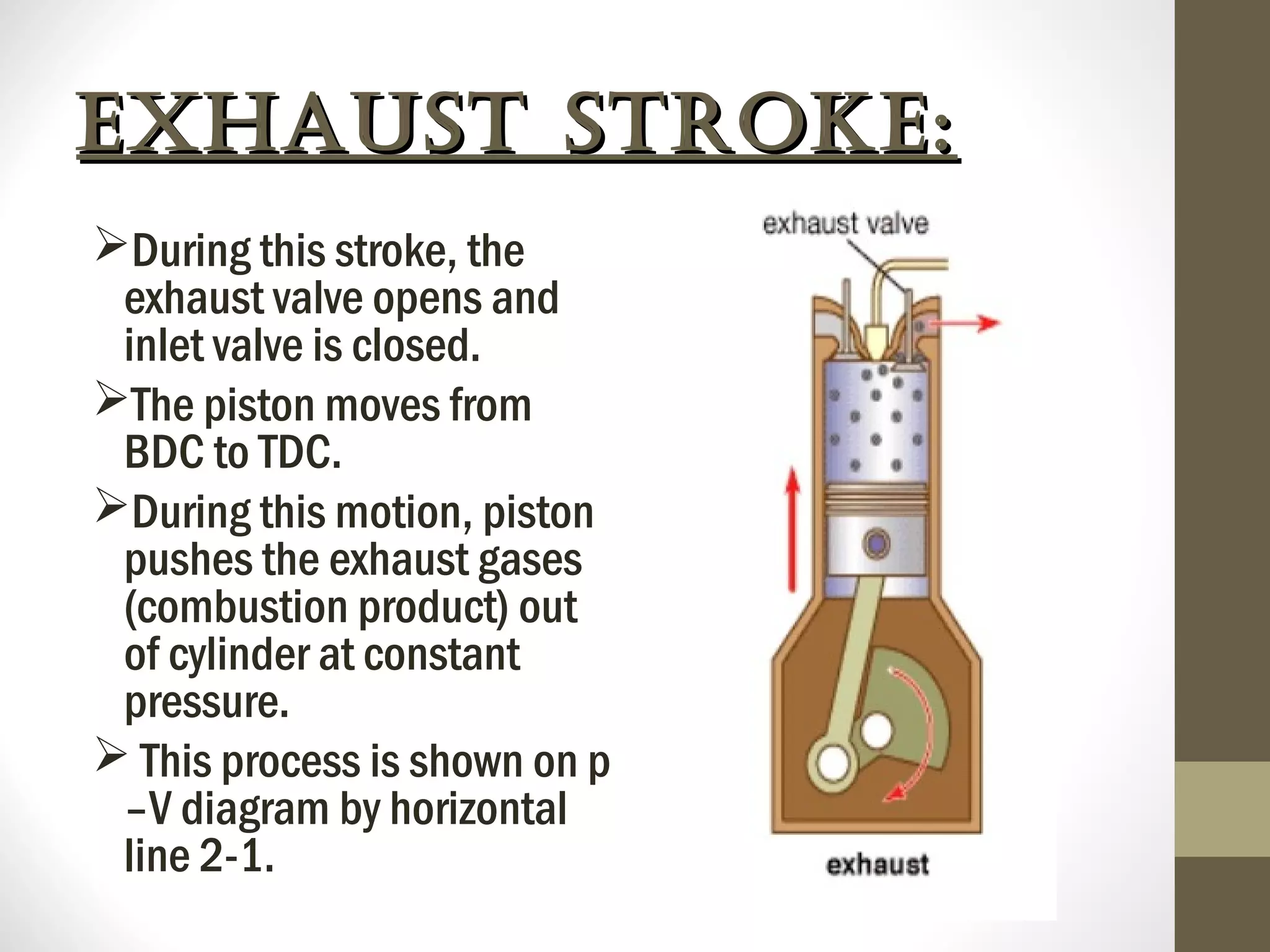
During this stroke, the
exhaust valve opens and
inlet valve is closed.
The piston moves from
BDC to TDC.
During this motion, piston
pushes the exhaust gases
(combustion product) out
of cylinder at constant
pressure.
 This process is shown on p
–V diagram by horizontal
line 2-1.
Four stroke diesel engine

Four stroke diesel engine

  • 1.
    L.D. COLLEGE OFL.D.COLLEGE OF ENGINEERINGENGINEERING SUBJECT : EME SUBJECT CODE : 2110006
  • 2.
    Four StrokeFour Stroke DieselEngineDiesel Engine
  • 3.
    INDEXINDEX  Introduction  Workingof Four stroke Diesel Engine  Different strokes Suction stroke Compression stroke Power or Expansion stroke Exhaust stroke
  • 4.
    INTRODUCTION:INTRODUCTION: Rudolf Christian Karl Dieselwas born in Paris, France in 1858. He was a German inventor and Mechanical Engineer, famous for the invention of the Diesel Engine.
  • 5.
    WORKING OF FOURWORKINGOF FOUR STROKE DIESELSTROKE DIESEL ENGINE:ENGINE:
  • 6.
    DIESEL CYCLE:DIESEL CYCLE: Thediesel engines work on the principle of Diesel cycle, also called constant pressure heat addition cycle shown in figure.  The four stroke diesel engine cycle also consists of suction, compression, power and exhaust strokes.  The basic construction of a four stroke diesel engine is same as that of four stroke petrol engine, expect instead of spark plug, a fuel injector is mounted in its place.  A fuel pump supplies the fuel oil to the injector at higher pressure.
  • 7.
    SUCTION STROKE:SUCTION STROKE: Duringthis stroke, inlet valve opens and exhaust valve is closed, the pressure in the cylinder will be atmospheric. As the piston moves from TDC to BDC, the volume in the cylinder increases, while simultaneously the pressure decreases.  This creates a pressure difference between the atmosphere and inside of the cylinder. Due to this pressure difference only the atmospheric air will enter into the cylinder through air filter and inlet. This stroke is represented by horizontal line 1-2 on p – V diagram. At the end of this stroke, the cylinder will be filled completely with air and inlet valve will be closed.
  • 8.
    COMPRESSIONCOMPRESSION STROKE:STROKE: During thisstroke, both inlet valve and exhaust valve remain closed. The piston moves from BDC to TDC. As this stroke is being performed, the air in the cylinder will be compressed, so pressure and temperature of air increases. The process compression is shown by the curve 2-3.  The compression ratio of this engine is higher than petrol engine. Due to higher compression ratio, air will have attained a higher temperature than self ignition temperature of the diesel fuel.
  • 9.
    Near the endthis stroke, a metered quantity of the diesel fuel is injected into the cylinder. As the diesel fuel particles come in contact with high temperature air, it will ignite automatically. This is called auto-ignition or self- ignition. In this engine compressed air ignites the diesel fuel, this type of engine is also called as compression ignition Engine or C.I. engine.
  • 10.
    POWER OR EXPANSIONPOWEROR EXPANSION STROKE:STROKE: During this stroke, both the inlet valve and the exhaust valve are closed. The piston moves from TDC to BDC. The fuel injection starts nearly at the end of compression stroke, but the rate of fuel injection is such that combustion maintains constant pressure.  This constant pressure expansion with simultaneous combustion is represented by horizontal line 3-4 on the p - V diagram.  The piston is forced further during the remaining part of this stroke only due to the expansion of the burnt gases. The engine produce mechanical work or power during this stroke. As the piston moves from TDC to BDC, the pressure of hot gases gradually decreases and volume increases. This is represented by curve
  • 11.
    EXHAUST STROKE:EXHAUST STROKE: Duringthis stroke, the exhaust valve opens and inlet valve is closed. The piston moves from BDC to TDC. During this motion, piston pushes the exhaust gases (combustion product) out of cylinder at constant pressure.  This process is shown on p –V diagram by horizontal line 2-1.