Presentation
on
Working of a four wheeler
(4 stroke diesel Engine)
In partial fulfillment of the subject
Elements of Mechanical Engineering
GA N D H IN A GA R IN STITU TE OF
TEC H N OLOGY
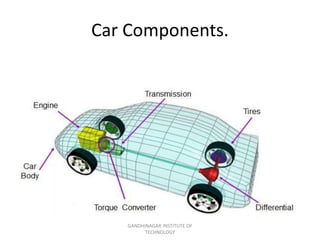
Car Components.
GANDHINAGAR INSTITUTE OF
TECHNOLOGY
What is Engine?
• Engine is a Prime Mover which converts
Natural Source(fuel) in to mechanical energy.
GANDHINAGAR INSTITUTE OF
TECHNOLOGY
Basic classification of Engines.
On the Basis of…
• Stroke: Two-stroke/Four -stroke
• Fuel used: Diesel/Petrol
• Cylinder position: Horizontal/Vertical.
• Ignition of Fuel: Compression ignition/ Spark Ignition
GANDHINAGAR INSTITUTE OF
TECHNOLOGY
5
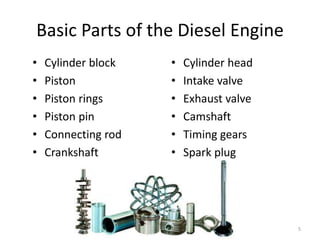
Basic Parts of the Diesel Engine
• Cylinder block
• Piston
• Piston rings
• Piston pin
• Connecting rod
• Crankshaft
• Cylinder head
• Intake valve
• Exhaust valve
• Camshaft
• Timing gears
• Spark plug
6
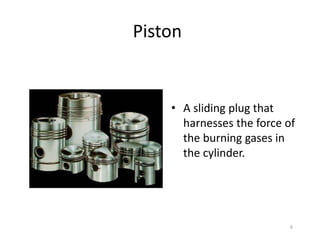
Piston
• A sliding plug that
harnesses the force of
the burning gases in
the cylinder.
7
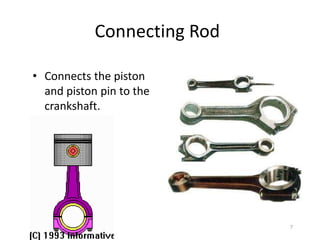
Connecting Rod
• Connects the piston
and piston pin to the
crankshaft.
8
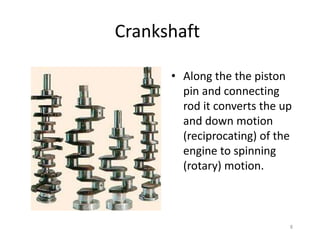
Crankshaft
• Along the the piston
pin and connecting
rod it converts the up
and down motion
(reciprocating) of the
engine to spinning
(rotary) motion.
9
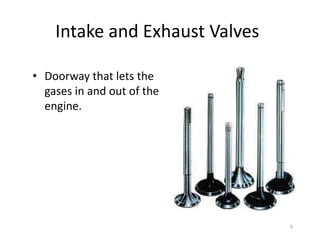
Intake and Exhaust Valves
• Doorway that lets the
gases in and out of the
engine.
10
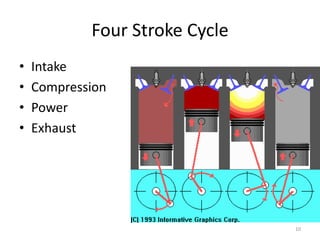
Four Stroke Cycle
• Intake
• Compression
• Power
• Exhaust
11
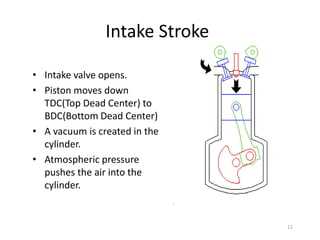
Intake Stroke
• Intake valve opens.
• Piston moves down
TDC(Top Dead Center) to
BDC(Bottom Dead Center)
• A vacuum is created in the
cylinder.
• Atmospheric pressure
pushes the air into the
cylinder.
12
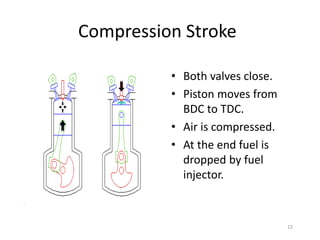
Compression Stroke
• Both valves close.
• Piston moves from
BDC to TDC.
• Air is compressed.
• At the end fuel is
dropped by fuel
injector.
13
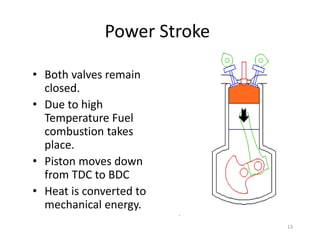
Power Stroke
• Both valves remain
closed.
• Due to high
Temperature Fuel
combustion takes
place.
• Piston moves down
from TDC to BDC
• Heat is converted to
mechanical energy.
14
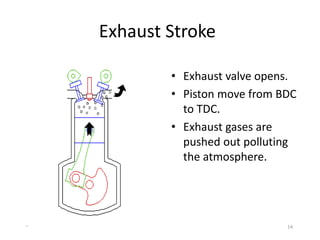
Exhaust Stroke
• Exhaust valve opens.
• Piston move from BDC
to TDC.
• Exhaust gases are
pushed out polluting
the atmosphere.
15
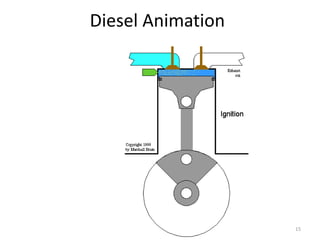
Diesel Animation
16
Advantages
• Better fuel economy and longer engine life.
• For a fairly long time usage, the equation
works great in a big diesel tractor-trailer rig
that is running 400 miles every day, but it is
not nearly so beneficial in a passenger car.
• Lower Fuel cost compared to Gasoline
Engine.
• Diesels are more reliable. Because they
don’t need high-voltage ignition systems,
diesel engines never fail for lack of a spark.
Reference.
• www.howstuffworks.com
• en.wikipedia.org
GANDHINAGAR INSTITUTE OF
TECHNOLOGY
Thank You
GANDHINAGAR INSTITUTE OF
TECHNOLOGY

4 stroke diesel engine

  • 1.
    Presentation on Working of afour wheeler (4 stroke diesel Engine) In partial fulfillment of the subject Elements of Mechanical Engineering GA N D H IN A GA R IN STITU TE OF TEC H N OLOGY
  • 2.
  • 3.
    What is Engine? •Engine is a Prime Mover which converts Natural Source(fuel) in to mechanical energy. GANDHINAGAR INSTITUTE OF TECHNOLOGY
  • 4.
    Basic classification ofEngines. On the Basis of… • Stroke: Two-stroke/Four -stroke • Fuel used: Diesel/Petrol • Cylinder position: Horizontal/Vertical. • Ignition of Fuel: Compression ignition/ Spark Ignition GANDHINAGAR INSTITUTE OF TECHNOLOGY
  • 5.
    5 Basic Parts ofthe Diesel Engine • Cylinder block • Piston • Piston rings • Piston pin • Connecting rod • Crankshaft • Cylinder head • Intake valve • Exhaust valve • Camshaft • Timing gears • Spark plug
  • 6.
    6 Piston • A slidingplug that harnesses the force of the burning gases in the cylinder.
  • 7.
    7 Connecting Rod • Connectsthe piston and piston pin to the crankshaft.
  • 8.
    8 Crankshaft • Along thethe piston pin and connecting rod it converts the up and down motion (reciprocating) of the engine to spinning (rotary) motion.
  • 9.
    9 Intake and ExhaustValves • Doorway that lets the gases in and out of the engine.
  • 10.
    10 Four Stroke Cycle •Intake • Compression • Power • Exhaust
  • 11.
    11 Intake Stroke • Intakevalve opens. • Piston moves down TDC(Top Dead Center) to BDC(Bottom Dead Center) • A vacuum is created in the cylinder. • Atmospheric pressure pushes the air into the cylinder.
  • 12.
    12 Compression Stroke • Bothvalves close. • Piston moves from BDC to TDC. • Air is compressed. • At the end fuel is dropped by fuel injector.
  • 13.
    13 Power Stroke • Bothvalves remain closed. • Due to high Temperature Fuel combustion takes place. • Piston moves down from TDC to BDC • Heat is converted to mechanical energy.
  • 14.
    14 Exhaust Stroke • Exhaustvalve opens. • Piston move from BDC to TDC. • Exhaust gases are pushed out polluting the atmosphere.
  • 15.
  • 16.
    16 Advantages • Better fueleconomy and longer engine life. • For a fairly long time usage, the equation works great in a big diesel tractor-trailer rig that is running 400 miles every day, but it is not nearly so beneficial in a passenger car. • Lower Fuel cost compared to Gasoline Engine. • Diesels are more reliable. Because they don’t need high-voltage ignition systems, diesel engines never fail for lack of a spark.
  • 17.
  • 18.