Diesel Engine
By: Muhammad Yousuf Chhajro
Outlines
 Diesel engine
 Two stroke
 Four stroke
 Differences
 Applications
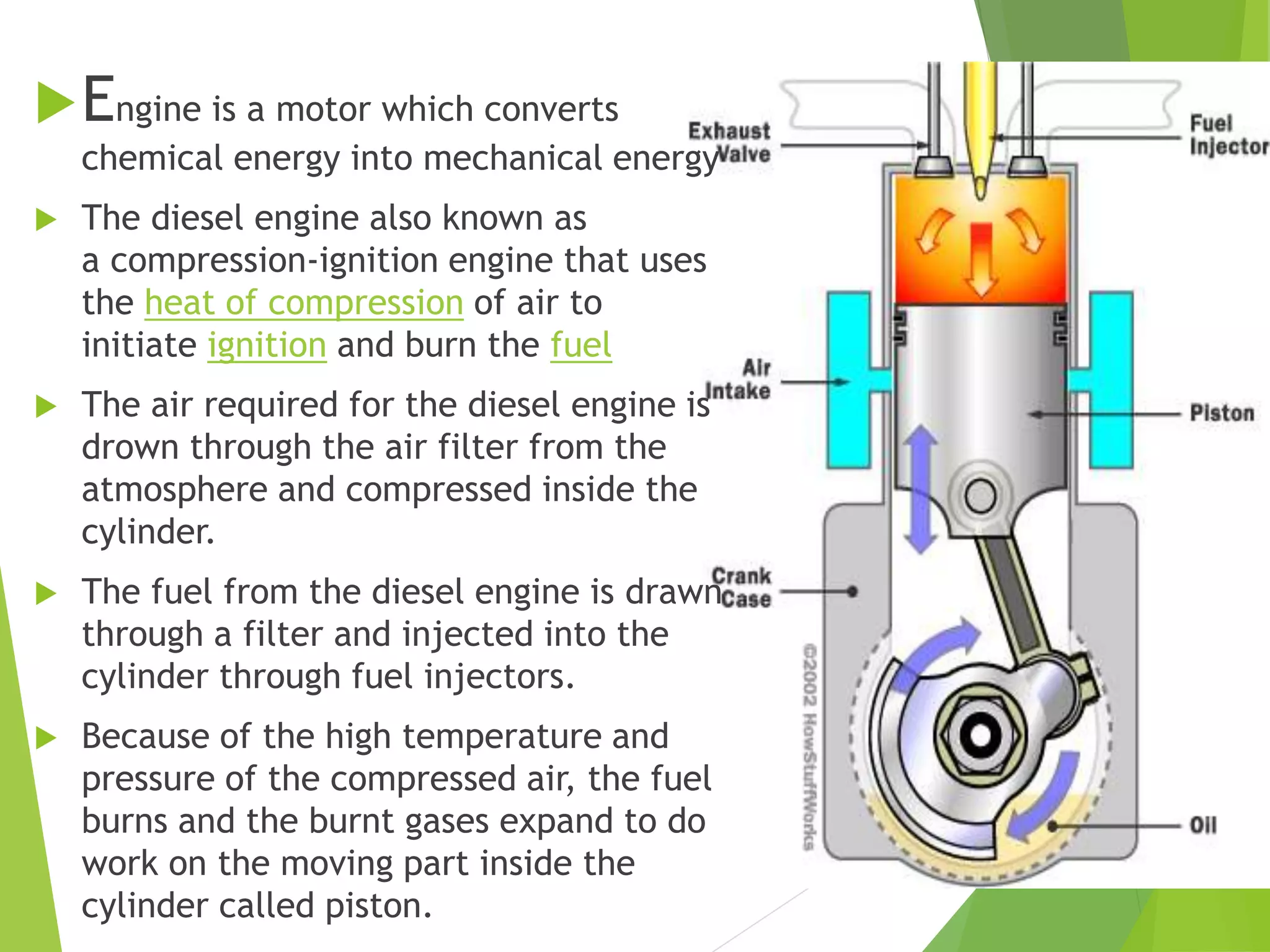
Engine is a motor which converts
chemical energy into mechanical energy
 The diesel engine also known as
a compression-ignition engine that uses
the heat of compression of air to
initiate ignition and burn the fuel
 The air required for the diesel engine is
drown through the air filter from the
atmosphere and compressed inside the
cylinder.
 The fuel from the diesel engine is drawn
through a filter and injected into the
cylinder through fuel injectors.
 Because of the high temperature and
pressure of the compressed air, the fuel
burns and the burnt gases expand to do
work on the moving part inside the
cylinder called piston.
 This movement of the piston rotates a
flywheel and the engine is directly coupled to
electric generator
 The gases after expansion inside the cylinder
is exhausted into the atmosphere and passes
through a silencer in order to reduce the
noise.
 Incoming air is compressed until its
temperature reaches about 1,000°F (540°C).
Diesel engines are
manufactured in two
stoke and four stroke versions
Two stroke
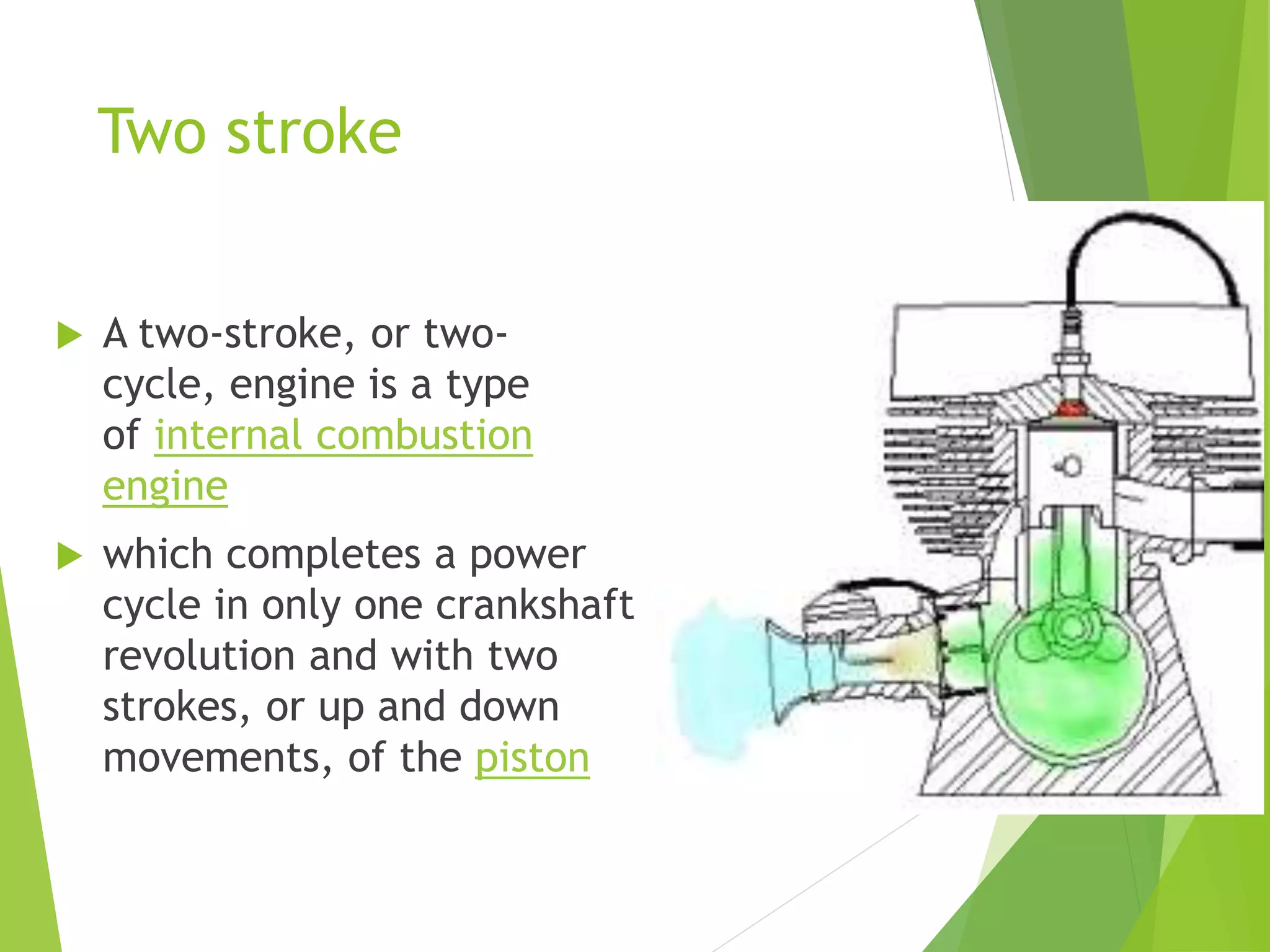
 A two-stroke, or two-
cycle, engine is a type
of internal combustion
engine
 which completes a power
cycle in only one crankshaft
revolution and with two
strokes, or up and down
movements, of the piston
Intake: Air is drawn into the crank case(a
case or covering enclosing a crankshaft) by
vacuum and then into the cylinder.
Compression: Air is then compresses inside
the cylinder.
Power: Fuel is injected trough fuel injector
air is ignited forcing the piston down
exposing the exhaust port.
Exhaust: The exhaust gases are forced out
by the incoming fuel air mix
Four stroke
 A four-stroke engine (also
known as four-cycle) is
an internal combustion
engine in which
the piston completes four
separate strokes
 A stroke refers to the full
travel of the piston along
the cylinder
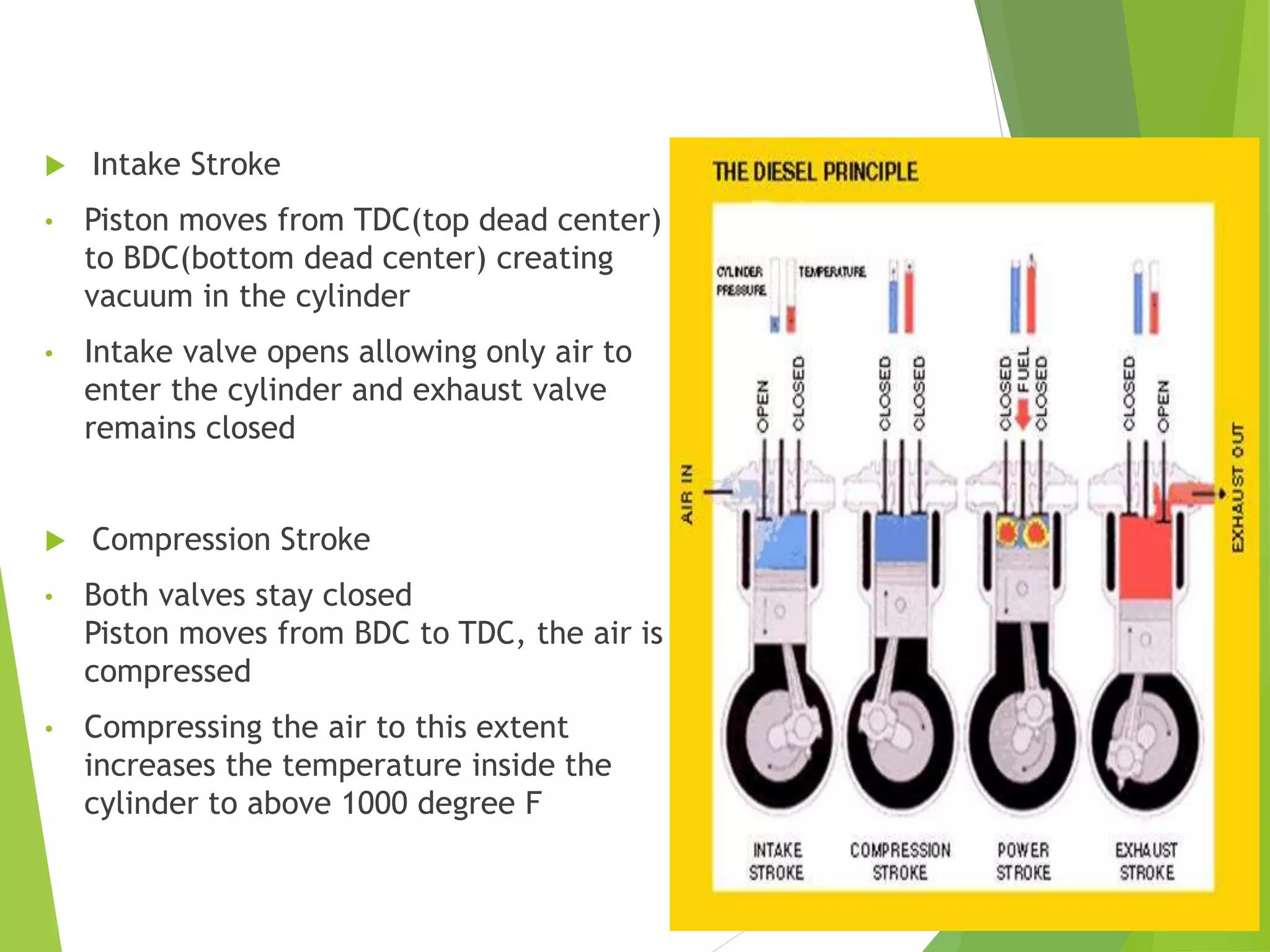
 Intake Stroke
• Piston moves from TDC(top dead center)
to BDC(bottom dead center) creating
vacuum in the cylinder
• Intake valve opens allowing only air to
enter the cylinder and exhaust valve
remains closed
 Compression Stroke
• Both valves stay closed
Piston moves from BDC to TDC, the air is
compressed
• Compressing the air to this extent
increases the temperature inside the
cylinder to above 1000 degree F
 Power Stroke
• Both valves stay closed
• When the piston is at the end of
compression stroke(TDC) the injector
• sprays a mist of diesel fuel into the
cylinder.
• When hot air mixes with diesel fuel an
explosion takes place in the cylinder
• Expanding gases push the piston from
TDC to BDC
 Exhaust Stroke
• Piston moves from BDC to TDC
• Exhaust valve opens and the exhaust
gases escape
• Intake valve remains closed
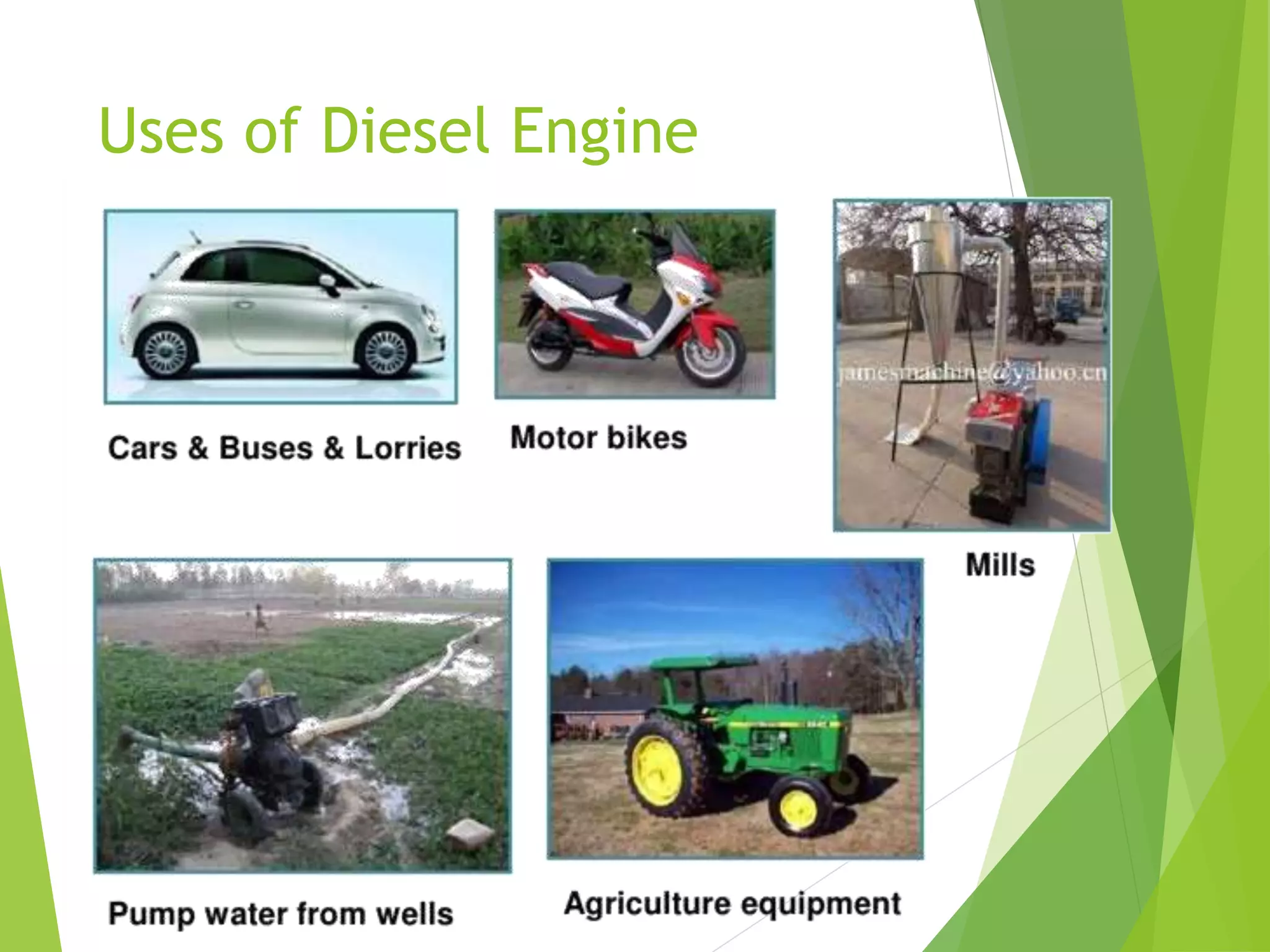
Uses of Diesel Engine
Diesel engine

Diesel engine

  • 1.
  • 2.
    Outlines  Diesel engine Two stroke  Four stroke  Differences  Applications
  • 4.
    Engine is amotor which converts chemical energy into mechanical energy  The diesel engine also known as a compression-ignition engine that uses the heat of compression of air to initiate ignition and burn the fuel  The air required for the diesel engine is drown through the air filter from the atmosphere and compressed inside the cylinder.  The fuel from the diesel engine is drawn through a filter and injected into the cylinder through fuel injectors.  Because of the high temperature and pressure of the compressed air, the fuel burns and the burnt gases expand to do work on the moving part inside the cylinder called piston.
  • 5.
     This movementof the piston rotates a flywheel and the engine is directly coupled to electric generator  The gases after expansion inside the cylinder is exhausted into the atmosphere and passes through a silencer in order to reduce the noise.  Incoming air is compressed until its temperature reaches about 1,000°F (540°C).
  • 6.
    Diesel engines are manufacturedin two stoke and four stroke versions
  • 7.
    Two stroke  Atwo-stroke, or two- cycle, engine is a type of internal combustion engine  which completes a power cycle in only one crankshaft revolution and with two strokes, or up and down movements, of the piston
  • 8.
    Intake: Air isdrawn into the crank case(a case or covering enclosing a crankshaft) by vacuum and then into the cylinder. Compression: Air is then compresses inside the cylinder. Power: Fuel is injected trough fuel injector air is ignited forcing the piston down exposing the exhaust port. Exhaust: The exhaust gases are forced out by the incoming fuel air mix
  • 9.
    Four stroke  Afour-stroke engine (also known as four-cycle) is an internal combustion engine in which the piston completes four separate strokes  A stroke refers to the full travel of the piston along the cylinder
  • 10.
     Intake Stroke •Piston moves from TDC(top dead center) to BDC(bottom dead center) creating vacuum in the cylinder • Intake valve opens allowing only air to enter the cylinder and exhaust valve remains closed  Compression Stroke • Both valves stay closed Piston moves from BDC to TDC, the air is compressed • Compressing the air to this extent increases the temperature inside the cylinder to above 1000 degree F
  • 11.
     Power Stroke •Both valves stay closed • When the piston is at the end of compression stroke(TDC) the injector • sprays a mist of diesel fuel into the cylinder. • When hot air mixes with diesel fuel an explosion takes place in the cylinder • Expanding gases push the piston from TDC to BDC  Exhaust Stroke • Piston moves from BDC to TDC • Exhaust valve opens and the exhaust gases escape • Intake valve remains closed
  • 13.