COOLING SYSTEMS
IN INTERNAL COMBUSTION ENGINES
Mantosh Kumar
12BTMECH016
What is it?
 It is a system which is used to keep engine from
getting not too hot and at the same time not to
keep it too cool either.
Reasons for Cooling
 To promote a high volumetric efficiency.
 To ensure proper combustion.
 To ensure mechanical operation.
Effect for Over-cooling
 The thermal efficiency is decreased due to more
loss of heat carried by the coolant.
 The vapourization of the fuel is less resulting in
lower combustion efficiency.
 Low temperature increases the viscosity of
lubricant causing more loss due to friction.
Types of Cooling system
 Air cooling (or direct cooling) system.
 Liquid cooling (or indirect cooling) system.
Air cooling system
Air cooled engines depend on airflow across their external
surfaces of the engine cylinders to remove the necessary
heat. It is used for Small Engines
The amount of heat dissipated depends upon:
 The area of cooling surface in contact with the air.
 Mass flow rate of air
 Temperature difference between cylinder and air
 Conductivity of metal.
Air cooling system – Advantages
 No need of radiator, cooling jackets, coolant and pumps.
 The engine can be operated in cold climate where liquid
may freeze.
 In places where water is scarce , air cooled engine is an
advantage.
 Less weight and low cost.
 Air cooled engines have no coolant leakage or freezing
problems.
Air cooling system -
Disadvantages
 Large amount of power is used to drive the
cooling fan.
 Engines give low power output.
 Cooling fins under certain conditions may vibrate
and amplify the noise level.
 Cooling is not uniform.
Liquid cooling system
 A liquid (coolant) is circulated around the
cylinders and absorb heat from the
cylinder walls and cylinder head.
 It is used for large Engines
Liquid cooling systems - Types
 Thermo-syphon system
 Forced circulation cooling system
 Evaporative cooling system
 Direct or non- return system
Thermo Siphon System
In this system the circulation of water is due to
difference in temperature of water. So in this
system pump is not required but water is circulated
because of density difference only.
Evaporative cooling system
In this system , the engine will be cooled because of
the evaporation of the water in the cylinders into
steams. It is used for cooling of many types of
industrial engines.
Forced circulation cooling system
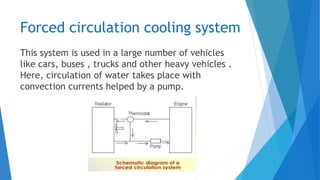
This system is used in a large number of vehicles
like cars, buses , trucks and other heavy vehicles .
Here, circulation of water takes place with
convection currents helped by a pump.
Non-Return Water Cooling
System
This is suitable for large installations and where
plenty of water is available. The water from a
storage tank is directly supplied to the engine
cylinder. The hot water is not cooled for reuse but
simply discharges.
Parts of Liquid System
Water Pump Cooling Fan Radiator
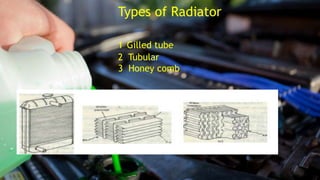
Types of Radiator
1 Gilled tube
2 Tubular
3 Honey comb
Parts of cooling system
 Thermostat valve
Liquid cooling system-
Advantages
 Uniform cooling of cylinder, cylinder head and
valves.
 fuel consumption of engine improves by using
water cooling system.
 The Engine need not be provided at the front end
of moving vehicle because of cooling system.
 Engine is less noisy as compared with air cooled
engines, as it has water for damping noise.
Disadvantages of Cooling system
 It depends upon the supply of water.
 The water pump which circulates water absorbs
considerable power.
 If the water cooling system fails then it will result in
several damage of engine.
 The water cooling system is costlier as it has more
number of parts.
 Also it requires more maintenance and care for its
parts.
Use of Anti- Freezers
During winter the water used in the radiator freezes because of cold
climates, then ice formed has more volume and produces cracks in the
cylinder blocks, pipes, and radiator. So, to prevent freezing antifreeze
mixtures or solutions are added in the cooling water.
Normally following are used as antifreeze solutions :
 Methyl, ethyl alcohols.
 A solution of alcohol and water.
 Ethylene Glycol etc.
The ideal antifreeze solutions
should have the following
properties :
 It should dissolve in water easily.
 It should not evaporate.
 It should not have any harmful effect on any part
of cooling system.
 It should be cheap and easily available.
 It should not corrode the system.
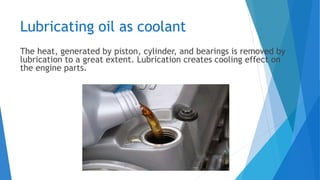
Lubricating oil as coolant
The heat, generated by piston, cylinder, and bearings is removed by
lubrication to a great extent. Lubrication creates cooling effect on
the engine parts.
Conclusion
A cooling system must be provided not only to
prevent damage to the vital parts of the engine
(due to high temperature), but the temperature of
these components must be maintained within
certain limits in order to obtain maximum
performance from the engine.
THANK YOU

Cooling system

  • 1.
    COOLING SYSTEMS IN INTERNALCOMBUSTION ENGINES Mantosh Kumar 12BTMECH016
  • 2.
    What is it? It is a system which is used to keep engine from getting not too hot and at the same time not to keep it too cool either.
  • 3.
    Reasons for Cooling To promote a high volumetric efficiency.  To ensure proper combustion.  To ensure mechanical operation.
  • 4.
    Effect for Over-cooling The thermal efficiency is decreased due to more loss of heat carried by the coolant.  The vapourization of the fuel is less resulting in lower combustion efficiency.  Low temperature increases the viscosity of lubricant causing more loss due to friction.
  • 5.
    Types of Coolingsystem  Air cooling (or direct cooling) system.  Liquid cooling (or indirect cooling) system.
  • 6.
    Air cooling system Aircooled engines depend on airflow across their external surfaces of the engine cylinders to remove the necessary heat. It is used for Small Engines The amount of heat dissipated depends upon:  The area of cooling surface in contact with the air.  Mass flow rate of air  Temperature difference between cylinder and air  Conductivity of metal.
  • 7.
    Air cooling system– Advantages  No need of radiator, cooling jackets, coolant and pumps.  The engine can be operated in cold climate where liquid may freeze.  In places where water is scarce , air cooled engine is an advantage.  Less weight and low cost.  Air cooled engines have no coolant leakage or freezing problems.
  • 8.
    Air cooling system- Disadvantages  Large amount of power is used to drive the cooling fan.  Engines give low power output.  Cooling fins under certain conditions may vibrate and amplify the noise level.  Cooling is not uniform.
  • 9.
    Liquid cooling system A liquid (coolant) is circulated around the cylinders and absorb heat from the cylinder walls and cylinder head.  It is used for large Engines
  • 10.
    Liquid cooling systems- Types  Thermo-syphon system  Forced circulation cooling system  Evaporative cooling system  Direct or non- return system
  • 11.
    Thermo Siphon System Inthis system the circulation of water is due to difference in temperature of water. So in this system pump is not required but water is circulated because of density difference only.
  • 12.
    Evaporative cooling system Inthis system , the engine will be cooled because of the evaporation of the water in the cylinders into steams. It is used for cooling of many types of industrial engines.
  • 13.
    Forced circulation coolingsystem This system is used in a large number of vehicles like cars, buses , trucks and other heavy vehicles . Here, circulation of water takes place with convection currents helped by a pump.
  • 14.
    Non-Return Water Cooling System Thisis suitable for large installations and where plenty of water is available. The water from a storage tank is directly supplied to the engine cylinder. The hot water is not cooled for reuse but simply discharges.
  • 15.
    Parts of LiquidSystem Water Pump Cooling Fan Radiator
  • 16.
    Types of Radiator 1Gilled tube 2 Tubular 3 Honey comb
  • 17.
    Parts of coolingsystem  Thermostat valve
  • 18.
    Liquid cooling system- Advantages Uniform cooling of cylinder, cylinder head and valves.  fuel consumption of engine improves by using water cooling system.  The Engine need not be provided at the front end of moving vehicle because of cooling system.  Engine is less noisy as compared with air cooled engines, as it has water for damping noise.
  • 19.
    Disadvantages of Coolingsystem  It depends upon the supply of water.  The water pump which circulates water absorbs considerable power.  If the water cooling system fails then it will result in several damage of engine.  The water cooling system is costlier as it has more number of parts.  Also it requires more maintenance and care for its parts.
  • 20.
    Use of Anti-Freezers During winter the water used in the radiator freezes because of cold climates, then ice formed has more volume and produces cracks in the cylinder blocks, pipes, and radiator. So, to prevent freezing antifreeze mixtures or solutions are added in the cooling water. Normally following are used as antifreeze solutions :  Methyl, ethyl alcohols.  A solution of alcohol and water.  Ethylene Glycol etc.
  • 21.
    The ideal antifreezesolutions should have the following properties :  It should dissolve in water easily.  It should not evaporate.  It should not have any harmful effect on any part of cooling system.  It should be cheap and easily available.  It should not corrode the system.
  • 22.
    Lubricating oil ascoolant The heat, generated by piston, cylinder, and bearings is removed by lubrication to a great extent. Lubrication creates cooling effect on the engine parts.
  • 23.
    Conclusion A cooling systemmust be provided not only to prevent damage to the vital parts of the engine (due to high temperature), but the temperature of these components must be maintained within certain limits in order to obtain maximum performance from the engine.
  • 24.