Mr. MOIZKHAN A. FADWALA of Mechanical Engineering.
Enrolment No. 136010319018 has Satisfactorily
completed his term work in T.E-II for the ending in
OCTOBER 2015.
Date :-
Guide External faculty H.O.D
Sign Sign Sign
TOPIC
COOLING SYSTEM IN I.C
ENGINE
Cooling System
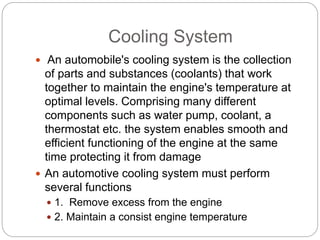
 An automobile's cooling system is the collection
of parts and substances (coolants) that work
together to maintain the engine's temperature at
optimal levels. Comprising many different
components such as water pump, coolant, a
thermostat etc. the system enables smooth and
efficient functioning of the engine at the same
time protecting it from damage
 An automotive cooling system must perform
several functions
 1. Remove excess from the engine
 2. Maintain a consist engine temperature
Need Of Cooling System
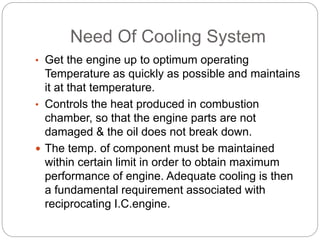
• Get the engine up to optimum operating
Temperature as quickly as possible and maintains
it at that temperature.
• Controls the heat produced in combustion
chamber, so that the engine parts are not
damaged & the oil does not break down.
 The temp. of component must be maintained
within certain limit in order to obtain maximum
performance of engine. Adequate cooling is then
a fundamental requirement associated with
reciprocating I.C.engine.
Types of cooling system
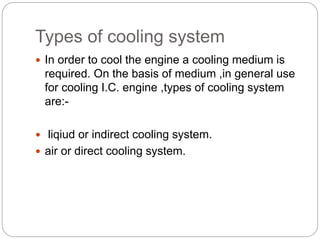
 In order to cool the engine a cooling medium is
required. On the basis of medium ,in general use
for cooling I.C. engine ,types of cooling system
are:-
 liqiud or indirect cooling system.
 air or direct cooling system.
Liquid Cooled
System
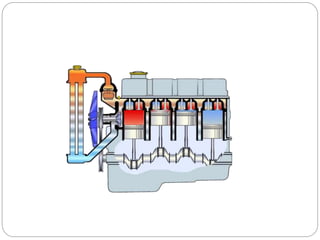
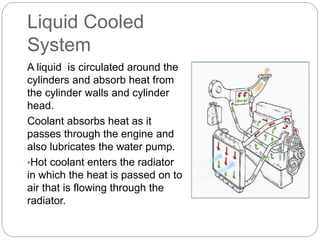
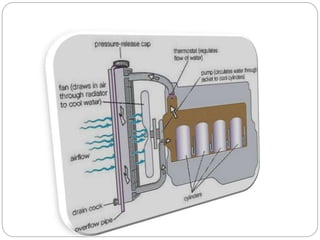
A liquid is circulated around the
cylinders and absorb heat from
the cylinder walls and cylinder
head.
Coolant absorbs heat as it
passes through the engine and
also lubricates the water pump.
•Hot coolant enters the radiator
in which the heat is passed on to
air that is flowing through the
radiator.
Water Jackets
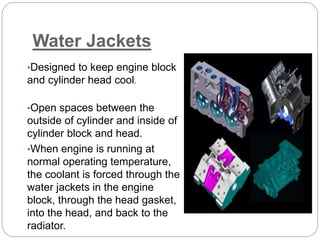
•Designed to keep engine block
and cylinder head cool.
•Open spaces between the
outside of cylinder and inside of
cylinder block and head.
•When engine is running at
normal operating temperature,
the coolant is forced through the
water jackets in the engine
block, through the head gasket,
into the head, and back to the
radiator.
Water Pump
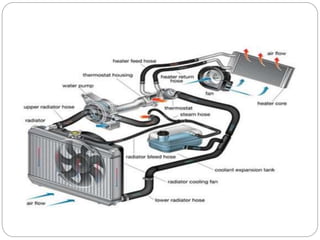
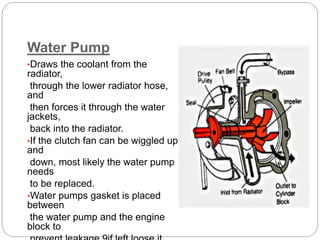
•Draws the coolant from the
radiator,
through the lower radiator hose,
and
then forces it through the water
jackets,
back into the radiator.
•If the clutch fan can be wiggled up
and
down, most likely the water pump
needs
to be replaced.
•Water pumps gasket is placed
between
the water pump and the engine
block to
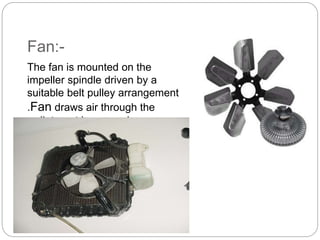
Fan:-
The fan is mounted on the
impeller spindle driven by a
suitable belt pulley arrangement
.Fan draws air through the
radiator at low speeds.
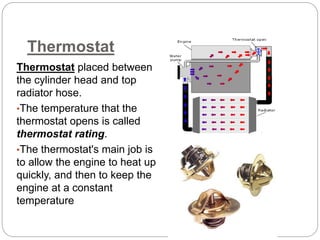
Thermostat
Thermostat placed between
the cylinder head and top
radiator hose.
•The temperature that the
thermostat opens is called
thermostat rating.
•The thermostat's main job is
to allow the engine to heat up
quickly, and then to keep the
engine at a constant
temperature
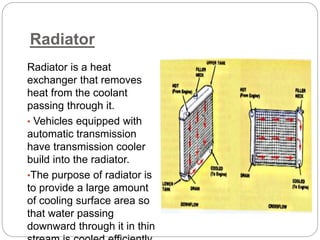
Radiator
Radiator is a heat
exchanger that removes
heat from the coolant
passing through it.
• Vehicles equipped with
automatic transmission
have transmission cooler
build into the radiator.
•The purpose of radiator is
to provide a large amount
of cooling surface area so
that water passing
downward through it in thin
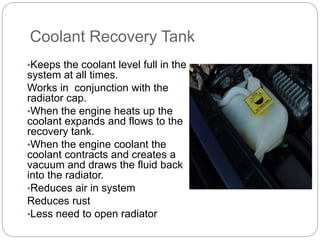
Coolant Recovery Tank
•Keeps the coolant level full in the
system at all times.
Works in conjunction with the
radiator cap.
•When the engine heats up the
coolant expands and flows to the
recovery tank.
•When the engine coolant the
coolant contracts and creates a
vacuum and draws the fluid back
into the radiator.
•Reduces air in system
Reduces rust
•Less need to open radiator
Advantages and Disadvantages
of liquid Cooling System
Advantages:-
 (a) Uniform cooling of cylinder, cylinder head and
valves.
 (b) Specific fuel consumption of engine improves
by using water cooling system.
 (c) If we employ water cooling system, then
engine need not be provided at the front end of
moving vehicle.
 (d) Engine is less noisy as compared with air
cooled engines, as it has water for damping
Disadvantages:-
 (a) It depends upon the supply of water.
 (b) The water pump which circulates water
absorbs considerable power.
 (c) If the water cooling system fails then it will
result in severe damage of engine.
 (d) The water cooling system is costlier as it has
more number of parts. Also it requires more
maintenance and care for its parts.
Air Cooled System
 In air cooled system a current of air made to flow
past the outside of the cylinder barrel ,outer
surface area which has been considerably
increased by providing cooling fins.
 The amount of heat dissipated to air depends
upon :
 (a) Amount of air flowing through the fins.
 (b) Fin surface area.
 (c) Thermal conductivity of metal used for fins.
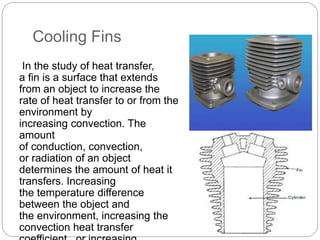
Cooling Fins
In the study of heat transfer,
a fin is a surface that extends
from an object to increase the
rate of heat transfer to or from the
environment by
increasing convection. The
amount
of conduction, convection,
or radiation of an object
determines the amount of heat it
transfers. Increasing
the temperature difference
between the object and
the environment, increasing the
convection heat transfer
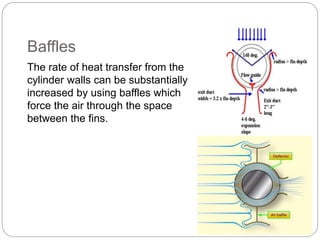
Baffles
The rate of heat transfer from the
cylinder walls can be substantially
increased by using baffles which
force the air through the space
between the fins.
Advantages and
Disadvantages of air Cooling
System
Advantages:-
 (a) Radiator/pump is absent hence the system is
light.
 (b) In case of water cooling system there are
leakages, but in this case here are no leakages.
 (c) Coolant and antifreeze solutions are not
required.
 (d) This system can be used in cold climates,
where if water is used it may freeze.
Disadvantages:-
 (a) Comparatively it is less efficient.
 (b) It is used in aero planes and
motorcycle engines where the engines
are exposed to air directly.

Cooling system in i.c engine

  • 2.
    Mr. MOIZKHAN A.FADWALA of Mechanical Engineering. Enrolment No. 136010319018 has Satisfactorily completed his term work in T.E-II for the ending in OCTOBER 2015. Date :- Guide External faculty H.O.D Sign Sign Sign
  • 3.
  • 4.
    Cooling System  Anautomobile's cooling system is the collection of parts and substances (coolants) that work together to maintain the engine's temperature at optimal levels. Comprising many different components such as water pump, coolant, a thermostat etc. the system enables smooth and efficient functioning of the engine at the same time protecting it from damage  An automotive cooling system must perform several functions  1. Remove excess from the engine  2. Maintain a consist engine temperature
  • 6.
    Need Of CoolingSystem • Get the engine up to optimum operating Temperature as quickly as possible and maintains it at that temperature. • Controls the heat produced in combustion chamber, so that the engine parts are not damaged & the oil does not break down.  The temp. of component must be maintained within certain limit in order to obtain maximum performance of engine. Adequate cooling is then a fundamental requirement associated with reciprocating I.C.engine.
  • 7.
    Types of coolingsystem  In order to cool the engine a cooling medium is required. On the basis of medium ,in general use for cooling I.C. engine ,types of cooling system are:-  liqiud or indirect cooling system.  air or direct cooling system.
  • 8.
    Liquid Cooled System A liquidis circulated around the cylinders and absorb heat from the cylinder walls and cylinder head. Coolant absorbs heat as it passes through the engine and also lubricates the water pump. •Hot coolant enters the radiator in which the heat is passed on to air that is flowing through the radiator.
  • 10.
    Water Jackets •Designed tokeep engine block and cylinder head cool. •Open spaces between the outside of cylinder and inside of cylinder block and head. •When engine is running at normal operating temperature, the coolant is forced through the water jackets in the engine block, through the head gasket, into the head, and back to the radiator.
  • 11.
    Water Pump •Draws thecoolant from the radiator, through the lower radiator hose, and then forces it through the water jackets, back into the radiator. •If the clutch fan can be wiggled up and down, most likely the water pump needs to be replaced. •Water pumps gasket is placed between the water pump and the engine block to
  • 12.
    Fan:- The fan ismounted on the impeller spindle driven by a suitable belt pulley arrangement .Fan draws air through the radiator at low speeds.
  • 13.
    Thermostat Thermostat placed between thecylinder head and top radiator hose. •The temperature that the thermostat opens is called thermostat rating. •The thermostat's main job is to allow the engine to heat up quickly, and then to keep the engine at a constant temperature
  • 15.
    Radiator Radiator is aheat exchanger that removes heat from the coolant passing through it. • Vehicles equipped with automatic transmission have transmission cooler build into the radiator. •The purpose of radiator is to provide a large amount of cooling surface area so that water passing downward through it in thin
  • 16.
    Coolant Recovery Tank •Keepsthe coolant level full in the system at all times. Works in conjunction with the radiator cap. •When the engine heats up the coolant expands and flows to the recovery tank. •When the engine coolant the coolant contracts and creates a vacuum and draws the fluid back into the radiator. •Reduces air in system Reduces rust •Less need to open radiator
  • 17.
    Advantages and Disadvantages ofliquid Cooling System Advantages:-  (a) Uniform cooling of cylinder, cylinder head and valves.  (b) Specific fuel consumption of engine improves by using water cooling system.  (c) If we employ water cooling system, then engine need not be provided at the front end of moving vehicle.  (d) Engine is less noisy as compared with air cooled engines, as it has water for damping
  • 18.
    Disadvantages:-  (a) Itdepends upon the supply of water.  (b) The water pump which circulates water absorbs considerable power.  (c) If the water cooling system fails then it will result in severe damage of engine.  (d) The water cooling system is costlier as it has more number of parts. Also it requires more maintenance and care for its parts.
  • 19.
    Air Cooled System In air cooled system a current of air made to flow past the outside of the cylinder barrel ,outer surface area which has been considerably increased by providing cooling fins.  The amount of heat dissipated to air depends upon :  (a) Amount of air flowing through the fins.  (b) Fin surface area.  (c) Thermal conductivity of metal used for fins.
  • 20.
    Cooling Fins In thestudy of heat transfer, a fin is a surface that extends from an object to increase the rate of heat transfer to or from the environment by increasing convection. The amount of conduction, convection, or radiation of an object determines the amount of heat it transfers. Increasing the temperature difference between the object and the environment, increasing the convection heat transfer
  • 21.
    Baffles The rate ofheat transfer from the cylinder walls can be substantially increased by using baffles which force the air through the space between the fins.
  • 22.
    Advantages and Disadvantages ofair Cooling System Advantages:-  (a) Radiator/pump is absent hence the system is light.  (b) In case of water cooling system there are leakages, but in this case here are no leakages.  (c) Coolant and antifreeze solutions are not required.  (d) This system can be used in cold climates, where if water is used it may freeze.
  • 23.
    Disadvantages:-  (a) Comparativelyit is less efficient.  (b) It is used in aero planes and motorcycle engines where the engines are exposed to air directly.