Factoring and forfaiting

International financial settlements

2
Lecture outline
Factoring as trade finance method
Forfaiting as trade finance method

International financial settlements

3
Factoring
 Factoring is a transaction where the
exporter sells its receivables to an
institution
 The factoring institution buys the
receivables without recourse
 Due to increased risk factors demand
discount on the receivables
International financial settlements

4
Types of factoring
 Maturity factoring- the factor pays the
exporter at maturity of the accounts
receivable
 Advance factoring- the factor pays the
exporter in advance a specified share of
the receivables

International financial settlements

5
The mechanism of factoring
 The factoring transaction involves three parties:
 The seller-the exporter
 The debtor-the importer
 The factor

International financial settlements

6
The mechanism of factoring
 The receivables sold are usually invoices
for the delivered products
Factoring can take place with or without
notification of the debtor
In the case of notification the factor carries
out the collection, in the case of lack of
notification the exporter carries out the
collection
International financial settlements

7
Advantages
Factoring is advantageous for exporters
because this way they can obtain cash
This can especially beneficial if companies
struggle with liquidity problems
 In some industries factoring is the historic
method of finance e.g. in textiles or
apparel branches

International financial settlements

8
Advantages
 Factoring enables risk-free export sales
 The exporter can offer more attractive
transaction terms
 Exporters are relieved from administration
duties

International financial settlements

9
When to use factoring?
 Factoring is more expensive than a bank
loan
 In fact it is not a loan
 It can happen that banks would refuse a loan
to an exporter to provide him with cash but a
factor would buy his receivables
 The factor checks the creditworthiness of the
debtor and not of the seller
 Especially beneficial for small exporters
International financial settlements

10
Would factors always buy the
receivables?
The credit history of the debtor is a crucial
condition
The current creditworthiness of the debtor
Usually even average credit rating of the
debtor is refused by factors

International financial settlements
120881-1165

11
Is the debtor affected by factoring?
 Some types of debtors- usually large firms or
governments have specified procedures when it comes
to transferring the payment from the seller to debtor
 This matters especially due to the obligation of the factor
to perform the collection
 The distinction between assignment of the responsibility
to perform the work and the assignment of funds to the
factor influences largely the debtor’s processes
 Sometimes the debtor wants the seller to perform the
collection
International financial settlements

12
Forfaiting (1)
 A transaction where a forfaiting institution buys withoutrecourse the debt resulting from a trade contract which is
due in the future
Forfaiting is usually aimed at medium-term capital goods
financing
The subject of forfaiting transactions are usually fixed
assets
As this type of goods are usually expensive the financing
period may account for several years

International financial settlements

13
Forfaiting (2)
 Exporters are not willing to finance importers
over such a long period
 This is why the debt of the importer is sold to
forfaiters (usually banks)
 Forfaiting financing usually refers to
transactions exceeding 500000 USD
 For larger transaction more than one
forfaiting institutions can be involved

International financial settlements

14
Forfaiting (3)
 The forfaiting institution takes over the risk of the sales
transaction.
 The exporter is liable for the quality and reliability of the
project
 The forfaiter has an unconditional payment obligation

International financial settlements

15
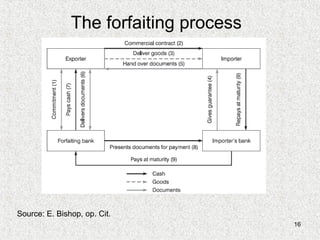
The forfaiting process

Source: E. Bishop, op. Cit.
16
Does the bank always agree to
forfaiting?
 The bank needs a guarantee that the debt will
be paid off
 The debt should be freely transferable
 The forfaiting bank requires the debt purchased
to be secured by a credible bank guarantee or
the importer to be a prime buyer, e.g.
government agency or a multinational company

International financial settlements

17
Required documents
The guarantee can take the form of:
 promissory notes
 bills of exchange,
 book receivables
 deferred payments under a letter of
credit

International financial settlements

18
Forfaiting paper
 All documents guarantying the transaction e.g.
bills of exchange and promissory notes become
the property of the forfaiter
 The documents are called forfaiting papers
 They are liquid assets with comparatively high
yields

International financial settlements

19
What are the costs of forfaiting?(1)
The forfaiting institution demands cash for
buying the debt
The value of the debt is discounted at a
specified rate,
The forfaiting institution demands also a
risk premium on the transaction


International financial settlements

20
What are the costs of forfaiting?
(2)
The discount margin is the one of the
principal costs of forfaiting
Besides the discount margin the bank
charges a commitment fee
The discount can be computed as straight
discount or discount to yield basis
International financial settlements

21
Advantages of forfaiting for the
exporter
 Conversion of a credit transaction into a
cash transaction
Increase of liquidity
 Risk elimination (market, transaction and
political risks)
 Relieve of administration duties
International financial settlements

22
Advantages of forfaiting for the
importer
The flexibility to pay for his goods
Deferred payment
Fixed interest cost

International financial settlements

23
Summing up
 Factoring and forfaiting can be beneficial methods of
trade finance
 Both allow to transfer credit transactions into cash
transactions
 Factoring serves financing short term transactions while
forfaiting medium term transactions

International financial settlements

24
Discussion
Factoring and forfaiting are withoutrecourse methods of trade finance. Is this
always beneficial? Name examples when
recourse financing would be more
beneficial.
International financial settlements

25
Literature
E. Bishop, Finance of international trade,
Chapter 10. Publication available via
Science Direct Database

International financial settlements

26
Forfaiting and factoring

Forfaiting and factoring

  • 2.
  • 3.
    Lecture outline Factoring astrade finance method Forfaiting as trade finance method International financial settlements 3
  • 4.
    Factoring  Factoring isa transaction where the exporter sells its receivables to an institution  The factoring institution buys the receivables without recourse  Due to increased risk factors demand discount on the receivables International financial settlements 4
  • 5.
    Types of factoring Maturity factoring- the factor pays the exporter at maturity of the accounts receivable  Advance factoring- the factor pays the exporter in advance a specified share of the receivables International financial settlements 5
  • 6.
    The mechanism offactoring  The factoring transaction involves three parties:  The seller-the exporter  The debtor-the importer  The factor International financial settlements 6
  • 7.
    The mechanism offactoring  The receivables sold are usually invoices for the delivered products Factoring can take place with or without notification of the debtor In the case of notification the factor carries out the collection, in the case of lack of notification the exporter carries out the collection International financial settlements 7
  • 8.
    Advantages Factoring is advantageousfor exporters because this way they can obtain cash This can especially beneficial if companies struggle with liquidity problems  In some industries factoring is the historic method of finance e.g. in textiles or apparel branches International financial settlements 8
  • 9.
    Advantages  Factoring enablesrisk-free export sales  The exporter can offer more attractive transaction terms  Exporters are relieved from administration duties International financial settlements 9
  • 10.
    When to usefactoring?  Factoring is more expensive than a bank loan  In fact it is not a loan  It can happen that banks would refuse a loan to an exporter to provide him with cash but a factor would buy his receivables  The factor checks the creditworthiness of the debtor and not of the seller  Especially beneficial for small exporters International financial settlements 10
  • 11.
    Would factors alwaysbuy the receivables? The credit history of the debtor is a crucial condition The current creditworthiness of the debtor Usually even average credit rating of the debtor is refused by factors International financial settlements 120881-1165 11
  • 12.
    Is the debtoraffected by factoring?  Some types of debtors- usually large firms or governments have specified procedures when it comes to transferring the payment from the seller to debtor  This matters especially due to the obligation of the factor to perform the collection  The distinction between assignment of the responsibility to perform the work and the assignment of funds to the factor influences largely the debtor’s processes  Sometimes the debtor wants the seller to perform the collection International financial settlements 12
  • 13.
    Forfaiting (1)  Atransaction where a forfaiting institution buys withoutrecourse the debt resulting from a trade contract which is due in the future Forfaiting is usually aimed at medium-term capital goods financing The subject of forfaiting transactions are usually fixed assets As this type of goods are usually expensive the financing period may account for several years International financial settlements 13
  • 14.
    Forfaiting (2)  Exportersare not willing to finance importers over such a long period  This is why the debt of the importer is sold to forfaiters (usually banks)  Forfaiting financing usually refers to transactions exceeding 500000 USD  For larger transaction more than one forfaiting institutions can be involved International financial settlements 14
  • 15.
    Forfaiting (3)  Theforfaiting institution takes over the risk of the sales transaction.  The exporter is liable for the quality and reliability of the project  The forfaiter has an unconditional payment obligation International financial settlements 15
  • 16.
    The forfaiting process Source:E. Bishop, op. Cit. 16
  • 17.
    Does the bankalways agree to forfaiting?  The bank needs a guarantee that the debt will be paid off  The debt should be freely transferable  The forfaiting bank requires the debt purchased to be secured by a credible bank guarantee or the importer to be a prime buyer, e.g. government agency or a multinational company International financial settlements 17
  • 18.
    Required documents The guaranteecan take the form of:  promissory notes  bills of exchange,  book receivables  deferred payments under a letter of credit International financial settlements 18
  • 19.
    Forfaiting paper  Alldocuments guarantying the transaction e.g. bills of exchange and promissory notes become the property of the forfaiter  The documents are called forfaiting papers  They are liquid assets with comparatively high yields International financial settlements 19
  • 20.
    What are thecosts of forfaiting?(1) The forfaiting institution demands cash for buying the debt The value of the debt is discounted at a specified rate, The forfaiting institution demands also a risk premium on the transaction  International financial settlements 20
  • 21.
    What are thecosts of forfaiting? (2) The discount margin is the one of the principal costs of forfaiting Besides the discount margin the bank charges a commitment fee The discount can be computed as straight discount or discount to yield basis International financial settlements 21
  • 22.
    Advantages of forfaitingfor the exporter  Conversion of a credit transaction into a cash transaction Increase of liquidity  Risk elimination (market, transaction and political risks)  Relieve of administration duties International financial settlements 22
  • 23.
    Advantages of forfaitingfor the importer The flexibility to pay for his goods Deferred payment Fixed interest cost International financial settlements 23
  • 24.
    Summing up  Factoringand forfaiting can be beneficial methods of trade finance  Both allow to transfer credit transactions into cash transactions  Factoring serves financing short term transactions while forfaiting medium term transactions International financial settlements 24
  • 25.
    Discussion Factoring and forfaitingare withoutrecourse methods of trade finance. Is this always beneficial? Name examples when recourse financing would be more beneficial. International financial settlements 25
  • 26.
    Literature E. Bishop, Financeof international trade, Chapter 10. Publication available via Science Direct Database International financial settlements 26