Control 
Principles of management 
MADE BY:- ADAMU, TUSHAR, 
SHAHRUKH KHAN, YUSIF.
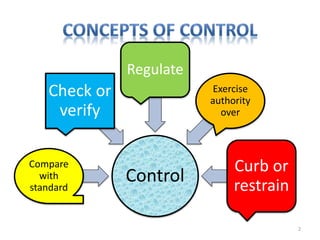
Control 
Check or 
verify 
Compare 
with 
standard 
Regulate 
Exercise 
authority 
over 
Curb or 
restrain 
2
Definitions 
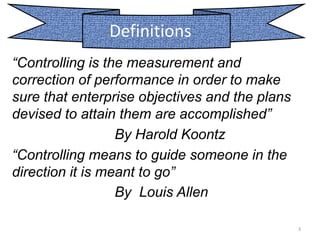
“Controlling is the measurement and 
correction of performance in order to make 
sure that enterprise objectives and the plans 
devised to attain them are accomplished” 
By Harold Koontz 
“Controlling means to guide someone in the 
direction it is meant to go” 
By Louis Allen 
3
Characteristics 
of control 
function 
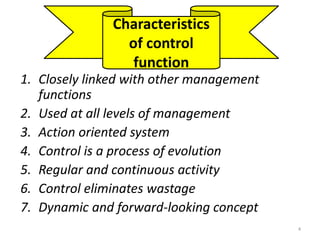
1. Closely linked with other management 
functions 
2. Used at all levels of management 
3. Action oriented system 
4. Control is a process of evolution 
5. Regular and continuous activity 
6. Control eliminates wastage 
7. Dynamic and forward-looking concept 
4
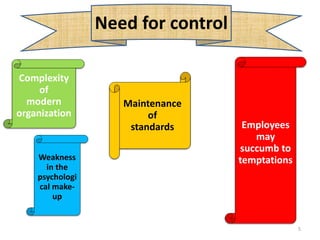
Complexity 
of 
modern 
organization 
Weakness 
in the 
psychologi 
cal make-up 
Maintenance 
of 
standards Employees 
may 
succumb to 
temptations 
5 
Need for control
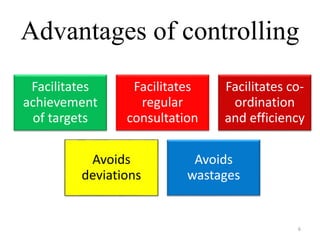
Advantages of controlling 
Facilitates 
achievement 
of targets 
Facilitates 
regular 
consultation 
Facilitates co-ordination 
and efficiency 
Avoids 
deviations 
Avoids 
wastages 
6
Advantages of controlling 
Facilitates 
achievement 
of targets 
Facilitates 
regular 
consultation 
Facilitates co-ordination 
and efficiency 
Avoids 
deviations 
Avoids 
wastages 
7
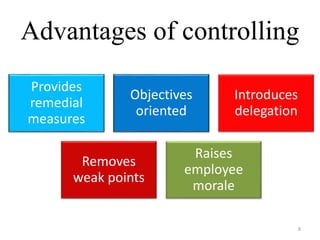
Advantages of controlling 
Provides 
remedial 
measures 
Objectives 
oriented 
Introduces 
delegation 
Removes 
weak points 
Raises 
employee 
morale 
8
Is too much control on 
employees good ? 
Too much of 
anything is bad ! 
9
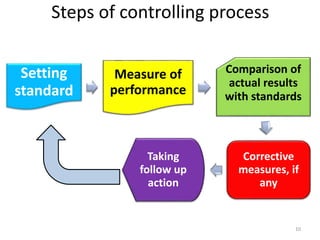
Steps of controlling process 
Setting 
standard 
Measure of 
performance 
Comparison of 
actual results 
with standards 
Corrective 
measures, if 
any 
Taking 
follow up 
action 
10
Step 1 
Setting/establishing 
standards or targets 
A standard is a criteria against 
which performance is measured 
11
Step 2 
Measuring actual 
performance 
Performance is measured in line of standards 
12
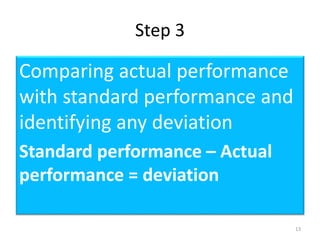
Step 3 
Comparing actual performance 
with standard performance and 
identifying any deviation 
Standard performance – Actual 
performance = deviation 
13
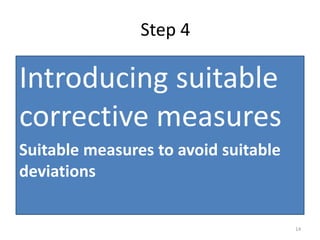
Step 4 
Introducing suitable 
corrective measures 
Suitable measures to avoid suitable 
deviations 
14
Step 5 (Final) 
Taking follow-up 
actions 
Follow-up is essential for every organization 
15
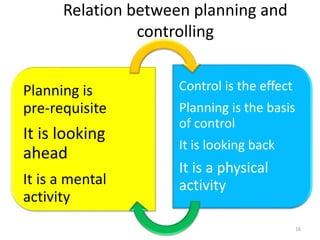
Relation between planning and 
controlling 
Planning is 
pre-requisite 
It is looking 
ahead 
It is a mental 
activity 
Control is the effect 
Planning is the basis 
of control 
It is looking back 
It is a physical 
activity 
16
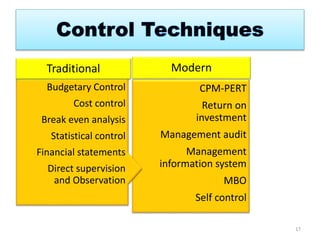
Modern 
CPM-PERT 
Return on 
investment 
Management audit 
Management 
information system 
MBO 
Self control 
Traditional 
Budgetary Control 
Cost control 
Break even analysis 
Statistical control 
Financial statements 
Direct supervision 
and Observation 
17
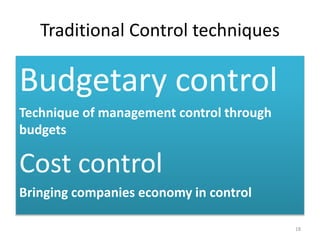
Traditional Control techniques 
Budgetary control 
Technique of management control through 
budgets 
Cost control 
Bringing companies economy in control 
18
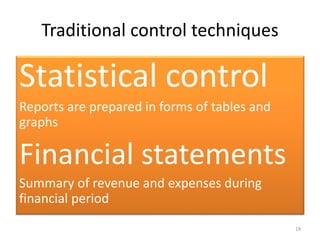
Traditional control techniques 
Statistical control 
Reports are prepared in forms of tables and 
graphs 
Financial statements 
Summary of revenue and expenses during 
financial period 
19
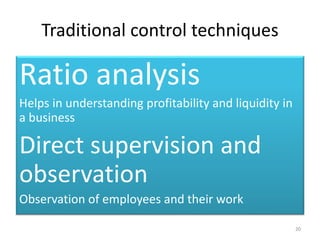
Traditional control techniques 
Ratio analysis 
Helps in understanding profitability and liquidity in 
a business 
Direct supervision and 
observation 
Observation of employees and their work 
20
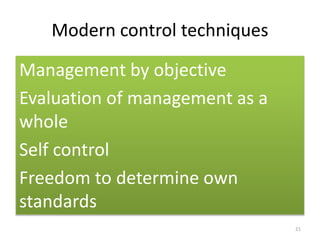
Modern control techniques 
Management by objective 
Evaluation of management as a 
whole 
Self control 
Freedom to determine own 
standards 
21
Thank You 
22

Control

  • 1.
    Control Principles ofmanagement MADE BY:- ADAMU, TUSHAR, SHAHRUKH KHAN, YUSIF.
  • 2.
    Control Check or verify Compare with standard Regulate Exercise authority over Curb or restrain 2
  • 3.
    Definitions “Controlling isthe measurement and correction of performance in order to make sure that enterprise objectives and the plans devised to attain them are accomplished” By Harold Koontz “Controlling means to guide someone in the direction it is meant to go” By Louis Allen 3
  • 4.
    Characteristics of control function 1. Closely linked with other management functions 2. Used at all levels of management 3. Action oriented system 4. Control is a process of evolution 5. Regular and continuous activity 6. Control eliminates wastage 7. Dynamic and forward-looking concept 4
  • 5.
    Complexity of modern organization Weakness in the psychologi cal make-up Maintenance of standards Employees may succumb to temptations 5 Need for control
  • 6.
    Advantages of controlling Facilitates achievement of targets Facilitates regular consultation Facilitates co-ordination and efficiency Avoids deviations Avoids wastages 6
  • 7.
    Advantages of controlling Facilitates achievement of targets Facilitates regular consultation Facilitates co-ordination and efficiency Avoids deviations Avoids wastages 7
  • 8.
    Advantages of controlling Provides remedial measures Objectives oriented Introduces delegation Removes weak points Raises employee morale 8
  • 9.
    Is too muchcontrol on employees good ? Too much of anything is bad ! 9
  • 10.
    Steps of controllingprocess Setting standard Measure of performance Comparison of actual results with standards Corrective measures, if any Taking follow up action 10
  • 11.
    Step 1 Setting/establishing standards or targets A standard is a criteria against which performance is measured 11
  • 12.
    Step 2 Measuringactual performance Performance is measured in line of standards 12
  • 13.
    Step 3 Comparingactual performance with standard performance and identifying any deviation Standard performance – Actual performance = deviation 13
  • 14.
    Step 4 Introducingsuitable corrective measures Suitable measures to avoid suitable deviations 14
  • 15.
    Step 5 (Final) Taking follow-up actions Follow-up is essential for every organization 15
  • 16.
    Relation between planningand controlling Planning is pre-requisite It is looking ahead It is a mental activity Control is the effect Planning is the basis of control It is looking back It is a physical activity 16
  • 17.
    Modern CPM-PERT Returnon investment Management audit Management information system MBO Self control Traditional Budgetary Control Cost control Break even analysis Statistical control Financial statements Direct supervision and Observation 17
  • 18.
    Traditional Control techniques Budgetary control Technique of management control through budgets Cost control Bringing companies economy in control 18
  • 19.
    Traditional control techniques Statistical control Reports are prepared in forms of tables and graphs Financial statements Summary of revenue and expenses during financial period 19
  • 20.
    Traditional control techniques Ratio analysis Helps in understanding profitability and liquidity in a business Direct supervision and observation Observation of employees and their work 20
  • 21.
    Modern control techniques Management by objective Evaluation of management as a whole Self control Freedom to determine own standards 21
  • 22.