FOCUSING ON LANGUAGE
CONTENT IN A
COMMUNICATIVE
SYLLABUS
WAHYU UTAMI
2010 1250 0440
SURYONO
2010 1250 1260
Discrete and holistic
views: the horns
of a dilemma
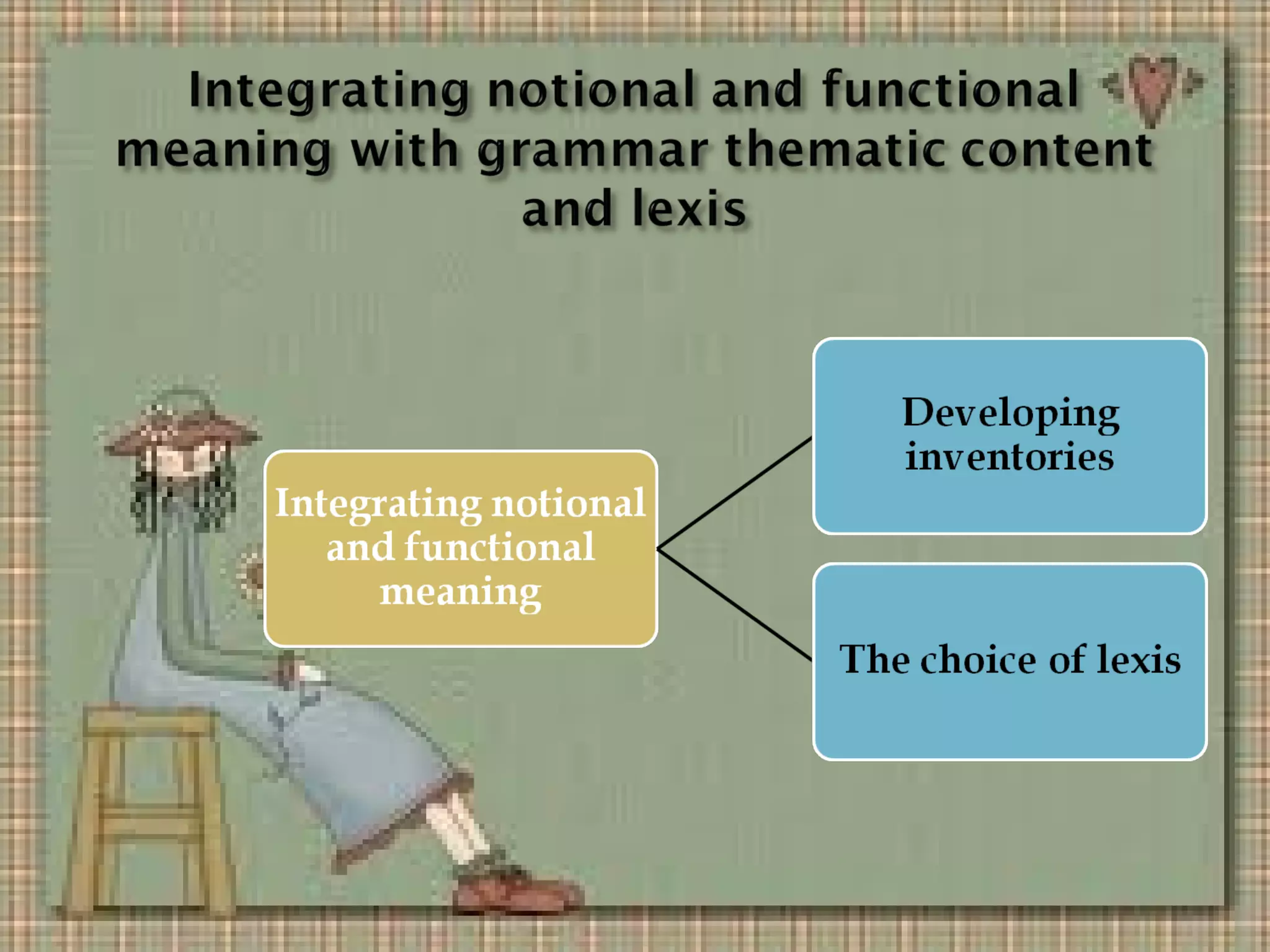
Integrating notional and
functional meaning with
grammar thematic content and
lexis
Teachers need to do the following :
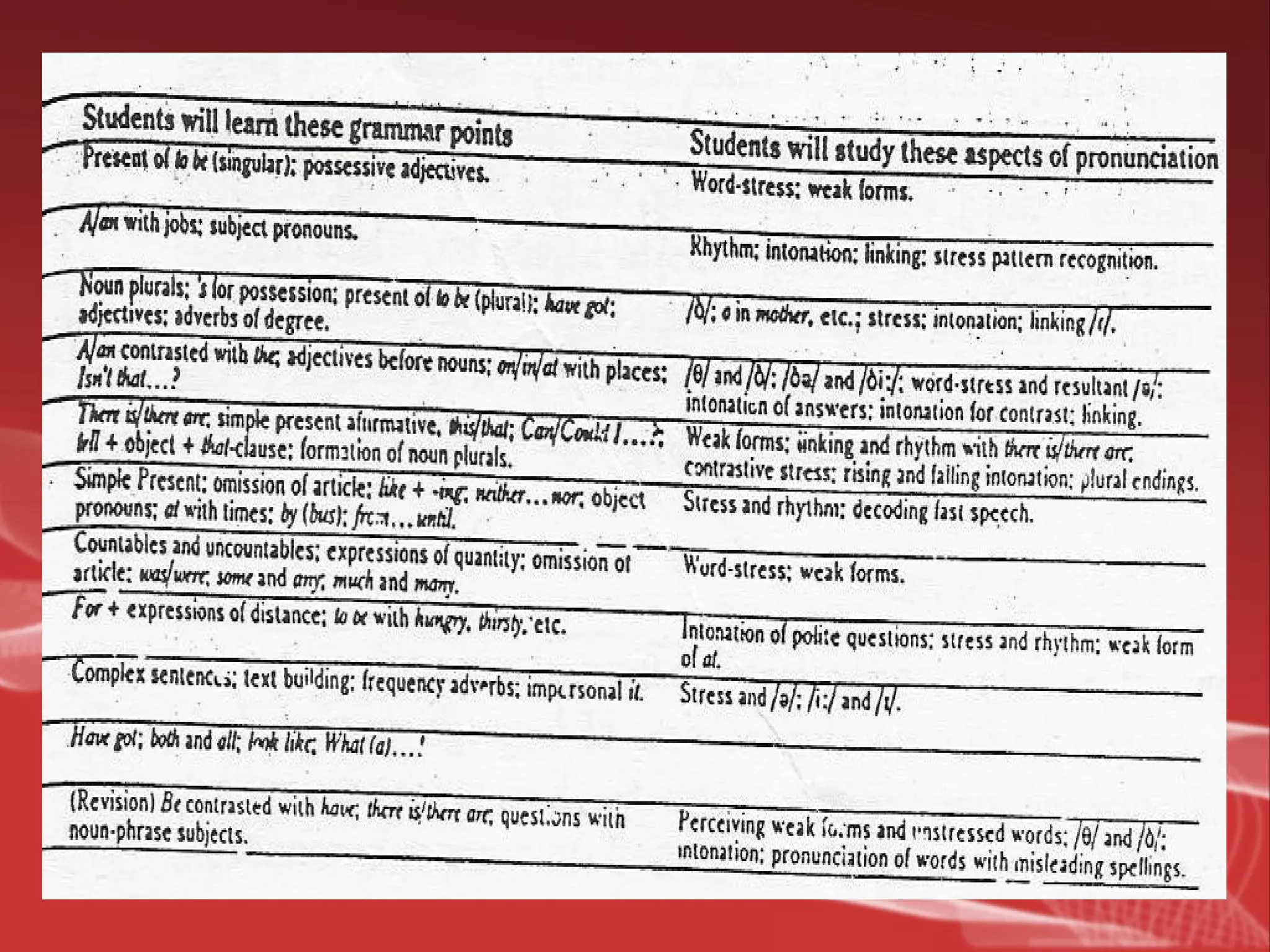
Present lingustic formssystematically
usecommunicativecontext
useavariety of text – types
what is needed for course
development is to combine forms,
notions, functions, lexis and
language skills.
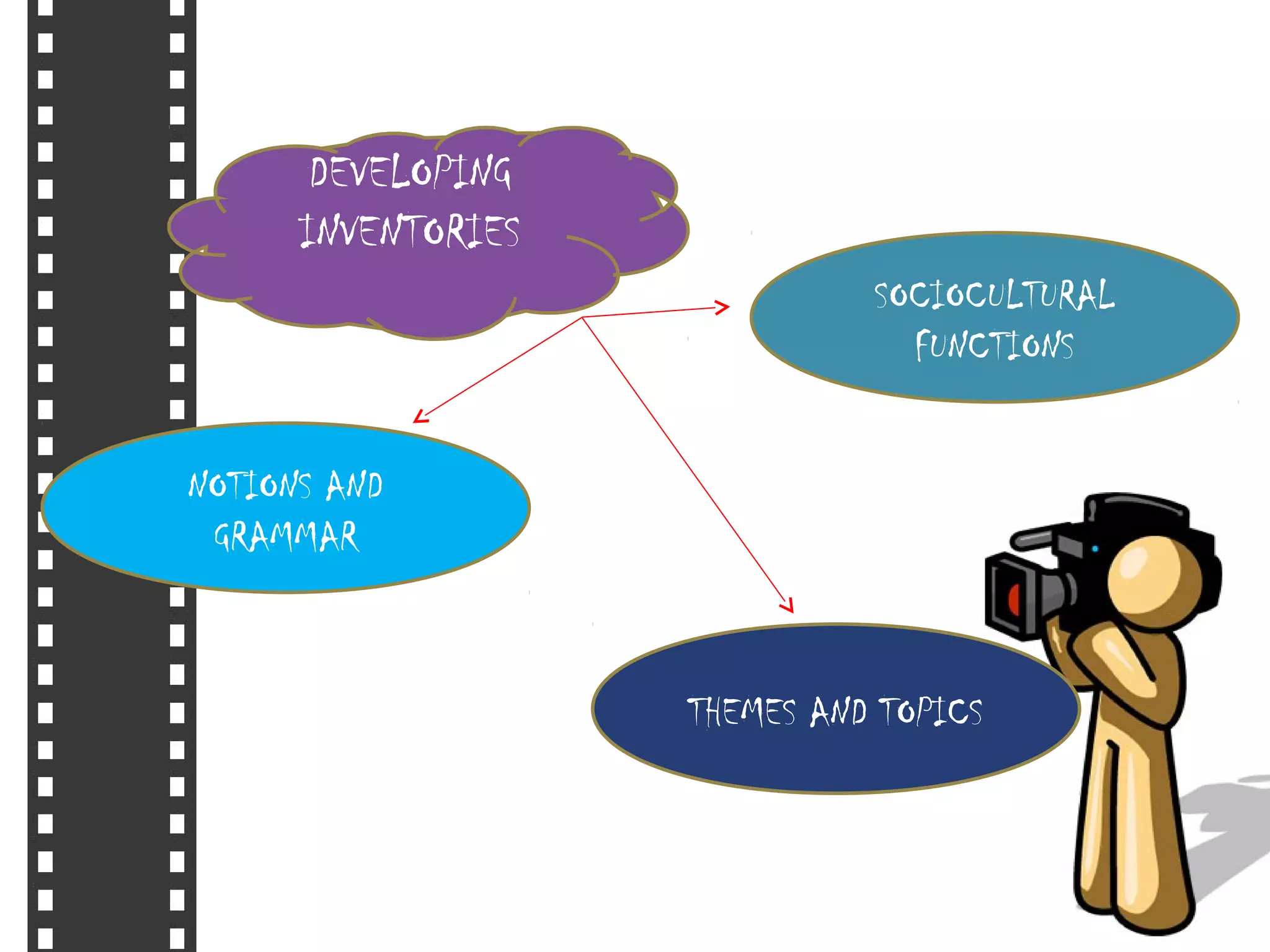
DEVELOPING
INVENTORIES
NOTIONS AND
GRAMMAR
THEMES AND TOPICS
SOCIOCULTURAL
FUNCTIONS
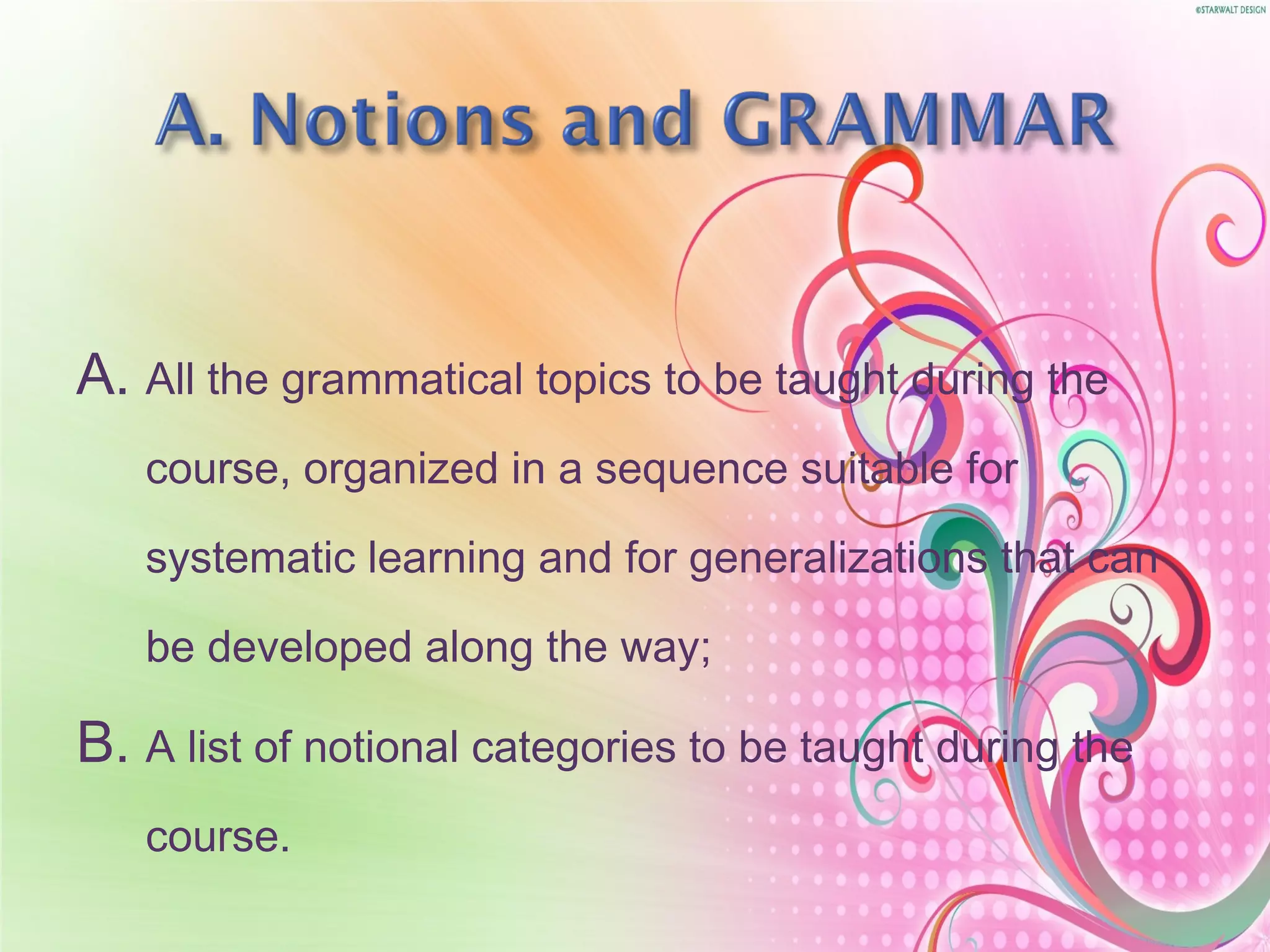
A. All the grammatical topics to be taught during the
course, organized in a sequence suitable for
systematic learning and for generalizations that can
be developed along the way;
B. A list of notional categories to be taught during the
course.
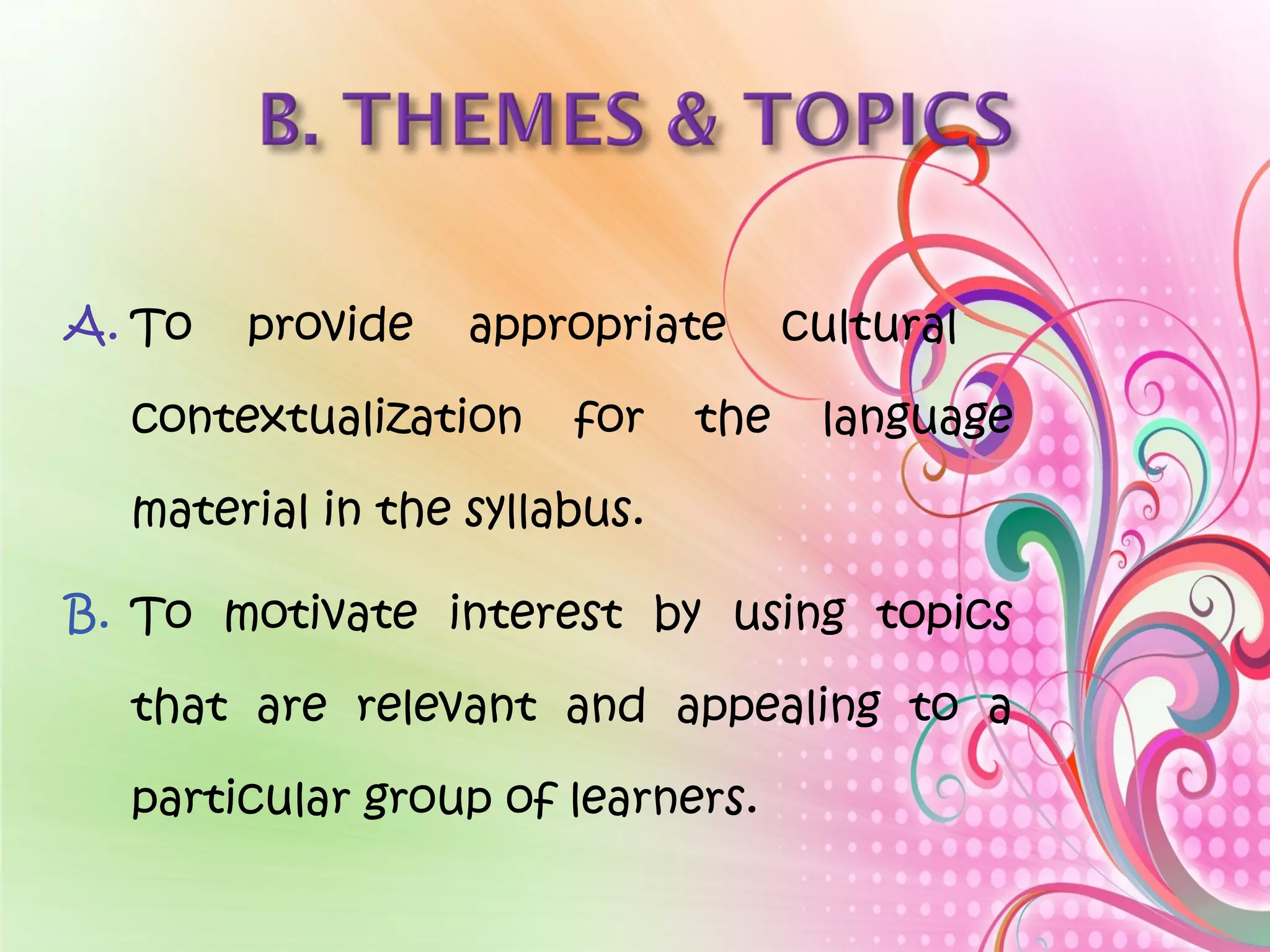
A. To provide appropriate cultural
contextualization for the language
material in the syllabus.
B. To motivate interest by using topics
that are relevant and appealing to a
particular group of learners.
 The typical situations in which each speech act is
used by native speakers.
 The extent to which the speech act changes in form
or selection of the particular utterance according to
the participants taking part.
 The most frequent utterances that native speakers
use to carry out this speech act in formal and
informal settings.
The goal is to create course plans which will
consist of a theme, a list of notions and
grammatical structures, and a selection of
functions.
Lexis is derived in part from the
notional-grammatical inventory;
time expressions; prepositions;
verbs that fit the patterns.
Lexis has failed to receive
enough attention either in older
grammatical syllabuses or in
more recent communicative
approaches.
Plannersneed to work with mapsof languagecontent
which arecompatiblewith thechronological
constraintsof theinstructional setting, so grammars
which segment languageinto discreteelementshave
great appeal.
• It has gained prominence through the
influence of a humanistically oriented
philosophy.
• The unit of analysis of language itself has
come to be viewed by linguistic scholars and
those in related disciplines not as single
sentences, but rather so longer spans of
language or discourse.
Second & foreign language instruction
has ;
to a great extent
incorporated the discrete element view
of language
particularly in audiolingual and
cognitive – code approaches
 Human languages differ in the
manner in which forms represent
functions.
 Forms and functions in language
are manisfestations of the discrete
vs. holistic dilemma as it appears
in the domain of language content.
 Fluency, has been associated with
communicating one’s idea, getting the
meaning across, or in the terms of the
dichotomy, using language either
holistically or comprehensively.
 Accuracy processes are concerned with those
aspects of language content that are
conducive to analysis through dissection.
 Those who stress knowing the
formal properties of language
as a proper outcome for
learners in a language course,
and ‘activists’ those who
stress using language actively.
Various sequential plans have been proposed for
course design :
A holistic approach
A more structural / notional approach
The early phrase of the course is structural
The course follows a thematic, communicative tone,
similar a language arts course.
Other suggestions have been made for the utilization of language
content based on analyses that are less tied to discreteness since
they draw on systemic characteristic
An approach to the study of human language
might provide course designers a framework
which brings a synthesis of discrete and
holistic view.
“FOCUSING ON
LANGUAGE
CONTENT IN A
COMMUNICATIVE
SYLLABUS “
(this presentation is an excerpt
of chapter 6 of course design”
by Fraida Dubin & Elite
Olshtain)

Focusing on language content in a communicative syllabus

  • 2.
    FOCUSING ON LANGUAGE CONTENTIN A COMMUNICATIVE SYLLABUS
  • 3.
    WAHYU UTAMI 2010 12500440 SURYONO 2010 1250 1260
  • 4.
    Discrete and holistic views:the horns of a dilemma Integrating notional and functional meaning with grammar thematic content and lexis
  • 6.
    Teachers need todo the following : Present lingustic formssystematically usecommunicativecontext useavariety of text – types
  • 7.
    what is neededfor course development is to combine forms, notions, functions, lexis and language skills.
  • 8.
  • 9.
    A. All thegrammatical topics to be taught during the course, organized in a sequence suitable for systematic learning and for generalizations that can be developed along the way; B. A list of notional categories to be taught during the course.
  • 10.
    A. To provideappropriate cultural contextualization for the language material in the syllabus. B. To motivate interest by using topics that are relevant and appealing to a particular group of learners.
  • 11.
     The typicalsituations in which each speech act is used by native speakers.  The extent to which the speech act changes in form or selection of the particular utterance according to the participants taking part.  The most frequent utterances that native speakers use to carry out this speech act in formal and informal settings.
  • 12.
    The goal isto create course plans which will consist of a theme, a list of notions and grammatical structures, and a selection of functions.
  • 13.
    Lexis is derivedin part from the notional-grammatical inventory; time expressions; prepositions; verbs that fit the patterns. Lexis has failed to receive enough attention either in older grammatical syllabuses or in more recent communicative approaches.
  • 15.
    Plannersneed to workwith mapsof languagecontent which arecompatiblewith thechronological constraintsof theinstructional setting, so grammars which segment languageinto discreteelementshave great appeal.
  • 18.
    • It hasgained prominence through the influence of a humanistically oriented philosophy. • The unit of analysis of language itself has come to be viewed by linguistic scholars and those in related disciplines not as single sentences, but rather so longer spans of language or discourse.
  • 19.
    Second & foreignlanguage instruction has ; to a great extent incorporated the discrete element view of language particularly in audiolingual and cognitive – code approaches
  • 21.
     Human languagesdiffer in the manner in which forms represent functions.  Forms and functions in language are manisfestations of the discrete vs. holistic dilemma as it appears in the domain of language content.
  • 22.
     Fluency, hasbeen associated with communicating one’s idea, getting the meaning across, or in the terms of the dichotomy, using language either holistically or comprehensively.  Accuracy processes are concerned with those aspects of language content that are conducive to analysis through dissection.
  • 23.
     Those whostress knowing the formal properties of language as a proper outcome for learners in a language course, and ‘activists’ those who stress using language actively.
  • 24.
    Various sequential planshave been proposed for course design : A holistic approach A more structural / notional approach The early phrase of the course is structural The course follows a thematic, communicative tone, similar a language arts course.
  • 25.
    Other suggestions havebeen made for the utilization of language content based on analyses that are less tied to discreteness since they draw on systemic characteristic An approach to the study of human language might provide course designers a framework which brings a synthesis of discrete and holistic view.
  • 27.
    “FOCUSING ON LANGUAGE CONTENT INA COMMUNICATIVE SYLLABUS “ (this presentation is an excerpt of chapter 6 of course design” by Fraida Dubin & Elite Olshtain)