
Analysis of Study Skills
 Why is there a need to study these skills?
  Teaching the language itself isn’t sufficient to develop
  the ability to perform the required tasks of ESP
  students, in addition of language work – thought
  process should also come along.
 Developed from functional-notional in line with
  communicative language teaching, the growth of
  needs analysis
 Priorities one particular skill in a given situation.
  Example:
  1. A class when the medium of instruction is not
  English
  2. International students embarking a study in UK
  3. Business people conducting international
  negotiations
Problem solving    The aim of the lesson is
activities where     stated clearly in the
    thought         beginning – here the
 processes are       focus of study is on
  implemented        getting the meaning
                       from the context


                      Each activity makes
                      use of group work /
                     pair work, which is in
                     line with the ideas of
                        communicative
                           teaching.
   Skills are         Excerpt
 taught using
    general        from “Skills
    carrier
    content             for
                    Learning”
                   (University of Malaya ESP
                            Project)
Analysis of learning needs
 Early 1980s saw the period of consolidation of ESP, some
  thought that ESP was dead and needed something that set
  it apart from General English.
 Hutchinson and Waters gave some thought to the
  consolidation of ESP work, particularly in their definition of
  what ESP should not be:
  1. ESP is not just a matter of teaching ‘specialized
  varieties’ of English
  2. ESP is not just a matter of science words and grammar
  for scientist or hotel receptionists
  3. ESP is not different from any other language teaching
  where effective and efficient learning process are sought
  after.
 They also argued that ESP had concentrated too much on
  the end product rather than the process itself, with this in
  mind came the concept of learning-centered approach.
Learning centered approach:
 Is an approach with avowed aim of maximizing
  potentials of the learning process. (Hutchison and
  Waters, 1987)
 Considered the process of learning and student
  motivation very fully and working out what is
  needed to reach the end target.
 Exploited learning skills students may have
  gained outside the class.
 Emphasis on groupwork or pairwork
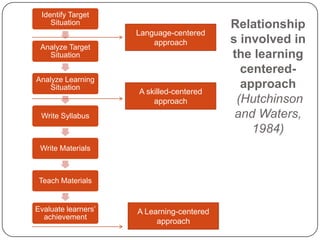
Identify Target
    Situation                              Relationship
                     Language-centered
                         approach          s involved in
 Analyze Target
   Situation                               the learning
                                             centered-
Analyze Learning
    Situation                                approach
                     A skilled-centered
                         approach           (Hutchinson
 Write Syllabus                             and Waters,
                                               1984)
 Write Materials


 Teach Materials


Evaluate learners’   A Learning-centered
  achievement
                          approach
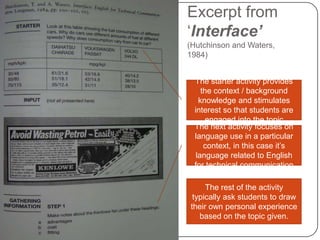
Excerpt from
‘Interface’
(Hutchinson and Waters,
1984)


 The starter activity provides
    the context / background
   knowledge and stimulates
 interest so that students are
     engaged into the topic
 The next activity focuses on
 language use in a particular
     context, in this case it’s
  language related to English
 for technical communication

     The rest of the activity
 typically ask students to draw
their own personal experience
   based on the topic given.
Authenticity
 During its course of development, there was a
    great deal of controversy for using authentic text.
   Its unclear meaning – what is meant by authentic
    text?
   Authenticity in terms of the material
   Authenticity in terms of the tasks
   Authenticity in terms of the level

Analysis of study skills

  • 1.
    Analysis of StudySkills  Why is there a need to study these skills? Teaching the language itself isn’t sufficient to develop the ability to perform the required tasks of ESP students, in addition of language work – thought process should also come along.  Developed from functional-notional in line with communicative language teaching, the growth of needs analysis  Priorities one particular skill in a given situation. Example: 1. A class when the medium of instruction is not English 2. International students embarking a study in UK 3. Business people conducting international negotiations
  • 2.
    Problem solving The aim of the lesson is activities where stated clearly in the thought beginning – here the processes are focus of study is on implemented getting the meaning from the context Each activity makes use of group work / pair work, which is in line with the ideas of communicative teaching. Skills are Excerpt taught using general from “Skills carrier content for Learning” (University of Malaya ESP Project)
  • 3.
    Analysis of learningneeds  Early 1980s saw the period of consolidation of ESP, some thought that ESP was dead and needed something that set it apart from General English.  Hutchinson and Waters gave some thought to the consolidation of ESP work, particularly in their definition of what ESP should not be: 1. ESP is not just a matter of teaching ‘specialized varieties’ of English 2. ESP is not just a matter of science words and grammar for scientist or hotel receptionists 3. ESP is not different from any other language teaching where effective and efficient learning process are sought after.  They also argued that ESP had concentrated too much on the end product rather than the process itself, with this in mind came the concept of learning-centered approach.
  • 4.
    Learning centered approach: Is an approach with avowed aim of maximizing potentials of the learning process. (Hutchison and Waters, 1987)  Considered the process of learning and student motivation very fully and working out what is needed to reach the end target.  Exploited learning skills students may have gained outside the class.  Emphasis on groupwork or pairwork
  • 5.
    Identify Target Situation Relationship Language-centered approach s involved in Analyze Target Situation the learning centered- Analyze Learning Situation approach A skilled-centered approach (Hutchinson Write Syllabus and Waters, 1984) Write Materials Teach Materials Evaluate learners’ A Learning-centered achievement approach
  • 6.
    Excerpt from ‘Interface’ (Hutchinson andWaters, 1984) The starter activity provides the context / background knowledge and stimulates interest so that students are engaged into the topic The next activity focuses on language use in a particular context, in this case it’s language related to English for technical communication The rest of the activity typically ask students to draw their own personal experience based on the topic given.
  • 7.
    Authenticity  During itscourse of development, there was a great deal of controversy for using authentic text.  Its unclear meaning – what is meant by authentic text?  Authenticity in terms of the material  Authenticity in terms of the tasks  Authenticity in terms of the level