Language Descriptions
Classical or Traditional Grammar		- Not all the developments in Linguistics have had pedagogic applications. - We shall give a brief outline of the various ideas about language that have influenced ESP in some way.
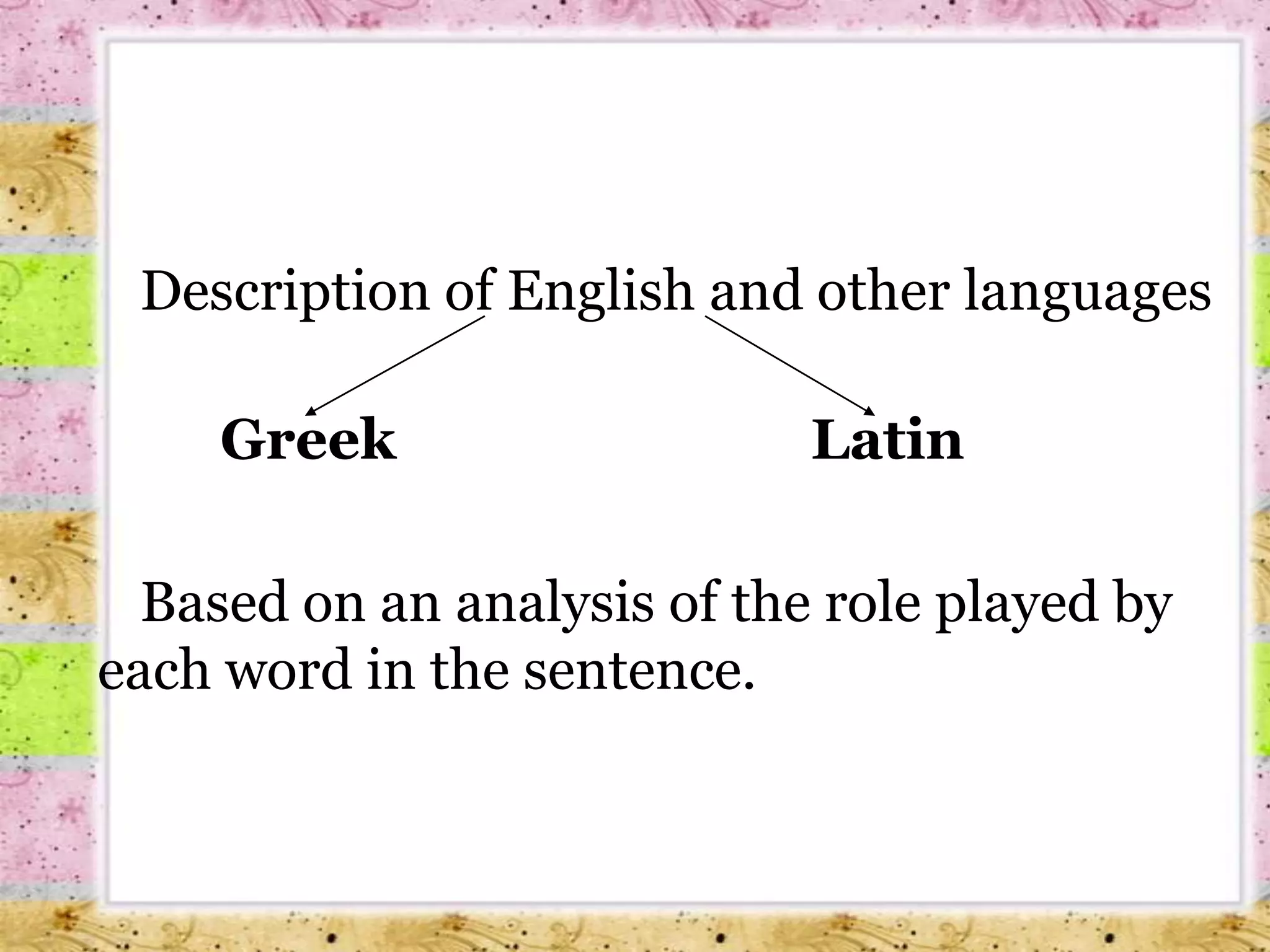
		Description of English and other languagesGreek                             Latin		Based on an analysis of the role played by each word in the sentence.
		 “Teachers who wish to maintain a balanced view of linguistics should not overlook the fact that traditional grammar has many useful virtues.  The traditional handbooks provided an array of terms and distinctions which most of us used in learning to talk about our own language, and which many people continue to find serviceable throughout their lives”                                                                                                                                Allen and Widdowson
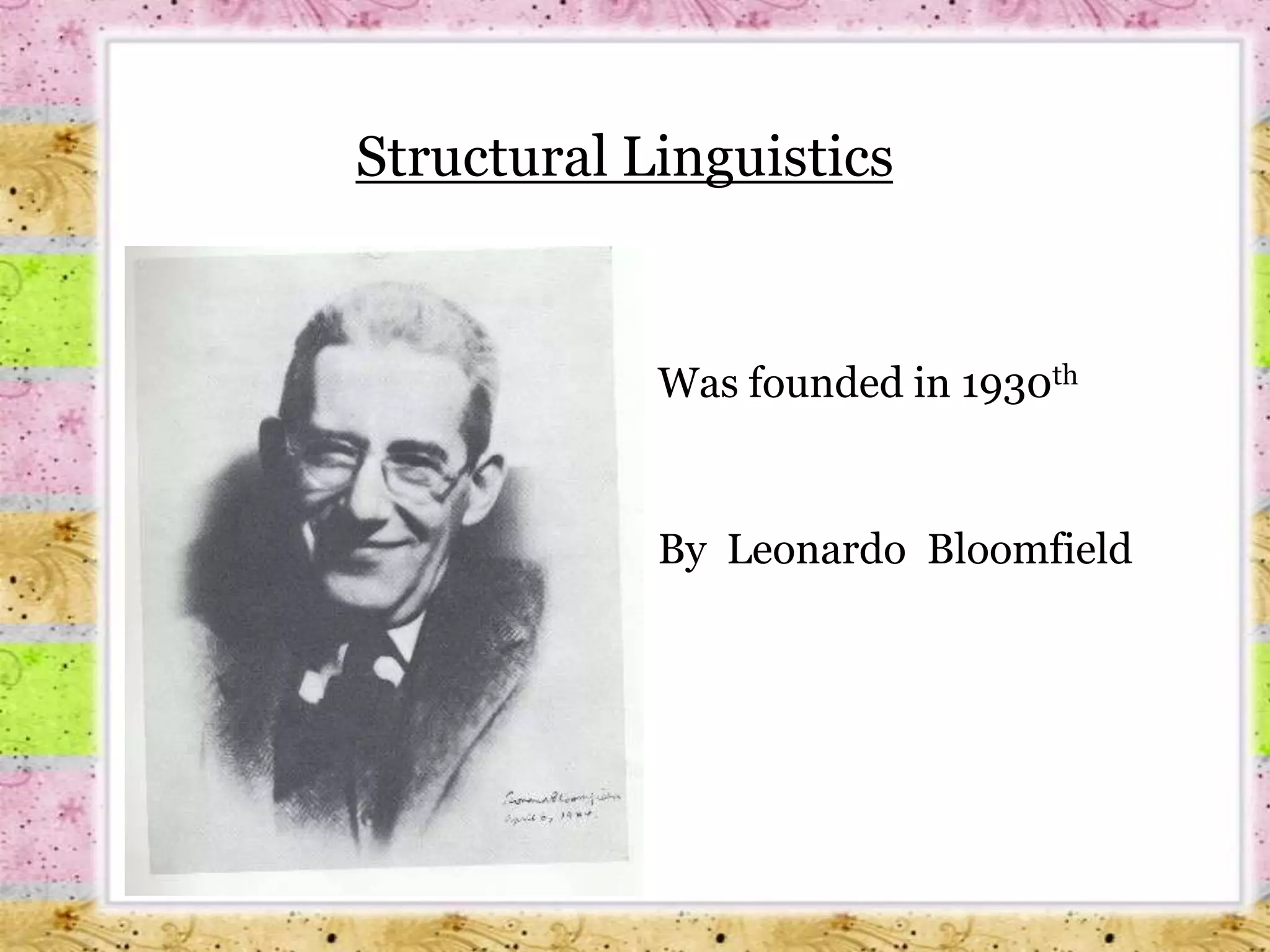
Structural LinguisticsWas founded in 1930thBy  Leonardo  Bloomfield
Structural Linguistics   Peculiarities:      1. The grammar of the language is described in terms of syntagmatic structures which carry the fundamental propositions( statement, interrogative, negative, imperative) and notions ( time, number, gender). By varying words within these structural frameworks, sentences with different meaning can be generated.         2. With the help of the structural linguistic the structural syllabus was created. In such syllabus , items are graded so that  simpler and more immediately useable structures precede the more complex ones.			Example: ESP syllabus based on structural principals                                                   1. Simple present active                                                   2. Simple present passive                                                   3. Simple present passive and active                                                   4. -ing forms                                                   5. Present Perfect; Present Continuous                                                   6. Infinitives                                                   7. Anomalous Finites                                                   8. Past Perfect
Transformational Generative (TG) grammar1. 	John is easy to please.	John is eager to please.The City Bank has taken over Acme Holdings.	Acme Holdings has been taken over by the City Bank.
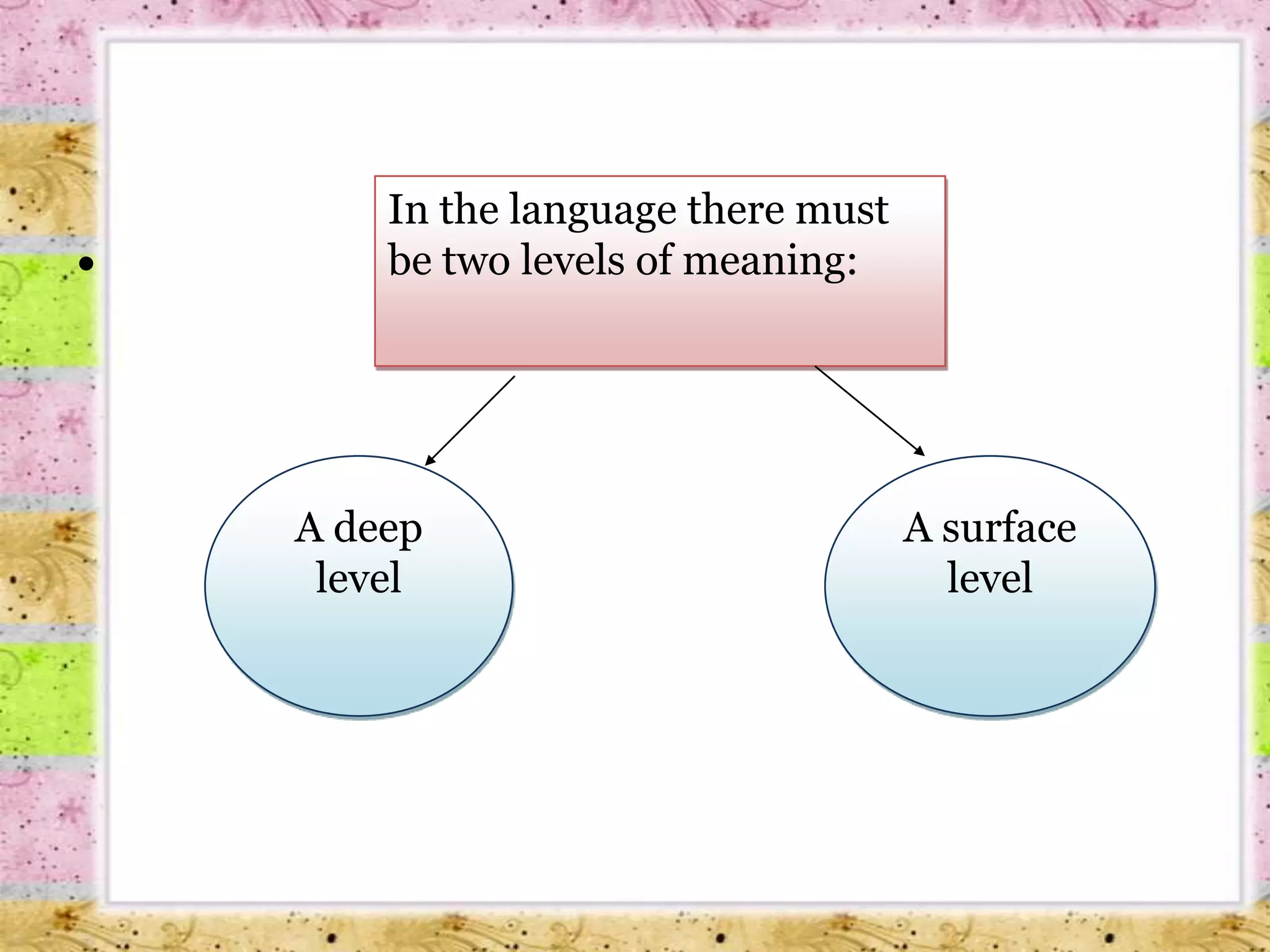
In the language there must be two levels of meaning:A deep levelA surface level
Language can be looked at from the point of view:Of formOf functionWhy does language exist?   People do things with it:they give information
they promise
they threaten
they make excuses
they seek information
they identify
they classify
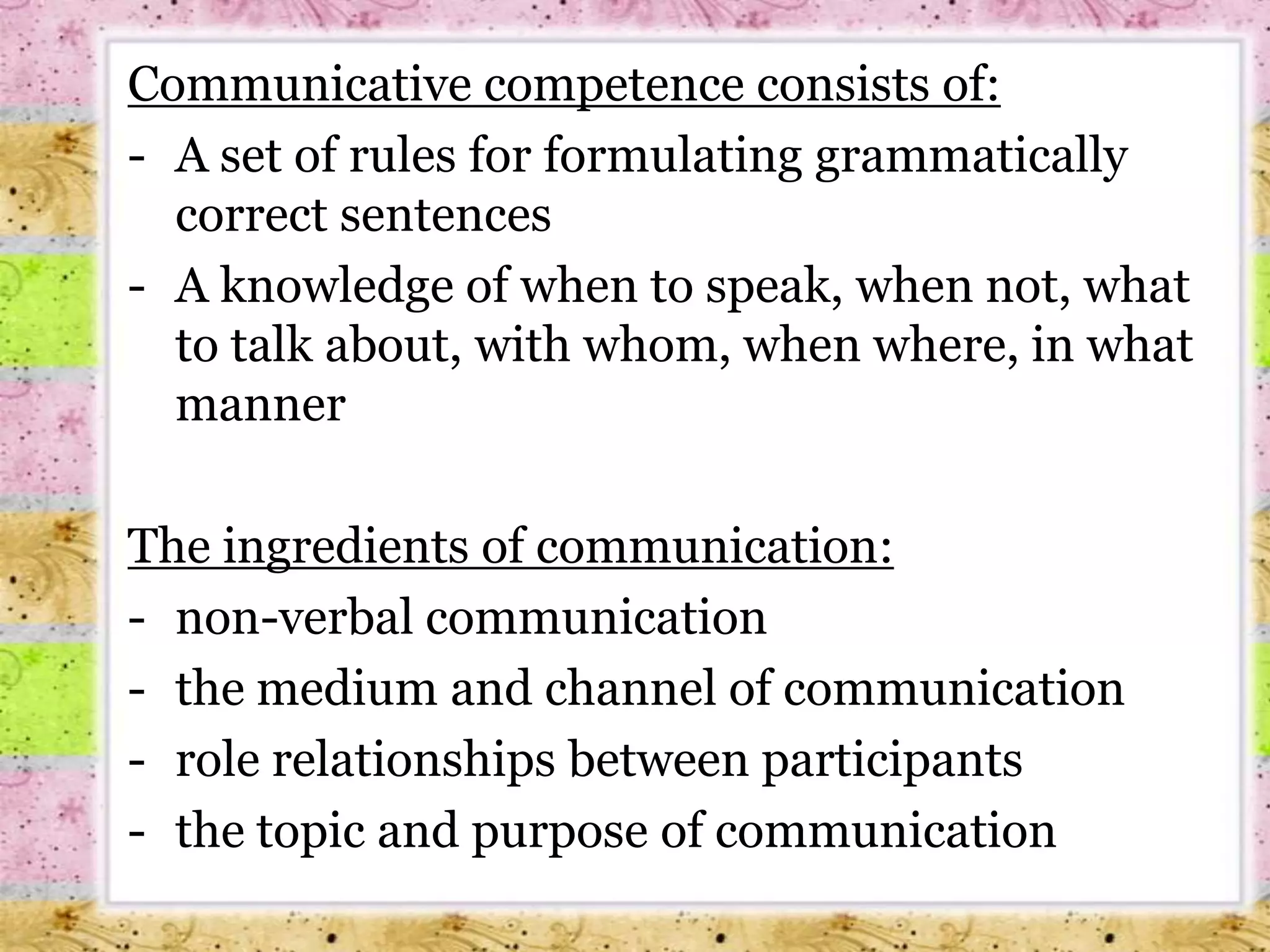
they reportCommunicative competence consists of:A set of rules for formulating grammatically correct sentences
A knowledge of when to speak, when not, what to talk about, with whom, when where, in what mannerThe ingredients of communication:non-verbal communication
the medium and channel of communication
role relationships between participants
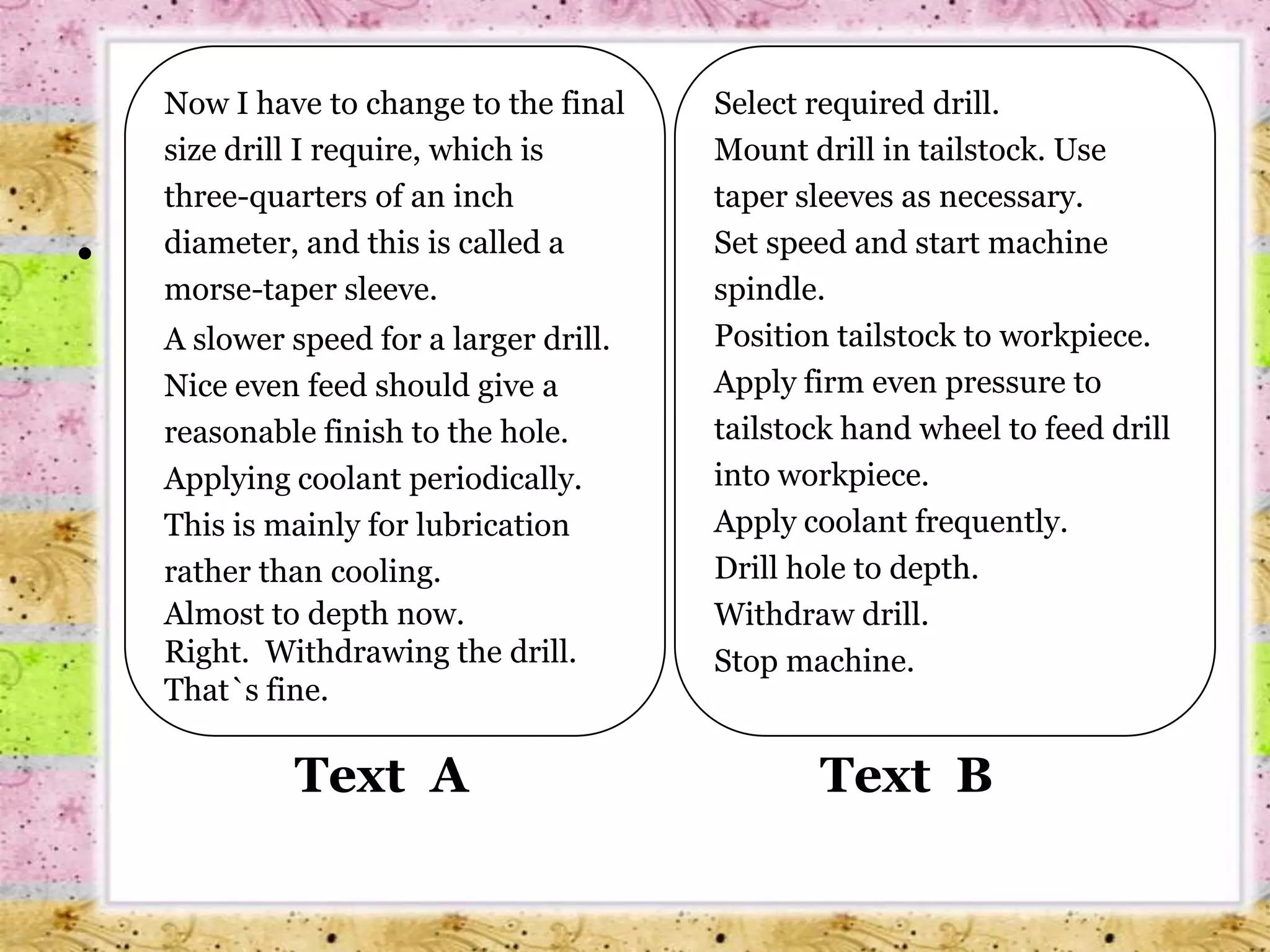
the topic and purpose of communicationText  AText  BNow I have to change to the final size drill I require, which is three-quarters of an inch diameter, and this is called a morse-taper sleeve.A slower speed for a larger drill.Nice even feed should give a reasonable finish to the hole.Applying coolant periodically. This is mainly for lubrication rather than cooling.Almost to depth now.Right.  Withdrawing the drill.That`s fine.Select required drill.Mount drill in tailstock. Use taper sleeves as necessary.Set speed and start machine spindle.Position tailstock to workpiece.Apply firm even pressure to tailstock hand wheel to feed drill into workpiece.Apply coolant frequently.Drill hole to depth.Withdraw drill.Stop machine.
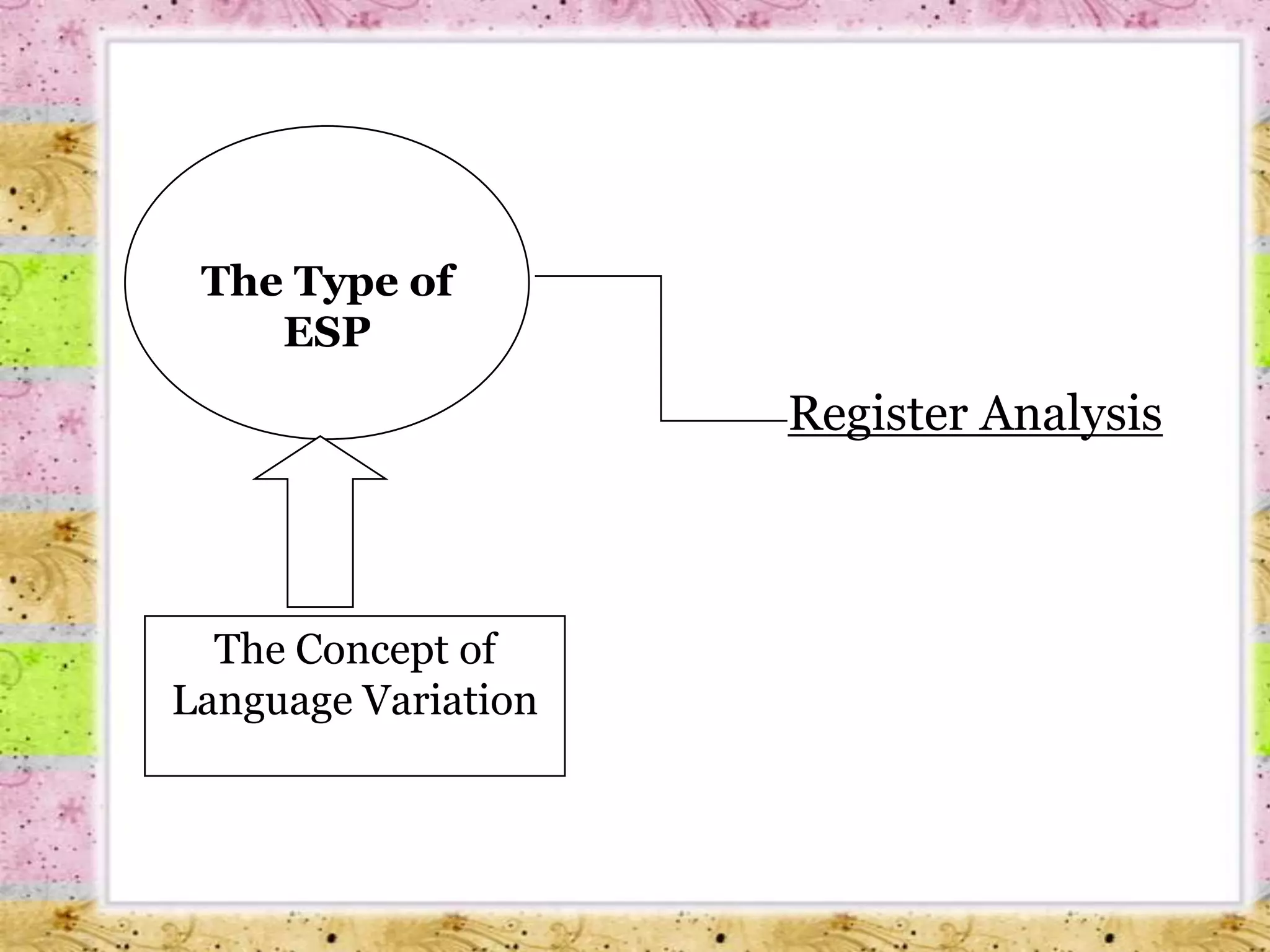
The Type of ESPRegister AnalysisThe Concept of Language Variation

Esp language descriptions

  • 1.
  • 2.
    Classical or TraditionalGrammar - Not all the developments in Linguistics have had pedagogic applications. - We shall give a brief outline of the various ideas about language that have influenced ESP in some way.
  • 3.
    Description of Englishand other languagesGreek Latin Based on an analysis of the role played by each word in the sentence.
  • 4.
    “Teachers whowish to maintain a balanced view of linguistics should not overlook the fact that traditional grammar has many useful virtues. The traditional handbooks provided an array of terms and distinctions which most of us used in learning to talk about our own language, and which many people continue to find serviceable throughout their lives” Allen and Widdowson
  • 5.
    Structural LinguisticsWas foundedin 1930thBy Leonardo Bloomfield
  • 6.
    Structural Linguistics Peculiarities: 1. The grammar of the language is described in terms of syntagmatic structures which carry the fundamental propositions( statement, interrogative, negative, imperative) and notions ( time, number, gender). By varying words within these structural frameworks, sentences with different meaning can be generated. 2. With the help of the structural linguistic the structural syllabus was created. In such syllabus , items are graded so that simpler and more immediately useable structures precede the more complex ones. Example: ESP syllabus based on structural principals 1. Simple present active 2. Simple present passive 3. Simple present passive and active 4. -ing forms 5. Present Perfect; Present Continuous 6. Infinitives 7. Anomalous Finites 8. Past Perfect
  • 7.
    Transformational Generative (TG)grammar1. John is easy to please. John is eager to please.The City Bank has taken over Acme Holdings. Acme Holdings has been taken over by the City Bank.
  • 8.
    In the languagethere must be two levels of meaning:A deep levelA surface level
  • 9.
    Language can belooked at from the point of view:Of formOf functionWhy does language exist? People do things with it:they give information
  • 10.
  • 11.
  • 12.
  • 13.
  • 14.
  • 15.
  • 16.
    they reportCommunicative competenceconsists of:A set of rules for formulating grammatically correct sentences
  • 17.
    A knowledge ofwhen to speak, when not, what to talk about, with whom, when where, in what mannerThe ingredients of communication:non-verbal communication
  • 18.
    the medium andchannel of communication
  • 19.
  • 20.
    the topic andpurpose of communicationText AText BNow I have to change to the final size drill I require, which is three-quarters of an inch diameter, and this is called a morse-taper sleeve.A slower speed for a larger drill.Nice even feed should give a reasonable finish to the hole.Applying coolant periodically. This is mainly for lubrication rather than cooling.Almost to depth now.Right. Withdrawing the drill.That`s fine.Select required drill.Mount drill in tailstock. Use taper sleeves as necessary.Set speed and start machine spindle.Position tailstock to workpiece.Apply firm even pressure to tailstock hand wheel to feed drill into workpiece.Apply coolant frequently.Drill hole to depth.Withdraw drill.Stop machine.
  • 21.
    The Type ofESPRegister AnalysisThe Concept of Language Variation
  • 22.
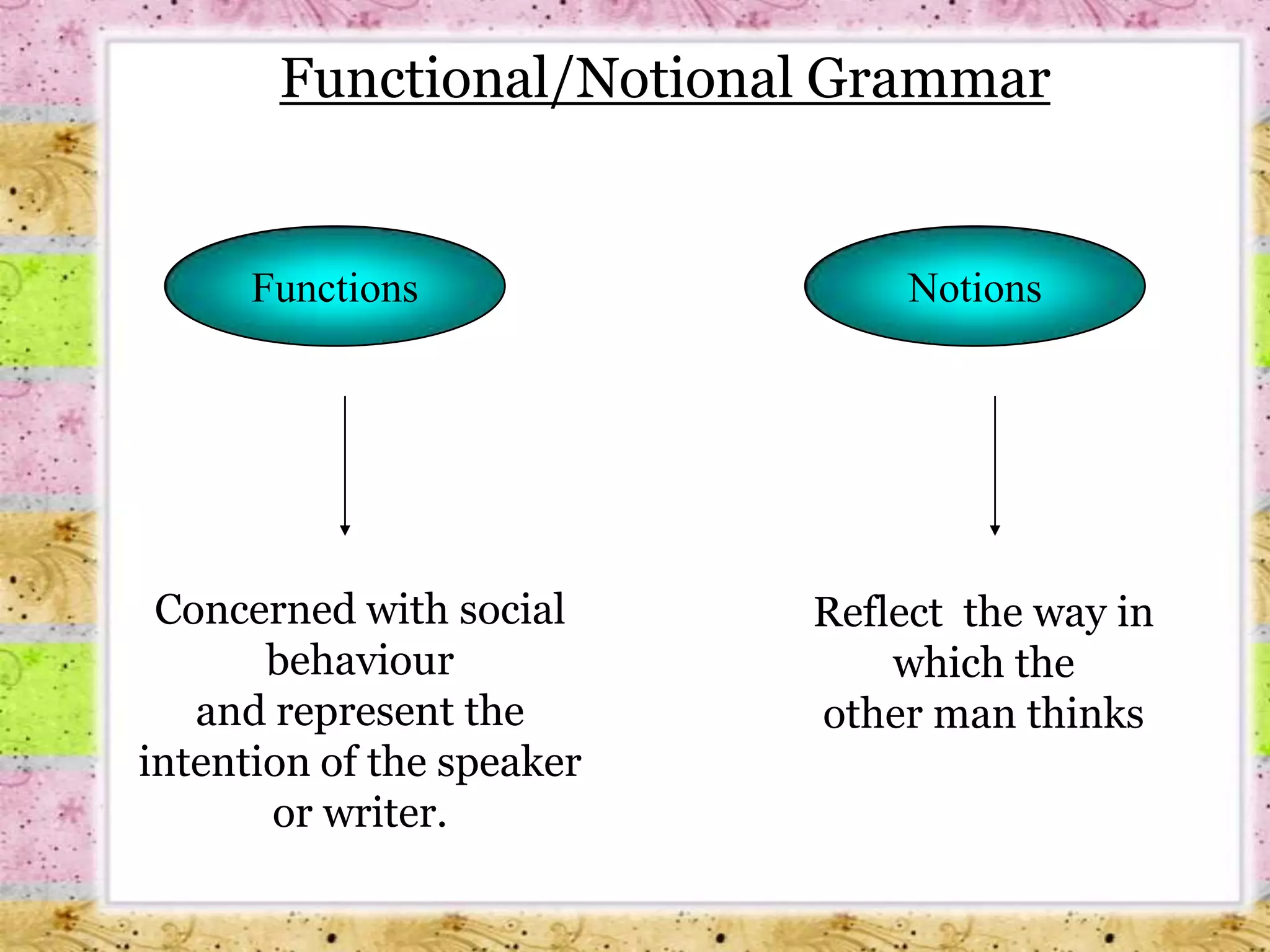
    Functional/Notional GrammarFunctionsNotionsConcerned withsocial behaviour and represent the intention of the speaker or writer.Reflect the way in which theother man thinks
  • 23.
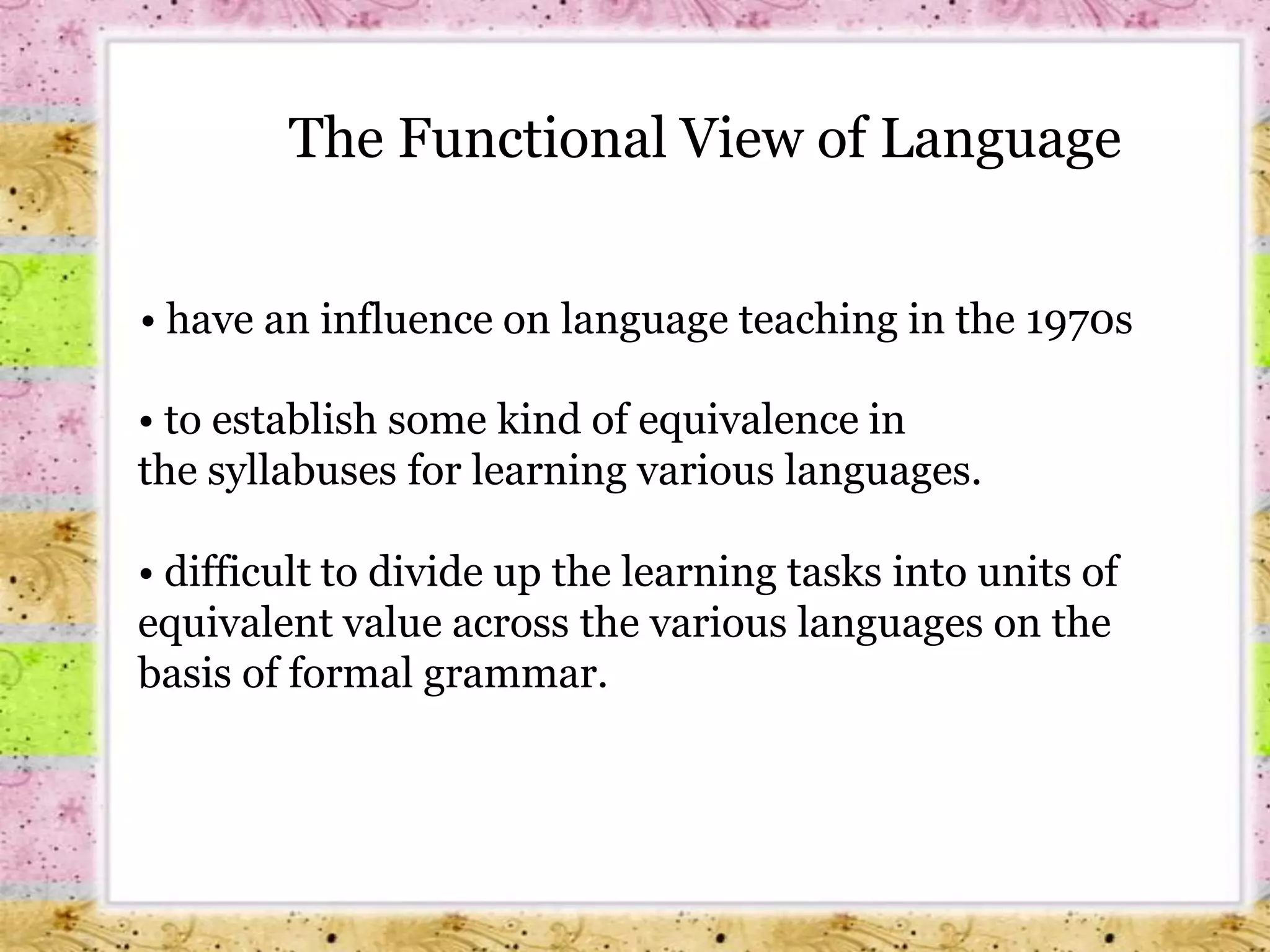
    The Functional Viewof Language have an influence on language teaching in the 1970s
  • 24.
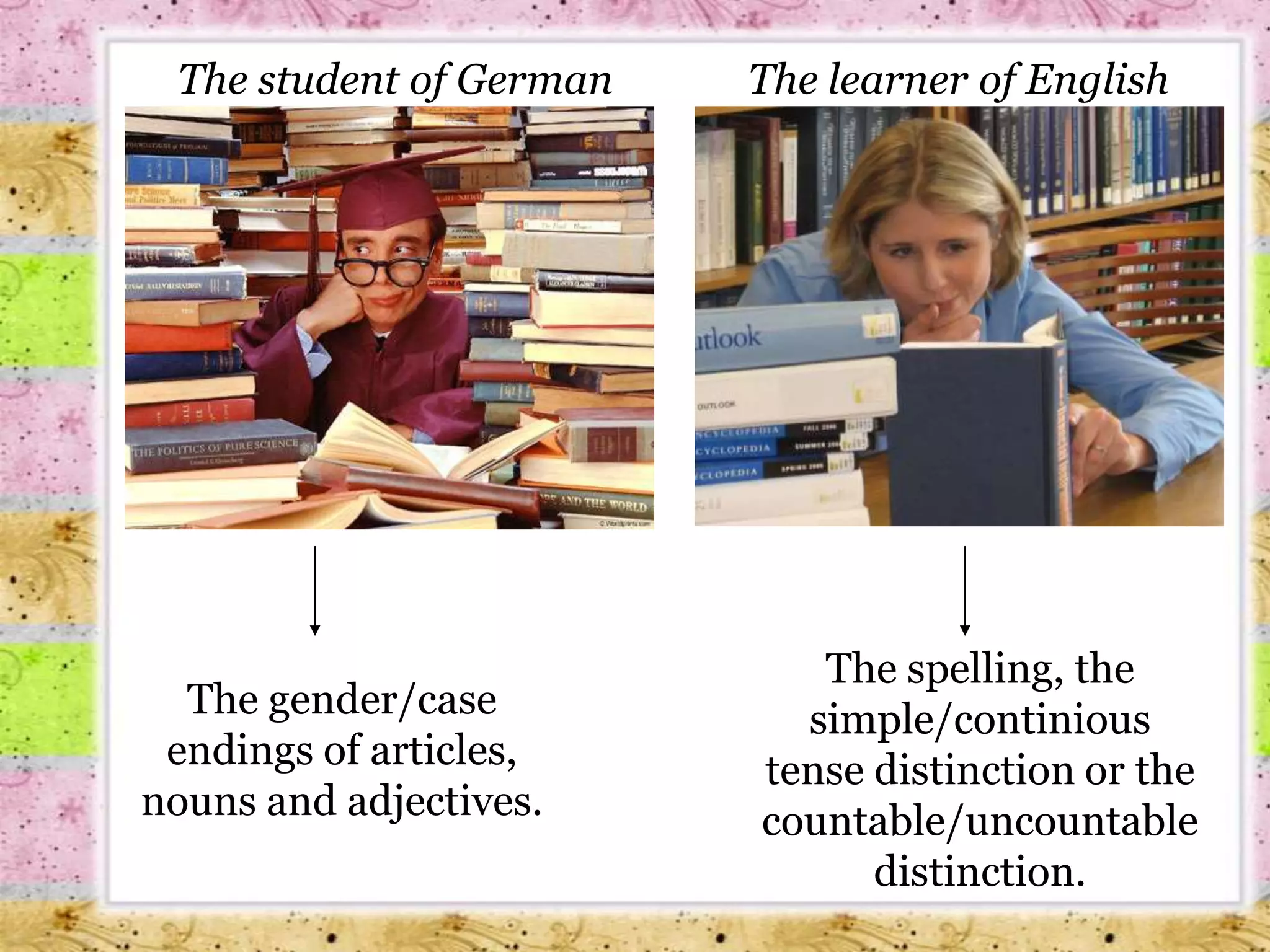
    to establishsome kind of equivalence in the syllabuses for learning various languages. difficult to divide up the learning tasks into units of equivalent value across the various languages on the basis of formal grammar.The student of GermanThe learner of EnglishThe spelling, the simple/continious tense distinction or the countable/uncountable distinction.The gender/case endings of articles,nouns and adjectives.
  • 25.
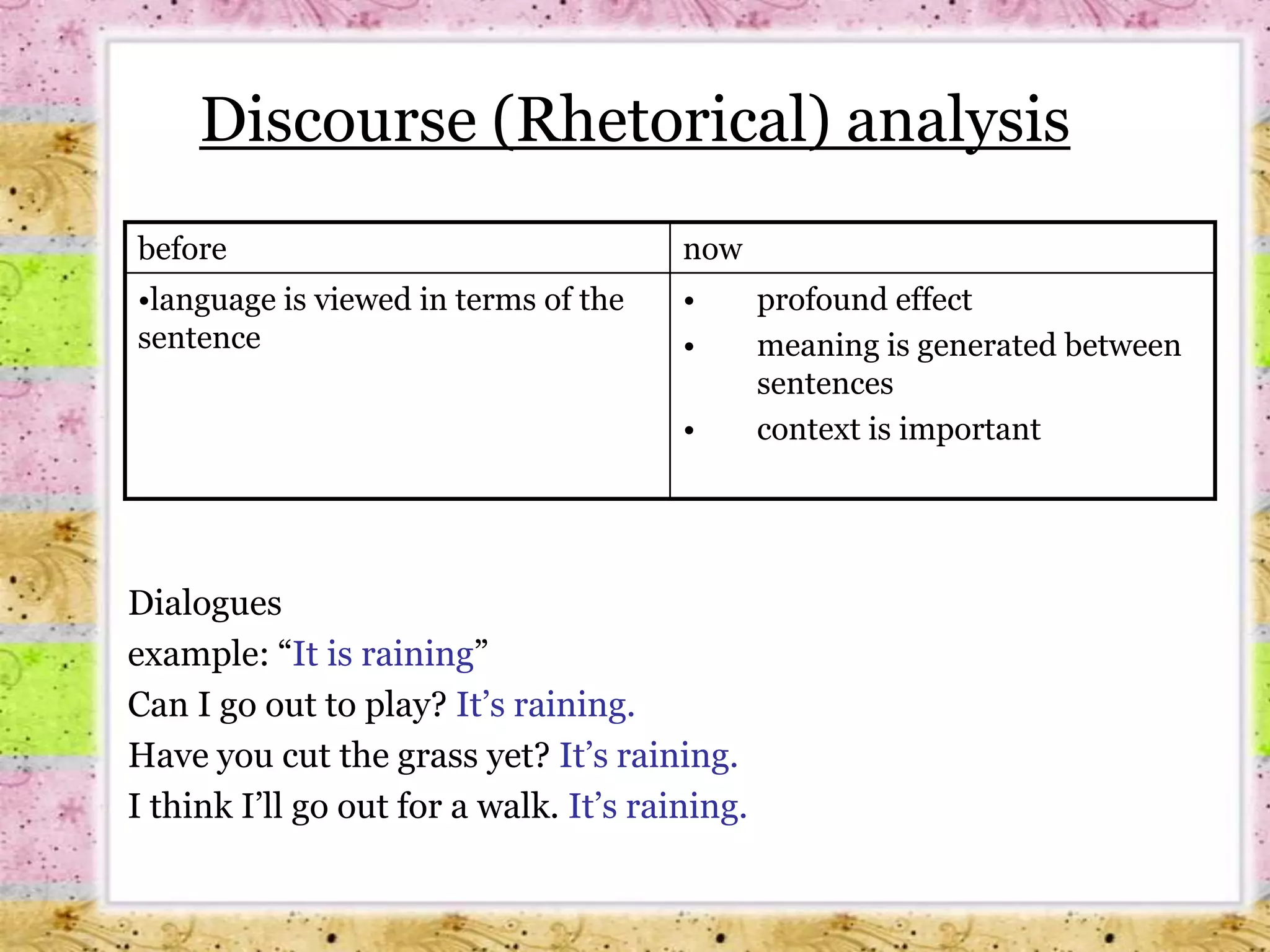
    Discourse (Rhetorical) analysisDialoguesexample: “It is raining”Can I go out to play? It’s raining.Have you cut the grass yet? It’s raining.I think I’ll go out for a walk. It’s raining.
  • 26.
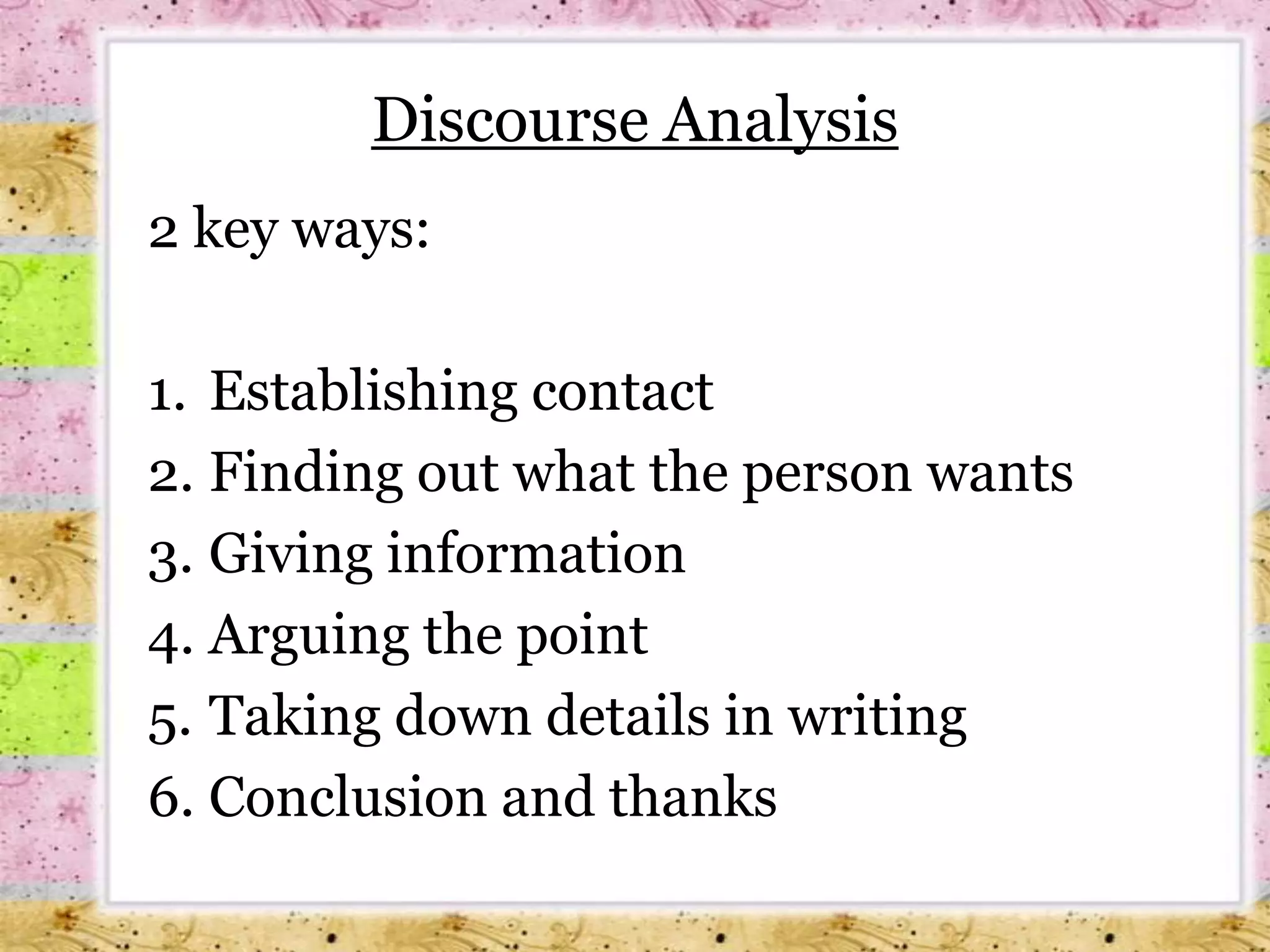
    Discourse Analysis2 keyways: Establishing contact Finding out what the person wants Giving information Arguing the point Taking down details in writing Conclusion and thanks
  • 27.
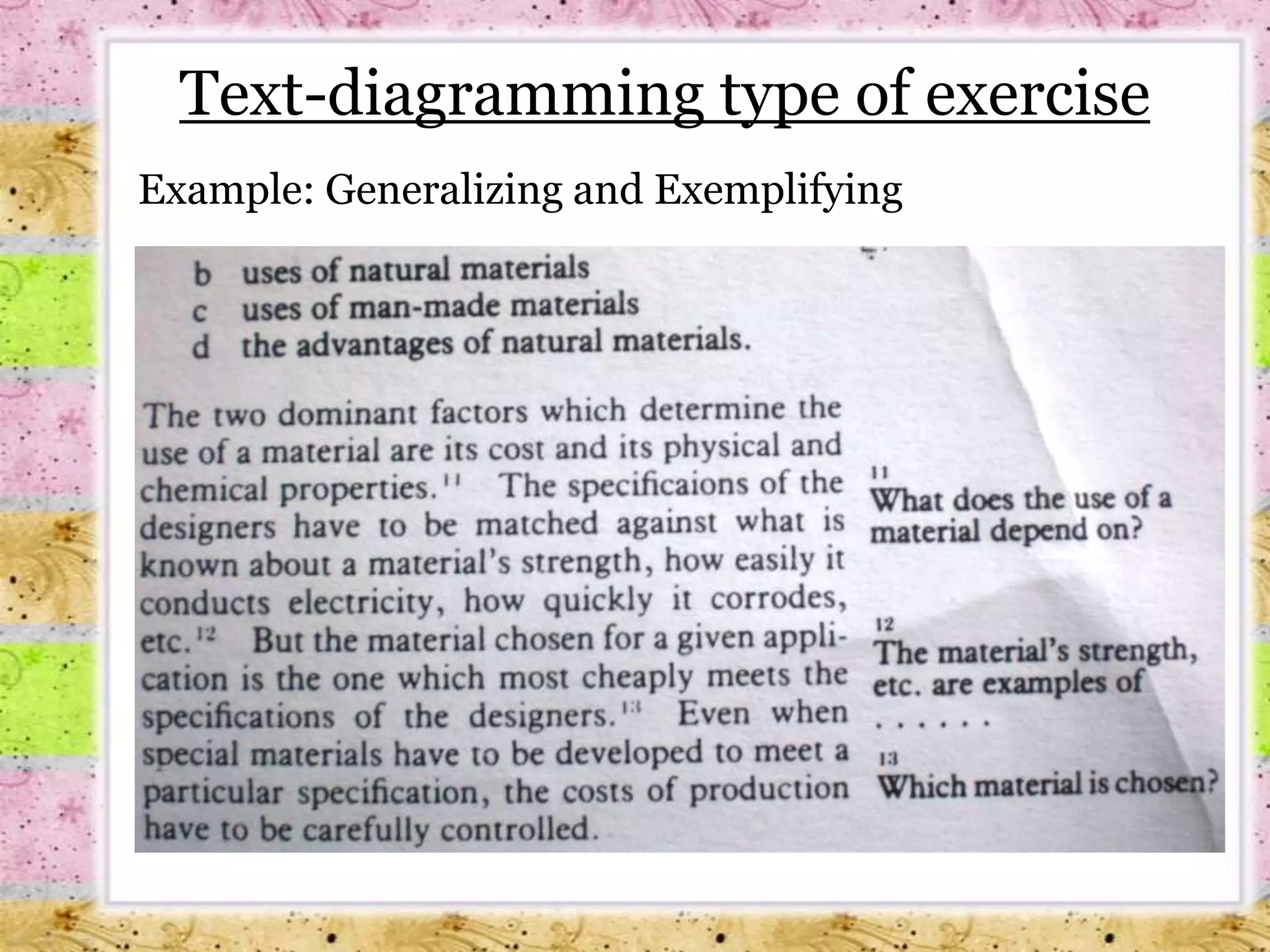
    Text-diagramming type ofexerciseExample: Generalizing and Exemplifying
  • 28.
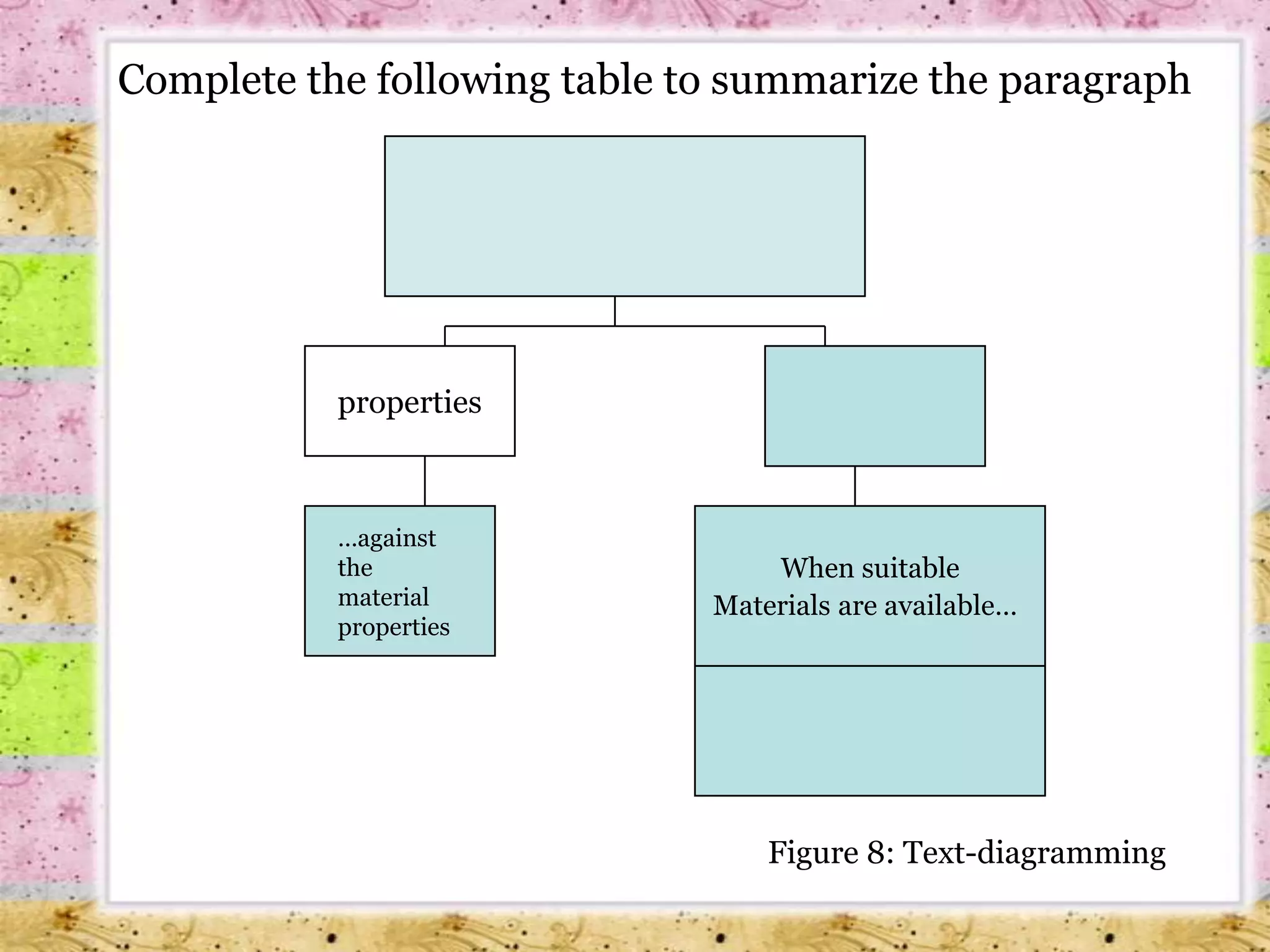
    Complete the followingtable to summarize the paragraphpropertiesWhen suitableMaterials are available……against the material propertiesFigure 8: Text-diagramming
  • 29.
    The approach establishespatterns, but does not account for how these patterns create meaning
  • 30.
    3 lessons whichmust be borne in mind: A) The various developments are not separate entities;B) Describing a language for the purposes of linguistic analysis does not necessarily carry any implications for language learning;C) Describing a language we must make a distinction between what a person does (performance) and what enables them to do (competence)