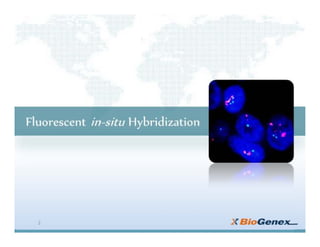
Fluorescent in-situ Hybridization
2
Definition
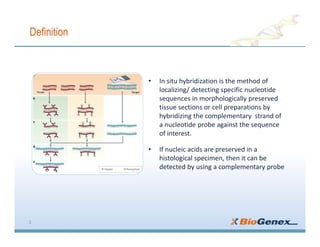
• In situ hybridization is the method of
localizing/ detecting specific nucleotide
sequences in morphologically preserved
tissue sections or cell preparations by
hybridizing the complementary strand of
a nucleotide probe against the sequence
of interest.
• If nucleic acids are preserved in a
histological specimen, then it can be
detected by using a complementary probe
3
Principle
• Principle is same as that of ISH
• Use of a fluorescent labeled probe differentiates ISH & FISH
• FISH is a cytogenetic technique used to detect and localize
the presence or absence of specific DNA sequences on
chromosomes
4
FISH technique
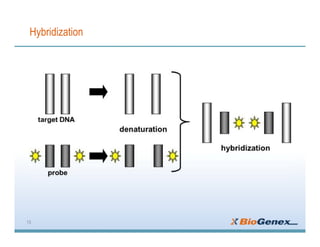
Schematic representation of FISH technique. A DNA probe is tagged with a
fluorescent marker. The probe and target DNA are denatured, and the probe is
allowed to hybridize with the target. The fluorescent tag is then detected with a
fluorescent microscope.
5
Types of Samples Used
• Fixed cell suspension
• Formalin fixed paraffin embedded tissues
6
A
B
C
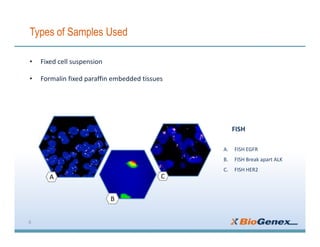
FISH
A. FISH EGFR
B. FISH Break apart ALK
C. FISH HER2
Diagnostic Applications of FISH
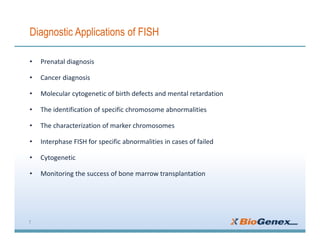
• Prenatal diagnosis
• Cancer diagnosis
• Molecular cytogenetic of birth defects and mental retardation
• The identification of specific chromosome abnormalities
• The characterization of marker chromosomes
• Interphase FISH for specific abnormalities in cases of failed
• Cytogenetic
• Monitoring the success of bone marrow transplantation
7
Protocol Outline
8
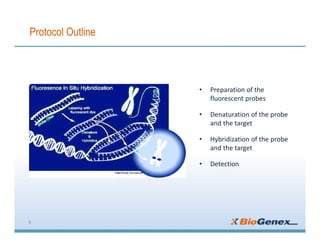
• Preparation of the
fluorescent probes
• Denaturation of the probe
and the target
• Hybridization of the probe
and the target
• Detection
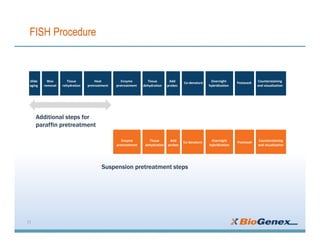
FISH Procedure
9
FISH Procedure
10
FISH Procedure
11
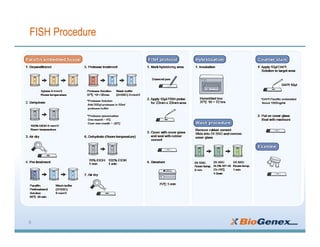
Slide
aging
Wax
removal
Tissue
rehydration
Heat
pretreatment
Enzyme
pretreatment
Tissue
dehydration
Add
probes
Co-denature Overnight
hybridization
Postwash Counterstaining
and visualisation
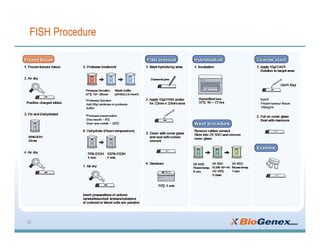
Enzyme
pretreatment
Tissue
dehydration
Add
probes
Co-denature Overnight
hybridization
Postwash Counterstaining
and visualisation
Additional steps for
paraffin pretreatment
Suspension pretreatment steps
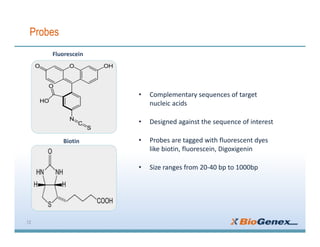
Probes
• Complementary sequences of target
nucleic acids
• Designed against the sequence of interest
• Probes are tagged with fluorescent dyes
like biotin, fluorescein, Digoxigenin
• Size ranges from 20-40 bp to 1000bp
12
Fluorescein
Biotin
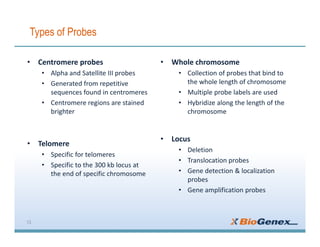
Types of Probes
• Centromere probes
• Alpha and Satellite III probes
• Generated from repetitive
sequences found in centromeres
• Centromere regions are stained
brighter
• Telomere
• Specific for telomeres
• Specific to the 300 kb locus at
the end of specific chromosome
13
• Whole chromosome
• Collection of probes that bind to
the whole length of chromosome
• Multiple probe labels are used
• Hybridize along the length of the
chromosome
• Locus
• Deletion
• Translocation probes
• Gene detection & localization
probes
• Gene amplification probes
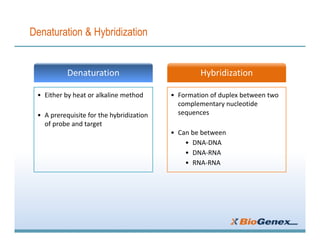
Denaturation & Hybridization
DenaturationDenaturation
• Either by heat or alkaline method
• A prerequisite for the hybridization
of probe and target
HybridizationHybridization
• Formation of duplex between two
complementary nucleotide
sequences
• Can be between
• DNA-DNA
• DNA-RNA
• RNA-RNA
15
Hybridization
Detection & Visualization
DetectionDetection
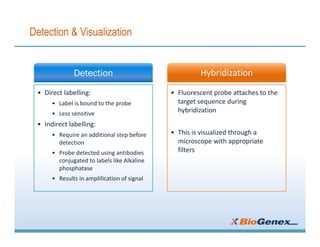
• Direct labelling:
• Label is bound to the probe
• Less sensitive
• Indirect labelling:
• Require an additional step before
detection
• Probe detected using antibodies
conjugated to labels like Alkaline
phosphatase
• Results in amplification of signal
HybridizationHybridization
• Fluorescent probe attaches to the
target sequence during
hybridization
• This is visualized through a
microscope with appropriate
filters
Thank You
Please visit www.biogenex.com for more details on our product portfolio
17

Fluorescent in-situ Hybridization (FISH)

  • 1.
  • 2.
  • 3.
    Definition • In situhybridization is the method of localizing/ detecting specific nucleotide sequences in morphologically preserved tissue sections or cell preparations by hybridizing the complementary strand of a nucleotide probe against the sequence of interest. • If nucleic acids are preserved in a histological specimen, then it can be detected by using a complementary probe 3
  • 4.
    Principle • Principle issame as that of ISH • Use of a fluorescent labeled probe differentiates ISH & FISH • FISH is a cytogenetic technique used to detect and localize the presence or absence of specific DNA sequences on chromosomes 4
  • 5.
    FISH technique Schematic representationof FISH technique. A DNA probe is tagged with a fluorescent marker. The probe and target DNA are denatured, and the probe is allowed to hybridize with the target. The fluorescent tag is then detected with a fluorescent microscope. 5
  • 6.
    Types of SamplesUsed • Fixed cell suspension • Formalin fixed paraffin embedded tissues 6 A B C FISH A. FISH EGFR B. FISH Break apart ALK C. FISH HER2
  • 7.
    Diagnostic Applications ofFISH • Prenatal diagnosis • Cancer diagnosis • Molecular cytogenetic of birth defects and mental retardation • The identification of specific chromosome abnormalities • The characterization of marker chromosomes • Interphase FISH for specific abnormalities in cases of failed • Cytogenetic • Monitoring the success of bone marrow transplantation 7
  • 8.
    Protocol Outline 8 • Preparationof the fluorescent probes • Denaturation of the probe and the target • Hybridization of the probe and the target • Detection
  • 9.
  • 10.
  • 11.
    FISH Procedure 11 Slide aging Wax removal Tissue rehydration Heat pretreatment Enzyme pretreatment Tissue dehydration Add probes Co-denature Overnight hybridization PostwashCounterstaining and visualisation Enzyme pretreatment Tissue dehydration Add probes Co-denature Overnight hybridization Postwash Counterstaining and visualisation Additional steps for paraffin pretreatment Suspension pretreatment steps
  • 12.
    Probes • Complementary sequencesof target nucleic acids • Designed against the sequence of interest • Probes are tagged with fluorescent dyes like biotin, fluorescein, Digoxigenin • Size ranges from 20-40 bp to 1000bp 12 Fluorescein Biotin
  • 13.
    Types of Probes •Centromere probes • Alpha and Satellite III probes • Generated from repetitive sequences found in centromeres • Centromere regions are stained brighter • Telomere • Specific for telomeres • Specific to the 300 kb locus at the end of specific chromosome 13 • Whole chromosome • Collection of probes that bind to the whole length of chromosome • Multiple probe labels are used • Hybridize along the length of the chromosome • Locus • Deletion • Translocation probes • Gene detection & localization probes • Gene amplification probes
  • 14.
    Denaturation & Hybridization DenaturationDenaturation •Either by heat or alkaline method • A prerequisite for the hybridization of probe and target HybridizationHybridization • Formation of duplex between two complementary nucleotide sequences • Can be between • DNA-DNA • DNA-RNA • RNA-RNA
  • 15.
  • 16.
    Detection & Visualization DetectionDetection •Direct labelling: • Label is bound to the probe • Less sensitive • Indirect labelling: • Require an additional step before detection • Probe detected using antibodies conjugated to labels like Alkaline phosphatase • Results in amplification of signal HybridizationHybridization • Fluorescent probe attaches to the target sequence during hybridization • This is visualized through a microscope with appropriate filters
  • 17.
    Thank You Please visitwww.biogenex.com for more details on our product portfolio 17