Immunohistochemistry
2
Introduction
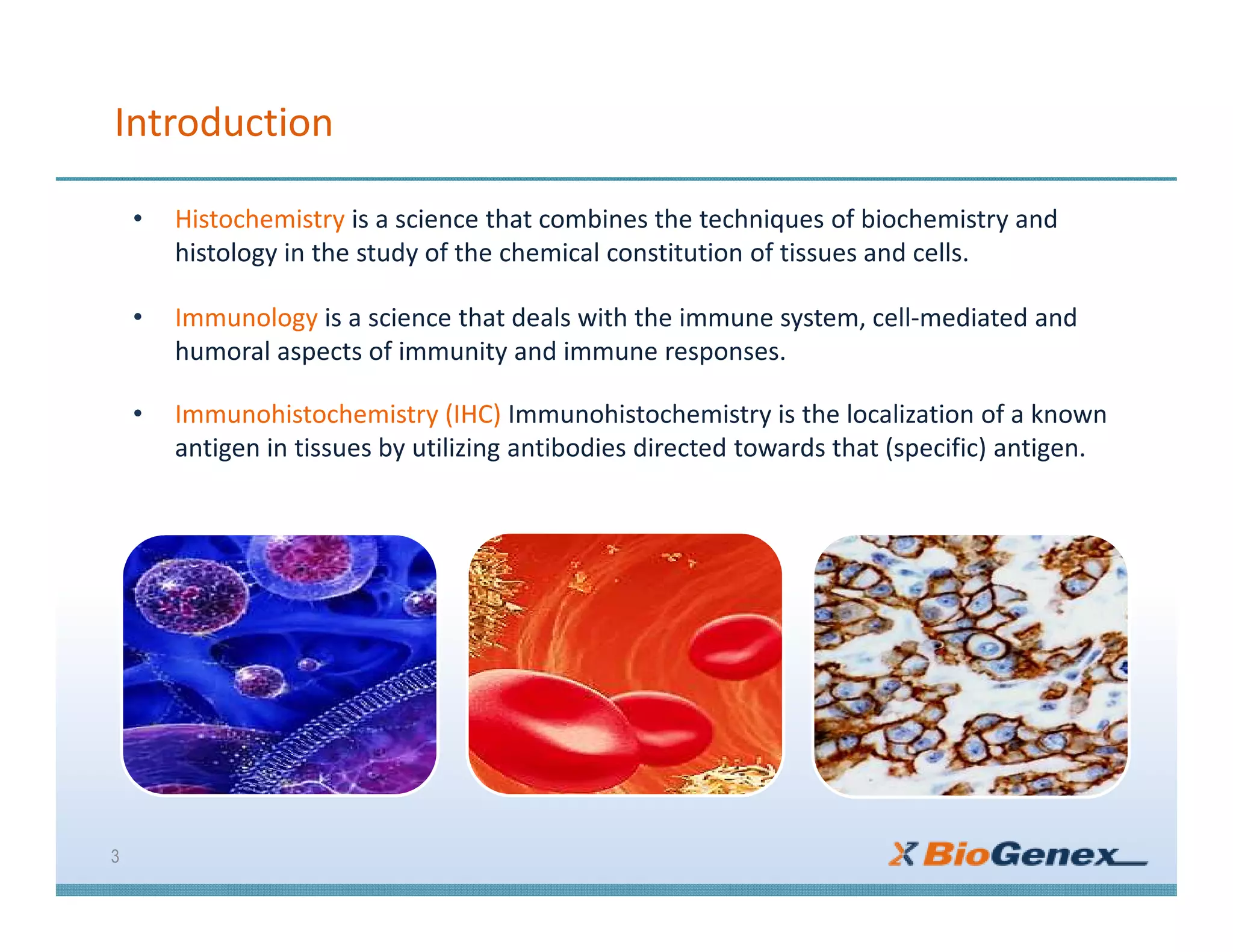
• Histochemistry is a science that combines the techniques of biochemistry and
histology in the study of the chemical constitution of tissues and cells.
• Immunology is a science that deals with the immune system, cell-mediated and
humoral aspects of immunity and immune responses.
• Immunohistochemistry (IHC) Immunohistochemistry is the localization of a known
antigen in tissues by utilizing antibodies directed towards that (specific) antigen.
3
Immunohistochemistry
4
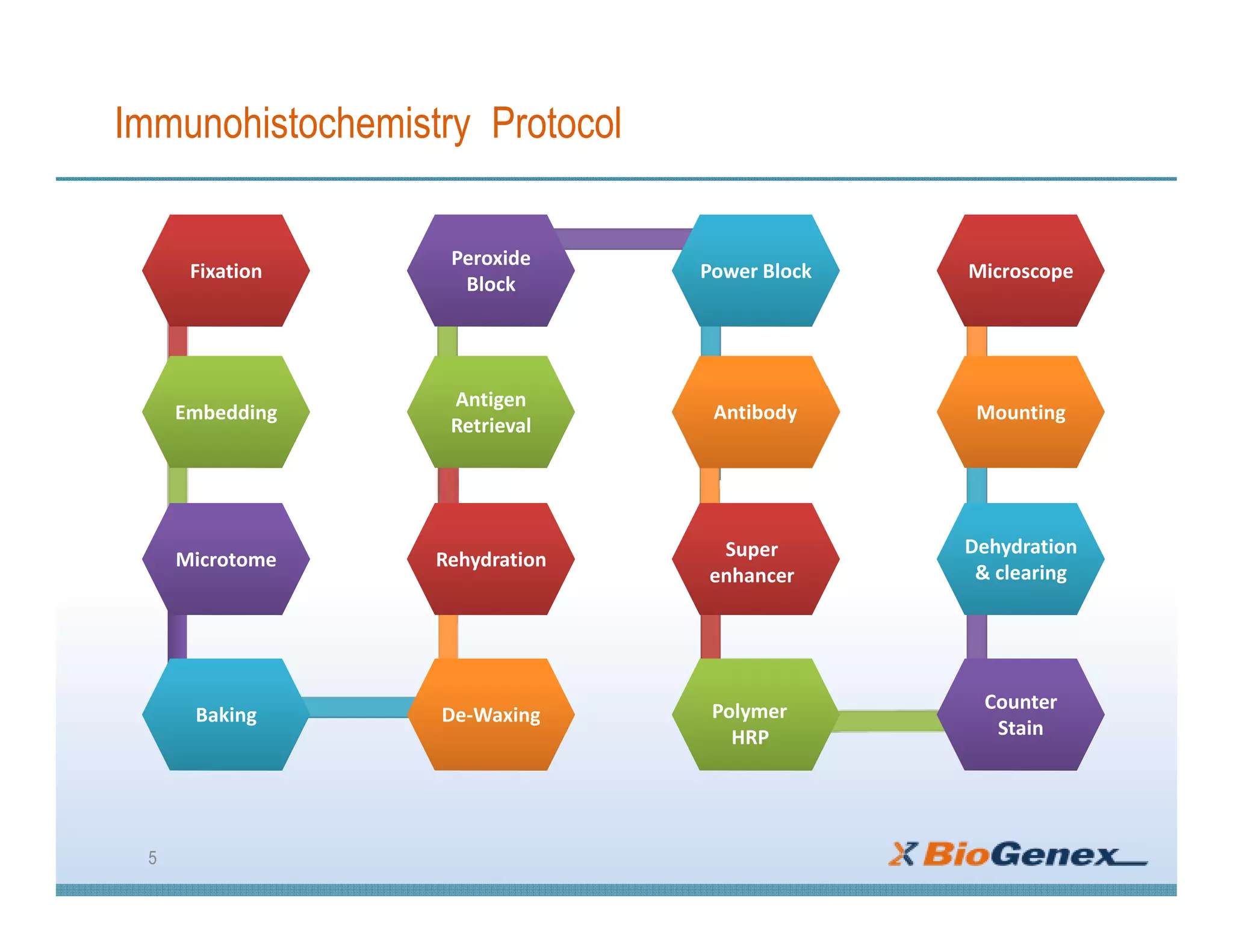
Immunohistochemistry Protocol
5
De-WaxingDe-Waxing
RehydrationRehydration
Antigen
Retrieval
Antigen
Retrieval
Peroxide
Block
Peroxide
Block
Power BlockPower Block
Counter
Stain
Counter
Stain
Dehydration
& clearing
Dehydration
& clearing
MountingMounting
MicroscopeMicroscopeFixationFixation
EmbeddingEmbedding
MicrotomeMicrotome
BakingBaking
Antibody
Super
enhancer
Polymer
HRP
Immunohistochemistry
Steps - Fixation
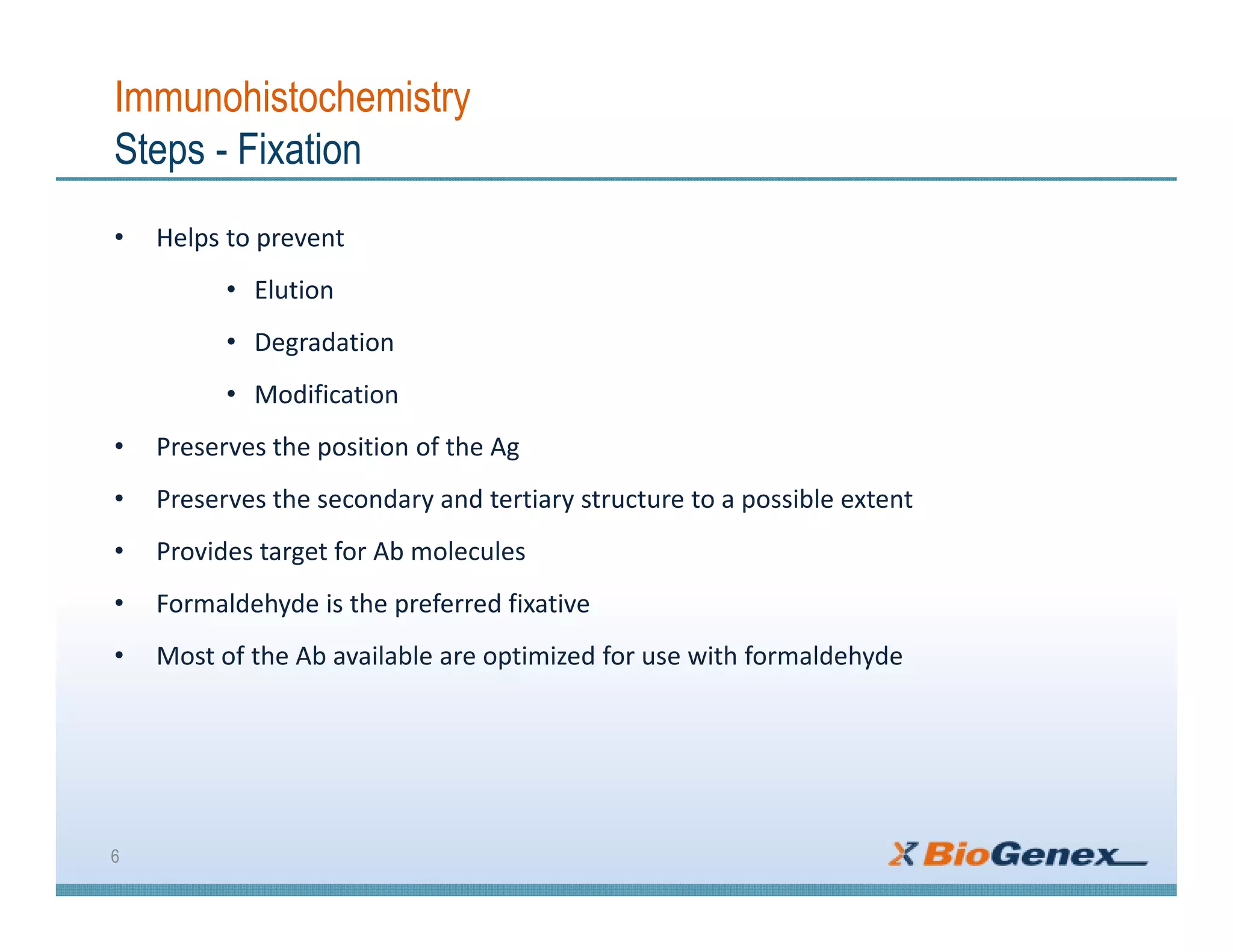
• Helps to prevent
• Elution
• Degradation
• Modification
• Preserves the position of the Ag
• Preserves the secondary and tertiary structure to a possible extent
• Provides target for Ab molecules
• Formaldehyde is the preferred fixative
• Most of the Ab available are optimized for use with formaldehyde
6
Immunohistochemistry
Steps – Slide preparation
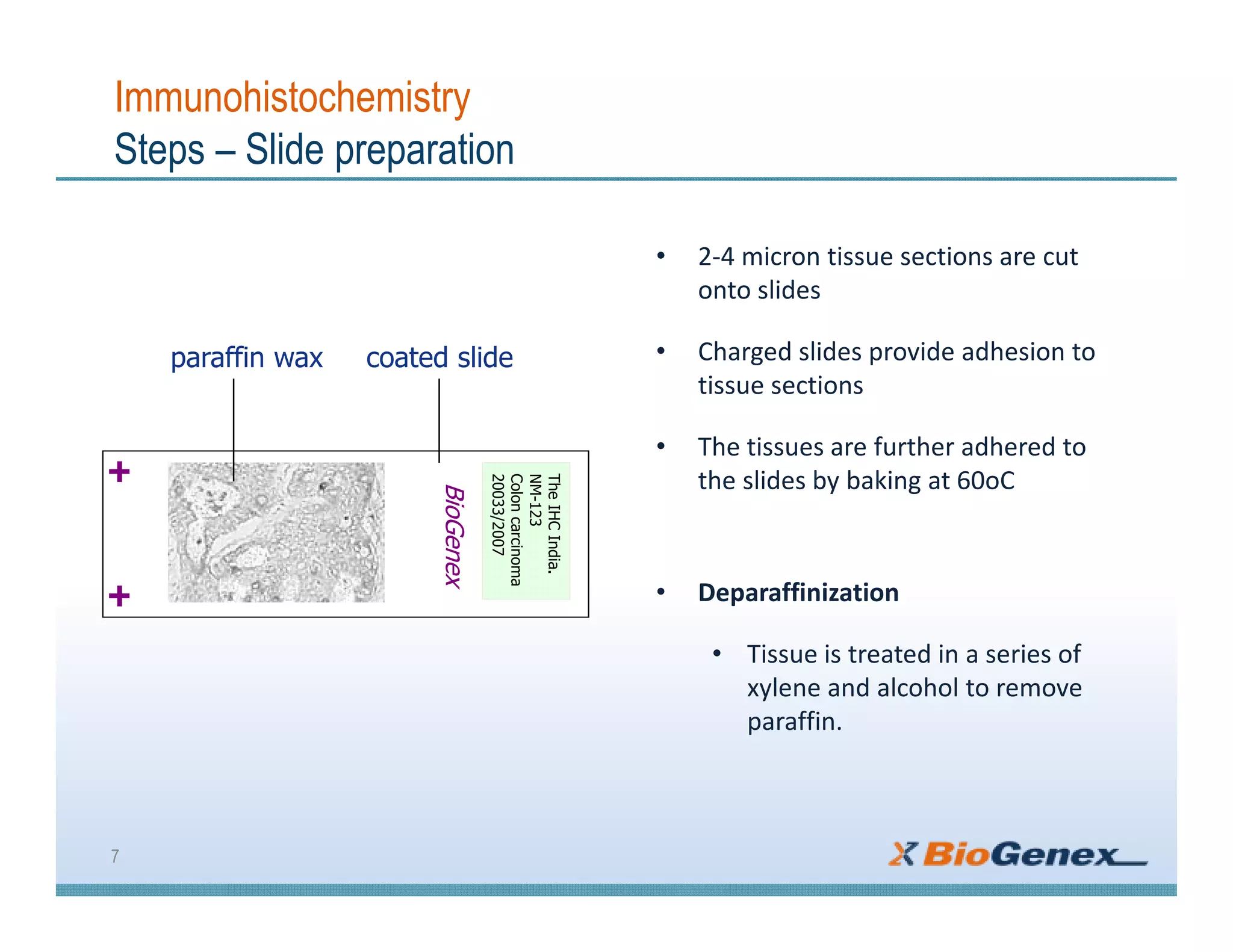
• 2-4 micron tissue sections are cut
onto slides
• Charged slides provide adhesion to
tissue sections
• The tissues are further adhered to
the slides by baking at 60oC
• Deparaffinization
• Tissue is treated in a series of
xylene and alcohol to remove
paraffin.
7
BioGenex
TheIHCIndia.
NM-123
Coloncarcinoma
20033/2007
paraffin wax coated slide
Immunohistochemistry
Steps – Antigen Retrieval
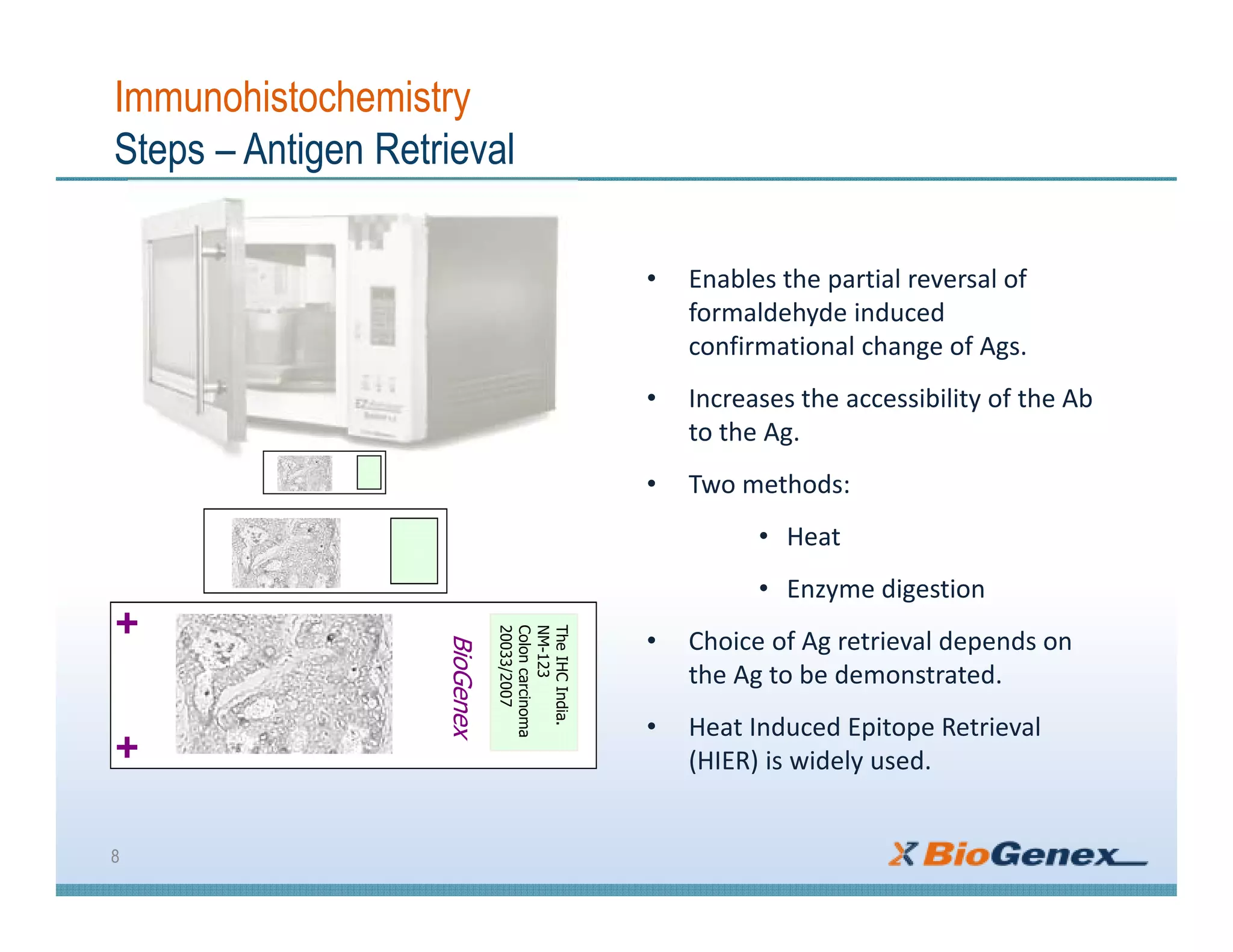
• Enables the partial reversal of
formaldehyde induced
confirmational change of Ags.
• Increases the accessibility of the Ab
to the Ag.
• Two methods:
• Heat
• Enzyme digestion
• Choice of Ag retrieval depends on
the Ag to be demonstrated.
• Heat Induced Epitope Retrieval
(HIER) is widely used.
8
BioGenex
TheIHCIndia.
NM-123
Coloncarcinoma
20033/2007
Immunohistochemistry
Pre-treatment: HIER
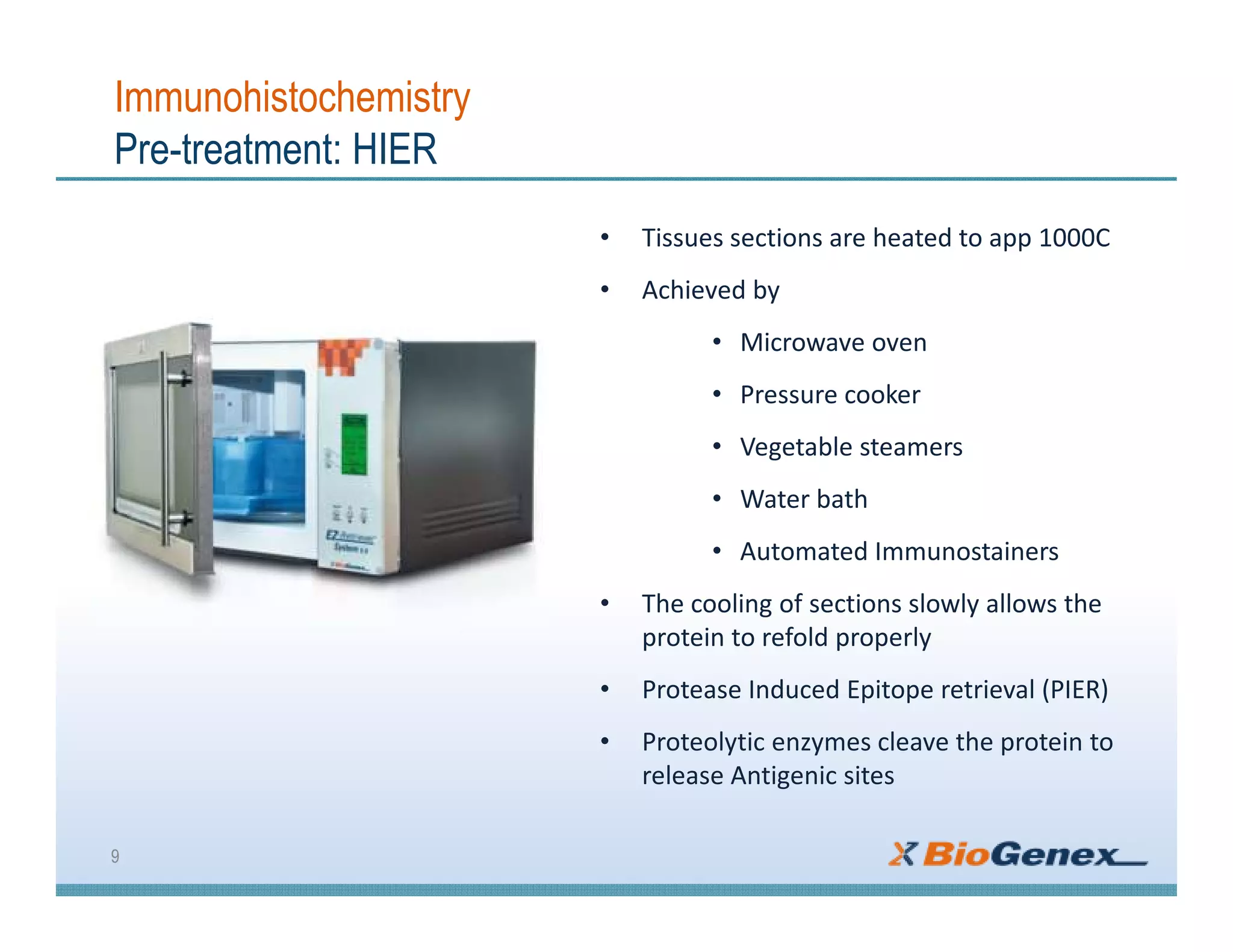
• Tissues sections are heated to app 1000C
• Achieved by
• Microwave oven
• Pressure cooker
• Vegetable steamers
• Water bath
• Automated Immunostainers
• The cooling of sections slowly allows the
protein to refold properly
• Protease Induced Epitope retrieval (PIER)
• Proteolytic enzymes cleave the protein to
release Antigenic sites
9
Immunohistochemistry
Pre-treatment: Blocking
• Peroxide Block
• Blocks endogenous
peroxidases
• 3% H2O2
• Protein Block
• Blocks all non specific sites
• Reduces background
• 10% Normal serum is used
10
BioGenex
TheIHCIndia.
NM-123
Coloncarcinoma
20033/2007
Immunohistochemistry
Primary Antibodies
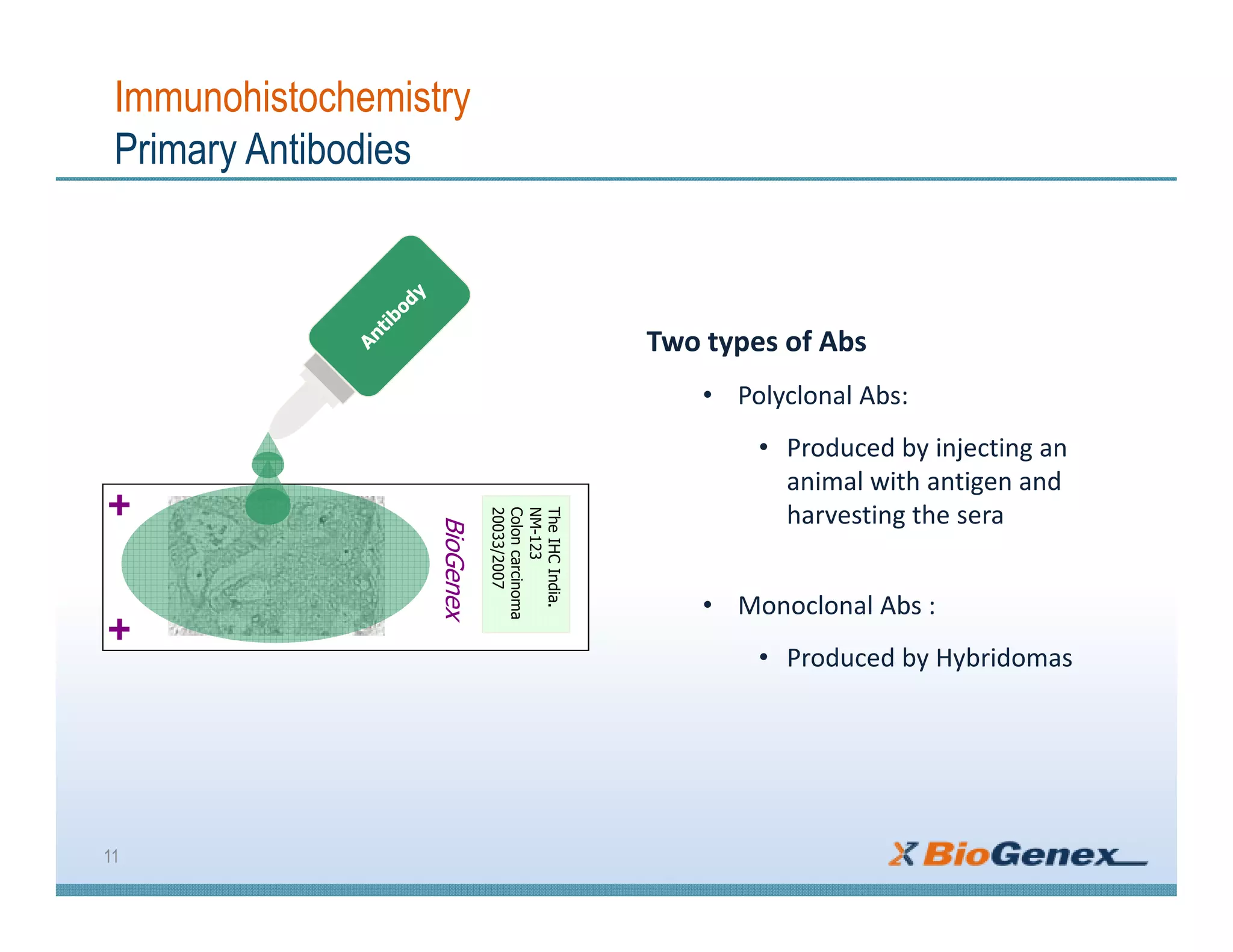
Two types of Abs
• Polyclonal Abs:
• Produced by injecting an
animal with antigen and
harvesting the sera
• Monoclonal Abs :
• Produced by Hybridomas
11
BioGenex
TheIHCIndia.
NM-123
Coloncarcinoma
20033/2007
Immunohistochemistry
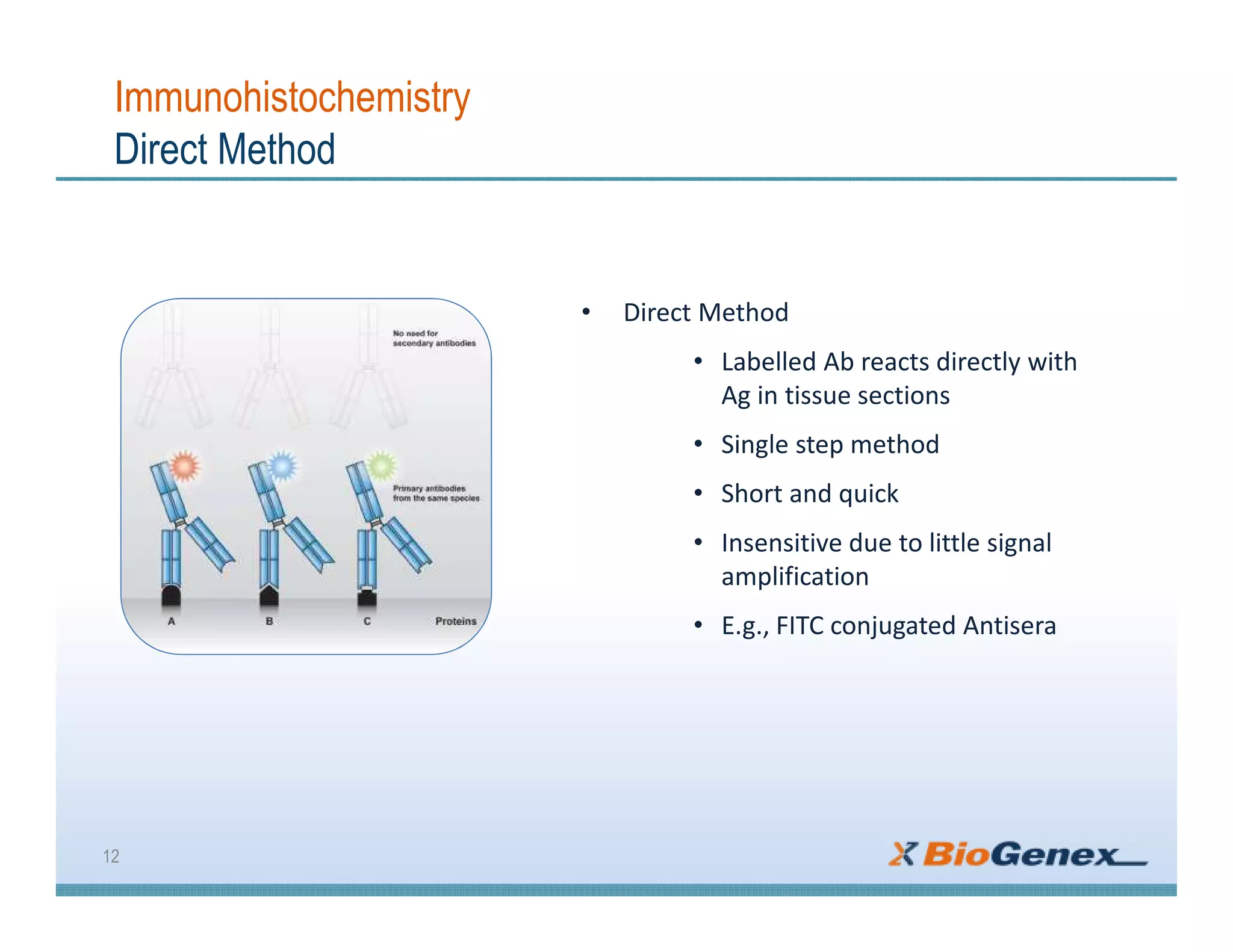
Direct Method
• Direct Method
• Labelled Ab reacts directly with
Ag in tissue sections
• Single step method
• Short and quick
• Insensitive due to little signal
amplification
• E.g., FITC conjugated Antisera
12
Immunohistochemistry
Indirect Method
• Unlabelled Primary Ab reacts with Ag and
the labelled secondary Ab reacts with the
primary Ab.
• Sensitive due to signal amplification
• Economical as single secondary Ab can be
used against many Abs from same species
• Peroxidase Anti-Peroxidase/ Alkaline
Phosphatase Anti-Alkaline
Phosphatase (PAP/ APAAP) Method
• Avidin-Biotin Complex (ABC) Method
• Streptavidin – Peroxidase Method
13
Immunohistochemistry
Detection Methods
• Ag-Ab conjugates are visualized by
the use of a label.
• Enzymes that produce a colored
precipitate in the presence of a
substrate are used as labels
• Labels :
• Peroxidase
• Alkaline Phosphatase
• Detection systems:
• Direct or Single step Method
• Indirect or Two step Method
14
BioGenex
TheIHCIndia.
NM-123
Coloncarcinoma
20033/2007
A B
Immunohistochemistry
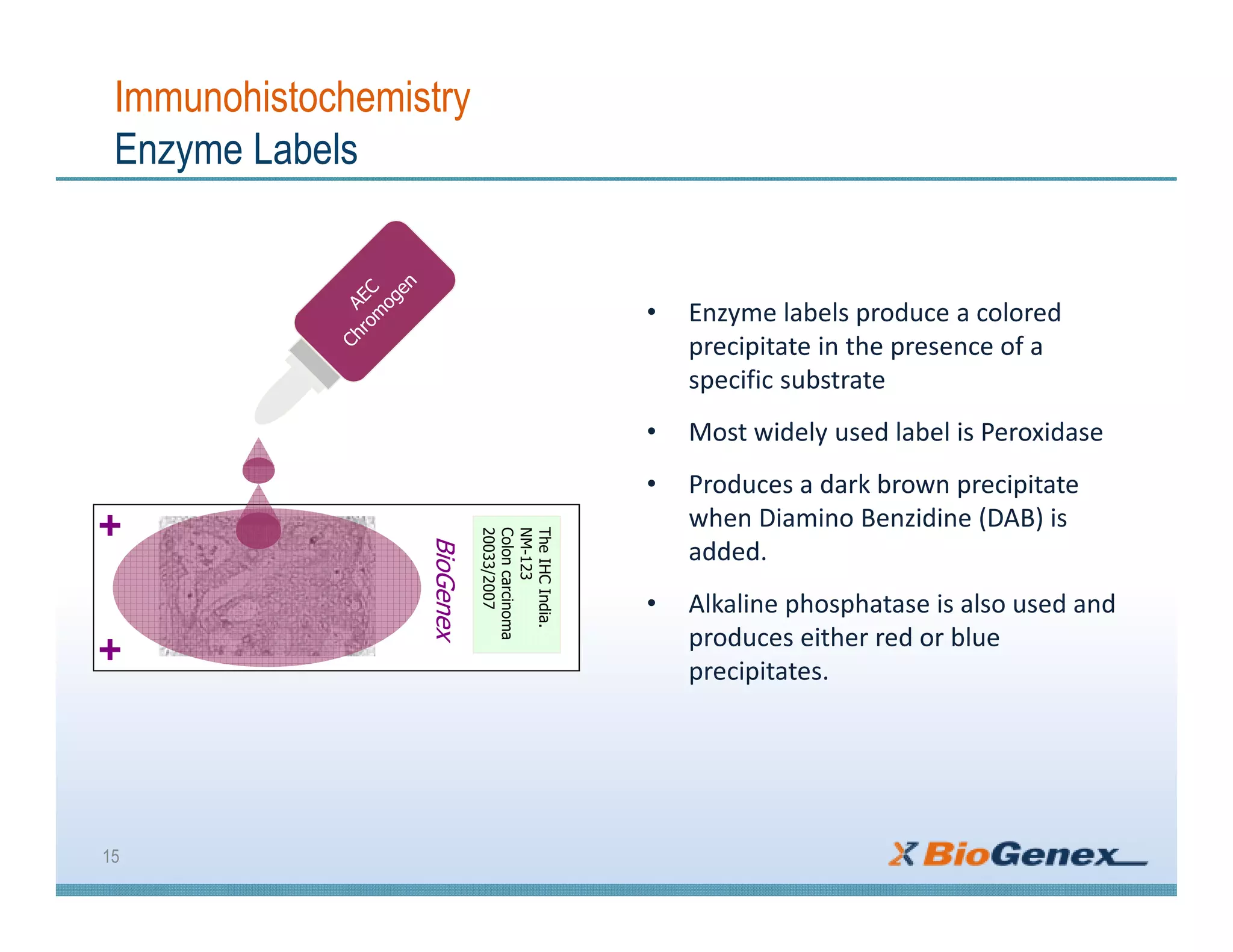
Enzyme Labels
• Enzyme labels produce a colored
precipitate in the presence of a
specific substrate
• Most widely used label is Peroxidase
• Produces a dark brown precipitate
when Diamino Benzidine (DAB) is
added.
• Alkaline phosphatase is also used and
produces either red or blue
precipitates.
15
BioGenex
TheIHCIndia.
NM-123
Coloncarcinoma
20033/2007
Immunohistochemistry
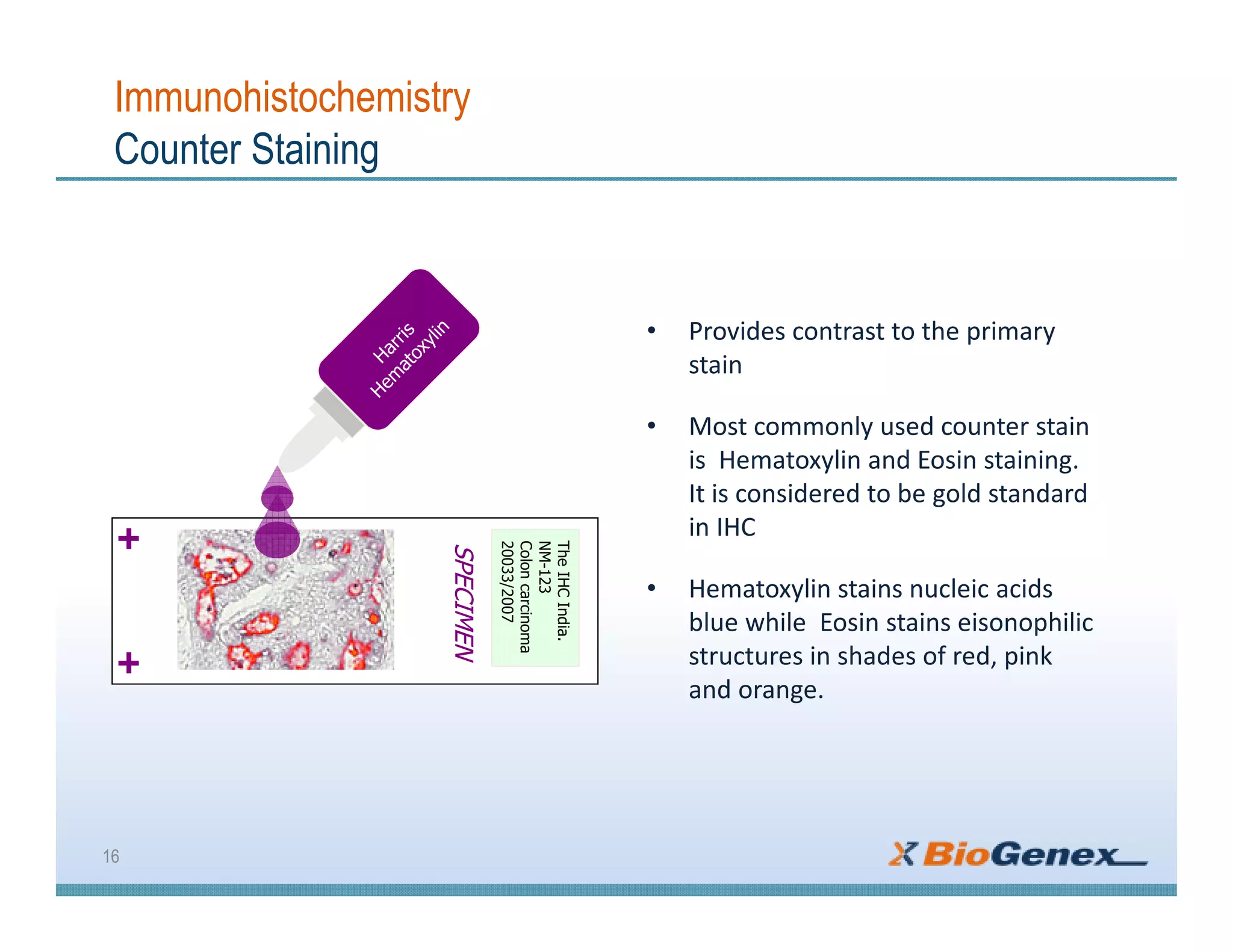
Counter Staining
• Provides contrast to the primary
stain
• Most commonly used counter stain
is Hematoxylin and Eosin staining.
It is considered to be gold standard
in IHC
• Hematoxylin stains nucleic acids
blue while Eosin stains eisonophilic
structures in shades of red, pink
and orange.
16
SPECIMEN
TheIHCIndia.
NM-123
Coloncarcinoma
20033/2007
Immunohistochemistry
Staining result
17
Immunohistochemistry
Controls
• Positive Controls:
• Cells or tissues that are known to contain the specific Ag
• Detects false negatives due to fixation and processing.
• It is used to validate the protocol or procedure used
• Negative Controls:
• Omission of Primary Ab with the same tissue and procedure
• Useful to detect endogenous biotin and peroxidase activity
18
Immunohistochemistry
Automation
• Fully automated IHC work stations are a
common practice
• Advantages:
• Greater consistency of staining
• Fast and accurate results
• Decreased use of reagents
• Less use of man power
19
Immunohistochemistry
Troubleshooting
• Weak or No staining
• Over staining
• High Background
20
Immunohistochemistry
Troubleshooting: Weak or No staining
21
Sources Solutions
Inadequate deparaffinization
Deparaffinize sections longer or change
fresh xylene
Inactive primary antibodies Replace with a new batch of antibodies
Antibodies do not work due to improper
storage
Aliquot antibodies into smaller volumes and
store in freezer (-20 to -70℃) and avoid
repeated freeze and thaw cycles.
Antibody concentration was too low
Increase the concentration of antibodies. Or
run a serial dilution test to determine the
optimal dilution that gives the best signal to
noise ratio
Inadequate antibody incubation time Increase antibody incubation time
Inadequate or improper tissue fixation
Increase duration of post fixation or try
different fixatives
Immunohistochemistry
Troubleshooting: Weak or No staining
22
Sources Solutions
Tissue over-fixation
Reduce the duration of post-fixation or
perform an appropriate antigen retrieval
procedure
Incompatible secondary and primary
antibodies
Use secondary antibody that will interact
with primary antibody.
Inactive secondary antibody or other
reagents
Replace with a new batch of reagents
Inadequate substrate incubation time Increase the substrate incubation time
Incorrect mounting medium Choose a correct mounting medium
Reagents applied in wrong order or steps
omitted
Check notes or procedure used
Immunohistochemistry
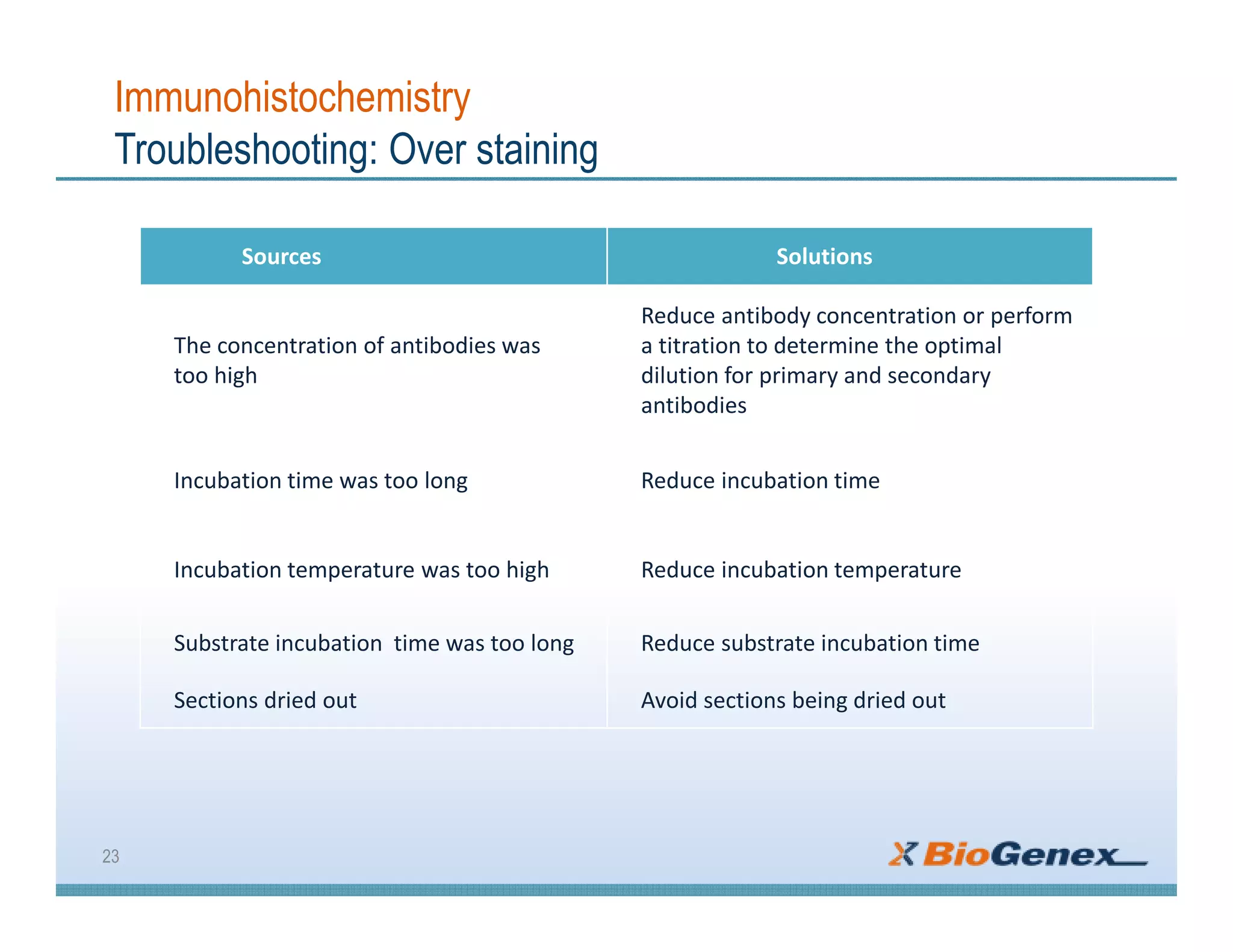
Troubleshooting: Over staining
23
Sources Solutions
The concentration of antibodies was
too high
Reduce antibody concentration or perform
a titration to determine the optimal
dilution for primary and secondary
antibodies
Incubation time was too long Reduce incubation time
Incubation temperature was too high Reduce incubation temperature
Substrate incubation time was too long Reduce substrate incubation time
Sections dried out Avoid sections being dried out
Immunohistochemistry
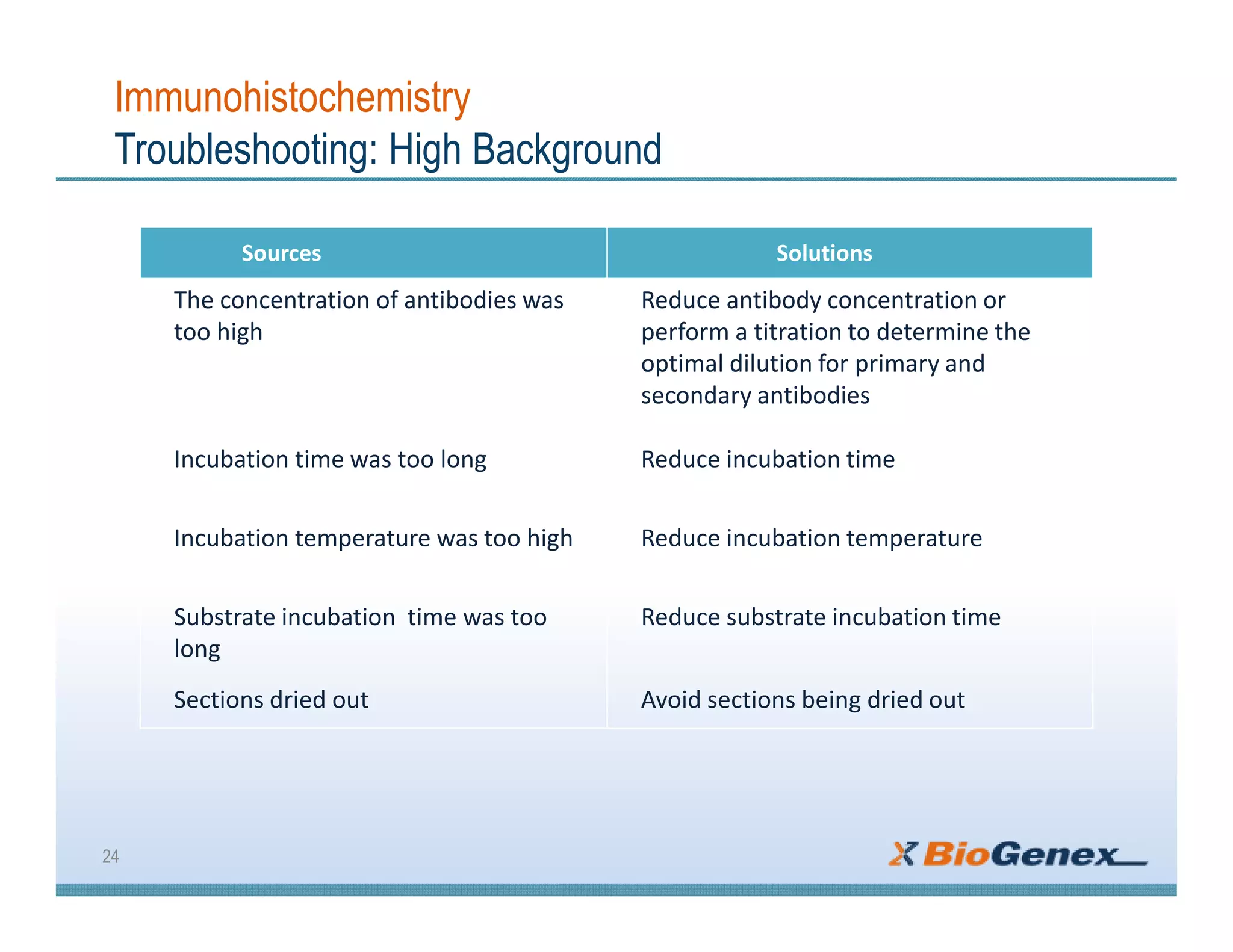
Troubleshooting: High Background
24
Sources Solutions
The concentration of antibodies was
too high
Reduce antibody concentration or
perform a titration to determine the
optimal dilution for primary and
secondary antibodies
Incubation time was too long Reduce incubation time
Incubation temperature was too high Reduce incubation temperature
Substrate incubation time was too
long
Reduce substrate incubation time
Sections dried out Avoid sections being dried out
Immunohistochemistry
Applications
• Tumor Pathology
• Classification of Neoplasma
• Diagnosis of Malignancy
• Prognostic Markers
• Predicting response to treatment
• Detection of metastases
• Screening of inherited cancer syndromes
• Non- Tumor Pathology
• Neurodegenerative diseases
• Brain trauma
• Muscle diseases
• Amyloidosis
• Dementias
25
Thank You
Please visit www.biogenex.com for more details on our product portfolio
26

Basics of Immunohistochemistry (IHC)

  • 1.
  • 2.
  • 3.
    Introduction • Histochemistry isa science that combines the techniques of biochemistry and histology in the study of the chemical constitution of tissues and cells. • Immunology is a science that deals with the immune system, cell-mediated and humoral aspects of immunity and immune responses. • Immunohistochemistry (IHC) Immunohistochemistry is the localization of a known antigen in tissues by utilizing antibodies directed towards that (specific) antigen. 3
  • 4.
  • 5.
    Immunohistochemistry Protocol 5 De-WaxingDe-Waxing RehydrationRehydration Antigen Retrieval Antigen Retrieval Peroxide Block Peroxide Block Power BlockPowerBlock Counter Stain Counter Stain Dehydration & clearing Dehydration & clearing MountingMounting MicroscopeMicroscopeFixationFixation EmbeddingEmbedding MicrotomeMicrotome BakingBaking Antibody Super enhancer Polymer HRP
  • 6.
    Immunohistochemistry Steps - Fixation •Helps to prevent • Elution • Degradation • Modification • Preserves the position of the Ag • Preserves the secondary and tertiary structure to a possible extent • Provides target for Ab molecules • Formaldehyde is the preferred fixative • Most of the Ab available are optimized for use with formaldehyde 6
  • 7.
    Immunohistochemistry Steps – Slidepreparation • 2-4 micron tissue sections are cut onto slides • Charged slides provide adhesion to tissue sections • The tissues are further adhered to the slides by baking at 60oC • Deparaffinization • Tissue is treated in a series of xylene and alcohol to remove paraffin. 7 BioGenex TheIHCIndia. NM-123 Coloncarcinoma 20033/2007 paraffin wax coated slide
  • 8.
    Immunohistochemistry Steps – AntigenRetrieval • Enables the partial reversal of formaldehyde induced confirmational change of Ags. • Increases the accessibility of the Ab to the Ag. • Two methods: • Heat • Enzyme digestion • Choice of Ag retrieval depends on the Ag to be demonstrated. • Heat Induced Epitope Retrieval (HIER) is widely used. 8 BioGenex TheIHCIndia. NM-123 Coloncarcinoma 20033/2007
  • 9.
    Immunohistochemistry Pre-treatment: HIER • Tissuessections are heated to app 1000C • Achieved by • Microwave oven • Pressure cooker • Vegetable steamers • Water bath • Automated Immunostainers • The cooling of sections slowly allows the protein to refold properly • Protease Induced Epitope retrieval (PIER) • Proteolytic enzymes cleave the protein to release Antigenic sites 9
  • 10.
    Immunohistochemistry Pre-treatment: Blocking • PeroxideBlock • Blocks endogenous peroxidases • 3% H2O2 • Protein Block • Blocks all non specific sites • Reduces background • 10% Normal serum is used 10 BioGenex TheIHCIndia. NM-123 Coloncarcinoma 20033/2007
  • 11.
    Immunohistochemistry Primary Antibodies Two typesof Abs • Polyclonal Abs: • Produced by injecting an animal with antigen and harvesting the sera • Monoclonal Abs : • Produced by Hybridomas 11 BioGenex TheIHCIndia. NM-123 Coloncarcinoma 20033/2007
  • 12.
    Immunohistochemistry Direct Method • DirectMethod • Labelled Ab reacts directly with Ag in tissue sections • Single step method • Short and quick • Insensitive due to little signal amplification • E.g., FITC conjugated Antisera 12
  • 13.
    Immunohistochemistry Indirect Method • UnlabelledPrimary Ab reacts with Ag and the labelled secondary Ab reacts with the primary Ab. • Sensitive due to signal amplification • Economical as single secondary Ab can be used against many Abs from same species • Peroxidase Anti-Peroxidase/ Alkaline Phosphatase Anti-Alkaline Phosphatase (PAP/ APAAP) Method • Avidin-Biotin Complex (ABC) Method • Streptavidin – Peroxidase Method 13
  • 14.
    Immunohistochemistry Detection Methods • Ag-Abconjugates are visualized by the use of a label. • Enzymes that produce a colored precipitate in the presence of a substrate are used as labels • Labels : • Peroxidase • Alkaline Phosphatase • Detection systems: • Direct or Single step Method • Indirect or Two step Method 14 BioGenex TheIHCIndia. NM-123 Coloncarcinoma 20033/2007 A B
  • 15.
    Immunohistochemistry Enzyme Labels • Enzymelabels produce a colored precipitate in the presence of a specific substrate • Most widely used label is Peroxidase • Produces a dark brown precipitate when Diamino Benzidine (DAB) is added. • Alkaline phosphatase is also used and produces either red or blue precipitates. 15 BioGenex TheIHCIndia. NM-123 Coloncarcinoma 20033/2007
  • 16.
    Immunohistochemistry Counter Staining • Providescontrast to the primary stain • Most commonly used counter stain is Hematoxylin and Eosin staining. It is considered to be gold standard in IHC • Hematoxylin stains nucleic acids blue while Eosin stains eisonophilic structures in shades of red, pink and orange. 16 SPECIMEN TheIHCIndia. NM-123 Coloncarcinoma 20033/2007
  • 17.
  • 18.
    Immunohistochemistry Controls • Positive Controls: •Cells or tissues that are known to contain the specific Ag • Detects false negatives due to fixation and processing. • It is used to validate the protocol or procedure used • Negative Controls: • Omission of Primary Ab with the same tissue and procedure • Useful to detect endogenous biotin and peroxidase activity 18
  • 19.
    Immunohistochemistry Automation • Fully automatedIHC work stations are a common practice • Advantages: • Greater consistency of staining • Fast and accurate results • Decreased use of reagents • Less use of man power 19
  • 20.
    Immunohistochemistry Troubleshooting • Weak orNo staining • Over staining • High Background 20
  • 21.
    Immunohistochemistry Troubleshooting: Weak orNo staining 21 Sources Solutions Inadequate deparaffinization Deparaffinize sections longer or change fresh xylene Inactive primary antibodies Replace with a new batch of antibodies Antibodies do not work due to improper storage Aliquot antibodies into smaller volumes and store in freezer (-20 to -70℃) and avoid repeated freeze and thaw cycles. Antibody concentration was too low Increase the concentration of antibodies. Or run a serial dilution test to determine the optimal dilution that gives the best signal to noise ratio Inadequate antibody incubation time Increase antibody incubation time Inadequate or improper tissue fixation Increase duration of post fixation or try different fixatives
  • 22.
    Immunohistochemistry Troubleshooting: Weak orNo staining 22 Sources Solutions Tissue over-fixation Reduce the duration of post-fixation or perform an appropriate antigen retrieval procedure Incompatible secondary and primary antibodies Use secondary antibody that will interact with primary antibody. Inactive secondary antibody or other reagents Replace with a new batch of reagents Inadequate substrate incubation time Increase the substrate incubation time Incorrect mounting medium Choose a correct mounting medium Reagents applied in wrong order or steps omitted Check notes or procedure used
  • 23.
    Immunohistochemistry Troubleshooting: Over staining 23 SourcesSolutions The concentration of antibodies was too high Reduce antibody concentration or perform a titration to determine the optimal dilution for primary and secondary antibodies Incubation time was too long Reduce incubation time Incubation temperature was too high Reduce incubation temperature Substrate incubation time was too long Reduce substrate incubation time Sections dried out Avoid sections being dried out
  • 24.
    Immunohistochemistry Troubleshooting: High Background 24 SourcesSolutions The concentration of antibodies was too high Reduce antibody concentration or perform a titration to determine the optimal dilution for primary and secondary antibodies Incubation time was too long Reduce incubation time Incubation temperature was too high Reduce incubation temperature Substrate incubation time was too long Reduce substrate incubation time Sections dried out Avoid sections being dried out
  • 25.
    Immunohistochemistry Applications • Tumor Pathology •Classification of Neoplasma • Diagnosis of Malignancy • Prognostic Markers • Predicting response to treatment • Detection of metastases • Screening of inherited cancer syndromes • Non- Tumor Pathology • Neurodegenerative diseases • Brain trauma • Muscle diseases • Amyloidosis • Dementias 25
  • 26.
    Thank You Please visitwww.biogenex.com for more details on our product portfolio 26