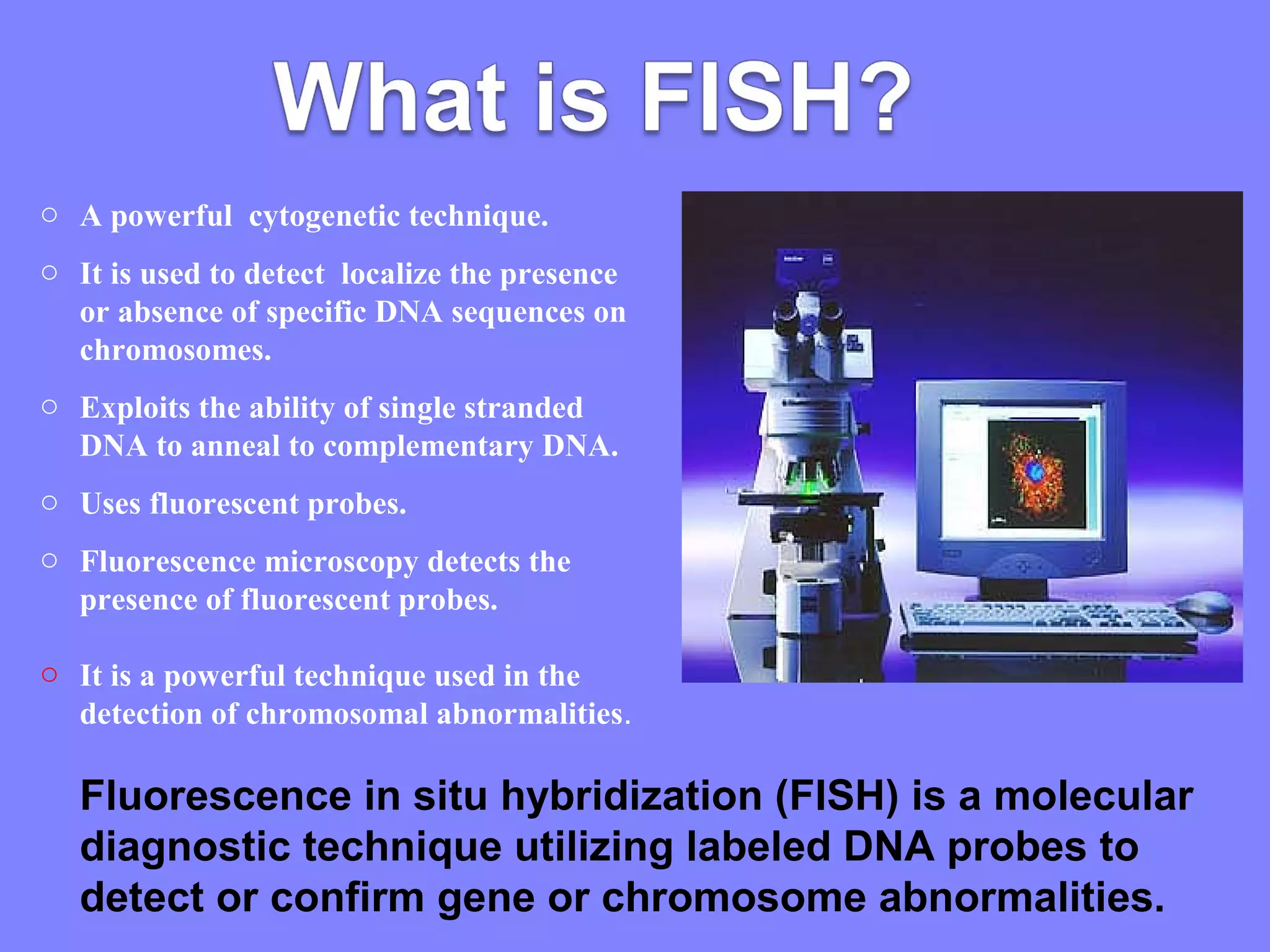

o A powerful cytogenetic technique.
o It is used to detect localize the presence
or absence of specific DNA sequences on
chromosomes.
o Exploits the ability of single stranded
DNA to anneal to complementary DNA.
o Uses fluorescent probes.
o Fluorescence microscopy detects the
presence of fluorescent probes.
o It is a powerful technique used in the
detection of chromosomal abnormalities.
Fluorescence in situ hybridization (FISH) is a molecular
diagnostic technique utilizing labeled DNA probes to
detect or confirm gene or chromosome abnormalities.
FISH Targets
- Metaphase Chromosomes
- Interphase Nuclei
- Fixed Tissues
- Cells in culture
I t is a relat ively new cyt ogenet ic
t echnique t hat allows a cyt ogenet icist t o
det er mine how many copies of a
part icular chromosome are present
wit hout having t o go t hr ough all of t he
st eps involved in pr oducing a kar yot ype. 
For example,
FISH analysis can quickly tell you how many number 21 chromosomes
are present, but it cannot tell you anything about the structure of those
chromosomes.
For example,
FISH analysis can quickly tell you how many number 21 chromosomes
are present, but it cannot tell you anything about the structure of those
chromosomes.
How does FISH work?
FISH is useful, for example, to help a researcher identify
where a particular gene falls within an individual's
chromosomes.
A.The first step is to prepare short sequences of single-stranded
DNA that match a portion of the gene the researcher is looking for.
These are called probes.
B.The next step is to label these probes by attaching one of a
number of colors of fluorescent dye.
C.DNA is composed of two strands of complementary molecules that
bind to each other like chemical magnets. Since the researchers'
probes are single-stranded, they are able to bind to the
complementary strand of DNA, wherever it may reside on a person's
chromosomes.
D.When a probe binds to a chromosome, its fluorescent tag provides
a way for researchers to see its location.
FISH uses fluorescent probes that bind to only those parts of the
chromosome with which they show a high degree of sequence
complementarity.
Fluorescence microscopy can be used to find out where the
fluorescent probe is bound to the chromosomes. FISH is often used
for finding specific features in DNA for use in genetic counseling,
medicine, and species identification.
FISH testing is usually done on the same samples as a karyotype -
blood, amniocytes or a chorionic villi sample.
A FISH test is done using a fluorescent probe that binds to certain
specific chromosomes. These fluorescent probes are made of DNA
specific to certain chromosomes and are tagged with fluorescent dye.
The cells used in FISH analysis don’t have to be grown or cultured
(which can take 7 to 10 days), so the results of a FISH analysis are
available much faster than the results of a karyotype.
A sample is obtained and sent to the laboratory and the chromosomes are
isolated on a slide.
The probes are then placed on the slide and allowed to hybridize (or find
their match) for about 12 hours. Because the probes are made of DNA,
they will bind to the “matching” DNA of their specific chromosome.
For example, a probe made of DNA specific to chromosome 21 will bind to
any number 21 chromosome that is present.
After hybridization (or sticking), the slide is examined under a special
microscope that can see fluorescent images. By counting the number of
fluorescent signals, a cytogeneticist can determine how many of a specific
chromosomes are present.
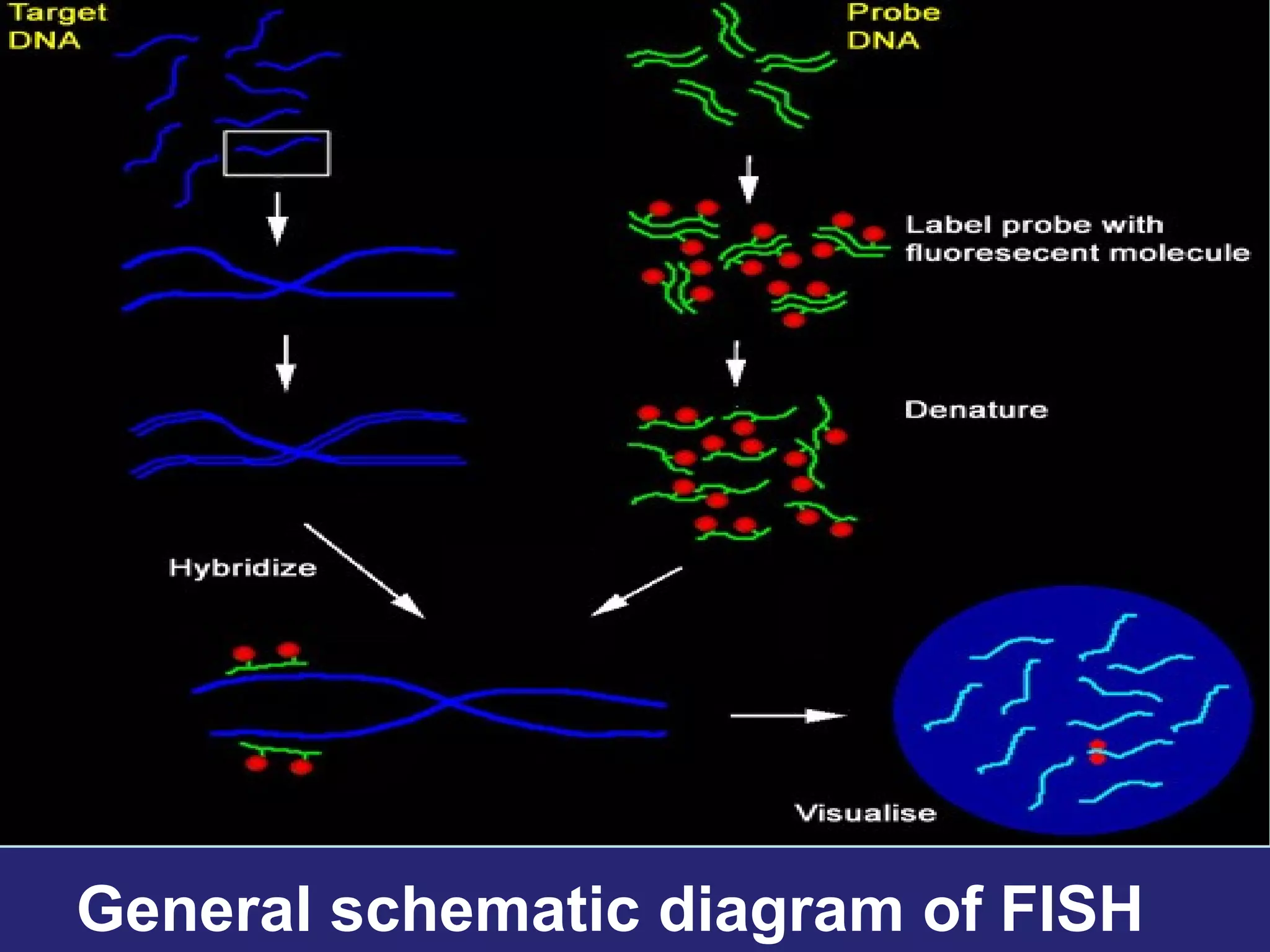
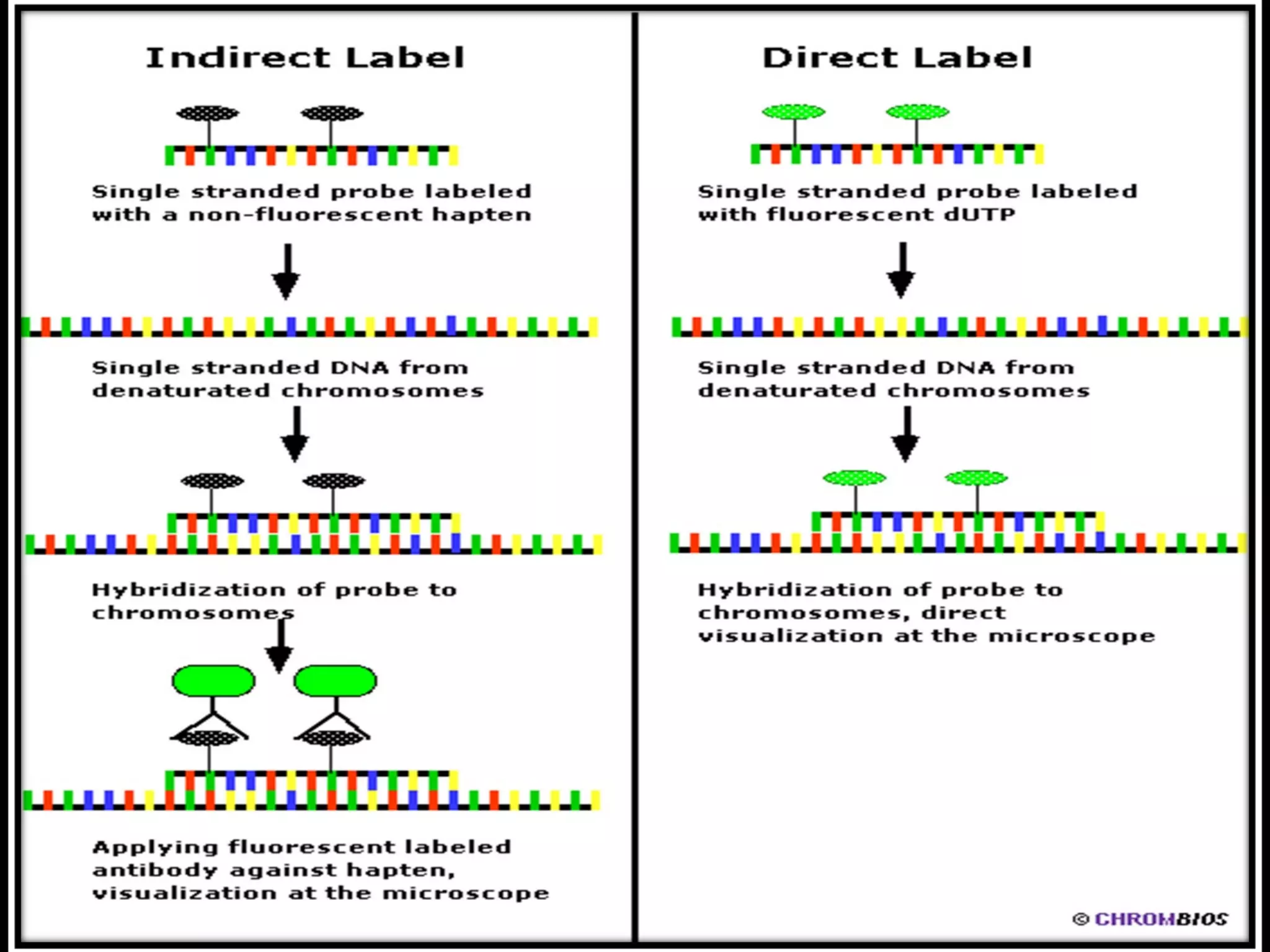
General schematic diagram of FISH
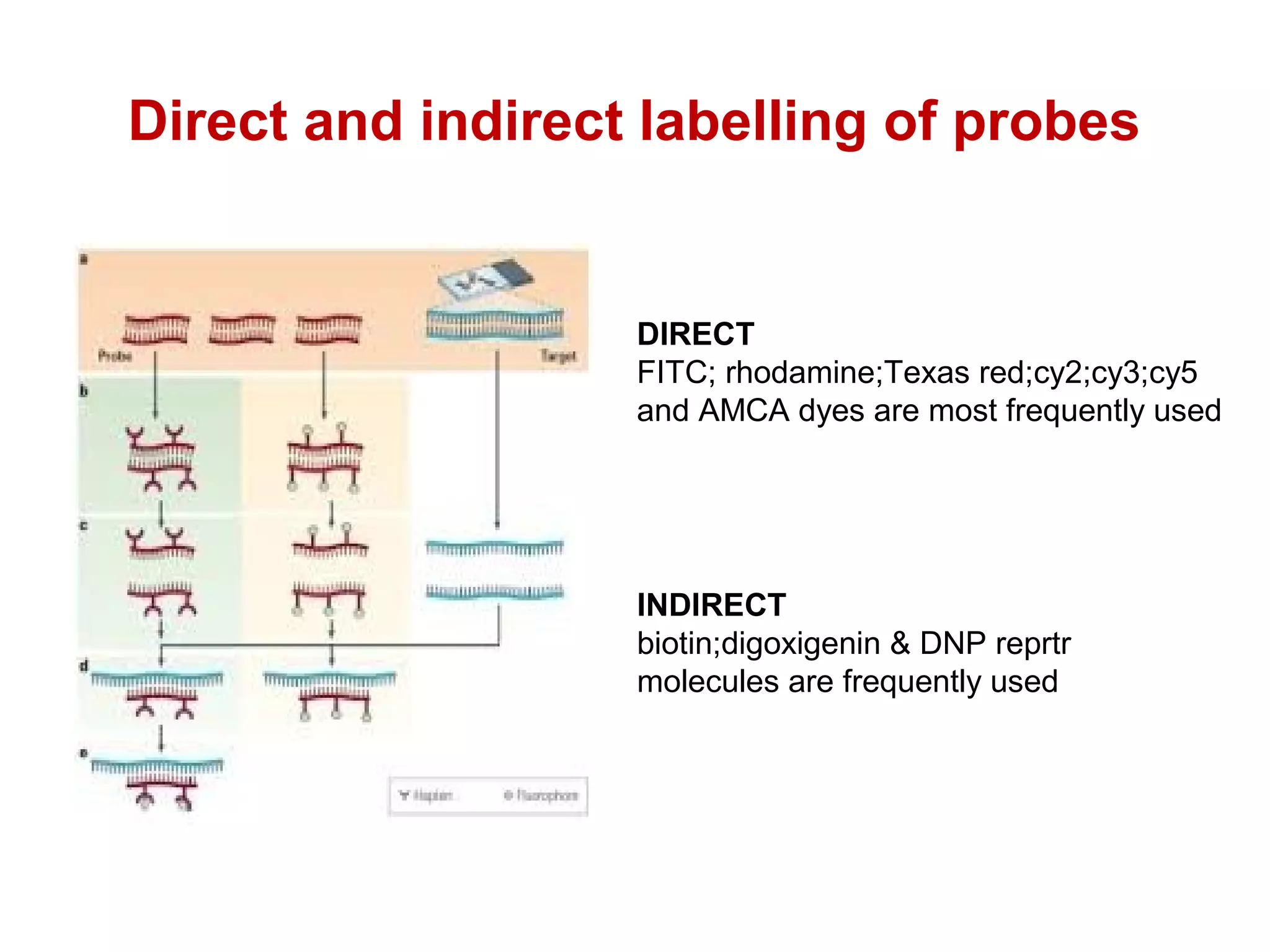
Direct and indirect labelling of probes
DIRECT
FITC; rhodamine;Texas red;cy2;cy3;cy5
and AMCA dyes are most frequently used
INDIRECT
biotin;digoxigenin & DNP reprtr
molecules are frequently used
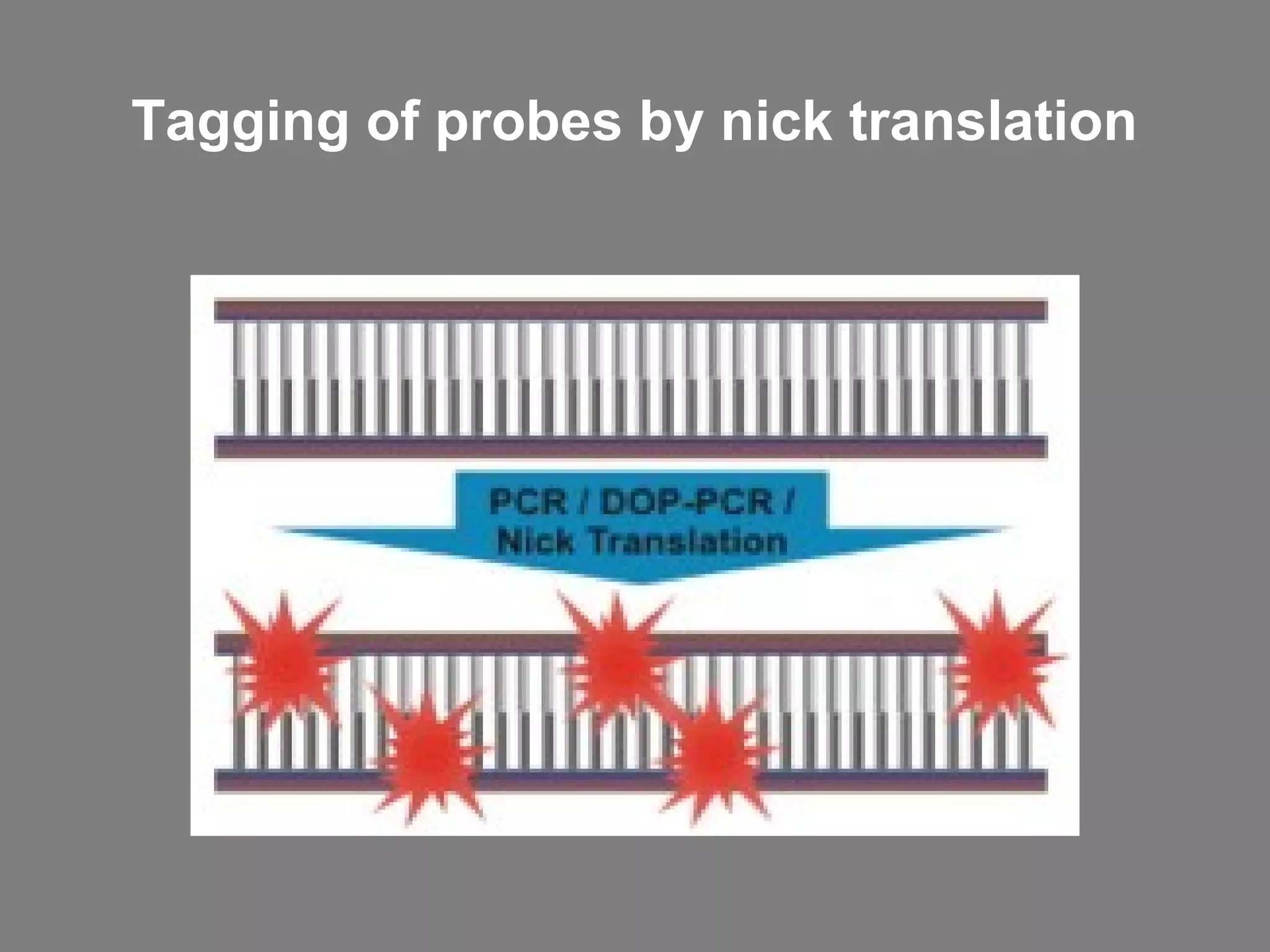
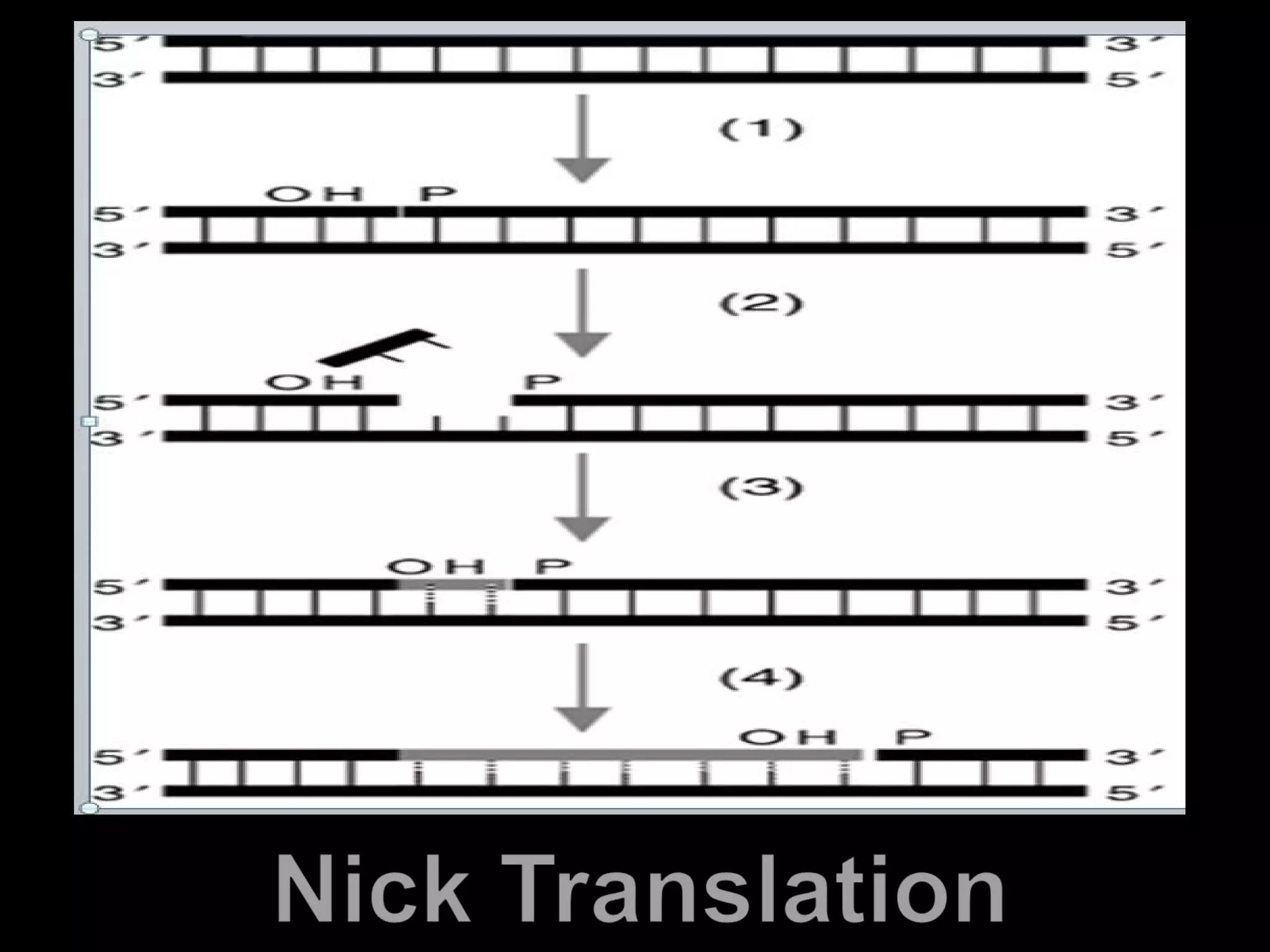
Tagging of probes by nick translation
Types of Probes
Locus specific probes bind to a
particular region of a chromosome.
This type of probe is useful when
scientists have isolated a small
portion of a gene and want to
determine on which chromosome
the gene is located.
Alphoid or centromeric repeat 
probes are generated from 
repetitive sequences found in 
the middle of each 
chromosome. Researchers use 
these probes to determine 
whether an individual has the 
correct number of 
chromosomes. These probes 
can also be used in combination 
with "locus specific probes" to 
determine whether an individual 
is missing genetic material from 
a particular chromosome.
Whole chromosome 
probes are actually collections 
of smaller probes, each of 
which binds to a different 
sequence along the length of a 
given chromosome. Using 
multiple probes labeled with a 
mixture of different fluorescent 
dyes, scientists are able to 
label each chromosome in its 
own unique color. The resulting 
full-color map of the 
chromosome is known as a 
spectral karyotype. Whole 
chromosome probes are 
particularly useful for 
examining chromosomal 
abnormalities, for example, 
when a piece of one 
chromosome is attached to the 
end of another chromosome.
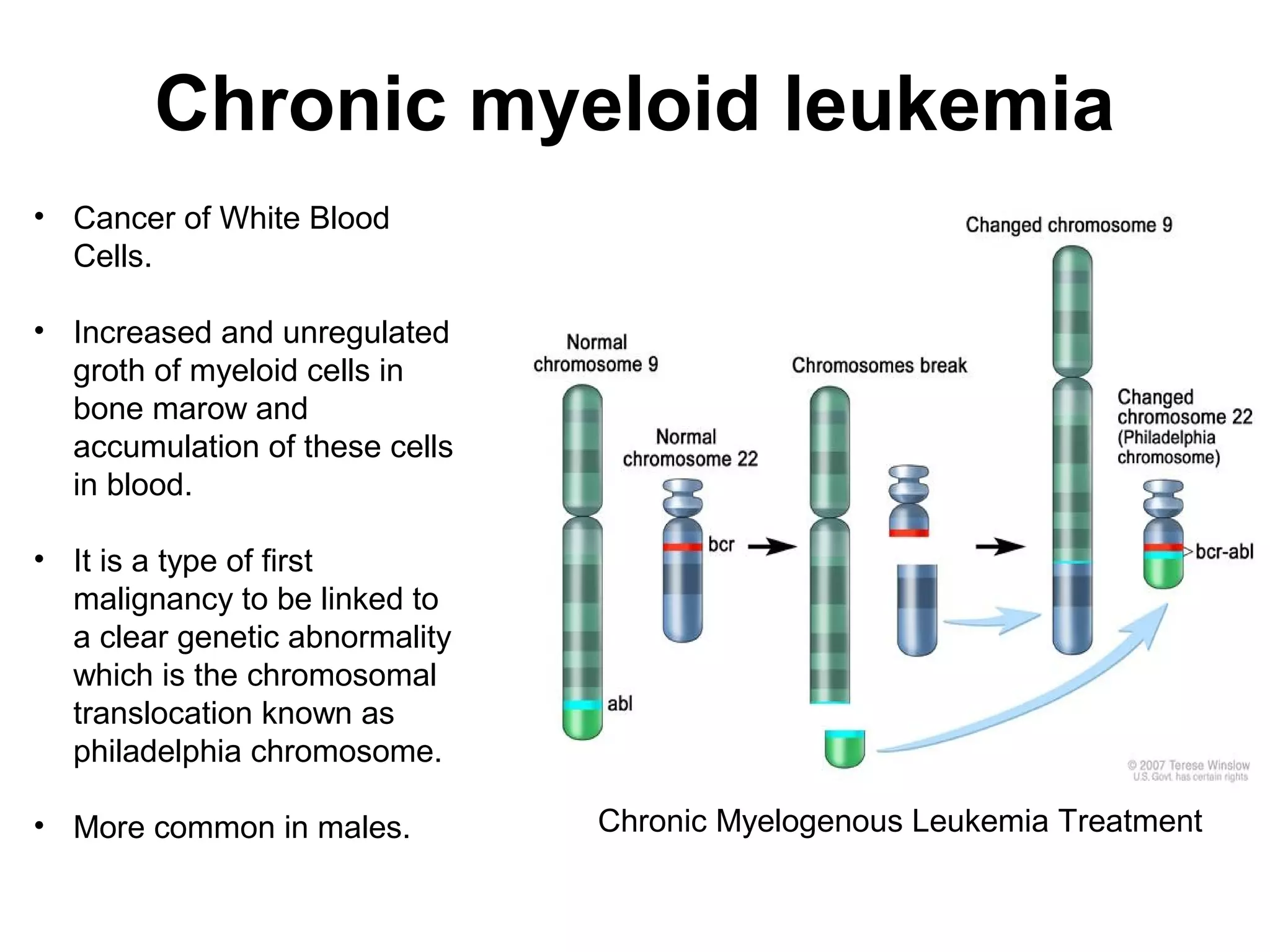
Chronic myeloid leukemia
• Cancer of White Blood 
Cells.
• Increased and unregulated 
groth of myeloid cells in 
bone marow and 
accumulation of these cells 
in blood.
• It is a type of first 
malignancy to be linked to 
a clear genetic abnormality 
which is the chromosomal 
translocation known as 
philadelphia chromosome.
• More common in males. Chronic Myelogenous Leukemia Treatment
Philadelphia chromosome
• In this translocation, 
parts of chromosomes 
9th
 and 22nd
 switch 
places.
• As a result , part of 
BCR gene from 
chromosome 22 is 
fused with ABL gene 
on chromosome. 
• BCR ABL fusion gene 
prouct is a tyrosine 
kinase-remains 
continuously on.
• Green fluorescence – BCR 
gene  
• Red fluorescence -  ABL 
gene
• Yellow fluorescence – BCR 
ABL fusion gene
Interphase FISH on a 
nucleus using an Exta-
signal probe to detect 
the BCR/ABL translocation.
The green signal indicates 
the presence of 
the BCR gene, red signals 
indicate the presence of 
the ABL gene and the red-
green fusion (yellow) signal 
confirms a 
BCR/ABL translocation. 
The extra red signal 
confirms this is not a false 
positive result.
Genetic diseases identified using FISH
Prader-Willi Syndrome
Prader-Willi syndrome is a complex 
genetic condition that affects many 
parts of the body. In infancy, this 
condition is characterized by weak 
muscle tone (hypotonia), feeding 
difficulties, poor growth, and delayed 
development. Beginning in childhood, 
affected individuals develop an 
insatiable appetite, which leads to 
chronic overeating (hyperphagia) and 
obesity. Some people with Prader-
Willi syndrome, particularly those with 
obesity, also develop type 2 diabetes 
mellitus (the most common form of 
diabetes).
Prader-Willi syndrome is caused by the loss of function of genes in a particular region of
chromosome 15
Angelman Syndrome
Angelman syndrome is a complex genetic disorder that primarily affects
the nervous system. Characteristic features of this condition include
delayed development, intellectual disability, severe speech impairment,
and problems with movement and balance.
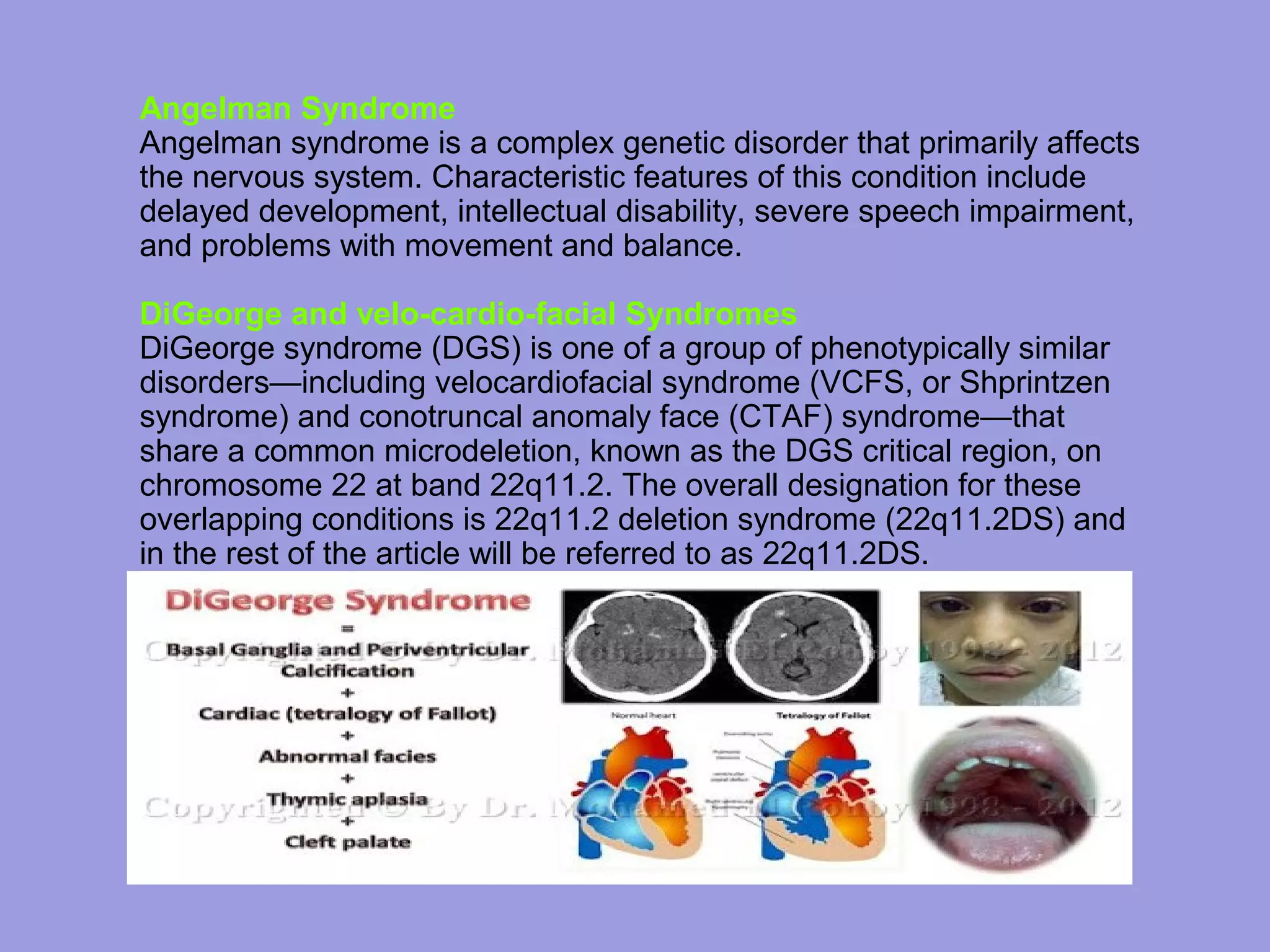
DiGeorge and velo-cardio-facial Syndromes
DiGeorge syndrome (DGS) is one of a group of phenotypically similar
disorders—including velocardiofacial syndrome (VCFS, or Shprintzen
syndrome) and conotruncal anomaly face (CTAF) syndrome—that
share a common microdeletion, known as the DGS critical region, on
chromosome 22 at band 22q11.2. The overall designation for these
overlapping conditions is 22q11.2 deletion syndrome (22q11.2DS) and
in the rest of the article will be referred to as 22q11.2DS.
• Miller-Dieker Syndrome
• Williams Syndrome de Williams
• Wolf-Hirschhorn Syndrome
• Smith-Magenis Syndrome
• Kallmann Syndrome etc. are the other methods.
Applications of FISH Diagnostics
FISH is often used in clinical studies : If a patient is infected
with a suspected pathogen, bacteria, from the
patient's tissues or fluids, are typically grown on agar
to determine the identity of the pathogen. Many
bacteria, however, even well-known species, do not
grow well under laboratory conditions.
FISH can be used to detect directly the presence of
the suspect on small samples of patient's tissue.
FISH can also be used to compare the genomes of
two biological species, to
deduce evolutionary relationships.
FISH is widely used in the field of microbial ecology,
to identify microorganisms.
Often parents of children with a developmental
disability want to know more about their child's
conditions before choosing to have another
child. These concerns can be addressed by
analysis of the parents' and child's DNA. In
cases where the child's developmental disability
is not understood, the cause of it can potentially
be determined using FISH
and cytogenetic techniques.
In medicine, FISH can be used to form
a diagnosis, to evaluate prognosis, or to
evaluate remission of a disease, such
as cancer.
o FISH is performed on a variety of specimen types such as blood, bone
marrow and paraffin-embedded tissue sections.
o Because of the higher sensitivity, FISH testing can detect mosaicism for
clonal chromosome changes,and is therefore useful in the detection of
minimal residual disease following treatment (e.g., interferon for chronic
myelogenous leukemia [CML]).
o Because the majority of specific deletions are sub-microscopic and can
only be detected by molecular tests, FISH plays a critical role in the
confirmation of microdeletion syndromes.
o FISH is also useful in solid tumors. For example, in determining the
prognostic role of HER-2/neu gene amplification or overexpression in
breast cancer.

fish