Prepared by
FAMEEDA KP
PHYSICAL SCIENCE
KSTC
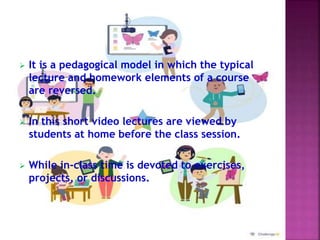
 It is a pedagogical model in which the typical
lecture and homework elements of a course
are reversed.
 In this short video lectures are viewed by
students at home before the class session.
 While in-class time is devoted to exercises,
projects, or discussions.
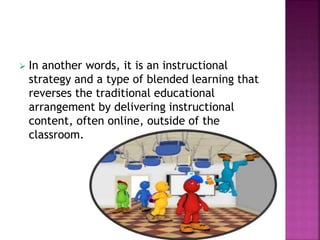
 In another words, it is an instructional
strategy and a type of blended learning that
reverses the traditional educational
arrangement by delivering instructional
content, often online, outside of the
classroom.
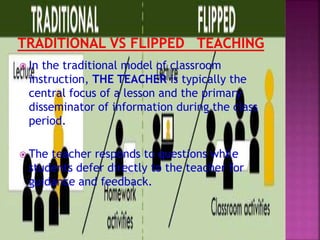
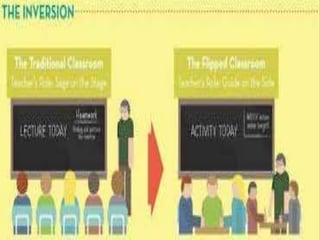
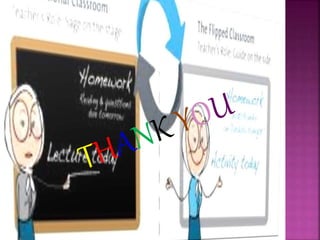
 In the traditional model of classroom
instruction, THE TEACHER is typically the
central focus of a lesson and the primary
disseminator of information during the class
period.
 The teacher responds to questions while
students defer directly to the teacher for
guidance and feedback.
 The flipped classroom intentionally shifts
instruction to a learner-centered model
in which class time explores topics in
greater depth and creates meaningful
learning opportunities, while educational
technologies such as online videos are
used to deliver content outside the
classroom.
 Here content delivery may take a variety of
forms.
 Students gain necessary knowledge
before class.
 Instructors guide students to actively
and interactively clarify and apply that
knowledge during class.
 Students learn more deeply.
 Students are more active participants in
learning.
 Interaction increases and students learn
from one another.
 Flipped mastery classrooms apply a mastery
learning model that requires each student to
master a topic before moving to the next one.
 It was revived by BENJAMIN BLOOM in 1968.
 It allows the teacher to provide the
materials, tools and support for learning
while students set goals and instruction
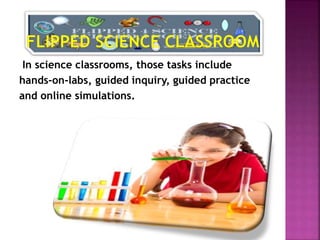
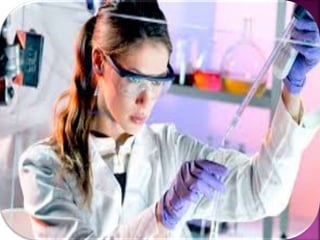
In science classrooms, those tasks include
hands-on-labs, guided inquiry, guided practice
and online simulations.
 For both students and teachers,
For students,
 there exists a digital divide.
 Some students may struggle due to their
personal responsibility.
 It leads to increase the use of computers.
 Students may not learn best by listening to
a lecture, and watching instructional
videos at home is still representing a
traditional form of teaching.
For teachers,
 increased preparation time needed for
creating high quality videos requires
teachers to contribute significant time
and effort.
 Additional funding may also be required
FLIPPED CLASSROOMS-A MODERN TEACHING STRATEGY

FLIPPED CLASSROOMS-A MODERN TEACHING STRATEGY

  • 1.
  • 2.
     It isa pedagogical model in which the typical lecture and homework elements of a course are reversed.  In this short video lectures are viewed by students at home before the class session.  While in-class time is devoted to exercises, projects, or discussions.
  • 3.
     In anotherwords, it is an instructional strategy and a type of blended learning that reverses the traditional educational arrangement by delivering instructional content, often online, outside of the classroom.
  • 4.
     In thetraditional model of classroom instruction, THE TEACHER is typically the central focus of a lesson and the primary disseminator of information during the class period.  The teacher responds to questions while students defer directly to the teacher for guidance and feedback.
  • 5.
     The flippedclassroom intentionally shifts instruction to a learner-centered model in which class time explores topics in greater depth and creates meaningful learning opportunities, while educational technologies such as online videos are used to deliver content outside the classroom.  Here content delivery may take a variety of forms.
  • 7.
     Students gainnecessary knowledge before class.  Instructors guide students to actively and interactively clarify and apply that knowledge during class.  Students learn more deeply.  Students are more active participants in learning.  Interaction increases and students learn from one another.
  • 8.
     Flipped masteryclassrooms apply a mastery learning model that requires each student to master a topic before moving to the next one.  It was revived by BENJAMIN BLOOM in 1968.  It allows the teacher to provide the materials, tools and support for learning while students set goals and instruction
  • 9.
    In science classrooms,those tasks include hands-on-labs, guided inquiry, guided practice and online simulations.
  • 11.
     For bothstudents and teachers, For students,  there exists a digital divide.  Some students may struggle due to their personal responsibility.  It leads to increase the use of computers.  Students may not learn best by listening to a lecture, and watching instructional videos at home is still representing a traditional form of teaching.
  • 12.
    For teachers,  increasedpreparation time needed for creating high quality videos requires teachers to contribute significant time and effort.  Additional funding may also be required