The Classroom Performance System as a tool for Response to Intervention Michael Fisher mikefisher.pbworks.com
Overview of RtI High-quality, scientifically based classroom instruction . All students receive the best possible instruction in the general education classroom.
Overview of RtI Ongoing student assessment . Universal screening and progress monitoring provide information about a student’s learning rate and level of achievement. Throughout the RTI process, student progress is monitored frequently to examine student achievement and gauge the effectiveness of the curriculum. Decisions made regarding students’ instructional needs are based on multiple data points taken in context over time.
Overview of RtI Tiered instruction . A multi-tiered approach used to efficiently differentiate instruction for all students.
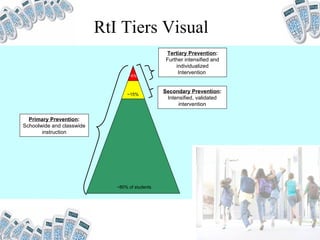
RtI Tiers Visual Primary Prevention : Schoolwide and classwide instruction Secondary Prevention : Intensified, validated intervention Tertiary Prevention : Further intensified and individualized Intervention  ~80% of students ~15%  ~5%
How CPS supports RtI: Academic and Behavioral intervention strategies based on engagement and motivation (Which drives attention, learning, and ultimately, performance) CPS provides a tool for the teacher to positively and easily engage all students in the class at any point in the instructional process
How CPS supports RtI: CPS provides immediate feedback to the teacher and the students in the class CPS reduces the time involved analyzing  short-term and long-term results of classroom  interactivity
CPS With Research-Based  Instructional Practices You can structure multiple choice questions that require inference, application, analysis, etc. by asking students to decide upon the "best" choice or most likely outcome from the scenario posed in the question stem. (Multi-level Bloom’s Question Stems) Nonlinguistic Representation Analysis DBQ Analysis Compare & Contrast Games
Using CPS In Multiple Tiers Academic: Enhance questioning and feedback Facilitate knowledge-centered conversations Easily use formative and summative data to drive future instruction Use data to quickly differentiate  “in the moment” or in future lessons.
Behavioral: Engaging and motivating Allows for individual or group responding Anonymous public interaction Enables mutual support Promotes on-task behaviors Using CPS In Multiple Tiers
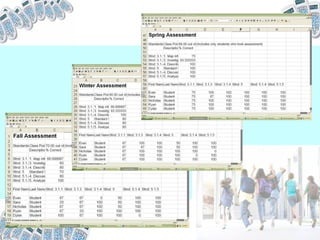
CPS Reports CPS has several reporting features to help teachers collect data, drive instruction, drive differentiated decisions, or for grading. The “Standards Analysis” report specifically shows where a student is based on year-end curricular targets at any point in the year Multiple assessments can be compared with this report since it is based on standards, rather than a particular  instructional sequence.  (CBM vs.  Proficiency or Mastery Measures)
 
Creating assessments Attaching standards Running standards-based reports and manipulating in Excel
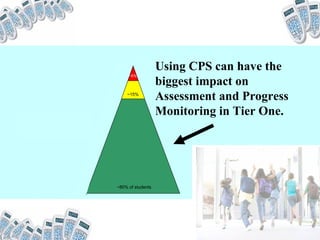
Using CPS can have the biggest impact on Assessment and Progress Monitoring in Tier One. Primary Prevention : Schoolwide and classwide instruction Secondary Prevention : Intensified, validated intervention Tertiary Prevention : Further intensified and individualized Intervention  ~80% of students ~15%  ~5%
http://delicious.com/mikefisher821/cps http://delicious.com/mikefisher821/rti http://cpsclickers.pbworks.com http://eInstruction.com Additional Resources:
The Classroom Performance System as a tool for Response to Intervention Michael Fisher mikefisher.pbworks.com

Cps For Rti

  • 1.
    The Classroom PerformanceSystem as a tool for Response to Intervention Michael Fisher mikefisher.pbworks.com
  • 2.
    Overview of RtIHigh-quality, scientifically based classroom instruction . All students receive the best possible instruction in the general education classroom.
  • 3.
    Overview of RtIOngoing student assessment . Universal screening and progress monitoring provide information about a student’s learning rate and level of achievement. Throughout the RTI process, student progress is monitored frequently to examine student achievement and gauge the effectiveness of the curriculum. Decisions made regarding students’ instructional needs are based on multiple data points taken in context over time.
  • 4.
    Overview of RtITiered instruction . A multi-tiered approach used to efficiently differentiate instruction for all students.
  • 5.
    RtI Tiers VisualPrimary Prevention : Schoolwide and classwide instruction Secondary Prevention : Intensified, validated intervention Tertiary Prevention : Further intensified and individualized Intervention ~80% of students ~15% ~5%
  • 6.
    How CPS supportsRtI: Academic and Behavioral intervention strategies based on engagement and motivation (Which drives attention, learning, and ultimately, performance) CPS provides a tool for the teacher to positively and easily engage all students in the class at any point in the instructional process
  • 7.
    How CPS supportsRtI: CPS provides immediate feedback to the teacher and the students in the class CPS reduces the time involved analyzing short-term and long-term results of classroom interactivity
  • 8.
    CPS With Research-Based Instructional Practices You can structure multiple choice questions that require inference, application, analysis, etc. by asking students to decide upon the "best" choice or most likely outcome from the scenario posed in the question stem. (Multi-level Bloom’s Question Stems) Nonlinguistic Representation Analysis DBQ Analysis Compare & Contrast Games
  • 9.
    Using CPS InMultiple Tiers Academic: Enhance questioning and feedback Facilitate knowledge-centered conversations Easily use formative and summative data to drive future instruction Use data to quickly differentiate “in the moment” or in future lessons.
  • 10.
    Behavioral: Engaging andmotivating Allows for individual or group responding Anonymous public interaction Enables mutual support Promotes on-task behaviors Using CPS In Multiple Tiers
  • 11.
    CPS Reports CPShas several reporting features to help teachers collect data, drive instruction, drive differentiated decisions, or for grading. The “Standards Analysis” report specifically shows where a student is based on year-end curricular targets at any point in the year Multiple assessments can be compared with this report since it is based on standards, rather than a particular instructional sequence. (CBM vs. Proficiency or Mastery Measures)
  • 12.
  • 13.
    Creating assessments Attachingstandards Running standards-based reports and manipulating in Excel
  • 14.
    Using CPS canhave the biggest impact on Assessment and Progress Monitoring in Tier One. Primary Prevention : Schoolwide and classwide instruction Secondary Prevention : Intensified, validated intervention Tertiary Prevention : Further intensified and individualized Intervention ~80% of students ~15% ~5%
  • 15.
  • 16.
    The Classroom PerformanceSystem as a tool for Response to Intervention Michael Fisher mikefisher.pbworks.com