Techniques for
Teaching Children
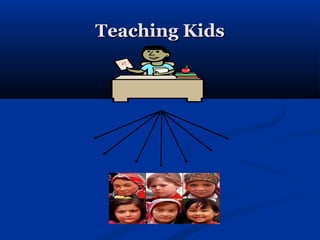
Teaching Kids
How do children learn?
   How do children        More open, less analytic
    learn differently      Eager to learn
    than adults?           Short attention span
                            (about 1 minute per year)
                           Need practical, active
                            teaching
                           More concrete—not as able
                            to think in abstract or
                            general terms
How does that work out in
            practice?
   They need fast-paced, interactive teaching
   Use multiple senses
     Dramas, stories, puppets shows
     Games, activities, action songs

   Action-oriented (not theoretical)
   Frequent changes of activities
   Put what they learn into practice, showing
    others and through community projects
Teaching through games:
   When can you use games? Why?
   Divide into small groups.
   Give out the handouts, Memory Verse
    Games, Review Games, and Games
     Prepare to demonstrate one game.
     What is the purpose of using games?

     What is the purpose of this game in
      particular?
Storying
   Read and act out the health story, Bad
    Medicine (but don’t ask the questions yet)
   When can we use stories?
     Health stories
     Islamic Incidents and stories

     Other stories

   Why tell stories?
   What can children learn from storying?
Telling the Story
   What are some other ways to tell the
    story?
     Puppets
     Flannel graphs
     Dramas, mimes
     Children can draw pictures or illustrations
     Use songs or poems
     Add sound effects and different voices
     Use an object to illustrate the story
Understanding the Story
   How would you introduce the story?
   What questions do we ask after a starter or
    story?
     Think SHOWD:
     Observation questions: What did you See?
     Interpretation questions: What is Happening?
      Why?
     Application questions: Does this happen in
      Our place? What should we Do about it?
Asking Questions
   Why do we ask questions?
   Give some examples of questions for the
    story Bad Medicine:
     Observation questions
     Interpretation questions

     Application questions

   When can you ask these questions?
Involving the Children
   How can you involve the children in the
    story?
     They can name the characters or change the
      animals.
     They can act out the story.

     Ask them questions during the story, such as,
      “What should he have done instead?”
     Have them give another ending to the story.

     Ask them to relate the story to their own lives.
Adapting the Story
   How could you adapt the story to your
    culture or context?
     Change the names and the details to fit your
      context.
     Adapt stories to match the ages of the children.
     Use shorter stories with younger children.
     Focus on health needs that are common in your
      area.
     Change the time period or context. Tell a Bible
      story in a modern context or an urban context.
     Change the illustrations so they fit your culture.
Tell the Story
   Finally, the children will practice telling or
    acting out the story.
   Sometimes there is a coloring page.
   During the week, they will tell the story to
    their family, friends and neighbors.
Techniques for teaching children

  • 1.
  • 2.
  • 3.
    How do childrenlearn?  How do children  More open, less analytic learn differently  Eager to learn than adults?  Short attention span (about 1 minute per year)  Need practical, active teaching  More concrete—not as able to think in abstract or general terms
  • 4.
    How does thatwork out in practice?  They need fast-paced, interactive teaching  Use multiple senses  Dramas, stories, puppets shows  Games, activities, action songs  Action-oriented (not theoretical)  Frequent changes of activities  Put what they learn into practice, showing others and through community projects
  • 5.
    Teaching through games:  When can you use games? Why?  Divide into small groups.  Give out the handouts, Memory Verse Games, Review Games, and Games  Prepare to demonstrate one game.  What is the purpose of using games?  What is the purpose of this game in particular?
  • 6.
    Storying  Read and act out the health story, Bad Medicine (but don’t ask the questions yet)  When can we use stories?  Health stories  Islamic Incidents and stories  Other stories  Why tell stories?  What can children learn from storying?
  • 7.
    Telling the Story  What are some other ways to tell the story?  Puppets  Flannel graphs  Dramas, mimes  Children can draw pictures or illustrations  Use songs or poems  Add sound effects and different voices  Use an object to illustrate the story
  • 8.
    Understanding the Story  How would you introduce the story?  What questions do we ask after a starter or story?  Think SHOWD:  Observation questions: What did you See?  Interpretation questions: What is Happening? Why?  Application questions: Does this happen in Our place? What should we Do about it?
  • 9.
    Asking Questions  Why do we ask questions?  Give some examples of questions for the story Bad Medicine:  Observation questions  Interpretation questions  Application questions  When can you ask these questions?
  • 10.
    Involving the Children  How can you involve the children in the story?  They can name the characters or change the animals.  They can act out the story.  Ask them questions during the story, such as, “What should he have done instead?”  Have them give another ending to the story.  Ask them to relate the story to their own lives.
  • 11.
    Adapting the Story  How could you adapt the story to your culture or context?  Change the names and the details to fit your context.  Adapt stories to match the ages of the children.  Use shorter stories with younger children.  Focus on health needs that are common in your area.  Change the time period or context. Tell a Bible story in a modern context or an urban context.  Change the illustrations so they fit your culture.
  • 12.
    Tell the Story  Finally, the children will practice telling or acting out the story.  Sometimes there is a coloring page.  During the week, they will tell the story to their family, friends and neighbors.