FLASHPATH
H A Z E M A L I
CONSTRICTIVE
(OBLITERATIVE)
BRONCHIOLITIS
H A Z E M A L I
CLINICAL
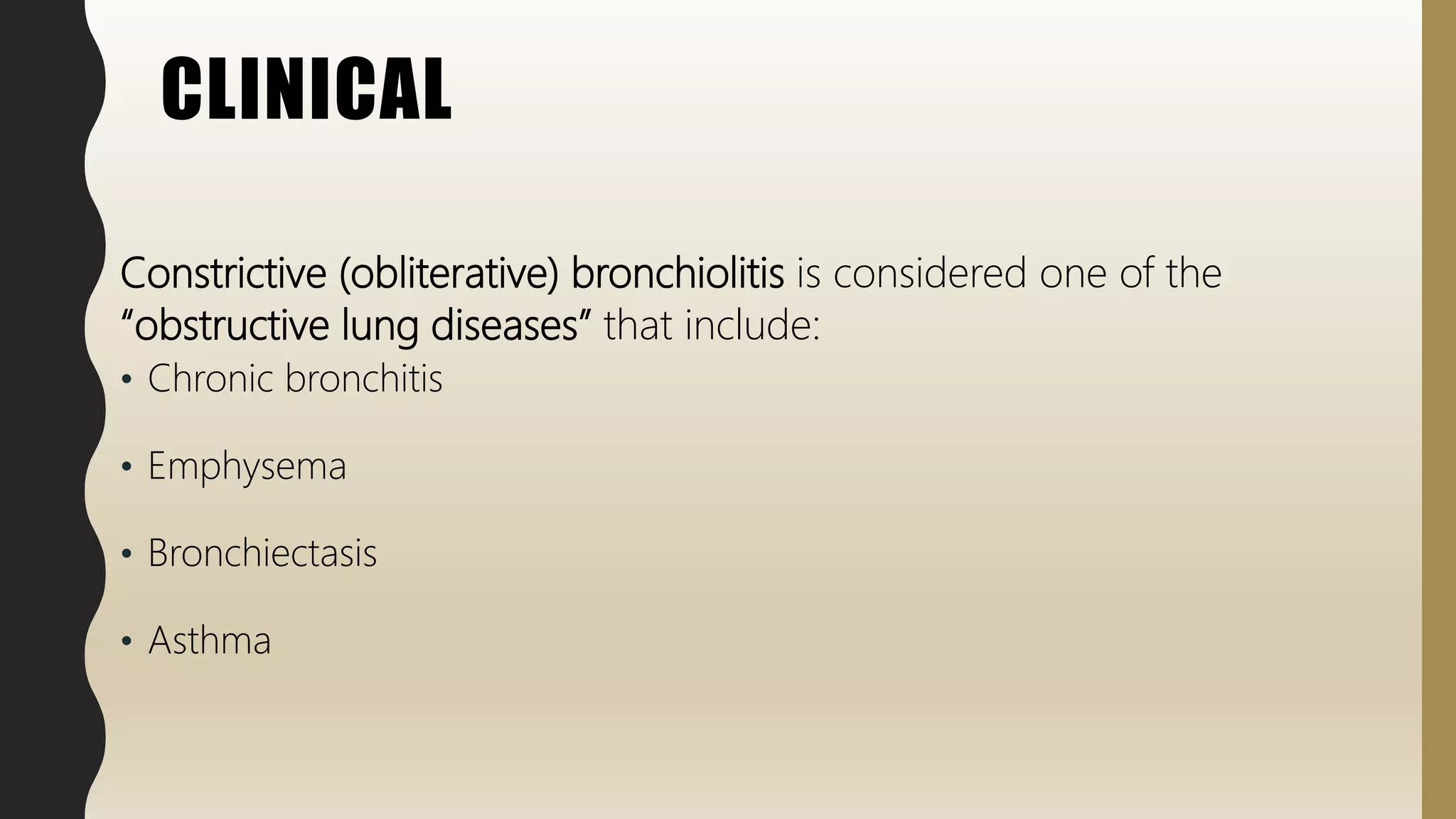
Constrictive (obliterative) bronchiolitis is considered one of the
“obstructive lung diseases” that include:
• Chronic bronchitis
• Emphysema
• Bronchiectasis
• Asthma
CLINICAL
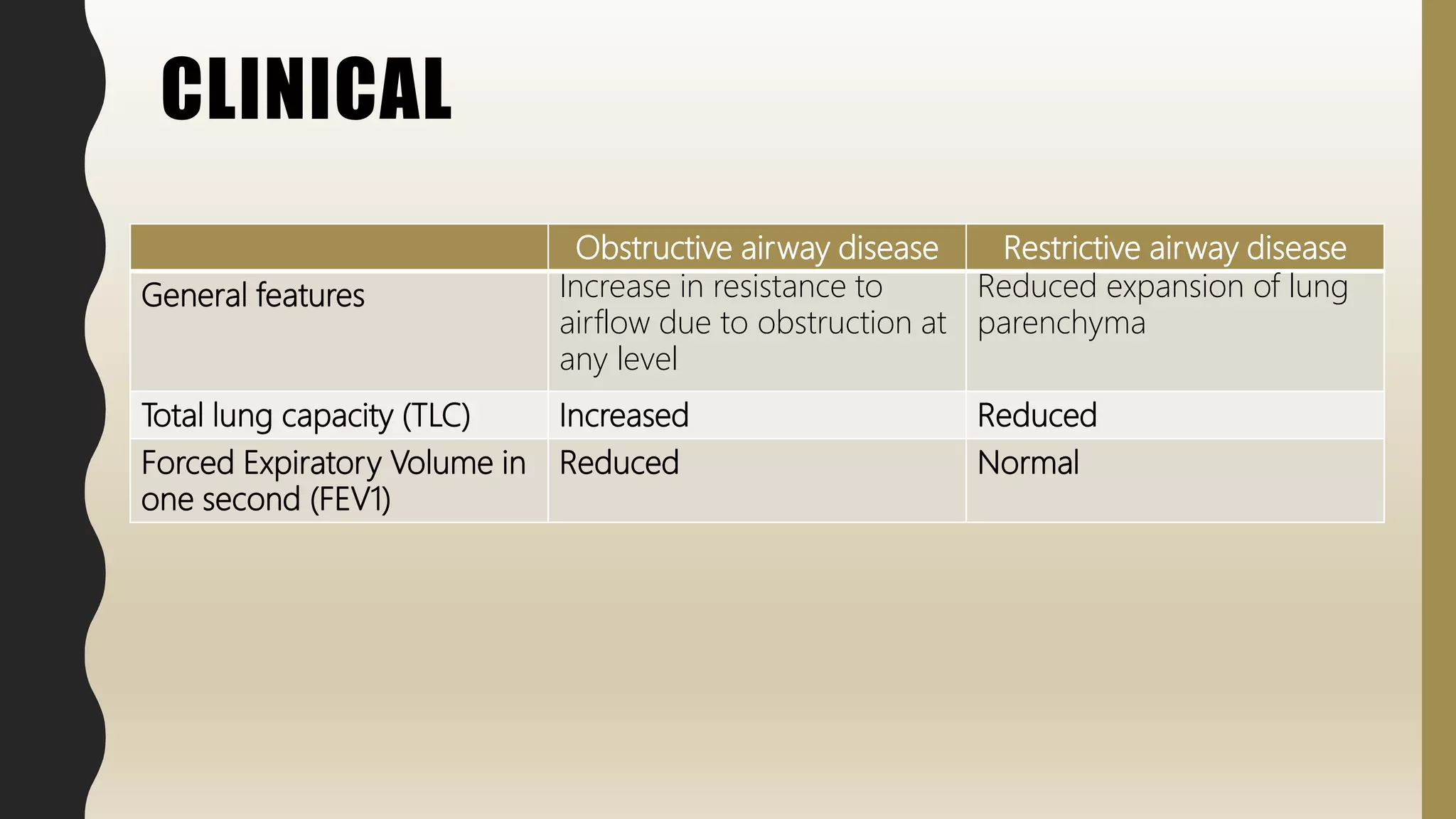
Obstructive airway disease Restrictive airway disease
General features Increase in resistance to
airflow due to obstruction at
any level
Reduced expansion of lung
parenchyma
Total lung capacity (TLC) Increased Reduced
Forced Expiratory Volume in
one second (FEV1)
Reduced Normal
CLINICAL
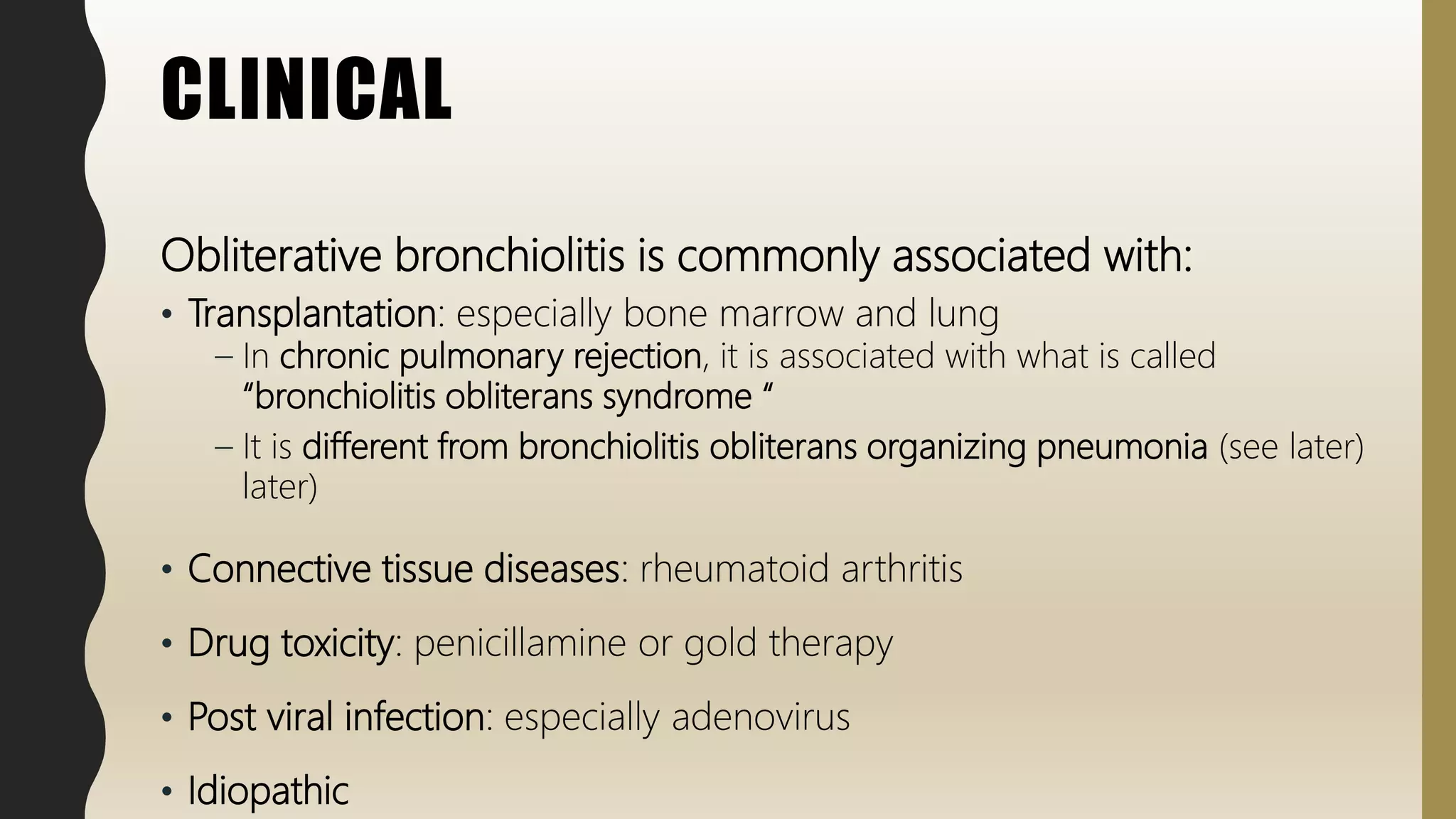
Obliterative bronchiolitis is commonly associated with:
• Transplantation: especially bone marrow and lung
– In chronic pulmonary rejection, it is associated with what is called
“bronchiolitis obliterans syndrome “
– It is different from bronchiolitis obliterans organizing pneumonia (see later)
later)
• Connective tissue diseases: rheumatoid arthritis
• Drug toxicity: penicillamine or gold therapy
• Post viral infection: especially adenovirus
• Idiopathic
MICROSCOPY
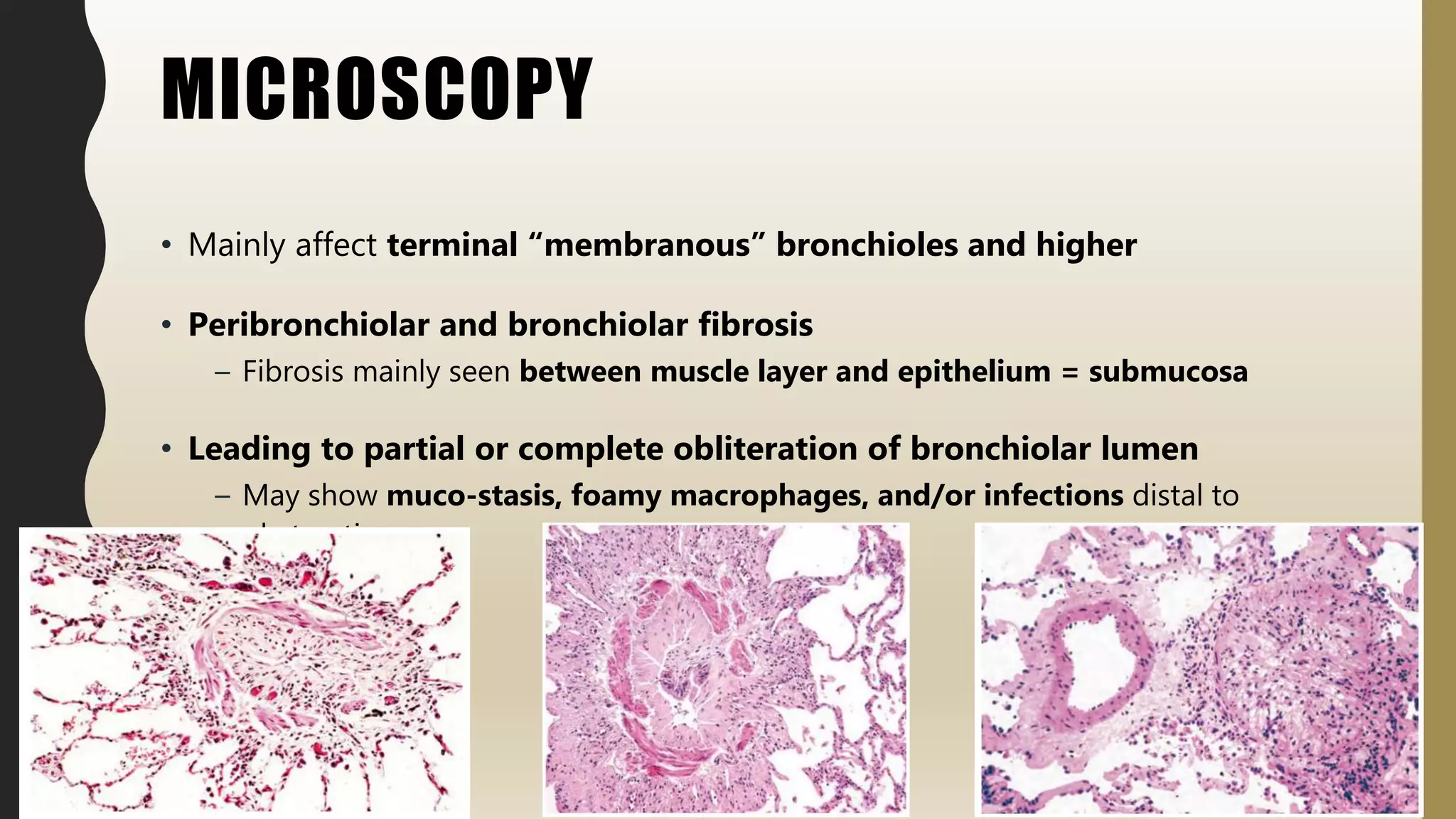
• Mainly affect terminal “membranous” bronchioles and higher
• Peribronchiolar and bronchiolar fibrosis
– Fibrosis mainly seen between muscle layer and epithelium = submucosa
• Leading to partial or complete obliteration of bronchiolar lumen
– May show muco-stasis, foamy macrophages, and/or infections distal to
obstruction
MICROSCOPY
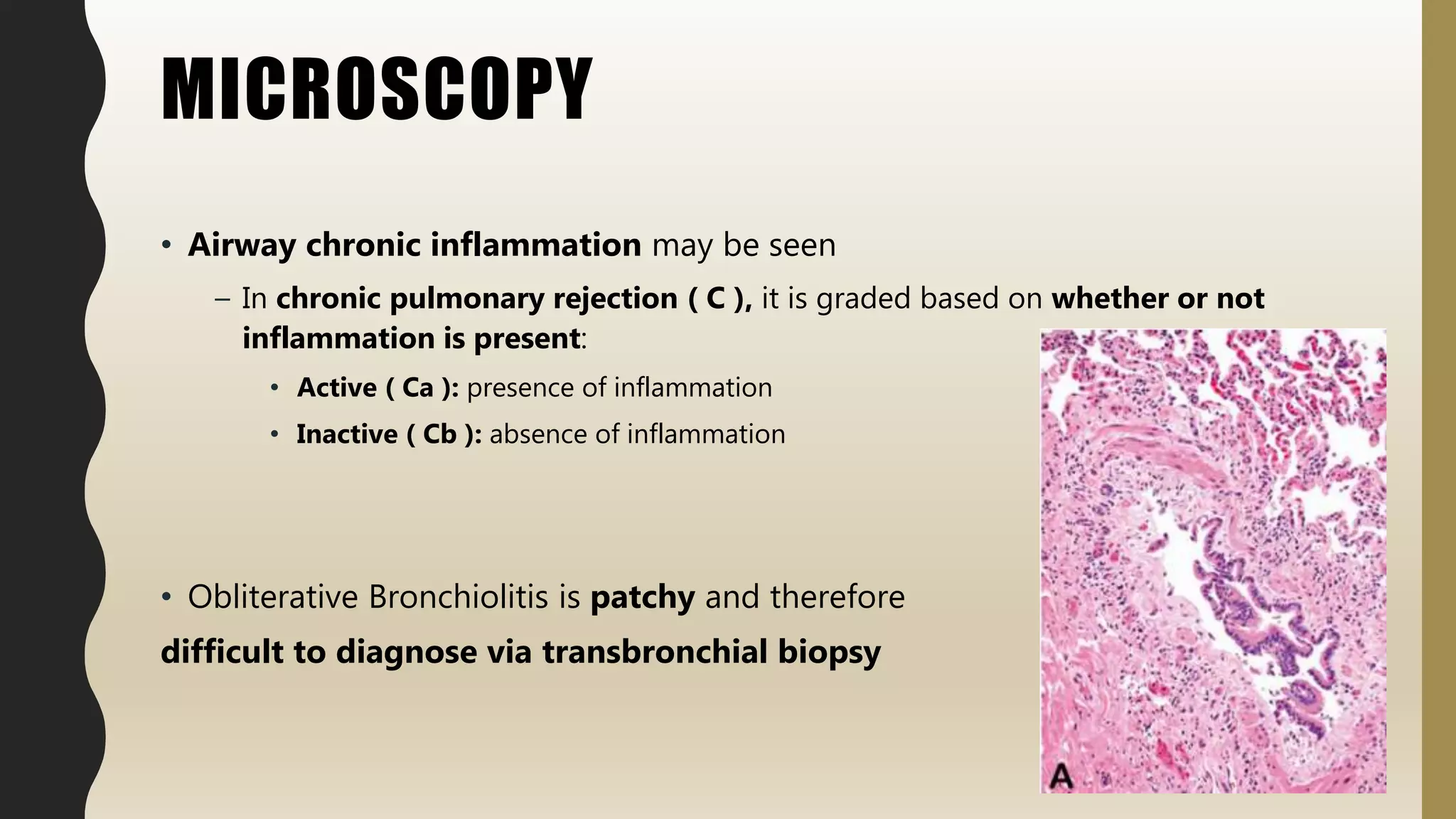
• Airway chronic inflammation may be seen
– In chronic pulmonary rejection ( C ), it is graded based on whether or not
inflammation is present:
• Active ( Ca ): presence of inflammation
• Inactive ( Cb ): absence of inflammation
• Obliterative Bronchiolitis is patchy and therefore
difficult to diagnose via transbronchial biopsy
SPECIAL STUDIES
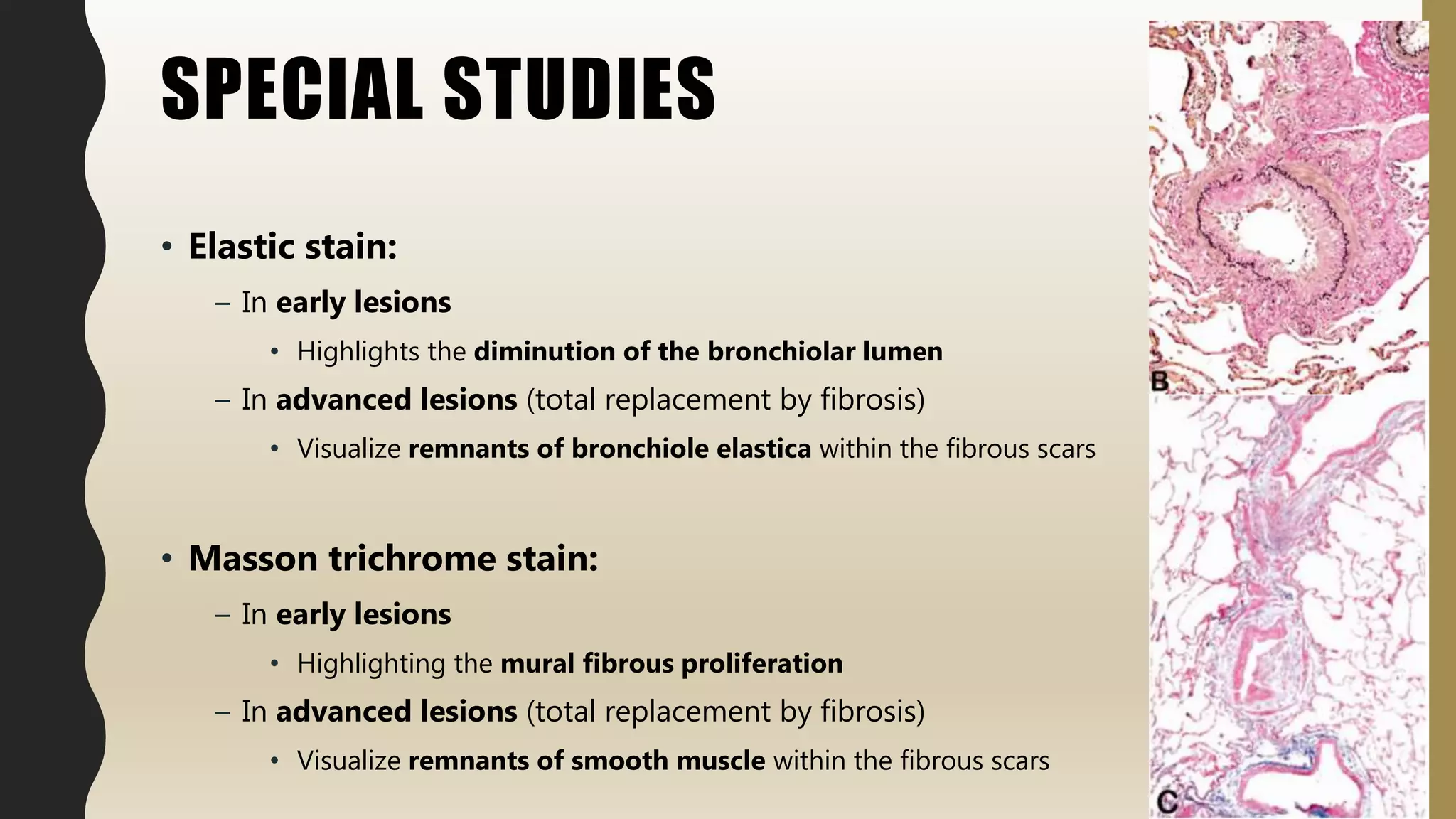
• Elastic stain:
– In early lesions
• Highlights the diminution of the bronchiolar lumen
– In advanced lesions (total replacement by fibrosis)
• Visualize remnants of bronchiole elastica within the fibrous scars
• Masson trichrome stain:
– In early lesions
• Highlighting the mural fibrous proliferation
– In advanced lesions (total replacement by fibrosis)
• Visualize remnants of smooth muscle within the fibrous scars
DIFFERENTIAL DIAGNOSIS
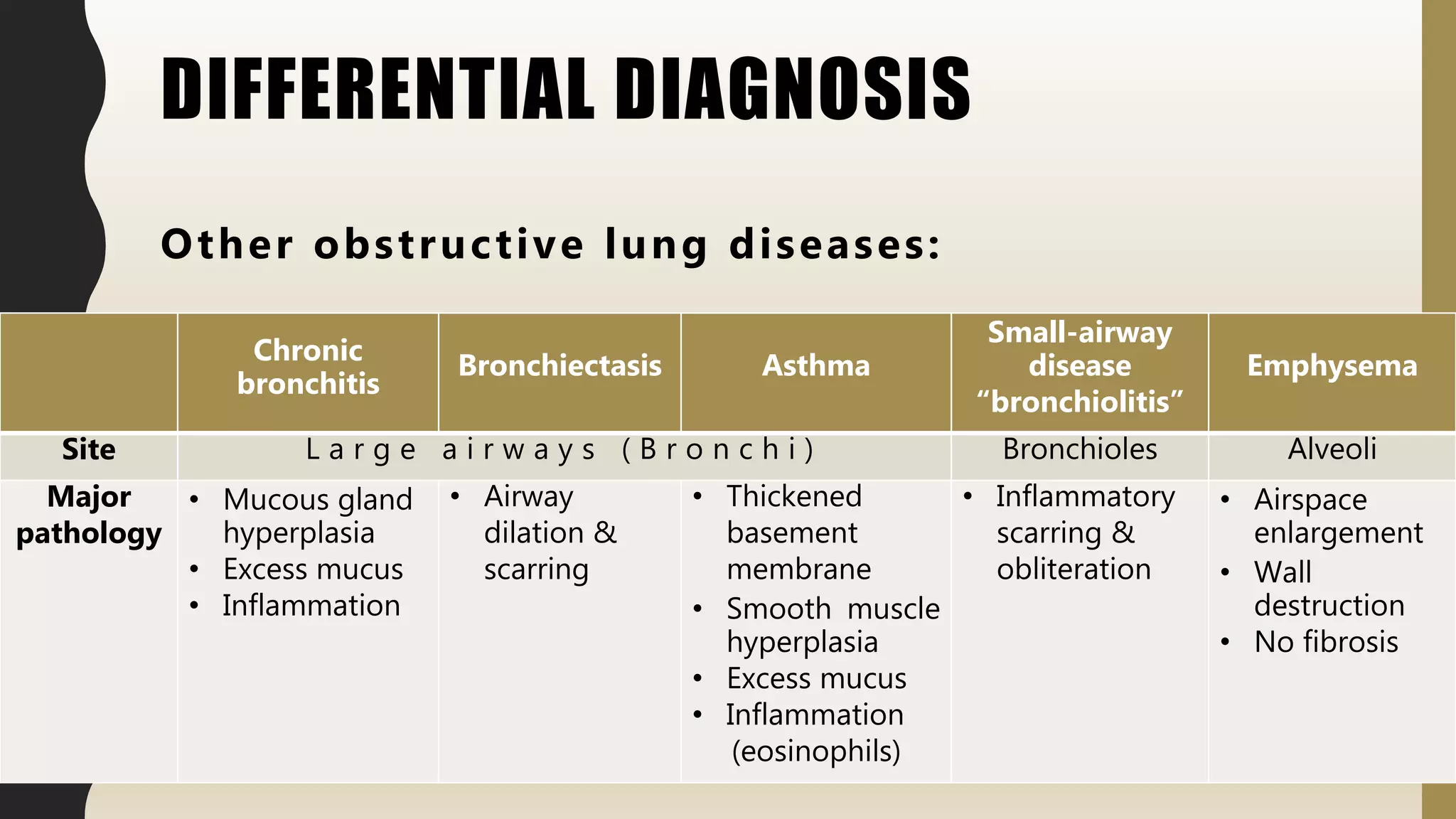
Chronic
bronchitis
Bronchiectasis Asthma
Small-airway
disease
“bronchiolitis”
Emphysema
Site L a r g e a i r w a y s ( B r o n c h i ) Bronchioles Alveoli
Major
pathology
• Mucous gland
hyperplasia
• Excess mucus
• Inflammation
• Airway
dilation &
scarring
• Thickened
basement
membrane
• Smooth muscle
hyperplasia
• Excess mucus
• Inflammation
(eosinophils)
• Inflammatory
scarring &
obliteration
• Airspace
enlargement
• Wall
destruction
• No fibrosis
Other obstructive lung diseases:
DIFFERENTIAL DIAGNOSIS
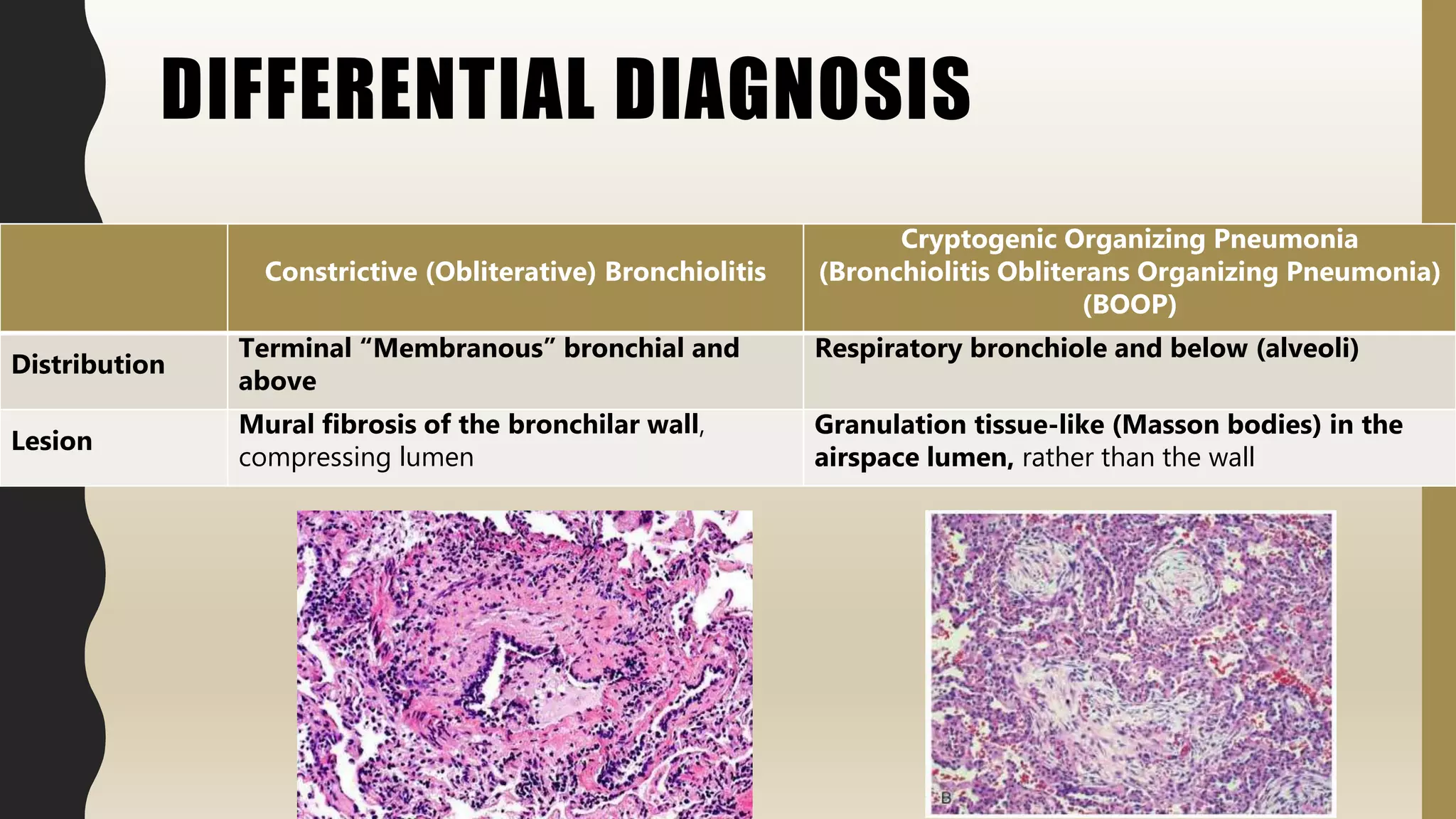
Constrictive (Obliterative) Bronchiolitis
Cryptogenic Organizing Pneumonia
(Bronchiolitis Obliterans Organizing Pneumonia)
(BOOP)
Distribution
Terminal “Membranous” bronchial and
above
Respiratory bronchiole and below (alveoli)
Lesion
Mural fibrosis of the bronchilar wall,
compressing lumen
Granulation tissue-like (Masson bodies) in the
airspace lumen, rather than the wall
WWW.
DO NOT FORGET TO SEARCH FOR MORE PICS
AND VIRTUAL SLIDES
THANK YOU
H a z e m A l i

FlashPath- Lung - Constrictive (Obliterative) Bronchiolitis

  • 1.
    FLASHPATH H A ZE M A L I
  • 2.
  • 3.
    CLINICAL Constrictive (obliterative) bronchiolitisis considered one of the “obstructive lung diseases” that include: • Chronic bronchitis • Emphysema • Bronchiectasis • Asthma
  • 4.
    CLINICAL Obstructive airway diseaseRestrictive airway disease General features Increase in resistance to airflow due to obstruction at any level Reduced expansion of lung parenchyma Total lung capacity (TLC) Increased Reduced Forced Expiratory Volume in one second (FEV1) Reduced Normal
  • 5.
    CLINICAL Obliterative bronchiolitis iscommonly associated with: • Transplantation: especially bone marrow and lung – In chronic pulmonary rejection, it is associated with what is called “bronchiolitis obliterans syndrome “ – It is different from bronchiolitis obliterans organizing pneumonia (see later) later) • Connective tissue diseases: rheumatoid arthritis • Drug toxicity: penicillamine or gold therapy • Post viral infection: especially adenovirus • Idiopathic
  • 6.
    MICROSCOPY • Mainly affectterminal “membranous” bronchioles and higher • Peribronchiolar and bronchiolar fibrosis – Fibrosis mainly seen between muscle layer and epithelium = submucosa • Leading to partial or complete obliteration of bronchiolar lumen – May show muco-stasis, foamy macrophages, and/or infections distal to obstruction
  • 7.
    MICROSCOPY • Airway chronicinflammation may be seen – In chronic pulmonary rejection ( C ), it is graded based on whether or not inflammation is present: • Active ( Ca ): presence of inflammation • Inactive ( Cb ): absence of inflammation • Obliterative Bronchiolitis is patchy and therefore difficult to diagnose via transbronchial biopsy
  • 8.
    SPECIAL STUDIES • Elasticstain: – In early lesions • Highlights the diminution of the bronchiolar lumen – In advanced lesions (total replacement by fibrosis) • Visualize remnants of bronchiole elastica within the fibrous scars • Masson trichrome stain: – In early lesions • Highlighting the mural fibrous proliferation – In advanced lesions (total replacement by fibrosis) • Visualize remnants of smooth muscle within the fibrous scars
  • 9.
    DIFFERENTIAL DIAGNOSIS Chronic bronchitis Bronchiectasis Asthma Small-airway disease “bronchiolitis” Emphysema SiteL a r g e a i r w a y s ( B r o n c h i ) Bronchioles Alveoli Major pathology • Mucous gland hyperplasia • Excess mucus • Inflammation • Airway dilation & scarring • Thickened basement membrane • Smooth muscle hyperplasia • Excess mucus • Inflammation (eosinophils) • Inflammatory scarring & obliteration • Airspace enlargement • Wall destruction • No fibrosis Other obstructive lung diseases:
  • 10.
    DIFFERENTIAL DIAGNOSIS Constrictive (Obliterative)Bronchiolitis Cryptogenic Organizing Pneumonia (Bronchiolitis Obliterans Organizing Pneumonia) (BOOP) Distribution Terminal “Membranous” bronchial and above Respiratory bronchiole and below (alveoli) Lesion Mural fibrosis of the bronchilar wall, compressing lumen Granulation tissue-like (Masson bodies) in the airspace lumen, rather than the wall
  • 11.
    WWW. DO NOT FORGETTO SEARCH FOR MORE PICS AND VIRTUAL SLIDES
  • 12.
    THANK YOU H az e m A l i