FISH FEEDING
AND
FEEDING TYPES
Azeem Iqbal
Objective
Maximum
Growth
Good
Health
Minimum
waste
Optimum
yield
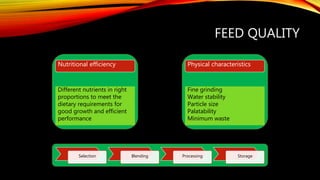
FEED QUALITY
Nutritional efficiency Physical characteristics
Selection Blending Processing Storage
Different nutrients in right
proportions to meet the
dietary requirements for
good growth and efficient
performance
Fine grinding
Water stability
Particle size
Palatability
Minimum waste
8-10bags
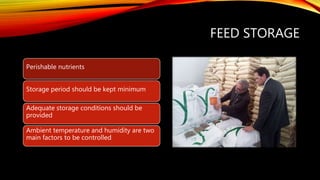
FEED STORAGE
Perishable nutrients
Storage period should be kept minimum
Adequate storage conditions should be
provided
Ambient temperature and humidity are two
main factors to be controlled
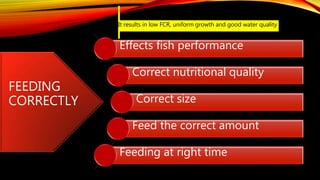
FEEDING
CORRECTLY
Effects fish performance
Correct nutritional quality
Correct size
Feed the correct amount
Feeding at right time
It results in low FCR, uniform growth and good water quality
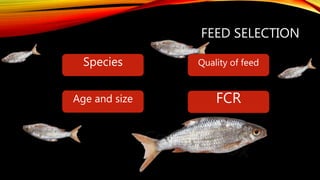
FEED SELECTION
Species Quality of feed
Age and size FCR
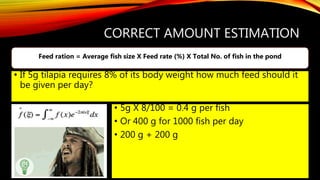
CORRECT AMOUNT ESTIMATION
• 5g X 8/100 = 0.4 g per fish
• Or 400 g for 1000 fish per day
• 200 g + 200 g
Feed ration = Average fish size X Feed rate (%) X Total No. of fish in the pond
• If 5g tilapia requires 8% of its body weight how much feed should it
be given per day?
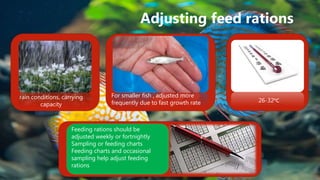
Feeding rations should be
adjusted weekly or fortnightly
Sampling or feeding charts
Feeding charts and occasional
sampling help adjust feeding
rations
For smaller fish , adjusted more
frequently due to fast growth rate 26-32ᵒC
rain conditions, carrying
capacity
Adjusting feed rations
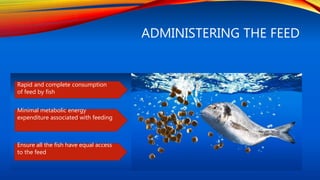
ADMINISTERING THE FEED
Rapid and complete consumption
of feed by fish
Minimal metabolic energy
expenditure associated with feeding
Ensure all the fish have equal access
to the feed
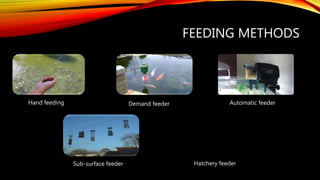
FEEDING METHODS
Hand feeding Demand feeder Automatic feeder
Sub-surface feeder Hatchery feeder
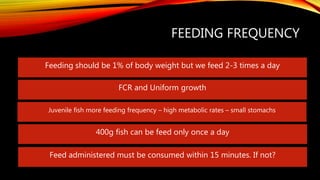
Feeding should be 1% of body weight but we feed 2-3 times a day
FCR and Uniform growth
Juvenile fish more feeding frequency – high metabolic rates – small stomachs
400g fish can be feed only once a day
FEEDING FREQUENCY
Feed administered must be consumed within 15 minutes. If not?
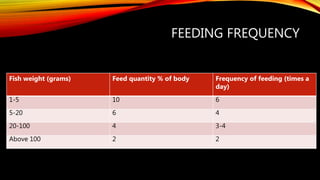
FEEDING FREQUENCY
Fish weight (grams) Feed quantity % of body Frequency of feeding (times a
day)
1-5 10 6
5-20 6 4
20-100 4 3-4
Above 100 2 2
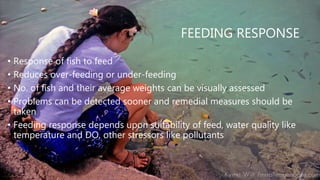
FEEDING RESPONSE
• Response of fish to feed
• Reduces over-feeding or under-feeding
• No. of fish and their average weights can be visually assessed
• Problems can be detected sooner and remedial measures should be
taken
• Feeding response depends upon suitability of feed, water quality like
temperature and DO, other stressors like pollutants
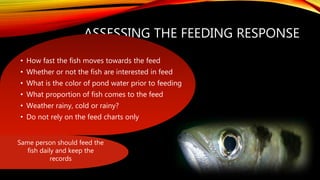
ASSESSING THE FEEDING RESPONSE
• How fast the fish moves towards the feed
• Whether or not the fish are interested in feed
• What is the color of pond water prior to feeding
• What proportion of fish comes to the feed
• Weather rainy, cold or rainy?
• Do not rely on the feed charts only
Same person should feed the
fish daily and keep the
records
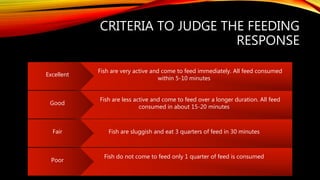
CRITERIA TO JUDGE THE FEEDING
RESPONSE
Fish are very active and come to feed immediately. All feed consumed
within 5-10 minutes
Fish are less active and come to feed over a longer duration. All feed
consumed in about 15-20 minutes
Excellent
Fish are sluggish and eat 3 quarters of feed in 30 minutes
Fish do not come to feed only 1 quarter of feed is consumed
Good
Fair
Poor
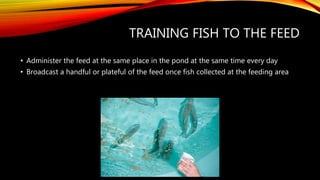
TRAINING FISH TO THE FEED
• Administer the feed at the same place in the pond at the same time every day
• Broadcast a handful or plateful of the feed once fish collected at the feeding area
WHEN NOT TO FEED FISH?
• If feeding response is poor
• If fish are feeling unwell
• Two days before harvest or transportation
• The afternoon before sampling and on the day of sampling before taking samples
• When treatments are applied to the pond
• When water temperatures are low or on rainy days
MANAGING FISH WASTES
Avoid over-feeding Using floating feeds
Thank You

Fish feeding and feeding types

  • 1.
  • 2.
  • 4.
    FEED QUALITY Nutritional efficiencyPhysical characteristics Selection Blending Processing Storage Different nutrients in right proportions to meet the dietary requirements for good growth and efficient performance Fine grinding Water stability Particle size Palatability Minimum waste
  • 5.
  • 6.
    FEED STORAGE Perishable nutrients Storageperiod should be kept minimum Adequate storage conditions should be provided Ambient temperature and humidity are two main factors to be controlled
  • 7.
    FEEDING CORRECTLY Effects fish performance Correctnutritional quality Correct size Feed the correct amount Feeding at right time It results in low FCR, uniform growth and good water quality
  • 8.
    FEED SELECTION Species Qualityof feed Age and size FCR
  • 9.
    CORRECT AMOUNT ESTIMATION •5g X 8/100 = 0.4 g per fish • Or 400 g for 1000 fish per day • 200 g + 200 g Feed ration = Average fish size X Feed rate (%) X Total No. of fish in the pond • If 5g tilapia requires 8% of its body weight how much feed should it be given per day?
  • 10.
    Feeding rations shouldbe adjusted weekly or fortnightly Sampling or feeding charts Feeding charts and occasional sampling help adjust feeding rations For smaller fish , adjusted more frequently due to fast growth rate 26-32ᵒC rain conditions, carrying capacity Adjusting feed rations
  • 11.
    ADMINISTERING THE FEED Rapidand complete consumption of feed by fish Minimal metabolic energy expenditure associated with feeding Ensure all the fish have equal access to the feed
  • 12.
    FEEDING METHODS Hand feedingDemand feeder Automatic feeder Sub-surface feeder Hatchery feeder
  • 13.
    Feeding should be1% of body weight but we feed 2-3 times a day FCR and Uniform growth Juvenile fish more feeding frequency – high metabolic rates – small stomachs 400g fish can be feed only once a day FEEDING FREQUENCY Feed administered must be consumed within 15 minutes. If not?
  • 14.
    FEEDING FREQUENCY Fish weight(grams) Feed quantity % of body Frequency of feeding (times a day) 1-5 10 6 5-20 6 4 20-100 4 3-4 Above 100 2 2
  • 15.
    FEEDING RESPONSE • Responseof fish to feed • Reduces over-feeding or under-feeding • No. of fish and their average weights can be visually assessed • Problems can be detected sooner and remedial measures should be taken • Feeding response depends upon suitability of feed, water quality like temperature and DO, other stressors like pollutants
  • 16.
    ASSESSING THE FEEDINGRESPONSE • How fast the fish moves towards the feed • Whether or not the fish are interested in feed • What is the color of pond water prior to feeding • What proportion of fish comes to the feed • Weather rainy, cold or rainy? • Do not rely on the feed charts only Same person should feed the fish daily and keep the records
  • 17.
    CRITERIA TO JUDGETHE FEEDING RESPONSE Fish are very active and come to feed immediately. All feed consumed within 5-10 minutes Fish are less active and come to feed over a longer duration. All feed consumed in about 15-20 minutes Excellent Fish are sluggish and eat 3 quarters of feed in 30 minutes Fish do not come to feed only 1 quarter of feed is consumed Good Fair Poor
  • 18.
    TRAINING FISH TOTHE FEED • Administer the feed at the same place in the pond at the same time every day • Broadcast a handful or plateful of the feed once fish collected at the feeding area
  • 19.
    WHEN NOT TOFEED FISH? • If feeding response is poor • If fish are feeling unwell • Two days before harvest or transportation • The afternoon before sampling and on the day of sampling before taking samples • When treatments are applied to the pond • When water temperatures are low or on rainy days
  • 20.
    MANAGING FISH WASTES Avoidover-feeding Using floating feeds Thank You