External Morphology of Fish
BY
MAHABUBUR RAHMAN
LECTURER, FIMS, NSTU
External Morphology of fish
External features of a catfish
External Morphology of Shark
Lateral line
• The lateral line is a system of sense organs found in
aquatic vertebrates, mainly fish, used to detect
movement and vibration in the surrounding water.
Lateral line
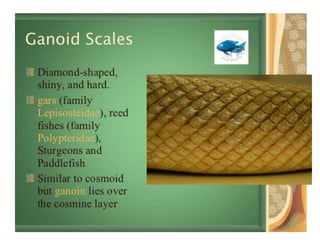
Fish scale types
Ctenoid Scale
Cycloid Scale
Scutes/
finlets
(A) - Heterocercal, (B) - Protocercal,
(C) - Homocercal, (D) - Diphycercal
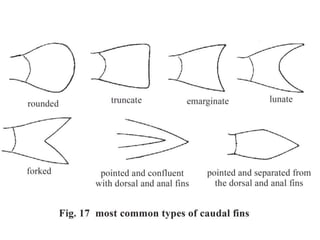
Fish tail
• Heterocercal if the vertebrae extend into the upper lobe of
the tail, making it longer (as in sharks)
• Protocercal if the vertebrae extend to the tip of the tail and
the tail is symmetrical but not expanded (as in amphioxus)
• Diphycercal if the vertebrae extend to the tip of the tail and
the tail is symmetrical and expanded (as in the bichir,
lungfish, lamprey and coelacanth. Most Palaeozoic fishes
had a diphycercal heterocercal tail.
• Most fish have a homocercal tail, where the fin appears
superficially symmetric but the vertebrae extend for a very
short distance into the upper lobe of the fin. This can be
expressed in a variety of shapes.
Mouth Position of Fish
Ventral Mouth position
Types and shape of dorsal fin
1. Fin margin straight
2. Concave
3. Rounded
4. Filamentous
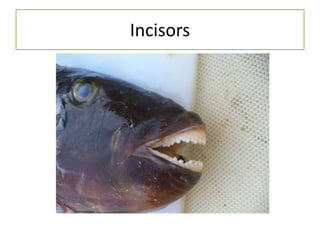
Teeth of fish
1. Incisors
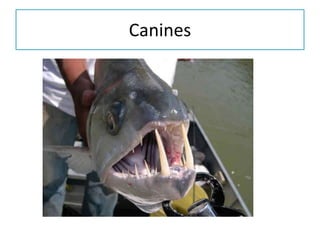
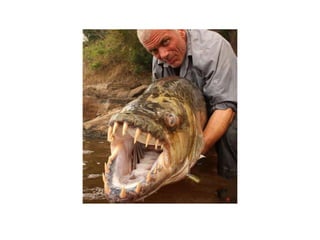
2. Canines
3. Molariform
4. Villiform
5. Grasping pharyngeal teeth
6. Tearing pharyngeal teeth
7. Grinding pharyngeal teeth
8. Comb-like pharyngeal teeth
Incisors
Canines
Molariform
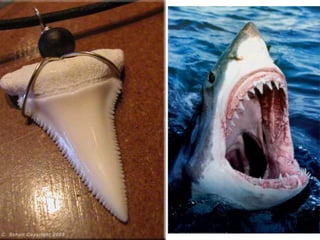
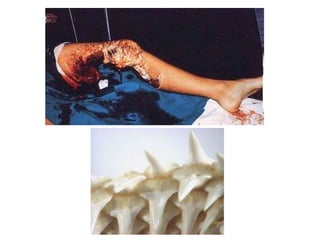
Shark Teeth
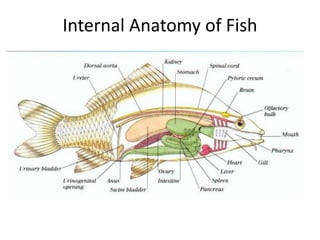
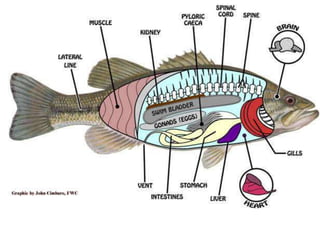
Internal Anatomy of Fish
External morphology of fish