PRESENTED BY, 
DARLA .SRINIVASA RAO MSc MLT 
13-PML-11 
SUBMITTED TO, 
Dr D.CAROL
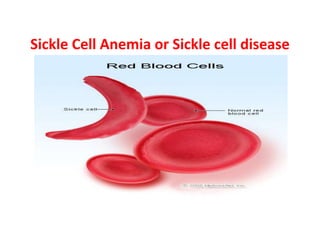
Sickle Cell Anemia or Sickle cell disease
ANEMIA 
Anemia means deficiency of hemoglobin in the 
blood, which can be caused by either too few 
red cells or too little hemoglobin in the cells. 
TYPES 
Hemorrhagic anemia: anemia due to 
hemorrhage is known as hemorrhagic anemia. 
Hemolytic anemia: Hemolysis means 
destruction of RBCs.(sickle cell anemia)
Types ,,,,, 
Nutritional deficiency anemia : nutritive substances 
such as iron, protiens and vitamins like C,B12,and 
folic acid are necessary for erythropoisis .the 
deficiency of these substances leads to 
nutritional deficiency anemia. 
Aplastic anemia: Aplastic anemia is due to the 
disorder of red bone marrow. 
Anemia of chronic disease: It is characterized by 
short life span of red cells caused by disturbance 
in iron metabolism.
Sickle cell anemia 
Hemolytic anemia 
Causes: 1) liver failure 
2)Renal disorder 
3)Burns 
4) congenital or acquired default in the shape of 
RBCs. 
Sickle Cell Anemia
Sickle Cell Disease 
What is sickle cell disease? 
• Sickle cell disease (SCD) is a group of inherited red 
blood cell disorder. 
• Healthy red blood cells are round and they move 
through small blood vessels carrying oxygen to all 
parts of the body. 
• In sickle cell disease ,the red blood cells become hard 
and sticky and look like a C-shaped farm tool called a 
sickle.
Continue,,,,,,, 
• Sickle cells die early , which causes a constant 
shortage of red blood cells. 
• Sickle cells can get stuck in small blood vessels 
and block the flow of blood and oxygen to 
organs in the body . these blokages cause 
repeated episodes of severe pain , organ 
damage, serious infections , even stroke.
Who is affected by SCD…. 
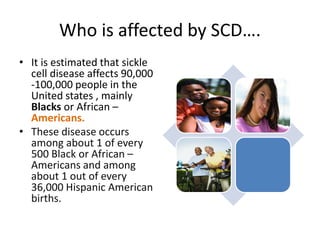
• It is estimated that sickle 
cell disease affects 90,000 
-100,000 people in the 
United states , mainly 
Blacks or African – 
Americans. 
• These disease occurs 
among about 1 of every 
500 Black or African – 
Americans and among 
about 1 out of every 
36,000 Hispanic American 
births.
Pathology .. 
• Caused by mutation in 
beta globin gene –at 
sixth position , glutamic 
acid is replaced by 
valine. 
• Red blood cells typically 
live 90-120 days , but 
sickle cells only survive 
10-20 days.
Types of sickle cell disease 
1. Sickle cell anemia: 
Homozygous state for HbS (βS- βS) 
2. Sickle cell trait : 
Heterozygous carrier state for HbS (βS -β) 
 If one parent has sickle cell anemia and other is 
normal , all children will have sickle cell trait. 
 If one parent has sickle cell anemia and other has 
sickle cell trait there is 50% chance of either with 
each pregnancy.
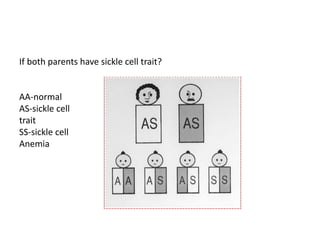
If both parents have sickle cell trait? 
AA-normal 
AS-sickle cell 
trait 
SS-sickle cell 
Anemia
3. Sickle cell – β thalassemia : 
Double heterozygote in which sickle cell gene 
is inherited from one parent and beta 
thalssemia gene from other parent . 
gene type (βsβo-βsβ+) 
4. Combination of Hbs with other abnormal 
hemoglobin (HbSD, HbSC, HbSO(arab 
disease),HbSE).
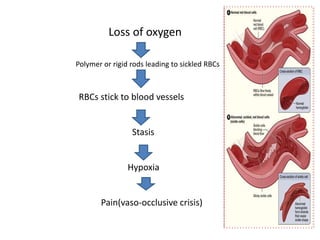
Loss of oxygen 
Polymer or rigid rods leading to sickled RBCs 
RBCs stick to blood vessels 
Stasis 
Hypoxia 
Pain(vaso-occlusive crisis)
Symptoms 
• No symptoms infants???? 
It is able to block the sickling action of the 
RBCs so infants who have inherited the 
disease do not develop symptoms. 
people with sickle cell gene who continue to 
carry some HbF are better protected from 
severe from of the disease.
Symptoms… 
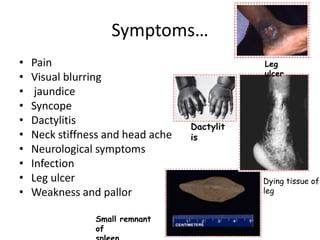
• Pain 
• Visual blurring 
• jaundice 
• Syncope 
• Dactylitis 
• Neck stiffness and head ache 
• Neurological symptoms 
• Infection 
• Leg ulcer 
• Weakness and pallor 
Dactylit 
is 
Leg 
ulcer 
Small remnant 
of 
spleen 
Dying tissue of 
leg
DIAGNOSIS 
• PERIPHERAL SMEAR 
• SICKLING TEST 
• HB ELECTROPHOROSIS 
• PCR
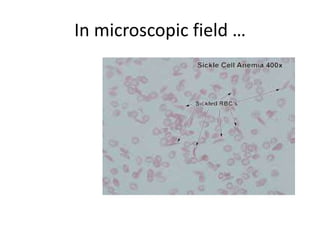
SICKLING TEST 
Principle : 
Sodium meta bisulphite reduces the oxygen tension 
inducing the typical sickle – shape of red blood 
cells. 
Sample: 
Fresh blood in any anticoagulant. 
Method: 
mix 1 drop of blood with 1 drop of 2% sodium 
meta bisulphate solution on a microscope slide.
In microscopic field …
TREATMENT 
• There is no single best treatment for all people 
with Sickle cell disease. 
• Treatment options are different for each 
person depending on the symptoms. 
• Treatments can include receiving blood 
transfusions, maintaining a high fluid intake 
(drinking 8 to 10 glasses of water each day), 
receiving IV (intravenous) therapy (fluids given 
into a vein) and medications to help with pain.
Main treatment methods 
There is no known cure for sickle cell anemia. 
The four main treatment options are: 
• Blood Transfusions 
• Drug Treatment 
• Blood and Marrow Stem Cell Transplantation 
• Gene Therapy
Prevention 
 Genetic screening 
 Testing for sickle cells in babies. 
 Chronic vill sampling 
 Amniotic fluid sampling 
 Fetal blood samplin 
 Daily penicillin for newborn babies with the 
disease.
Final ppt sickle cell

Final ppt sickle cell

  • 1.
    PRESENTED BY, DARLA.SRINIVASA RAO MSc MLT 13-PML-11 SUBMITTED TO, Dr D.CAROL
  • 2.
    Sickle Cell Anemiaor Sickle cell disease
  • 3.
    ANEMIA Anemia meansdeficiency of hemoglobin in the blood, which can be caused by either too few red cells or too little hemoglobin in the cells. TYPES Hemorrhagic anemia: anemia due to hemorrhage is known as hemorrhagic anemia. Hemolytic anemia: Hemolysis means destruction of RBCs.(sickle cell anemia)
  • 4.
    Types ,,,,, Nutritionaldeficiency anemia : nutritive substances such as iron, protiens and vitamins like C,B12,and folic acid are necessary for erythropoisis .the deficiency of these substances leads to nutritional deficiency anemia. Aplastic anemia: Aplastic anemia is due to the disorder of red bone marrow. Anemia of chronic disease: It is characterized by short life span of red cells caused by disturbance in iron metabolism.
  • 5.
    Sickle cell anemia Hemolytic anemia Causes: 1) liver failure 2)Renal disorder 3)Burns 4) congenital or acquired default in the shape of RBCs. Sickle Cell Anemia
  • 6.
    Sickle Cell Disease What is sickle cell disease? • Sickle cell disease (SCD) is a group of inherited red blood cell disorder. • Healthy red blood cells are round and they move through small blood vessels carrying oxygen to all parts of the body. • In sickle cell disease ,the red blood cells become hard and sticky and look like a C-shaped farm tool called a sickle.
  • 7.
    Continue,,,,,,, • Sicklecells die early , which causes a constant shortage of red blood cells. • Sickle cells can get stuck in small blood vessels and block the flow of blood and oxygen to organs in the body . these blokages cause repeated episodes of severe pain , organ damage, serious infections , even stroke.
  • 8.
    Who is affectedby SCD…. • It is estimated that sickle cell disease affects 90,000 -100,000 people in the United states , mainly Blacks or African – Americans. • These disease occurs among about 1 of every 500 Black or African – Americans and among about 1 out of every 36,000 Hispanic American births.
  • 9.
    Pathology .. •Caused by mutation in beta globin gene –at sixth position , glutamic acid is replaced by valine. • Red blood cells typically live 90-120 days , but sickle cells only survive 10-20 days.
  • 10.
    Types of sicklecell disease 1. Sickle cell anemia: Homozygous state for HbS (βS- βS) 2. Sickle cell trait : Heterozygous carrier state for HbS (βS -β)  If one parent has sickle cell anemia and other is normal , all children will have sickle cell trait.  If one parent has sickle cell anemia and other has sickle cell trait there is 50% chance of either with each pregnancy.
  • 11.
    If both parentshave sickle cell trait? AA-normal AS-sickle cell trait SS-sickle cell Anemia
  • 12.
    3. Sickle cell– β thalassemia : Double heterozygote in which sickle cell gene is inherited from one parent and beta thalssemia gene from other parent . gene type (βsβo-βsβ+) 4. Combination of Hbs with other abnormal hemoglobin (HbSD, HbSC, HbSO(arab disease),HbSE).
  • 13.
    Loss of oxygen Polymer or rigid rods leading to sickled RBCs RBCs stick to blood vessels Stasis Hypoxia Pain(vaso-occlusive crisis)
  • 14.
    Symptoms • Nosymptoms infants???? It is able to block the sickling action of the RBCs so infants who have inherited the disease do not develop symptoms. people with sickle cell gene who continue to carry some HbF are better protected from severe from of the disease.
  • 15.
    Symptoms… • Pain • Visual blurring • jaundice • Syncope • Dactylitis • Neck stiffness and head ache • Neurological symptoms • Infection • Leg ulcer • Weakness and pallor Dactylit is Leg ulcer Small remnant of spleen Dying tissue of leg
  • 16.
    DIAGNOSIS • PERIPHERALSMEAR • SICKLING TEST • HB ELECTROPHOROSIS • PCR
  • 17.
    SICKLING TEST Principle: Sodium meta bisulphite reduces the oxygen tension inducing the typical sickle – shape of red blood cells. Sample: Fresh blood in any anticoagulant. Method: mix 1 drop of blood with 1 drop of 2% sodium meta bisulphate solution on a microscope slide.
  • 18.
  • 19.
    TREATMENT • Thereis no single best treatment for all people with Sickle cell disease. • Treatment options are different for each person depending on the symptoms. • Treatments can include receiving blood transfusions, maintaining a high fluid intake (drinking 8 to 10 glasses of water each day), receiving IV (intravenous) therapy (fluids given into a vein) and medications to help with pain.
  • 20.
    Main treatment methods There is no known cure for sickle cell anemia. The four main treatment options are: • Blood Transfusions • Drug Treatment • Blood and Marrow Stem Cell Transplantation • Gene Therapy
  • 21.
    Prevention  Geneticscreening  Testing for sickle cells in babies.  Chronic vill sampling  Amniotic fluid sampling  Fetal blood samplin  Daily penicillin for newborn babies with the disease.