Sickle Cell Anemia


By:Detroit Students
The Reason WHY!

• The reason why we chose this topic is
  because it seemed interesting. A lot of
  people are confused by sickle cell
  anemia. We wanted to really know what
  it was and what it will do to our body
  and if you can catch it from other
  people.
What is the Sickle Cell?
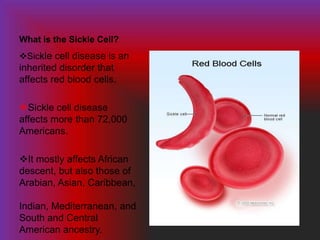
Sickle cell disease is an
inherited disorder that
affects red blood cells.

Sickle cell disease
affects more than 72,000
Americans.

It mostly affects African
descent, but also those of
Arabian, Asian, Caribbean,

Indian, Mediterranean, and
South and Central
American ancestry.
Symptoms
• The signs and symptoms of sickle cell anemia vary. Some people have mild
  symptoms. Others have very severe symptoms and often are hospitalized for
  treatment.
• Sickle cell anemia is present at birth, but many infants don't show any signs
  until after 4 months of age.
• The most common signs and symptoms are linked to anemia and pain. Other
  signs and symptoms are linked to the disease's complications.
Signs and Symptoms Related to Anemia
•   The most common symptom of anemia is fatigue (feeling tired or weak). Other signs
    and symptoms of anemia may include:
•   Shortness of breath
•   Dizziness
•   Headaches
•   Coldness in the hands and feet
•   Paler than normal skin or mucous membranes (the tissue that lines your
    nose, mouth, and other organs and body cavities)
•   Jaundice (a yellowish color of the skin or whites of the eyes)
How Common is the Trait?
The trait of Sickle Cell is very common.

The most common types of sickle cell disease
 are SS, SC and S beta thalassemia.

 Sickle cell trait (also known as being a carrier)
 occurs when a person has one gene for sickle
 hemoglobin and one gene for normal
 hemoglobin.
What is
Hemoglobin?

Hemoglobin is found in all red
blood cells and carries oxygen
from the lungs to tissues and
organs throughout the body.
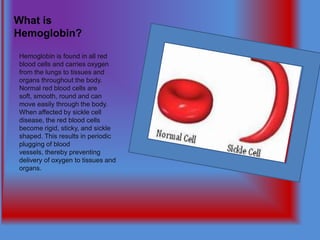
Normal red blood cells are
soft, smooth, round and can
move easily through the body.
When affected by sickle cell
disease, the red blood cells
become rigid, sticky, and sickle
shaped. This results in periodic
plugging of blood
vessels, thereby preventing
delivery of oxygen to tissues and
organs.
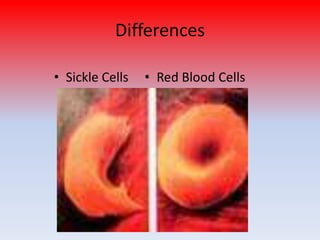
Differences

• Sickle Cells   • Red Blood Cells
How this Trait is Inherited
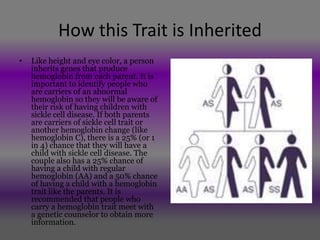
•   Like height and eye color, a person
    inherits genes that produce
    hemoglobin from each parent. It is
    important to identify people who
    are carriers of an abnormal
    hemoglobin so they will be aware of
    their risk of having children with
    sickle cell disease. If both parents
    are carriers of sickle cell trait or
    another hemoglobin change (like
    hemoglobin C), there is a 25% (or 1
    in 4) chance that they will have a
    child with sickle cell disease. The
    couple also has a 25% chance of
    having a child with regular
    hemoglobin (AA) and a 50% chance
    of having a child with a hemoglobin
    trait like the parents. It is
    recommended that people who
    carry a hemoglobin trait meet with
    a genetic counselor to obtain more
    information.

Sickle Cell Anemia. Student Presentation

  • 1.
  • 2.
    The Reason WHY! •The reason why we chose this topic is because it seemed interesting. A lot of people are confused by sickle cell anemia. We wanted to really know what it was and what it will do to our body and if you can catch it from other people.
  • 3.
    What is theSickle Cell? Sickle cell disease is an inherited disorder that affects red blood cells. Sickle cell disease affects more than 72,000 Americans. It mostly affects African descent, but also those of Arabian, Asian, Caribbean, Indian, Mediterranean, and South and Central American ancestry.
  • 4.
    Symptoms • The signsand symptoms of sickle cell anemia vary. Some people have mild symptoms. Others have very severe symptoms and often are hospitalized for treatment. • Sickle cell anemia is present at birth, but many infants don't show any signs until after 4 months of age. • The most common signs and symptoms are linked to anemia and pain. Other signs and symptoms are linked to the disease's complications. Signs and Symptoms Related to Anemia • The most common symptom of anemia is fatigue (feeling tired or weak). Other signs and symptoms of anemia may include: • Shortness of breath • Dizziness • Headaches • Coldness in the hands and feet • Paler than normal skin or mucous membranes (the tissue that lines your nose, mouth, and other organs and body cavities) • Jaundice (a yellowish color of the skin or whites of the eyes)
  • 5.
    How Common isthe Trait? The trait of Sickle Cell is very common. The most common types of sickle cell disease are SS, SC and S beta thalassemia.  Sickle cell trait (also known as being a carrier) occurs when a person has one gene for sickle hemoglobin and one gene for normal hemoglobin.
  • 6.
    What is Hemoglobin? Hemoglobin isfound in all red blood cells and carries oxygen from the lungs to tissues and organs throughout the body. Normal red blood cells are soft, smooth, round and can move easily through the body. When affected by sickle cell disease, the red blood cells become rigid, sticky, and sickle shaped. This results in periodic plugging of blood vessels, thereby preventing delivery of oxygen to tissues and organs.
  • 7.
    Differences • Sickle Cells • Red Blood Cells
  • 8.
    How this Traitis Inherited • Like height and eye color, a person inherits genes that produce hemoglobin from each parent. It is important to identify people who are carriers of an abnormal hemoglobin so they will be aware of their risk of having children with sickle cell disease. If both parents are carriers of sickle cell trait or another hemoglobin change (like hemoglobin C), there is a 25% (or 1 in 4) chance that they will have a child with sickle cell disease. The couple also has a 25% chance of having a child with regular hemoglobin (AA) and a 50% chance of having a child with a hemoglobin trait like the parents. It is recommended that people who carry a hemoglobin trait meet with a genetic counselor to obtain more information.