SICKLE- CELL
ANEMIA
BY: RANGAMPETA YESHWANTH
{AKAKI TSERETELI STATE
UNIVERSITY}
SICKLE CELL
ANEMIA
 Sickle cell anemia is one of a group of inherited disorders known as sickle cell disease. It affects
the shape of red blood cells.
 Red blood cells are usually round and flexible, so they move easily through blood vessels.
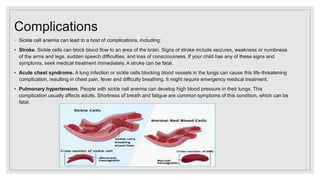
 In sickle cell anemia, some red blood cells are shaped like sickles or crescent moons. These
sickle cells also become rigid and sticky, which can slow or block blood flow.
 There's no cure for most people with sickle cell anemia. Treatments can relieve pain and help
prevent complications associated with the disease.
Symptoms:
◦ Signs and symptoms of sickle cell anemia usually appear around 6 months of age. They vary from person to person and
may change over time. Signs and symptoms can include:
• Anemia. Sickle cells break apart easily and die. Red blood cells usually live for about 120 days before they need to be
replaced. But sickle cells typically die in 10 to 20 days, leaving a shortage of red blood cells (anemia). Without enough red
blood cells, the body can't get enough oxygen and this causes fatigue.
• Swelling of hands and feet. The swelling is caused by sickle-shaped red blood cells blocking blood circulation in the
hands and feet.
• Frequent infections. Sickle cells can damage the spleen, increasing vulnerability to infections. Infants and children with
sickle cell anemia commonly receive vaccinations and antibiotics to prevent potentially life-threatening infections, such as
pneumonia.
• Delayed growth or puberty. Red blood cells provide the body with the oxygen and nutrients needed for growth. A
shortage of healthy red blood cells can slow growth in infants and children and delay puberty in teenagers.
• Vision problems. Tiny blood vessels that supply the eyes can become plugged with sickle cells. This can damage the
retina — the portion of the eye that processes visual images — and lead to vision problems.
Causes:
◦ Sickle cell anemia is caused by a change in the gene that tells the body to make the iron-rich compound
in red blood cells called hemoglobin.
◦ Hemoglobin enables red blood cells to carry oxygen from the lungs throughout the body.
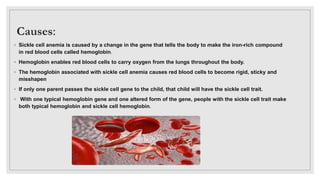
◦ The hemoglobin associated with sickle cell anemia causes red blood cells to become rigid, sticky and
misshapen
◦ If only one parent passes the sickle cell gene to the child, that child will have the sickle cell trait.
◦ With one typical hemoglobin gene and one altered form of the gene, people with the sickle cell trait make
both typical hemoglobin and sickle cell hemoglobin.
Complications
◦ Sickle cell anemia can lead to a host of complications, including:
• Stroke. Sickle cells can block blood flow to an area of the brain. Signs of stroke include seizures, weakness or numbness
of the arms and legs, sudden speech difficulties, and loss of consciousness. If your child has any of these signs and
symptoms, seek medical treatment immediately. A stroke can be fatal.
• Acute chest syndrome. A lung infection or sickle cells blocking blood vessels in the lungs can cause this life-threatening
complication, resulting in chest pain, fever and difficulty breathing. It might require emergency medical treatment.
• Pulmonary hypertension. People with sickle cell anemia can develop high blood pressure in their lungs. This
complication usually affects adults. Shortness of breath and fatigue are common symptoms of this condition, which can be
fatal.
• Splenic sequestration. A large number of sickle cells can get trapped in
the spleen, causing it to enlarge and possibly causing belly pain on the left
side of the body.
• This can be life-threatening. Parents of children with sickle cell anemia
should learn to regularly feel their child's spleen for enlargement.
• Blindness. Sickle cells can block tiny blood vessels that supply the eyes.
Over time, this can lead to blindness.
• Leg ulcers. Sickle cell anemia can cause painful open sores on the legs.
• Gallstones. The breakdown of red blood cells produces a substance called
bilirubin. A high level of bilirubin in the body can lead to gallstones.
Types of Sickle Cell Disease
There are several forms of sickle cell disease.
The type you or your child inherits depends on many things, including the specific type of abnormal hemoglobin
you have.
Hemoglobin SS, also called sickle cell anemia, is usually the most severe type of this disorder.
Other common forms include:
•Hemoglobin SC (usually mild)
•Hemoglobin sickle beta thalassemia
Rare types are:
•Hemoglobin SD
•Hemoglobin SE
•Hemoglobin SO
Diagnosis:
◦ A blood test can check for the form of hemoglobin that underlies sickle cell anemia. In the
United States, this blood test is part of routine newborn screening. But older children and adults
can be tested, too.
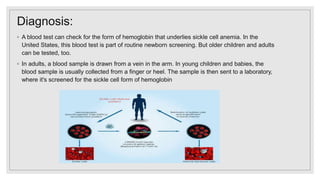
◦ In adults, a blood sample is drawn from a vein in the arm. In young children and babies, the
blood sample is usually collected from a finger or heel. The sample is then sent to a laboratory,
where it's screened for the sickle cell form of hemoglobin
Treatment/Symptom management:
◦ Antibiotics:
◦ Antibiotics can help children from two months of age to five years of age with Sickle
Cell Anemia prevent infections such as pneumonia and it can help Adults fight
certain diseases caused by Sickle Cell Anemia.
Hydroxyurea:
◦ Hydroxyurea is a medicine that can reduce the frequency of crises and can
sometimes reduce the need for blood cell transfusions. However, Hydroxyurea can
increase the risk of infections and while it still is not scientifically proven, it may
cause tumors or leukemia.
THANK YOU

SICKLE- CELL ANEMIA.pptx

  • 1.
    SICKLE- CELL ANEMIA BY: RANGAMPETAYESHWANTH {AKAKI TSERETELI STATE UNIVERSITY}
  • 2.
    SICKLE CELL ANEMIA  Sicklecell anemia is one of a group of inherited disorders known as sickle cell disease. It affects the shape of red blood cells.  Red blood cells are usually round and flexible, so they move easily through blood vessels.  In sickle cell anemia, some red blood cells are shaped like sickles or crescent moons. These sickle cells also become rigid and sticky, which can slow or block blood flow.  There's no cure for most people with sickle cell anemia. Treatments can relieve pain and help prevent complications associated with the disease.
  • 3.
    Symptoms: ◦ Signs andsymptoms of sickle cell anemia usually appear around 6 months of age. They vary from person to person and may change over time. Signs and symptoms can include: • Anemia. Sickle cells break apart easily and die. Red blood cells usually live for about 120 days before they need to be replaced. But sickle cells typically die in 10 to 20 days, leaving a shortage of red blood cells (anemia). Without enough red blood cells, the body can't get enough oxygen and this causes fatigue. • Swelling of hands and feet. The swelling is caused by sickle-shaped red blood cells blocking blood circulation in the hands and feet. • Frequent infections. Sickle cells can damage the spleen, increasing vulnerability to infections. Infants and children with sickle cell anemia commonly receive vaccinations and antibiotics to prevent potentially life-threatening infections, such as pneumonia. • Delayed growth or puberty. Red blood cells provide the body with the oxygen and nutrients needed for growth. A shortage of healthy red blood cells can slow growth in infants and children and delay puberty in teenagers. • Vision problems. Tiny blood vessels that supply the eyes can become plugged with sickle cells. This can damage the retina — the portion of the eye that processes visual images — and lead to vision problems.
  • 4.
    Causes: ◦ Sickle cellanemia is caused by a change in the gene that tells the body to make the iron-rich compound in red blood cells called hemoglobin. ◦ Hemoglobin enables red blood cells to carry oxygen from the lungs throughout the body. ◦ The hemoglobin associated with sickle cell anemia causes red blood cells to become rigid, sticky and misshapen ◦ If only one parent passes the sickle cell gene to the child, that child will have the sickle cell trait. ◦ With one typical hemoglobin gene and one altered form of the gene, people with the sickle cell trait make both typical hemoglobin and sickle cell hemoglobin.
  • 5.
    Complications ◦ Sickle cellanemia can lead to a host of complications, including: • Stroke. Sickle cells can block blood flow to an area of the brain. Signs of stroke include seizures, weakness or numbness of the arms and legs, sudden speech difficulties, and loss of consciousness. If your child has any of these signs and symptoms, seek medical treatment immediately. A stroke can be fatal. • Acute chest syndrome. A lung infection or sickle cells blocking blood vessels in the lungs can cause this life-threatening complication, resulting in chest pain, fever and difficulty breathing. It might require emergency medical treatment. • Pulmonary hypertension. People with sickle cell anemia can develop high blood pressure in their lungs. This complication usually affects adults. Shortness of breath and fatigue are common symptoms of this condition, which can be fatal.
  • 6.
    • Splenic sequestration.A large number of sickle cells can get trapped in the spleen, causing it to enlarge and possibly causing belly pain on the left side of the body. • This can be life-threatening. Parents of children with sickle cell anemia should learn to regularly feel their child's spleen for enlargement. • Blindness. Sickle cells can block tiny blood vessels that supply the eyes. Over time, this can lead to blindness. • Leg ulcers. Sickle cell anemia can cause painful open sores on the legs. • Gallstones. The breakdown of red blood cells produces a substance called bilirubin. A high level of bilirubin in the body can lead to gallstones.
  • 7.
    Types of SickleCell Disease There are several forms of sickle cell disease. The type you or your child inherits depends on many things, including the specific type of abnormal hemoglobin you have. Hemoglobin SS, also called sickle cell anemia, is usually the most severe type of this disorder. Other common forms include: •Hemoglobin SC (usually mild) •Hemoglobin sickle beta thalassemia Rare types are: •Hemoglobin SD •Hemoglobin SE •Hemoglobin SO
  • 8.
    Diagnosis: ◦ A bloodtest can check for the form of hemoglobin that underlies sickle cell anemia. In the United States, this blood test is part of routine newborn screening. But older children and adults can be tested, too. ◦ In adults, a blood sample is drawn from a vein in the arm. In young children and babies, the blood sample is usually collected from a finger or heel. The sample is then sent to a laboratory, where it's screened for the sickle cell form of hemoglobin
  • 9.
    Treatment/Symptom management: ◦ Antibiotics: ◦Antibiotics can help children from two months of age to five years of age with Sickle Cell Anemia prevent infections such as pneumonia and it can help Adults fight certain diseases caused by Sickle Cell Anemia. Hydroxyurea: ◦ Hydroxyurea is a medicine that can reduce the frequency of crises and can sometimes reduce the need for blood cell transfusions. However, Hydroxyurea can increase the risk of infections and while it still is not scientifically proven, it may cause tumors or leukemia.
  • 11.