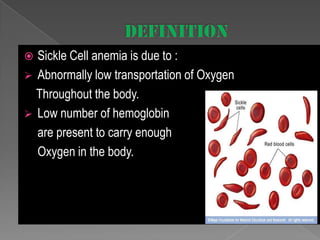

Sickle Cell anemia is due to :
 Abnormally low transportation of Oxygen
Throughout the body.
 Low number of hemoglobin
are present to carry enough
Oxygen in the body.

 It is a hereditary disease. i.e. Transfers from

parents to off-springs and so on.
 SCA is caused by mutation at the 6th position of
beta-globin gene. (glutamic acid is replaced by
valine).
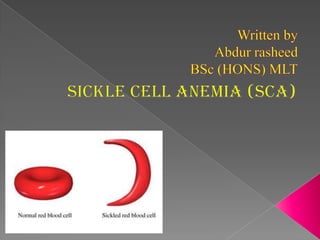
 SCA is a serious disease in which the body makes
sickle-shaped red blood cells. “Sickle-shaped”
means that the red blood cells are shaped like a
"C."
 Sickle-shaped cells don’t move easily through

blood vessels . Get stuck in the blood vessels.
 The clumps of sickle cells block blood flow in the
blood vessels that lead to the limbs and organs.
Blocked blood vessels can cause pain, serious
infections, and organ damage.
 Sickle cells usually die after only about 10 to 20
days. The bone marrow can’t make new red blood
cells fast enough to replace the dying ones
 People who have the SCA are born with it. They

inherit two copies of the sickle cell gene—one from
each parent.
 In SCA, the hemoglobin sticks together when it
delivers oxygen to the body’s tissues. They cause the
red blood cells to become stiff and shaped like a
sickle, or “C.” The sickled RBCs tend to stick together
and get caught in the blood vessels.
 SCA is found in specially black people of Africa.
 Two copies of the sickle cell gene are needed for

the body to make the abnormal hemoglobin found
in sickle cell anemia.
 SCA provides defense against malaria. The Sickled
cells binds with the plasma membrane and become
porous due to the nutrients like Potassium releases
,which is essential for malarial parasite to live.
 Sickle cell trait is a condition to cause Sickle cell
anemia.







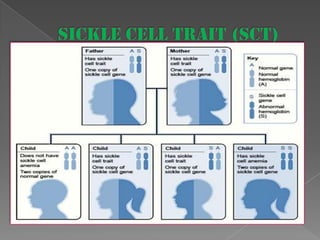
It is a condition in which one Sickle gene from one
parent and a normal gene from another parent is
transferred to the off-spring.
It is not a disease.
The person look likes healthy.
But it can cause Sickle cell anemia. i.e. A person
Suffering from SCT got marriage with the same
person can cause SCA in their off-spring.


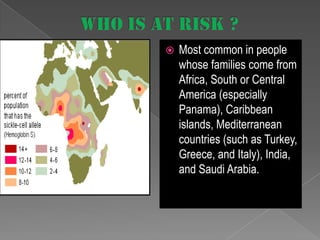
Most common in people
whose families come from
Africa, South or Central
America (especially
Panama), Caribbean
islands, Mediterranean
countries (such as Turkey,
Greece, and Italy), India,
and Saudi Arabia.








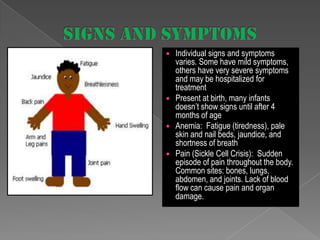
Individual signs and symptoms
varies. Some have mild symptoms,
others have very severe symptoms
and may be hospitalized for
treatment
Present at birth, many infants
doesn’t show signs until after 4
months of age
Anemia: Fatigue (tiredness), pale
skin and nail beds, jaundice, and
shortness of breath
Pain (Sickle Cell Crisis): Sudden
episode of pain throughout the body.
Common sites: bones, lungs,
abdomen, and joints. Lack of blood
flow can cause pain and organ
damage.











Hand-Food Syndrome
Splenic Crisis
Infections
Acute Chest Syndrome
Delayed growth and
puberty in children
Stroke
Eye problem









Priapism
Gallstone
Ulcers on the legs
Pulmonary Arterial
Hypertension (High blood
pressure)
Multiple Organ Failure








Infections
Thirst and dehydration caused by not drinking
enough even if thirst is not felt
Over-exertion
Over-excitement
Cold weather and cold drinks and swimming
Bangs, bumps, bruises and strains
Stress triggers pain in adults, but does not seem to
do so in children.


Children and families can often tell when a
severe sickle pain is coming on by



Thirst



Eyes turning yellow (jaundice),



Sufferer being more irritable or tired than
usual.


Warmth: increases blood flow



Massaging and rubbing



Heat from hot water bottles and deep heat creams



Bandaging to support the painful region



Resting the body



Cognitive Behavioral Therapy



Getting the sufferer to relax



distracting the attention




deep breathing exercises
by other psychological methods.

Pain-killing medicines (analgesics): paracetamol, codeine non-steroidal
anti-inflammatory, morphine if necessary
1.

Taking the folic acid (folate) daily to help make new red
cells

2.

Daily penicillin until age six to prevent serious infection

3.

Drinking plenty of water daily (8-10 glasses for adults)

4.

Avoiding too hot or too cold temperatures

5.

Avoiding over exertion and stress

6.

Getting plenty of rest

7.

Getting regular check-ups from knowledgeable health
care providers


Pain-killing drugs and oral and intravenous fluids
 To reduce pain and prevent complications.



Transfusions
 Correct anemia
 Treat spleen enlargement in children before the
condition becomes life-threatening
 Regular transfusion therapy also can help prevent
recurring strokes in children at high risk of crippling
nervous system complications.


Hydroxyurea


The first effective drug treatment for adults with severe sickle cell
anemia reported in early 1995



Daily doses of the anticancer drug, hydroxyurea, reduced the
frequency of painful crises, acute chest syndrome, needed fewer
blood transfusions



Increases production of fetal hemoglobin in the blood


Fetal hemoglobin seems to prevent sickling of red cells



cells containing fetal hemoglobin tend to survive longer in the
bloodstream
 Bone marrow transplantation

 Shown to provide a cure for severely affected

children with sickle cell disease
 Only about 18 percent of children with sickle cell

anemia are likely to have a matched sibling.
1.

Correcting the “defective gene” and inserting it into the
bone marrow

2.

Turning off the defective gene and simultaneously
reactivating another gene that turns on production of
fetal hemoglobin.



No real cure for Sickle Cell Anemia at this time.



“In the past 30 years, the life expectancy of people
with sickle cell anemia has increased. Many patients
with sickle cell anemia now live into their mid-forties
and beyond.”
Sickle Cell Anemia

Sickle Cell Anemia

  • 2.
    Sickle Cell anemiais due to :  Abnormally low transportation of Oxygen Throughout the body.  Low number of hemoglobin are present to carry enough Oxygen in the body. 
  • 3.
     It isa hereditary disease. i.e. Transfers from parents to off-springs and so on.  SCA is caused by mutation at the 6th position of beta-globin gene. (glutamic acid is replaced by valine).  SCA is a serious disease in which the body makes sickle-shaped red blood cells. “Sickle-shaped” means that the red blood cells are shaped like a "C."
  • 4.
     Sickle-shaped cellsdon’t move easily through blood vessels . Get stuck in the blood vessels.  The clumps of sickle cells block blood flow in the blood vessels that lead to the limbs and organs. Blocked blood vessels can cause pain, serious infections, and organ damage.  Sickle cells usually die after only about 10 to 20 days. The bone marrow can’t make new red blood cells fast enough to replace the dying ones
  • 5.
     People whohave the SCA are born with it. They inherit two copies of the sickle cell gene—one from each parent.  In SCA, the hemoglobin sticks together when it delivers oxygen to the body’s tissues. They cause the red blood cells to become stiff and shaped like a sickle, or “C.” The sickled RBCs tend to stick together and get caught in the blood vessels.  SCA is found in specially black people of Africa.
  • 6.
     Two copiesof the sickle cell gene are needed for the body to make the abnormal hemoglobin found in sickle cell anemia.  SCA provides defense against malaria. The Sickled cells binds with the plasma membrane and become porous due to the nutrients like Potassium releases ,which is essential for malarial parasite to live.  Sickle cell trait is a condition to cause Sickle cell anemia.
  • 7.
        It is acondition in which one Sickle gene from one parent and a normal gene from another parent is transferred to the off-spring. It is not a disease. The person look likes healthy. But it can cause Sickle cell anemia. i.e. A person Suffering from SCT got marriage with the same person can cause SCA in their off-spring.
  • 9.
     Most common inpeople whose families come from Africa, South or Central America (especially Panama), Caribbean islands, Mediterranean countries (such as Turkey, Greece, and Italy), India, and Saudi Arabia.
  • 10.
        Individual signs andsymptoms varies. Some have mild symptoms, others have very severe symptoms and may be hospitalized for treatment Present at birth, many infants doesn’t show signs until after 4 months of age Anemia: Fatigue (tiredness), pale skin and nail beds, jaundice, and shortness of breath Pain (Sickle Cell Crisis): Sudden episode of pain throughout the body. Common sites: bones, lungs, abdomen, and joints. Lack of blood flow can cause pain and organ damage.
  • 11.
           Hand-Food Syndrome Splenic Crisis Infections AcuteChest Syndrome Delayed growth and puberty in children Stroke Eye problem      Priapism Gallstone Ulcers on the legs Pulmonary Arterial Hypertension (High blood pressure) Multiple Organ Failure
  • 12.
           Infections Thirst and dehydrationcaused by not drinking enough even if thirst is not felt Over-exertion Over-excitement Cold weather and cold drinks and swimming Bangs, bumps, bruises and strains Stress triggers pain in adults, but does not seem to do so in children.
  • 13.
     Children and familiescan often tell when a severe sickle pain is coming on by  Thirst  Eyes turning yellow (jaundice),  Sufferer being more irritable or tired than usual.
  • 14.
     Warmth: increases bloodflow  Massaging and rubbing  Heat from hot water bottles and deep heat creams  Bandaging to support the painful region  Resting the body  Cognitive Behavioral Therapy  Getting the sufferer to relax   distracting the attention   deep breathing exercises by other psychological methods. Pain-killing medicines (analgesics): paracetamol, codeine non-steroidal anti-inflammatory, morphine if necessary
  • 15.
    1. Taking the folicacid (folate) daily to help make new red cells 2. Daily penicillin until age six to prevent serious infection 3. Drinking plenty of water daily (8-10 glasses for adults) 4. Avoiding too hot or too cold temperatures 5. Avoiding over exertion and stress 6. Getting plenty of rest 7. Getting regular check-ups from knowledgeable health care providers
  • 16.
     Pain-killing drugs andoral and intravenous fluids  To reduce pain and prevent complications.  Transfusions  Correct anemia  Treat spleen enlargement in children before the condition becomes life-threatening  Regular transfusion therapy also can help prevent recurring strokes in children at high risk of crippling nervous system complications.
  • 17.
     Hydroxyurea  The first effectivedrug treatment for adults with severe sickle cell anemia reported in early 1995  Daily doses of the anticancer drug, hydroxyurea, reduced the frequency of painful crises, acute chest syndrome, needed fewer blood transfusions  Increases production of fetal hemoglobin in the blood  Fetal hemoglobin seems to prevent sickling of red cells  cells containing fetal hemoglobin tend to survive longer in the bloodstream
  • 18.
     Bone marrowtransplantation  Shown to provide a cure for severely affected children with sickle cell disease  Only about 18 percent of children with sickle cell anemia are likely to have a matched sibling.
  • 19.
    1. Correcting the “defectivegene” and inserting it into the bone marrow 2. Turning off the defective gene and simultaneously reactivating another gene that turns on production of fetal hemoglobin.  No real cure for Sickle Cell Anemia at this time.  “In the past 30 years, the life expectancy of people with sickle cell anemia has increased. Many patients with sickle cell anemia now live into their mid-forties and beyond.”