Lymphatic Filariasis
A. HEMANTH
VIGNAN INSTITUTE OF PHARMACEUTICAL TECHNOLOGY
B.PHATMACY
IV YEAR
ROLL -19-01
Introduction
 Lymphatic filariasis, is a parasitic disease caused by microscopic, thread-like
worms
 The adult worms only live in the human lymph system.
 Lymphatic filariasis is spread from person to person by mosquitoes.
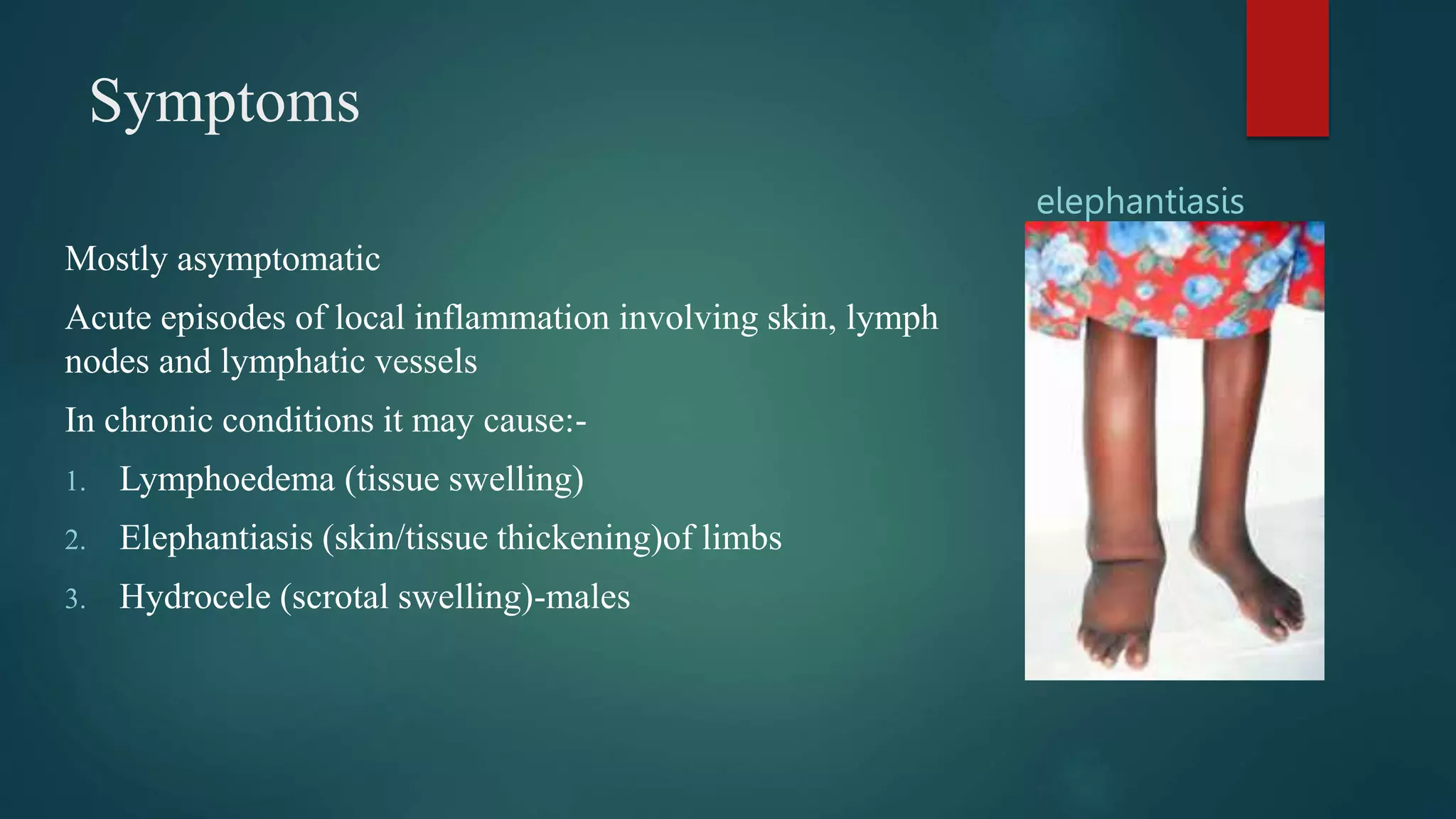
 People with the disease can suffer from lymphedema and elephantiasis
 In men, swelling of the scrotum, called hydrocele.
 Lymphatic filariasis is a leading cause of permanent disability
Cause and transmission
Cause
 Lymphatic filariasis is caused by infection with parasites classified as nematodes
(roundworms) of the family Filariodidea.
 There are 3 types of these thread-like filarial worms:
1. Wuchereria bancrofti –which is responsible for 90% of the cases
2. Brugia malayi- which causes most of the remainder of the cases
3. Brugia timori, which also causes the disease.
Vector
 A wide range of mosquitoes can transmit the parasite, depending on
the geographic area. In Africa, the most common vector
is Anopheles and in the Americas, it is Culex
quinquefasciatus. Aedes and Mansonia can transmit the infection in
the Pacific and in Asia.
Transmission
 The adult worm lives in the human lymph vessels, mates, and produces millions
of microscopic worms ,also known as microfilariae.
 Microfilariae circulate in the person’s blood
 Infect the mosquito when it bites a person who is infected.
 Microfilariae grow and develop in the mosquito.
 When the mosquito bites another person, the larval worms pass from the
mosquito into the human skin, and travel to the lymph vessels.
 This Process that takes 6 months or more.
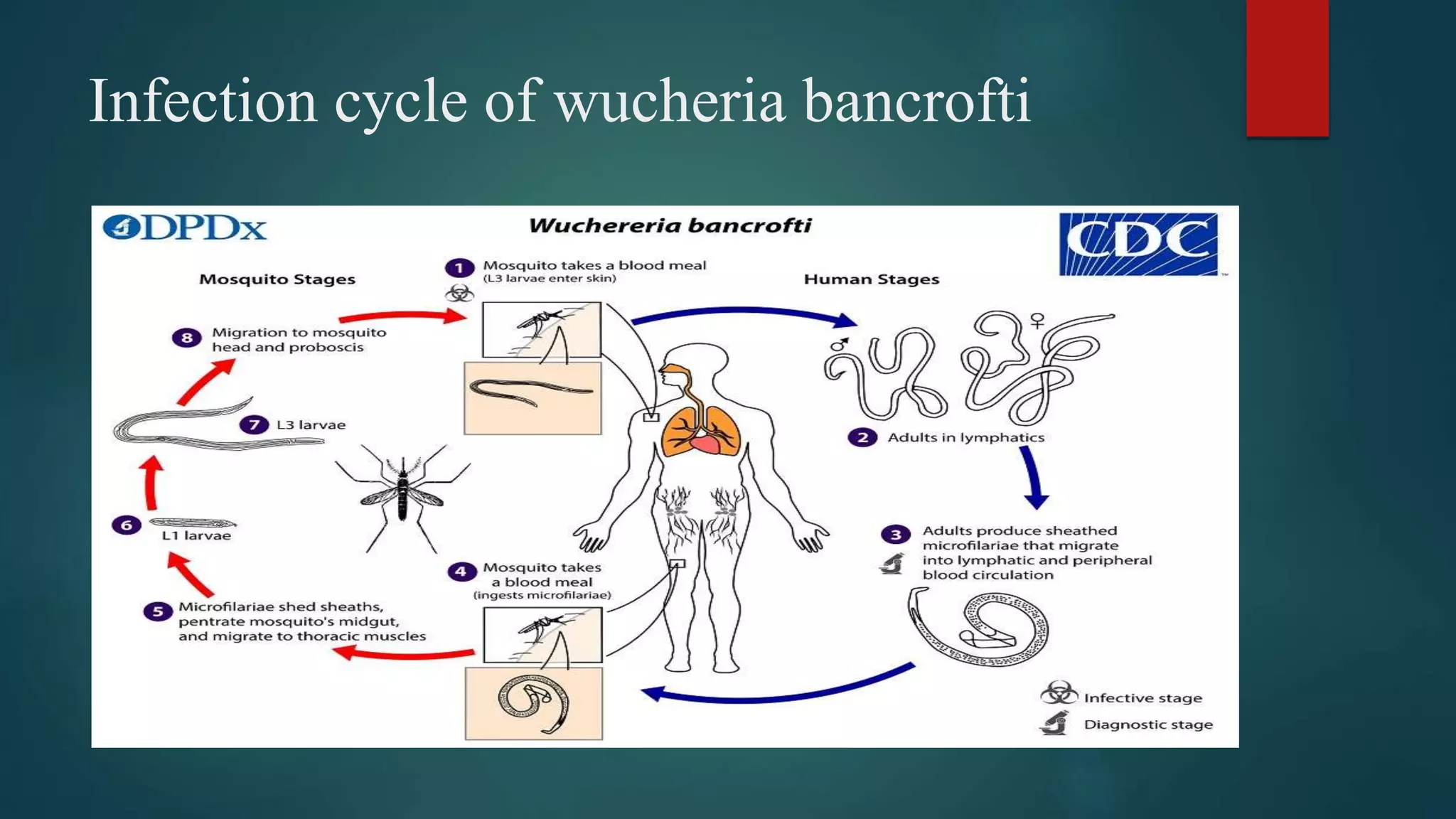
Infection cycle of wucheria bancrofti
 During a blood meal, an infected mosquito introduces third-stage
filarial larvae onto the skin of the human host
 They develop in adults that commonly reside in the lymphatics
 The female worms measure 80 to 100 mm in length and 0.24 to 0.30
mm in diameter,
 While the males measure about 40 mm by 1 mm.
 Adults produce microfilariae measuring 244 to 296 μm by 7.5 to 10
μm
 The microfilariae migrate into lymph and blood channels moving
actively through lymph and blood
 They have nocturnal periodicity, except the South Pacific
microfilariae
Brugia Malayi
 Female worms measure 43 to 55 mm in length by 130 to 170 μm in
width
 Males measure 13 to 23 mm in length by 70 to 80 μm in width.
 Adults produce microfilariae, measuring 177 to 230 μm in length and 5
to 7 μm in width,
Symptoms
Mostly asymptomatic
Acute episodes of local inflammation involving skin, lymph
nodes and lymphatic vessels
In chronic conditions it may cause:-
1. Lymphoedema (tissue swelling)
2. Elephantiasis (skin/tissue thickening)of limbs
3. Hydrocele (scrotal swelling)-males
elephantiasis
Diagnosis
Microscopic examination:-
 As they were nocturnal –blood sample should be collected during
nights
 Thick smear should be prepared
 Stained with Giemsa Or hematoxytin and esosin
Alternative to microcopic
Patient with active filarial infection had eleveated levels of antifilarial
IgG4 in blood and detected by using assay
Treatment & prevention
 Diethylcarbamazine (DEC) is the drug of choice in the United
States. The drug kills the microfilariae- dose 2-3 mg per kg
 Patients with hydrocele may have evidence of active infection, but
typically do not improve clinically following treatment with DEC.
The treatment for hydrocele is surgery.
 For Lymphedima patients they wereSome basic principles of care
such as hygiene, elevation, exercises,skin and wound care, and
wearing appropriate shoes.
Cont
 The best way to prevent lymphatic filariasis is to avoid mosquito bites.
 The mosquitoes that carry the microscopic worms usually bite between the
hours of dusk and dawn
 Sleep in an air-conditioned room or
 Sleep under a mosquito net
 Wear long sleeves and trousers and
 Use mosquito repellent on exposed skin.
 Another approach to prevention includes giving entire communities medicine
that kills the microscopic worms
Summary
 Lymphatic filariasis impairs the lymphatic system and can lead to
the abnormal enlargement of body parts, causing pain, severe
disability and social stigma.
 Lymphatic filariasis can be eliminated by stopping the spread of
infection through preventive chemotherapy with safe medicine
combinations repeated annually.
 Lymphatic filariasis, commonly known as elephantiasis, is a
neglected tropical disease. Infection occurs when filarial parasites
are transmitted to humans through mosquitoes
 Infection is usually acquired in childhood causing hidden damage to
the lymphatic system.
Thank you

Lymphatic Filariasis

  • 1.
    Lymphatic Filariasis A. HEMANTH VIGNANINSTITUTE OF PHARMACEUTICAL TECHNOLOGY B.PHATMACY IV YEAR ROLL -19-01
  • 2.
    Introduction  Lymphatic filariasis,is a parasitic disease caused by microscopic, thread-like worms  The adult worms only live in the human lymph system.  Lymphatic filariasis is spread from person to person by mosquitoes.  People with the disease can suffer from lymphedema and elephantiasis  In men, swelling of the scrotum, called hydrocele.  Lymphatic filariasis is a leading cause of permanent disability
  • 3.
    Cause and transmission Cause Lymphatic filariasis is caused by infection with parasites classified as nematodes (roundworms) of the family Filariodidea.  There are 3 types of these thread-like filarial worms: 1. Wuchereria bancrofti –which is responsible for 90% of the cases 2. Brugia malayi- which causes most of the remainder of the cases 3. Brugia timori, which also causes the disease.
  • 4.
    Vector  A widerange of mosquitoes can transmit the parasite, depending on the geographic area. In Africa, the most common vector is Anopheles and in the Americas, it is Culex quinquefasciatus. Aedes and Mansonia can transmit the infection in the Pacific and in Asia.
  • 5.
    Transmission  The adultworm lives in the human lymph vessels, mates, and produces millions of microscopic worms ,also known as microfilariae.  Microfilariae circulate in the person’s blood  Infect the mosquito when it bites a person who is infected.  Microfilariae grow and develop in the mosquito.  When the mosquito bites another person, the larval worms pass from the mosquito into the human skin, and travel to the lymph vessels.  This Process that takes 6 months or more.
  • 6.
    Infection cycle ofwucheria bancrofti
  • 7.
     During ablood meal, an infected mosquito introduces third-stage filarial larvae onto the skin of the human host  They develop in adults that commonly reside in the lymphatics  The female worms measure 80 to 100 mm in length and 0.24 to 0.30 mm in diameter,  While the males measure about 40 mm by 1 mm.  Adults produce microfilariae measuring 244 to 296 μm by 7.5 to 10 μm  The microfilariae migrate into lymph and blood channels moving actively through lymph and blood  They have nocturnal periodicity, except the South Pacific microfilariae
  • 8.
    Brugia Malayi  Femaleworms measure 43 to 55 mm in length by 130 to 170 μm in width  Males measure 13 to 23 mm in length by 70 to 80 μm in width.  Adults produce microfilariae, measuring 177 to 230 μm in length and 5 to 7 μm in width,
  • 9.
    Symptoms Mostly asymptomatic Acute episodesof local inflammation involving skin, lymph nodes and lymphatic vessels In chronic conditions it may cause:- 1. Lymphoedema (tissue swelling) 2. Elephantiasis (skin/tissue thickening)of limbs 3. Hydrocele (scrotal swelling)-males elephantiasis
  • 10.
    Diagnosis Microscopic examination:-  Asthey were nocturnal –blood sample should be collected during nights  Thick smear should be prepared  Stained with Giemsa Or hematoxytin and esosin Alternative to microcopic Patient with active filarial infection had eleveated levels of antifilarial IgG4 in blood and detected by using assay
  • 11.
    Treatment & prevention Diethylcarbamazine (DEC) is the drug of choice in the United States. The drug kills the microfilariae- dose 2-3 mg per kg  Patients with hydrocele may have evidence of active infection, but typically do not improve clinically following treatment with DEC. The treatment for hydrocele is surgery.  For Lymphedima patients they wereSome basic principles of care such as hygiene, elevation, exercises,skin and wound care, and wearing appropriate shoes.
  • 12.
    Cont  The bestway to prevent lymphatic filariasis is to avoid mosquito bites.  The mosquitoes that carry the microscopic worms usually bite between the hours of dusk and dawn  Sleep in an air-conditioned room or  Sleep under a mosquito net  Wear long sleeves and trousers and  Use mosquito repellent on exposed skin.  Another approach to prevention includes giving entire communities medicine that kills the microscopic worms
  • 13.
    Summary  Lymphatic filariasisimpairs the lymphatic system and can lead to the abnormal enlargement of body parts, causing pain, severe disability and social stigma.  Lymphatic filariasis can be eliminated by stopping the spread of infection through preventive chemotherapy with safe medicine combinations repeated annually.  Lymphatic filariasis, commonly known as elephantiasis, is a neglected tropical disease. Infection occurs when filarial parasites are transmitted to humans through mosquitoes  Infection is usually acquired in childhood causing hidden damage to the lymphatic system.
  • 14.