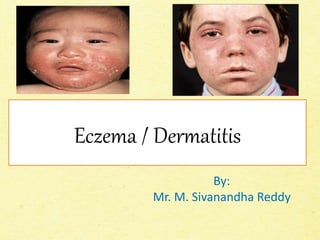
Eczema / Dermatitis
By:
Mr. M. Sivanandha Reddy
Eczema
• Eczema: Come from the Greek name for boiling, a
reference to the tiny vesicles (bubbles) that are
commonly seen in the early acute stage of the disease
• Dermatitis: means inflammation of epidermal layer of
the skin.
Types of eczema
1. Contact Dermatitis
2. Atopic Dermatitis
3. Seborrhoeic Dermatitis
4. Napkin Dermatitis
Contact dermatitis
 Contact dermatitis is an inflammatory reaction of the skin to physical, chemical, or
biologic agents.
 The epidermis is damaged by repeated physical and chemical irritations.
 Contact dermatitis may be due to irritants or allergens
 Constitutes 80% of dermatitis cases
 Mostly industrial
 Usually on hands & forearm
 Acute reaction elicited after brief contact
 Commonly by detergents, alkalis, solvents
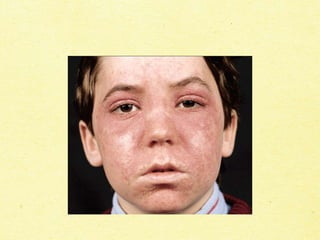
Clinical Manifestations
• The eruptions begin when the causative agent contacts the
skin.
• The acute phase includes itching, burning, and erythema,
followed closely by edema, papules, vesicles, and oozing.
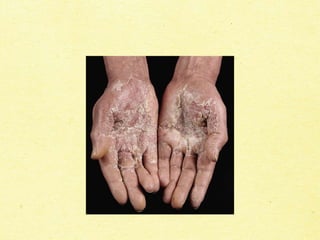
• In the subacute phase, these vesicular changes are less
marked, and they alternate with crusting, drying, fissuring,
and peeling.
• If repeated reactions occur or if the patient
continually scratches the skin, lichenification
and pigmentation occur.
• Secondary bacterial invasion may follow.
Medical Management
• The objectives of management are to rest the involved
skin and protect it from further damage.
• A detailed history is obtained.
• The offending irritant is removed.
• Local irritation should be avoided, and soap is not
generally used until healing occurs.
Rest & liquid application
Nonsteroidal preparation
Daily 10 min soaks in cool 0.65% aluminium
acetate solution
Saline or tap water & soaks followed by a smear
of corticosteroid cream or lotion
 potassium permanganate
Calamine lotion
Wet wrap dressing: esp. in children a bath
followed by steroid application covered with
double layers of tubular dressing
• Systemic corticosteroids and antibiotics in
case of extensive contact dermatitis
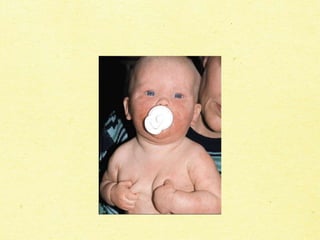
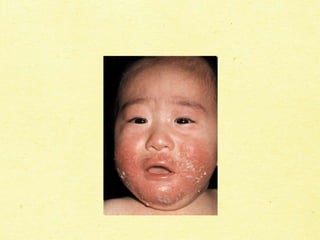
Atopic dermatitis
Means without place in greek
Is a state in which exuberant production of IgE
occurs as a response to common environmental
allergens
Atopic patient develop one or more of atopic
diseases as asthma, hay fever, & food allergies
• Cardinal feature is itching
• Lubrication of dry (xerotic) skin, restoration of skin barrier
function.
• Topical immunomodulators (pimecrolimus , tacrolimus).
• Corticosteroids, phototherapy for severe inflammation and
pruritus.
• Reduction of stress reduces flares.
• Antibiotics for secondary infection as needed
Seborrhoeic dermatitis
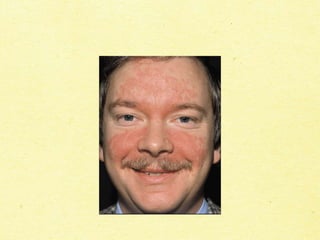
Common eczema of the hairy areas show
characteristic greasy yellowish scales
May be red scaly exudative or dry scaly
Affects scalp, ears, eyebrows, face, pre-sternal
area, armpits, umblicus, groin
Napkin (diaper) dermatitis
Irritant in nature aggravated by waterproof
plastic pants, feces, urine
Moist, erythema of napkin area sparing skin
folds .
Candida superinfection is common.
• The child should be allowed to be free of
napkins as much as possible
Eczema

Eczema

  • 1.
    Eczema / Dermatitis By: Mr.M. Sivanandha Reddy
  • 2.
    Eczema • Eczema: Comefrom the Greek name for boiling, a reference to the tiny vesicles (bubbles) that are commonly seen in the early acute stage of the disease • Dermatitis: means inflammation of epidermal layer of the skin.
  • 3.
    Types of eczema 1.Contact Dermatitis 2. Atopic Dermatitis 3. Seborrhoeic Dermatitis 4. Napkin Dermatitis
  • 4.
    Contact dermatitis  Contactdermatitis is an inflammatory reaction of the skin to physical, chemical, or biologic agents.  The epidermis is damaged by repeated physical and chemical irritations.  Contact dermatitis may be due to irritants or allergens  Constitutes 80% of dermatitis cases  Mostly industrial  Usually on hands & forearm  Acute reaction elicited after brief contact  Commonly by detergents, alkalis, solvents
  • 5.
    Clinical Manifestations • Theeruptions begin when the causative agent contacts the skin. • The acute phase includes itching, burning, and erythema, followed closely by edema, papules, vesicles, and oozing. • In the subacute phase, these vesicular changes are less marked, and they alternate with crusting, drying, fissuring, and peeling.
  • 6.
    • If repeatedreactions occur or if the patient continually scratches the skin, lichenification and pigmentation occur. • Secondary bacterial invasion may follow.
  • 9.
    Medical Management • Theobjectives of management are to rest the involved skin and protect it from further damage. • A detailed history is obtained. • The offending irritant is removed. • Local irritation should be avoided, and soap is not generally used until healing occurs.
  • 10.
    Rest & liquidapplication Nonsteroidal preparation Daily 10 min soaks in cool 0.65% aluminium acetate solution Saline or tap water & soaks followed by a smear of corticosteroid cream or lotion
  • 11.
     potassium permanganate Calaminelotion Wet wrap dressing: esp. in children a bath followed by steroid application covered with double layers of tubular dressing
  • 12.
    • Systemic corticosteroidsand antibiotics in case of extensive contact dermatitis
  • 13.
    Atopic dermatitis Means withoutplace in greek Is a state in which exuberant production of IgE occurs as a response to common environmental allergens Atopic patient develop one or more of atopic diseases as asthma, hay fever, & food allergies
  • 14.
    • Cardinal featureis itching • Lubrication of dry (xerotic) skin, restoration of skin barrier function. • Topical immunomodulators (pimecrolimus , tacrolimus). • Corticosteroids, phototherapy for severe inflammation and pruritus. • Reduction of stress reduces flares. • Antibiotics for secondary infection as needed
  • 17.
    Seborrhoeic dermatitis Common eczemaof the hairy areas show characteristic greasy yellowish scales May be red scaly exudative or dry scaly Affects scalp, ears, eyebrows, face, pre-sternal area, armpits, umblicus, groin
  • 19.
    Napkin (diaper) dermatitis Irritantin nature aggravated by waterproof plastic pants, feces, urine Moist, erythema of napkin area sparing skin folds . Candida superinfection is common.
  • 20.
    • The childshould be allowed to be free of napkins as much as possible