
CHIKUNGUNYA
Kashish Agrawaal
2nd Professional
Batch 2020
CHIKUNGUNYA
DEFINITION
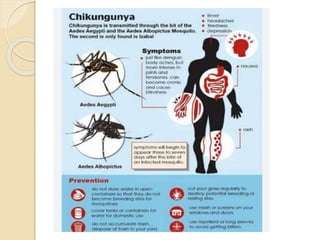
Chikungunya is a viral disease transmitted to humans by infected
mosquitoes characterized by fever & joint pain.
Other symptoms
muscle pain
headache
nausea
fatigue
rash
The disease share some clinical signs with dengue & Zika can be
misdiagnosed in areas where they are
COMMON RISK FACTOR
mosquitoes breeding sites
AETIOLOGY
Chikungunya is caused by CHIKUNGUNYA VIRUS it is a RNA
VIRUS
family -Togaviride
Genus- alpha virus
virus was isolated in 1953 from serum & Aedes mosquitoes.
INCUBATION PERIOD
2-4days
VECTOR
The virus is transmitted human to human by the bites of infected
mosquitoes AEDES AEGYPTI generally in the morning (early) & late
afternoon.
These mosquitoes breeds in clean water
Human & non human vertetsates serve as chikungunya virus reservoir.
MOSQ
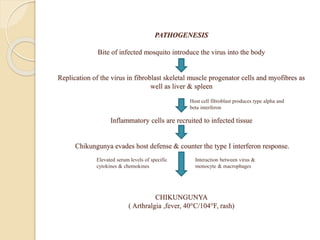
PATHOGENESIS
Bite of infected mosquito introduce the virus into the body
Replication of the virus in fibroblast skeletal muscle progenator cells and myofibres as
well as liver & spleen
Inflammatory cells are recruited to infected tissue
Chikungunya evades host defense & counter the type I interferon response.
CHIKUNGUNYA
( Arthralgia ,fever, 40°C/104°F, rash)
Host cell fibroblast produces type alpha and
beta interferon
Elevated serum levels of specific
cytokines & chemokines
Interaction between virus &
monocyte & macrophages
CYCL
CLINICAL MENIFESTATIONS
Sudden onset of high fiver that lasts from few days to a WEEK or unto 10 days
to (102°F or 104°F) may be biphasic, breaking & then returning.
"Fever occurs with the onset of viremia and level of virus in the blood co-
relates with the intensity of symptoms in acute phase
Headache
Insomnia
extreme exhaustion for 5-7 days..
following the fever & strong joint pain or stiffness usually last week by months
sometimes years
Debilating pain-
immobility of affected joint affects more than one joint, most commonly occurs
in peripheral joints of the hands & feet as well as some larger joints typically
the shoulder, knee, elbow.
SYMPTO 2
Maculo Papular Rash-
After 2-5 days of onset of symptoms Abdominal pain, nausea, vomiting
Inflammation of the eyes, retinal lesion, neurological disorders are rare.
DIAGNOSIS
Detailed history & physical examination.
History of travelling in area affected with chikungunya fever may be
present with in last 2 weeks.
Blood Test→
CBC (low lymphocyte count)
viral isolation RT-PCR
CRP-Reactive protein
ELISA test - to measure IgM chikunya specific levels in
serum - elevated
Maculo Papular Rash
TREATMENT
There is no specific antiviral drug or vaccine for it .Chikunya fever is
not life threatening infection. symptomatic treatment for mitigating pain
and fever using anti inflammatory drug along with rest usually
suffices.
PREVENTION
Avoid mosquito bite
Insecticide or biological control agents can be used.

CHIKUNGUNYA1.pptx

  • 1.
  • 2.
    CHIKUNGUNYA DEFINITION Chikungunya is aviral disease transmitted to humans by infected mosquitoes characterized by fever & joint pain. Other symptoms muscle pain headache nausea fatigue rash The disease share some clinical signs with dengue & Zika can be misdiagnosed in areas where they are COMMON RISK FACTOR mosquitoes breeding sites
  • 3.
    AETIOLOGY Chikungunya is causedby CHIKUNGUNYA VIRUS it is a RNA VIRUS family -Togaviride Genus- alpha virus virus was isolated in 1953 from serum & Aedes mosquitoes. INCUBATION PERIOD 2-4days VECTOR The virus is transmitted human to human by the bites of infected mosquitoes AEDES AEGYPTI generally in the morning (early) & late afternoon. These mosquitoes breeds in clean water Human & non human vertetsates serve as chikungunya virus reservoir.
  • 4.
  • 5.
    PATHOGENESIS Bite of infectedmosquito introduce the virus into the body Replication of the virus in fibroblast skeletal muscle progenator cells and myofibres as well as liver & spleen Inflammatory cells are recruited to infected tissue Chikungunya evades host defense & counter the type I interferon response. CHIKUNGUNYA ( Arthralgia ,fever, 40°C/104°F, rash) Host cell fibroblast produces type alpha and beta interferon Elevated serum levels of specific cytokines & chemokines Interaction between virus & monocyte & macrophages
  • 6.
  • 7.
    CLINICAL MENIFESTATIONS Sudden onsetof high fiver that lasts from few days to a WEEK or unto 10 days to (102°F or 104°F) may be biphasic, breaking & then returning. "Fever occurs with the onset of viremia and level of virus in the blood co- relates with the intensity of symptoms in acute phase Headache Insomnia extreme exhaustion for 5-7 days.. following the fever & strong joint pain or stiffness usually last week by months sometimes years Debilating pain- immobility of affected joint affects more than one joint, most commonly occurs in peripheral joints of the hands & feet as well as some larger joints typically the shoulder, knee, elbow.
  • 8.
  • 10.
    Maculo Papular Rash- After2-5 days of onset of symptoms Abdominal pain, nausea, vomiting Inflammation of the eyes, retinal lesion, neurological disorders are rare. DIAGNOSIS Detailed history & physical examination. History of travelling in area affected with chikungunya fever may be present with in last 2 weeks. Blood Test→ CBC (low lymphocyte count) viral isolation RT-PCR CRP-Reactive protein ELISA test - to measure IgM chikunya specific levels in serum - elevated
  • 11.
  • 12.
    TREATMENT There is nospecific antiviral drug or vaccine for it .Chikunya fever is not life threatening infection. symptomatic treatment for mitigating pain and fever using anti inflammatory drug along with rest usually suffices. PREVENTION Avoid mosquito bite Insecticide or biological control agents can be used.