FILARIASIS
Ms. Sonam sharma
Asst. professor
Definition
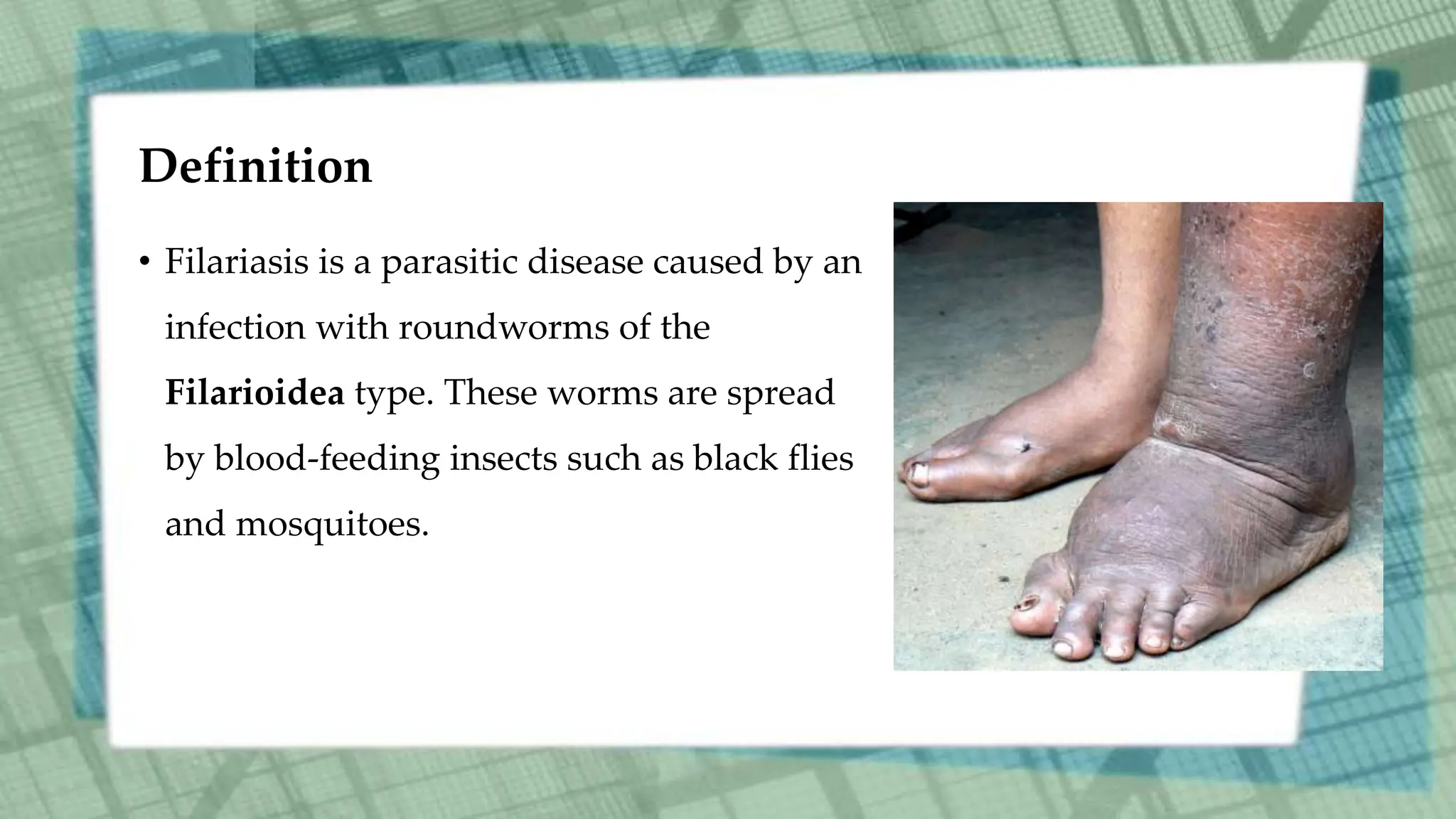
• Filariasis is a parasitic disease caused by an
infection with roundworms of the
Filarioidea type. These worms are spread
by blood-feeding insects such as black flies
and mosquitoes.
Environmental triad
• Agent:
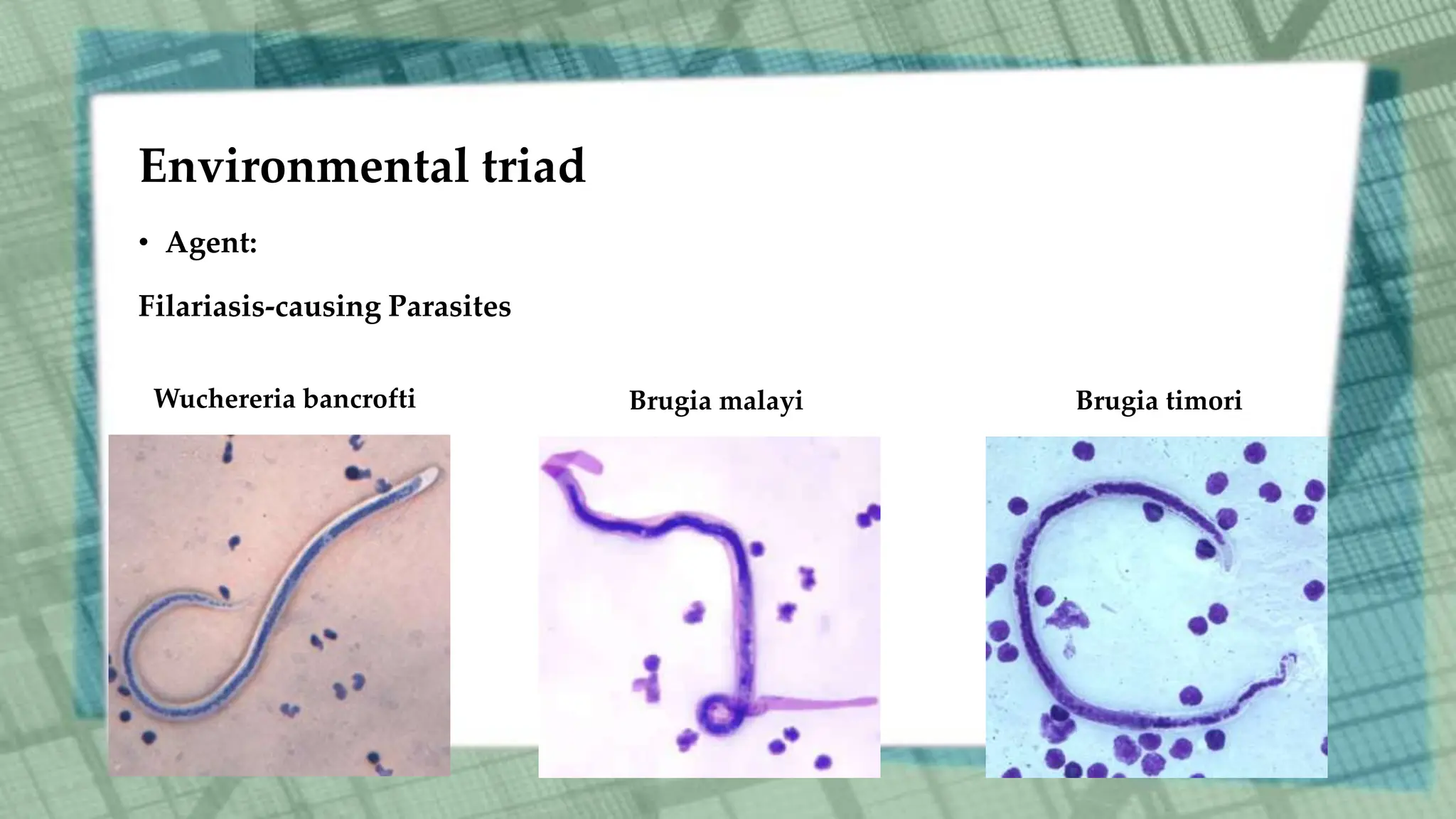
Filariasis-causing Parasites
Wuchereria bancrofti Brugia malayi Brugia timori
• Host:
– Humans
• Susceptibility: Individuals in endemic areas are at higher risk, especially
those who live in conditions that favor mosquito breeding, such as near
stagnant water.
• Behavioral Factors: Activities that increase exposure to mosquito bites, such
as working or sleeping outdoors, enhance susceptibility.
• Immune Response: The host’s immune response can influence the severity
and progression of the disease.
• Environment:
– Factors that Influence Transmission
• Climate: Warm, humid climates are ideal for mosquito breeding
and survival. Tropical and subtropical regions are most affected.
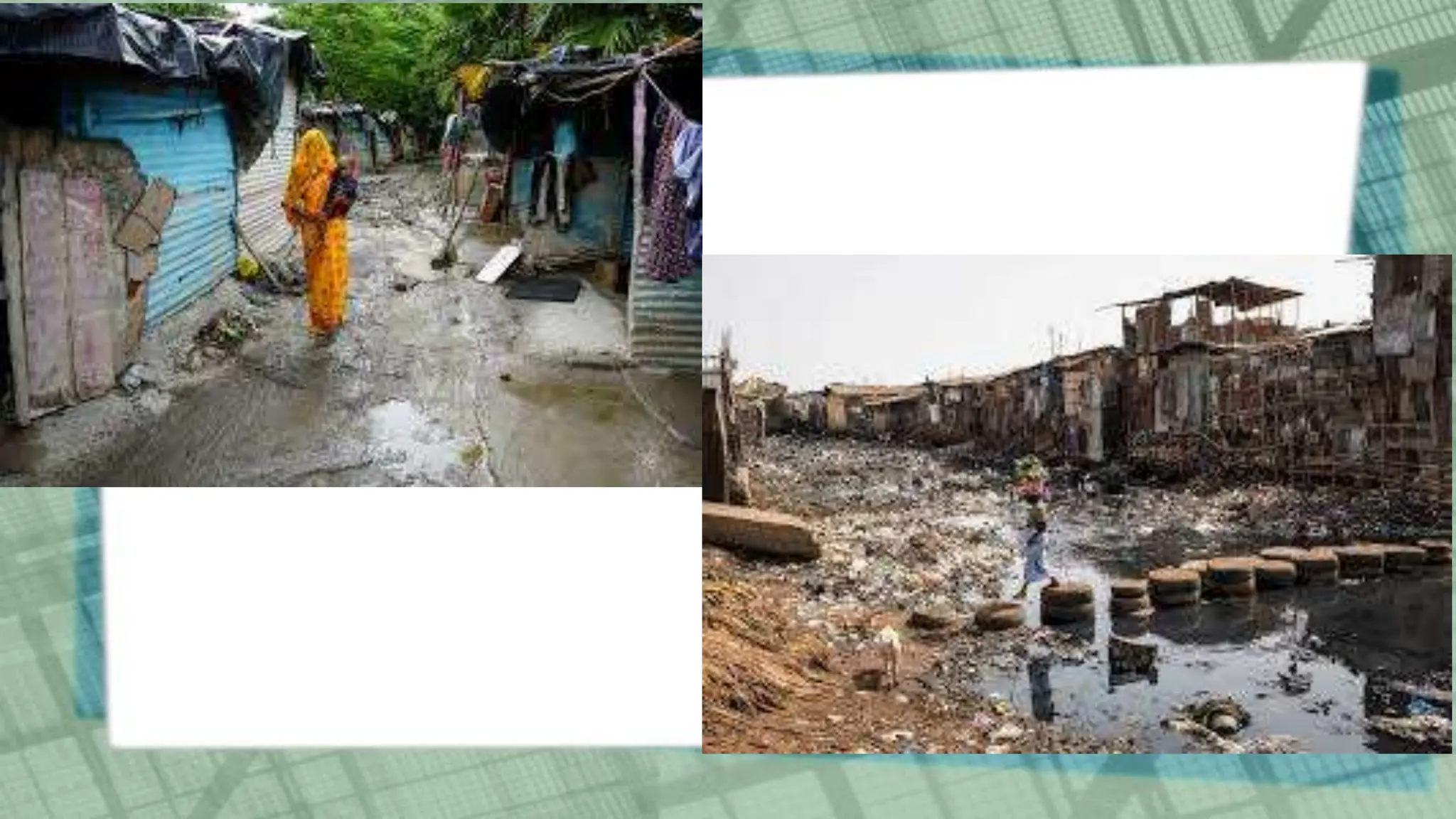
• Water Sources: Stagnant water bodies, such as ponds, ditches,
and poorly drained areas, provide breeding sites for
mosquitoes.
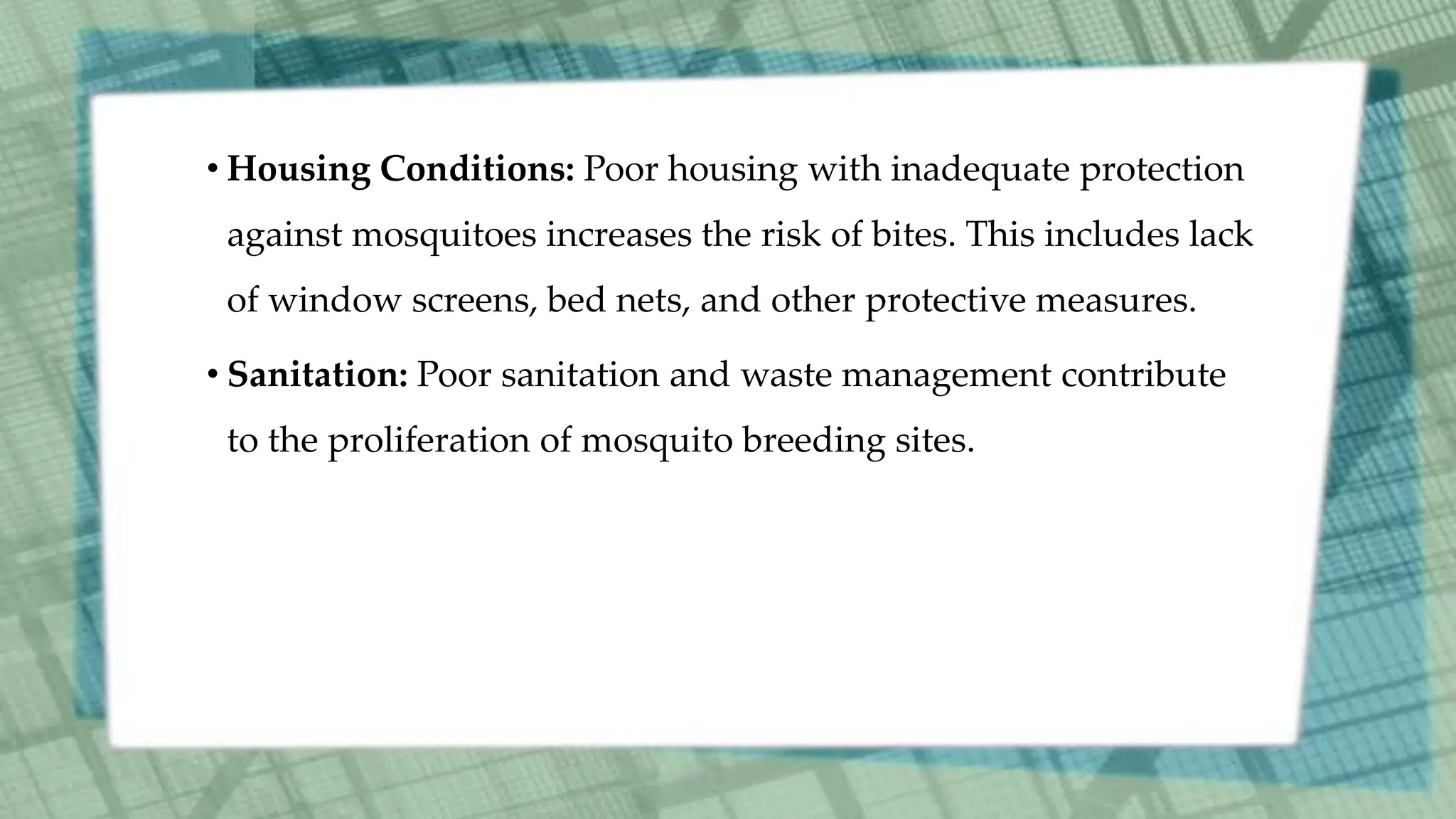
• Housing Conditions: Poor housing with inadequate protection
against mosquitoes increases the risk of bites. This includes lack
of window screens, bed nets, and other protective measures.
• Sanitation: Poor sanitation and waste management contribute
to the proliferation of mosquito breeding sites.
Symptoms
Acute Stage:
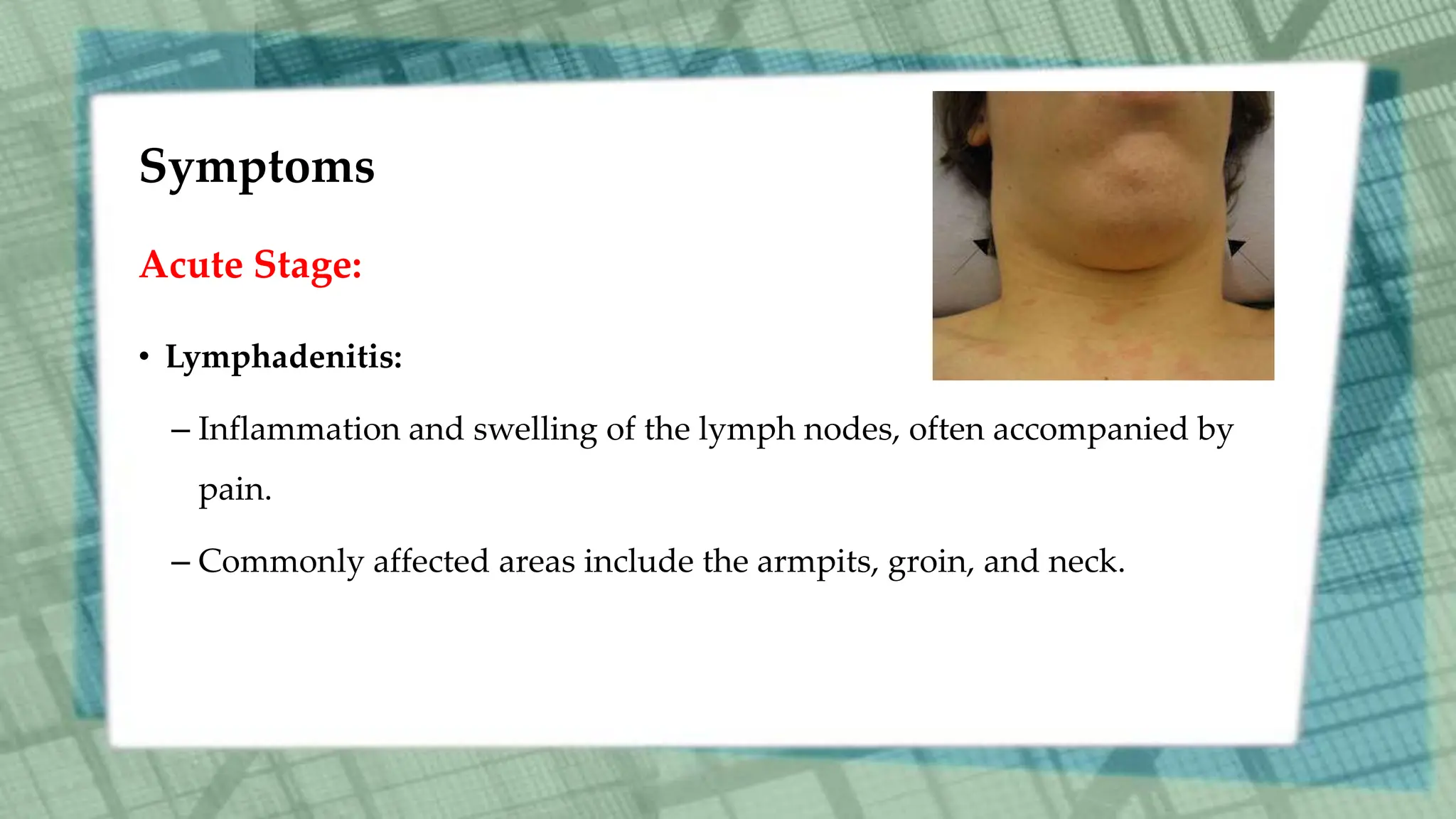
• Lymphadenitis:
– Inflammation and swelling of the lymph nodes, often accompanied by
pain.
– Commonly affected areas include the armpits, groin, and neck.
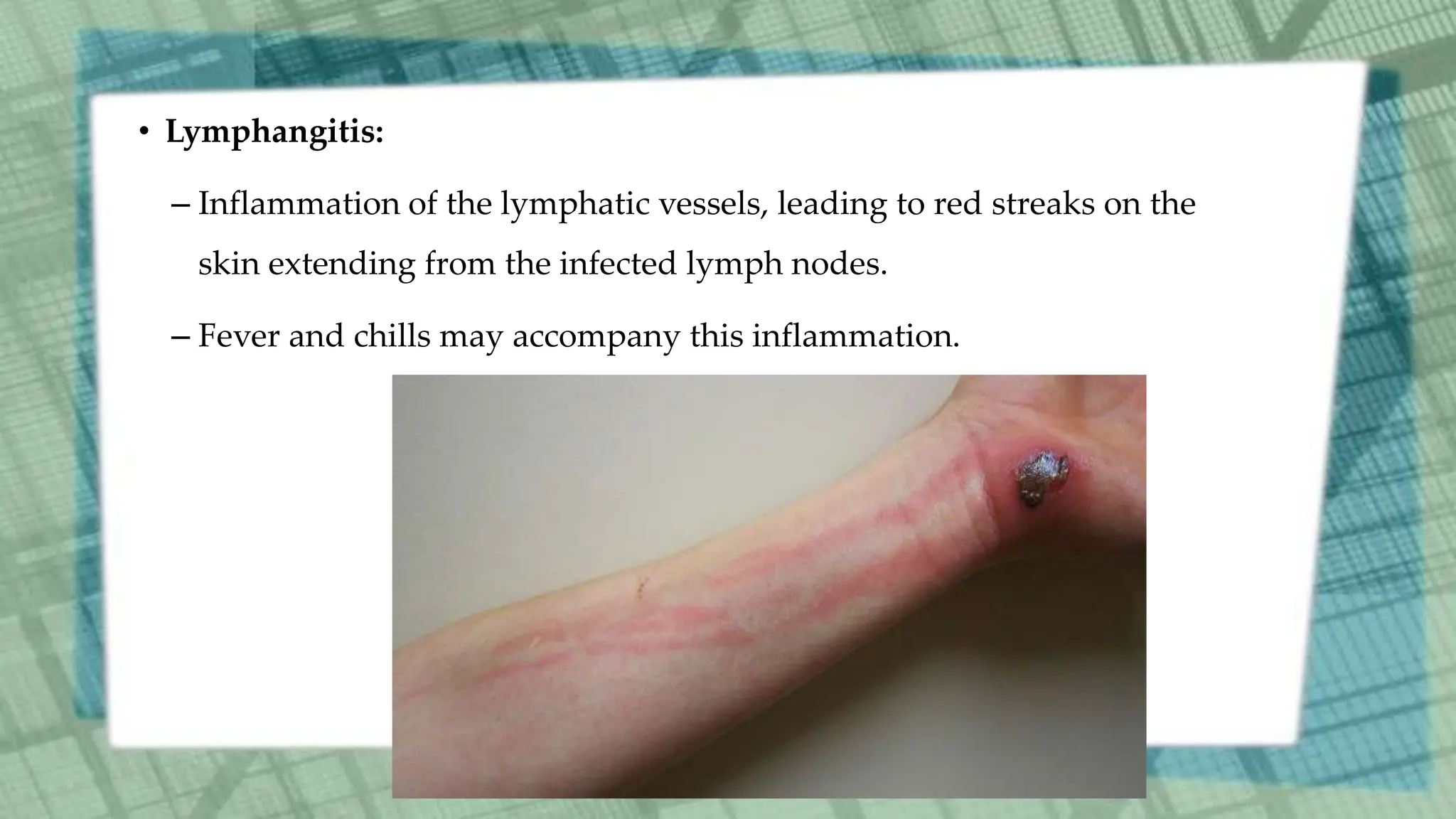
• Lymphangitis:
– Inflammation of the lymphatic vessels, leading to red streaks on the
skin extending from the infected lymph nodes.
– Fever and chills may accompany this inflammation.
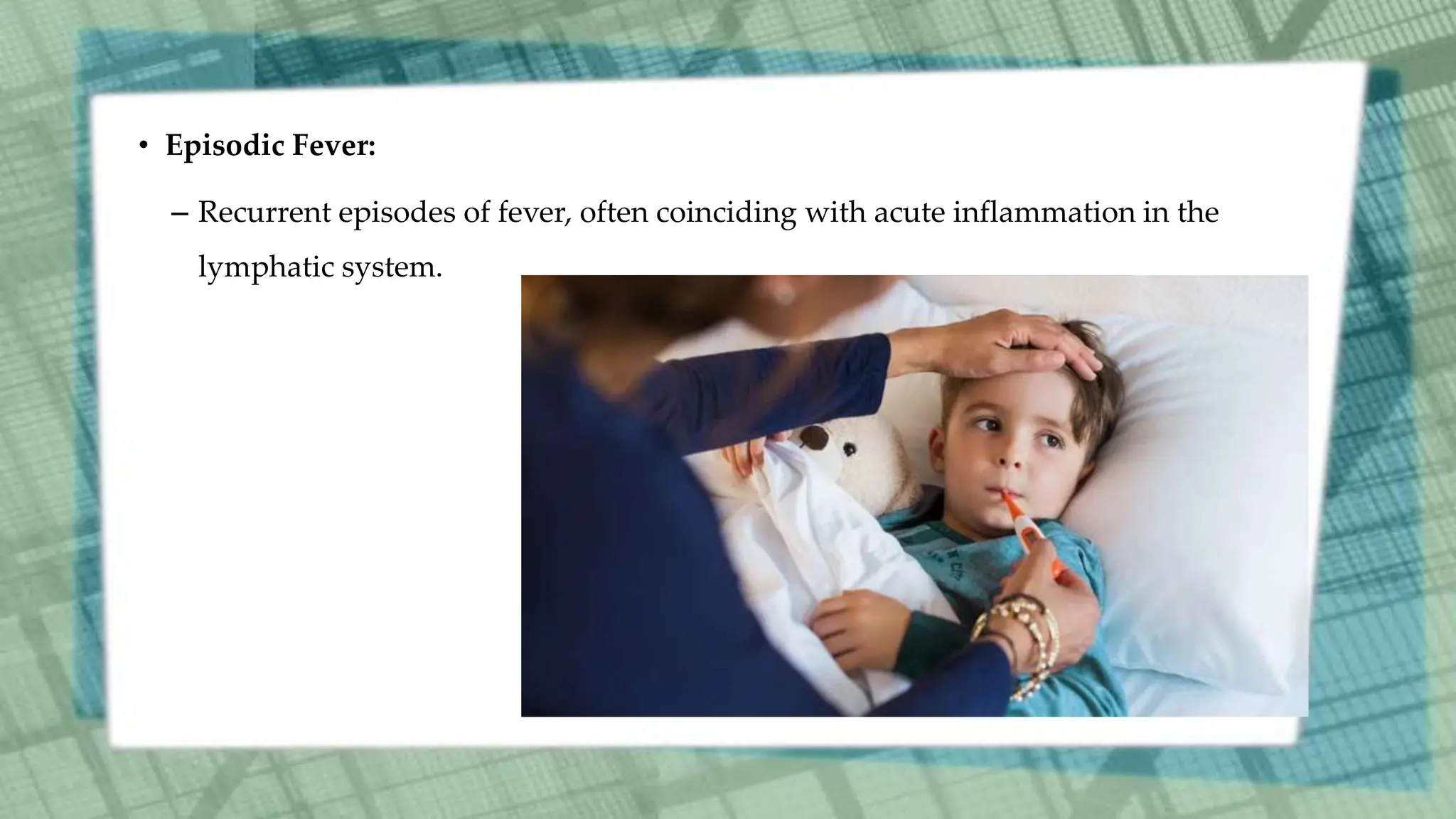
• Episodic Fever:
– Recurrent episodes of fever, often coinciding with acute inflammation in the
lymphatic system.
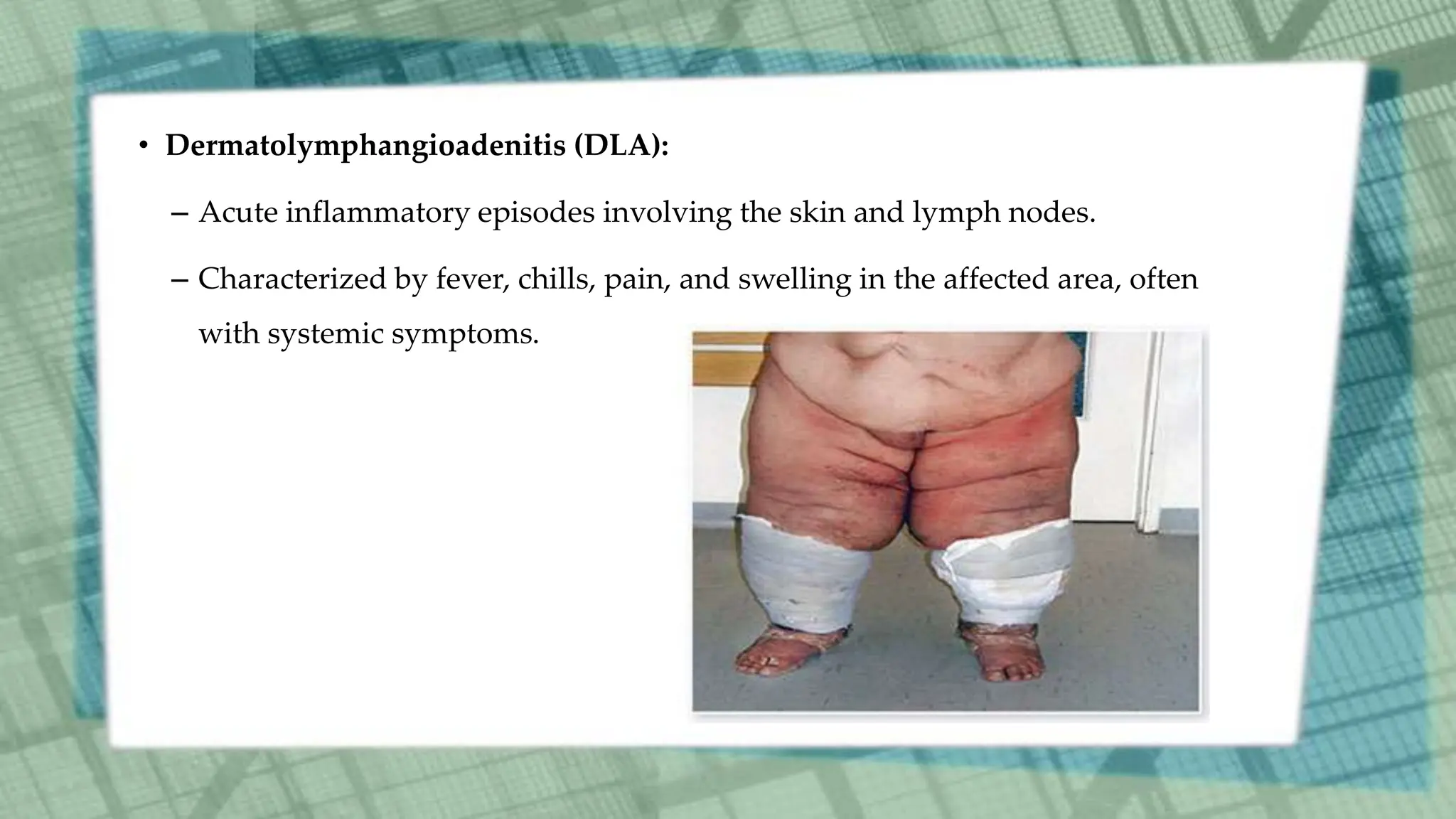
• Dermatolymphangioadenitis (DLA):
– Acute inflammatory episodes involving the skin and lymph nodes.
– Characterized by fever, chills, pain, and swelling in the affected area, often
with systemic symptoms.
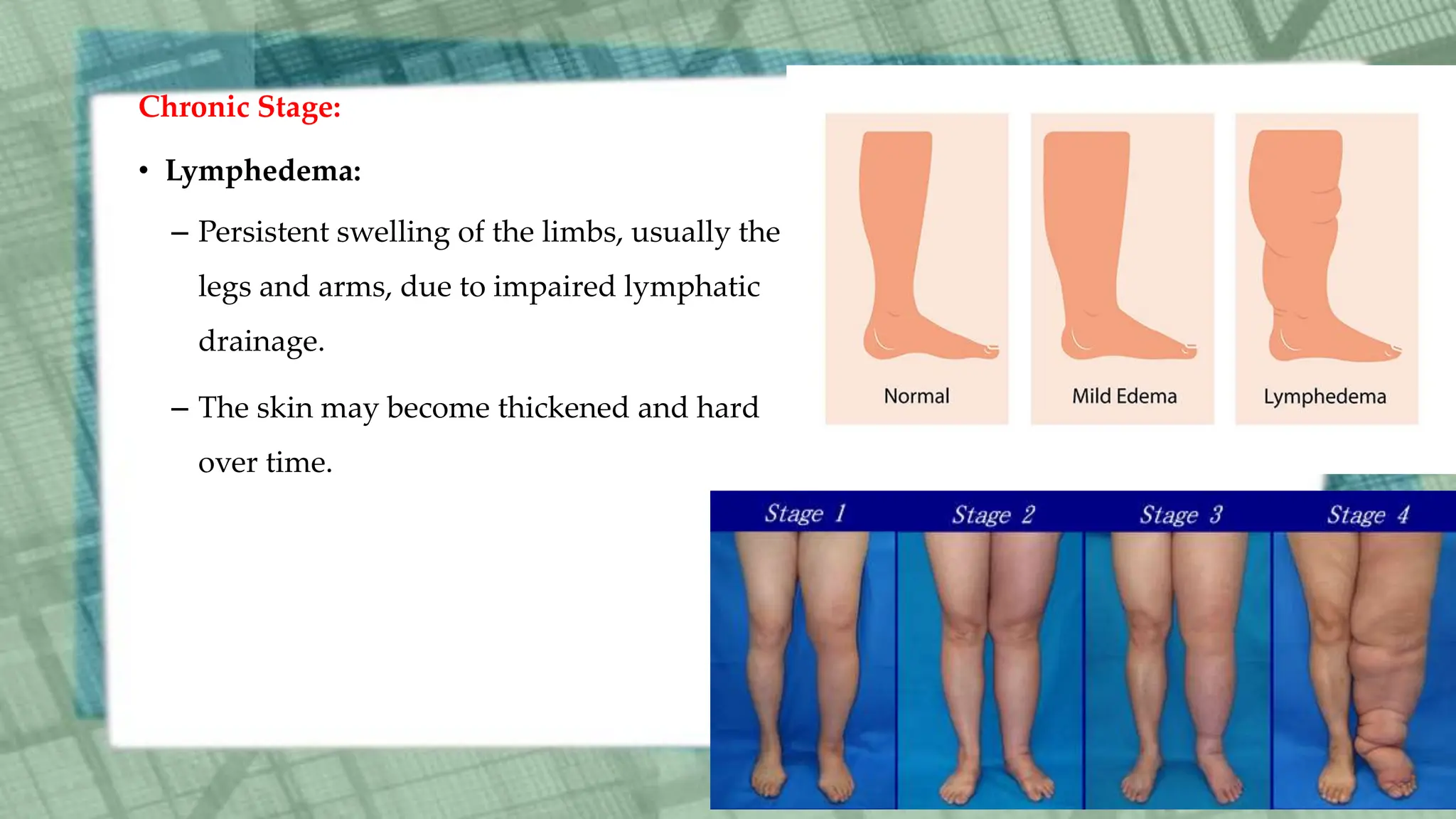
Chronic Stage:
• Lymphedema:
– Persistent swelling of the limbs, usually the
legs and arms, due to impaired lymphatic
drainage.
– The skin may become thickened and hard
over time.
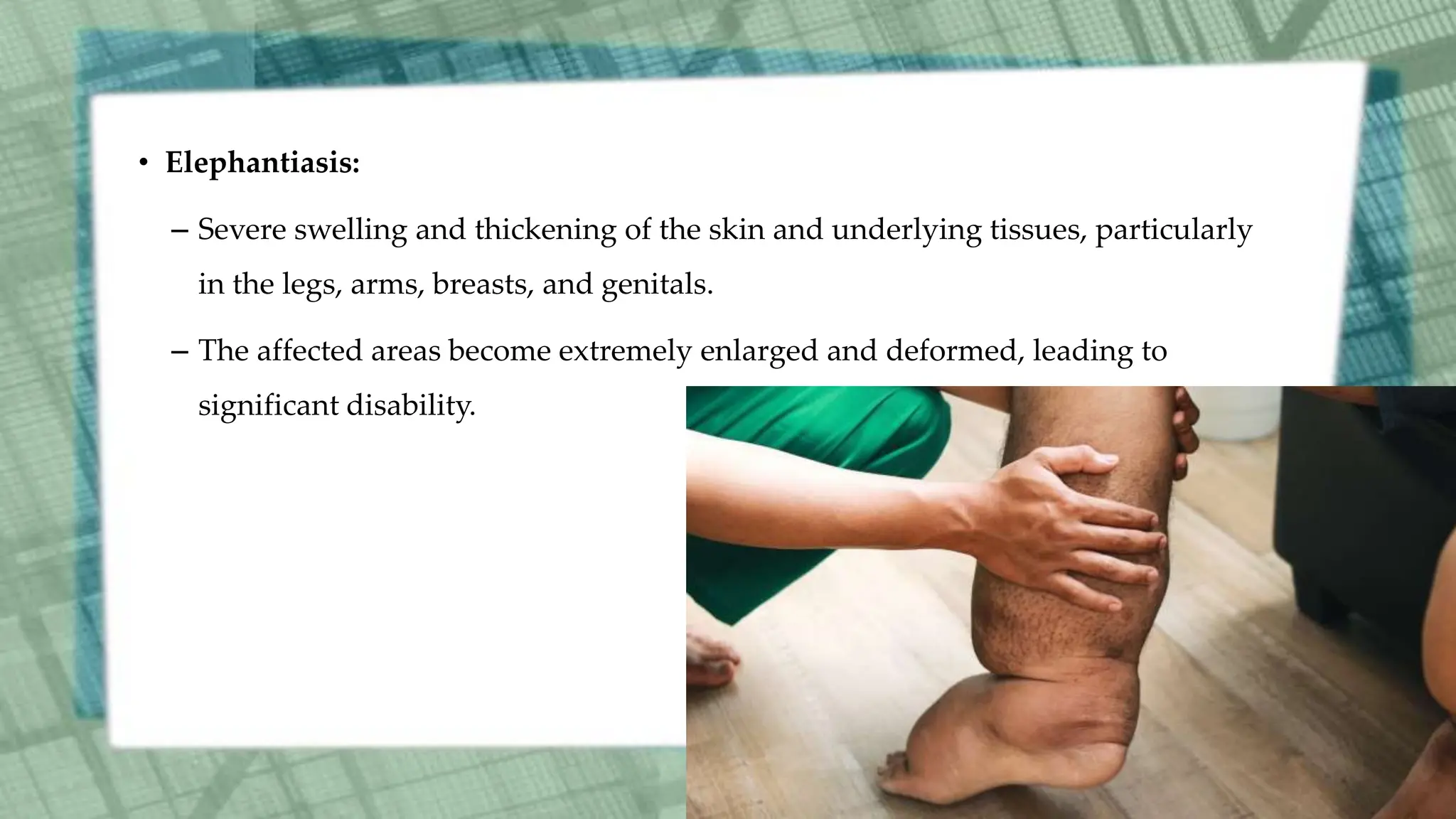
• Elephantiasis:
– Severe swelling and thickening of the skin and underlying tissues, particularly
in the legs, arms, breasts, and genitals.
– The affected areas become extremely enlarged and deformed, leading to
significant disability.
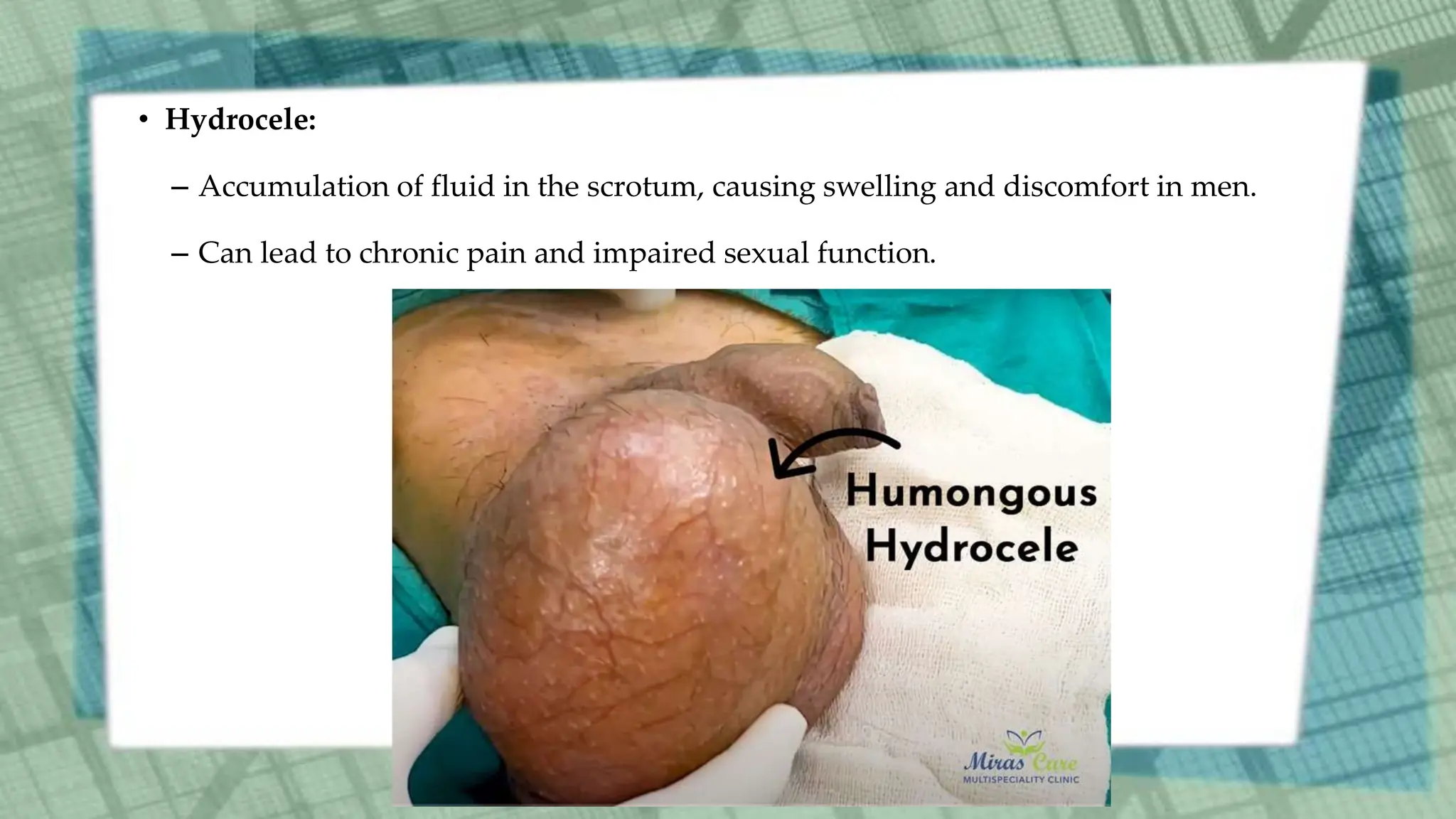
• Hydrocele:
– Accumulation of fluid in the scrotum, causing swelling and discomfort in men.
– Can lead to chronic pain and impaired sexual function.
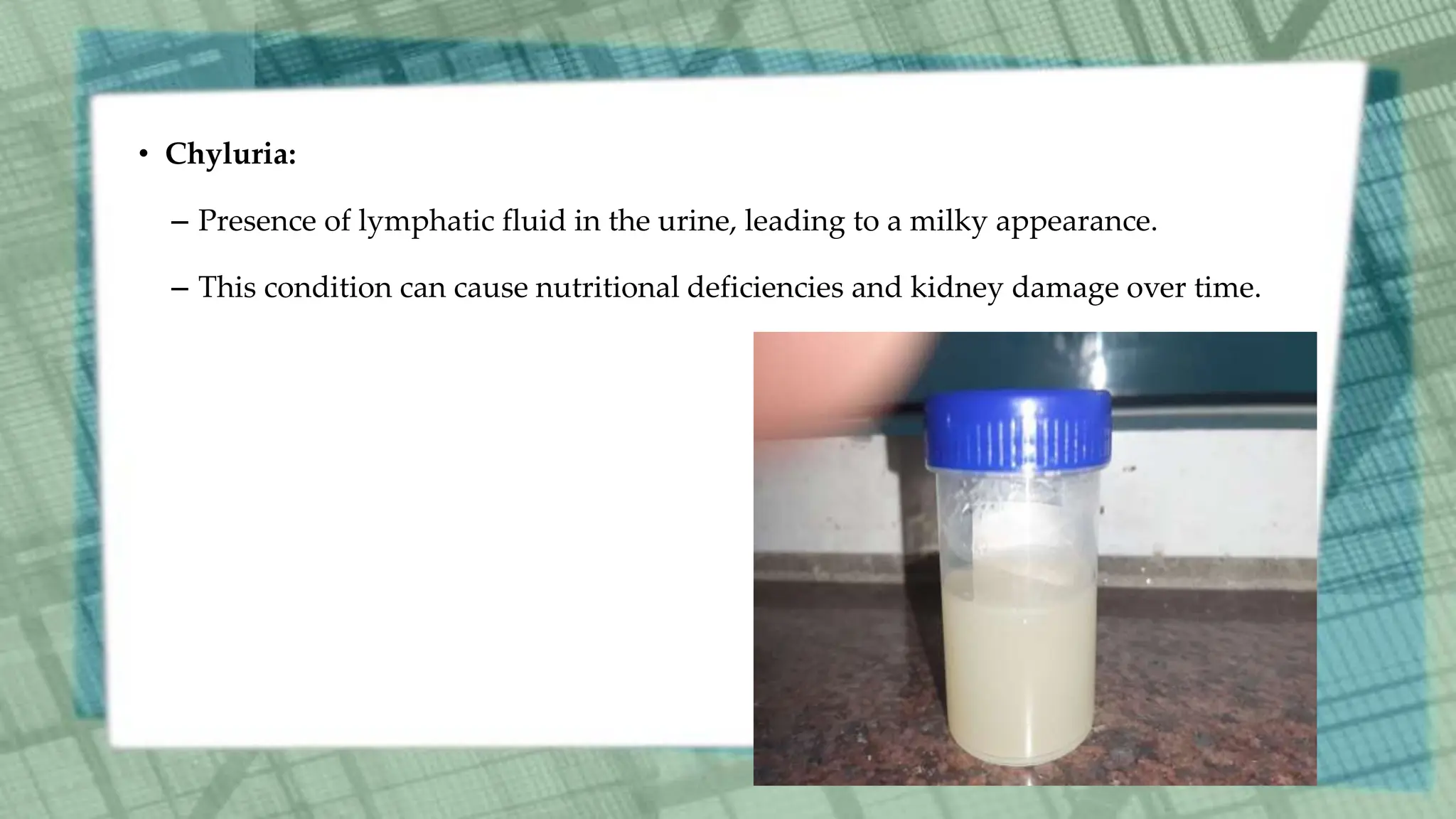
• Chyluria:
– Presence of lymphatic fluid in the urine, leading to a milky appearance.
– This condition can cause nutritional deficiencies and kidney damage over time.
Other Symptoms
• Skin Changes:
– Thickening, hardening, and cracking of the skin, especially in the affected areas.
– Fungal and bacterial infections may occur due to compromised skin integrity.
• Pain and Discomfort:
– Chronic pain in the affected limbs or genitals, often exacerbated by secondary infections
and inflammation.
• Systemic Symptoms:
– General malaise, fatigue, and reduced physical activity due to chronic pain and
swelling.
Diagnosis
• Blood Tests: Detection of microfilariae in the bloodstream, particularly during
the night when they are most abundant.
• Antigen Detection: Immunological tests to detect filarial antigens.
• Ultrasound: To visualize adult worms, especially in the scrotal area.
• X-ray and MRI: Imaging to assess the extent of lymphatic damage.
Treatment
• Antifilarial Medications: Diethylcarbamazine (DEC), ivermectin, and
albendazole are commonly used to kill microfilariae and, to some extent, adult
worms.
• Management of Symptoms: Hygiene, exercise, and use of compression garments
to manage lymphedema.
• Surgery: In severe cases, surgical intervention may be necessary to remove
fibrous tissue and alleviate symptoms of elephantiasis.
Prevention
• Vector Control: Use of insect repellent, mosquito nets, and insecticide spraying to
reduce exposure to mosquito bites.
• Mass Drug Administration (MDA): Community-wide distribution of antifilarial
medications to reduce the prevalence of the infection.
FILARIASIS.pptx

FILARIASIS.pptx

  • 1.
  • 2.
    Definition • Filariasis isa parasitic disease caused by an infection with roundworms of the Filarioidea type. These worms are spread by blood-feeding insects such as black flies and mosquitoes.
  • 3.
    Environmental triad • Agent: Filariasis-causingParasites Wuchereria bancrofti Brugia malayi Brugia timori
  • 4.
    • Host: – Humans •Susceptibility: Individuals in endemic areas are at higher risk, especially those who live in conditions that favor mosquito breeding, such as near stagnant water. • Behavioral Factors: Activities that increase exposure to mosquito bites, such as working or sleeping outdoors, enhance susceptibility. • Immune Response: The host’s immune response can influence the severity and progression of the disease.
  • 7.
    • Environment: – Factorsthat Influence Transmission • Climate: Warm, humid climates are ideal for mosquito breeding and survival. Tropical and subtropical regions are most affected. • Water Sources: Stagnant water bodies, such as ponds, ditches, and poorly drained areas, provide breeding sites for mosquitoes.
  • 9.
    • Housing Conditions:Poor housing with inadequate protection against mosquitoes increases the risk of bites. This includes lack of window screens, bed nets, and other protective measures. • Sanitation: Poor sanitation and waste management contribute to the proliferation of mosquito breeding sites.
  • 11.
    Symptoms Acute Stage: • Lymphadenitis: –Inflammation and swelling of the lymph nodes, often accompanied by pain. – Commonly affected areas include the armpits, groin, and neck.
  • 12.
    • Lymphangitis: – Inflammationof the lymphatic vessels, leading to red streaks on the skin extending from the infected lymph nodes. – Fever and chills may accompany this inflammation.
  • 13.
    • Episodic Fever: –Recurrent episodes of fever, often coinciding with acute inflammation in the lymphatic system.
  • 14.
    • Dermatolymphangioadenitis (DLA): –Acute inflammatory episodes involving the skin and lymph nodes. – Characterized by fever, chills, pain, and swelling in the affected area, often with systemic symptoms.
  • 15.
    Chronic Stage: • Lymphedema: –Persistent swelling of the limbs, usually the legs and arms, due to impaired lymphatic drainage. – The skin may become thickened and hard over time.
  • 16.
    • Elephantiasis: – Severeswelling and thickening of the skin and underlying tissues, particularly in the legs, arms, breasts, and genitals. – The affected areas become extremely enlarged and deformed, leading to significant disability.
  • 17.
    • Hydrocele: – Accumulationof fluid in the scrotum, causing swelling and discomfort in men. – Can lead to chronic pain and impaired sexual function.
  • 18.
    • Chyluria: – Presenceof lymphatic fluid in the urine, leading to a milky appearance. – This condition can cause nutritional deficiencies and kidney damage over time.
  • 19.
    Other Symptoms • SkinChanges: – Thickening, hardening, and cracking of the skin, especially in the affected areas. – Fungal and bacterial infections may occur due to compromised skin integrity. • Pain and Discomfort: – Chronic pain in the affected limbs or genitals, often exacerbated by secondary infections and inflammation. • Systemic Symptoms: – General malaise, fatigue, and reduced physical activity due to chronic pain and swelling.
  • 20.
    Diagnosis • Blood Tests:Detection of microfilariae in the bloodstream, particularly during the night when they are most abundant. • Antigen Detection: Immunological tests to detect filarial antigens. • Ultrasound: To visualize adult worms, especially in the scrotal area. • X-ray and MRI: Imaging to assess the extent of lymphatic damage.
  • 21.
    Treatment • Antifilarial Medications:Diethylcarbamazine (DEC), ivermectin, and albendazole are commonly used to kill microfilariae and, to some extent, adult worms. • Management of Symptoms: Hygiene, exercise, and use of compression garments to manage lymphedema. • Surgery: In severe cases, surgical intervention may be necessary to remove fibrous tissue and alleviate symptoms of elephantiasis.
  • 22.
    Prevention • Vector Control:Use of insect repellent, mosquito nets, and insecticide spraying to reduce exposure to mosquito bites. • Mass Drug Administration (MDA): Community-wide distribution of antifilarial medications to reduce the prevalence of the infection.