AIDS
             By
    Mallappa. Shalavadi,
          Lecturer,
Department of Pharmacology,
  HSK College of Pharmacy,
          Bagalkot.
CONTENTS
• Introduction
• Etiology
• Pathophysiology
• Role of enzymes
• Mode of transmission
• Diagnosis
• Anti retroviral drugs
• New therapy
Introduction
• AIDS- Acquired Immunodeficiency Disease.
• It is a disease caused by the retrovirus human
  immunodeficiency virus (HIV) and characterized by
  profound immunosuppression that leads to
  opportunistic infections, secondary neoplasms and
  neurological manifestations.
• The acquired immune deficiency syndrome AIDS was
  first recognized in 1981 in US.
• Centers for Disease Control and Prevention reported
  the unexplained occurrence of Pneumocystis jiroveci
  pneumonia in five previously healthy homosexual
  men in Los Angeles and of Kaposi's sarcoma with or
without P. jiroveci pneumonia in 26 previously healthy
 homosexual men in New York and Los Angeles.


ETIOLOGY
• AIDS is caused by HIV, a human retrovirus.
• Two types- HIV I and HIV II which are genetically
  different but has related forms.
• HIV I is most common type associated with AIDS in
  US, Europe and Central Africa.
• HIV II causes similar disease in West Africa and India.
• HIV-II is transmitted less efficiently than HIV-I.
STRUCTURE
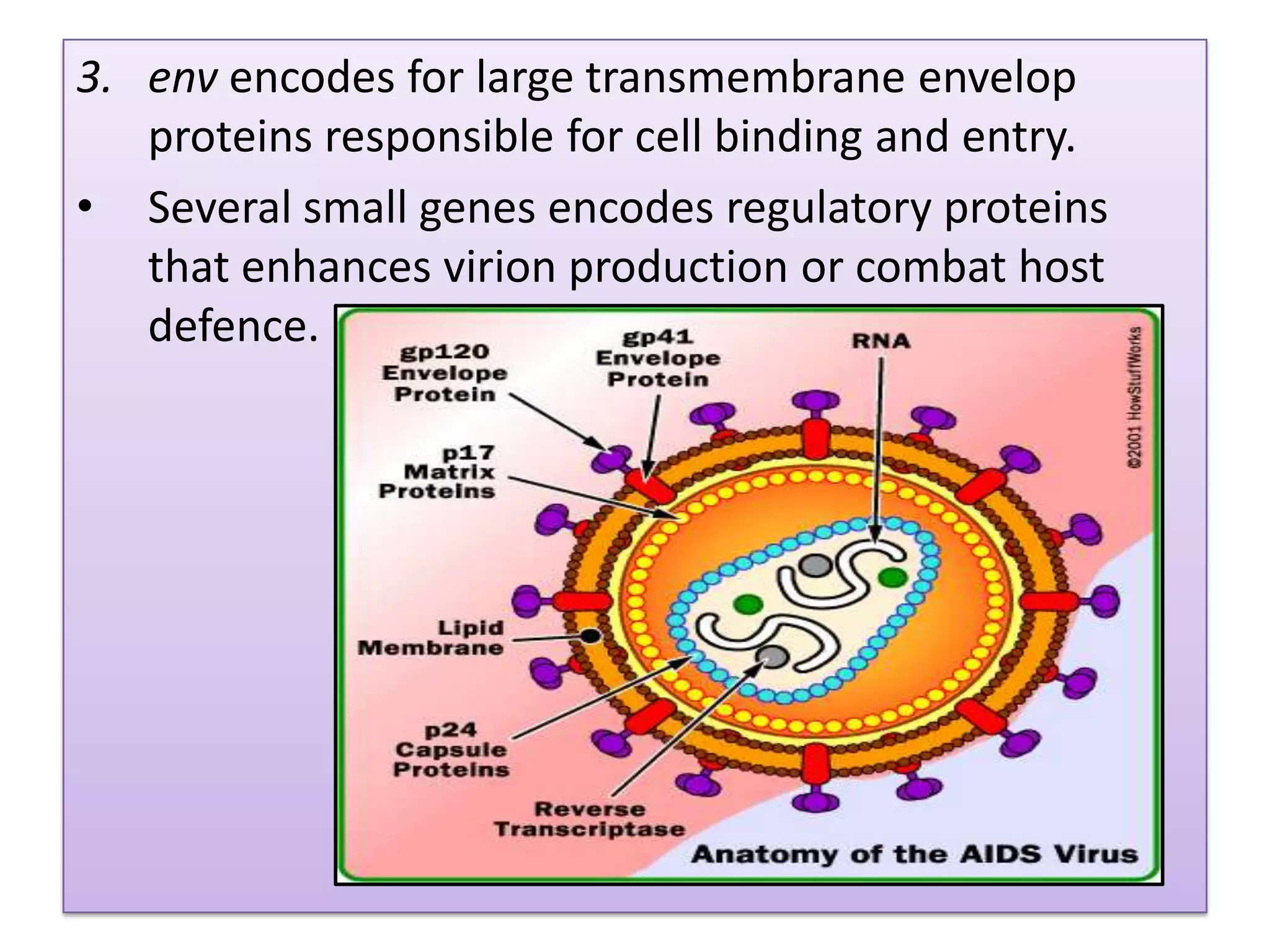
• HIV is a typical retrovirus with a small RNA genome
  of 9300 base pairs.
• Is a spherical and contains nucleocapsid core
  surrounded by a lipid bilayer or envelop derived from
  host cell membrane.
• The viral genome encodes 3 major open reading
  frames-
1. gag encodes a polyprotein that is processed to
    release major structural proteins of virus.
2. pol encodes 3 important enzymes are RNA
    dependent DNA polymerase or reverse
    transcriptase with RNAse H, Protease and integrase.
3. env encodes for large transmembrane envelop
   proteins responsible for cell binding and entry.
• Several small genes encodes regulatory proteins
   that enhances virion production or combat host
   defence.
PATHOGENESIS
• HIV can infect many tissues, there are 2 major targets
  -Immune system
  -Central nervous system.
• Primarily affect cell mediated immunity.
• Results in severe loss of CD4+ T cells and impairment
  in the function of helper T cells.
• Macrophages and dendritic cells also infected.
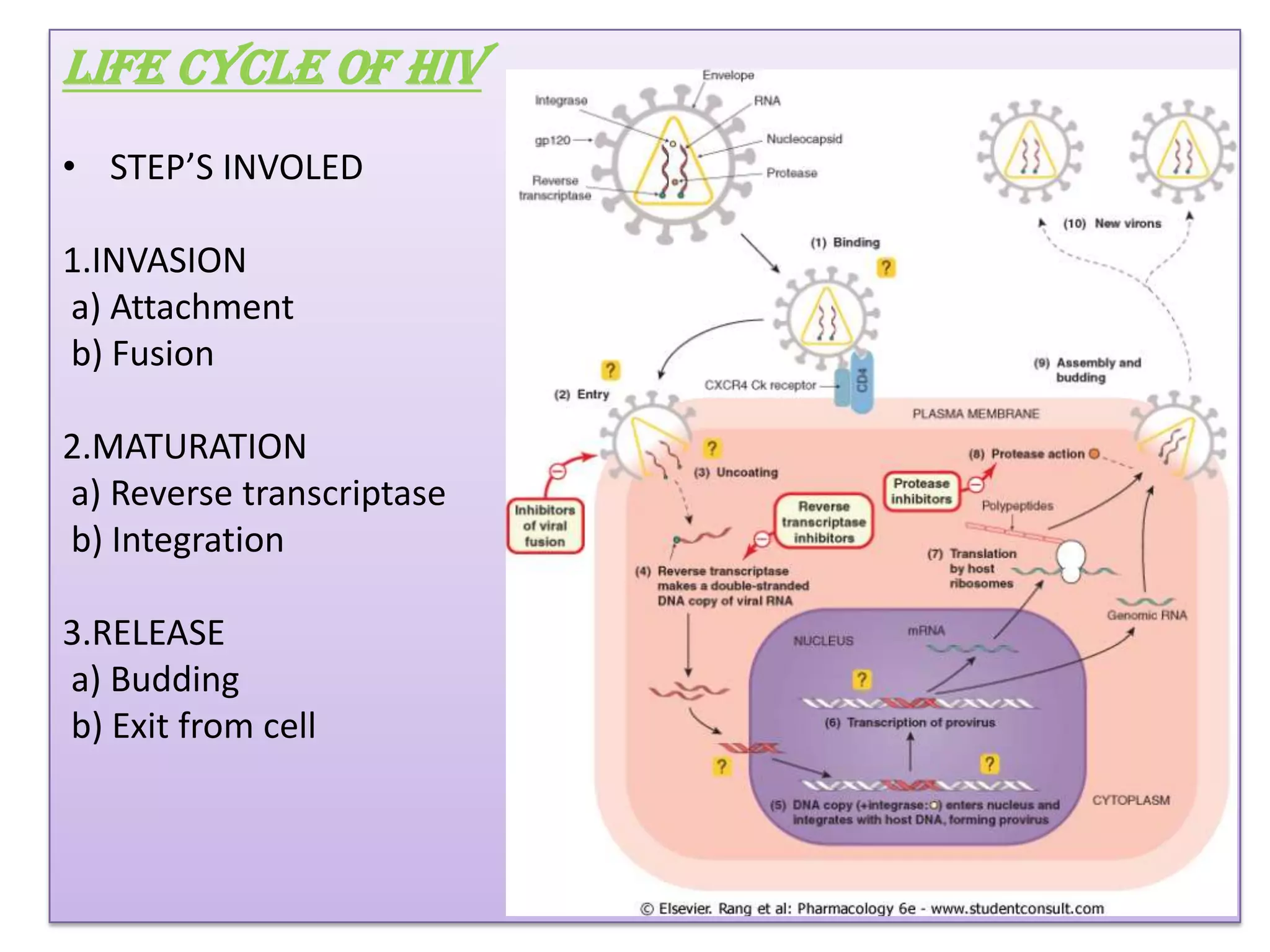
LIFE CYCLE OF HIV
• STEP’S INVOLED

1.INVASION
a) Attachment
b) Fusion

2.MATURATION
a) Reverse transcriptase
b) Integration

3.RELEASE
a) Budding
b) Exit from cell
ROLE OF ENZYMES

1. REVERSE TRASCRIPTASE (RT)
• Multifunctional enzymes having RNA
  dependent DNA polymerase activity
• Also having RNase H (helicase) activity
• Catalyses formation of double stranded
  proviral DNA from singal stranded RNA
  genome
• Due to its central role in the viral replication
  RT is prime target for anti aids therapy
• Inhibitors of RT can be classified as
  1.nucleoside RT inhibitor(NRTI)
  2.non nucleoside RT inhibitor(NNRTI)
• NRTI are competative in nature while NNRTI
  are non competative
2. PORTEASE
• Protease essential for production of mature,
  infectious virions
• HIV protease is responsible for posttranslatio-
  nal processing of poly proteins & protolytic
  activity
• Inhibition of these protease enzyme is also
  attractive target for anti aids therapy

3. Intigrase
• Catalyses the integration of double stranded
  DNA copy of their RNA genome into
  chromosome of a host cell
• Inhibition of integrase enzyme is prime target
  for anti aids therapy
COMMAN SIGN & SYMPTOMS
• Severe impairment or suppression of immune
  system.
• Pneumocystis carinii pneumonia (pcp) is
  mostly seen.
• Opportunistic infection
• CD4+T- cells count falls below 200 cells/mm3
  of blood.
• In healthy adult it’s value is 600-1500
  cells/mm3 of blood.
•   Weight loss
•   Pharyngitis
•   Neurological symptoms.
•   Rash
•   Headache
•   Fever
•   Lymphadenopathy
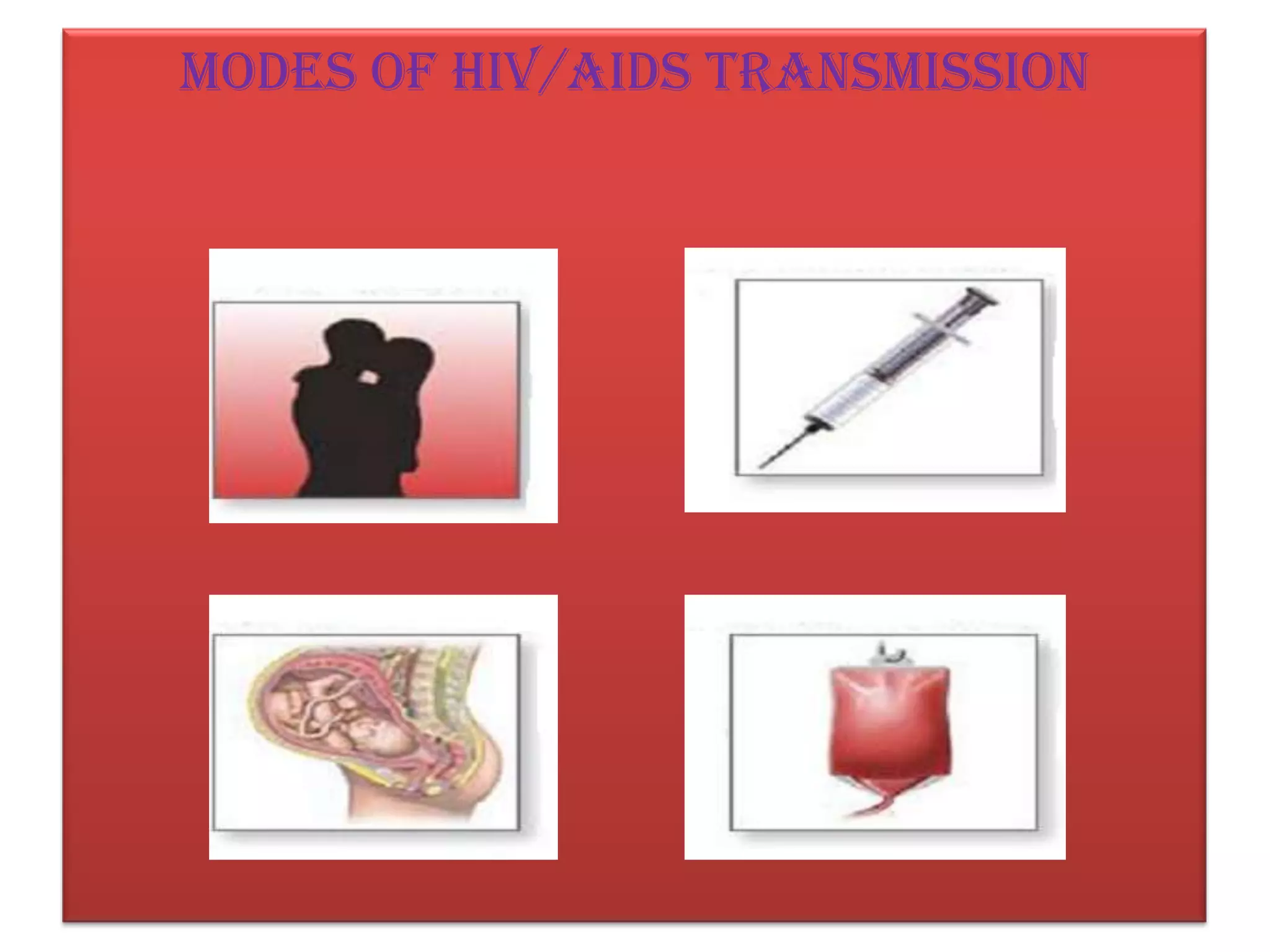
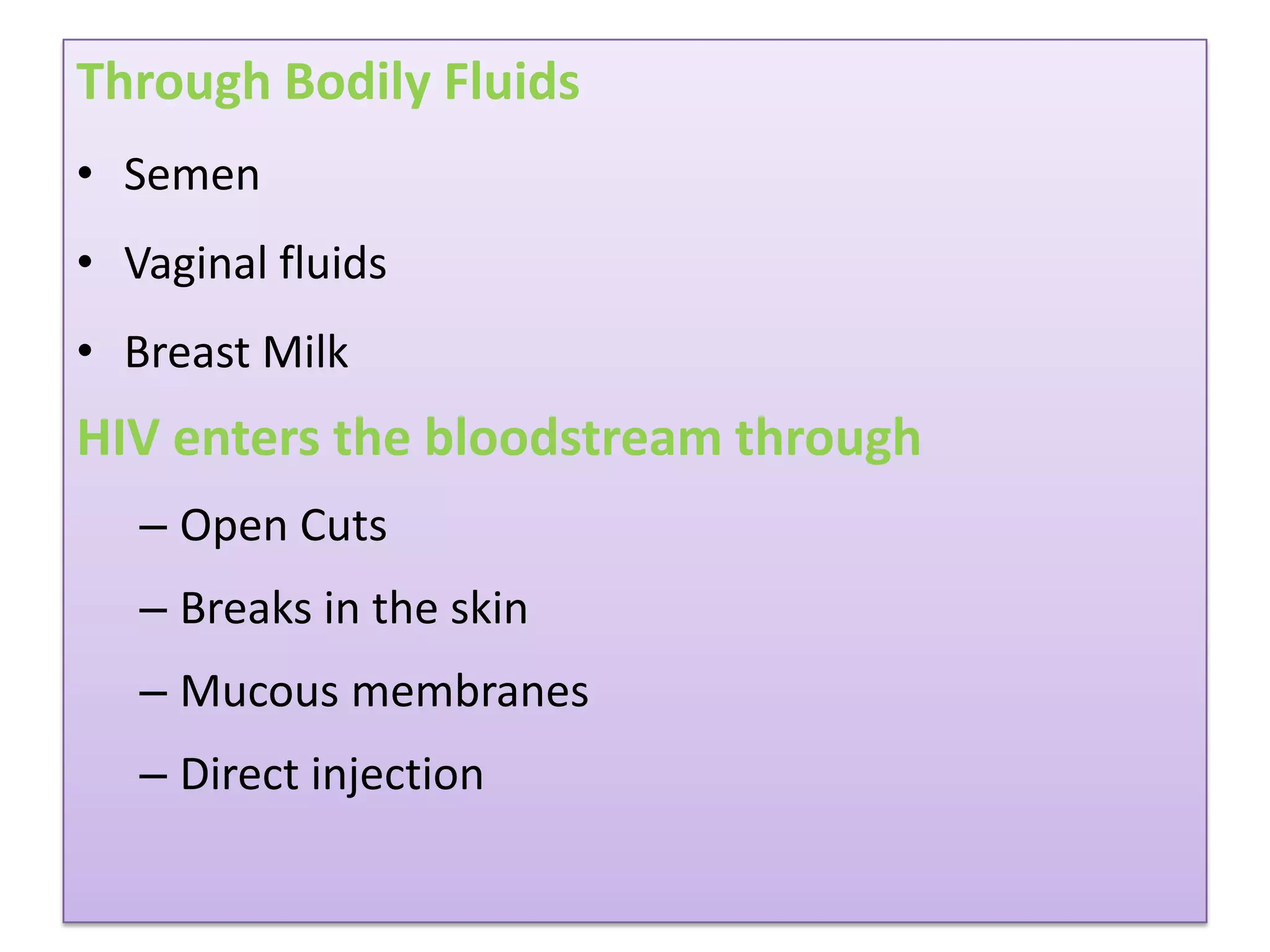
Modes of HIV/AIDS Transmission
Through Bodily Fluids
• Semen
• Vaginal fluids
• Breast Milk
HIV enters the bloodstream through
   – Open Cuts
   – Breaks in the skin
   – Mucous membranes
   – Direct injection
• Sharing Needles
  – Without sterilization


  Through Sex
• Intercourse
• Oral
• Anal
Mother-to-Baby
• During pregnancy transplacently transmitted.
• During post-partum period through contamination
  with maternal blood, infected amniotic fluid or
  breast milk
DIAGNOSIS
BLOOD DETECTION TEST
• Enzyme-Linked Immunosorbent Assay/Enzyme
  Immunoassay (ELISA/EIA)
• Radio Immunoprecipitation Assay/Indirect
  Fluorescent Antibody Assay (RIP/IFA)
• Polymerase Chain Reaction (PCR)
• Western Blot Confirmatory test
URINE TEST
• Urine Western Blot
• As sensitive as testing blood
• Safe way to screen for HIV
• Can cause false positives in certain people at
  high risk for HIV
Orasure
  – The only FDA approved HIV antibody.
  – As accurate as blood testing
  – Involves collecting secretions between the cheek
    and gum and evaluating them for HIV antibodies.
ANTIRETROVIRAL AGENTS
1. Nucleoside/Nucleotide Analogues
• Abacavir Didanosine Emtricitabine
  Lamivudine Stavudine Tenofovir Zalcitabine
2. Non nucleoside Reverse Transcriptase
  Inhibitors
• Delavirdine, Efavirenz ,Etravirine ,Nevirapine
3. Protease Inhibitors
• Amprenavir,Atazanavir ,Darunavir
  Fosamprenavir, Indinavir, Lopinavir/Ritonavir
  Nelfinavir ,Ritonavir, quinavir
4. Fusion Inhibitors
• Enfuvirtide
5. Chemokine Coreceptor Antagonists
• Maraviroc
6. Integrase Inhibitors
• Raltegravir
NUCLEOSIDE/NUCLEOTIDE ANALOGUES
• Nucleoside and nucleotide reverse
  transcriptase inhibitors prevent infection of
  susceptible cells but have no impact on cells
  that already harbor HIV.
• Nucleosides that must be triphosphorylated at
  the 5’-hydroxyl to exert activity.
• tenofovir, is a nucleotide monophosphate
  analog that requires two additional
  phosphates to acquire full activity.
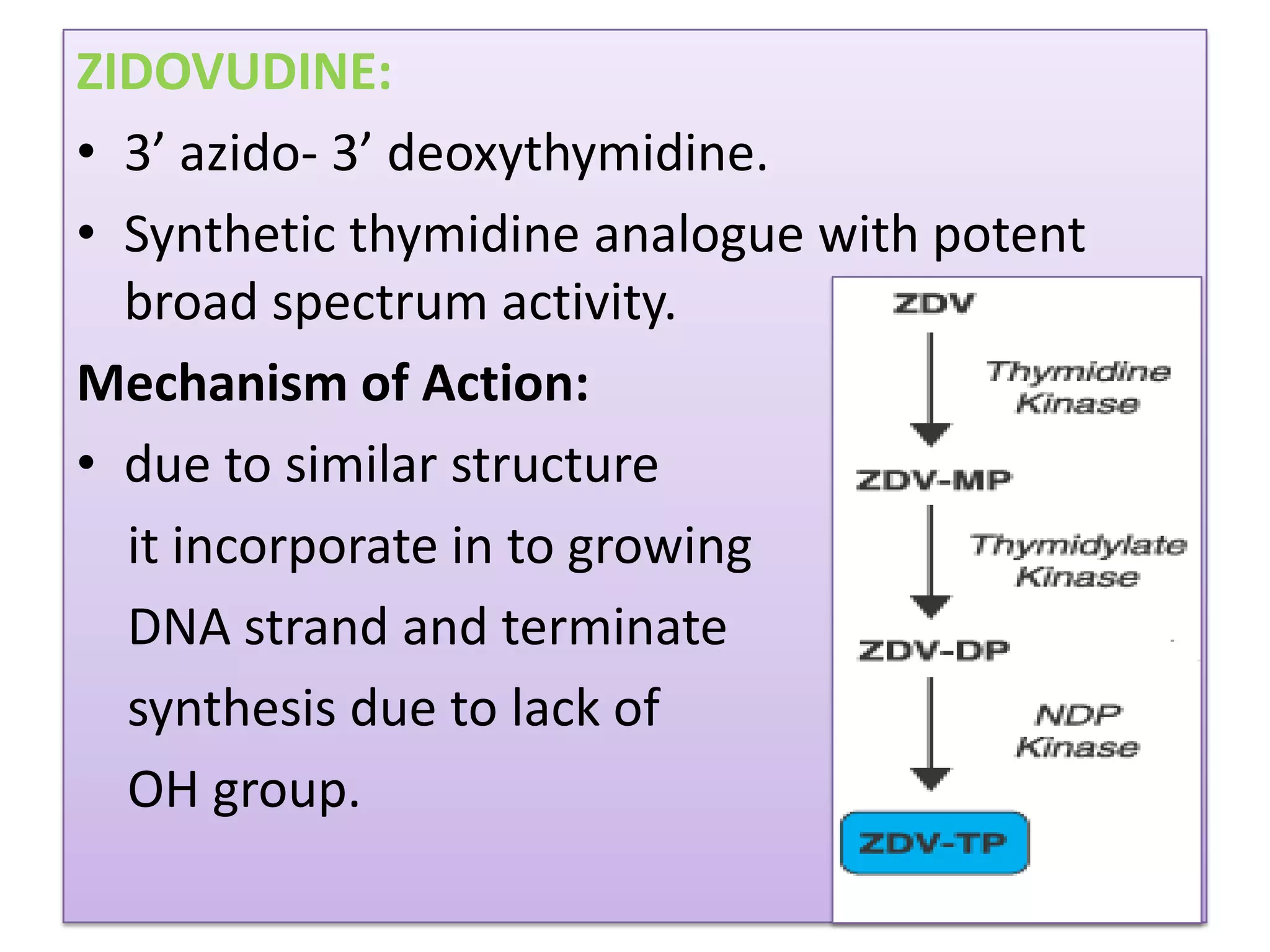
ZIDOVUDINE:
• 3’ azido- 3’ deoxythymidine.
• Synthetic thymidine analogue with potent
  broad spectrum activity.
Mechanism of Action:
• due to similar structure
  it incorporate in to growing
  DNA strand and terminate
  synthesis due to lack of
  OH group.
Untoward Effects
• They mainly due to partial inhibiton of cellular
  DNA polymarase.
• Fatigue, malaise, myalgia, nausea, anorexia,
  headache, and insomnia.
• Bone marrow suppression, mainly anemia and
  granulocytopenia.
• Gastrointestinal disturbances
• Abnormal liver functions
• hyperlipidemia
Therapeutic Uses.
• Zidovudine is FDA approved for the treatment
  of adults and children with HIV infection and
  for preventing mother-to-child transmission of
  HIV infection.
• It is also recommended for postexposure
  prophylaxis in HIV-exposed healthcare
  workers, also in combination with other
  antiretroviral agents.
NONNUCLEOSIDE REVERS TRANSCRIPTASE
 INHIBITORS
• Nonnucleoside reverse transcriptase inhibitors
   (NNRTIs) include a variety of chemical
   substrates that bind to the HIV-1 reverse
   transcriptase.
• These compounds induce a conformational
   change in the three-dimensional structure of
   the enzyme that greatly reduces its activity,
   and thus they act as noncompetitive inhibitors
NEVIRAPINE:
• Is a dipyridodiazepinone NNRTI with potent
  activity against HIV-1.
• nevirapine does not have significant activity
  against HIV-2 or other retroviruses.
Mechanism of Action:
• Nevirapine is a noncompetitive inhibitor that
  binds to a site on the HIV-1 reverse
  transcriptase that is distant from the active
  site, inducing a conformational change that
  disrupts catalytic activity.
Untoward Effects:
• Hepatotoxicity
• Stevens-Johnson syndrome
• Rash
• Pruritus
• Fever, fatigue, headache, somnolence, and
  nausea.
Uses
• Pregnant women
• Used to prevent mother to infant HIV infection
• HIV-1 infection in adults and children in
  combination with other antiretroviral agents.
PROTEASE INHIBITORS
• HIV protease inhibitors are peptidelike
  chemicals that competitively inhibit the action
  of the virus aspartyl protease.
• This protease is a homodimer consisting of
  two 99-amino-acid monomers; each monomer
  contributes an aspartic acid residue that is
  essential for catalysis.
SAQUINAVIR:
• A peptidomimetic hydroxyethylamine HIV
  protease inhibitor.
• Inhibits both HIV-1 and HIV-2 replication.
Mechanisms of Action
• Reversibly binds to the active site of HIV
  protease, preventing polypeptide processing
  and subsequent virus maturation.
• Potently inhibiting the HIV-encoded protease
  but not host-encoded aspartyl proteases.
Untoward Effects
• Nausea, vomiting, diarrhea, and abdominal
  discomfort.
• Lipodystrophy.
Therapeutic Use
• Reduction of viral load with other nucletide
  analogues.
FUSION INHIBITORS
• Enfuvirtide is the only available HIV entry
  inhibitor.
• Enfuvirtide is a 36-amino-acid synthetic
  peptide whose sequence is derived from a
  part of the transmembrane gp41 region of
  HIV-1.
• Not active against HIV-2.
• The peptide blocks the interaction between
  the N36 and C34 sequences of the gp41
  glycoprotein by binding to a hydrophobic
  groove in the N36 coil
• This prevents formation of a six-helix bundle
  critical for membrane fusion and viral entry
  into the host cell.
• Treatment-experienced adults who have
  evidence of HIV replication despite ongoing
  antiretroviral therapy.
CCR5 antagonists
• In order to enter a human cell, HIV must first
  attach itself to proteins on the cell’s surface.
• The next stage involves proteins called co-
  receptors, two main types: CCR5 and CXCR4.
  Some strains of HIV use CCR5, others use
  CXCR4,.
• CCR5 antagonists are drugs that bind to the
  CCR5 co-receptor so that HIV cannot exploit it
  to gain entry to a cell.
• The main drawback of these drugs is that they
  don’t work against all strains of HIV.
• Maraviroc is a example for this class.
Raltegravir: first in class HIV integrase inhibitor
• The integration of HIV-1 proviral DNA into the
  host cell genome
• Integrase mainly involved in integration of
  viral DNA in to host DNA.
• Inhibition of this enzyme prevents integration.
• Impressive antiviral potency in heavily
  treatment-experienced patients.
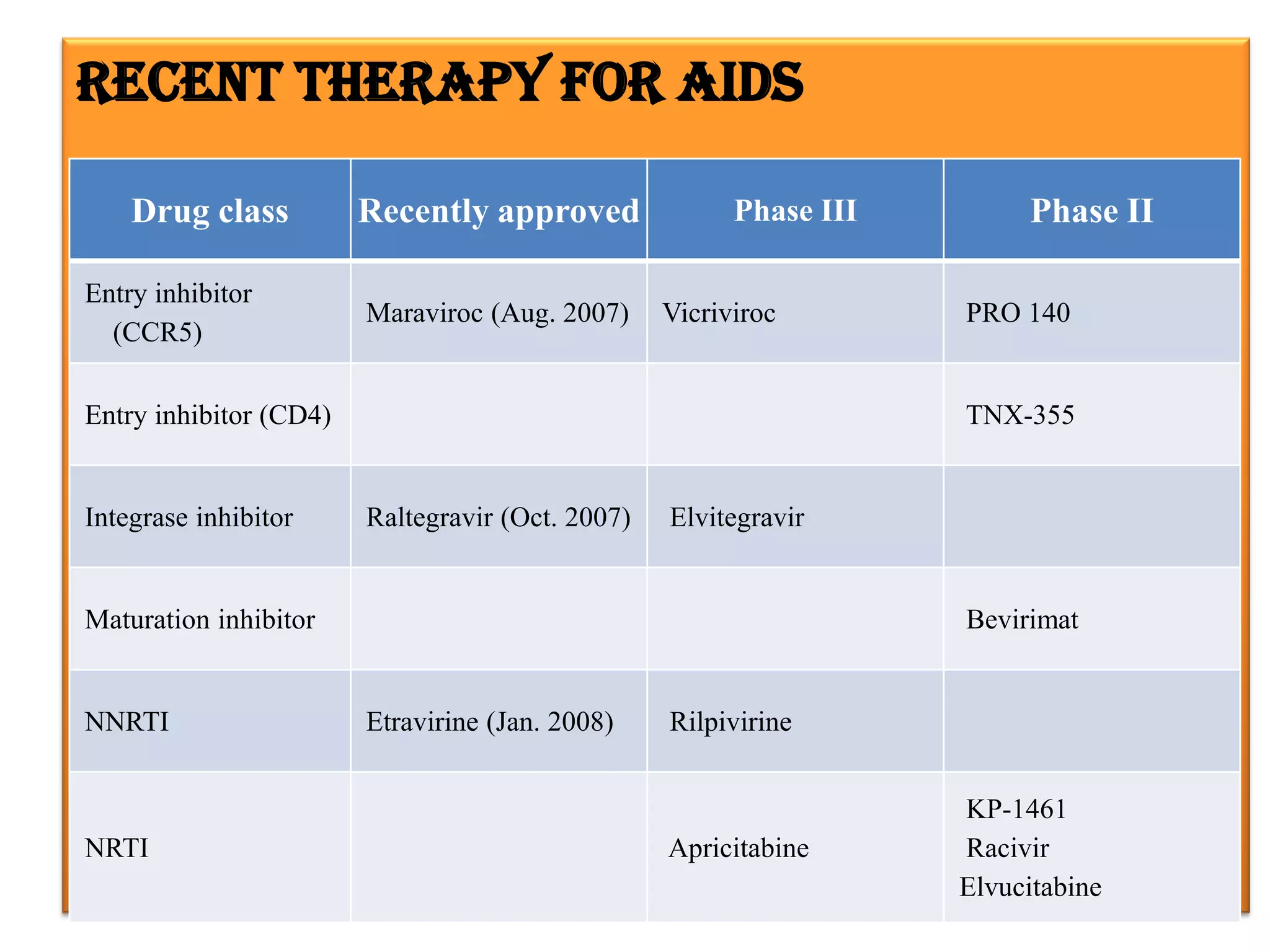
RECENT THERAPY FOR AIDS

    Drug class          Recently approved               Phase III        Phase II

Entry inhibitor
                        Maraviroc (Aug. 2007)     Vicriviroc        PRO 140
  (CCR5)

Entry inhibitor (CD4)                                               TNX-355


Integrase inhibitor     Raltegravir (Oct. 2007)   Elvitegravir


Maturation inhibitor                                                Bevirimat


NNRTI                   Etravirine (Jan. 2008)    Rilpivirine


                                                                    KP-1461
NRTI                                              Apricitabine      Racivir
                                                                    Elvucitabine
GENE THERAPY
• RNA-interference is damage to a certain RNA
  sequence with participation of a different,
  "defending" RNA molecule.
• This system prevents viral infection, unless
  viruses had learned to cut it off in the course of
  evolution.
• Researchers from countries including Russia are
  developing the artificial RNA-interference system.
• It is non-injurious to the patient and, due to high
  specificity of action, does not damage its own
  RNA in cells infected by the virus.
• To fight HIV, Russian biologists have created
  three genetic structures.
• These structures contain short nucleotide
  against sequences that find the most
  conservative molecules among all RNA
  molecules, that is, sequences that do not
  change quickly and are important to the virus.
• These sequences are then "damaged".
• Genetic structures significantly suppress viral
  reproduction.
VACCINE
Difficulties in developing an HIV vaccine
• Classic vaccines mimic natural immunity against
  reinfection generally seen in individuals
  recovered from infection; there are almost no
  recovered AIDS patients.
• Most vaccines protect against disease, not against
  infection; HIV infection may remain latent for
  long periods before causing AIDS.
• Most effective vaccines are whole-killed or live-
  attenuated organisms; killed HIV-1 does not
  retain antigenicity and the use of a live retrovirus
  vaccine raises safety issues.
• Most vaccines protect against infections
  through mucosal surfaces of the respiratory or
  gastrointestinal tract; the great majority of
  HIV infection is through the genital tract.
Phase I
• Most initial approaches have focused on the
  HIV envelope protein.
• Thirteen different gp120 and gp160 envelope
  candidates have been evaluated.
• Most research focused on gp120 rather than
  gp41/gp160.
Phase III
• AIDSVAX vaccine.
• This is the first successful HIV vaccine trial in
  history.
• The percentage rate reduced to 26%
  compared with those who had been given a
  placebo.
Planned clinical trials
• Novel approaches, including modified vaccinia
  Ankara (MVA), adeno-associated virus,
  Venezuelan equine encephalitis (VEE).
MONOCLONAL ANTIBODIES
• monoclonal antibodies, produced after
  immunizing mice, have binding characteristics
  that look similar to two well-known broadly
  neutralizing human monoclonal antibodies,
  known as 2F5 and 4E10, which also bind to
  HIV-1 protein and lipid.
• That might be useful in an effective HIV-1
  vaccine.
REFERENES
1. The Pharmacological basis of Therapeutics by
   Goodman and Gilman’s, 11 ed.
2. Pathologic basis of disease by Robbins and
   Cotran, 7 ed.
3. Pharmacology by Rang and Dale’s, 6 ed.
4. www.google.com

AIDS

  • 1.
    AIDS By Mallappa. Shalavadi, Lecturer, Department of Pharmacology, HSK College of Pharmacy, Bagalkot.
  • 2.
    CONTENTS • Introduction • Etiology •Pathophysiology • Role of enzymes • Mode of transmission • Diagnosis • Anti retroviral drugs • New therapy
  • 3.
    Introduction • AIDS- AcquiredImmunodeficiency Disease. • It is a disease caused by the retrovirus human immunodeficiency virus (HIV) and characterized by profound immunosuppression that leads to opportunistic infections, secondary neoplasms and neurological manifestations. • The acquired immune deficiency syndrome AIDS was first recognized in 1981 in US. • Centers for Disease Control and Prevention reported the unexplained occurrence of Pneumocystis jiroveci pneumonia in five previously healthy homosexual men in Los Angeles and of Kaposi's sarcoma with or
  • 4.
    without P. jirovecipneumonia in 26 previously healthy homosexual men in New York and Los Angeles. ETIOLOGY • AIDS is caused by HIV, a human retrovirus. • Two types- HIV I and HIV II which are genetically different but has related forms. • HIV I is most common type associated with AIDS in US, Europe and Central Africa. • HIV II causes similar disease in West Africa and India. • HIV-II is transmitted less efficiently than HIV-I.
  • 5.
    STRUCTURE • HIV isa typical retrovirus with a small RNA genome of 9300 base pairs. • Is a spherical and contains nucleocapsid core surrounded by a lipid bilayer or envelop derived from host cell membrane. • The viral genome encodes 3 major open reading frames- 1. gag encodes a polyprotein that is processed to release major structural proteins of virus. 2. pol encodes 3 important enzymes are RNA dependent DNA polymerase or reverse transcriptase with RNAse H, Protease and integrase.
  • 6.
    3. env encodesfor large transmembrane envelop proteins responsible for cell binding and entry. • Several small genes encodes regulatory proteins that enhances virion production or combat host defence.
  • 7.
    PATHOGENESIS • HIV caninfect many tissues, there are 2 major targets -Immune system -Central nervous system. • Primarily affect cell mediated immunity. • Results in severe loss of CD4+ T cells and impairment in the function of helper T cells. • Macrophages and dendritic cells also infected.
  • 8.
    LIFE CYCLE OFHIV • STEP’S INVOLED 1.INVASION a) Attachment b) Fusion 2.MATURATION a) Reverse transcriptase b) Integration 3.RELEASE a) Budding b) Exit from cell
  • 9.
    ROLE OF ENZYMES 1.REVERSE TRASCRIPTASE (RT) • Multifunctional enzymes having RNA dependent DNA polymerase activity • Also having RNase H (helicase) activity • Catalyses formation of double stranded proviral DNA from singal stranded RNA genome • Due to its central role in the viral replication RT is prime target for anti aids therapy
  • 10.
    • Inhibitors ofRT can be classified as 1.nucleoside RT inhibitor(NRTI) 2.non nucleoside RT inhibitor(NNRTI) • NRTI are competative in nature while NNRTI are non competative 2. PORTEASE • Protease essential for production of mature, infectious virions • HIV protease is responsible for posttranslatio- nal processing of poly proteins & protolytic activity
  • 11.
    • Inhibition ofthese protease enzyme is also attractive target for anti aids therapy 3. Intigrase • Catalyses the integration of double stranded DNA copy of their RNA genome into chromosome of a host cell • Inhibition of integrase enzyme is prime target for anti aids therapy
  • 12.
    COMMAN SIGN &SYMPTOMS • Severe impairment or suppression of immune system. • Pneumocystis carinii pneumonia (pcp) is mostly seen. • Opportunistic infection • CD4+T- cells count falls below 200 cells/mm3 of blood. • In healthy adult it’s value is 600-1500 cells/mm3 of blood.
  • 13.
    Weight loss • Pharyngitis • Neurological symptoms. • Rash • Headache • Fever • Lymphadenopathy
  • 14.
    Modes of HIV/AIDSTransmission
  • 15.
    Through Bodily Fluids •Semen • Vaginal fluids • Breast Milk HIV enters the bloodstream through – Open Cuts – Breaks in the skin – Mucous membranes – Direct injection
  • 16.
    • Sharing Needles – Without sterilization Through Sex • Intercourse • Oral • Anal Mother-to-Baby • During pregnancy transplacently transmitted. • During post-partum period through contamination with maternal blood, infected amniotic fluid or breast milk
  • 17.
    DIAGNOSIS BLOOD DETECTION TEST •Enzyme-Linked Immunosorbent Assay/Enzyme Immunoassay (ELISA/EIA) • Radio Immunoprecipitation Assay/Indirect Fluorescent Antibody Assay (RIP/IFA) • Polymerase Chain Reaction (PCR) • Western Blot Confirmatory test
  • 18.
    URINE TEST • UrineWestern Blot • As sensitive as testing blood • Safe way to screen for HIV • Can cause false positives in certain people at high risk for HIV Orasure – The only FDA approved HIV antibody. – As accurate as blood testing – Involves collecting secretions between the cheek and gum and evaluating them for HIV antibodies.
  • 19.
    ANTIRETROVIRAL AGENTS 1. Nucleoside/NucleotideAnalogues • Abacavir Didanosine Emtricitabine Lamivudine Stavudine Tenofovir Zalcitabine 2. Non nucleoside Reverse Transcriptase Inhibitors • Delavirdine, Efavirenz ,Etravirine ,Nevirapine 3. Protease Inhibitors • Amprenavir,Atazanavir ,Darunavir Fosamprenavir, Indinavir, Lopinavir/Ritonavir Nelfinavir ,Ritonavir, quinavir
  • 20.
    4. Fusion Inhibitors •Enfuvirtide 5. Chemokine Coreceptor Antagonists • Maraviroc 6. Integrase Inhibitors • Raltegravir
  • 21.
    NUCLEOSIDE/NUCLEOTIDE ANALOGUES • Nucleosideand nucleotide reverse transcriptase inhibitors prevent infection of susceptible cells but have no impact on cells that already harbor HIV. • Nucleosides that must be triphosphorylated at the 5’-hydroxyl to exert activity. • tenofovir, is a nucleotide monophosphate analog that requires two additional phosphates to acquire full activity.
  • 22.
    ZIDOVUDINE: • 3’ azido-3’ deoxythymidine. • Synthetic thymidine analogue with potent broad spectrum activity. Mechanism of Action: • due to similar structure it incorporate in to growing DNA strand and terminate synthesis due to lack of OH group.
  • 24.
    Untoward Effects • Theymainly due to partial inhibiton of cellular DNA polymarase. • Fatigue, malaise, myalgia, nausea, anorexia, headache, and insomnia. • Bone marrow suppression, mainly anemia and granulocytopenia. • Gastrointestinal disturbances • Abnormal liver functions • hyperlipidemia
  • 25.
    Therapeutic Uses. • Zidovudineis FDA approved for the treatment of adults and children with HIV infection and for preventing mother-to-child transmission of HIV infection. • It is also recommended for postexposure prophylaxis in HIV-exposed healthcare workers, also in combination with other antiretroviral agents.
  • 26.
    NONNUCLEOSIDE REVERS TRANSCRIPTASE INHIBITORS • Nonnucleoside reverse transcriptase inhibitors (NNRTIs) include a variety of chemical substrates that bind to the HIV-1 reverse transcriptase. • These compounds induce a conformational change in the three-dimensional structure of the enzyme that greatly reduces its activity, and thus they act as noncompetitive inhibitors
  • 27.
    NEVIRAPINE: • Is adipyridodiazepinone NNRTI with potent activity against HIV-1. • nevirapine does not have significant activity against HIV-2 or other retroviruses. Mechanism of Action: • Nevirapine is a noncompetitive inhibitor that binds to a site on the HIV-1 reverse transcriptase that is distant from the active site, inducing a conformational change that disrupts catalytic activity.
  • 29.
    Untoward Effects: • Hepatotoxicity •Stevens-Johnson syndrome • Rash • Pruritus • Fever, fatigue, headache, somnolence, and nausea. Uses • Pregnant women • Used to prevent mother to infant HIV infection • HIV-1 infection in adults and children in combination with other antiretroviral agents.
  • 30.
    PROTEASE INHIBITORS • HIVprotease inhibitors are peptidelike chemicals that competitively inhibit the action of the virus aspartyl protease. • This protease is a homodimer consisting of two 99-amino-acid monomers; each monomer contributes an aspartic acid residue that is essential for catalysis.
  • 31.
    SAQUINAVIR: • A peptidomimetichydroxyethylamine HIV protease inhibitor. • Inhibits both HIV-1 and HIV-2 replication. Mechanisms of Action • Reversibly binds to the active site of HIV protease, preventing polypeptide processing and subsequent virus maturation. • Potently inhibiting the HIV-encoded protease but not host-encoded aspartyl proteases.
  • 32.
    Untoward Effects • Nausea,vomiting, diarrhea, and abdominal discomfort. • Lipodystrophy. Therapeutic Use • Reduction of viral load with other nucletide analogues.
  • 33.
    FUSION INHIBITORS • Enfuvirtideis the only available HIV entry inhibitor. • Enfuvirtide is a 36-amino-acid synthetic peptide whose sequence is derived from a part of the transmembrane gp41 region of HIV-1. • Not active against HIV-2. • The peptide blocks the interaction between the N36 and C34 sequences of the gp41 glycoprotein by binding to a hydrophobic groove in the N36 coil
  • 34.
    • This preventsformation of a six-helix bundle critical for membrane fusion and viral entry into the host cell. • Treatment-experienced adults who have evidence of HIV replication despite ongoing antiretroviral therapy.
  • 35.
    CCR5 antagonists • Inorder to enter a human cell, HIV must first attach itself to proteins on the cell’s surface. • The next stage involves proteins called co- receptors, two main types: CCR5 and CXCR4. Some strains of HIV use CCR5, others use CXCR4,. • CCR5 antagonists are drugs that bind to the CCR5 co-receptor so that HIV cannot exploit it to gain entry to a cell. • The main drawback of these drugs is that they don’t work against all strains of HIV. • Maraviroc is a example for this class.
  • 36.
    Raltegravir: first inclass HIV integrase inhibitor • The integration of HIV-1 proviral DNA into the host cell genome • Integrase mainly involved in integration of viral DNA in to host DNA. • Inhibition of this enzyme prevents integration. • Impressive antiviral potency in heavily treatment-experienced patients.
  • 37.
    RECENT THERAPY FORAIDS Drug class Recently approved Phase III Phase II Entry inhibitor Maraviroc (Aug. 2007) Vicriviroc PRO 140 (CCR5) Entry inhibitor (CD4) TNX-355 Integrase inhibitor Raltegravir (Oct. 2007) Elvitegravir Maturation inhibitor Bevirimat NNRTI Etravirine (Jan. 2008) Rilpivirine KP-1461 NRTI Apricitabine Racivir Elvucitabine
  • 38.
    GENE THERAPY • RNA-interferenceis damage to a certain RNA sequence with participation of a different, "defending" RNA molecule. • This system prevents viral infection, unless viruses had learned to cut it off in the course of evolution. • Researchers from countries including Russia are developing the artificial RNA-interference system. • It is non-injurious to the patient and, due to high specificity of action, does not damage its own RNA in cells infected by the virus.
  • 39.
    • To fightHIV, Russian biologists have created three genetic structures. • These structures contain short nucleotide against sequences that find the most conservative molecules among all RNA molecules, that is, sequences that do not change quickly and are important to the virus. • These sequences are then "damaged". • Genetic structures significantly suppress viral reproduction.
  • 40.
    VACCINE Difficulties in developingan HIV vaccine • Classic vaccines mimic natural immunity against reinfection generally seen in individuals recovered from infection; there are almost no recovered AIDS patients. • Most vaccines protect against disease, not against infection; HIV infection may remain latent for long periods before causing AIDS. • Most effective vaccines are whole-killed or live- attenuated organisms; killed HIV-1 does not retain antigenicity and the use of a live retrovirus vaccine raises safety issues.
  • 41.
    • Most vaccinesprotect against infections through mucosal surfaces of the respiratory or gastrointestinal tract; the great majority of HIV infection is through the genital tract. Phase I • Most initial approaches have focused on the HIV envelope protein. • Thirteen different gp120 and gp160 envelope candidates have been evaluated. • Most research focused on gp120 rather than gp41/gp160.
  • 42.
    Phase III • AIDSVAXvaccine. • This is the first successful HIV vaccine trial in history. • The percentage rate reduced to 26% compared with those who had been given a placebo. Planned clinical trials • Novel approaches, including modified vaccinia Ankara (MVA), adeno-associated virus, Venezuelan equine encephalitis (VEE).
  • 43.
    MONOCLONAL ANTIBODIES • monoclonalantibodies, produced after immunizing mice, have binding characteristics that look similar to two well-known broadly neutralizing human monoclonal antibodies, known as 2F5 and 4E10, which also bind to HIV-1 protein and lipid. • That might be useful in an effective HIV-1 vaccine.
  • 44.
    REFERENES 1. The Pharmacologicalbasis of Therapeutics by Goodman and Gilman’s, 11 ed. 2. Pathologic basis of disease by Robbins and Cotran, 7 ed. 3. Pharmacology by Rang and Dale’s, 6 ed. 4. www.google.com