Fighting Fires in
Sprinklered
Buildings
NFPA 13E
Types of Sprinkler Systems
• Wet-Pipe
• Dry-Pipe
• Preaction
• Deluge
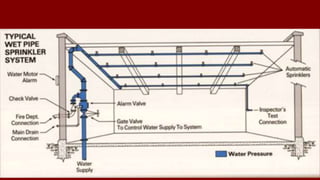
Wet-Pipe System
How system works?
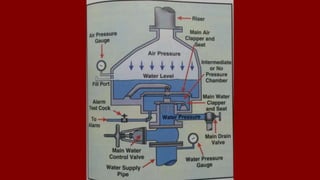
Dry-Pipe System
• water replaced by air under pressure
• air escapes first, valve opens
• air-pressure gauge above the valve; water
pressure gauge below
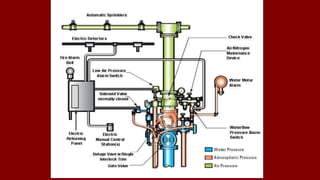
Preaction System
• dry system
• deluge-type valve, fire detection systems,
closed sprinklers
• system discharges only when smoke/heat
device is activated
Preaction System
Single-interlock
Double-interlock
Preaction System
VIDEO
Deluge System
• open heads
• deluge valve (specific to system sections)
• flame/heat/smoke detection devices
• manual device
Types of Sprinkler Heads
Identify what types of systems are in each building on the facility.
NFPA 13E
Fighting Fires In Sprinklered Buildings
Why sprinklers fail?
1. Closed valve in supply line.
2. Inadequate water supply to the system.
3. Occupancy changes that render system
ineffective.
How do we mitigate these risks?
Pre-incident Planning
1. Building construction, contents, layout
2. Water supply to system, source/type, flow/pressure,
duration of available supply
3. Location of control valves, area controlled,
consequence of shutting valve
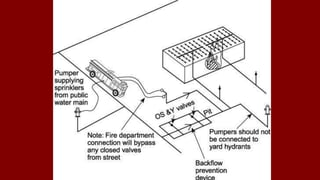
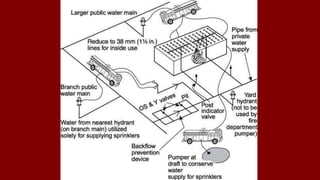
4. Location of FDC and layout to be used
5. Location of other water supplies
6. Alternate means of supplying water (damaged FDC)
7. Location of spare/replacement sprinklers
Fireground Operations
*Sprinkler system should not be shut down
1. supply system (150 psi)
Fireground Operations
*Sprinkler system should not be shut down
1. supply system (150 psi)
2. connect other hose streams (use different
source)
3. verify that water is flowing to system
4. If not- verify valves are open, verify pump
operation (make note of closed valves for
investigation)
Fireground Operations
5. If not- verify valves are open, verify pump
operation
6. Initiate ventilation procedures
7. Salvage covers deployed to protect
property
8. Undertake water removal procedures
Post-fire Operations
1. System should not be shut down until fire
extinguished.
2. Shut down sectional valve, not main system
3. Firefighter to remain at valve until overhaul
complete.
4. Shut down lines connected to FDC.
5. If only few opened heads, use wedges
Post-fire Operations
6. Conduct routine overhaul; initiate
investigation (notify fire prevention)
7. Disconnect hose lines
8. Contact sprinkler contractor; assist in
restoring system (building should not be
occupied until system restored)
9. Notify fire prevention.
Reports
• location of operating
sprinklers
• number of sprinkler
operating
• result of sprinkler
operation
• reason for
unsatisfactory operation
• employee assigned to
• did FD connect to
system
• unit that connected to
FDC
• number of lines used
• was water pumped into
system? how long?
what pressure?
• valve closed after fire
Reports
• number of sprinklers
replaced by fire dept.
• type of sprinklers
installed
• was system restored?
by whom?
• actions taken to restore
service
• did water supply
• fire prevention
personnel notified
• proper facilities
personnel notified
Exercise
Given a floor plan, walk through facility and
make note of sprinkler system components
and connections. Connect to FDC from truck,
to ensure proper operation.

Fighting Fires in Sprinklered Buildings

  • 1.
  • 2.
    Types of SprinklerSystems • Wet-Pipe • Dry-Pipe • Preaction • Deluge
  • 3.
  • 4.
    Dry-Pipe System • waterreplaced by air under pressure • air escapes first, valve opens • air-pressure gauge above the valve; water pressure gauge below
  • 6.
    Preaction System • drysystem • deluge-type valve, fire detection systems, closed sprinklers • system discharges only when smoke/heat device is activated
  • 8.
  • 9.
  • 10.
    Deluge System • openheads • deluge valve (specific to system sections) • flame/heat/smoke detection devices • manual device
  • 11.
  • 12.
    Identify what typesof systems are in each building on the facility.
  • 13.
    NFPA 13E Fighting FiresIn Sprinklered Buildings
  • 14.
    Why sprinklers fail? 1.Closed valve in supply line. 2. Inadequate water supply to the system. 3. Occupancy changes that render system ineffective. How do we mitigate these risks?
  • 15.
    Pre-incident Planning 1. Buildingconstruction, contents, layout 2. Water supply to system, source/type, flow/pressure, duration of available supply 3. Location of control valves, area controlled, consequence of shutting valve 4. Location of FDC and layout to be used 5. Location of other water supplies 6. Alternate means of supplying water (damaged FDC) 7. Location of spare/replacement sprinklers
  • 16.
    Fireground Operations *Sprinkler systemshould not be shut down 1. supply system (150 psi)
  • 19.
    Fireground Operations *Sprinkler systemshould not be shut down 1. supply system (150 psi) 2. connect other hose streams (use different source) 3. verify that water is flowing to system 4. If not- verify valves are open, verify pump operation (make note of closed valves for investigation)
  • 20.
    Fireground Operations 5. Ifnot- verify valves are open, verify pump operation 6. Initiate ventilation procedures 7. Salvage covers deployed to protect property 8. Undertake water removal procedures
  • 21.
    Post-fire Operations 1. Systemshould not be shut down until fire extinguished. 2. Shut down sectional valve, not main system 3. Firefighter to remain at valve until overhaul complete. 4. Shut down lines connected to FDC. 5. If only few opened heads, use wedges
  • 22.
    Post-fire Operations 6. Conductroutine overhaul; initiate investigation (notify fire prevention) 7. Disconnect hose lines 8. Contact sprinkler contractor; assist in restoring system (building should not be occupied until system restored) 9. Notify fire prevention.
  • 23.
    Reports • location ofoperating sprinklers • number of sprinkler operating • result of sprinkler operation • reason for unsatisfactory operation • employee assigned to • did FD connect to system • unit that connected to FDC • number of lines used • was water pumped into system? how long? what pressure? • valve closed after fire
  • 24.
    Reports • number ofsprinklers replaced by fire dept. • type of sprinklers installed • was system restored? by whom? • actions taken to restore service • did water supply • fire prevention personnel notified • proper facilities personnel notified
  • 25.
    Exercise Given a floorplan, walk through facility and make note of sprinkler system components and connections. Connect to FDC from truck, to ensure proper operation.