Hot Work Permits 
NFPA 1:41 and NFPA 51B
When is a permit required? 
➔welding 
➔heat treating 
➔grinding 
➔thawing pipe 
➔powder-driven 
fasteners 
➔hot riveting 
➔torch applied 
roofing (NFPA 1:16.6) 
➔similar applications 
causing spark, 
flame, heat
Non-permissible Areas 
➔unauthorized areas 
➔sprinklered 
buildings with 
impaired system 
➔explosive 
atmospheres 
➔in the presence of 
damaged or 
improperly stored 
equipment, tanks, 
containers 
➔combustible dusts
Program Manager Responsibility 
➔examine equipment for any defects 
➔determine the presence of flammable 
materials 
➔ensure fire protection and fire extinguishers 
are available 
➔maintain proper fire watch 
➔inspect area at least once per day and ½ 
hour after work is completed
Operators Responsibility 
➔get approval prior to starting hot work 
➔maintain all equipment in proper working 
condition 
➔shall cease work if unsafe condition 
develops 
➔shall notify proper authority (fire department) 
➔hot work area to be reassessed
Fire Watch Personnel Responsibility 
➔be aware of potential hazards and personnel 
➔maintain safe condition 
➔stop work if situation becomes unsafe 
➔have fire extinguishing equipment ready 
➔watch for fires in all exposed areas
Is a fire watch required? 
➔combustible material within 35’ of operation 
➔combustible materials easily ignited by 
sparks 
➔wall/floor openings expose combustibles 
➔combustibles adjacent to opposite side of 
wall/ceiling/floor and likely to be ignited
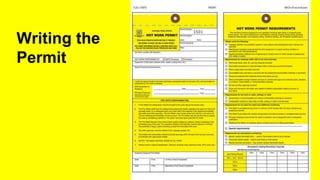
Writing the 
Permit
Writing the Permit 
➔general precautions 
➔within 35’ of hot work 
➔on walls, ceilings, or roofs 
➔on enclosed equipment 
➔fire watch requirements
Permit Process 
➔visit the site 
➔inspect equipment 
➔fill out permit 
➔leave permit card on-site 
➔retain top portion for permanent record 
➔retain middle portion as reminder, until work 
is complete and final site visit made
Why Hot Work Permits Matter

Conducting Hot Work Operations

  • 1.
    Hot Work Permits NFPA 1:41 and NFPA 51B
  • 2.
    When is apermit required? ➔welding ➔heat treating ➔grinding ➔thawing pipe ➔powder-driven fasteners ➔hot riveting ➔torch applied roofing (NFPA 1:16.6) ➔similar applications causing spark, flame, heat
  • 3.
    Non-permissible Areas ➔unauthorizedareas ➔sprinklered buildings with impaired system ➔explosive atmospheres ➔in the presence of damaged or improperly stored equipment, tanks, containers ➔combustible dusts
  • 4.
    Program Manager Responsibility ➔examine equipment for any defects ➔determine the presence of flammable materials ➔ensure fire protection and fire extinguishers are available ➔maintain proper fire watch ➔inspect area at least once per day and ½ hour after work is completed
  • 5.
    Operators Responsibility ➔getapproval prior to starting hot work ➔maintain all equipment in proper working condition ➔shall cease work if unsafe condition develops ➔shall notify proper authority (fire department) ➔hot work area to be reassessed
  • 6.
    Fire Watch PersonnelResponsibility ➔be aware of potential hazards and personnel ➔maintain safe condition ➔stop work if situation becomes unsafe ➔have fire extinguishing equipment ready ➔watch for fires in all exposed areas
  • 7.
    Is a firewatch required? ➔combustible material within 35’ of operation ➔combustible materials easily ignited by sparks ➔wall/floor openings expose combustibles ➔combustibles adjacent to opposite side of wall/ceiling/floor and likely to be ignited
  • 8.
  • 9.
    Writing the Permit ➔general precautions ➔within 35’ of hot work ➔on walls, ceilings, or roofs ➔on enclosed equipment ➔fire watch requirements
  • 10.
    Permit Process ➔visitthe site ➔inspect equipment ➔fill out permit ➔leave permit card on-site ➔retain top portion for permanent record ➔retain middle portion as reminder, until work is complete and final site visit made
  • 11.
    Why Hot WorkPermits Matter

Editor's Notes

  • #9 review permits and FM Global booklet. -work through checklist
  • #10 review permits and FM Global booklet. -work through checklist
  • #12 show CSB video