Feudalism in Europe
 After the Treaty of Verdun, Charlemagne's 
3 grandsons broke up the kingdom further 
 Part of the territory becomes battleground 
for attacks on Europe 
 This leads to a rise in feudalism: military 
and political system based on land 
ownership and personal loyalty
Invasions 
 Between 800-1000, invasions destroy the 
Carolingian empire 
 Muslims invade from the south 
 Magyars invade from the east 
 Vikings attack from the north
Living in Fear 
 Invasions of Vikings, Magyars and Muslims 
caused disorder and suffering 
 Europeans lived in fear and constant 
danger 
 Central authority proved powerless 
 Many turned to local lleeaaddeerrss wwiitthh tthheeiirr 
oowwnn aarrmmiieess
How It Began… 
 In 911, two former enemies faced each other in a 
peace ceremony. Rollo was the head of the 
Viking army and had been plundering the rich 
Seine River Valley for years. Charles the Simple 
was the king of France but held little power. 
Charles granted the Viking leader a huge piece of 
French territory, becoming known as Normandy. 
In return, Rollo placed his hands between the 
king’s hands and swore a pledge of loyalty.
A New Social Order 
 Worst years of invaders attacks were 850- 
950. 
 During this time, rulers and warriors made 
similar agreements in many parts of Europe 
 The system of governing and landholding 
called feudalism had emerged in Europe
Feudal M&M’s
Feudal System 
 Based on mutual obligations 
 A lord (landowner) granted land called a fief 
in exchange for military protection and 
other services 
 Person receiving the fief was a vassal 
 So, Charles the Simple was the lord, and 
Rollo would have been the vassal
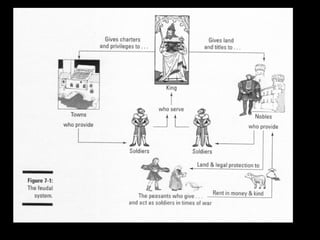
Feudalism 
(the pyramid) 
-The king- 
-Claimed ownership of 
land 
-Granted land to Lords 
(nobles) 
-Gave land to vassals if 
they fought for him 
1 
2 
-Lord 
(Noble)- 
-Could gain 
land from 
King 
-Could give 
and control 
land he got 
3 -Knight- 
-Was granted land 
by Lord (Noble) 
-Could live on land 
as long as they 
4 fought for the lord -Peasant- 
-Worked the land for 
little pay 
-Bottom of the 
pyramid
 The feudal system didn’t always work so 
simply 
 Relationships between lords and vassals 
weren’t always clear cut 
 The same noble might be a vassal to 
several different lords 
 Lords and vassals tried to use relationships 
to their own advantage
Social Classes 
 Status determined a person’s prestige and 
power 
 People were placed into 3 groups: 
1) Those who fought- nobles and knights 
2) Those who prayed- men and women of 
church 
3) Those who worked- the peasants 
 Social class was usually inherited
Serfs 
 Majority of people in Europe were peasants 
 Most peasants were serfs 
 Serfs were people who couldn’t lawfully 
leave the place where they were born 
 Even though they were bound to the land, 
they were not slaves 
 Lords could not buy or sell them
Manor 
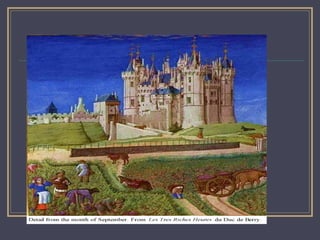
 The manor was the lords estate 
 The manor system was the basic economic 
arrangement 
 Lord provided the serfs and peasants with 
housing, strips of farmland and protection 
from bandits
Life on the Manor 
 Serfs tended the lords land, cared for his 
animals and maintained the estate 
 Peasant women shared the duties with her 
husband 
 Owed the lord certain duties like working 3- 
4 days, and portions of their grain
 Rare for peasants to travel more than 25 miles 
from manor in lifetime! 
 A manor usually covered a few square miles of 
land 
 Consisted of the lord’s manor house, a church 
and workshops 
 15-30 families lived in the village on the manor 
 Fields, pastures and forests surrounded the 
village
Map of a Manor
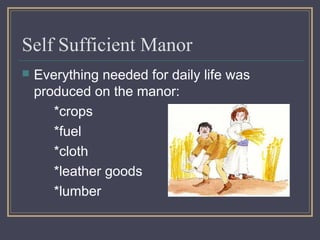
Self Sufficient Manor 
 Everything needed for daily life was 
produced on the manor: 
*crops 
*fuel 
*cloth 
*leather goods 
*lumber
 The only outside purchases were salt, iron 
and a few unusual objects like millstones-stones 
used to grind flour
Value of Peasants 
 https://www.youtube.com/watch?v=Lv0dKdhdRpM
Peasant Life on the Manor 
 Since it was considered a privilege to live on the 
manor, peasants paid a high price 
 Paid a tax on all grain ground on the lord’s mill 
 Was considered a crime to avoid paying taxes 
 Paid a tax on marriage- weddings could only take 
place with the lord’s consent 
 All peasant families had to pay a tithe (church tax) 
to the village priest (10% of income)
 Serfs and peasants lived in cottages with 
only 1 or 2 rooms 
 Would warm their dirt floor by bringing pigs 
inside 
 Families would huddle together on pile of 
straw crawling with insects to stay warm
Simple Diet 
 Peasant diets consisted of: 
*vegetables 
*coarse brown bread 
*grain 
*cheese 
*soup
Manorial Food 
 https://www.youtube.com/watch?v=Xff4Z5xMMro
 Serfs accepted their way of life, and viewed 
it as part of church teachings 
 Believed God determined a person’s place 
in society
Modern Feudalism? 
 https://www.youtube.com/watch?v=QHFJEtP2iI0
 http://www.youtube.com/watch?v=Bl12HA1ZmqI (peasant 
makeover) 
 http://www.youtube.com/watch?v=1gvRYHUxrhQ (viking wipe 
swap) 
 http://www.bbc.co.uk/history/ancient/vikings/launch_gms_viking_qu 
est.shtml 
 http://www.youtube.com/watch? 
v=8qSkaAwKMD4&feature=rellist&playnext=1&list=PL9351F1206C 
6AD31A (Viking band) 
 http://www.youtube.com/watch?v=AjRoJiz_6_U (Leif Ericson) 
 http://www.youtube.com/watch?v=VPDNjcN12Zw (viking feud) 
 http://www.youtube.com/watch?v=Ta3F0JBnEqY&feature=related 
(Viking food) 
 http://www.youtube.com/watch?v=kmrY7AgcrqA&feature=related 
(sell monks)

Feudalism

  • 1.
  • 2.
     After theTreaty of Verdun, Charlemagne's 3 grandsons broke up the kingdom further  Part of the territory becomes battleground for attacks on Europe  This leads to a rise in feudalism: military and political system based on land ownership and personal loyalty
  • 3.
    Invasions  Between800-1000, invasions destroy the Carolingian empire  Muslims invade from the south  Magyars invade from the east  Vikings attack from the north
  • 4.
    Living in Fear  Invasions of Vikings, Magyars and Muslims caused disorder and suffering  Europeans lived in fear and constant danger  Central authority proved powerless  Many turned to local lleeaaddeerrss wwiitthh tthheeiirr oowwnn aarrmmiieess
  • 5.
    How It Began…  In 911, two former enemies faced each other in a peace ceremony. Rollo was the head of the Viking army and had been plundering the rich Seine River Valley for years. Charles the Simple was the king of France but held little power. Charles granted the Viking leader a huge piece of French territory, becoming known as Normandy. In return, Rollo placed his hands between the king’s hands and swore a pledge of loyalty.
  • 6.
    A New SocialOrder  Worst years of invaders attacks were 850- 950.  During this time, rulers and warriors made similar agreements in many parts of Europe  The system of governing and landholding called feudalism had emerged in Europe
  • 7.
  • 8.
    Feudal System Based on mutual obligations  A lord (landowner) granted land called a fief in exchange for military protection and other services  Person receiving the fief was a vassal  So, Charles the Simple was the lord, and Rollo would have been the vassal
  • 9.
    Feudalism (the pyramid) -The king- -Claimed ownership of land -Granted land to Lords (nobles) -Gave land to vassals if they fought for him 1 2 -Lord (Noble)- -Could gain land from King -Could give and control land he got 3 -Knight- -Was granted land by Lord (Noble) -Could live on land as long as they 4 fought for the lord -Peasant- -Worked the land for little pay -Bottom of the pyramid
  • 12.
     The feudalsystem didn’t always work so simply  Relationships between lords and vassals weren’t always clear cut  The same noble might be a vassal to several different lords  Lords and vassals tried to use relationships to their own advantage
  • 13.
    Social Classes Status determined a person’s prestige and power  People were placed into 3 groups: 1) Those who fought- nobles and knights 2) Those who prayed- men and women of church 3) Those who worked- the peasants  Social class was usually inherited
  • 14.
    Serfs  Majorityof people in Europe were peasants  Most peasants were serfs  Serfs were people who couldn’t lawfully leave the place where they were born  Even though they were bound to the land, they were not slaves  Lords could not buy or sell them
  • 15.
    Manor  Themanor was the lords estate  The manor system was the basic economic arrangement  Lord provided the serfs and peasants with housing, strips of farmland and protection from bandits
  • 18.
    Life on theManor  Serfs tended the lords land, cared for his animals and maintained the estate  Peasant women shared the duties with her husband  Owed the lord certain duties like working 3- 4 days, and portions of their grain
  • 19.
     Rare forpeasants to travel more than 25 miles from manor in lifetime!  A manor usually covered a few square miles of land  Consisted of the lord’s manor house, a church and workshops  15-30 families lived in the village on the manor  Fields, pastures and forests surrounded the village
  • 20.
    Map of aManor
  • 21.
    Self Sufficient Manor  Everything needed for daily life was produced on the manor: *crops *fuel *cloth *leather goods *lumber
  • 22.
     The onlyoutside purchases were salt, iron and a few unusual objects like millstones-stones used to grind flour
  • 23.
    Value of Peasants  https://www.youtube.com/watch?v=Lv0dKdhdRpM
  • 24.
    Peasant Life onthe Manor  Since it was considered a privilege to live on the manor, peasants paid a high price  Paid a tax on all grain ground on the lord’s mill  Was considered a crime to avoid paying taxes  Paid a tax on marriage- weddings could only take place with the lord’s consent  All peasant families had to pay a tithe (church tax) to the village priest (10% of income)
  • 25.
     Serfs andpeasants lived in cottages with only 1 or 2 rooms  Would warm their dirt floor by bringing pigs inside  Families would huddle together on pile of straw crawling with insects to stay warm
  • 26.
    Simple Diet Peasant diets consisted of: *vegetables *coarse brown bread *grain *cheese *soup
  • 27.
    Manorial Food https://www.youtube.com/watch?v=Xff4Z5xMMro
  • 28.
     Serfs acceptedtheir way of life, and viewed it as part of church teachings  Believed God determined a person’s place in society
  • 30.
    Modern Feudalism? https://www.youtube.com/watch?v=QHFJEtP2iI0
  • 31.
     http://www.youtube.com/watch?v=Bl12HA1ZmqI (peasant makeover)  http://www.youtube.com/watch?v=1gvRYHUxrhQ (viking wipe swap)  http://www.bbc.co.uk/history/ancient/vikings/launch_gms_viking_qu est.shtml  http://www.youtube.com/watch? v=8qSkaAwKMD4&feature=rellist&playnext=1&list=PL9351F1206C 6AD31A (Viking band)  http://www.youtube.com/watch?v=AjRoJiz_6_U (Leif Ericson)  http://www.youtube.com/watch?v=VPDNjcN12Zw (viking feud)  http://www.youtube.com/watch?v=Ta3F0JBnEqY&feature=related (Viking food)  http://www.youtube.com/watch?v=kmrY7AgcrqA&feature=related (sell monks)