The Making of Medieval
       Europe
        Chapter 8
         Part 2
EMPIRE OF CHARLEMAGNE
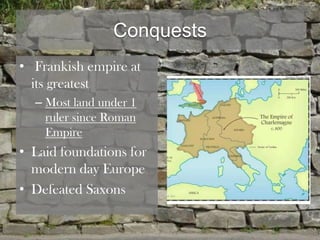
Conquests
• Frankish empire at
  its greatest
  – Most land under 1
    ruler since Roman
    Empire
• Laid foundations for
  modern day Europe
• Defeated Saxons
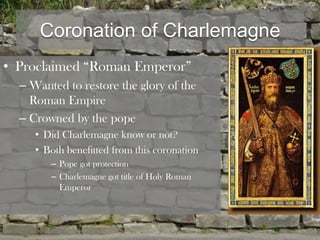
Coronation of Charlemagne
• Proclaimed “Roman Emperor”
  – Wanted to restore the glory of the
    Roman Empire
  – Crowned by the pope
     • Did Charlemagne know or not?
     • Both benefitted from this coronation
        – Pope got protection
        – Charlemagne got title of Holy Roman
          Emperor
• Charlemagne loved learning and promoted
  education
• Aachen = center of learning with best scholars in
  Europe
  – Alcuin- most distinguished scholar
     • From York, England
• * What other ruler was taught by best scholar in
  the land?
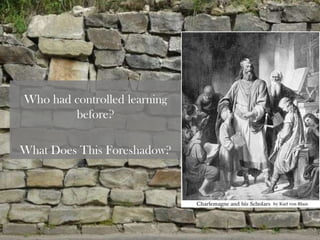
Who had controlled learning
        before?

What Does This Foreshadow?
Learning in the Church
• Charlemagne encouraged clergy to study Bible
  more
• Renewed interest in Bible and classical texts
• * Preservation of them
• Monasteries = print houses, libraries
  – Study, copy, preserve ancient texts
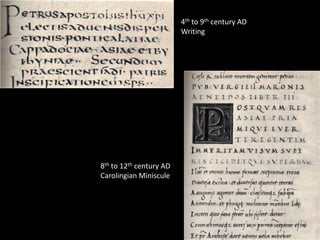
  – Carolingian miniscule was developed out of need for
    smaller more compact print
     • Shortage of material to write on
4th to 9th century AD
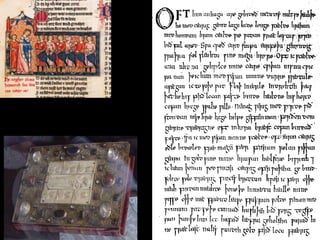
                         Writing


8th to 12th century AD
Carolingian Miniscule
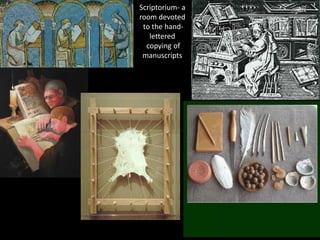
Scriptorium- a
room devoted
 to the hand-
   lettered
  copying of
 manuscripts
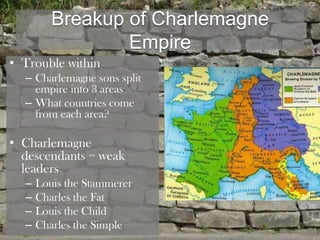
Breakup of Charlemagne
                 Empire
• Trouble within
  – Charlemagne sons split
    empire into 3 areas
  – What countries come
    from each area?

• Charlemagne
  descendants = weak
  leaders
  –   Louis the Stammerer
  –   Charles the Fat
  –   Louis the Child
  –   Charles the Simple
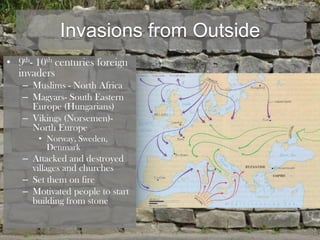
Invasions from Outside
• 9th- 10th centuries foreign
  invaders
   – Muslims - North Africa
   – Magyars- South Eastern
     Europe (Hungarians)
   – Vikings (Norsemen)-
     North Europe
       • Norway, Sweden,
         Denmark
   – Attacked and destroyed
     villages and churches
   – Set them on fire
   – Motivated people to start
     building from stone
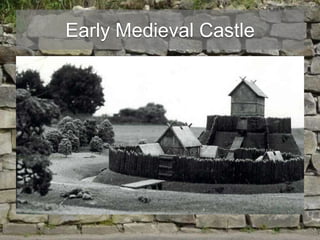
Early Medieval Castle
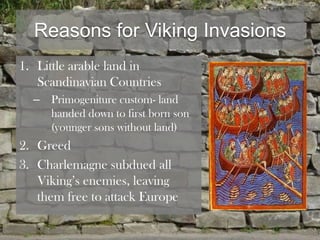
Reasons for Viking Invasions
1. Little arable land in
   Scandinavian Countries
  – Primogeniture custom- land
    handed down to first born son
    (younger sons without land)
2. Greed
3. Charlemagne subdued all
   Viking’s enemies, leaving
   them free to attack Europe
Feudalism
• 9th to 13th centuries (800s- 1200s)
• Powerful nobles replaced weak ineffective kings
  – Noble - peasants protection
  – Peasants worked noble
  – Provided relative order in this chaotic time
  – King granted land to nobles in exchange for military
    service (fief)
     • Noble DID NOT own the land, just kept it as payment
       for his services
Relationship
  s
• Feudalism based on =
  relation between lord and vassal
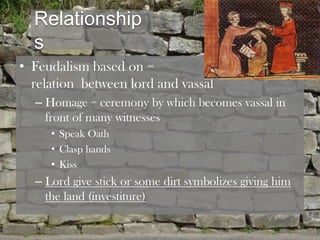
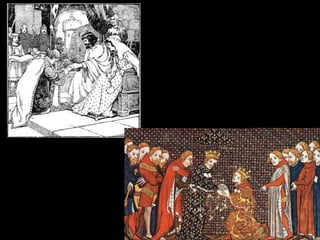
  – Homage = ceremony by which becomes vassal in
    front of many witnesses
     • Speak Oath
     • Clasp hands
     • Kiss
  – Lord give stick or some dirt symbolizes giving him
    the land (investiture)
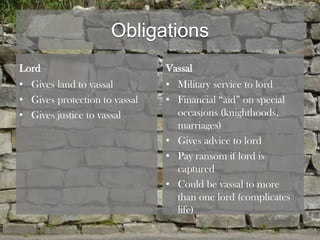
Obligations
Lord                           Vassal
• Gives land to vassal         • Military service to lord
• Gives protection to vassal   • Financial “aid” on special
• Gives justice to vassal        occasions (knighthoods,
                                 marriages)
                               • Gives advice to lord
                               • Pay ransom if lord is
                                 captured
                               • Could be vassal to more
                                 than one lord (complicates
                                 life)
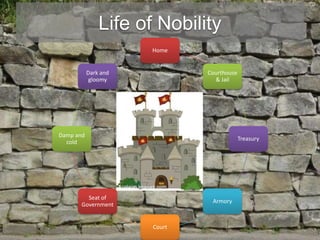
Life of Nobility
                      Home


           Dark and           Courthouse
            gloomy              & Jail


Damp and
                                           Treasury
  cold


         Seat of
                               Armory
       Government


                      Court
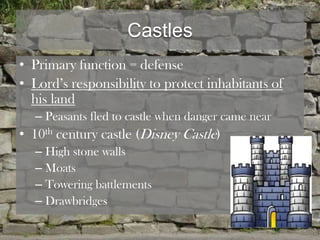
Castles
• Primary function = defense
• Lord’s responsibility to protect inhabitants of
  his land
  – Peasants fled to castle when danger came near
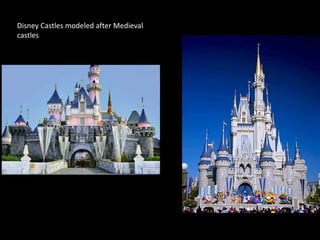
• 10th century castle (Disney Castle)
  – High stone walls
  – Moats
  – Towering battlements
  – Drawbridges
Disney Castles modeled after Medieval
castles
Knighthood
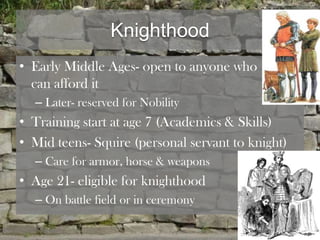
• Early Middle Ages- open to anyone who
  can afford it
  – Later- reserved for Nobility
• Training start at age 7 (Academics & Skills)
• Mid teens- Squire (personal servant to knight)
  – Care for armor, horse & weapons
• Age 21- eligible for knighthood
  – On battle field or in ceremony
Code of Chivalry
• Knight promised to live by strict code of behavior
   –   Brave in battle
   –   Skillful with weapons
   –   Honest and generous
   –   Loyal to lord
   –   Never attack unarmed knight
   –   Churched added spiritual responsibility to code of
       chivalry (protect church & venerate priesthood)
        • Peace of God = forbade pillaging of church property
        • Protection to non combatant people
•What is a skill that you
 used to have a long time
 ago but now you don’t
 have it anymore?
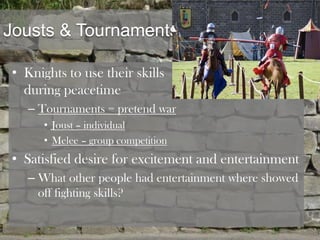
Jousts & Tournaments

• Knights to use their skills
  during peacetime
   – Tournaments = pretend war
      • Joust – individual
      • Melee – group competition
• Satisfied desire for excitement and entertainment
   – What other people had entertainment where showed
     off fighting skills?
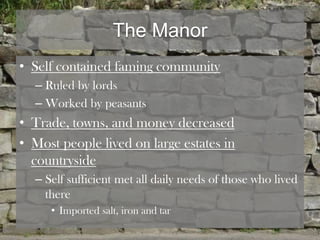
The Manor
• Self contained faming community
  – Ruled by lords
  – Worked by peasants
• Trade, towns, and money decreased
• Most people lived on large estates in
  countryside
  – Self sufficient met all daily needs of those who lived
    there
     • Imported salt, iron and tar
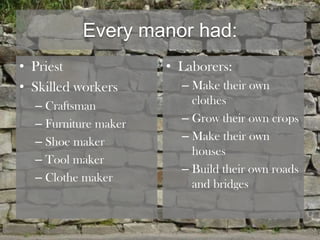
Every manor had:
• Priest              • Laborers:
• Skilled workers       – Make their own
  – Craftsman             clothes
  – Furniture maker     – Grow their own crops
  – Shoe maker          – Make their own
                          houses
  – Tool maker
                        – Build their own roads
  – Clothe maker
                          and bridges
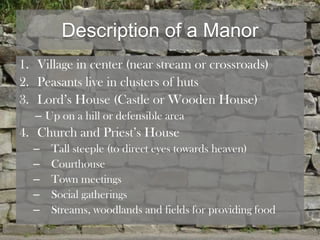
Description of a Manor
1. Village in center (near stream or crossroads)
2. Peasants live in clusters of huts
3. Lord’s House (Castle or Wooden House)
   – Up on a hill or defensible area
4. Church and Priest’s House
  –   Tall steeple (to direct eyes towards heaven)
  –   Courthouse
  –   Town meetings
  –   Social gatherings
  –   Streams, woodlands and fields for providing food
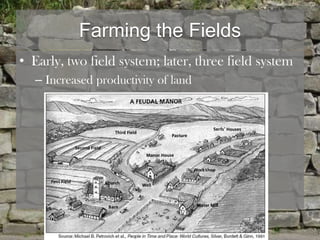
Farming the Fields
• Early, two field system; later, three field system
   – Increased productivity of land
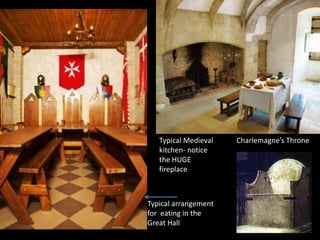
Typical Medieval   Charlemagne’s Throne
   kitchen- notice
   the HUGE
   fireplace


Typical arrangement
for eating in the
Great Hall
People
• Class structure:
  – Clergy- spiritual needs
  – Nobility- protection and justice
  – Peasants- produce food
  – * Freemen = peasants with specialized skills
     •   Blacksmith
     •   Miller
     •   Carpenter
     •   Did not have to work the lord’s land
     •   Could leave and move elsewhere
Serf
• Had use of land from Lord
  – Could grow food and provide for his family
• Tied to the land
  – could not leave without permission of lord
• Had to work on lord’s portion of the land (demesne)
  –   Plow, sow, and harvest
  –   Gather hay & care for lord’s cattle
  –   Build fences, clear woodlands, etc. (week work)
  –   Most peasants never left the manor land
       • Not further than 25 miles away from home
Daily Life


            Famines    Feudal
Poverty &                        Strenuous
             & Poor    Wars &
 Misery                            Labor
              Diet    Invasion

Chapter8 Part 2- Charlemagne & Vikings & Feudalism

  • 1.
    The Making ofMedieval Europe Chapter 8 Part 2
  • 2.
  • 3.
    Conquests • Frankish empireat its greatest – Most land under 1 ruler since Roman Empire • Laid foundations for modern day Europe • Defeated Saxons
  • 4.
    Coronation of Charlemagne •Proclaimed “Roman Emperor” – Wanted to restore the glory of the Roman Empire – Crowned by the pope • Did Charlemagne know or not? • Both benefitted from this coronation – Pope got protection – Charlemagne got title of Holy Roman Emperor
  • 5.
    • Charlemagne lovedlearning and promoted education • Aachen = center of learning with best scholars in Europe – Alcuin- most distinguished scholar • From York, England • * What other ruler was taught by best scholar in the land?
  • 6.
    Who had controlledlearning before? What Does This Foreshadow?
  • 7.
    Learning in theChurch • Charlemagne encouraged clergy to study Bible more • Renewed interest in Bible and classical texts • * Preservation of them • Monasteries = print houses, libraries – Study, copy, preserve ancient texts – Carolingian miniscule was developed out of need for smaller more compact print • Shortage of material to write on
  • 8.
    4th to 9thcentury AD Writing 8th to 12th century AD Carolingian Miniscule
  • 9.
    Scriptorium- a room devoted to the hand- lettered copying of manuscripts
  • 11.
    Breakup of Charlemagne Empire • Trouble within – Charlemagne sons split empire into 3 areas – What countries come from each area? • Charlemagne descendants = weak leaders – Louis the Stammerer – Charles the Fat – Louis the Child – Charles the Simple
  • 12.
    Invasions from Outside •9th- 10th centuries foreign invaders – Muslims - North Africa – Magyars- South Eastern Europe (Hungarians) – Vikings (Norsemen)- North Europe • Norway, Sweden, Denmark – Attacked and destroyed villages and churches – Set them on fire – Motivated people to start building from stone
  • 13.
  • 14.
    Reasons for VikingInvasions 1. Little arable land in Scandinavian Countries – Primogeniture custom- land handed down to first born son (younger sons without land) 2. Greed 3. Charlemagne subdued all Viking’s enemies, leaving them free to attack Europe
  • 15.
    Feudalism • 9th to13th centuries (800s- 1200s) • Powerful nobles replaced weak ineffective kings – Noble - peasants protection – Peasants worked noble – Provided relative order in this chaotic time – King granted land to nobles in exchange for military service (fief) • Noble DID NOT own the land, just kept it as payment for his services
  • 16.
    Relationship s •Feudalism based on = relation between lord and vassal – Homage = ceremony by which becomes vassal in front of many witnesses • Speak Oath • Clasp hands • Kiss – Lord give stick or some dirt symbolizes giving him the land (investiture)
  • 18.
    Obligations Lord Vassal • Gives land to vassal • Military service to lord • Gives protection to vassal • Financial “aid” on special • Gives justice to vassal occasions (knighthoods, marriages) • Gives advice to lord • Pay ransom if lord is captured • Could be vassal to more than one lord (complicates life)
  • 19.
    Life of Nobility Home Dark and Courthouse gloomy & Jail Damp and Treasury cold Seat of Armory Government Court
  • 20.
    Castles • Primary function= defense • Lord’s responsibility to protect inhabitants of his land – Peasants fled to castle when danger came near • 10th century castle (Disney Castle) – High stone walls – Moats – Towering battlements – Drawbridges
  • 21.
    Disney Castles modeledafter Medieval castles
  • 22.
    Knighthood • Early MiddleAges- open to anyone who can afford it – Later- reserved for Nobility • Training start at age 7 (Academics & Skills) • Mid teens- Squire (personal servant to knight) – Care for armor, horse & weapons • Age 21- eligible for knighthood – On battle field or in ceremony
  • 23.
    Code of Chivalry •Knight promised to live by strict code of behavior – Brave in battle – Skillful with weapons – Honest and generous – Loyal to lord – Never attack unarmed knight – Churched added spiritual responsibility to code of chivalry (protect church & venerate priesthood) • Peace of God = forbade pillaging of church property • Protection to non combatant people
  • 24.
    •What is askill that you used to have a long time ago but now you don’t have it anymore?
  • 25.
    Jousts & Tournaments •Knights to use their skills during peacetime – Tournaments = pretend war • Joust – individual • Melee – group competition • Satisfied desire for excitement and entertainment – What other people had entertainment where showed off fighting skills?
  • 26.
    The Manor • Selfcontained faming community – Ruled by lords – Worked by peasants • Trade, towns, and money decreased • Most people lived on large estates in countryside – Self sufficient met all daily needs of those who lived there • Imported salt, iron and tar
  • 27.
    Every manor had: •Priest • Laborers: • Skilled workers – Make their own – Craftsman clothes – Furniture maker – Grow their own crops – Shoe maker – Make their own houses – Tool maker – Build their own roads – Clothe maker and bridges
  • 28.
    Description of aManor 1. Village in center (near stream or crossroads) 2. Peasants live in clusters of huts 3. Lord’s House (Castle or Wooden House) – Up on a hill or defensible area 4. Church and Priest’s House – Tall steeple (to direct eyes towards heaven) – Courthouse – Town meetings – Social gatherings – Streams, woodlands and fields for providing food
  • 29.
    Farming the Fields •Early, two field system; later, three field system – Increased productivity of land
  • 30.
    Typical Medieval Charlemagne’s Throne kitchen- notice the HUGE fireplace Typical arrangement for eating in the Great Hall
  • 32.
    People • Class structure: – Clergy- spiritual needs – Nobility- protection and justice – Peasants- produce food – * Freemen = peasants with specialized skills • Blacksmith • Miller • Carpenter • Did not have to work the lord’s land • Could leave and move elsewhere
  • 33.
    Serf • Had useof land from Lord – Could grow food and provide for his family • Tied to the land – could not leave without permission of lord • Had to work on lord’s portion of the land (demesne) – Plow, sow, and harvest – Gather hay & care for lord’s cattle – Build fences, clear woodlands, etc. (week work) – Most peasants never left the manor land • Not further than 25 miles away from home
  • 34.
    Daily Life Famines Feudal Poverty & Strenuous & Poor Wars & Misery Labor Diet Invasion

Editor's Notes

  • #2 ----- Meeting Notes (11/12/12 18:47) -----Called "Middle Ages" because it was between - Roman Empire- RenaissanceWhich were two periods in history with much accomplishments in:-culture-artistic -scientific-political
  • #4 Hello here I am
  • #5 Charlemagne was about 60 years oldHad already been in power for over 3 decades
  • #6 Alexander the Great vs. CharlemagneBoth trained by leading scholars in countryBoth loved learning and promoted it in his empireBoth had good fathers- good rulers military successfulBoth conquered and controlled great amount of land for their timeBoth left their land in sections to their followersAlexander the Great was younger when started learningAlexander the Great – Eastern EmpireCharlemagne- Western Empire
  • #7 Church had controlled all learning Foreshadows learning will take a secular turn in the renaissance
  • #8 Papyrus not available anymore because Muslims took over EgyptHides were expensive and hard to get
  • #15 SIGNIFICANCE = Managed to throw Europe BACK into dark agesIt had a mini renaissance under Charlemagne’s reignTHEY KNEW where to attack = Churches and Cities This is where the plunder was the bestSETTLETRADERAIDTO STOP Vikings they had to built fortifications
  • #16 Land = wealth and power
  • #17 What other ceremony does this remind you of?
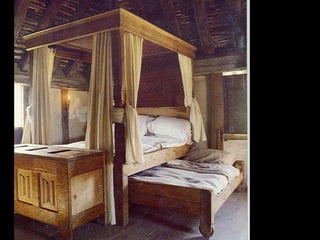
  • #32 Notice the lack of ornamentation on wood workDrapes help keep the cold out in winterRoll away bed for whoever had the honor of sleeping with the nobleFurniture came apart for travel purposesChest at bottom of bed for clothing
  • #35 1/3 of all died before the age of 5