GENETICS AND DEVELOPMENTAL BIOLOGY
U.Monika
I-M.Sc Bio-Chemistry
INTRODUCTION
The fusion between egg and sperm
involves a number of different steps.
The egg and sperm must first be
brought together , which involves a
combination of passive movement and active
motility on the part of the sperm.
Once the gametes are together , they
must recognize each other and make contact.
A complex interaction between the
male and female gametes to form a zygote.
Normally occurs in the ampulla of
uterine tubes within 24hrs after ovulation.
TYPES OF FERTILIZATION
1. External Fertilization
2. Internal Fertilization
TYPES OF FERTILIZATION
1. EXTERNAL
FERTILIZATION
2. INTERNAL
FERTILIZATION
EXTERNAL FERTILIZATION
Occurs when both sperm and eggs are
deposited into the water.
There is the addicted complication
that the gametes of many species mix together.
In external fertilization , large number
of both gametes available , although more sperm
than eggs.
Ex : FISHES , AMPHIBIANS..
INTERNAL FERTILIZATION
Occurs when the egg is retained in
the body of female , the sperm are deposited
there by the male .
In internal fertilization , there are
very often very few eggs , but large number of
sperms .
Ex : HUMANS , DOGS , CATS..
IMPORTANT EVENTS
1. Transport of Oocyte (female gamete)
2. Transport of Sperm
3. Acrosome reaction
TRANSPORT OF OOCYTE
TRANSPORT OF SPERM
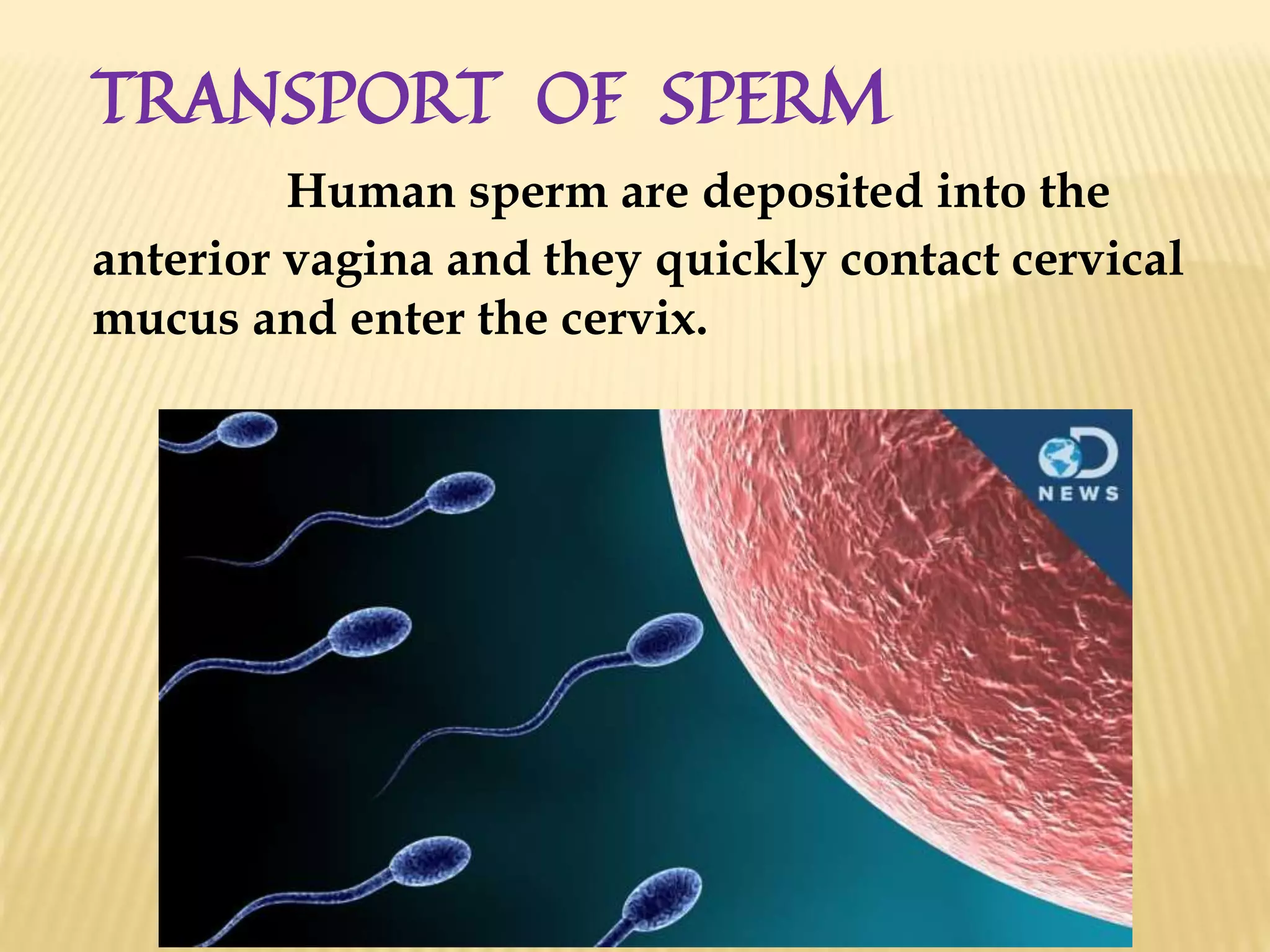
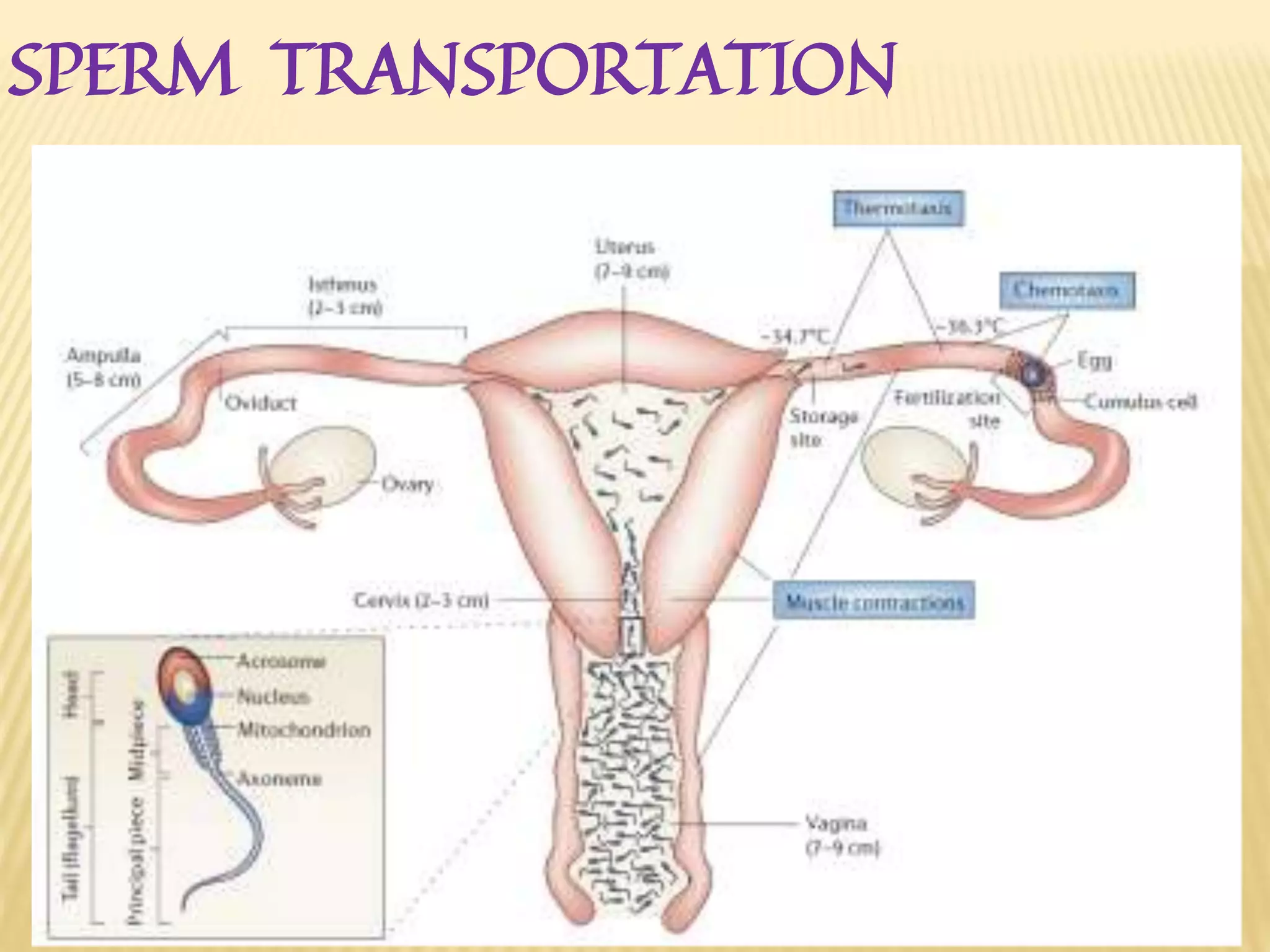
Human sperm are deposited into the
anterior vagina and they quickly contact cervical
mucus and enter the cervix.
SPERM TRANSPORTATION
REACTION OF ACROSOME
The acrosome reaction is a crucial
step during gamete interaction in all species,
including man.
It allows spermatozoa to penetrate
the zona pellucida and fuse with the oocyte
membrane.
Spermatozoa unable to undergo
the acrosome reaction will not fertilize intact
oocytes.
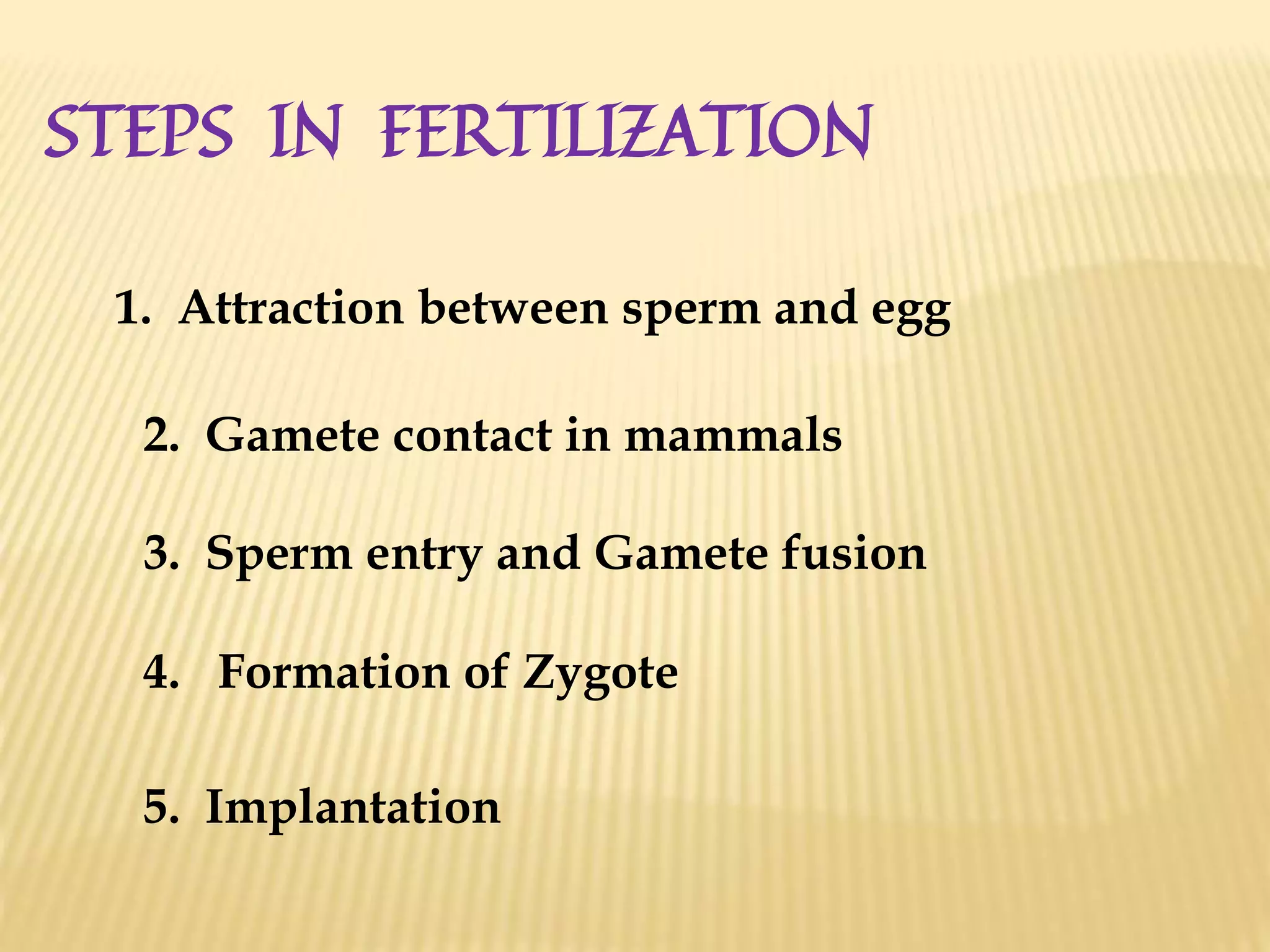
STEPS IN FERTILIZATION
1. Attraction between sperm and egg
2. Gamete contact in mammals
3. Sperm entry and Gamete fusion
4. Formation of Zygote
5. Implantation
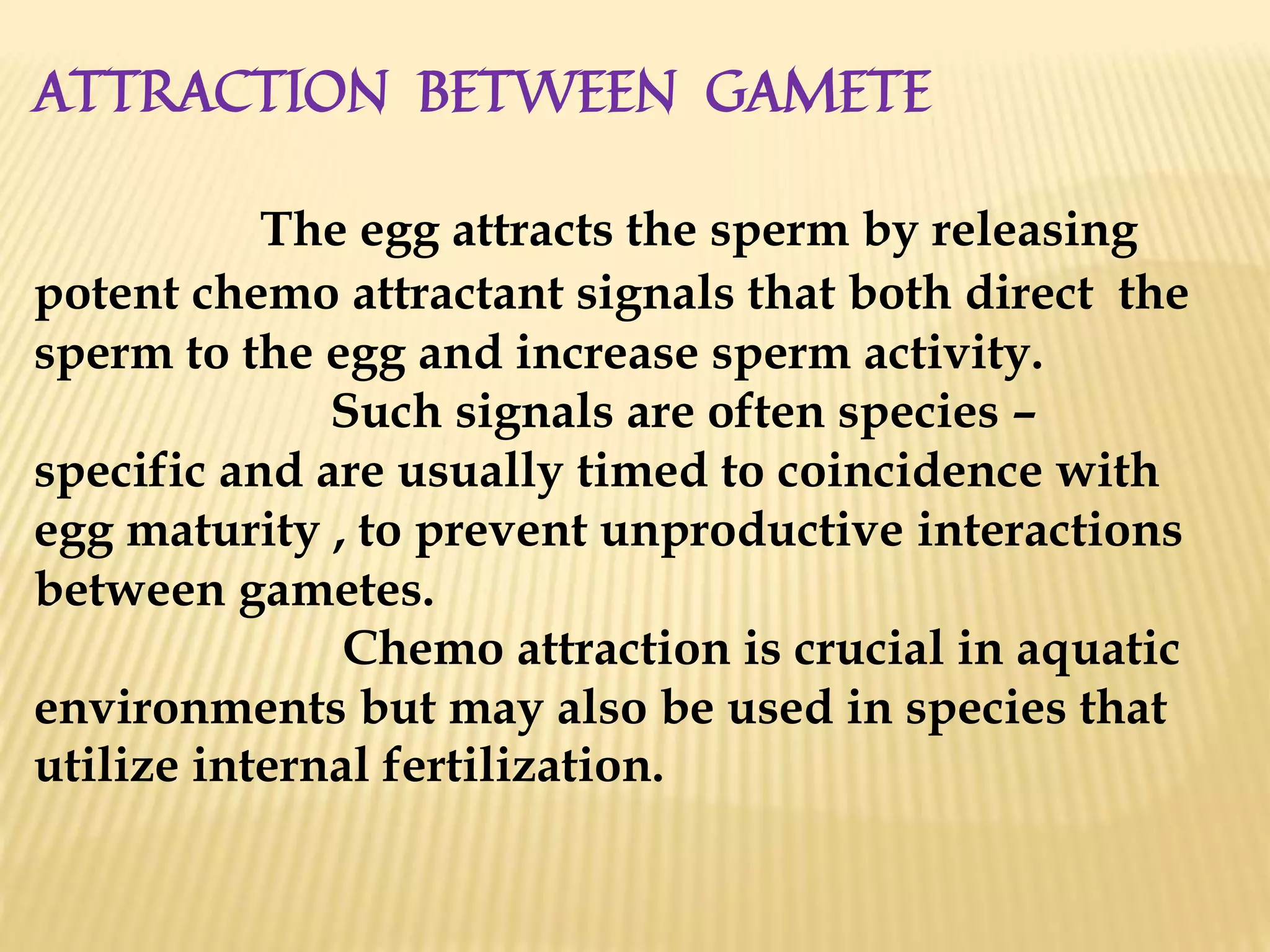
ATTRACTION BETWEEN GAMETE
The egg attracts the sperm by releasing
potent chemo attractant signals that both direct the
sperm to the egg and increase sperm activity.
Such signals are often species –
specific and are usually timed to coincidence with
egg maturity , to prevent unproductive interactions
between gametes.
Chemo attraction is crucial in aquatic
environments but may also be used in species that
utilize internal fertilization.
GAMETE CONTACT
In mammals , surface properties of the
sperm membrane must be modified in order for
the sperm to interact with the zona pellucida , a
process termed capacitation.
Interaction with the zona pellucida
induces the acrosomes reaction and the sperm can
penetrate this layer and contact the membrane.
CAPACITATION
SPERM ENTRY
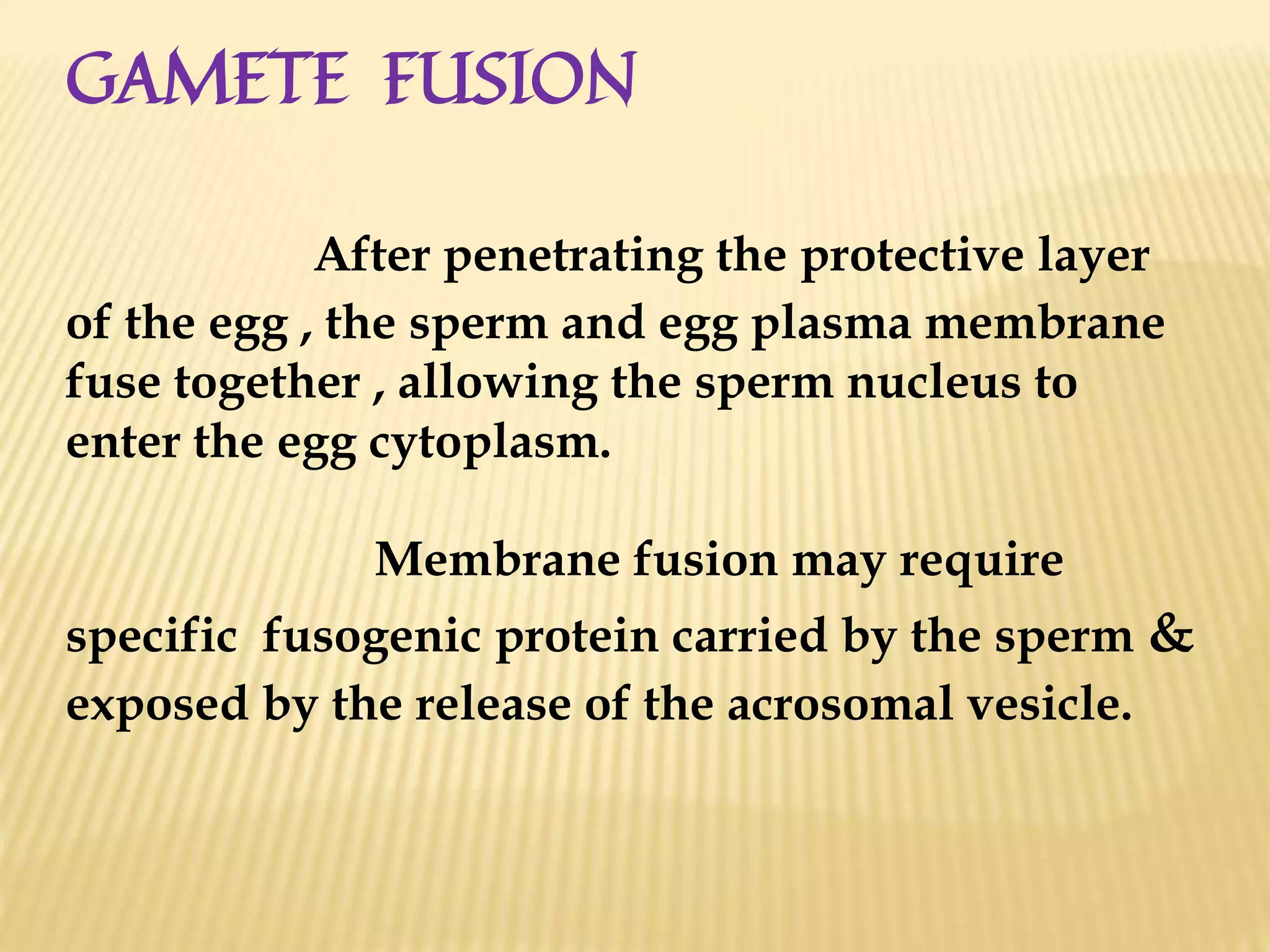
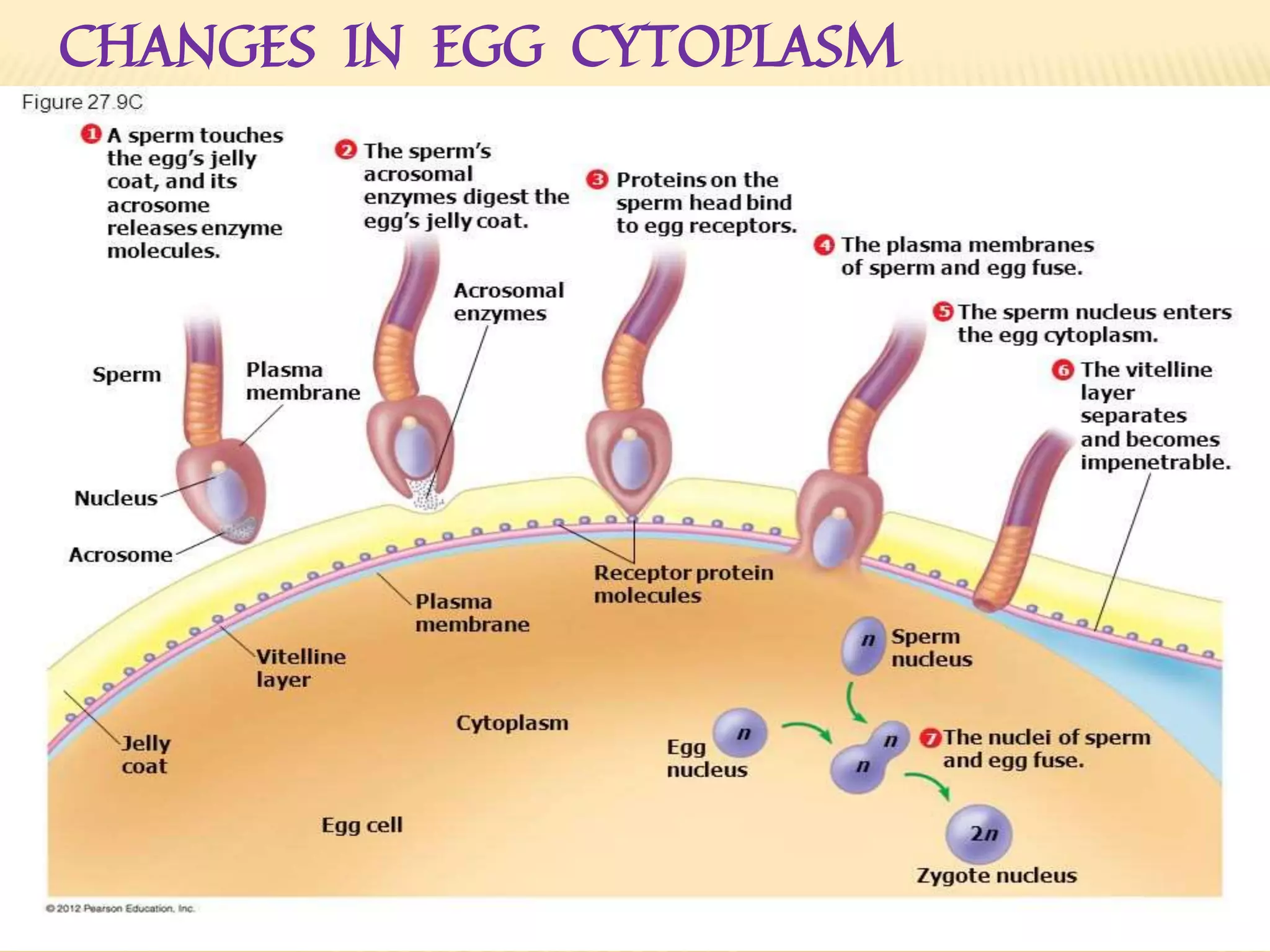
GAMETE FUSION
After penetrating the protective layer
of the egg , the sperm and egg plasma membrane
fuse together , allowing the sperm nucleus to
enter the egg cytoplasm.
Membrane fusion may require
specific fusogenic protein carried by the sperm &
exposed by the release of the acrosomal vesicle.
CHANGES IN EGG CYTOPLASM
ZYGOTE
After entry , most of the sperm breaks down
, leaving the nucleus and centriole.
The nucleus decondenses and the
centriole initiate an aster of microtubules that
contact the egg nucleus.
Depends on the species , fusion may
occur immediately or may require the completion of
meiosis by the egg nucleus.
HORMONES INVOLVED
a) FOLLICLE STIMULATING HORMONE
a) LEUTINIZING HORMONE
a) OXYTOCIN
a) TESTOSTERONE
a) OESTROGEN
a) PROGESTERONE
Sex hormones are responsible for
driving sexual development (puberty).
The main reproductive hormones
are oestrogen and testosterone.
Oestrogen causes eggs to mature in
ovaries once a girl hits puberty.
These are then released at regular
intervals during the menstrual cycle.
Testosterone stimulates sperm
production in males.
Other hormones include:
Follicle stimulating hormone (FSH), causing
maturation of an egg in the ovary.
Luteinising hormone (LH) stimulating the release
of the egg.
Oestrogen and progesterone are involved in
maintaining the uterus lining.
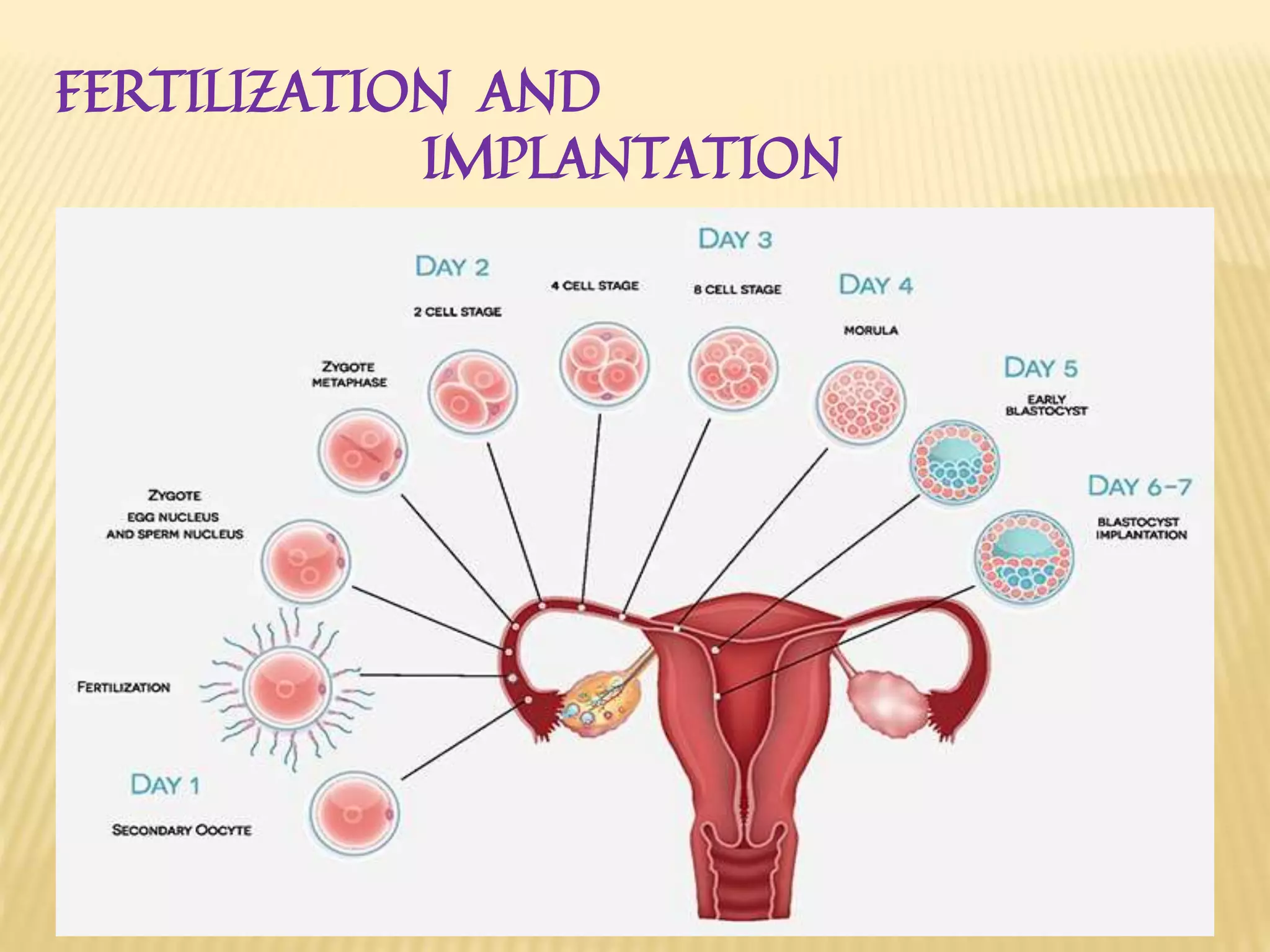
IMPLANTATION
In humans, implantation is the stage of
pregnancy at which the embryo adheres to the wall
of the uterus.
At this stage of prenatal development, the
conceptus is called a blastocyst.
It is by this adhesion that the embryo
receives oxygen and nutrients from the mother to be
able to grow
FERTILIZATION AND
IMPLANTATION
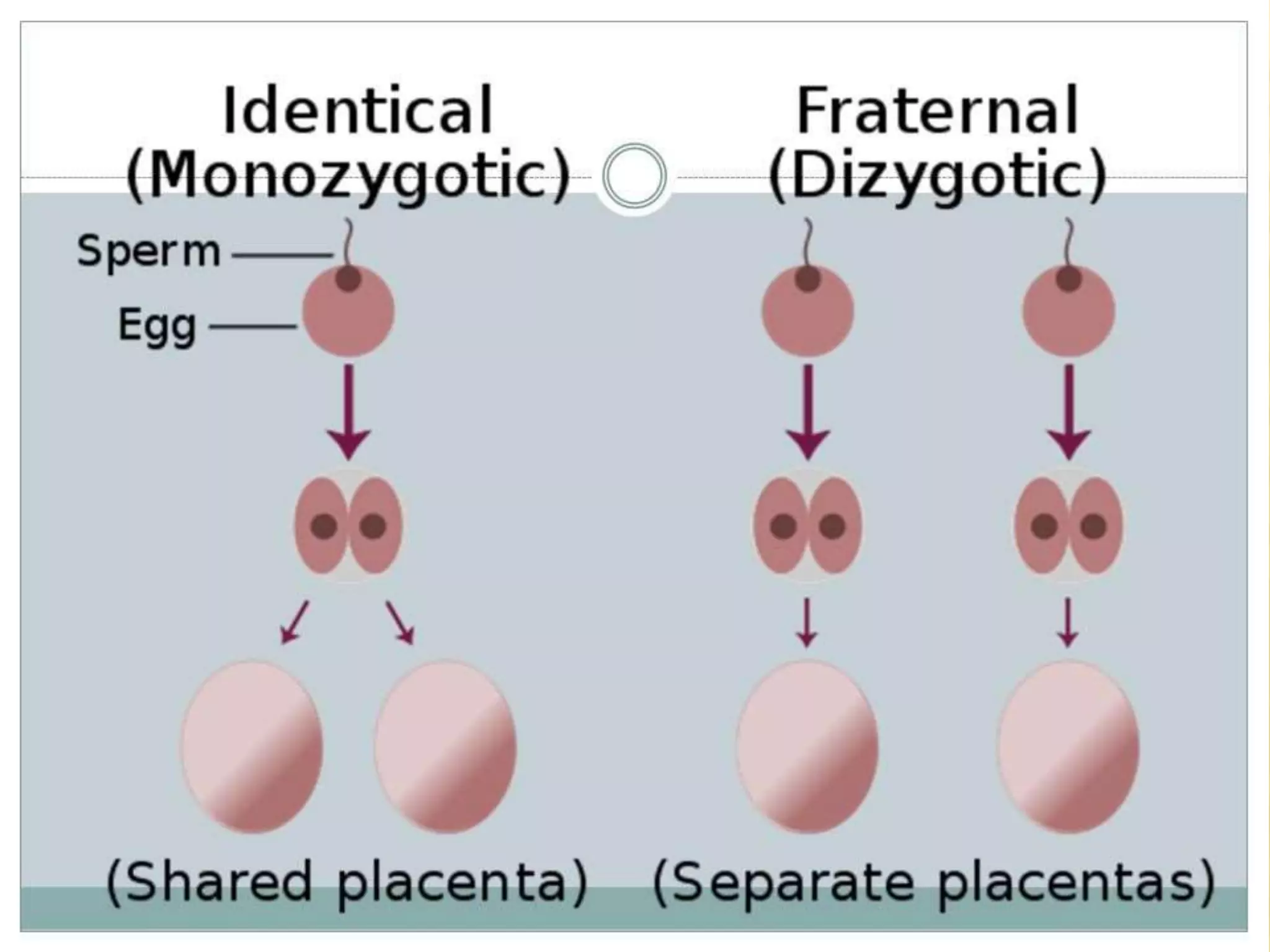
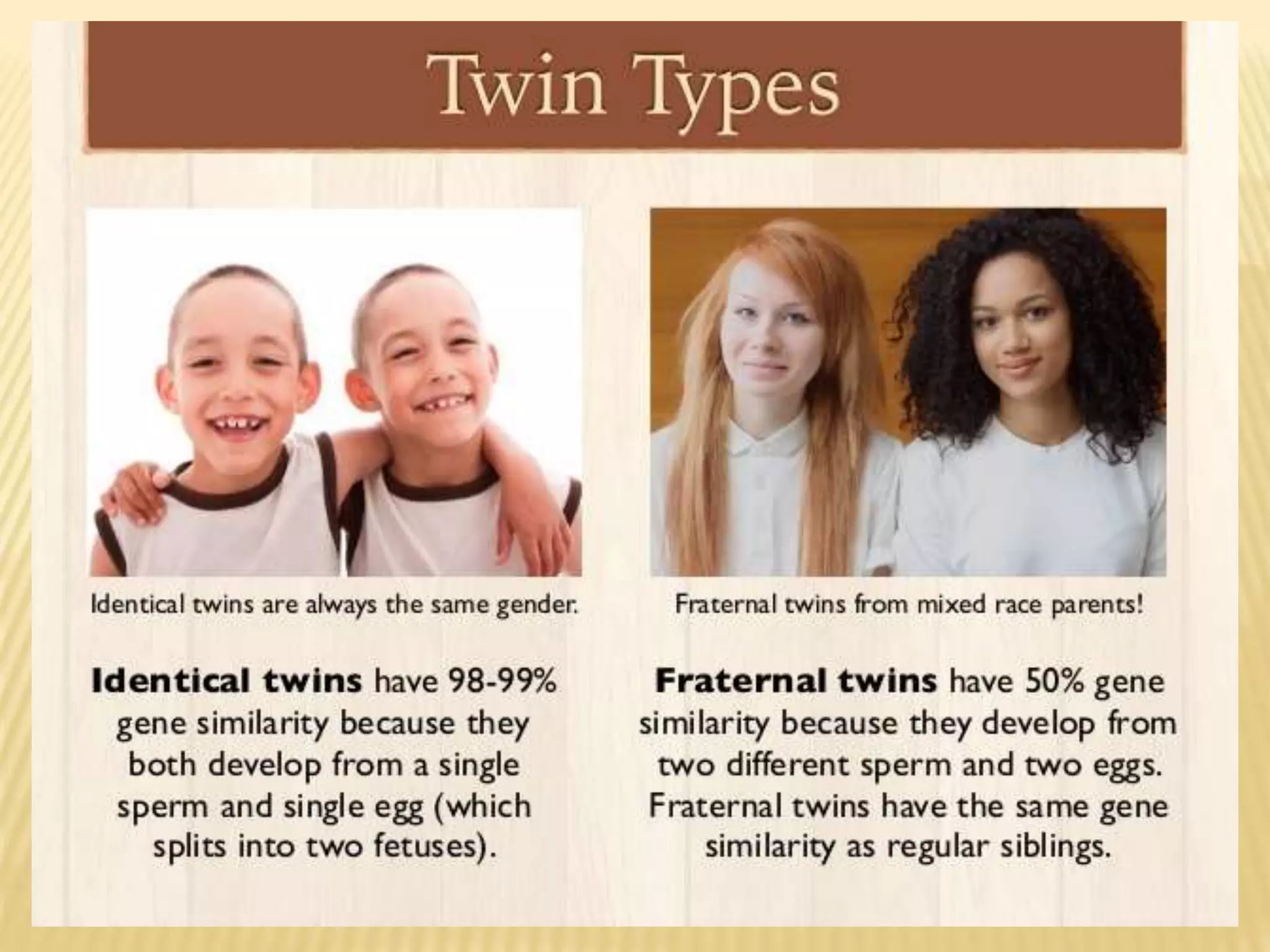
FORMATION OF TWIN
To form identical or
monozygotic twins , one fertilized egg (ovum)
splits and develops into two babies with exactly
the same genetic information.
To form fraternal or
dizygotic twins , two eggs (ova) are fertilized by
two sperm and produce two genetically unique
children.
CONCLUSION
Human fertilization is the union of a egg
and sperm , usually occuring in the ampulla of the
fallopian tube . The result of this union is the
production of a zygote cell , or fertilized egg ,
initiating prenatal development . The process of
fertilization involves a sperm fusing with an ovum.
Fertilization

Fertilization

  • 1.
    GENETICS AND DEVELOPMENTALBIOLOGY U.Monika I-M.Sc Bio-Chemistry
  • 2.
    INTRODUCTION The fusion betweenegg and sperm involves a number of different steps. The egg and sperm must first be brought together , which involves a combination of passive movement and active motility on the part of the sperm. Once the gametes are together , they must recognize each other and make contact.
  • 3.
    A complex interactionbetween the male and female gametes to form a zygote. Normally occurs in the ampulla of uterine tubes within 24hrs after ovulation.
  • 4.
    TYPES OF FERTILIZATION 1.External Fertilization 2. Internal Fertilization
  • 5.
    TYPES OF FERTILIZATION 1.EXTERNAL FERTILIZATION 2. INTERNAL FERTILIZATION
  • 6.
    EXTERNAL FERTILIZATION Occurs whenboth sperm and eggs are deposited into the water. There is the addicted complication that the gametes of many species mix together. In external fertilization , large number of both gametes available , although more sperm than eggs. Ex : FISHES , AMPHIBIANS..
  • 7.
    INTERNAL FERTILIZATION Occurs whenthe egg is retained in the body of female , the sperm are deposited there by the male . In internal fertilization , there are very often very few eggs , but large number of sperms . Ex : HUMANS , DOGS , CATS..
  • 8.
    IMPORTANT EVENTS 1. Transportof Oocyte (female gamete) 2. Transport of Sperm 3. Acrosome reaction
  • 9.
  • 10.
    TRANSPORT OF SPERM Humansperm are deposited into the anterior vagina and they quickly contact cervical mucus and enter the cervix.
  • 11.
  • 12.
  • 13.
    The acrosome reactionis a crucial step during gamete interaction in all species, including man. It allows spermatozoa to penetrate the zona pellucida and fuse with the oocyte membrane. Spermatozoa unable to undergo the acrosome reaction will not fertilize intact oocytes.
  • 14.
    STEPS IN FERTILIZATION 1.Attraction between sperm and egg 2. Gamete contact in mammals 3. Sperm entry and Gamete fusion 4. Formation of Zygote 5. Implantation
  • 15.
    ATTRACTION BETWEEN GAMETE Theegg attracts the sperm by releasing potent chemo attractant signals that both direct the sperm to the egg and increase sperm activity. Such signals are often species – specific and are usually timed to coincidence with egg maturity , to prevent unproductive interactions between gametes. Chemo attraction is crucial in aquatic environments but may also be used in species that utilize internal fertilization.
  • 16.
    GAMETE CONTACT In mammals, surface properties of the sperm membrane must be modified in order for the sperm to interact with the zona pellucida , a process termed capacitation. Interaction with the zona pellucida induces the acrosomes reaction and the sperm can penetrate this layer and contact the membrane.
  • 17.
  • 18.
  • 19.
    GAMETE FUSION After penetratingthe protective layer of the egg , the sperm and egg plasma membrane fuse together , allowing the sperm nucleus to enter the egg cytoplasm. Membrane fusion may require specific fusogenic protein carried by the sperm & exposed by the release of the acrosomal vesicle.
  • 20.
    CHANGES IN EGGCYTOPLASM
  • 21.
    ZYGOTE After entry ,most of the sperm breaks down , leaving the nucleus and centriole. The nucleus decondenses and the centriole initiate an aster of microtubules that contact the egg nucleus. Depends on the species , fusion may occur immediately or may require the completion of meiosis by the egg nucleus.
  • 23.
    HORMONES INVOLVED a) FOLLICLESTIMULATING HORMONE a) LEUTINIZING HORMONE a) OXYTOCIN a) TESTOSTERONE a) OESTROGEN a) PROGESTERONE
  • 24.
    Sex hormones areresponsible for driving sexual development (puberty). The main reproductive hormones are oestrogen and testosterone. Oestrogen causes eggs to mature in ovaries once a girl hits puberty. These are then released at regular intervals during the menstrual cycle. Testosterone stimulates sperm production in males.
  • 25.
    Other hormones include: Folliclestimulating hormone (FSH), causing maturation of an egg in the ovary. Luteinising hormone (LH) stimulating the release of the egg. Oestrogen and progesterone are involved in maintaining the uterus lining.
  • 26.
    IMPLANTATION In humans, implantationis the stage of pregnancy at which the embryo adheres to the wall of the uterus. At this stage of prenatal development, the conceptus is called a blastocyst. It is by this adhesion that the embryo receives oxygen and nutrients from the mother to be able to grow
  • 27.
  • 28.
    FORMATION OF TWIN Toform identical or monozygotic twins , one fertilized egg (ovum) splits and develops into two babies with exactly the same genetic information. To form fraternal or dizygotic twins , two eggs (ova) are fertilized by two sperm and produce two genetically unique children.
  • 32.
    CONCLUSION Human fertilization isthe union of a egg and sperm , usually occuring in the ampulla of the fallopian tube . The result of this union is the production of a zygote cell , or fertilized egg , initiating prenatal development . The process of fertilization involves a sperm fusing with an ovum.