FERTILIZATION AND IMPLANTATIONBy: shenellD
PregnancyObjectives:What happens to an egg after fertiliZation?How does a baby develop in the uterus?
Fertilization The union of ovum and spermatozoa.
 Fertilization occurs in the outer third of the fallopian tube – the ampullar portion.
other terms are conception, impregnation, or fecundation.
The critical time span during which fertilization may occur is about 72 hours.Steps in fertilization
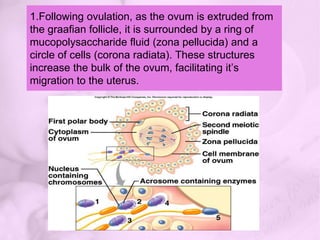
1.Following ovulation, as the ovum is extruded from the graafian follicle, it is surrounded by a ring of mucopolysaccharide fluid (zonapellucida) and a circle of cells (corona radiata). These structures increase the bulk of the ovum, facilitating it’s migration to the uterus. 
2. The ovum and surroundings cells are propelled, into the fallopian tube by the fimbriae, the fine, hair-like structures that line the openings of the fallopian tubes.
3. Only one ovum reaches maturity a month, a normal ejaculation of semen averages 2.5 ml of fluid containing 50 to 200 million spermatozoa per ml. or averages of 300-400 million per ejaculation. To promote the possibility of a sperm reaching the ovum, there is a reduction in the viscosity of cervical mucus at the time of ovulation.
4. Spermatozoa deposited in the vagina reaches the cervix of uterus within 90 seconds after deposition ant the outer end of the fallopian tube in 5 minutes. The functional life of spermatozoa is 48 hours.
5. Spermatozoa move by means of their flagella (tails) and uterine contraction through the cervix, the body of uterus toward the waiting ovum. All the spermatozoa that reaches the ovum cluster around the ovum’s protective layer of corona cells
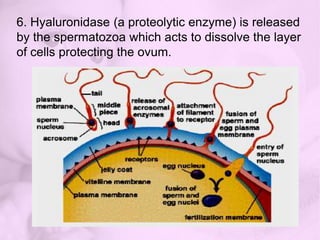
6. Hyaluronidase(a proteolytic enzyme) is released by the spermatozoa which acts to dissolve the layer of cells protecting the ovum.
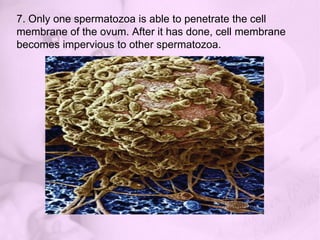
7. Only one spermatozoa is able to penetrate the cell membrane of the ovum. After it has done, cell membrane becomes impervious to other spermatozoa. 
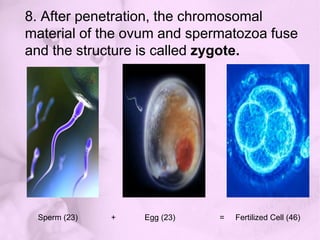
8. After penetration, the chromosomal material of the ovum and spermatozoa fuse and the structure is called zygote.Sperm (23)               +             Egg (23)                    =     Fertilized Cell (46)
implantationoccurs on the seventh day after fertilization
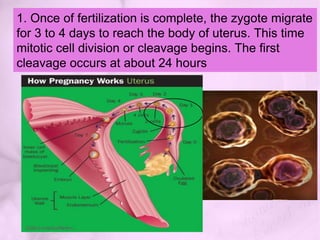
Is the contact between the growing structure and the uterine endometrium1. Once of fertilization is complete, the zygote migrate for 3 to 4 days to reach the body of uterus. This time mitotic cell division or cleavage begins. The first cleavage occurs at about 24 hours
2. As the zygote reaches the uterus it consists of 16 to 50 cells. Its bumpy outward appearance is termed morula (from Latin word morus meaning “mulberry.”)
3. The morula continues to multiply as it floats free in the uterine cavity for 3 or 4 more days. Large cells tend to mass at the periphery of the ball, leaving a fluid space surrounding an inner cell mass. The structure is now termed blastocyst. 
4. The cells in the outer ring are known as trophoblast cells. They are the part of the structure that forms the placenta and membrane the inner cell called erythroblast cells is the portion that forms the embryo.
5. After the 4th day of free floating, the residues of corona and zonapellucida are shed by growing structure. The blastocyst brushes against the rich uterine endometrium a process termed apposition. It attaches to the surface of the endometrium (termed adhesion) and settles down into soft folds (invasion)
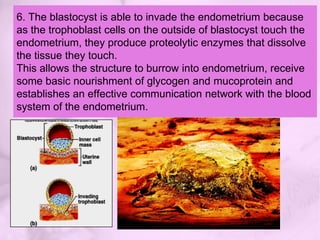
6. The blastocyst is able to invade the endometrium because as the trophoblast cells on the outside of blastocyst touch the endometrium, they produce proteolytic enzymes that dissolve the tissue they touch. This allows the structure to burrow into endometrium, receive some basic nourishment of glycogen and mucoprotein and establishes an effective communication network with the blood system of the endometrium.
stages
Stage 1: Fertilization1 day post-ovulation1 Egg, 300 Million Sperm0.1 - 0.15 mmFertilization begins when a sperm penetrates an an egg  and it ends with the creation of the zygote. Fertilization takes about 24 hours.
Stage 2: Division1.5 - 3 days post-ovulationFirst Cell DivisionWhen cell division produces sixteen cells, the zygote becomes mulberry shaped. It leaves the fallopian tube and three to four days after fertilization
Stage 3: Implantation Begins0.1 - 0.2 mm4 days post-ovulationAbout four days after fertilization, the egg enters the uterine cavity.Cell division continues, forming a cavity in the center of the egg. Cells flatten and compact on the inside of the cavity.The entire structure is now called a blastocyst.
Stage 4: Implantation Begins0.1 - 0.2 mm5 - 6 days post-ovulationThe blastocyst "hatches" around the sixth dayThe implantation site becomes swollen with new capillaries, and blood circulation begins
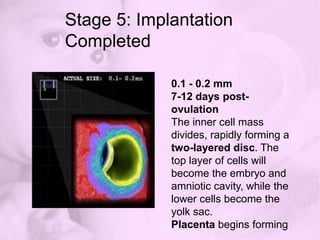
Stage 5: Implantation Completed0.1 - 0.2 mm7-12 days post-ovulationThe inner cell mass divides, rapidly forming a two-layered disc. The top layer of cells will become the embryo and amniotic cavity, while the lower cells become the yolk sac.Placenta begins forming

fertilization and pregnancy 1

  • 1.
  • 2.
    PregnancyObjectives:What happens toan egg after fertiliZation?How does a baby develop in the uterus?
  • 3.
    Fertilization The unionof ovum and spermatozoa.
  • 4.
    Fertilization occursin the outer third of the fallopian tube – the ampullar portion.
  • 5.
    other terms areconception, impregnation, or fecundation.
  • 6.
    The critical timespan during which fertilization may occur is about 72 hours.Steps in fertilization
  • 7.
    1.Following ovulation, asthe ovum is extruded from the graafian follicle, it is surrounded by a ring of mucopolysaccharide fluid (zonapellucida) and a circle of cells (corona radiata). These structures increase the bulk of the ovum, facilitating it’s migration to the uterus. 
  • 8.
    2. The ovumand surroundings cells are propelled, into the fallopian tube by the fimbriae, the fine, hair-like structures that line the openings of the fallopian tubes.
  • 9.
    3. Only oneovum reaches maturity a month, a normal ejaculation of semen averages 2.5 ml of fluid containing 50 to 200 million spermatozoa per ml. or averages of 300-400 million per ejaculation. To promote the possibility of a sperm reaching the ovum, there is a reduction in the viscosity of cervical mucus at the time of ovulation.
  • 10.
    4. Spermatozoa depositedin the vagina reaches the cervix of uterus within 90 seconds after deposition ant the outer end of the fallopian tube in 5 minutes. The functional life of spermatozoa is 48 hours.
  • 11.
    5. Spermatozoa moveby means of their flagella (tails) and uterine contraction through the cervix, the body of uterus toward the waiting ovum. All the spermatozoa that reaches the ovum cluster around the ovum’s protective layer of corona cells
  • 12.
    6. Hyaluronidase(a proteolyticenzyme) is released by the spermatozoa which acts to dissolve the layer of cells protecting the ovum.
  • 13.
    7. Only onespermatozoa is able to penetrate the cell membrane of the ovum. After it has done, cell membrane becomes impervious to other spermatozoa. 
  • 14.
    8. After penetration,the chromosomal material of the ovum and spermatozoa fuse and the structure is called zygote.Sperm (23) + Egg (23) = Fertilized Cell (46)
  • 15.
    implantationoccurs on theseventh day after fertilization
  • 16.
    Is the contactbetween the growing structure and the uterine endometrium1. Once of fertilization is complete, the zygote migrate for 3 to 4 days to reach the body of uterus. This time mitotic cell division or cleavage begins. The first cleavage occurs at about 24 hours
  • 17.
    2. As thezygote reaches the uterus it consists of 16 to 50 cells. Its bumpy outward appearance is termed morula (from Latin word morus meaning “mulberry.”)
  • 18.
    3. The morulacontinues to multiply as it floats free in the uterine cavity for 3 or 4 more days. Large cells tend to mass at the periphery of the ball, leaving a fluid space surrounding an inner cell mass. The structure is now termed blastocyst. 
  • 19.
    4. The cellsin the outer ring are known as trophoblast cells. They are the part of the structure that forms the placenta and membrane the inner cell called erythroblast cells is the portion that forms the embryo.
  • 20.
    5. After the4th day of free floating, the residues of corona and zonapellucida are shed by growing structure. The blastocyst brushes against the rich uterine endometrium a process termed apposition. It attaches to the surface of the endometrium (termed adhesion) and settles down into soft folds (invasion)
  • 21.
    6. The blastocystis able to invade the endometrium because as the trophoblast cells on the outside of blastocyst touch the endometrium, they produce proteolytic enzymes that dissolve the tissue they touch. This allows the structure to burrow into endometrium, receive some basic nourishment of glycogen and mucoprotein and establishes an effective communication network with the blood system of the endometrium.
  • 22.
  • 23.
    Stage 1: Fertilization1day post-ovulation1 Egg, 300 Million Sperm0.1 - 0.15 mmFertilization begins when a sperm penetrates an an egg and it ends with the creation of the zygote. Fertilization takes about 24 hours.
  • 24.
    Stage 2: Division1.5- 3 days post-ovulationFirst Cell DivisionWhen cell division produces sixteen cells, the zygote becomes mulberry shaped. It leaves the fallopian tube and three to four days after fertilization
  • 25.
    Stage 3: ImplantationBegins0.1 - 0.2 mm4 days post-ovulationAbout four days after fertilization, the egg enters the uterine cavity.Cell division continues, forming a cavity in the center of the egg. Cells flatten and compact on the inside of the cavity.The entire structure is now called a blastocyst.
  • 26.
    Stage 4: ImplantationBegins0.1 - 0.2 mm5 - 6 days post-ovulationThe blastocyst "hatches" around the sixth dayThe implantation site becomes swollen with new capillaries, and blood circulation begins
  • 27.
    Stage 5: ImplantationCompleted0.1 - 0.2 mm7-12 days post-ovulationThe inner cell mass divides, rapidly forming a two-layered disc. The top layer of cells will become the embryo and amniotic cavity, while the lower cells become the yolk sac.Placenta begins forming