P R E P A R E D B Y :
SRUJANI SWETASINA DASH
NURSING TUTOR
G.N.M.INSTITUTE,
A.N.M.M.C.H, GAYA
Placenta
Objectives
 Definition
 Characteristics
 Development
 Structure
 Diagram
 Function
 Conclusion
 Bibliography
Definition
 Structure developed in a pregnant uterus through which
the fetus derives nutrition.
 Placenta establishes connection between mother
and fetus through the umbilical cord.
Characteristics
 Discoid
 Hemochorial
 Deciduate
Development
 Begins at 6th week of gestation.
 Completed by 12th week.
 Two sources-
Chorion Frondosum (fetal component)
Decidua Basalis (maternal component)
Structure at term
 Shape : Circular Disc
 Diameter : 15-20 cm
 Thickness : 2.5cm at its centre
Thins off towards edge
 Weight : About 500gms at term
 Proportion :1:6 (weight of placenta: weight of baby) at term
 Attachment : Upper part of body of uterus near cornua.
 Invasion : Grows/invades upto decidua compact and Nitabuch’s
membrane prevent further invasion into deeper layer.
 Separation : Occurs after birth through the line of decidua
spongiosum.
 Surfaces :2 surfaces and a peripheral margin
Fetal and Maternal
contd
Presents 2 surfaces (fetal and maternal) and a peripheral margin
Fetal surface-
 Covered by smooth and glistening amnion
 Umbilical cord attached to it at centre
 Umbilical vessels visible beneath amnion
 4/5th is fetal origin
Maternal surface-
 Rough and spongy
 Dull red colour
 15-20 polygonal cotyledons limited by fissures
 1/5 is maternal origin
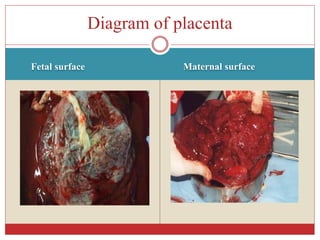
Fetal surface Maternal surface
Diagram of placenta
A human placenta
Functions
 Transfer of nutrients and oxygen:
Fetus derives nutrients and oxygen from placenta.
 Excretion:
Waste products from fetus is excreted to maternal blood in
placenta.
 Secretion:
Produces hormones such as HCG, progesterone etc and
enzymes such as oxitocinase necessary to maintain pregnancy.
 Barrier:
Act as protective barrier to fetus against noxious agent.
 Immunological:
Provides immunological protection to fetus.
Conclusion
Placenta is a vital structure and the knowledge on its
structure helps in detecting the abnormalities thereby
saving the life of mother and the baby.
Assignment
 Observe the structure of placenta in the labour room
and write down the observations.
 Draw the structure of placenta , attachment of
placenta.
Bibliography
 Dutta D.C, “Textbook Of Obstetrics”, New Central
Book Agency(P)LTD, 6th edition, Pg.28-29
 Jacob Annamma, “A Comprehensive Textbook of
Midwifery”, Jaypee Brothers Medical
Publishers(P)LTD, 2nd edition, Pg.75-78
 Myles, “ Textbook for Midwives”, Churchill
Livingstone Publishers, 13th edition, Pg.143-147
EVALUATION
Class Test – 15 marks for 5 minutes after end of session
I. Fill in the blanks: 10×1= 10
 Diameter of Placenta is______________.
 The fetal component of placenta is called as
_________________.
 Placenta is developed from ______________ part of
blastocyst.
 Development of placenta begins from ___________ weeks.
 Cord is attached to ______________ surface of placenta.
 Ratio of weight of placenta with fetus is ____________.
 Maternal component of placenta is called as _____________.
 The characteristic of placenta is ___________,
______________ and ___________.
II. List out the functions of placenta. 5
ANSWER KEY
I. Fill in the blanks:
 Diameter of Placenta is 15-20 cm.
 The fetal component of placenta is called as chorion frondosum.
 Placenta is developed from trophoblast part of blastocyst.
 Development of placenta begins from 6 weeks.
 Cord is attached to fetal surface of placenta.
 Ratio of weight of placenta with fetus is 1:6.
 Maternal component of placenta is called as decidua basalis.
 The characteristic of placenta is discoid, hemochorial and deciduate.
II. List out the functions of placenta.
 Transfer of nutrients and oxygen.
 Secretion
 Excretion
 Barrier
 Immunological
Thank You

Structure and Function of Placenta

  • 1.
    P R EP A R E D B Y : SRUJANI SWETASINA DASH NURSING TUTOR G.N.M.INSTITUTE, A.N.M.M.C.H, GAYA Placenta
  • 2.
    Objectives  Definition  Characteristics Development  Structure  Diagram  Function  Conclusion  Bibliography
  • 3.
    Definition  Structure developedin a pregnant uterus through which the fetus derives nutrition.  Placenta establishes connection between mother and fetus through the umbilical cord.
  • 4.
  • 5.
    Development  Begins at6th week of gestation.  Completed by 12th week.  Two sources- Chorion Frondosum (fetal component) Decidua Basalis (maternal component)
  • 6.
    Structure at term Shape : Circular Disc  Diameter : 15-20 cm  Thickness : 2.5cm at its centre Thins off towards edge  Weight : About 500gms at term  Proportion :1:6 (weight of placenta: weight of baby) at term  Attachment : Upper part of body of uterus near cornua.  Invasion : Grows/invades upto decidua compact and Nitabuch’s membrane prevent further invasion into deeper layer.  Separation : Occurs after birth through the line of decidua spongiosum.  Surfaces :2 surfaces and a peripheral margin Fetal and Maternal
  • 7.
    contd Presents 2 surfaces(fetal and maternal) and a peripheral margin Fetal surface-  Covered by smooth and glistening amnion  Umbilical cord attached to it at centre  Umbilical vessels visible beneath amnion  4/5th is fetal origin Maternal surface-  Rough and spongy  Dull red colour  15-20 polygonal cotyledons limited by fissures  1/5 is maternal origin
  • 8.
    Fetal surface Maternalsurface Diagram of placenta
  • 9.
  • 10.
    Functions  Transfer ofnutrients and oxygen: Fetus derives nutrients and oxygen from placenta.  Excretion: Waste products from fetus is excreted to maternal blood in placenta.  Secretion: Produces hormones such as HCG, progesterone etc and enzymes such as oxitocinase necessary to maintain pregnancy.  Barrier: Act as protective barrier to fetus against noxious agent.  Immunological: Provides immunological protection to fetus.
  • 11.
    Conclusion Placenta is avital structure and the knowledge on its structure helps in detecting the abnormalities thereby saving the life of mother and the baby.
  • 12.
    Assignment  Observe thestructure of placenta in the labour room and write down the observations.  Draw the structure of placenta , attachment of placenta.
  • 13.
    Bibliography  Dutta D.C,“Textbook Of Obstetrics”, New Central Book Agency(P)LTD, 6th edition, Pg.28-29  Jacob Annamma, “A Comprehensive Textbook of Midwifery”, Jaypee Brothers Medical Publishers(P)LTD, 2nd edition, Pg.75-78  Myles, “ Textbook for Midwives”, Churchill Livingstone Publishers, 13th edition, Pg.143-147
  • 14.
    EVALUATION Class Test –15 marks for 5 minutes after end of session I. Fill in the blanks: 10×1= 10  Diameter of Placenta is______________.  The fetal component of placenta is called as _________________.  Placenta is developed from ______________ part of blastocyst.  Development of placenta begins from ___________ weeks.  Cord is attached to ______________ surface of placenta.  Ratio of weight of placenta with fetus is ____________.  Maternal component of placenta is called as _____________.  The characteristic of placenta is ___________, ______________ and ___________. II. List out the functions of placenta. 5
  • 15.
    ANSWER KEY I. Fillin the blanks:  Diameter of Placenta is 15-20 cm.  The fetal component of placenta is called as chorion frondosum.  Placenta is developed from trophoblast part of blastocyst.  Development of placenta begins from 6 weeks.  Cord is attached to fetal surface of placenta.  Ratio of weight of placenta with fetus is 1:6.  Maternal component of placenta is called as decidua basalis.  The characteristic of placenta is discoid, hemochorial and deciduate. II. List out the functions of placenta.  Transfer of nutrients and oxygen.  Secretion  Excretion  Barrier  Immunological
  • 16.