FERTILIZATION
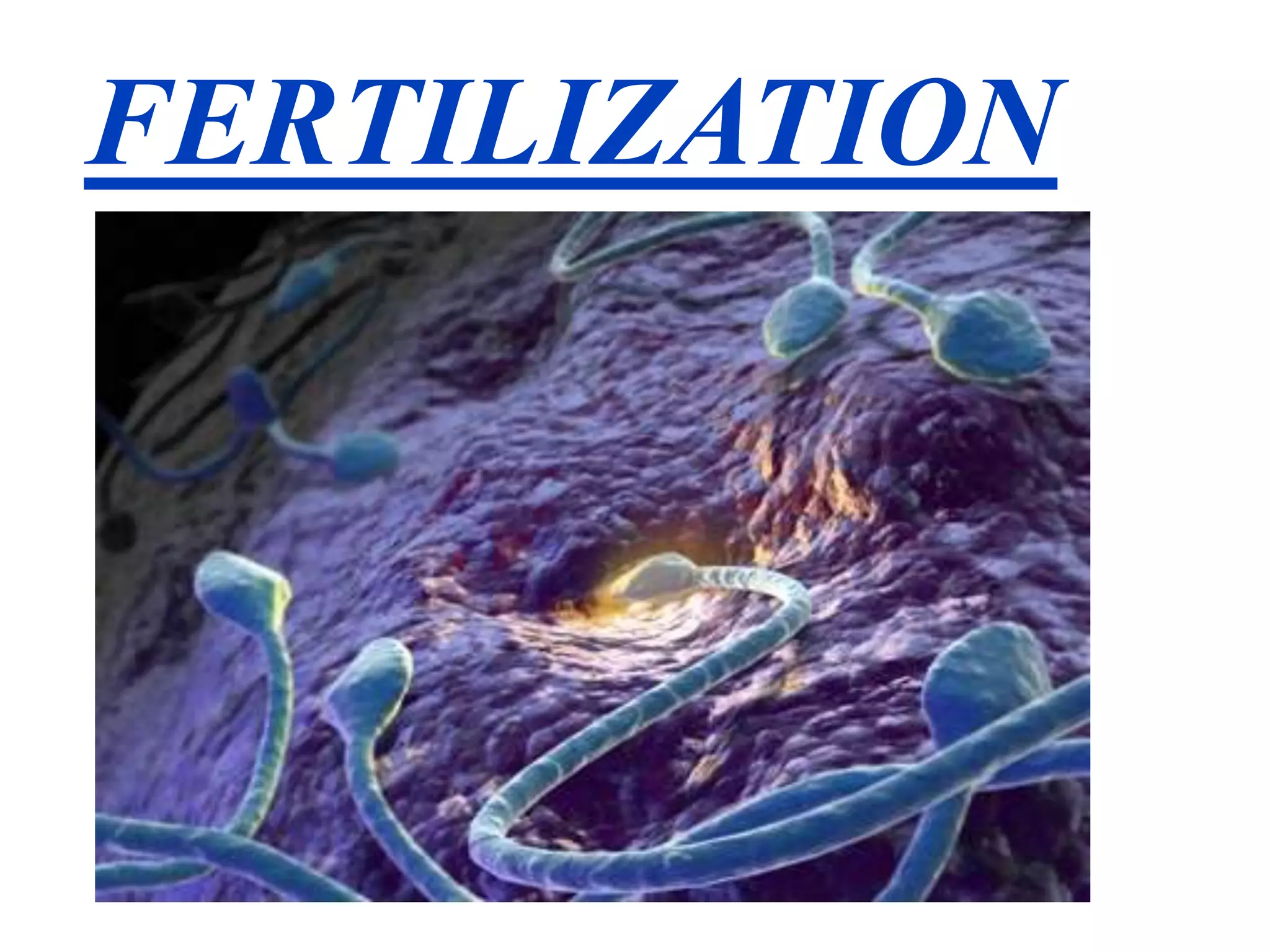
FERTILIZATION
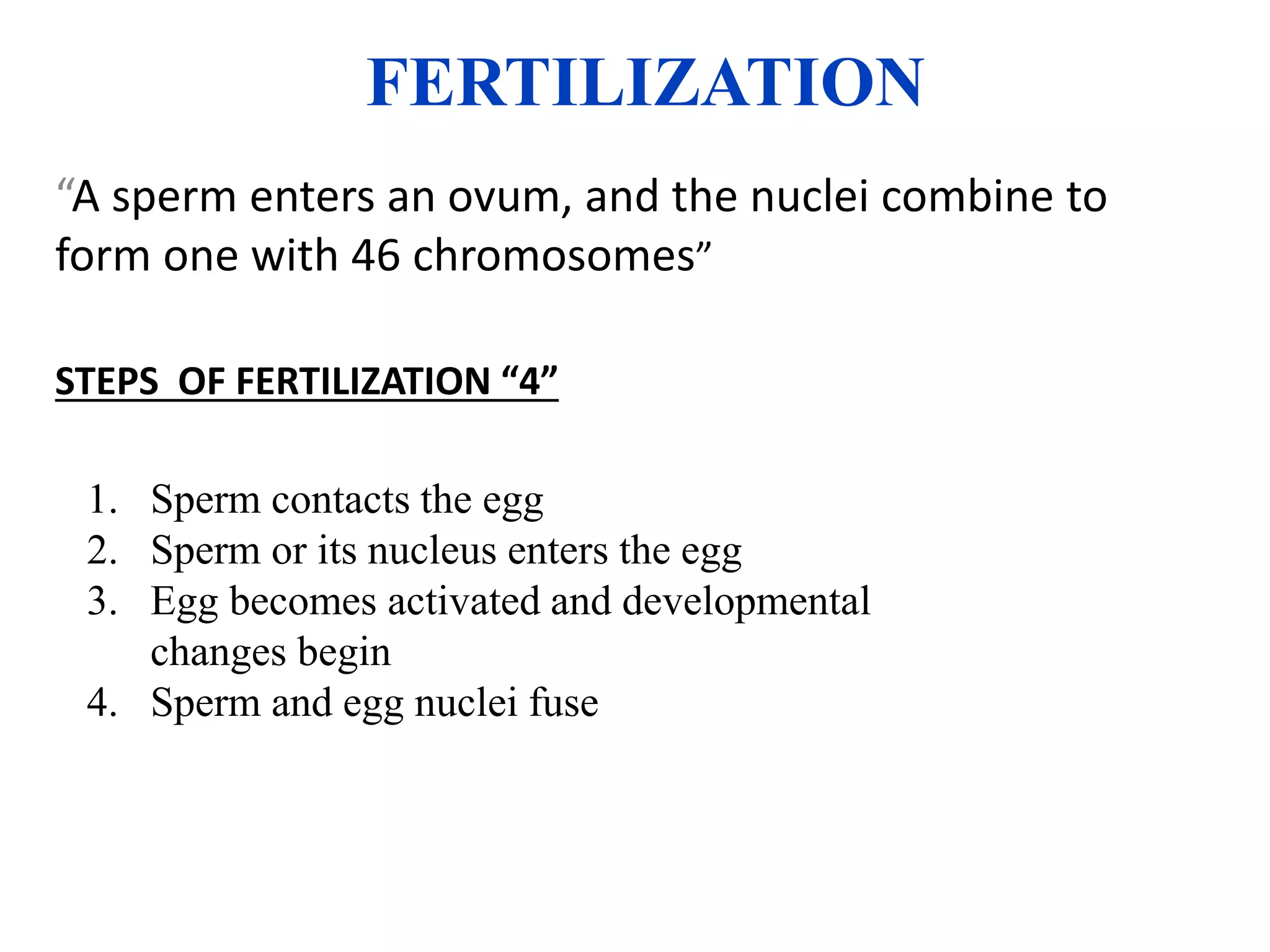
“A sperm enters an ovum, and the nuclei combine to
form one with 46 chromosomes”
STEPS OF FERTILIZATION “4”
1. Sperm contacts the egg
2. Sperm or its nucleus enters the egg
3. Egg becomes activated and developmental
changes begin
4. Sperm and egg nuclei fuse
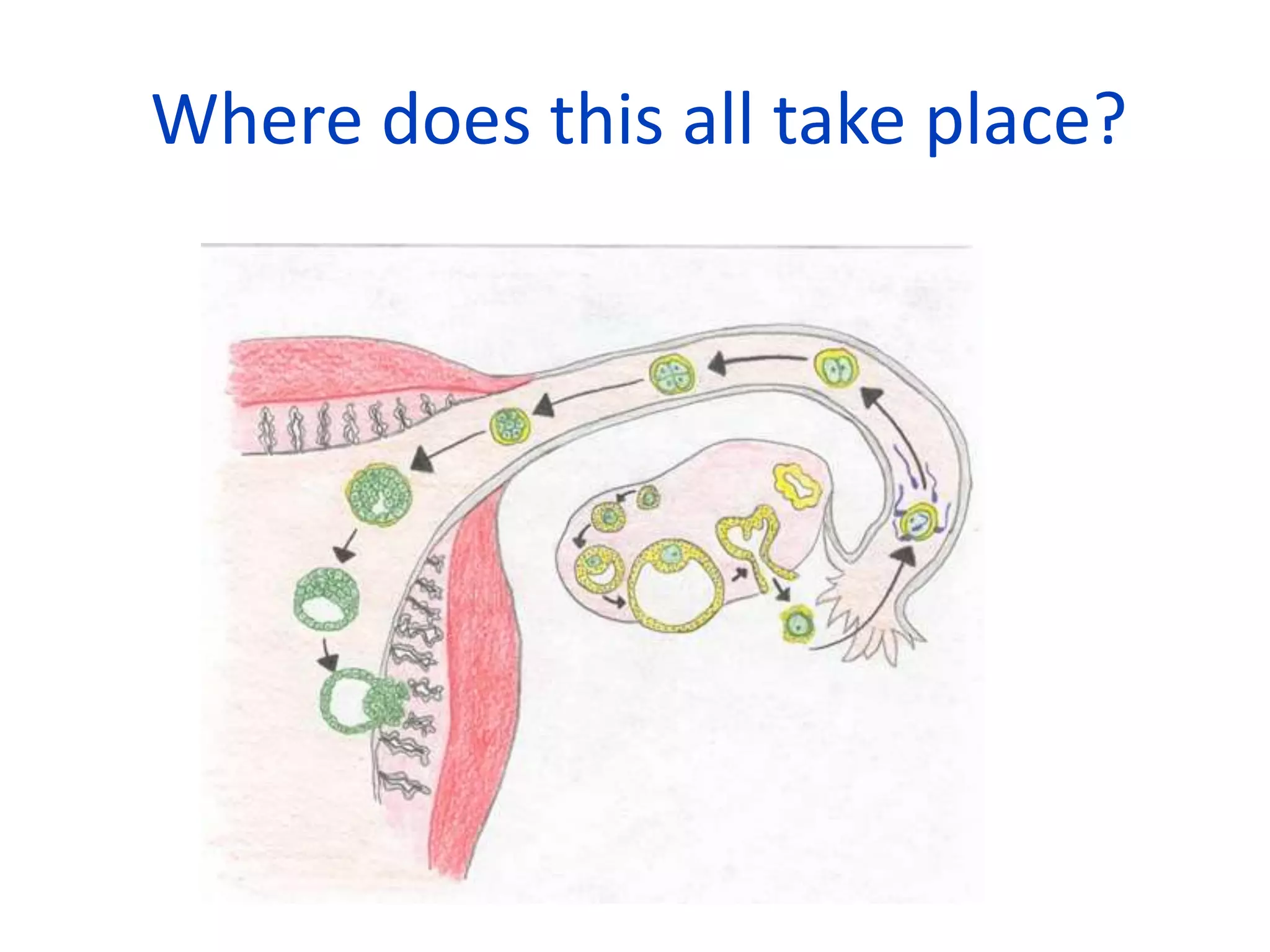
Where does this all take place?
Words to know…
 Fuse- to physically join together
 Ovum – egg cell (female gamete)
 Cleavage – process of cell division during development
 Differentiation – the process of forming different kinds of
cells from similar cells of the early embryo
 Embryo – an organism in an early stage of development
 Morula – solid ball of cells formed from cleavage
 Blastula – hollow ball of cells formed from cleavage
 Gastrula – a hollow ball of cells with an “in pushing” and
3 layers (germ layers)
The Nuclei Fuse Together
• Development of the zygote, the study of which is known as
embryology or developmental biology.
• The zygote undergoes a series of mitotic cell divisions called
cleavage.
• The stages of development are: Fertilized ovum (zygote)  2-
cell stage  4-cell stage  8-cell stage  Morella 
Blastula  Early Gastrula  Late Gastrula
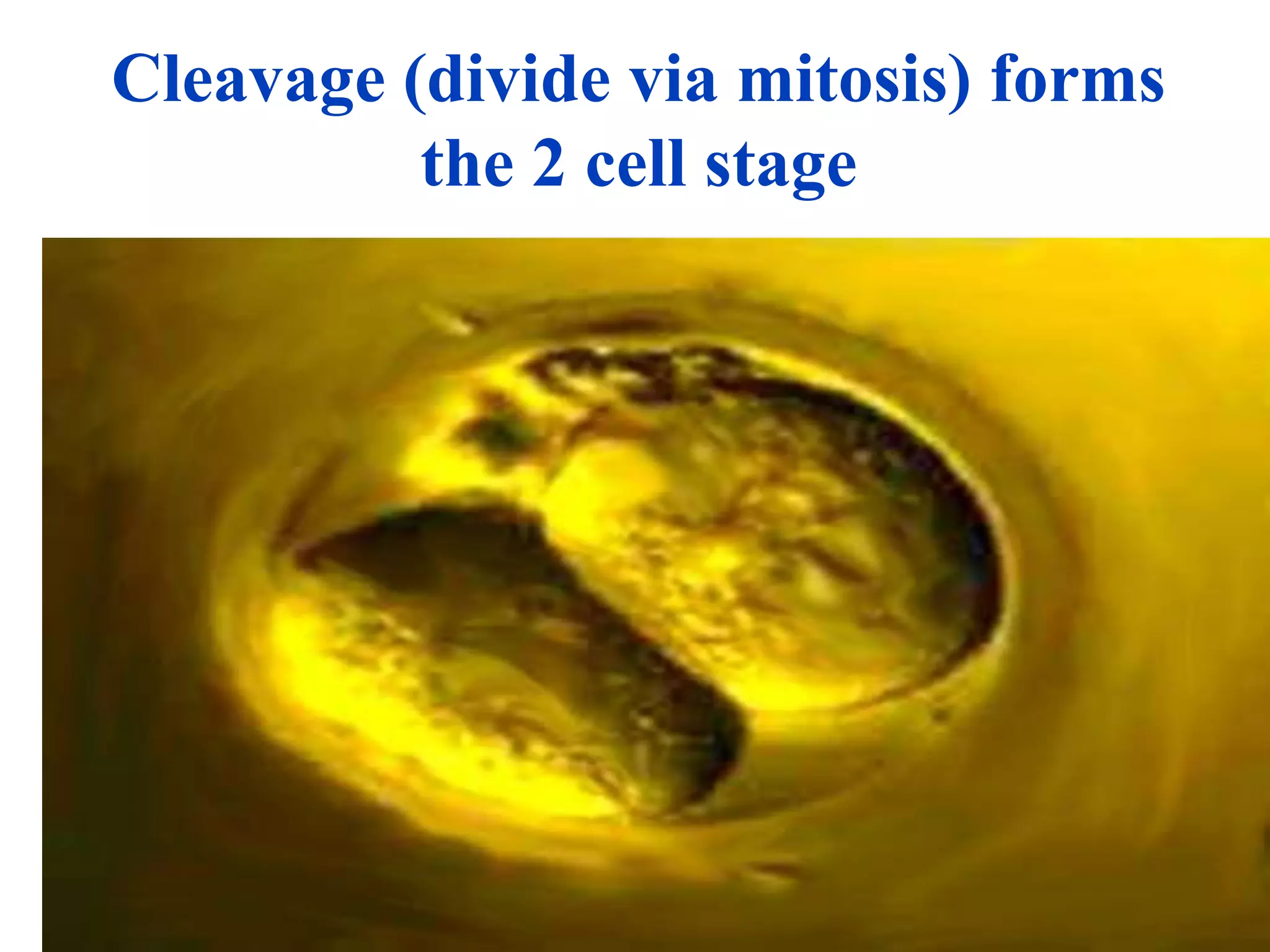
Cleavage (divide via mitosis) forms
the 2 cell stage
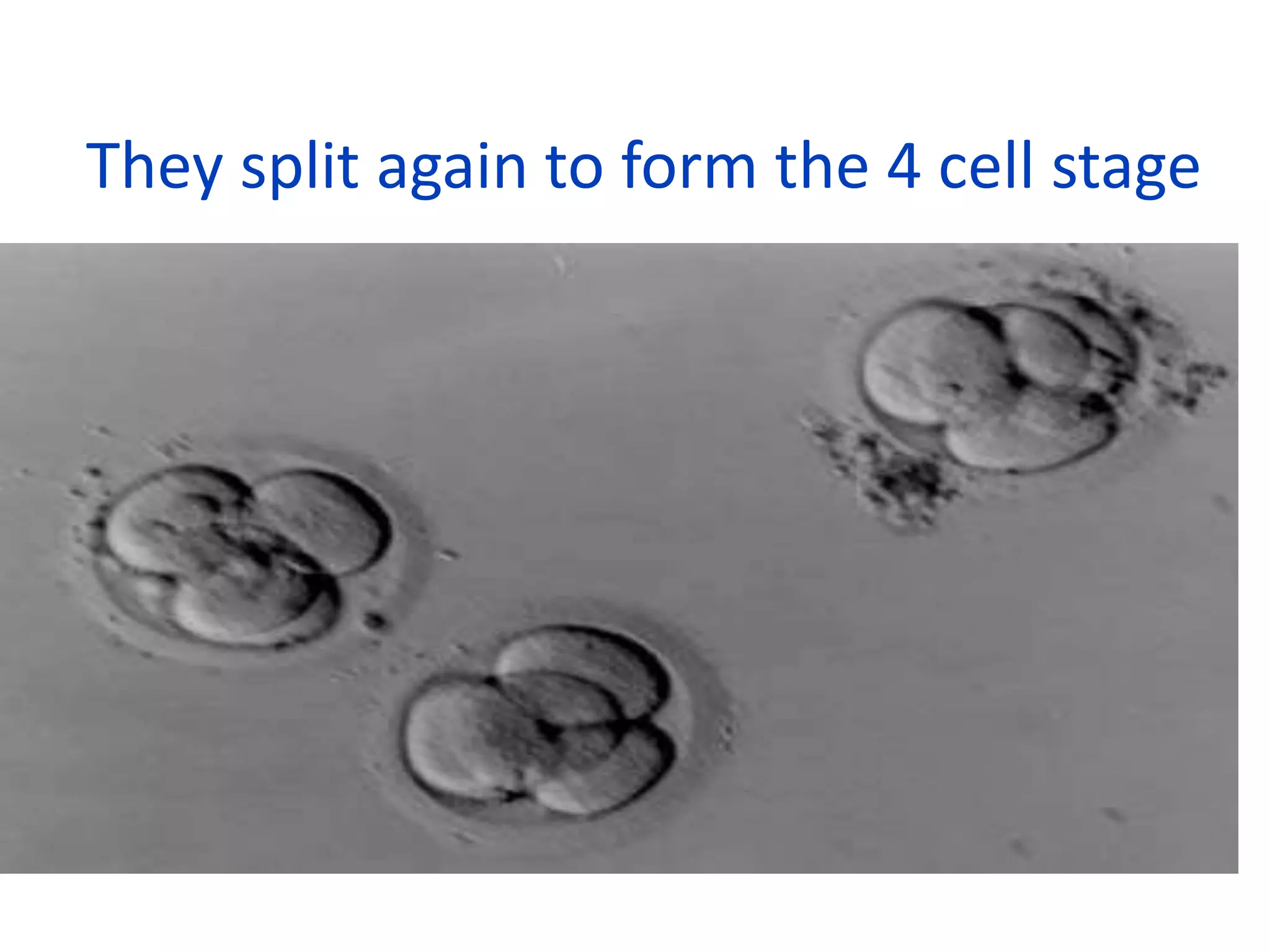
They split again to form the 4 cell stage
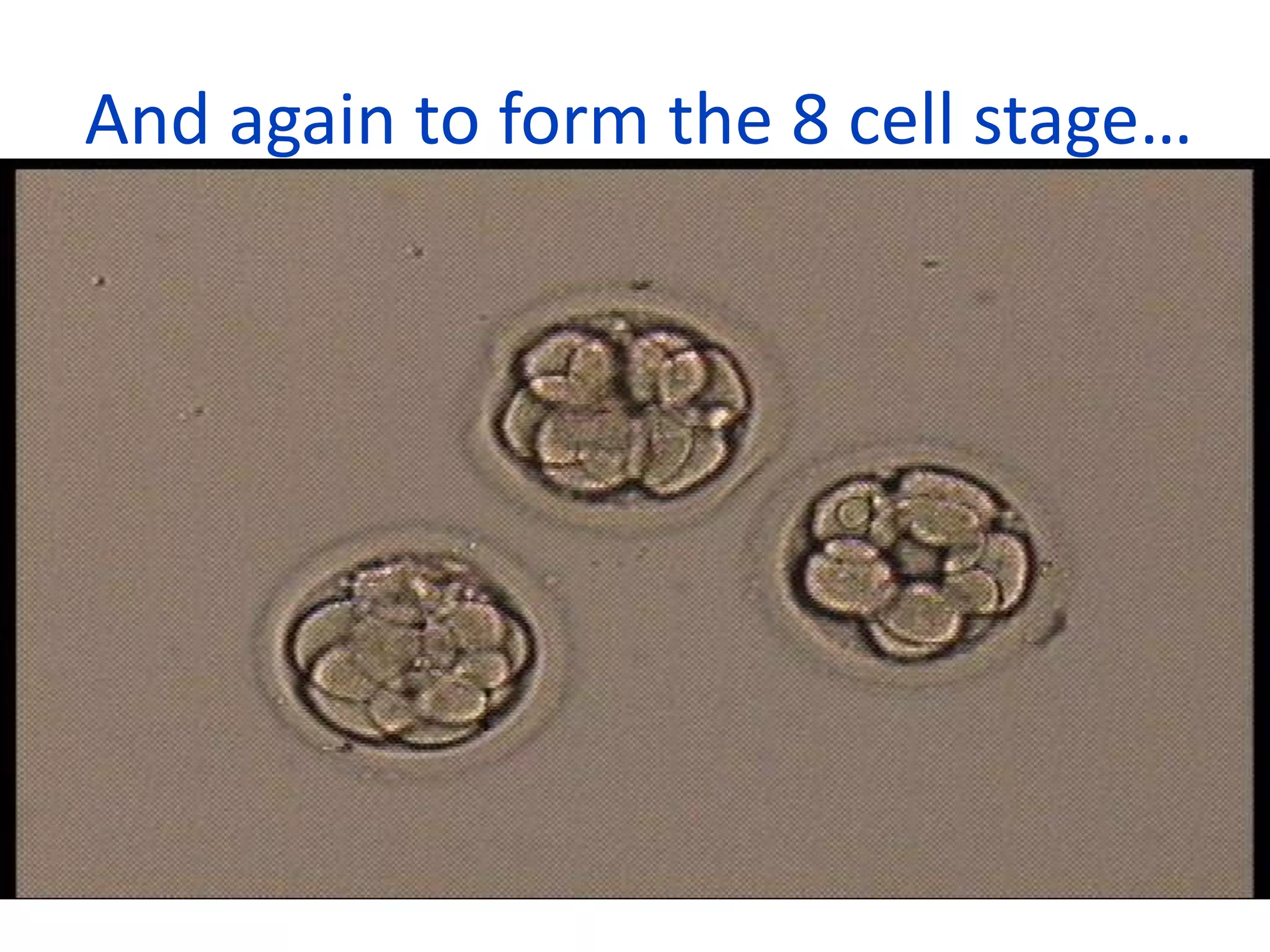
And again to form the 8 cell stage…
And eventually form a Morula
Next it becomes a blastula
STRUCTURE DEVELOP FROM BLASTULA
1. OUTER LAYER-PLACENTA & CHORIon IT
HAVING TWO LAYER
– Syncyti trophoblast[outer]-provide nutrient to
maternal blood
– Cyto trophoblast[inner]-secrete hormone hcg
2. Inner cell mass
And next, a gastrula
Late Gastrula
Mesoderm
Endoderm
Ectoderm
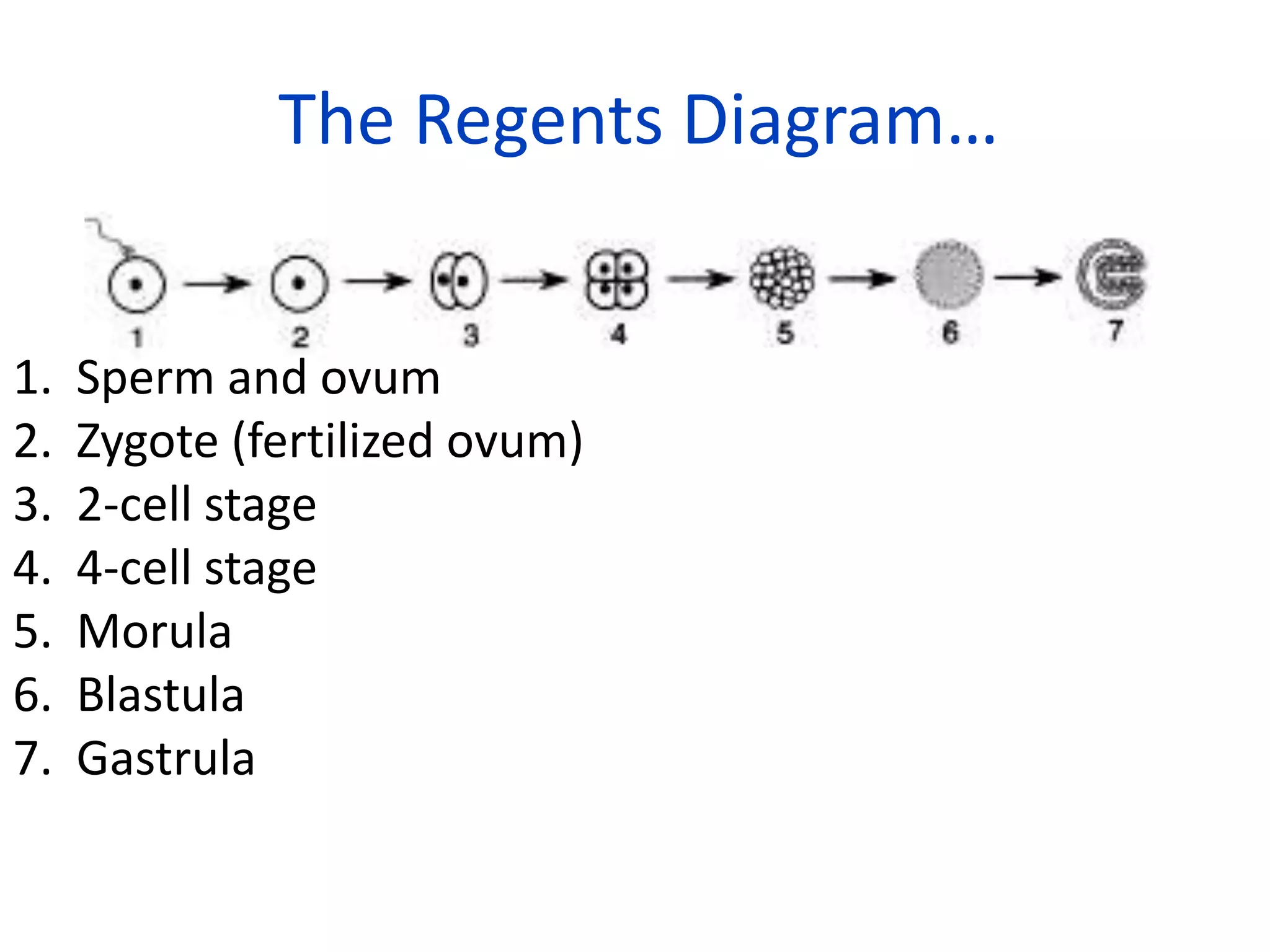
The Regents Diagram…
1. Sperm and ovum
2. Zygote (fertilized ovum)
3. 2-cell stage
4. 4-cell stage
5. Morula
6. Blastula
7. Gastrula
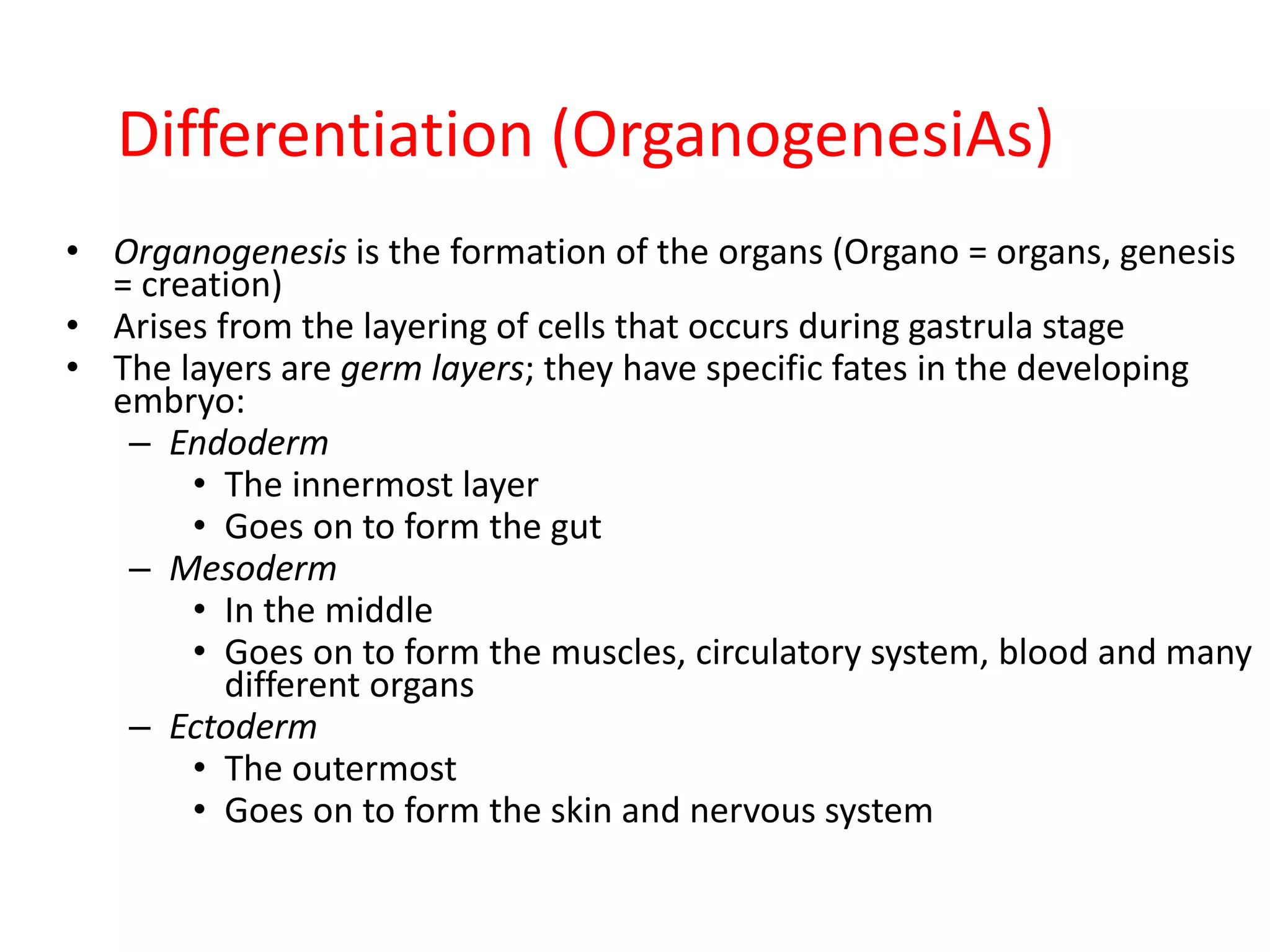
Differentiation (OrganogenesiAs)
• Organogenesis is the formation of the organs (Organo = organs, genesis
= creation)
• Arises from the layering of cells that occurs during gastrula stage
• The layers are germ layers; they have specific fates in the developing
embryo:
– Endoderm
• The innermost layer
• Goes on to form the gut
– Mesoderm
• In the middle
• Goes on to form the muscles, circulatory system, blood and many
different organs
– Ectoderm
• The outermost
• Goes on to form the skin and nervous system
Differentiation of Primary Germ Layers
(from the gastrula)
Ectoderm Mesoderm Endoderm
Nervous system Skeleton Digestive tract
Epidermis of
skin
Muscles Respiratory
system
Circulatory
system
Liver, pancreas
Gonads Bladder
Human Prenatal Development
• Gestation lasts 266 days from fertilization to birth
• Development begins in the oviduct
– About 24 hours after fertilization, the zygote has
divided to form a 2-celled embryo
– The embryo passes down the oviduct by cilia and
peristalsis
– The zona pellucida has dissolved by the 5th day,
when the embryo enters the uterus
– The embryo floats free for several days, nourished
by fluids from glands in the uterine wall
• At this point, it is called a blastocyst
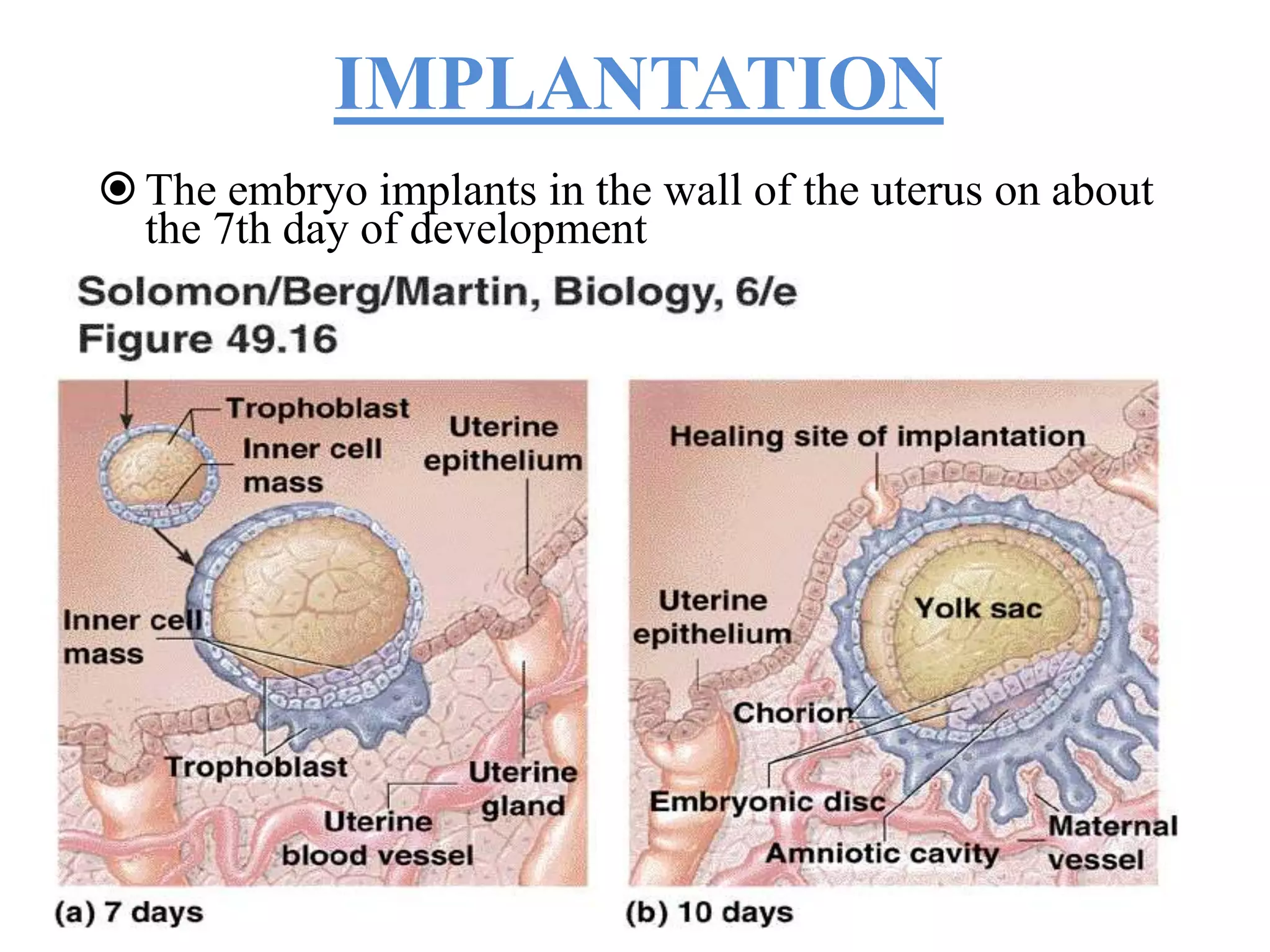
IMPLANTATION
The embryo implants in the wall of the uterus on about
the 7th day of development
12-day Human Embryo
Development of the Placenta
Human
Fetus at
Ten Weeks
placenta
Chorion villie
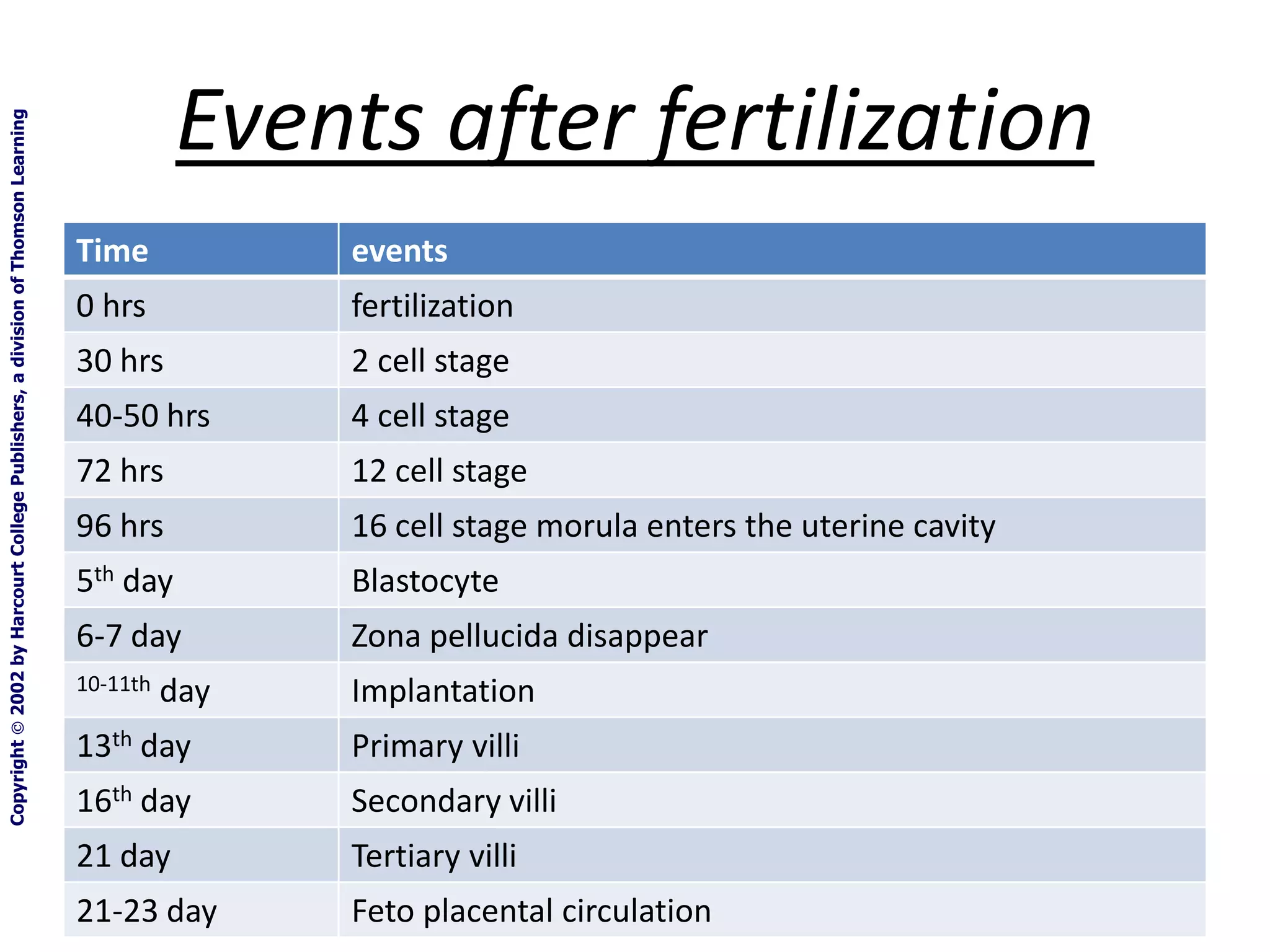
Events after fertilization
Time events
0 hrs fertilization
30 hrs 2 cell stage
40-50 hrs 4 cell stage
72 hrs 12 cell stage
96 hrs 16 cell stage morula enters the uterine cavity
5th day Blastocyte
6-7 day Zona pellucida disappear
10-11th day Implantation
13th day Primary villi
16th day Secondary villi
21 day Tertiary villi
21-23 day Feto placental circulation

Fertilization

  • 1.
  • 2.
    FERTILIZATION “A sperm entersan ovum, and the nuclei combine to form one with 46 chromosomes” STEPS OF FERTILIZATION “4” 1. Sperm contacts the egg 2. Sperm or its nucleus enters the egg 3. Egg becomes activated and developmental changes begin 4. Sperm and egg nuclei fuse
  • 3.
    Where does thisall take place?
  • 4.
    Words to know… Fuse- to physically join together  Ovum – egg cell (female gamete)  Cleavage – process of cell division during development  Differentiation – the process of forming different kinds of cells from similar cells of the early embryo  Embryo – an organism in an early stage of development  Morula – solid ball of cells formed from cleavage  Blastula – hollow ball of cells formed from cleavage  Gastrula – a hollow ball of cells with an “in pushing” and 3 layers (germ layers)
  • 5.
  • 6.
    • Development ofthe zygote, the study of which is known as embryology or developmental biology. • The zygote undergoes a series of mitotic cell divisions called cleavage. • The stages of development are: Fertilized ovum (zygote)  2- cell stage  4-cell stage  8-cell stage  Morella  Blastula  Early Gastrula  Late Gastrula
  • 7.
    Cleavage (divide viamitosis) forms the 2 cell stage
  • 8.
    They split againto form the 4 cell stage
  • 9.
    And again toform the 8 cell stage…
  • 10.
  • 11.
    Next it becomesa blastula
  • 12.
    STRUCTURE DEVELOP FROMBLASTULA 1. OUTER LAYER-PLACENTA & CHORIon IT HAVING TWO LAYER – Syncyti trophoblast[outer]-provide nutrient to maternal blood – Cyto trophoblast[inner]-secrete hormone hcg 2. Inner cell mass
  • 13.
    And next, agastrula
  • 14.
  • 15.
    The Regents Diagram… 1.Sperm and ovum 2. Zygote (fertilized ovum) 3. 2-cell stage 4. 4-cell stage 5. Morula 6. Blastula 7. Gastrula
  • 16.
    Differentiation (OrganogenesiAs) • Organogenesisis the formation of the organs (Organo = organs, genesis = creation) • Arises from the layering of cells that occurs during gastrula stage • The layers are germ layers; they have specific fates in the developing embryo: – Endoderm • The innermost layer • Goes on to form the gut – Mesoderm • In the middle • Goes on to form the muscles, circulatory system, blood and many different organs – Ectoderm • The outermost • Goes on to form the skin and nervous system
  • 17.
    Differentiation of PrimaryGerm Layers (from the gastrula) Ectoderm Mesoderm Endoderm Nervous system Skeleton Digestive tract Epidermis of skin Muscles Respiratory system Circulatory system Liver, pancreas Gonads Bladder
  • 18.
    Human Prenatal Development •Gestation lasts 266 days from fertilization to birth • Development begins in the oviduct – About 24 hours after fertilization, the zygote has divided to form a 2-celled embryo – The embryo passes down the oviduct by cilia and peristalsis – The zona pellucida has dissolved by the 5th day, when the embryo enters the uterus – The embryo floats free for several days, nourished by fluids from glands in the uterine wall • At this point, it is called a blastocyst
  • 19.
    IMPLANTATION The embryo implantsin the wall of the uterus on about the 7th day of development
  • 20.
  • 21.
  • 22.
  • 23.
  • 24.
  • 25.
    Events after fertilization Timeevents 0 hrs fertilization 30 hrs 2 cell stage 40-50 hrs 4 cell stage 72 hrs 12 cell stage 96 hrs 16 cell stage morula enters the uterine cavity 5th day Blastocyte 6-7 day Zona pellucida disappear 10-11th day Implantation 13th day Primary villi 16th day Secondary villi 21 day Tertiary villi 21-23 day Feto placental circulation