MARKING OR FEEDBACK? 
Assessment that moves learning 
forward.
Ofsted 2014: 
• “There is too much variability in the quality of some 
marking across the school.” 
• “The school needs to improve by ensuring that 
marking is consistently good across the school and 
all teachers give students clear guidance about how 
to improve their work, and time to respond to their 
comments.”
Two clear goals 
1. Improving the quality of feedback 
2. Giving students time to actively respond to their 
feedback.
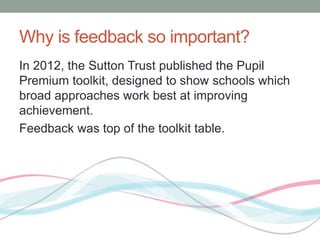
Why is feedback so important? 
In 2012, the Sutton Trust published the Pupil 
Premium toolkit, designed to show schools which 
broad approaches work best at improving 
achievement. 
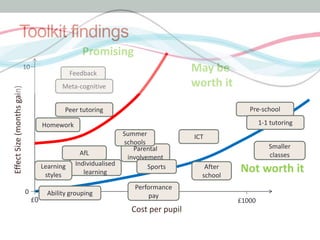
Feedback was top of the toolkit table.
Toolkit findings 
Promising 
Cost per pupil 
Effect Size (months gain) 
£0 
10 
0 
£1000 
Feedback 
Meta-cognitive 
Peer tutoring Pre-school 
Homework 1-1 tutoring 
ICT 
AfL 
Parental 
involvement 
Sports 
Summer 
schools 
After 
school 
Individualised 
learning 
Learning 
styles 
Performance 
pay 
Smaller 
classes 
Ability grouping 
May be 
worth it 
Not worth it
What have we already done about this? 
• In the Summer term, we had a staff meeting focused on 
marking and feedback. We asked departments to share 
best practice, and asked all teachers what we thought our 
policy should be. 
• The responses indicated that everyone agreed how 
important marking and feedback are – but that there was 
still a lot of work to be done. 
• Learning walks showed some outstanding feedback, but 
that this was still not consistent enough either across the 
school, or within departments. 
• Clear evidence of students actively responding to 
feedback was even more inconsistent.
GOAL 1 
Improving the quality of feedback
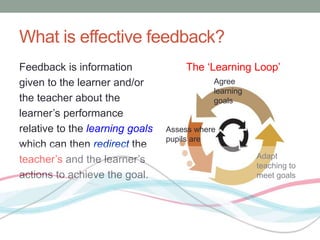
What is effective feedback? 
Feedback is information 
given to the learner and/or 
the teacher about the 
learner’s performance 
relative to the learning goals 
which can then redirect the 
teacher’s and the learner’s 
actions to achieve the goal. 
The ‘Learning Loop’ 
Adapt 
teaching to 
meet goals 
Agree 
learning 
goals 
Assess where 
pupils are
Not just about giving feedback – 
implementation is key 
• It’s not what you do, it’s the way that you do it that counts. 
• Where marking is less effective, it is used as a one way 
street, when the most valuable information is to be found 
from the pupils themselves. 
• Marking is also less effective when it is unfocused - simply 
urging pupils to do more of the same. 
• Feedback can even be detrimental to performance if it 
focuses on the wrong things.
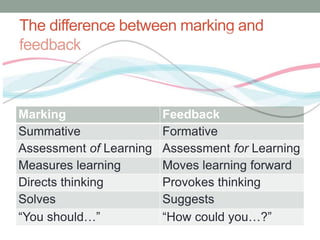
The difference between marking and 
feedback 
Marking Feedback 
Summative Formative 
Assessment of Learning Assessment for Learning 
Measures learning Moves learning forward 
Directs thinking Provokes thinking 
Solves Suggests 
“You should…” “How could you…?”
Feedback that moves learning forward 
• “Good feedback causes thinking.” – Dylan Wiliam 
• Feedback that provokes thinking offers hints and 
suggestions rather than complete solutions. 
• It asks learners, “How could you…?” rather than telling 
them, “You should…”. The emphasis is then on the 
learner rather than the teacher. 
• Effective feedback makes students think about their 
learning. It also helps them to see that learning is 
incremental rather than fixed. This metacognition is a 
crucial aspect of Tallis pedagogy, linked to our work on 
Habits of Mind and a Growth mindset.
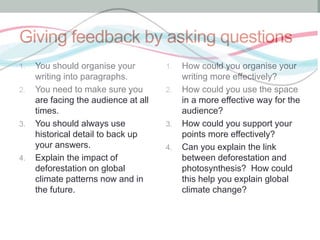
Giving feedback by asking questions 
1. You should organise your 
writing into paragraphs. 
2. You need to make sure you 
are facing the audience at all 
times. 
3. You should always use 
historical detail to back up 
your answers. 
4. Explain the impact of 
deforestation on global 
climate patterns now and in 
the future. 
1. How could you organise your 
writing more effectively? 
2. How could you use the space 
in a more effective way for the 
audience? 
3. How could you support your 
points more effectively? 
4. Can you explain the link 
between deforestation and 
photosynthesis? How could 
this help you explain global 
climate change?
GOAL 2 
Giving students time to actively respond to their 
feedback
How can we make sure our feedback has 
impact? 
• Too often we spend a great deal of time marking student 
work and giving them excellent feedback to improve. 
Crucially, however, students often spend a relatively short 
amount of time scanning the feedback for a grade or a 
level and then move on. 
• How can we redress that balance? 
• “How do we get inside students’ heads and turn up the 
knob that regulates quality and effort” (Ron Berger)
DIRT 
• DIRT stands for Dedicated Improvement and 
Reflection Time. 
• When giving feedback, make sure you give students 
a chunk of time to reflect critically on how to craft and 
improve their work and then to develop new 
techniques to put your feedback into practice. 
• The idea is that they must respond to the suggestions 
made in your feedback by writing responses 
underneath. 
• They must have time and space to do this.
The importance of critical reflection 
• “Most discussions of assessment start in the wrong place. 
The most important assessment that goes on in a school 
isn’t done to students but goes on inside students. Every 
student walks around with a picture of what is acceptable, 
what is good enough. Each time he [or she! ] works on 
something [s]he looks at it and assesses it. Is this good 
enough? Do I feel comfortable handing this in? Does it 
meet my standards? Changing assessment at this level 
should be the most important assessment goal of every 
school. How do we get inside students’ heads and turn up 
the knob that regulates quality and effort” (Ron Berger, 
‘An Ethic of Excellence’, p.103)
DIRT - top tips 
1. Allow time and space - expect students to 
spend approximately twice their time reflecting 
on their feedback as you have devoted to 
giving feedback. 
2. Keep it focused - with clear task instructions, 
including timing and outlining exact 
expectations, students can be more focused in 
their DIR time and considerably more effective. 
3. Model and scaffold – although DIRT is about 
independent reflection, teacher guidance is 
crucial.
Summing up 
We are asking for more consistent use of two 
fundamental principles in order to improve 
feedback across the school: 
1. Feedback should be phrased as questions; 
2. Students are given time and space to respond 
to and act on their feedback.
Where next? 
•We will be asking Curriculum Areas to revisit their 
marking policies, ensuring that the emphasis is 
on effective feedback. We will use these to write 
an updated school feedback policy. 
• Further consideration of the role of oral and peer 
feedback.

Feedback that moves learning forward

  • 1.
    MARKING OR FEEDBACK? Assessment that moves learning forward.
  • 2.
    Ofsted 2014: •“There is too much variability in the quality of some marking across the school.” • “The school needs to improve by ensuring that marking is consistently good across the school and all teachers give students clear guidance about how to improve their work, and time to respond to their comments.”
  • 3.
    Two clear goals 1. Improving the quality of feedback 2. Giving students time to actively respond to their feedback.
  • 4.
    Why is feedbackso important? In 2012, the Sutton Trust published the Pupil Premium toolkit, designed to show schools which broad approaches work best at improving achievement. Feedback was top of the toolkit table.
  • 5.
    Toolkit findings Promising Cost per pupil Effect Size (months gain) £0 10 0 £1000 Feedback Meta-cognitive Peer tutoring Pre-school Homework 1-1 tutoring ICT AfL Parental involvement Sports Summer schools After school Individualised learning Learning styles Performance pay Smaller classes Ability grouping May be worth it Not worth it
  • 6.
    What have wealready done about this? • In the Summer term, we had a staff meeting focused on marking and feedback. We asked departments to share best practice, and asked all teachers what we thought our policy should be. • The responses indicated that everyone agreed how important marking and feedback are – but that there was still a lot of work to be done. • Learning walks showed some outstanding feedback, but that this was still not consistent enough either across the school, or within departments. • Clear evidence of students actively responding to feedback was even more inconsistent.
  • 7.
    GOAL 1 Improvingthe quality of feedback
  • 8.
    What is effectivefeedback? Feedback is information given to the learner and/or the teacher about the learner’s performance relative to the learning goals which can then redirect the teacher’s and the learner’s actions to achieve the goal. The ‘Learning Loop’ Adapt teaching to meet goals Agree learning goals Assess where pupils are
  • 9.
    Not just aboutgiving feedback – implementation is key • It’s not what you do, it’s the way that you do it that counts. • Where marking is less effective, it is used as a one way street, when the most valuable information is to be found from the pupils themselves. • Marking is also less effective when it is unfocused - simply urging pupils to do more of the same. • Feedback can even be detrimental to performance if it focuses on the wrong things.
  • 10.
    The difference betweenmarking and feedback Marking Feedback Summative Formative Assessment of Learning Assessment for Learning Measures learning Moves learning forward Directs thinking Provokes thinking Solves Suggests “You should…” “How could you…?”
  • 11.
    Feedback that moveslearning forward • “Good feedback causes thinking.” – Dylan Wiliam • Feedback that provokes thinking offers hints and suggestions rather than complete solutions. • It asks learners, “How could you…?” rather than telling them, “You should…”. The emphasis is then on the learner rather than the teacher. • Effective feedback makes students think about their learning. It also helps them to see that learning is incremental rather than fixed. This metacognition is a crucial aspect of Tallis pedagogy, linked to our work on Habits of Mind and a Growth mindset.
  • 12.
    Giving feedback byasking questions 1. You should organise your writing into paragraphs. 2. You need to make sure you are facing the audience at all times. 3. You should always use historical detail to back up your answers. 4. Explain the impact of deforestation on global climate patterns now and in the future. 1. How could you organise your writing more effectively? 2. How could you use the space in a more effective way for the audience? 3. How could you support your points more effectively? 4. Can you explain the link between deforestation and photosynthesis? How could this help you explain global climate change?
  • 13.
    GOAL 2 Givingstudents time to actively respond to their feedback
  • 14.
    How can wemake sure our feedback has impact? • Too often we spend a great deal of time marking student work and giving them excellent feedback to improve. Crucially, however, students often spend a relatively short amount of time scanning the feedback for a grade or a level and then move on. • How can we redress that balance? • “How do we get inside students’ heads and turn up the knob that regulates quality and effort” (Ron Berger)
  • 15.
    DIRT • DIRTstands for Dedicated Improvement and Reflection Time. • When giving feedback, make sure you give students a chunk of time to reflect critically on how to craft and improve their work and then to develop new techniques to put your feedback into practice. • The idea is that they must respond to the suggestions made in your feedback by writing responses underneath. • They must have time and space to do this.
  • 16.
    The importance ofcritical reflection • “Most discussions of assessment start in the wrong place. The most important assessment that goes on in a school isn’t done to students but goes on inside students. Every student walks around with a picture of what is acceptable, what is good enough. Each time he [or she! ] works on something [s]he looks at it and assesses it. Is this good enough? Do I feel comfortable handing this in? Does it meet my standards? Changing assessment at this level should be the most important assessment goal of every school. How do we get inside students’ heads and turn up the knob that regulates quality and effort” (Ron Berger, ‘An Ethic of Excellence’, p.103)
  • 17.
    DIRT - toptips 1. Allow time and space - expect students to spend approximately twice their time reflecting on their feedback as you have devoted to giving feedback. 2. Keep it focused - with clear task instructions, including timing and outlining exact expectations, students can be more focused in their DIR time and considerably more effective. 3. Model and scaffold – although DIRT is about independent reflection, teacher guidance is crucial.
  • 18.
    Summing up Weare asking for more consistent use of two fundamental principles in order to improve feedback across the school: 1. Feedback should be phrased as questions; 2. Students are given time and space to respond to and act on their feedback.
  • 19.
    Where next? •Wewill be asking Curriculum Areas to revisit their marking policies, ensuring that the emphasis is on effective feedback. We will use these to write an updated school feedback policy. • Further consideration of the role of oral and peer feedback.