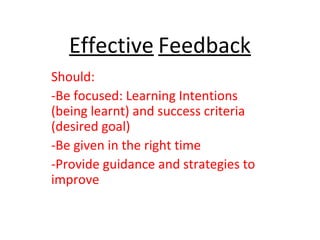
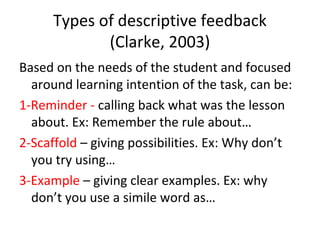
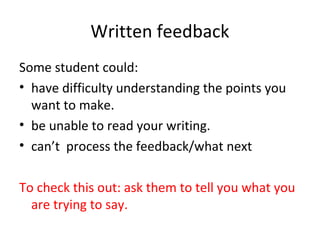
Effective feedback should focus on the learning intentions and success criteria, be timely, and provide guidance for improvement. Descriptive feedback is most useful, describing what the student did and how to improve, rather than evaluative feedback involving judgment. Descriptive feedback can take the form of reminders, scaffolds, or examples. When providing written feedback, teachers should check that students understand the feedback and ask them to restate it. Research shows that only comments without grades lead to improvement, as grades cancel out the benefits of comments. Feedback should highlight a few successes and one area for improvement, and allow students to act on the feedback.