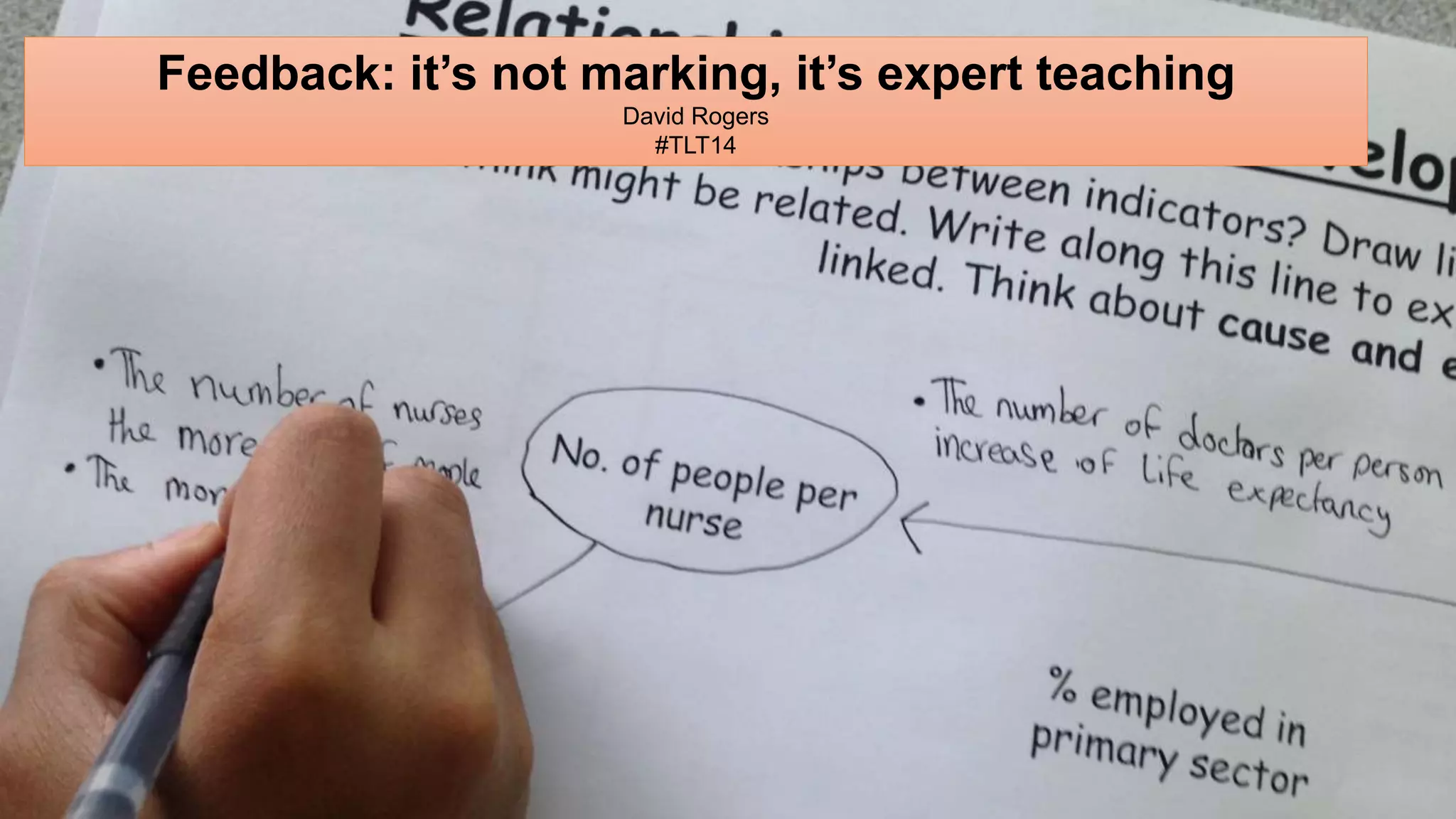









Feedback: it’s not marking, it’s expert teaching 
David Rogers 
#TLT14
@davidErogers 
davidrogers.org.uk
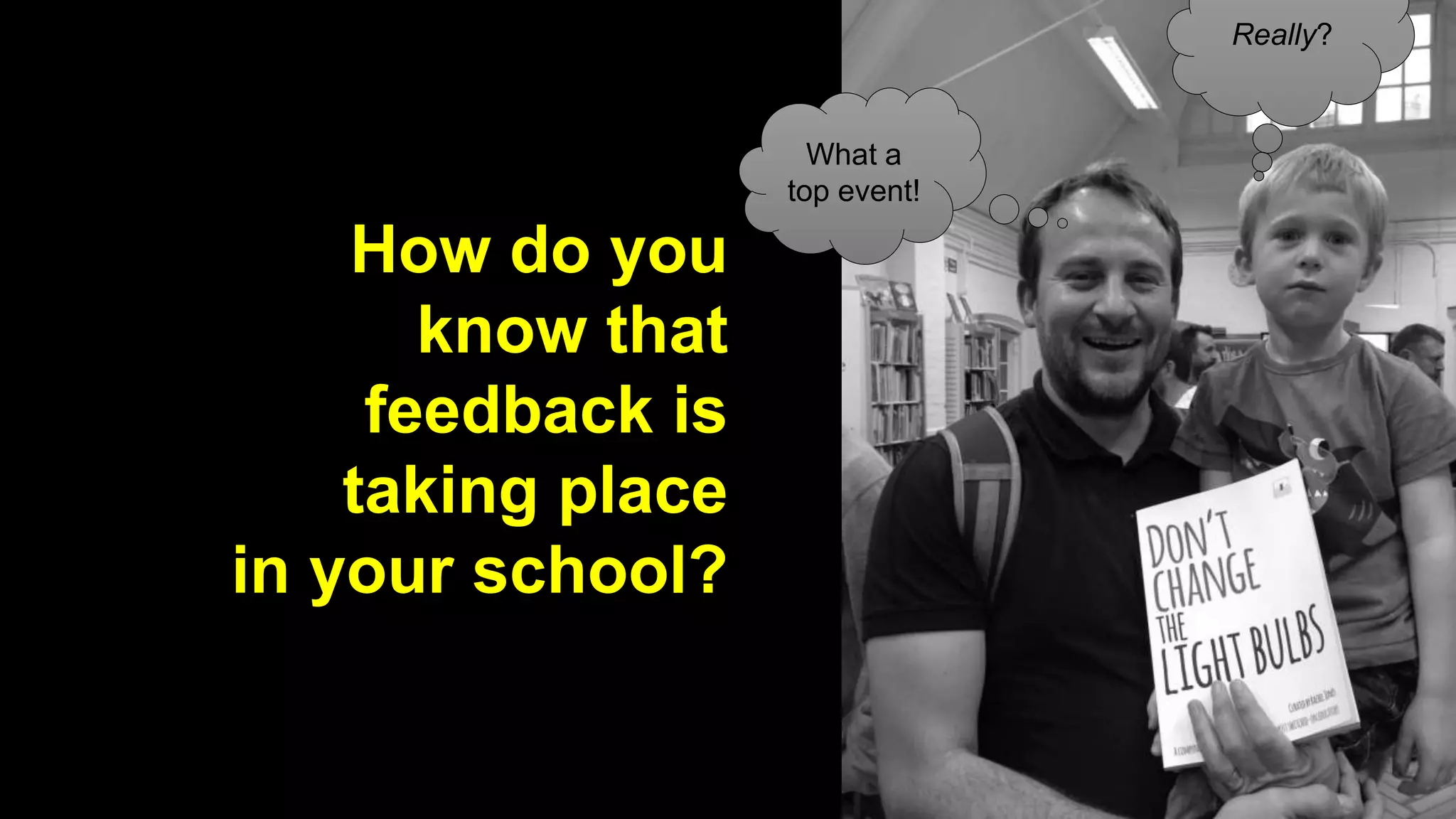
How do you 
know that 
feedback is 
taking place 
in your school? 
What a 
top event! 
Really?
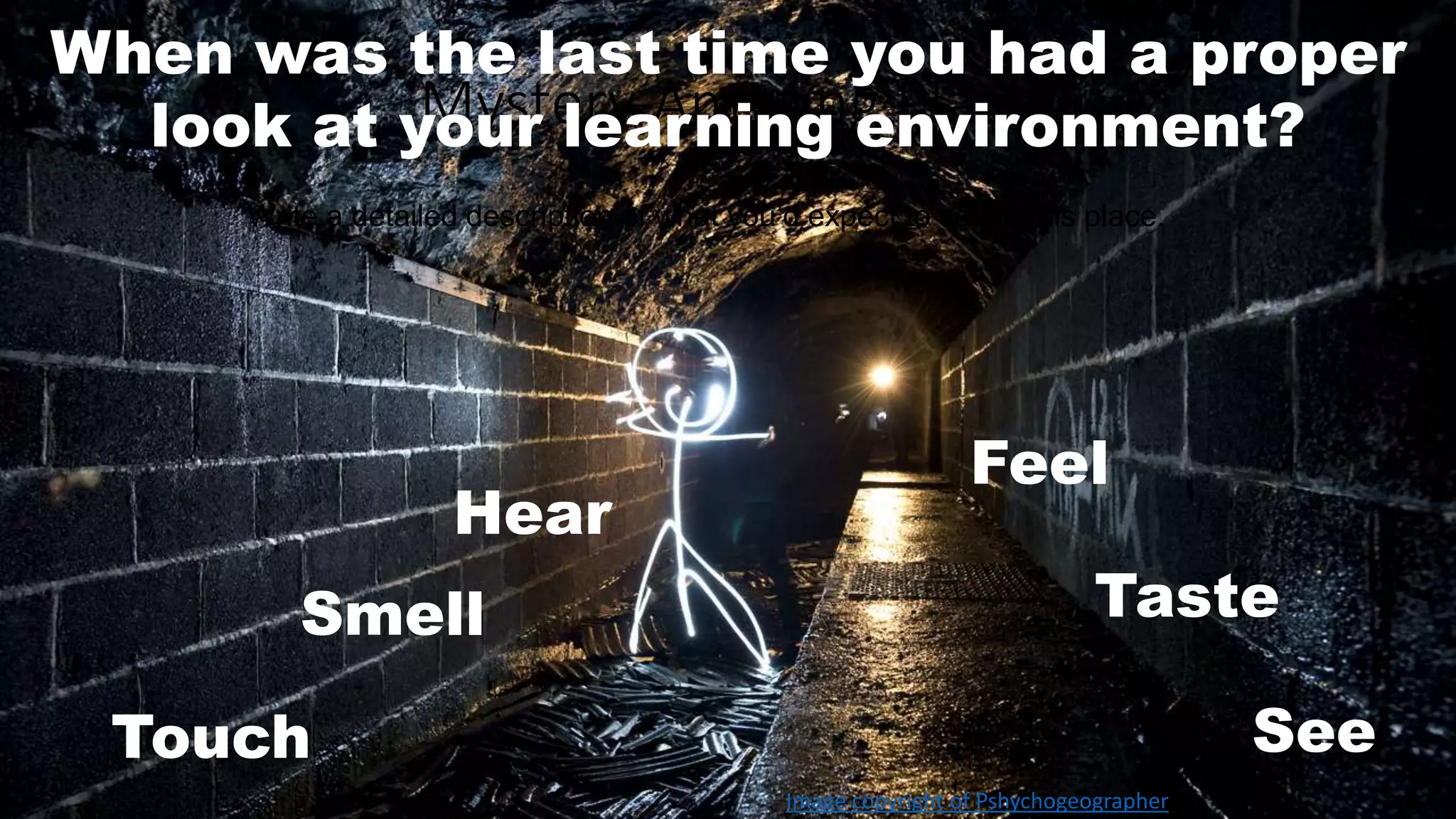
When was the last time you had a proper 
Mystery Amazing Place 
look at your learning environment? 
Write a detailed description of what you’d expect to see in this place. 
Hear 
Smell 
Feel 
Taste 
Touch See 
Image copyright of Pshychogeographer
Microsoft Expert educator, Google certified teacher, 
Marathon Runner, Adventurer, Author, Pedagogic 
Troublemaker, Fellow of the RGS, Dream Teacher, Dad, 
Husband, Welshman, Geographer, Assistant Head, 
Microsoft Expert educator, Google certified teacher, 
Marathon Runner, Adventurer, Author, Pedagogic 
Troublemaker, Fellow of the RGS, Dream Teacher, Dad, 
Husband, Welshman, Geographer, Assistant Head, 
Microsoft Expert educator, Google certified teacher, 
Marathon Runner, Adventurer, Author, Pedagogic 
Troublemaker, Fellow of the RGS, Dream Teacher, Dad, 
Husband, Welshman, Geographer, Assistant Head, 
Microsoft Expert educator, Google certified teacher, 
Marathon Runner, Adventurer, Author, Pedagogic
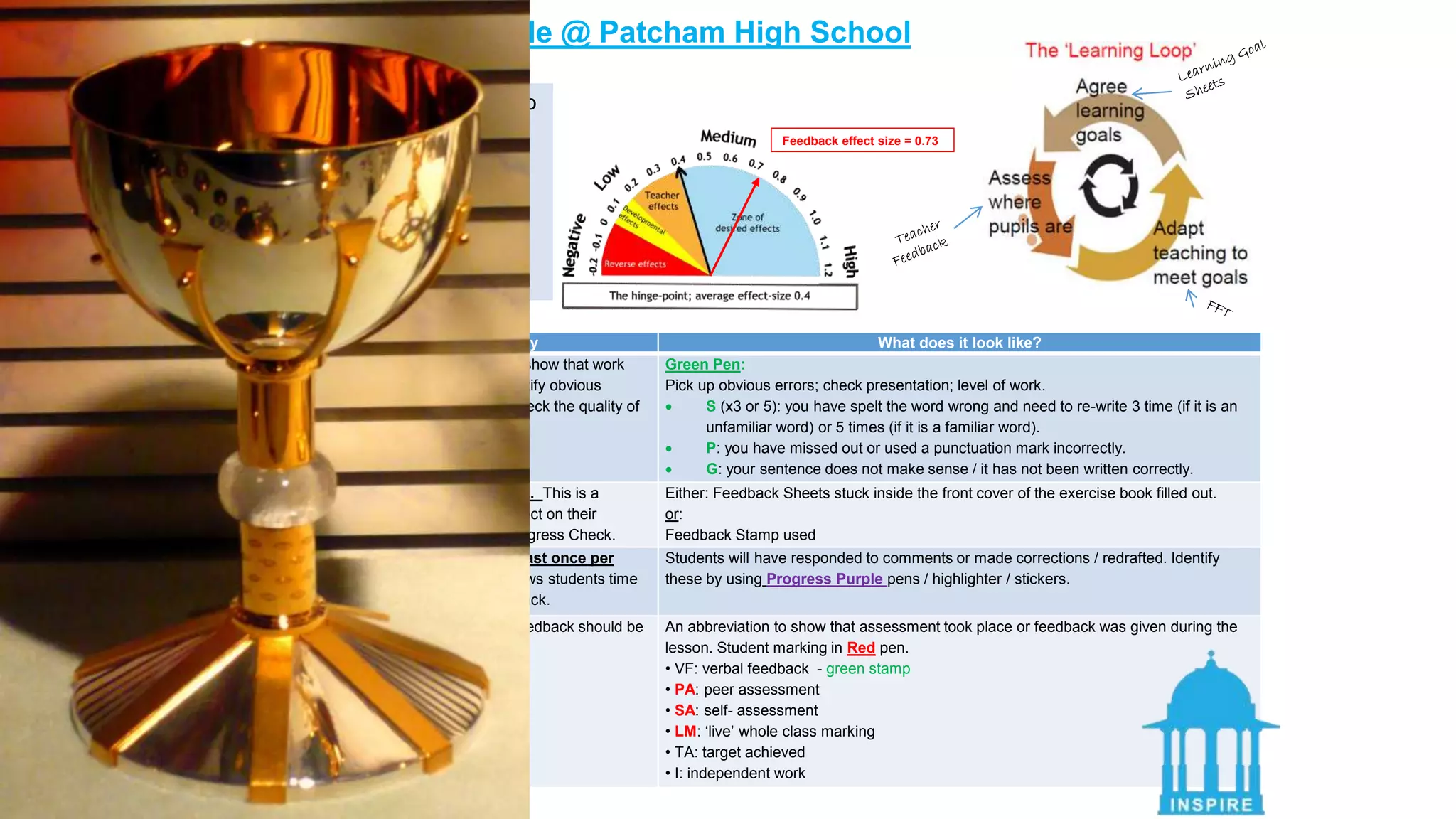
Holy Grail v Tool Shed 
Holy Grail photo Source via Flickr and a CC licence. Toolbox photo source via Flickr and a CC licence
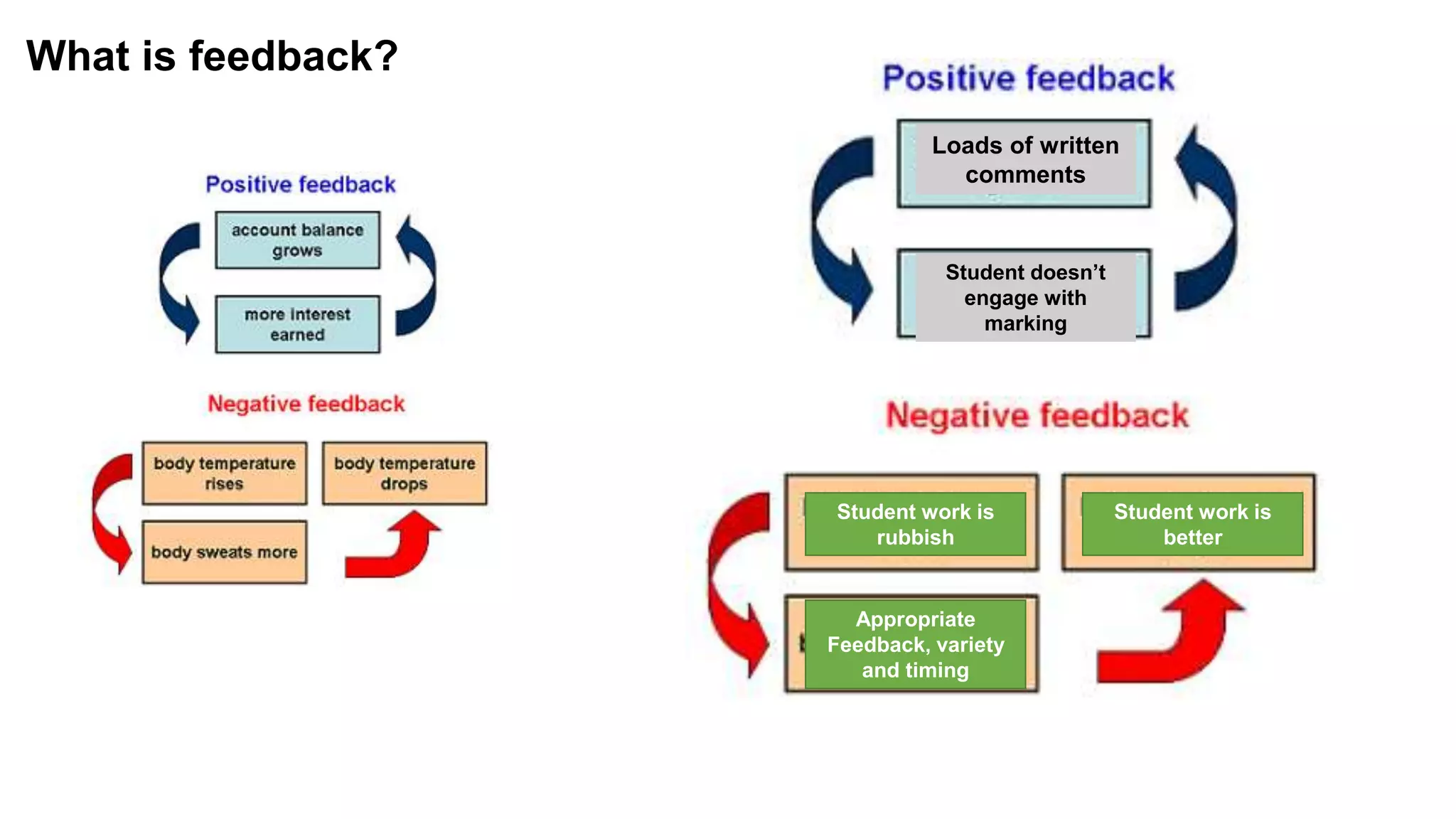
Loads of written 
comments 
Student doesn’t 
engage with 
marking 
Student work is 
rubbish 
Appropriate 
Feedback, variety 
and timing 
Student work is 
better 
What is feedback?
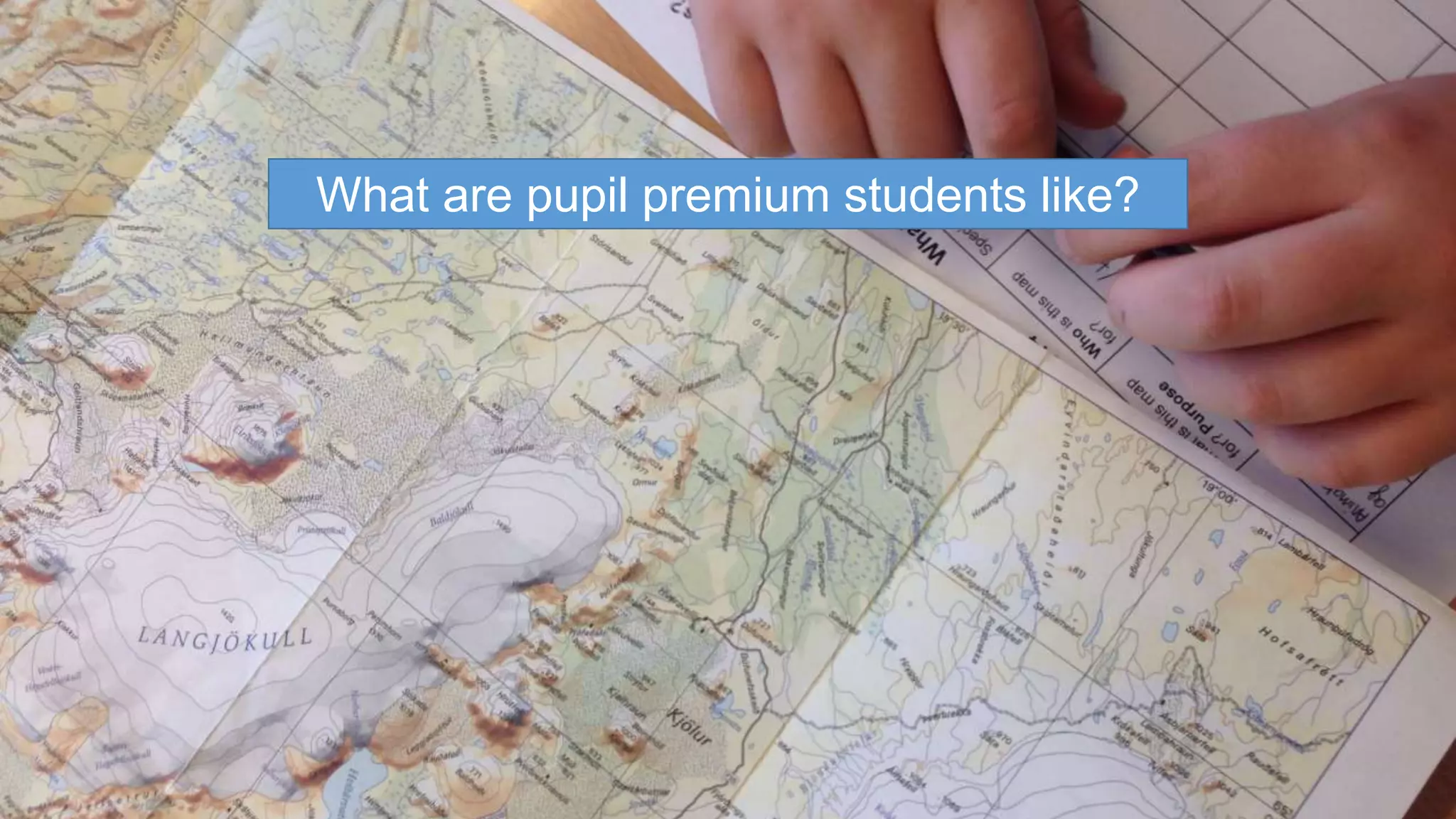
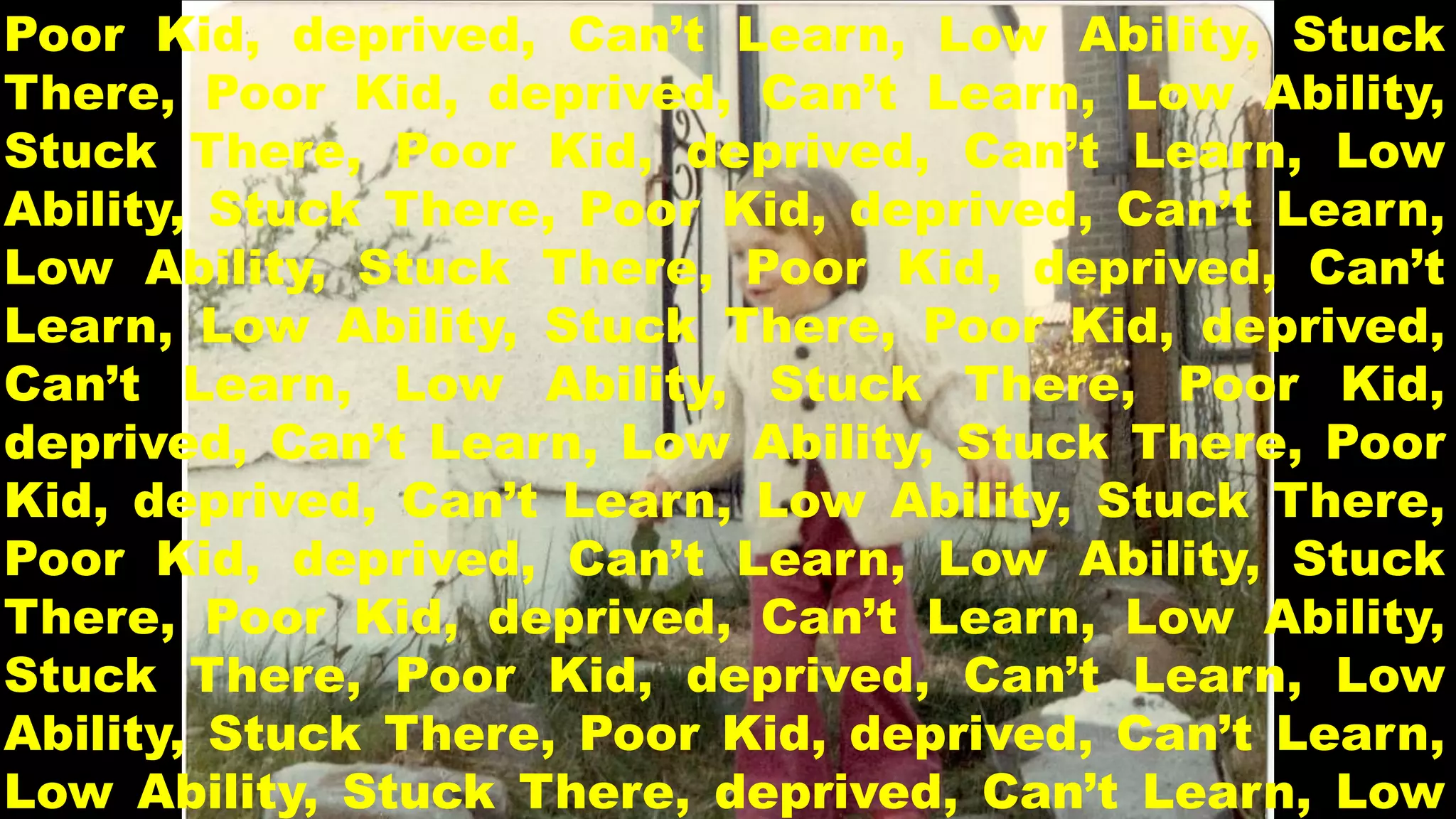
What are pupil premium students like?
Poor Kid, deprived, Can’t Learn, Low Ability, Stuck 
There, Poor Kid, deprived, Can’t Learn, Low Ability, 
Stuck There, Poor Kid, deprived, Can’t Learn, Low 
Ability, Stuck There, Poor Kid, deprived, Can’t Learn, 
Low Ability, Stuck There, Poor Kid, deprived, Can’t 
Learn, Low Ability, Stuck There, Poor Kid, deprived, 
Can’t Learn, Low Ability, Stuck There, Poor Kid, 
deprived, Can’t Learn, Low Ability, Stuck There, Poor 
Kid, deprived, Can’t Learn, Low Ability, Stuck There, 
Poor Kid, deprived, Can’t Learn, Low Ability, Stuck 
There, Poor Kid, deprived, Can’t Learn, Low Ability, 
Stuck There, Poor Kid, deprived, Can’t Learn, Low 
Ability, Stuck There, Poor Kid, deprived, Can’t Learn, 
Low Ability, Stuck There, deprived, Can’t Learn, Low
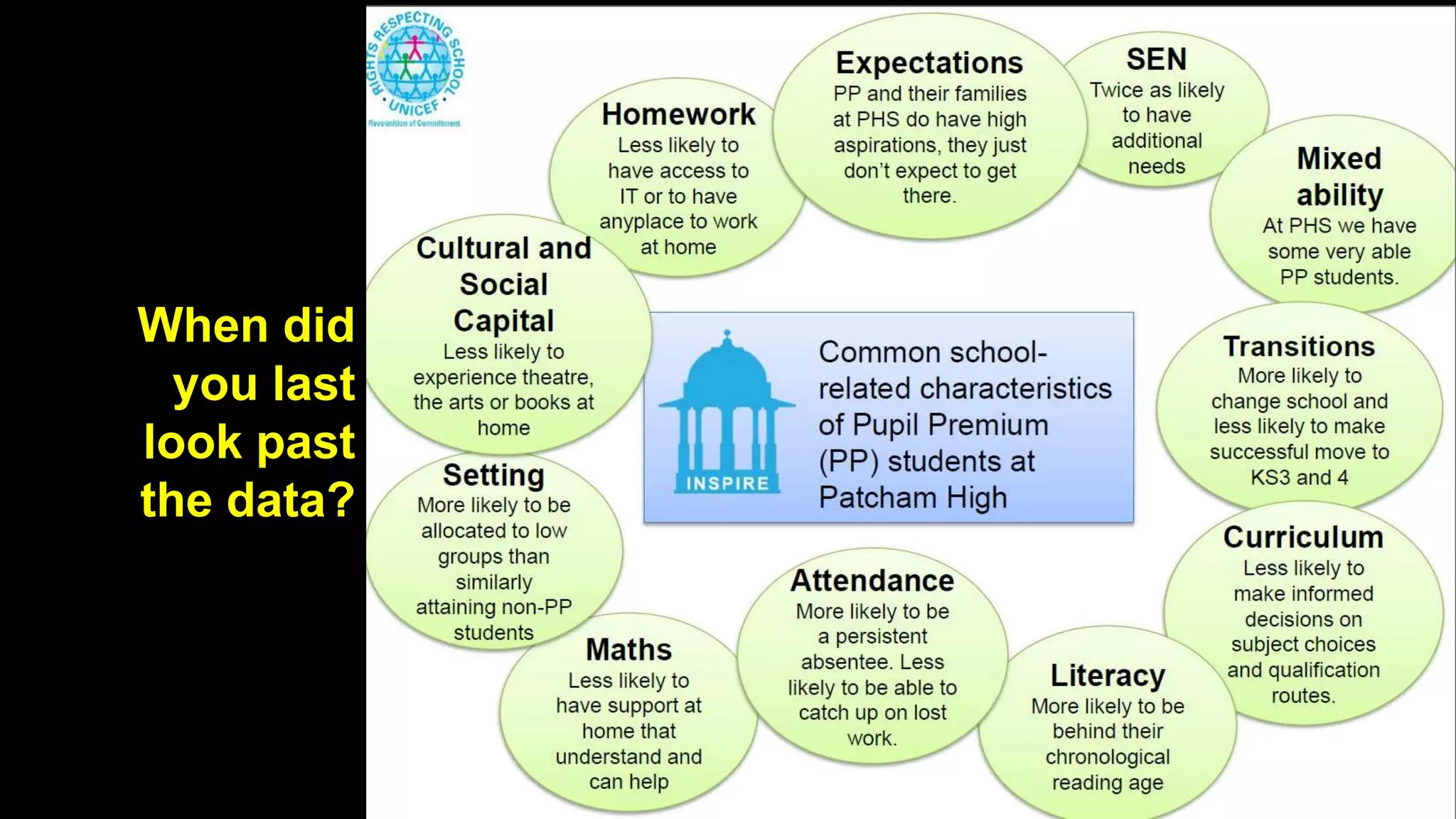
When did 
you last 
look past 
the data?
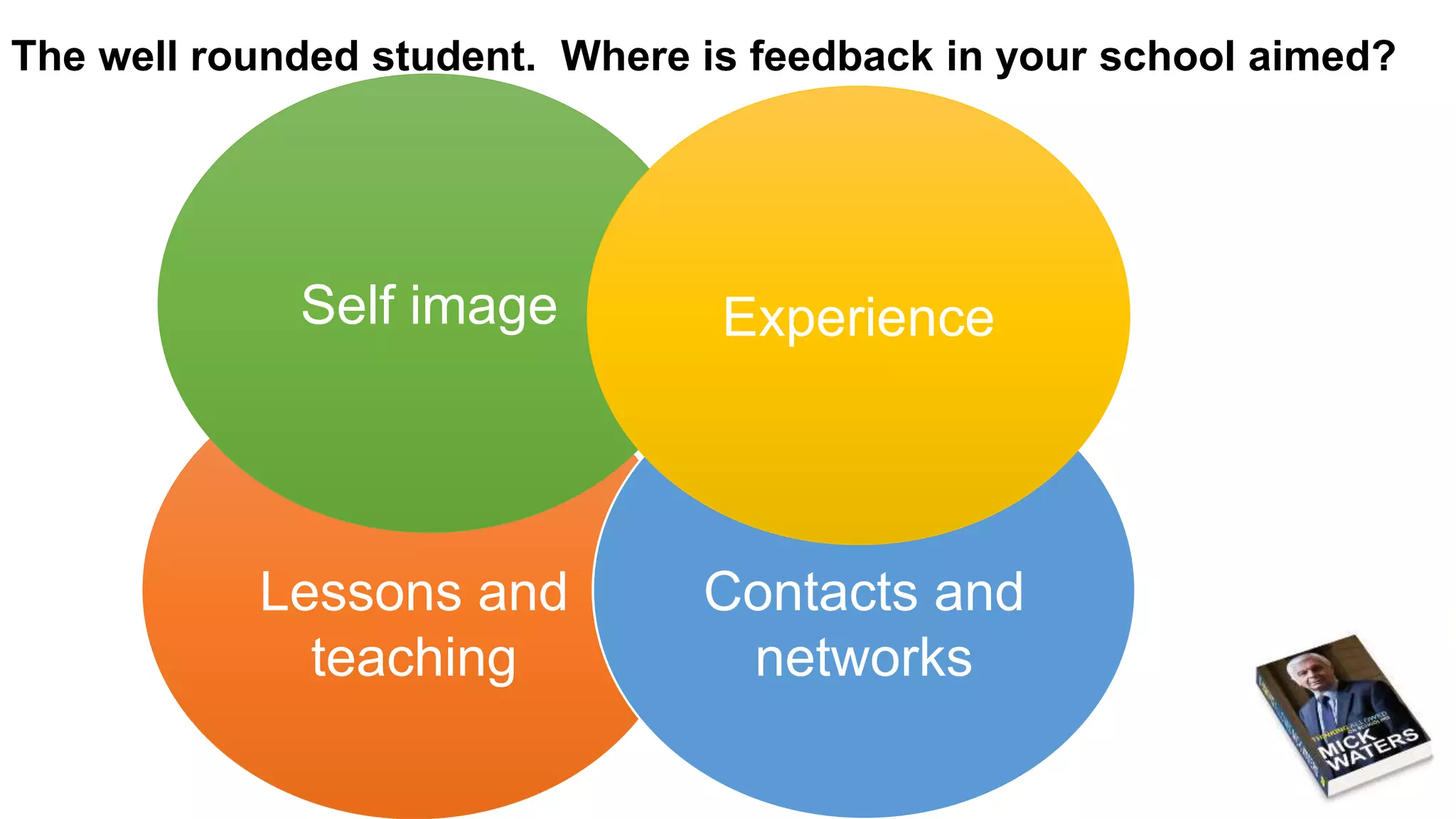
The well rounded student. Where is feedback in your school aimed? 
Self image Experience 
Lessons and 
teaching 
Contacts and 
networks
Should feedback be different for Pupil Premium students? 
If so, how?
Is the most useful form of feedback from teachers to students?
In LP, everyone is a student and everyone is a teacher. 
Led by pupils; guided by professionals; focused on learning.
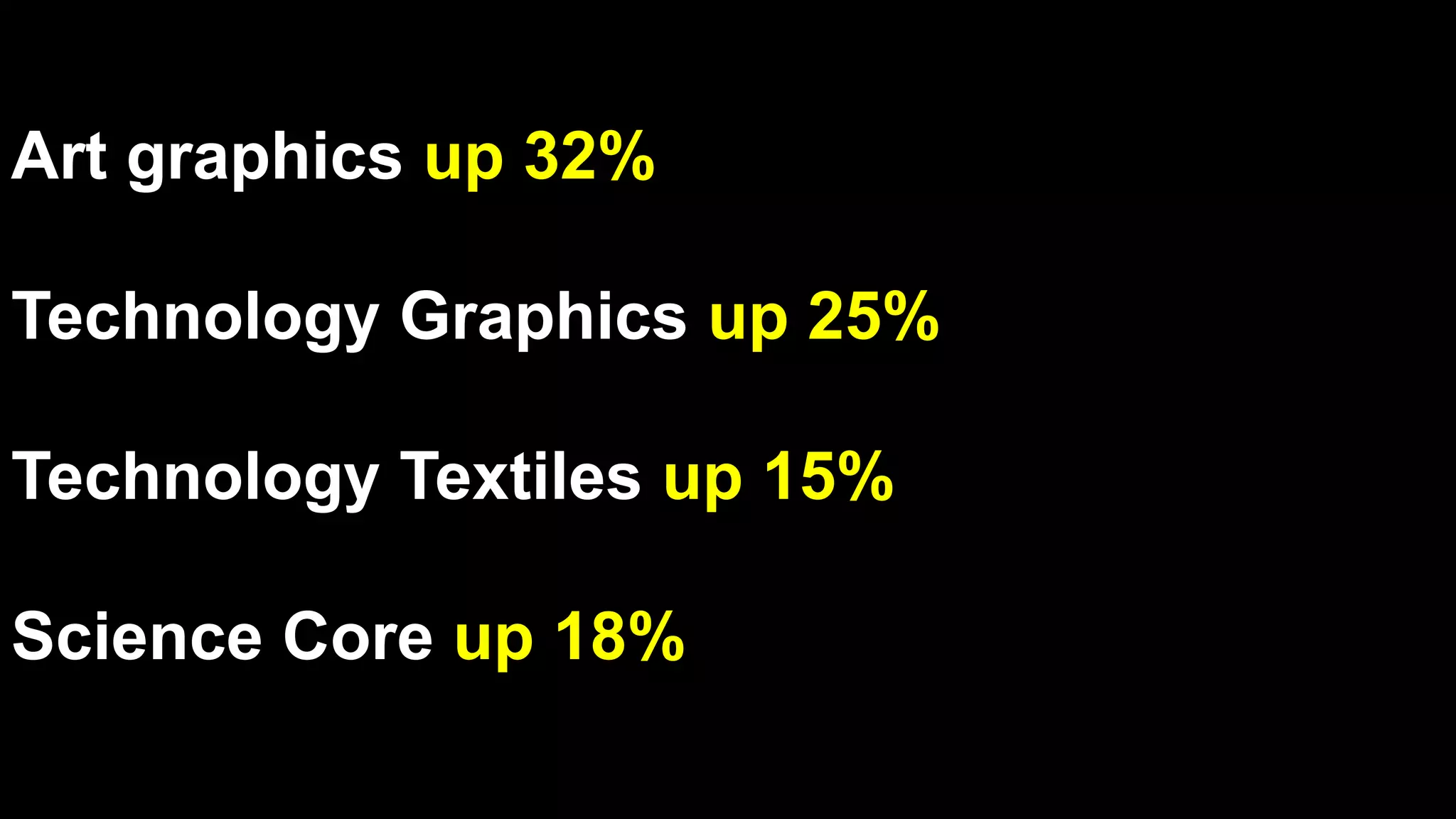
Art graphics up 32% 
Technology Graphics up 25% 
Technology Textiles up 15% 
Science Core up 18%
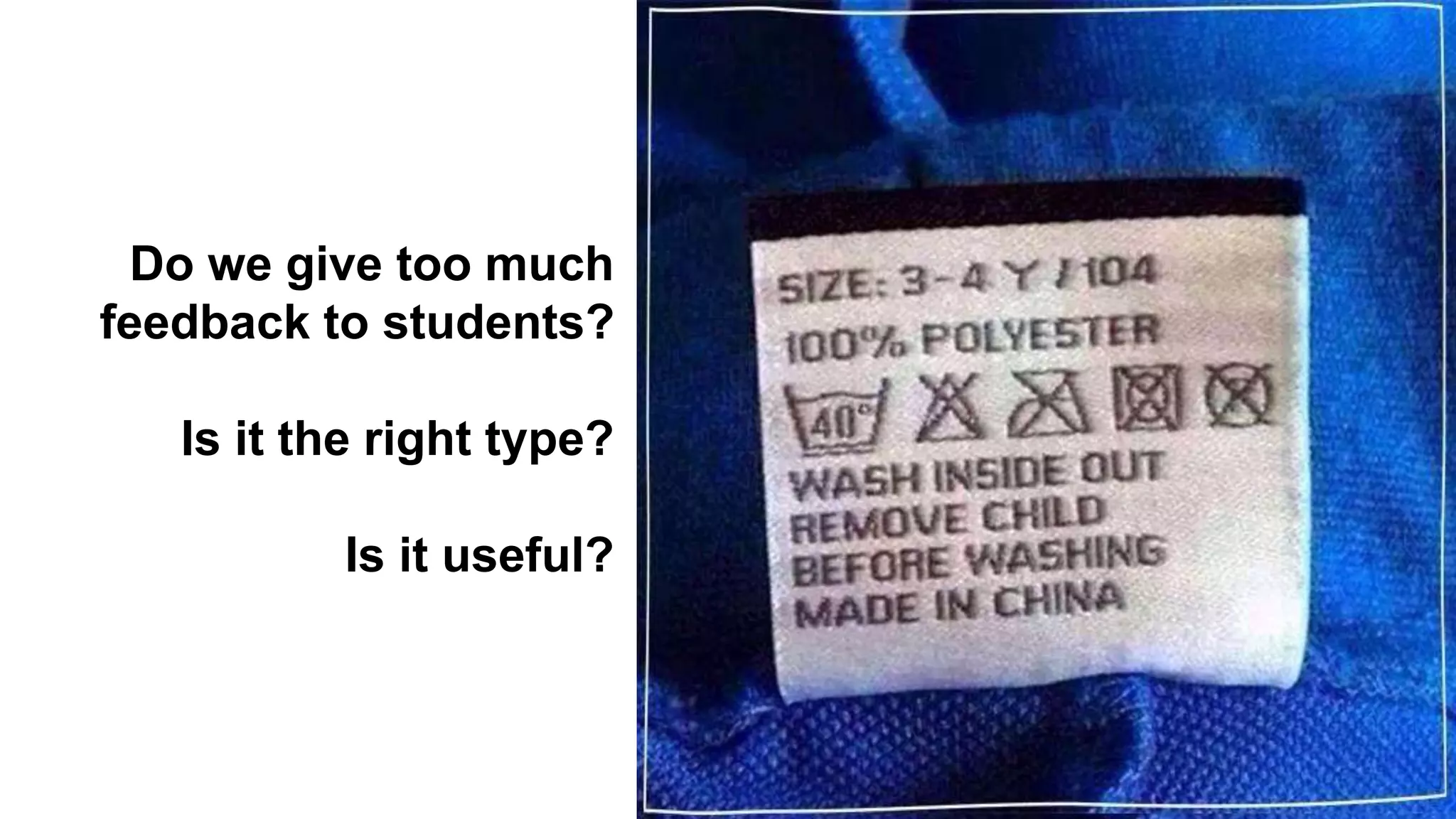
Do we give too much 
feedback to students? 
Is it the right type? 
Is it useful?
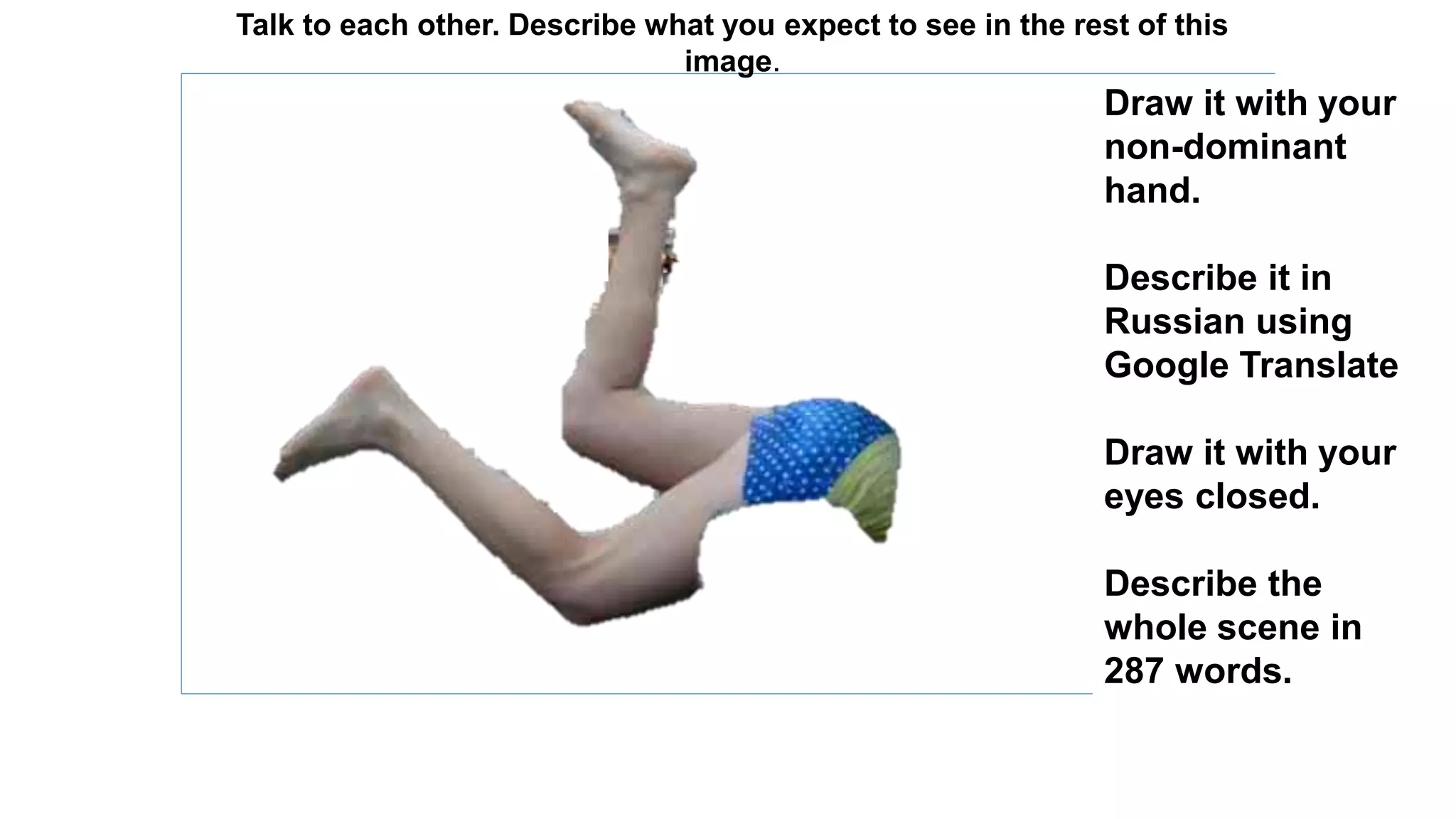
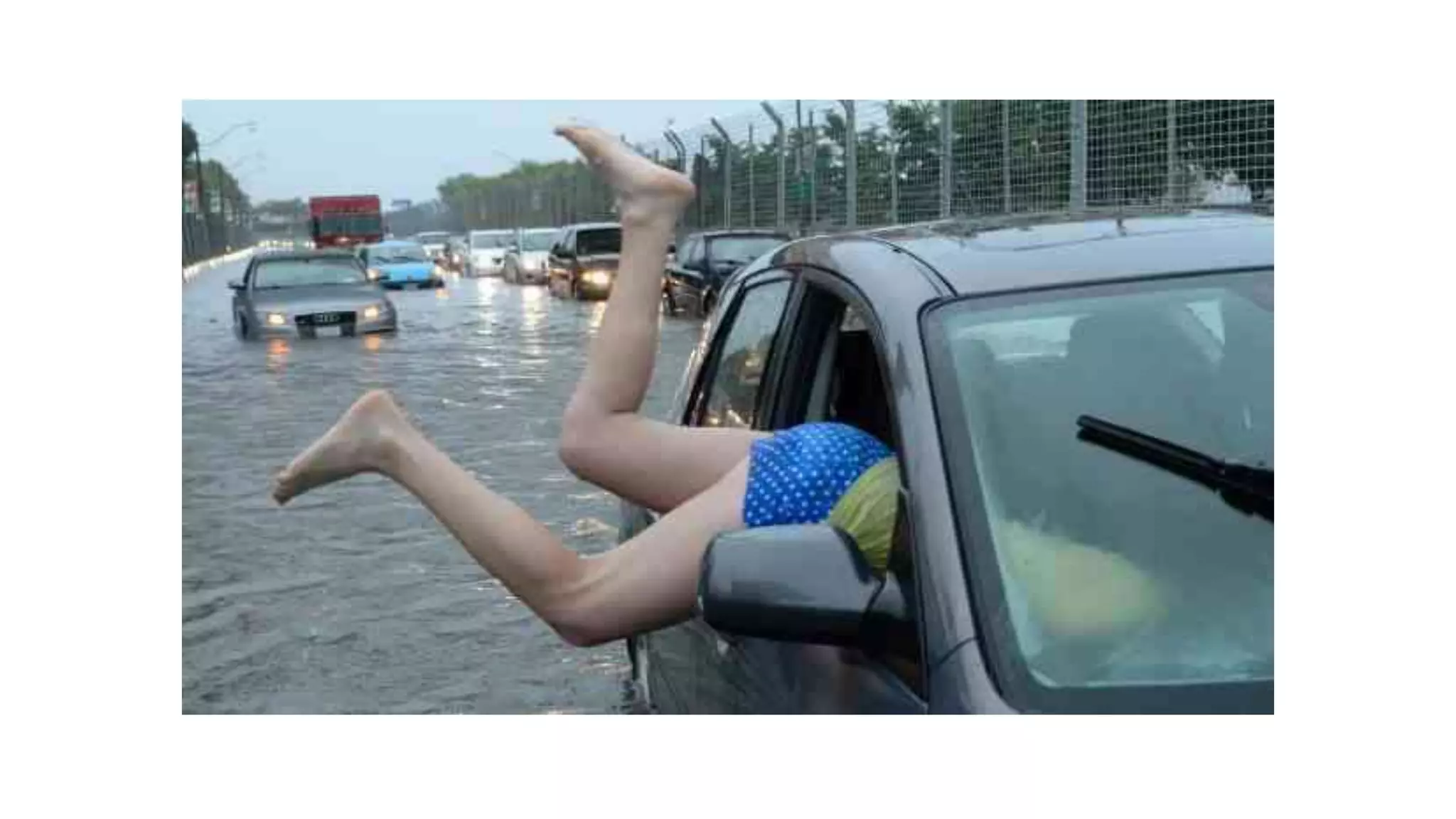
Talk to each other. Describe what you expect to see in the rest of this 
image. 
Draw it with your 
non-dominant 
hand. 
Describe it in 
Russian using 
Google Translate 
Draw it with your 
eyes closed. 
Describe the 
whole scene in 
287 words.
Learning exhibitions
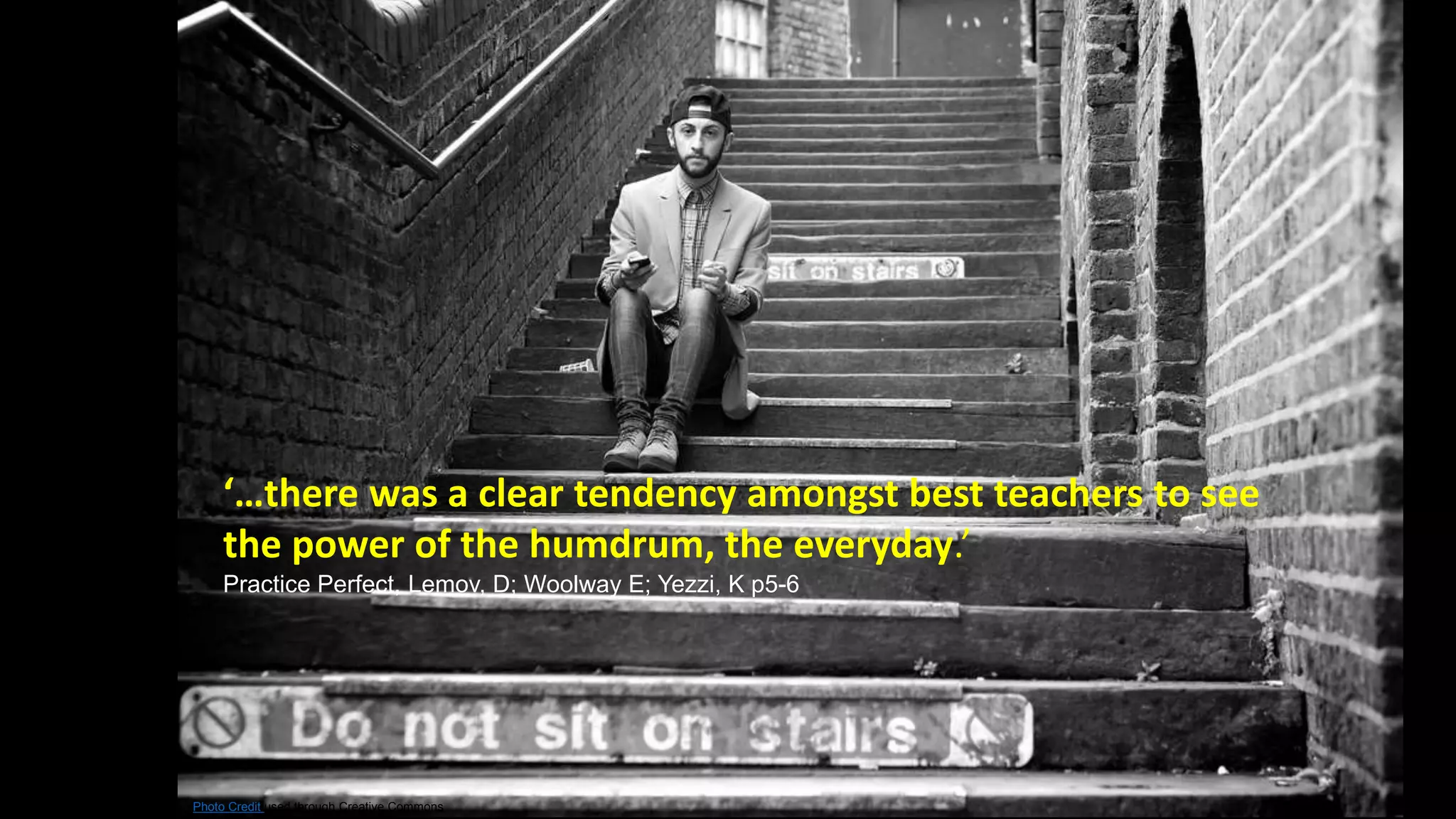
‘…there was a clear tendency amongst best teachers to see 
the power of the humdrum, the everyday.’ 
Practice Perfect, Lemov, D; Woolway E; Yezzi, K p5-6 
Photo Credit used through Creative Commons
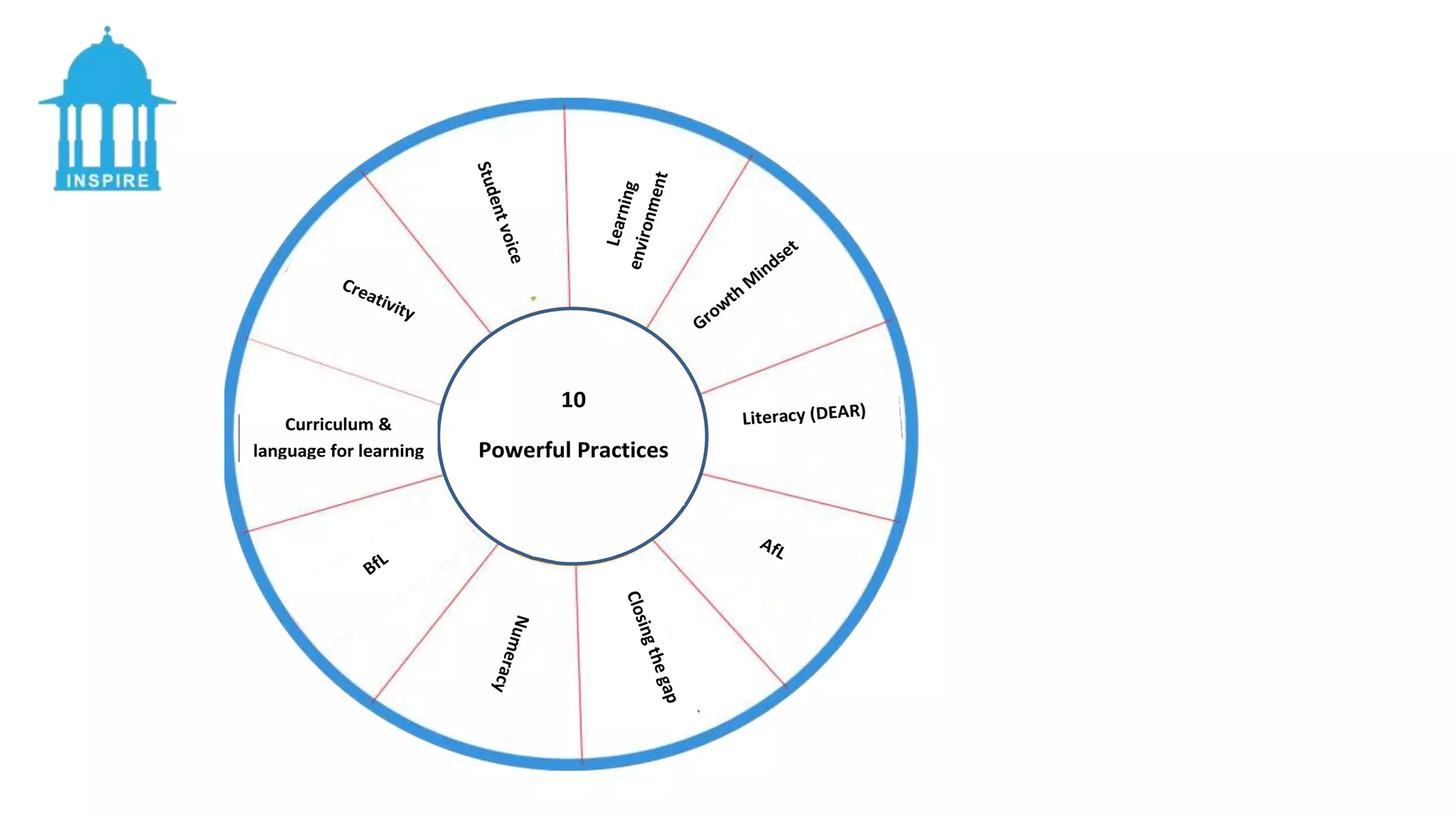
Practices that reflect the importance of personalised education, 
the power of creativity and the impact of passion in the classroom. 
10 
10 
10 Powerful 
Practices 
Powerful Practices 
Curriculum & 
language for learning 
The lasting measure of good teaching is what the
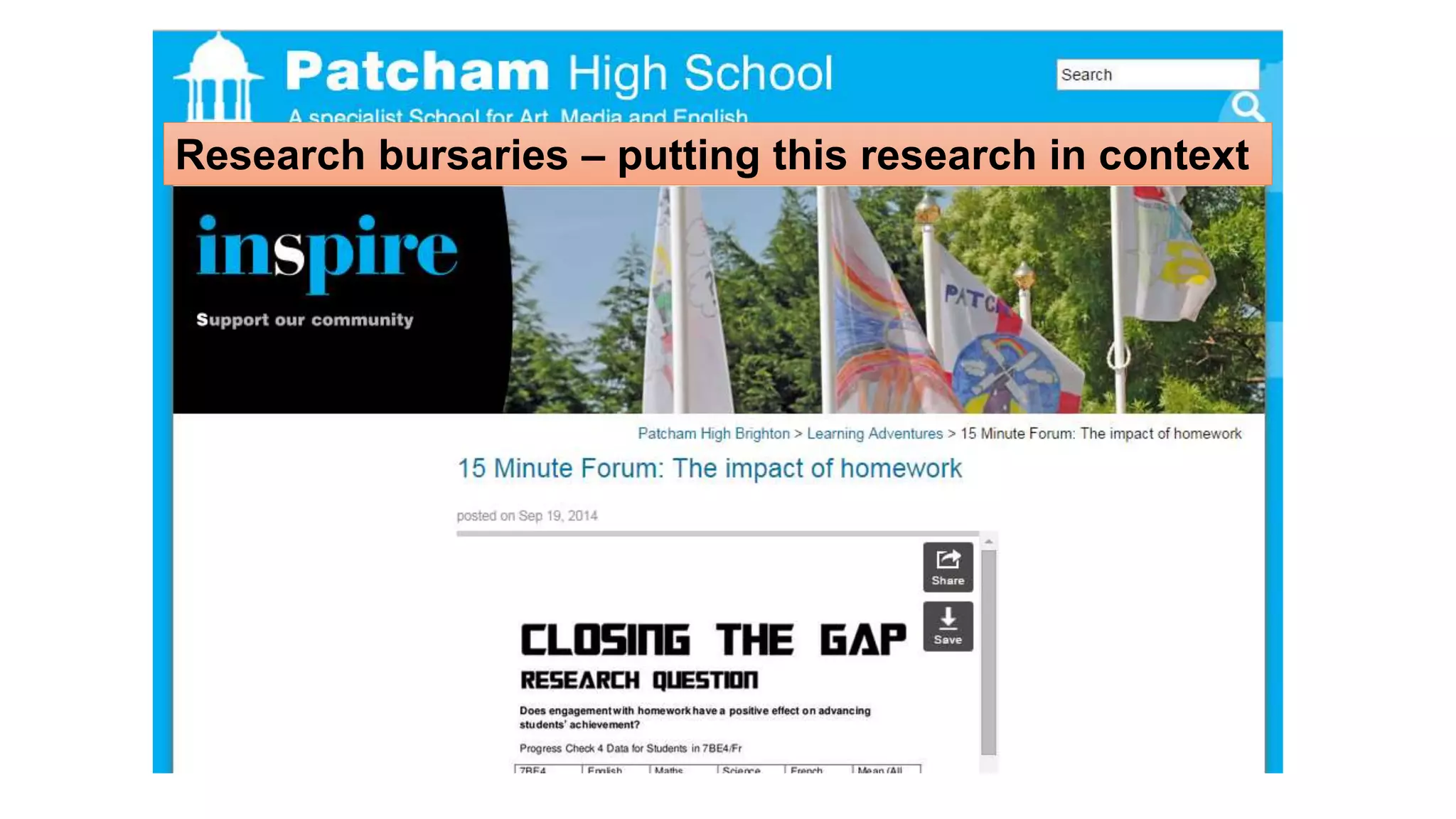
Research bursaries – putting this research in context
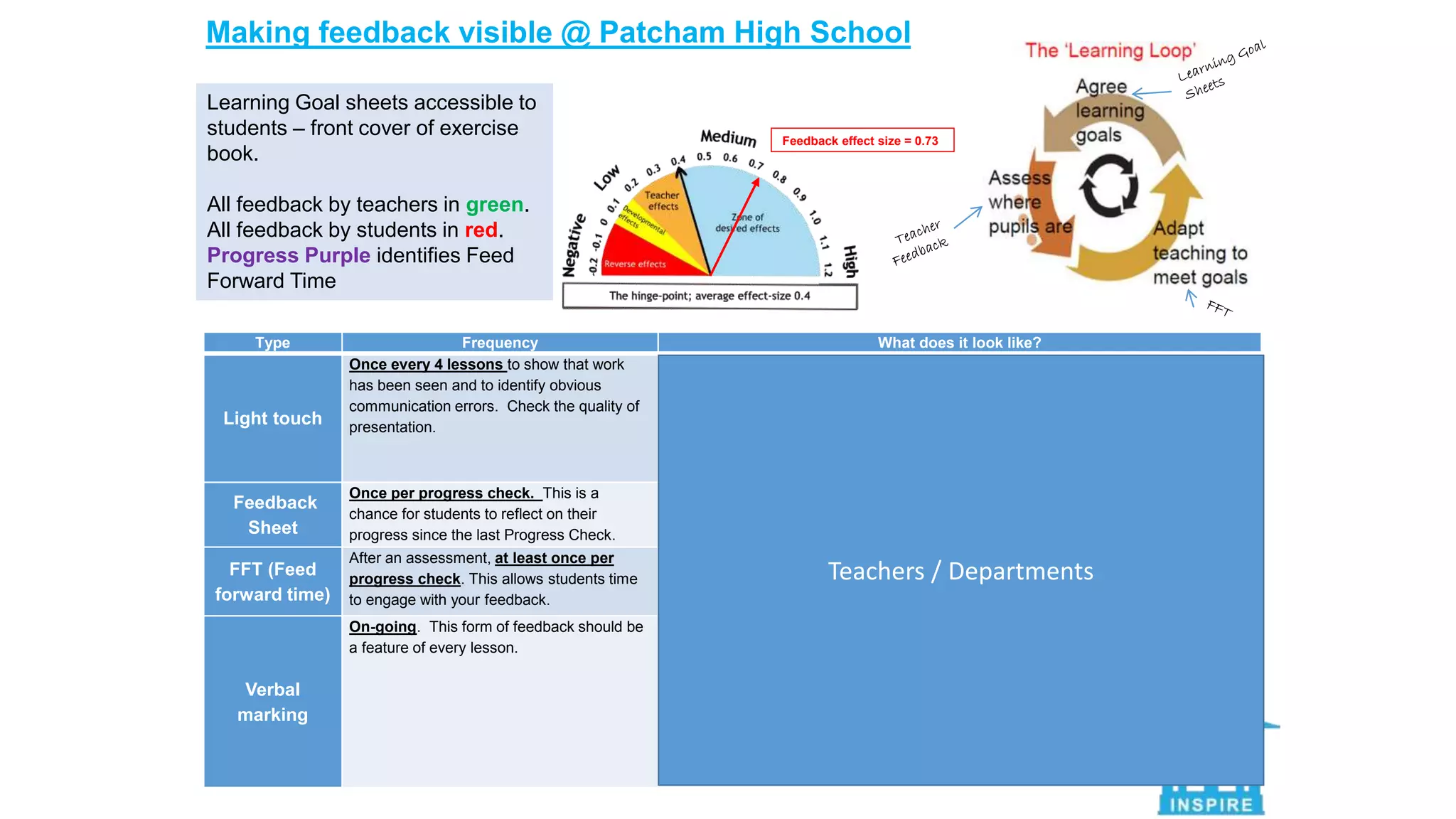
Making feedback visible @ Patcham High School 
Type Frequency What does it look like? 
Light touch 
Once every 4 lessons to show that work 
has been seen and to identify obvious 
communication errors. Check the quality of 
presentation. 
Green Pen: 
Pick up obvious errors; check presentation; level of work. 
 S (x3 or 5): you have spelt the word wrong and need to re-write 3 time (if it is an 
unfamiliar word) or 5 times (if it is a familiar word). 
 P: you have missed out or used a punctuation mark incorrectly. 
 G: your sentence does not make sense / it has not been written correctly. 
Feedback 
Sheet 
Once per progress check. This is a 
chance for students to reflect on their 
progress since the last Progress Check. 
Either: Feedback Sheets stuck inside the front cover of the exercise book filled out. 
or: 
Feedback Stamp used 
FFT (Feed 
forward time) 
After an assessment, at least once per 
progress check. This allows students time 
to engage with your feedback. 
Students will have responded to comments or made corrections / redrafted. Identify 
these by using Progress Purple pens / highlighter / stickers. 
Verbal 
marking 
On-going. This form of feedback should be 
a feature of every lesson. 
An abbreviation to show that assessment took place or feedback was given during the 
lesson. Student marking in Red pen. 
• VF: verbal feedback - green stamp 
• PA: peer assessment 
• SA: self- assessment 
• LM: ‘live’ whole class marking 
• TA: target achieved 
• I: independent work 
Learning Goal sheets accessible to 
students – front cover of exercise 
book. 
All feedback by teachers in green. 
All feedback by students in red. 
Progress Purple identifies Feed 
Forward Time 
Feedback effect size = 0.73
Making feedback visible @ Patcham High School 
Type Frequency What does it look like? 
Light touch 
Once every 4 lessons to show that work 
has been seen and to identify obvious 
communication errors. Check the quality of 
presentation. 
Green Pen: 
Pick up obvious errors; check presentation; level of work. 
 S (x3 or 5): you have spelt the word wrong and need to re-write 3 time (if it is an 
unfamiliar word) or 5 times (if it is a familiar word). 
 P: you have missed out or used a punctuation mark incorrectly. 
 G: your sentence does not make sense / it has not been written correctly. 
Feedback 
Sheet 
Once per progress check. This is a 
chance for students to reflect on their 
progress since the last Progress Check. 
Either: Feedback Sheets stuck inside the front cover of the exercise book filled out. 
or: 
Feedback Stamp used 
FFT (Feed 
forward time) 
After an assessment, at least once per 
progress check. This allows students time 
to engage with your feedback. 
Students will have responded to comments or made corrections / redrafted. Identify 
these by using Progress Purple pens / highlighter / stickers. 
Verbal 
marking 
On-going. This form of feedback should be 
a feature of every lesson. 
An abbreviation to show that assessment took place or feedback was given during the 
lesson. Student marking in Red pen. 
• VF: verbal feedback - green stamp 
• PA: peer assessment 
• SA: self- assessment 
• LM: ‘live’ whole class marking 
• TA: target achieved 
• I: independent work 
Learning Goal sheets accessible to 
students – front cover of exercise 
book. 
All feedback by teachers in green. 
All feedback by students in red. 
Progress Purple identifies Feed 
Forward Time 
Feedback effect size = 0.73 
Teachers / Departments
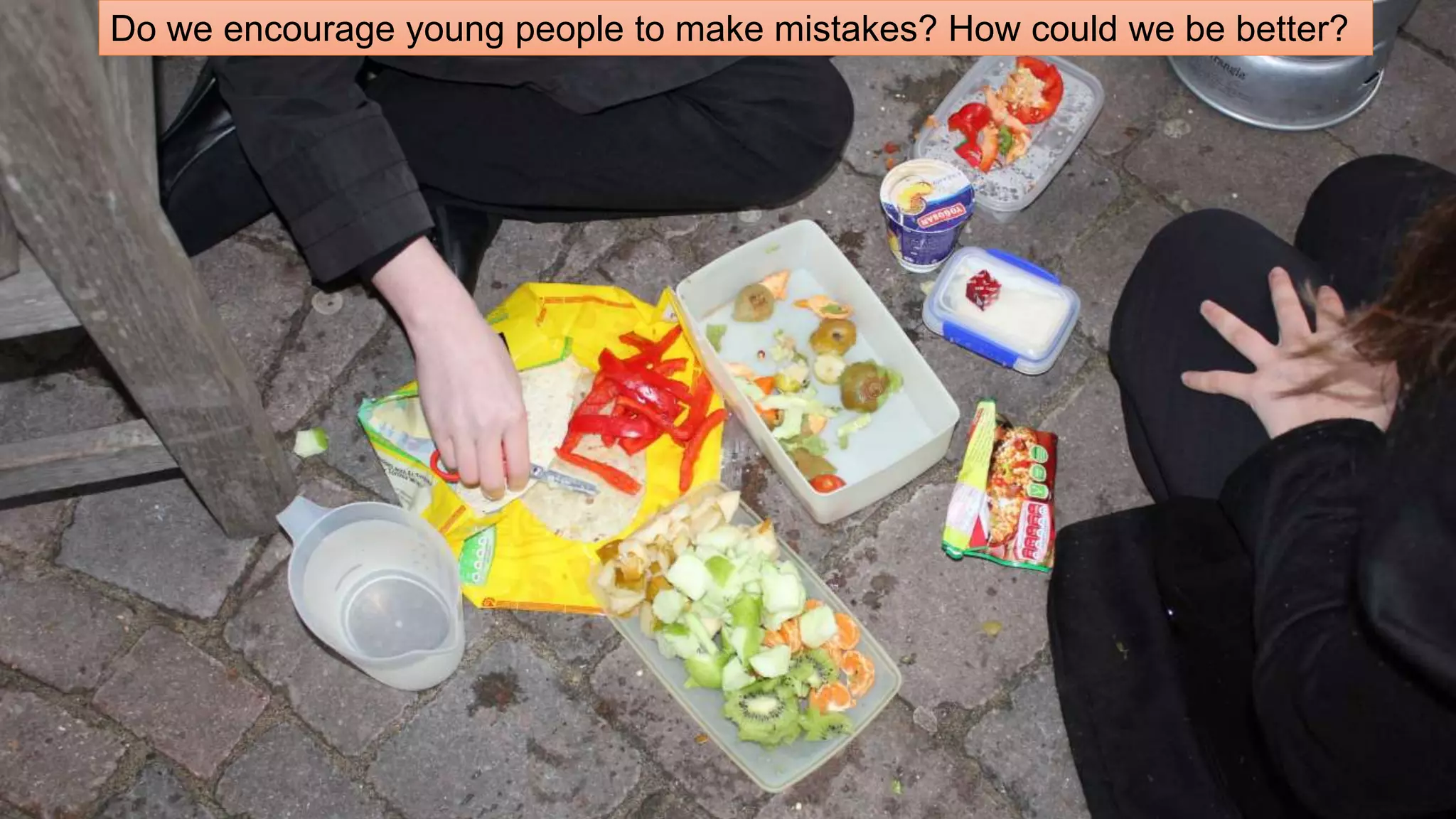
Do we encourage young people to make mistakes? How could we be better?
Holy Grail v Tool Shed
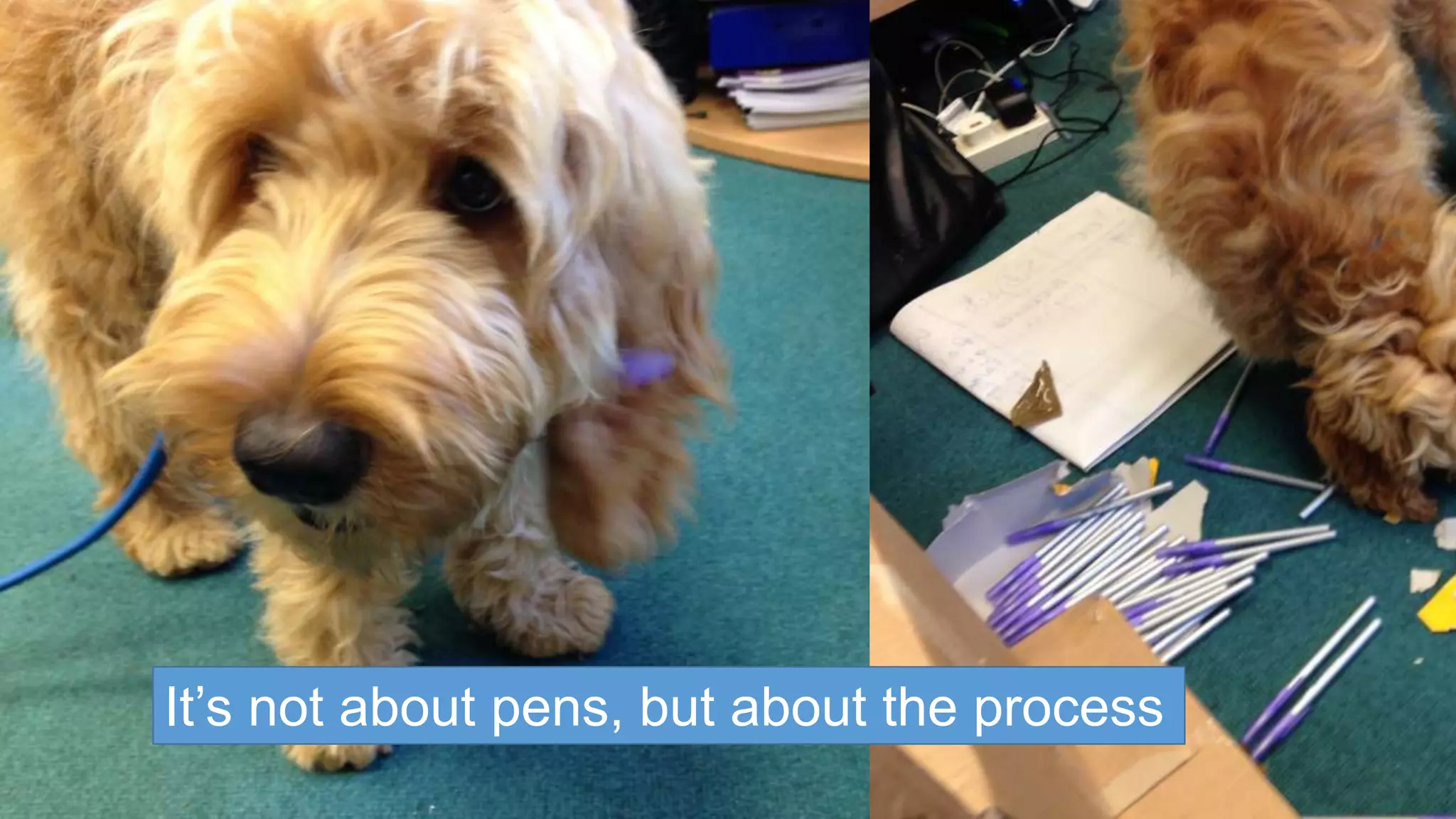
It’s not about pens, but about the process
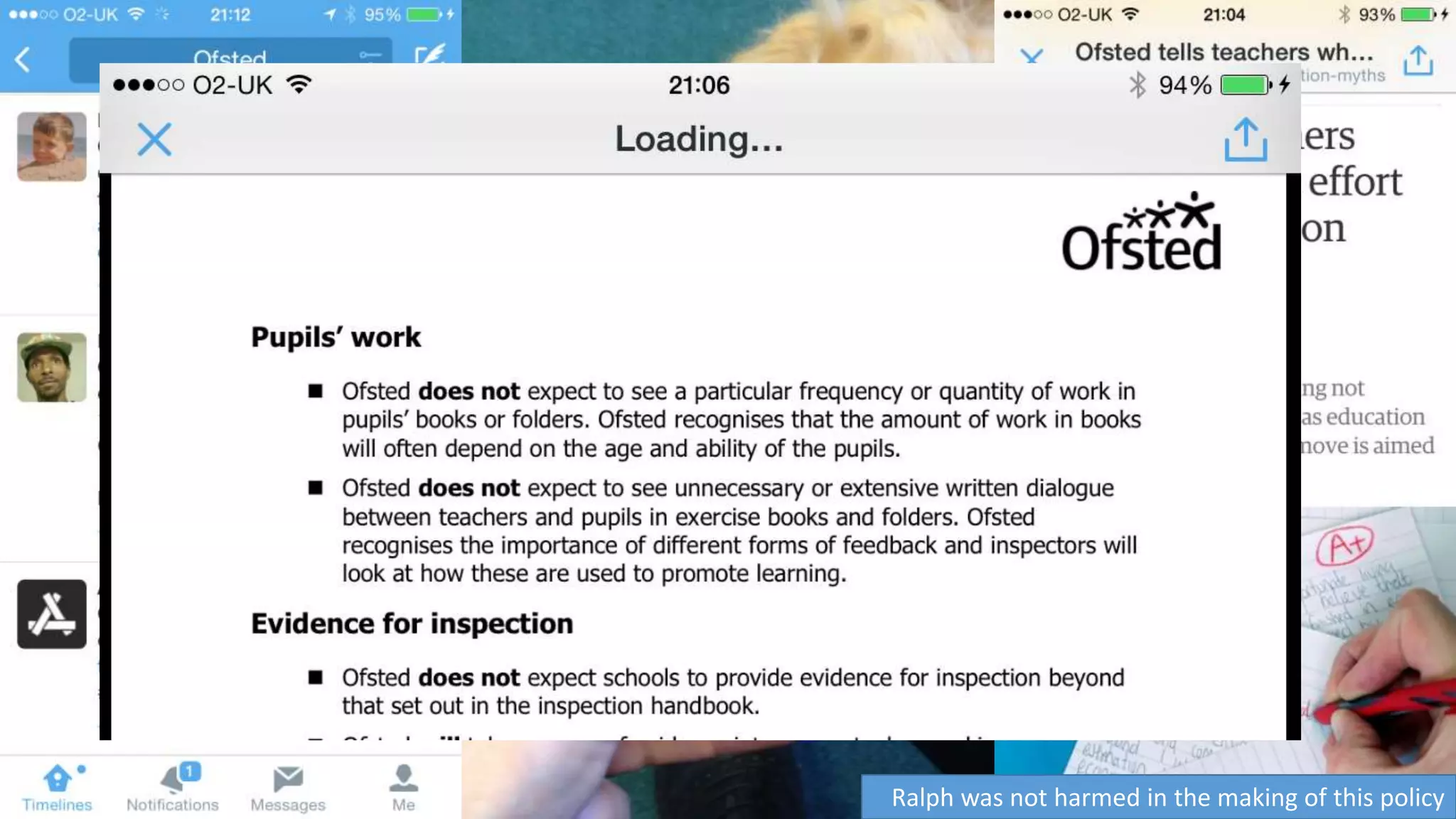
Ralph was not harmed in the making of this policy
Teachers need to be guerrillas.
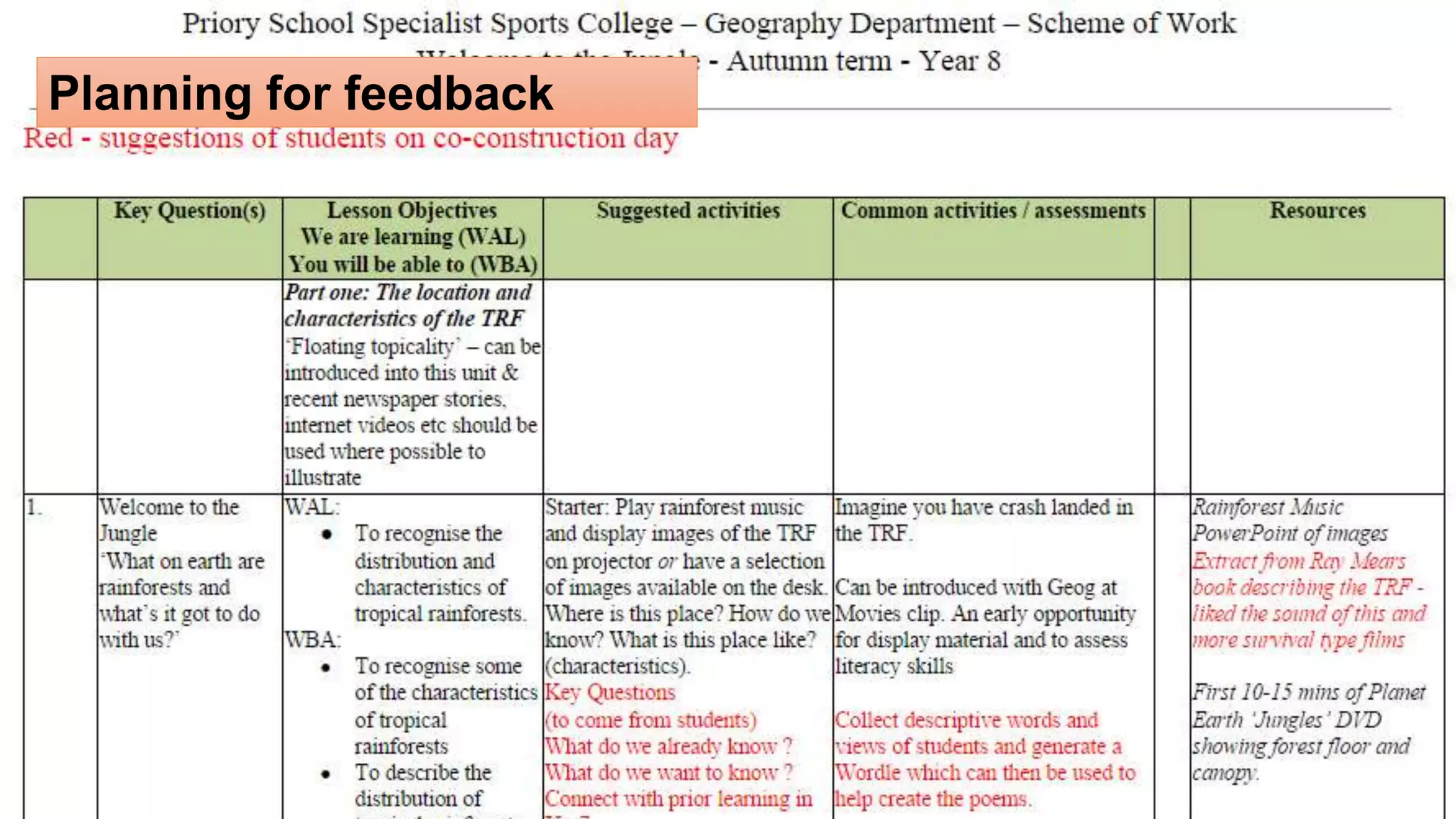
Planning for feedback
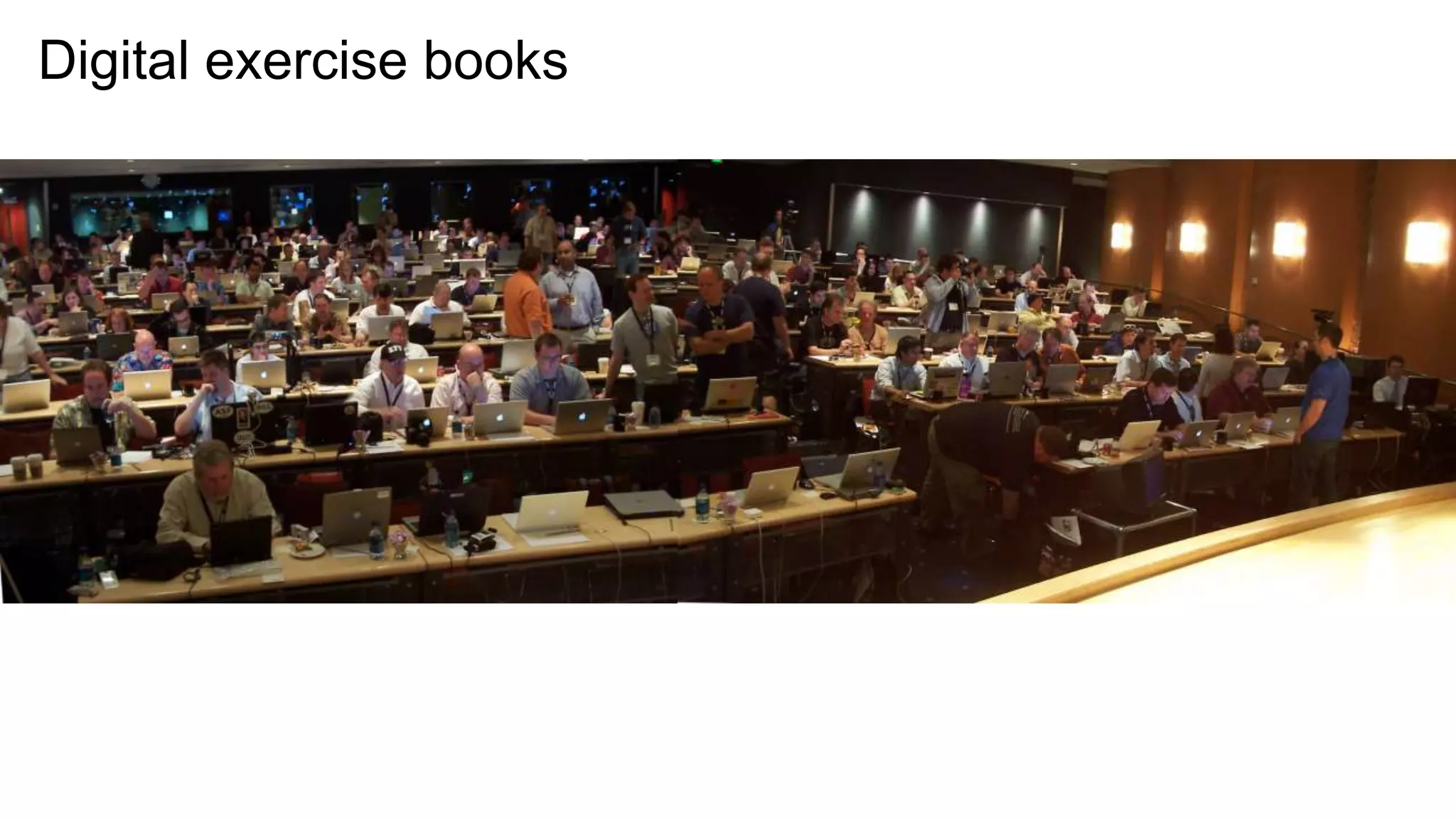
Digital exercise books
Teachers will wait for permission
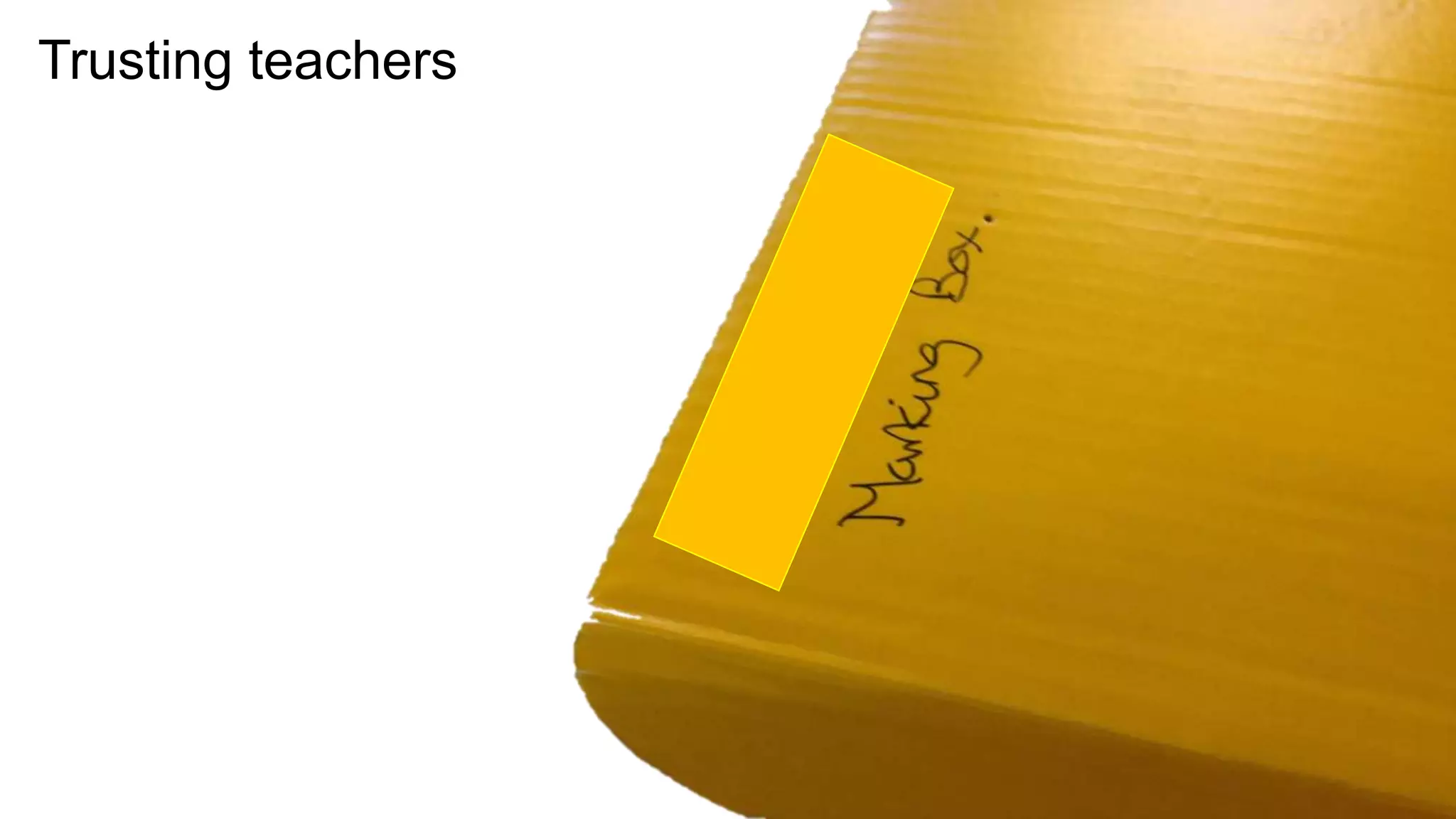
Trusting teachers
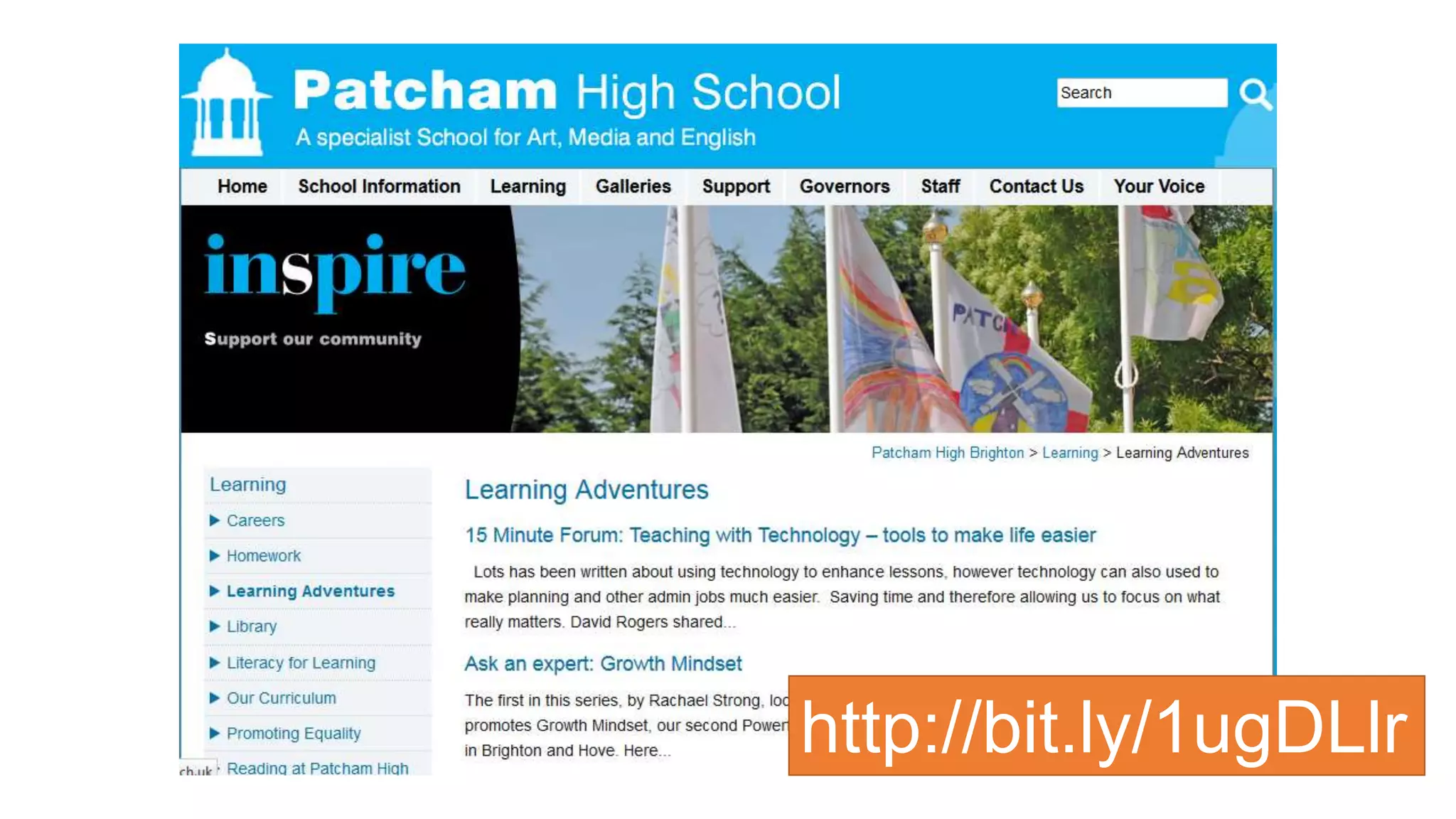
http://bit.ly/1ugDLlr
The late, great Dicky Fox.
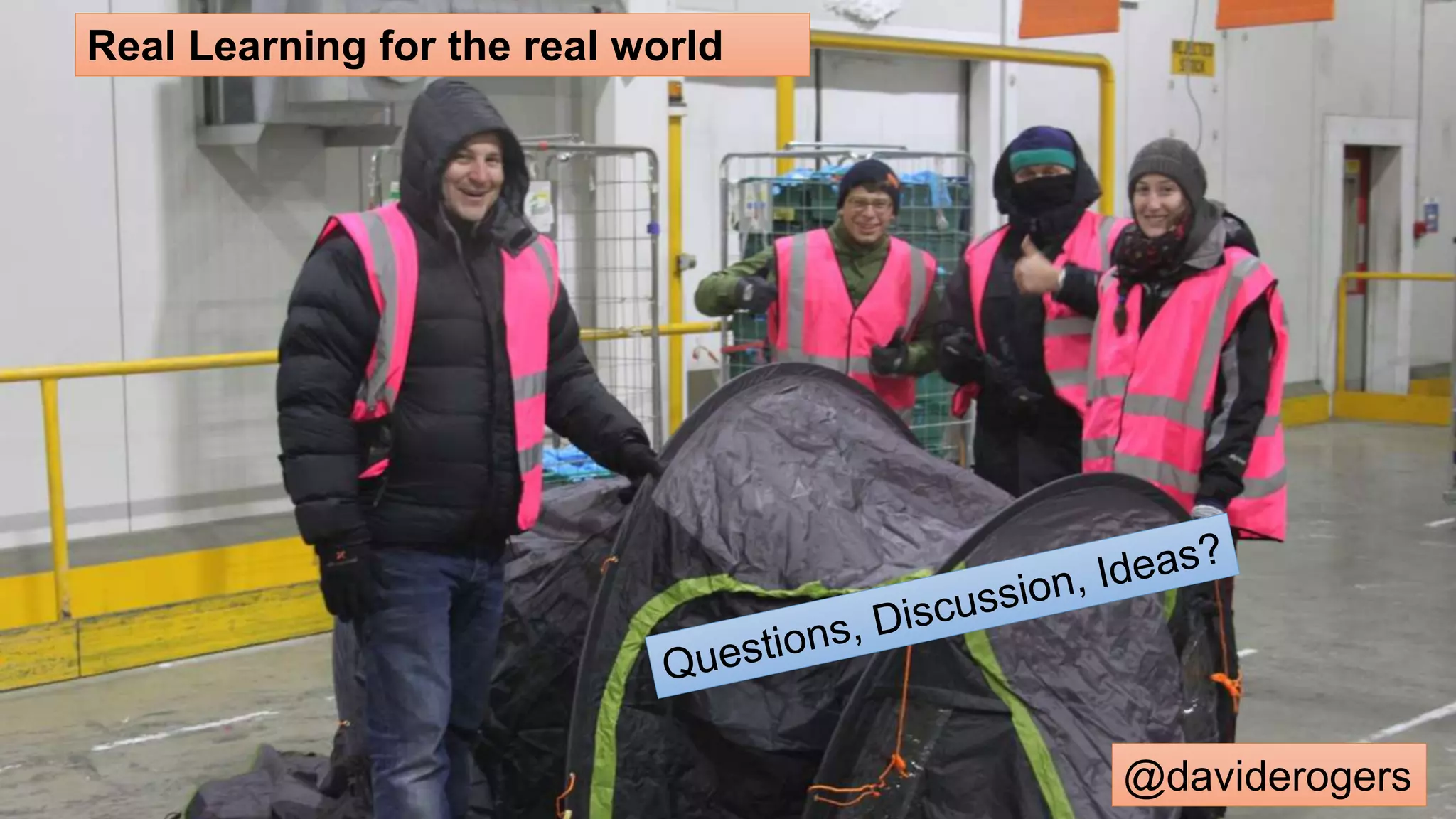
Real Learning for the real world 
@daviderogers

Feedback: it's not marking but expert teaching.

  • 1.
    Feedback: it’s notmarking, it’s expert teaching David Rogers #TLT14
  • 2.
  • 3.
    How do you know that feedback is taking place in your school? What a top event! Really?
  • 4.
    When was thelast time you had a proper Mystery Amazing Place look at your learning environment? Write a detailed description of what you’d expect to see in this place. Hear Smell Feel Taste Touch See Image copyright of Pshychogeographer
  • 5.
    Microsoft Expert educator,Google certified teacher, Marathon Runner, Adventurer, Author, Pedagogic Troublemaker, Fellow of the RGS, Dream Teacher, Dad, Husband, Welshman, Geographer, Assistant Head, Microsoft Expert educator, Google certified teacher, Marathon Runner, Adventurer, Author, Pedagogic Troublemaker, Fellow of the RGS, Dream Teacher, Dad, Husband, Welshman, Geographer, Assistant Head, Microsoft Expert educator, Google certified teacher, Marathon Runner, Adventurer, Author, Pedagogic Troublemaker, Fellow of the RGS, Dream Teacher, Dad, Husband, Welshman, Geographer, Assistant Head, Microsoft Expert educator, Google certified teacher, Marathon Runner, Adventurer, Author, Pedagogic
  • 6.
    Holy Grail vTool Shed Holy Grail photo Source via Flickr and a CC licence. Toolbox photo source via Flickr and a CC licence
  • 10.
    Loads of written comments Student doesn’t engage with marking Student work is rubbish Appropriate Feedback, variety and timing Student work is better What is feedback?
  • 11.
    What are pupilpremium students like?
  • 12.
    Poor Kid, deprived,Can’t Learn, Low Ability, Stuck There, Poor Kid, deprived, Can’t Learn, Low Ability, Stuck There, Poor Kid, deprived, Can’t Learn, Low Ability, Stuck There, Poor Kid, deprived, Can’t Learn, Low Ability, Stuck There, Poor Kid, deprived, Can’t Learn, Low Ability, Stuck There, Poor Kid, deprived, Can’t Learn, Low Ability, Stuck There, Poor Kid, deprived, Can’t Learn, Low Ability, Stuck There, Poor Kid, deprived, Can’t Learn, Low Ability, Stuck There, Poor Kid, deprived, Can’t Learn, Low Ability, Stuck There, Poor Kid, deprived, Can’t Learn, Low Ability, Stuck There, Poor Kid, deprived, Can’t Learn, Low Ability, Stuck There, Poor Kid, deprived, Can’t Learn, Low Ability, Stuck There, deprived, Can’t Learn, Low
  • 14.
    When did youlast look past the data?
  • 15.
    The well roundedstudent. Where is feedback in your school aimed? Self image Experience Lessons and teaching Contacts and networks
  • 16.
    Should feedback bedifferent for Pupil Premium students? If so, how?
  • 17.
    Is the mostuseful form of feedback from teachers to students?
  • 18.
    In LP, everyoneis a student and everyone is a teacher. Led by pupils; guided by professionals; focused on learning.
  • 19.
    Art graphics up32% Technology Graphics up 25% Technology Textiles up 15% Science Core up 18%
  • 20.
    Do we givetoo much feedback to students? Is it the right type? Is it useful?
  • 21.
    Talk to eachother. Describe what you expect to see in the rest of this image. Draw it with your non-dominant hand. Describe it in Russian using Google Translate Draw it with your eyes closed. Describe the whole scene in 287 words.
  • 24.
  • 25.
    ‘…there was aclear tendency amongst best teachers to see the power of the humdrum, the everyday.’ Practice Perfect, Lemov, D; Woolway E; Yezzi, K p5-6 Photo Credit used through Creative Commons
  • 26.
    Practices that reflectthe importance of personalised education, the power of creativity and the impact of passion in the classroom. 10 10 10 Powerful Practices Powerful Practices Curriculum & language for learning The lasting measure of good teaching is what the
  • 28.
    Research bursaries –putting this research in context
  • 29.
    Making feedback visible@ Patcham High School Type Frequency What does it look like? Light touch Once every 4 lessons to show that work has been seen and to identify obvious communication errors. Check the quality of presentation. Green Pen: Pick up obvious errors; check presentation; level of work.  S (x3 or 5): you have spelt the word wrong and need to re-write 3 time (if it is an unfamiliar word) or 5 times (if it is a familiar word).  P: you have missed out or used a punctuation mark incorrectly.  G: your sentence does not make sense / it has not been written correctly. Feedback Sheet Once per progress check. This is a chance for students to reflect on their progress since the last Progress Check. Either: Feedback Sheets stuck inside the front cover of the exercise book filled out. or: Feedback Stamp used FFT (Feed forward time) After an assessment, at least once per progress check. This allows students time to engage with your feedback. Students will have responded to comments or made corrections / redrafted. Identify these by using Progress Purple pens / highlighter / stickers. Verbal marking On-going. This form of feedback should be a feature of every lesson. An abbreviation to show that assessment took place or feedback was given during the lesson. Student marking in Red pen. • VF: verbal feedback - green stamp • PA: peer assessment • SA: self- assessment • LM: ‘live’ whole class marking • TA: target achieved • I: independent work Learning Goal sheets accessible to students – front cover of exercise book. All feedback by teachers in green. All feedback by students in red. Progress Purple identifies Feed Forward Time Feedback effect size = 0.73
  • 30.
    Making feedback visible@ Patcham High School Type Frequency What does it look like? Light touch Once every 4 lessons to show that work has been seen and to identify obvious communication errors. Check the quality of presentation. Green Pen: Pick up obvious errors; check presentation; level of work.  S (x3 or 5): you have spelt the word wrong and need to re-write 3 time (if it is an unfamiliar word) or 5 times (if it is a familiar word).  P: you have missed out or used a punctuation mark incorrectly.  G: your sentence does not make sense / it has not been written correctly. Feedback Sheet Once per progress check. This is a chance for students to reflect on their progress since the last Progress Check. Either: Feedback Sheets stuck inside the front cover of the exercise book filled out. or: Feedback Stamp used FFT (Feed forward time) After an assessment, at least once per progress check. This allows students time to engage with your feedback. Students will have responded to comments or made corrections / redrafted. Identify these by using Progress Purple pens / highlighter / stickers. Verbal marking On-going. This form of feedback should be a feature of every lesson. An abbreviation to show that assessment took place or feedback was given during the lesson. Student marking in Red pen. • VF: verbal feedback - green stamp • PA: peer assessment • SA: self- assessment • LM: ‘live’ whole class marking • TA: target achieved • I: independent work Learning Goal sheets accessible to students – front cover of exercise book. All feedback by teachers in green. All feedback by students in red. Progress Purple identifies Feed Forward Time Feedback effect size = 0.73 Teachers / Departments
  • 33.
    Do we encourageyoung people to make mistakes? How could we be better?
  • 36.
    Holy Grail vTool Shed
  • 37.
    It’s not aboutpens, but about the process
  • 38.
    Ralph was notharmed in the making of this policy
  • 39.
    Teachers need tobe guerrillas.
  • 40.
  • 42.
  • 43.
    Teachers will waitfor permission
  • 44.
  • 45.
  • 46.
    The late, greatDicky Fox.
  • 47.
    Real Learning forthe real world @daviderogers

Editor's Notes

  • #2 My own views.
  • #3 Contact details
  • #5 Little notices – really having a good look at your environment. Links to #GTAUK sketching activity – how often have you really observed your learning environments?
  • #6 Me. Lots of labels, two key principles. How do we make learning better? How do I make life easier for teachers to make learning better?
  • #7 I’m not a believer in the Holy Grail. The one answer. Holy Grail image: https://www.flickr.com/photos/spiritual_marketplace/2207966935/in/photolist-fD4X4D-dHySwH-fT4b9r-e55sF4-4YiJ11-fNBQQ2-muz5F4-4n7pDr-fQBPQD-7V79Qc-bDrPQF-muyZVc-MYW8-8XcJo7-8XcJpE-8XcJiQ-4CKM95-gdTn9z-i6Linz-4xv4P9-9nyrts-gGVrtc-2avs7z-6ZL18Y-fu5Ysr-fUb6Fs-3zwrh-dftA2z-4XjB27-p2v2wL-6Rv984-9dSS97-dsFUZa-f513co-ivbuTg-fNJGD1-6C7BDA-b8mCSi-hBVTDk-8QZv4U-9kZ3gC-6vkZQd-8Wy4YX-2P2Fz3-8WiDVr-63z1QP-fT4SKZ-hHra42-gWkd6g-fMKHc5 Toolbox image: https://www.flickr.com/photos/florianric/7263382550/in/photolist-753vLH-6SSj-6SSi-c4QJzC-74SYKK-74Svtz-6SSk-73H5zK-6jCc8q-vS2ka-vS2js-4FWiDP-vS2kQ-84oLaX-gKcQ1-bgpBQF-bkSP2c-ngCx9p-5XCQTy-5KQXvE-amYMbe-38ZYta-oMsSx3-6SSh-73c2Gi-e8BM9b-5Chxzf-73zALi-5sS3rM-84rPdb-f9gCni-7jhU6x-bgpBXK-5E3GXw-4C8BH6-2kruj-5SHDkS-8UosBX-71fvWr-uTeUc-4dW9a4-4dW9UM-4dW7iD-4e16eb-4dW7GK-4dW8tR-4dW6Ve-4dW7pv-4dW7Bn-4e17zw
  • #8 A story.
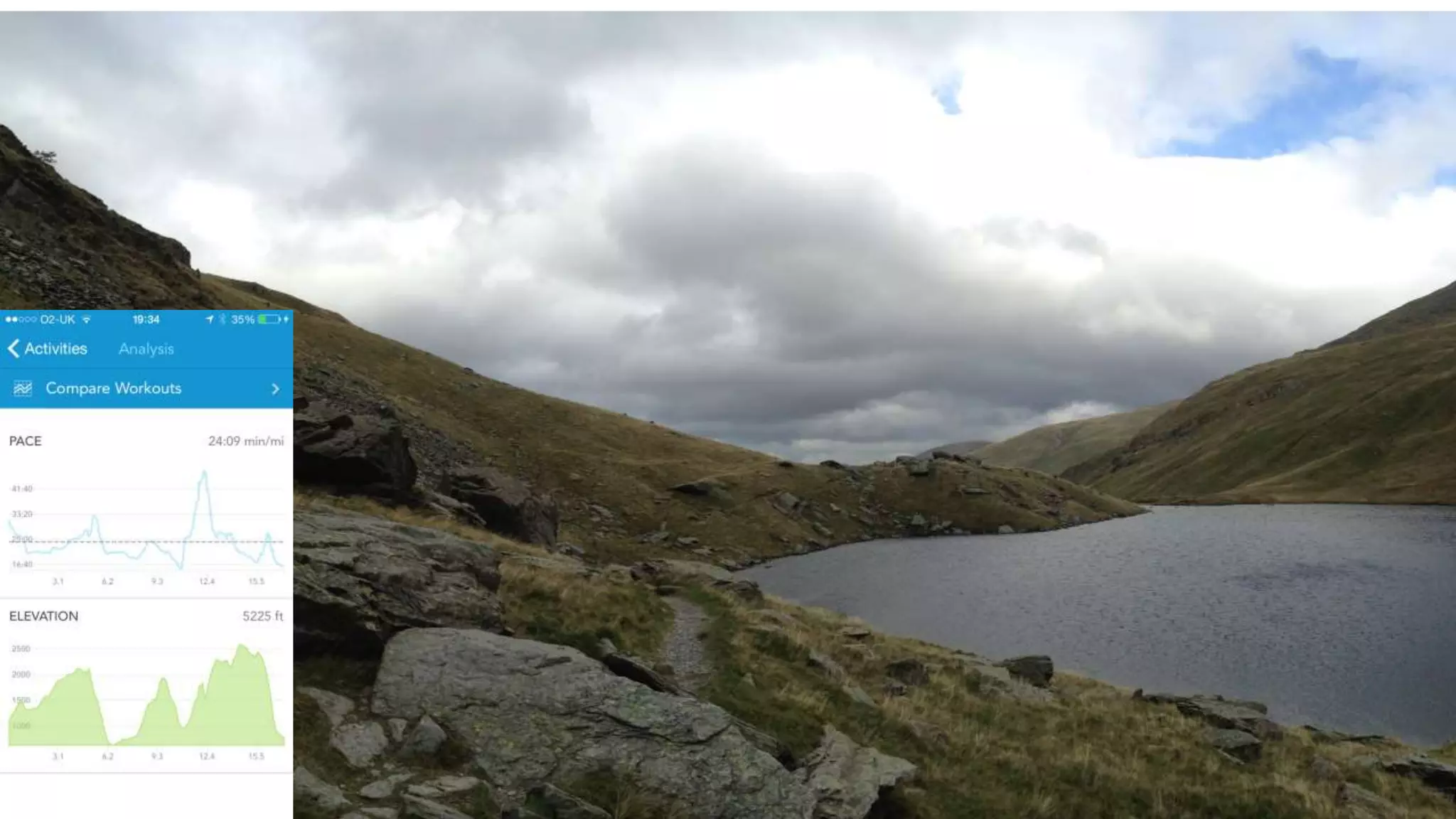
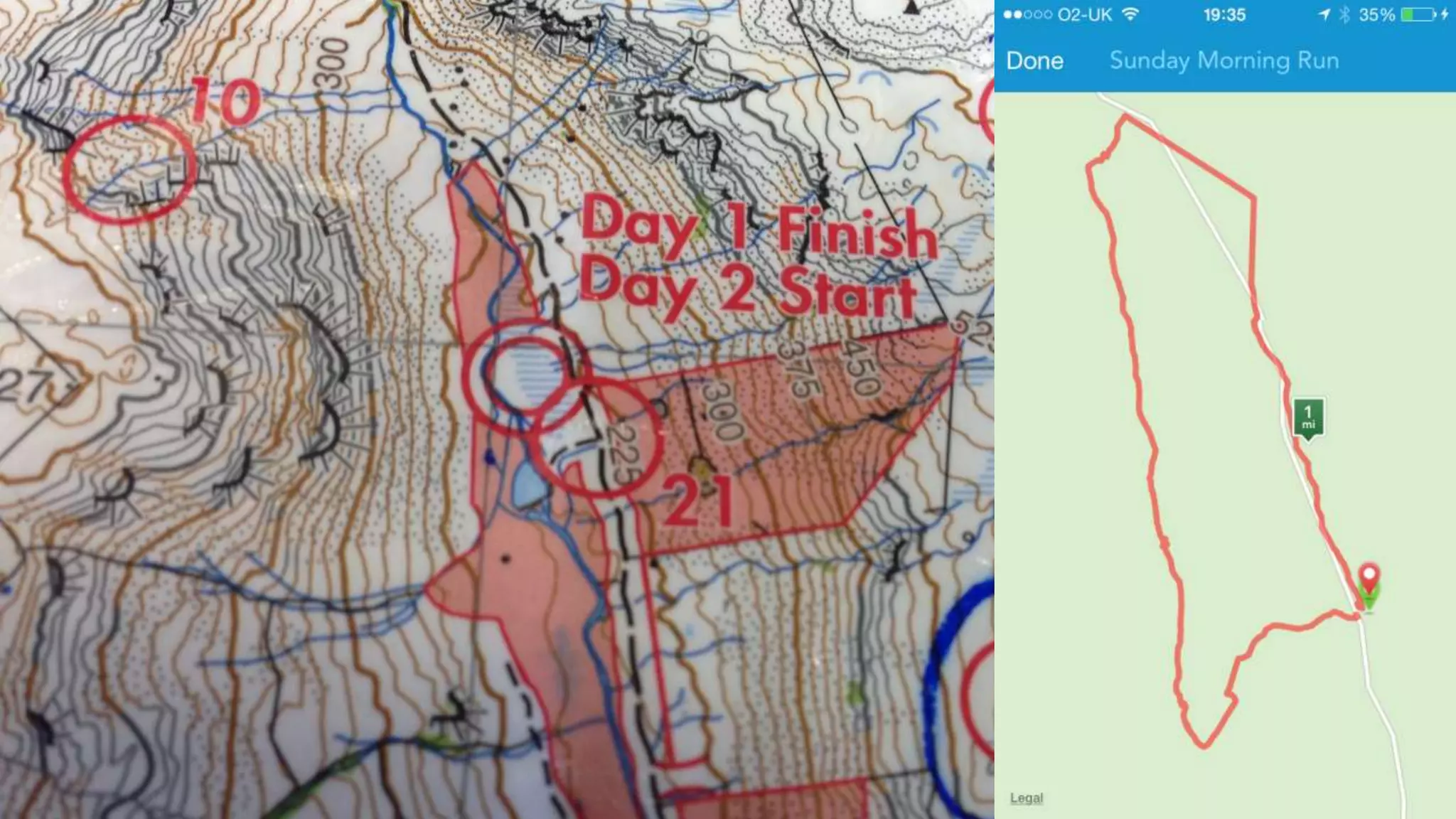
  • #9 Imagine. Day 2, we are in the top half of the pack. We had covered 19 miles on day one. Slept on lightweight sleeping bags, shivered as we had decided not to pack warm kit +++ of ascent. So it was a shock when , within sight of the overnight camp we were accosted by a man with a ginger beard and told we were disqualified. Put in Runkeeper thing.
  • #10 We were able to speak to the race director and receive some feedback. After apologising, we were allowed to restart, and hour after starting and with 6 hours to go. The point? 1. Appropriate, timley feedback is essential. 2. When I walk around schools, I wonder where the learning artefacts have gone. How useful is written feedback when you can’t read a map – an essential element of the key unique feature of geography. What about an experiment in science or reading a poem in English? 3. What I sense about feedback (or most things I schools) is that it’s very much like training for marathons: if it’s hurting all over that’s a sign that teaching is a demanding profession that takes it out of you. If you’ve got acute pain in one part of your body, it’s time to stop and do something about it.
  • #11 Geography positive and negative feedback loops. Which is best? Can we apply this to schools?
  • #12 Generalisations, discussion.
  • #15 When did you really look at your learners? Where is the role of effective feedback aimed at developing the well rounded student?
  • #19 Linked to work during the BSF 21stCentury Fellowship project we did at Priory Geography were we got students working with professionals.
  • #20 Selected stats, 2014 results compared to 2014 A*-C Headline figure. Linked to exam confidence and performance. Learning Partnerships has to have a clearly defined aim and purpose.
  • #22 http://www.ctvnews.ca/canada/dramatic-photos-show-parts-of-toronto-underwater-1.1358806 Do we give too much feedback?
  • #23 Got this from TLT13
  • #26 Share Gap Busters
  • #27 The 10 Powerful Practices
  • #30 But we have to start somewhere, thanks to Shaun Allison. Although I don’t believe in the Holy Grail, to reach effective feedback, we have to start somewhere and journey through some uncompromising lands.
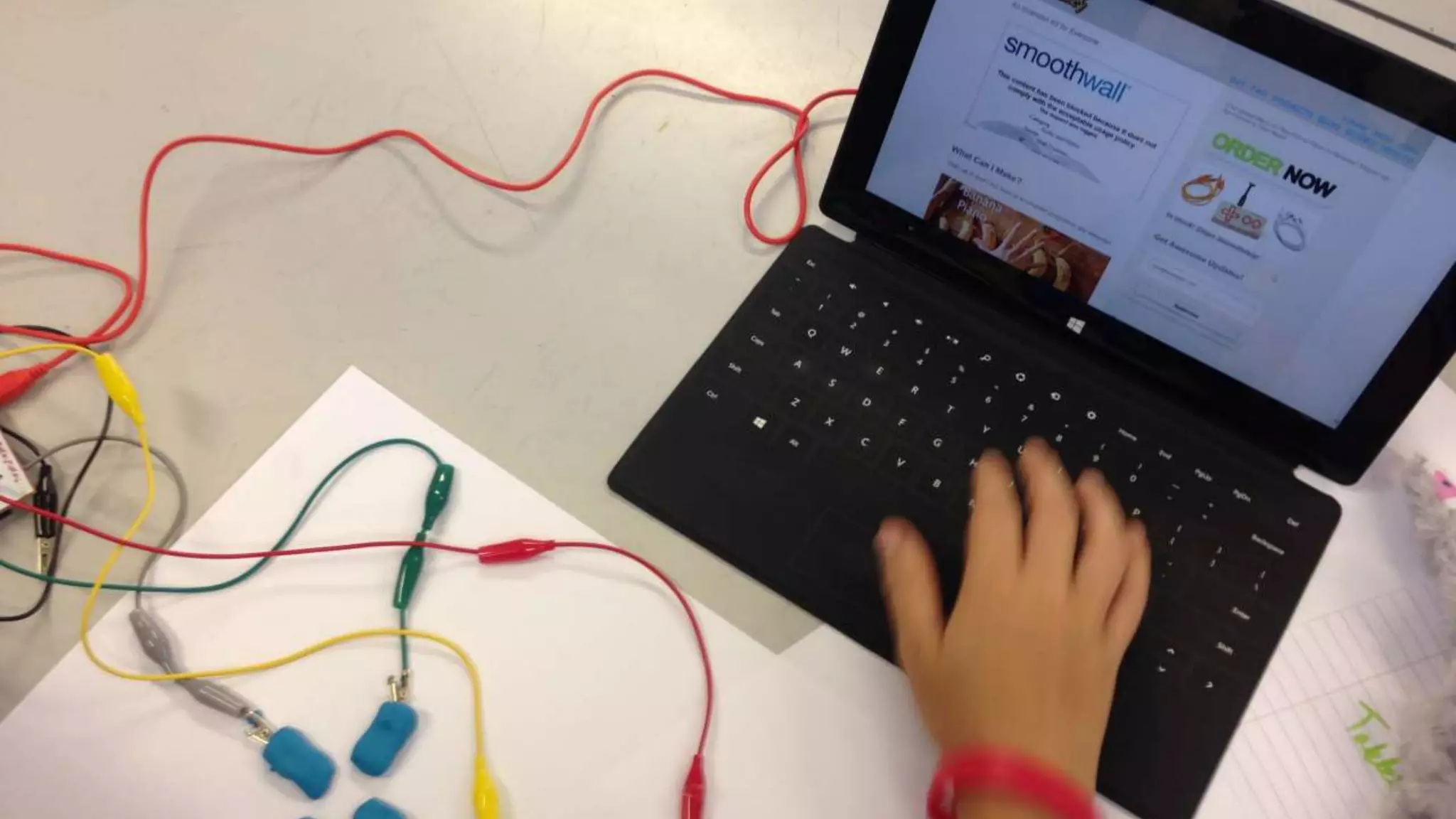
  • #32 Coding – if it doesn’t work it’s fairly obvious. But, what if it’s students that have been coding since 6 years old and have a waiting list for the coding club they run in a primary school?
  • #33 Labelling kids
  • #37 I’m not a believer in the Holy Grail.
  • #40 Teachers need to be a little more like Che Guavera
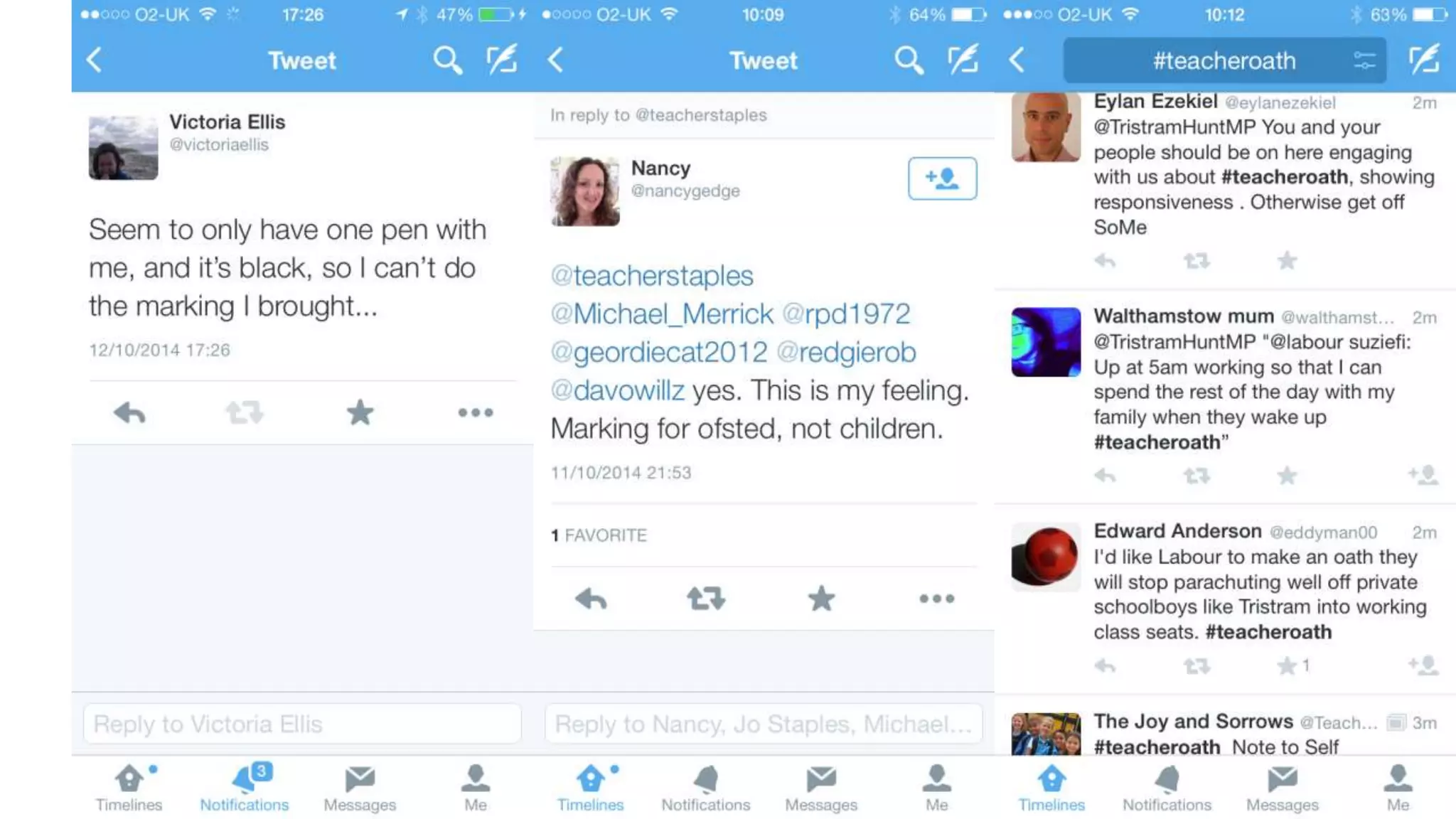
  • #42 Irony of the energy taken on twitter giving muppets feedback – imagine if kids receive the same level of feedback that Tristramhunt did
  • #43 The digital exercise book and conversations. Leaders job is to facilitate the opportunities for teachers to talk about learning.
  • #44 Campfire conversations about learning
  • #45 Box of tools
  • #46 Celebrate teachers getting it right rather than catching them out.
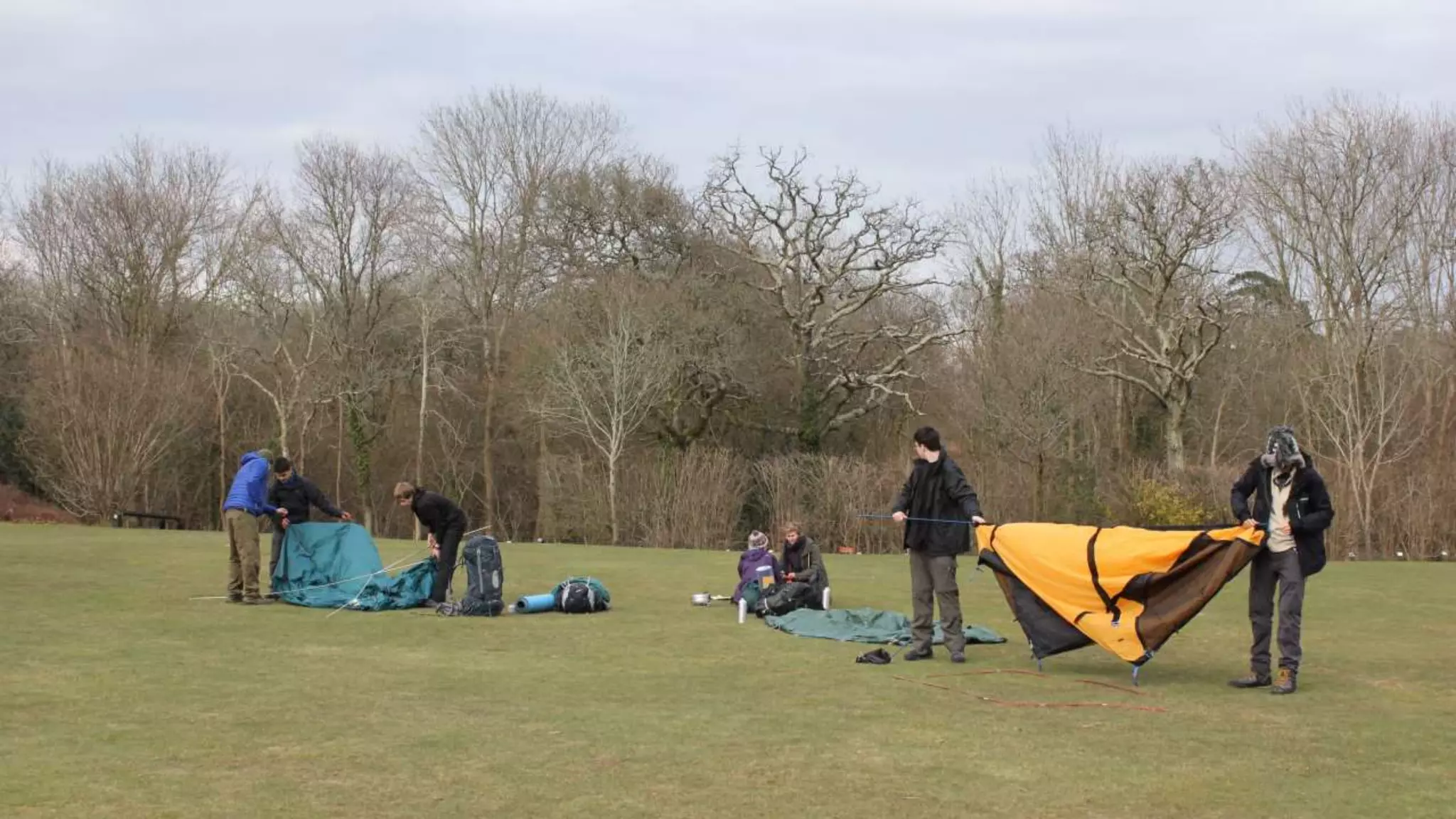
  • #48 Feedback – what’s it like to put up a tent in -