Misbehavior in the Classroom
& Behavior Modification
Prepared by:
Mr. Orlando A. Pistan
Psychology Instructor
Question:
How would you define a
misbehavior in the
classroom?
Misbehavior in the
Classroom
An action is considered
misbehavior when the
consequences compete with
instructional situation.
If the student’s action
compete for attention and
have the potential to draw
other students away from the
learning task at hand, then the
behavior is a misbehavior.
Misbehavior in the
Classroom
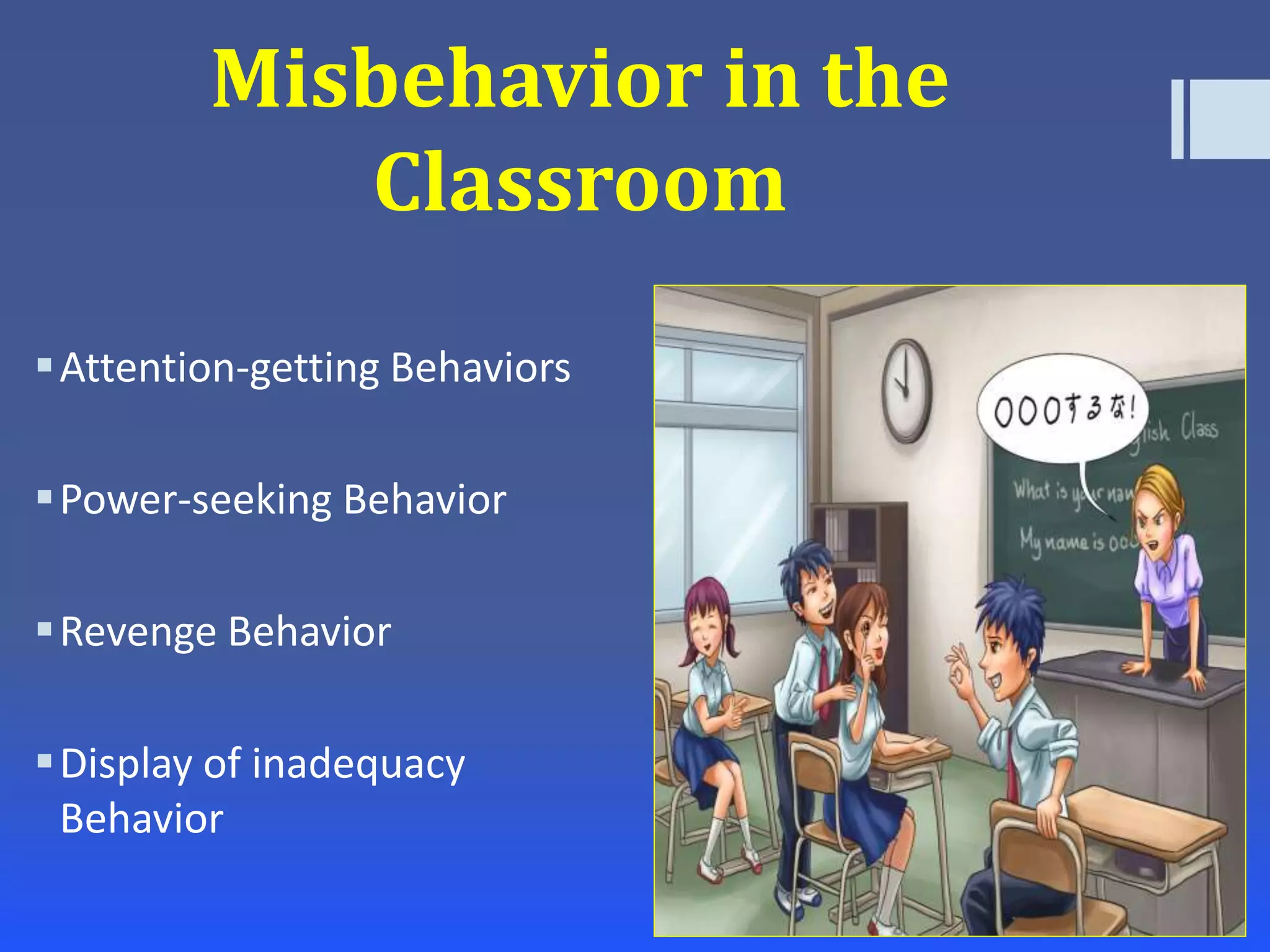
Attention-getting Behaviors
Power-seeking Behavior
Revenge Behavior
Display of inadequacy
Behavior
Misbehavior in the
Classroom
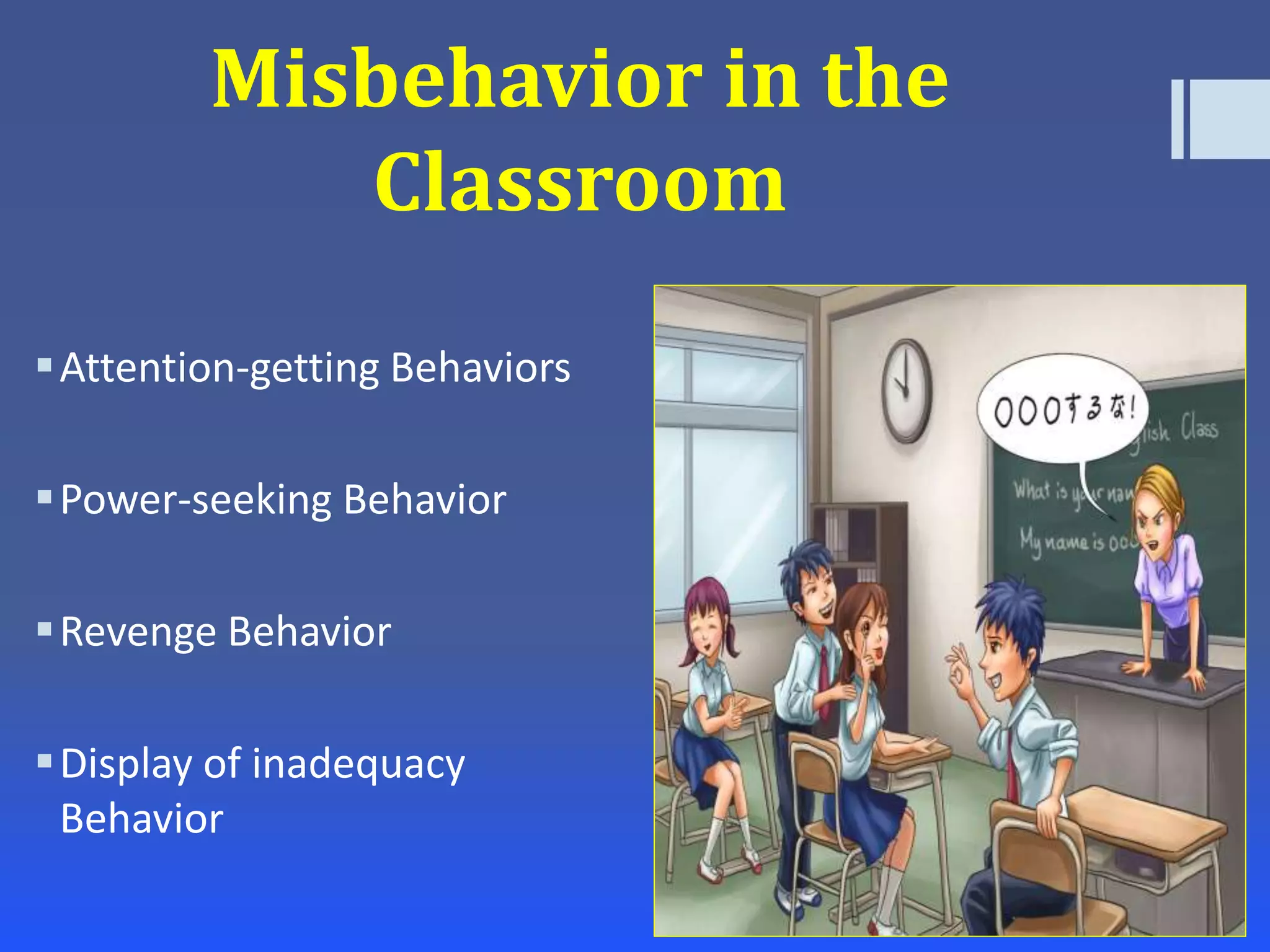
Attention-getting Behaviors
Power-seeking Behavior
Revenge Behavior
Display of inadequacy
Behavior
Attention-Getting
Behaviors
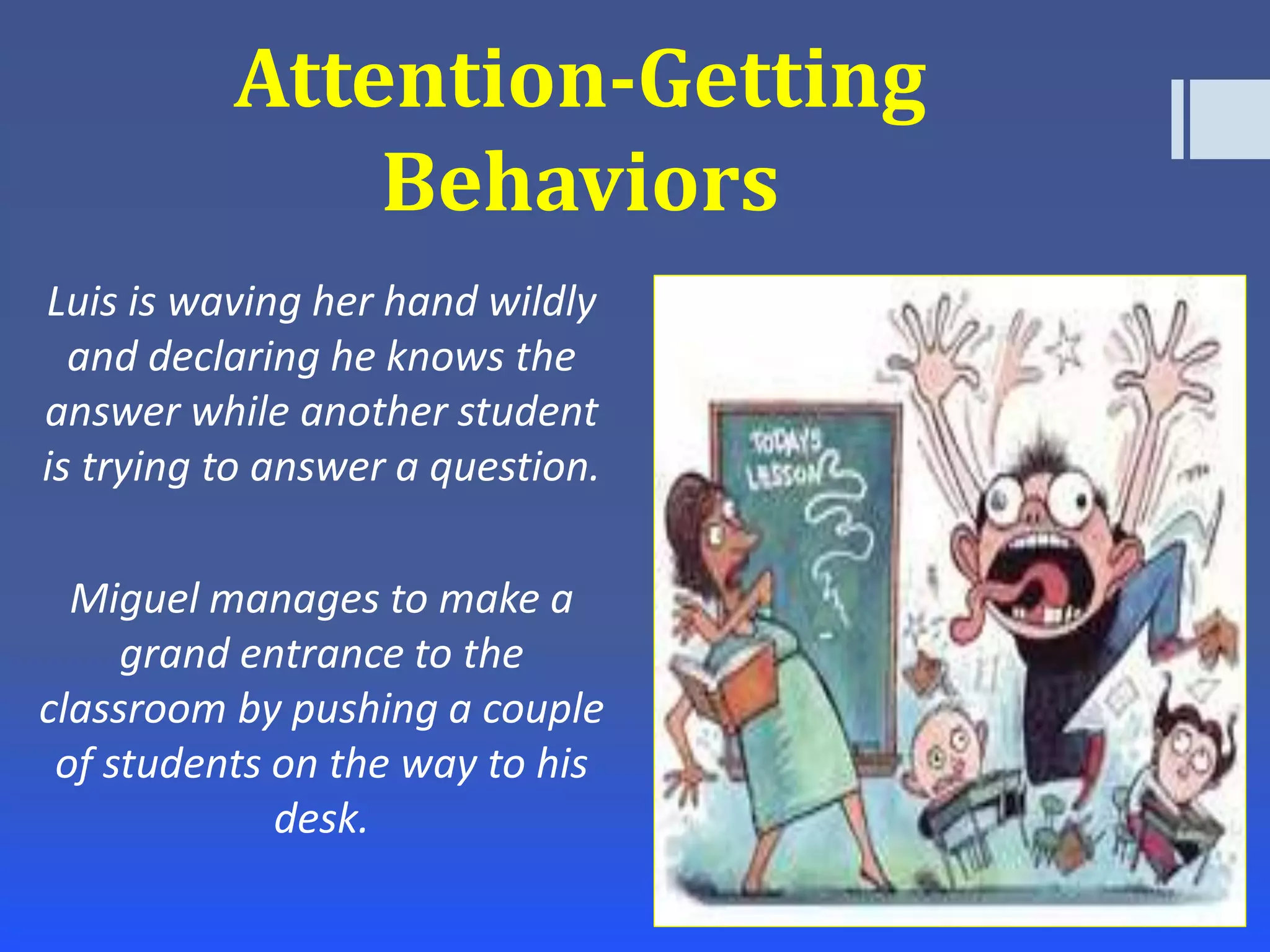
Luis is waving her hand wildly
and declaring he knows the
answer while another student
is trying to answer a question.
Miguel manages to make a
grand entrance to the
classroom by pushing a couple
of students on the way to his
desk.
Attention-Getting
Behaviors
 Most common form of distraction in the classroom
 Attention-getting is a way of finding themselves in the classroom for
discouraged students.
 Only when they are noticed do they feel accepted.
 Being reprimanded triggers to get more attention
 Verbal reprimands, loss of privileges, and various forms of retribution
 Induce think-twice-before-you-act mentality
 Teachers can also ignore these behaviors with the help of the class
 Give the student some non-academic ways to be helpful
 The student can experience achievement through responsible
participation in the class
Power-Seeking Behaviors
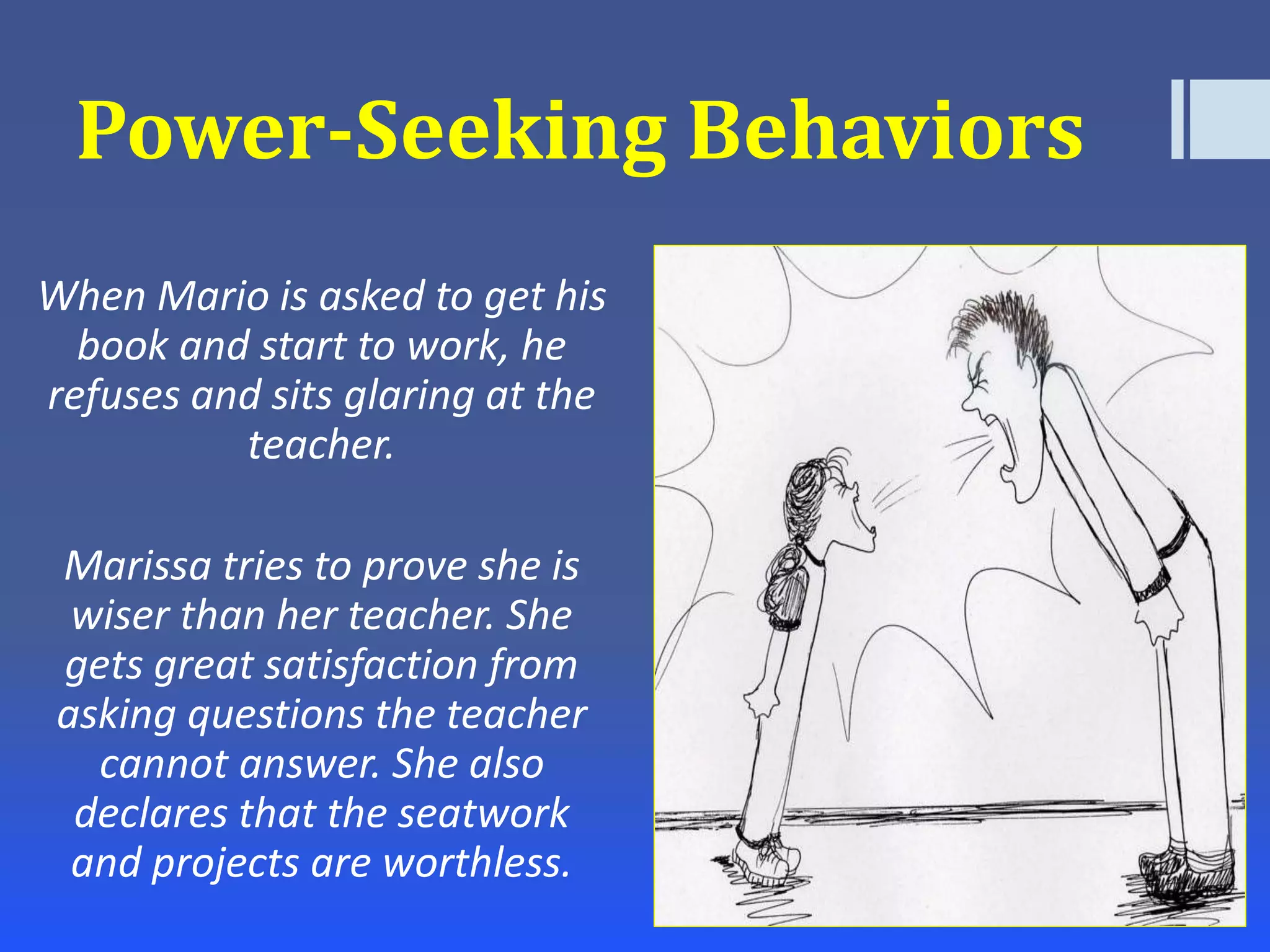
When Mario is asked to get his
book and start to work, he
refuses and sits glaring at the
teacher.
Marissa tries to prove she is
wiser than her teacher. She
gets great satisfaction from
asking questions the teacher
cannot answer. She also
declares that the seatwork
and projects are worthless.
Power-Seeking Behaviors
 Envy of the teacher’s popularity or authority
 Present in academically-able students
 Lead to argument or battle over power between the teacher and the
student
 Annoys the teacher and may lead him to exchange words in front of the
class
 Delegate the student in a responsibility
 Convert responsibility to recognition
 Make the student a leader
 The once shaky sense of self-esteem being protested will be turned to a
secure one.
Revenge Behaviors
Ms. Cruz is very well known for
her foul language. Mario has a
foul tongue too. After 3
consecutive admonitions, Ms.
Cruz gets a taste of both.
Revenge Behaviors
Aim to discredit and hurt the teacher
Tempting teachers to return hurt with hurt
Escalating problem gives discomfort to one another
Return maliciousness with kindness
Return quarrelsomeness with understanding
Return antagonism with cordiality
A desperate student needs help.
Display of Inadequacy
Behaviors
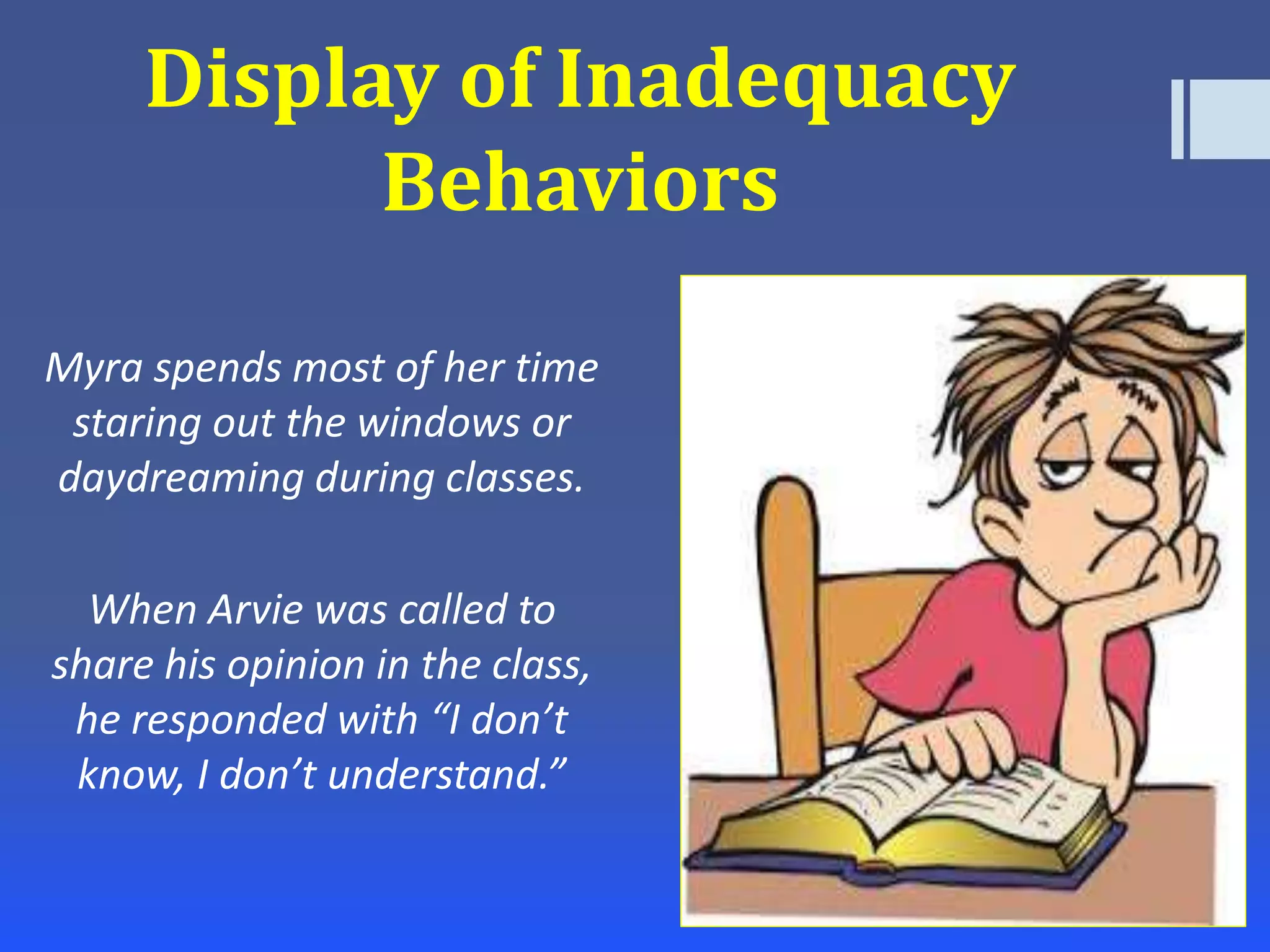
Myra spends most of her time
staring out the windows or
daydreaming during classes.
When Arvie was called to
share his opinion in the class,
he responded with “I don’t
know, I don’t understand.”
Display of Inadequacy
Behaviors
Physically present, psychologically absent
Passive resistance as a way to express dissatisfaction,
discontent and defiance
Do not create disruptions, but do not cooperates
Build steady relationship with the student
Give them sense of achievement
Motivate them
Experience of success will enhance their self-esteem
Behavior Modification
Applied behavior analysis
involves a systematic
performance based method of
studying and changing socially
important behavior. This is
also called behavioral
technique.
Behavior Modification
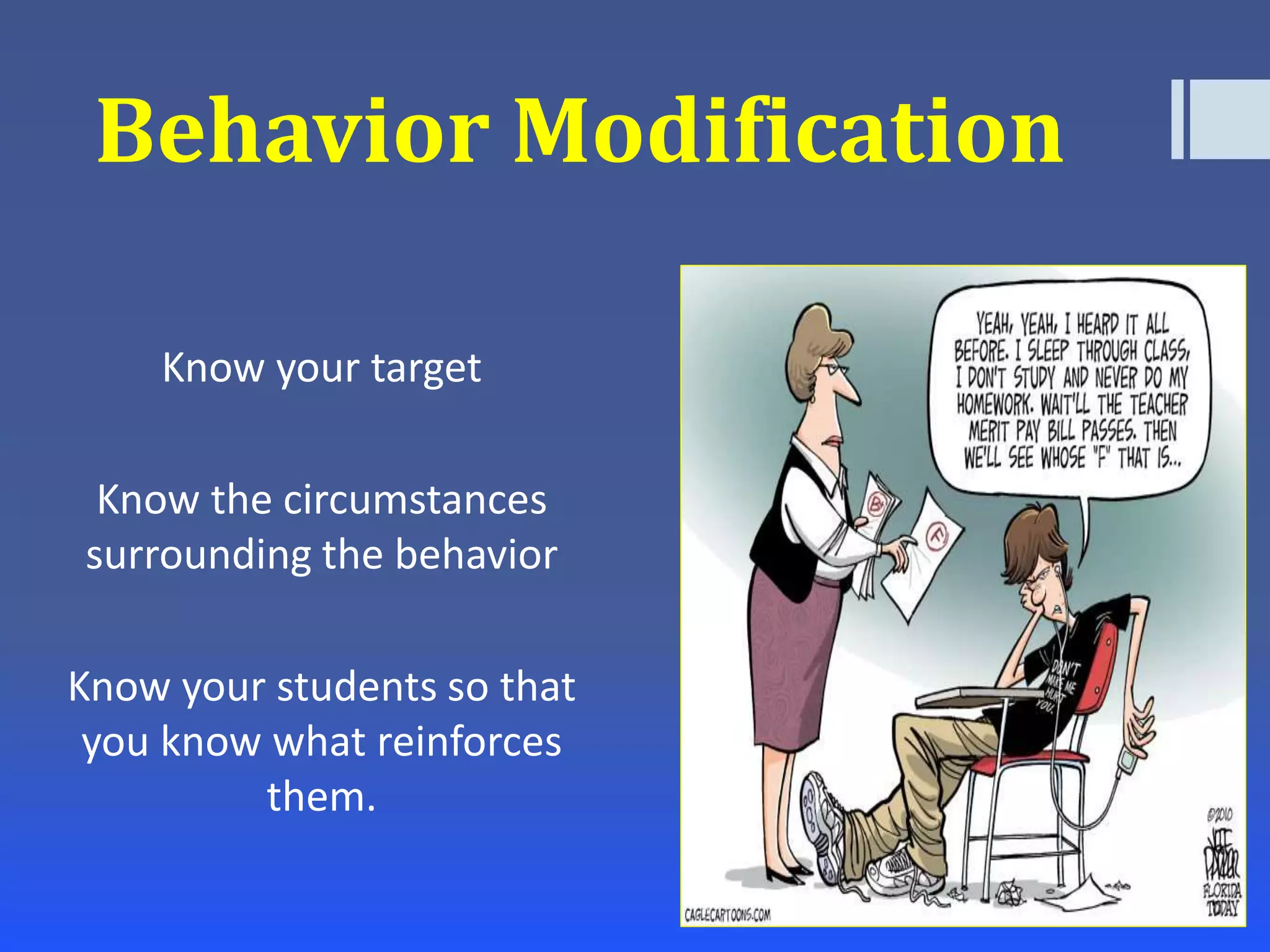
Know your target
Know the circumstances
surrounding the behavior
Know your students so that
you know what reinforces
them.
Know your target.
Identify what behavior you
want to change.
Specify precisely what you
would like to change and what
you want them to become.
Of course, behavior change
does not change quickly but
gradually.
Know the circumstances
surrounding the behavior.
When maladaptive behaviors
occurs, try to discover what
happened immediately
preceding and following it.
A – Antecedent
B – Behavior
C - Consequences
Know the circumstances
surrounding the behavior.
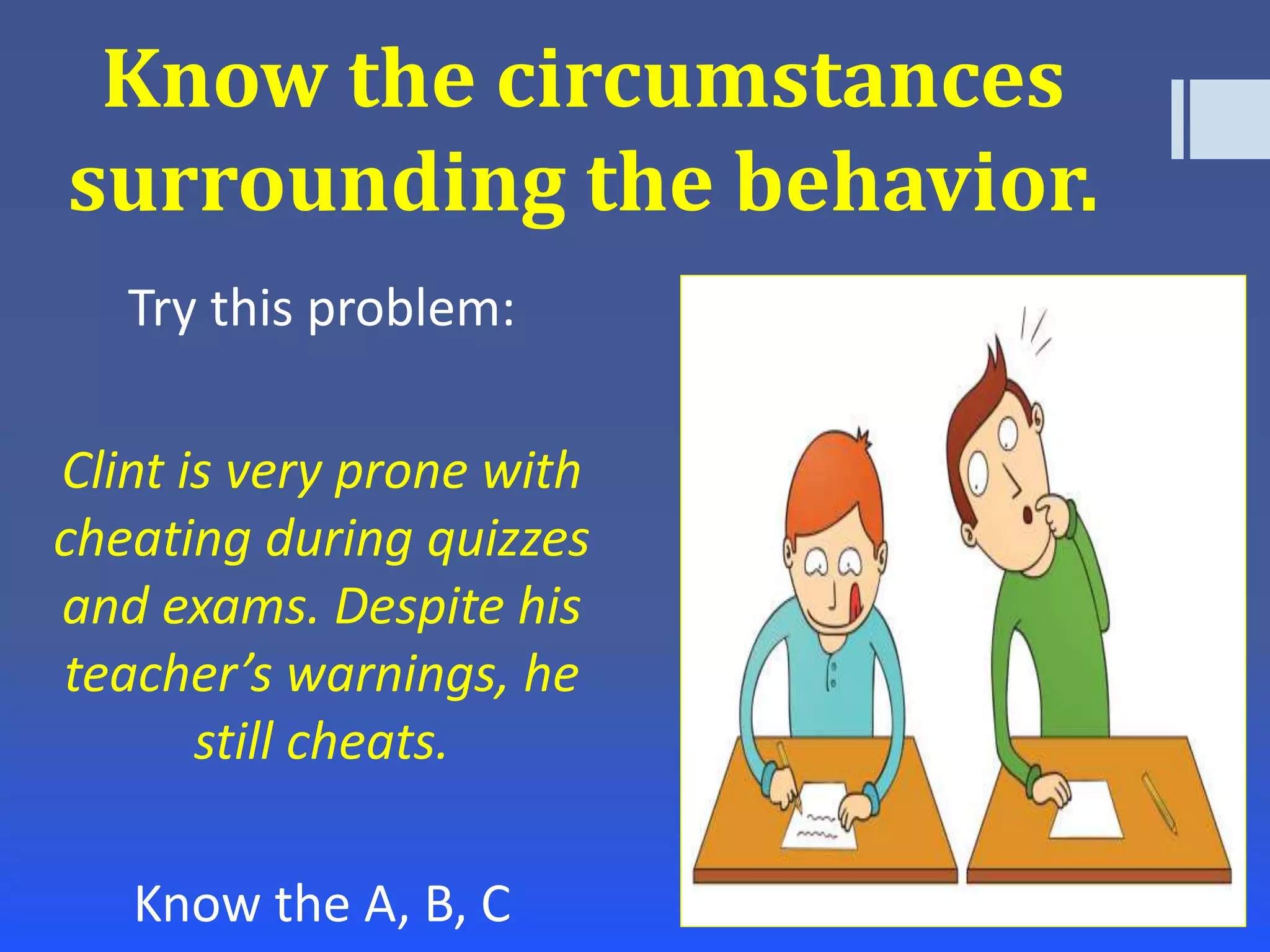
Try this problem:
Clint is very prone with
cheating during quizzes
and exams. Despite his
teacher’s warnings, he
still cheats.
Know the A, B, C
Know your students so that you
know what reinforces them.
The goal of the teacher is to
gradually reduce external
reinforcement and increase
self-control.
Thoughtfully used, behavior
modification techniques can
help teachers attain
constructive classroom
atmosphere.
Misbehavior in the Classroom
& Behavior Modification
Thank you for paying
attention.

Misbehavior in the Classroom

  • 1.
    Misbehavior in theClassroom & Behavior Modification Prepared by: Mr. Orlando A. Pistan Psychology Instructor
  • 2.
    Question: How would youdefine a misbehavior in the classroom?
  • 3.
    Misbehavior in the Classroom Anaction is considered misbehavior when the consequences compete with instructional situation. If the student’s action compete for attention and have the potential to draw other students away from the learning task at hand, then the behavior is a misbehavior.
  • 4.
    Misbehavior in the Classroom Attention-gettingBehaviors Power-seeking Behavior Revenge Behavior Display of inadequacy Behavior
  • 5.
    Misbehavior in the Classroom Attention-gettingBehaviors Power-seeking Behavior Revenge Behavior Display of inadequacy Behavior
  • 6.
    Attention-Getting Behaviors Luis is wavingher hand wildly and declaring he knows the answer while another student is trying to answer a question. Miguel manages to make a grand entrance to the classroom by pushing a couple of students on the way to his desk.
  • 7.
    Attention-Getting Behaviors  Most commonform of distraction in the classroom  Attention-getting is a way of finding themselves in the classroom for discouraged students.  Only when they are noticed do they feel accepted.  Being reprimanded triggers to get more attention  Verbal reprimands, loss of privileges, and various forms of retribution  Induce think-twice-before-you-act mentality  Teachers can also ignore these behaviors with the help of the class  Give the student some non-academic ways to be helpful  The student can experience achievement through responsible participation in the class
  • 8.
    Power-Seeking Behaviors When Mariois asked to get his book and start to work, he refuses and sits glaring at the teacher. Marissa tries to prove she is wiser than her teacher. She gets great satisfaction from asking questions the teacher cannot answer. She also declares that the seatwork and projects are worthless.
  • 9.
    Power-Seeking Behaviors  Envyof the teacher’s popularity or authority  Present in academically-able students  Lead to argument or battle over power between the teacher and the student  Annoys the teacher and may lead him to exchange words in front of the class  Delegate the student in a responsibility  Convert responsibility to recognition  Make the student a leader  The once shaky sense of self-esteem being protested will be turned to a secure one.
  • 10.
    Revenge Behaviors Ms. Cruzis very well known for her foul language. Mario has a foul tongue too. After 3 consecutive admonitions, Ms. Cruz gets a taste of both.
  • 11.
    Revenge Behaviors Aim todiscredit and hurt the teacher Tempting teachers to return hurt with hurt Escalating problem gives discomfort to one another Return maliciousness with kindness Return quarrelsomeness with understanding Return antagonism with cordiality A desperate student needs help.
  • 12.
    Display of Inadequacy Behaviors Myraspends most of her time staring out the windows or daydreaming during classes. When Arvie was called to share his opinion in the class, he responded with “I don’t know, I don’t understand.”
  • 13.
    Display of Inadequacy Behaviors Physicallypresent, psychologically absent Passive resistance as a way to express dissatisfaction, discontent and defiance Do not create disruptions, but do not cooperates Build steady relationship with the student Give them sense of achievement Motivate them Experience of success will enhance their self-esteem
  • 14.
    Behavior Modification Applied behavioranalysis involves a systematic performance based method of studying and changing socially important behavior. This is also called behavioral technique.
  • 15.
    Behavior Modification Know yourtarget Know the circumstances surrounding the behavior Know your students so that you know what reinforces them.
  • 16.
    Know your target. Identifywhat behavior you want to change. Specify precisely what you would like to change and what you want them to become. Of course, behavior change does not change quickly but gradually.
  • 17.
    Know the circumstances surroundingthe behavior. When maladaptive behaviors occurs, try to discover what happened immediately preceding and following it. A – Antecedent B – Behavior C - Consequences
  • 18.
    Know the circumstances surroundingthe behavior. Try this problem: Clint is very prone with cheating during quizzes and exams. Despite his teacher’s warnings, he still cheats. Know the A, B, C
  • 19.
    Know your studentsso that you know what reinforces them. The goal of the teacher is to gradually reduce external reinforcement and increase self-control. Thoughtfully used, behavior modification techniques can help teachers attain constructive classroom atmosphere.
  • 20.
    Misbehavior in theClassroom & Behavior Modification Thank you for paying attention.