Learning
Styles
Learning styles
• The way every individual learn
and how they approach
information.
• It is a pattern of behaviour.
• Every individual learn
differently.
Learning styles
•The preferential way in which
the learner:
• absorbs the processes
• comprehends, and
• retains information.
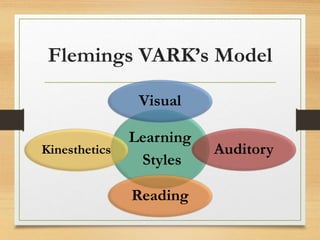
Flemings VARK’s Model
Learning
Styles
Visual
Auditory
Reading
Kinesthetics
Visual Learners
• Also known as ‘Spatial’ style of
learning.
• Learners can easily visualize objects,
plans and outcomes in their mind.
• have a good spatial sense, including
good sense of direction.
Visual Learners
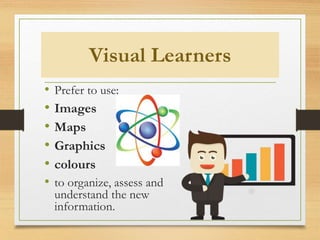
• Prefer to use:
• Images
• Maps
• Graphics
• colours
• to organize, assess and
understand the new
information.
Visual Learners use
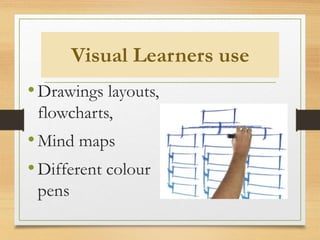
•Drawings layouts,
flowcharts,
•Mind maps
•Different colour
pens
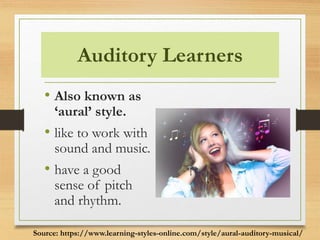
Auditory Learners
• Also known as
‘aural’ style.
• like to work with
sound and music.
• have a good
sense of pitch
and rhythm.
Source: https://www.learning-styles-online.com/style/aural-auditory-musical/
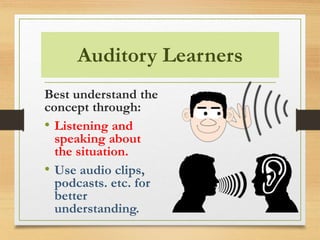
Auditory Learners
Best understand the
concept through:
• Listening and
speaking about
the situation.
• Use audio clips,
podcasts. etc. for
better
understanding.
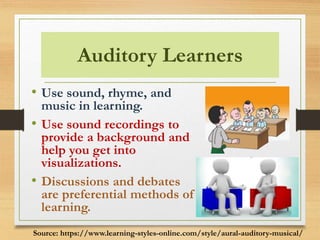
Auditory Learners
• Use sound, rhyme, and
music in learning.
• Use sound recordings to
provide a background and
help you get into
visualizations.
• Discussions and debates
are preferential methods of
learning.
Source: https://www.learning-styles-online.com/style/aural-auditory-musical/
Reading/writing preferences
• Also knowns as ‘verbal’.
• involves both the written
and spoken words.
• find it easy to express
themselves, both in
writing and verbally.
Source: https://www.learning-styles-online.com/style/verbal-linguistic/
Reading/writing preferences
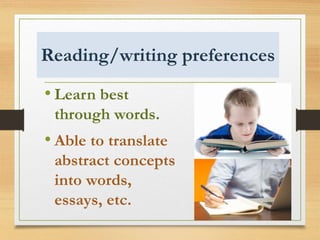
• Learn best
through words.
• Able to translate
abstract concepts
into words,
essays, etc.
Reading/writing preferences
• Use the techniques that
involve speaking and
writing.
• Use the word-based
techniques such as
assertions and scripting.
• Scripting is also powerful for
such learners.
Source: https://www.learning-styles-online.com/style/verbal-linguistic/
Kinesthetics Learners
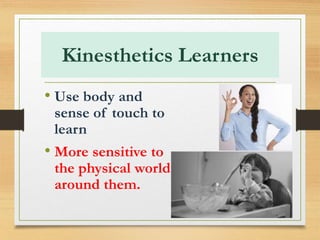
• Use body and
sense of touch to
learn
• More sensitive to
the physical world
around them.
Kinesthetics Learners
• Prefer tactile
representation of
information.
• Learn best through
figuring things by
hands.
• Use physical objects as
much as possible.
Kinesthetics Learners
• learners like 'getting the hands dirty,' or
making models, or working out jigsaws.
• typically use larger hand gestures and other
body language to communicate.
• use touch, action, movement and hands-on
work in learning activities.
• Use role-playing, either singularly or with
someone else, to practice skills and behaviors.
Source: https://www.learning-styles-online.com/style/physical-bodily-kinesthetic/

Learning Styles (VARK Model)

  • 1.
  • 2.
    Learning styles • Theway every individual learn and how they approach information. • It is a pattern of behaviour. • Every individual learn differently.
  • 3.
    Learning styles •The preferentialway in which the learner: • absorbs the processes • comprehends, and • retains information.
  • 4.
  • 5.
    Visual Learners • Alsoknown as ‘Spatial’ style of learning. • Learners can easily visualize objects, plans and outcomes in their mind. • have a good spatial sense, including good sense of direction.
  • 6.
    Visual Learners • Preferto use: • Images • Maps • Graphics • colours • to organize, assess and understand the new information.
  • 7.
    Visual Learners use •Drawingslayouts, flowcharts, •Mind maps •Different colour pens
  • 8.
    Auditory Learners • Alsoknown as ‘aural’ style. • like to work with sound and music. • have a good sense of pitch and rhythm. Source: https://www.learning-styles-online.com/style/aural-auditory-musical/
  • 9.
    Auditory Learners Best understandthe concept through: • Listening and speaking about the situation. • Use audio clips, podcasts. etc. for better understanding.
  • 10.
    Auditory Learners • Usesound, rhyme, and music in learning. • Use sound recordings to provide a background and help you get into visualizations. • Discussions and debates are preferential methods of learning. Source: https://www.learning-styles-online.com/style/aural-auditory-musical/
  • 11.
    Reading/writing preferences • Alsoknowns as ‘verbal’. • involves both the written and spoken words. • find it easy to express themselves, both in writing and verbally. Source: https://www.learning-styles-online.com/style/verbal-linguistic/
  • 12.
    Reading/writing preferences • Learnbest through words. • Able to translate abstract concepts into words, essays, etc.
  • 13.
    Reading/writing preferences • Usethe techniques that involve speaking and writing. • Use the word-based techniques such as assertions and scripting. • Scripting is also powerful for such learners. Source: https://www.learning-styles-online.com/style/verbal-linguistic/
  • 14.
    Kinesthetics Learners • Usebody and sense of touch to learn • More sensitive to the physical world around them.
  • 15.
    Kinesthetics Learners • Prefertactile representation of information. • Learn best through figuring things by hands. • Use physical objects as much as possible.
  • 16.
    Kinesthetics Learners • learnerslike 'getting the hands dirty,' or making models, or working out jigsaws. • typically use larger hand gestures and other body language to communicate. • use touch, action, movement and hands-on work in learning activities. • Use role-playing, either singularly or with someone else, to practice skills and behaviors. Source: https://www.learning-styles-online.com/style/physical-bodily-kinesthetic/