EMPHYSEMA
Dr. Sujan Vaidya
OBJECTIVES
1. Emphysema:
a. definition
a. types
a. pathogenesis
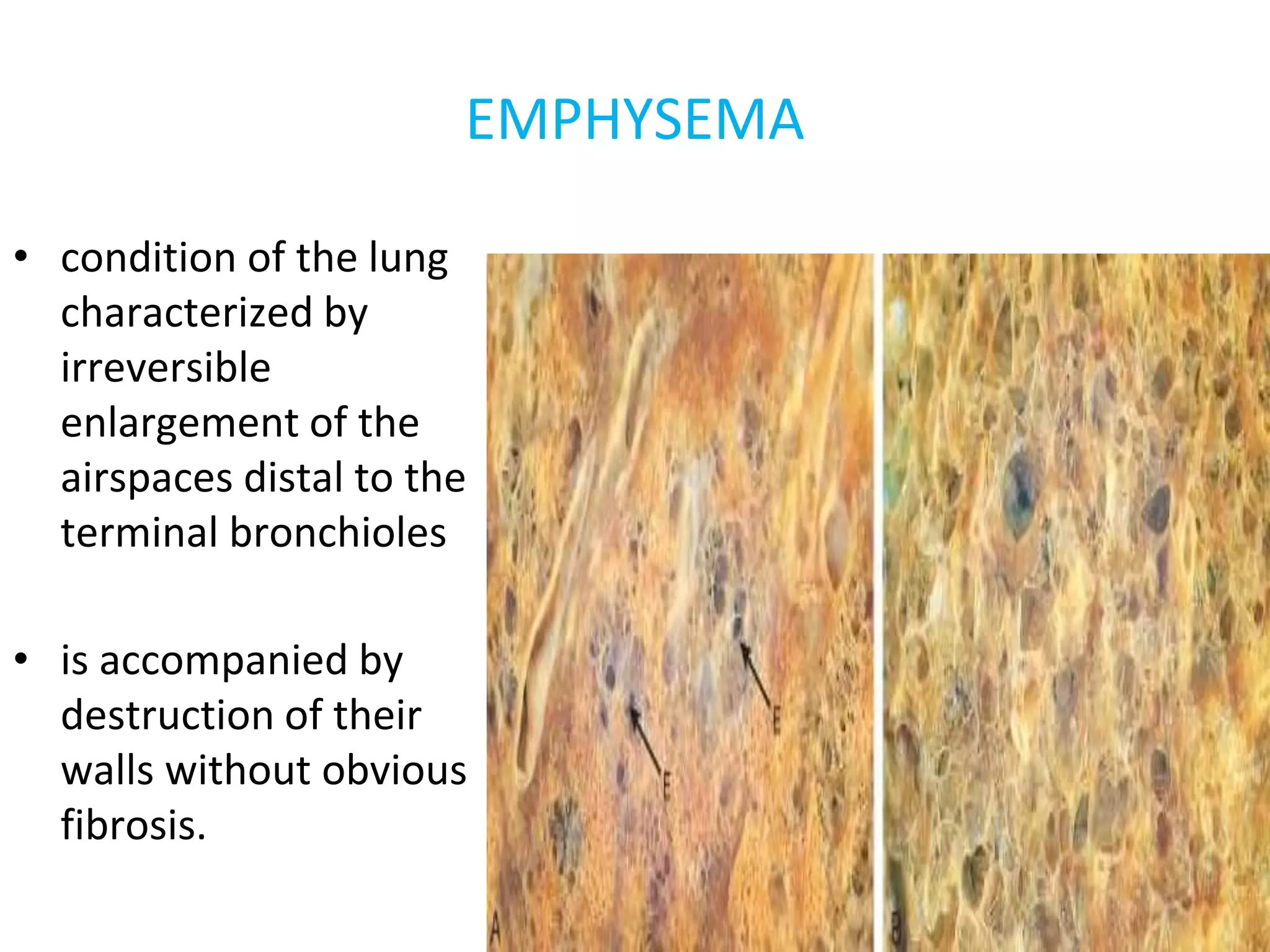
EMPHYSEMA
• condition of the lung
characterized by
irreversible
enlargement of the
airspaces distal to the
terminal bronchioles
• is accompanied by
destruction of their
walls without obvious
fibrosis.
TYPES OF EMPHYSEMA
1. centriacinar
1. panacinar
1. paraseptal
1. irregular
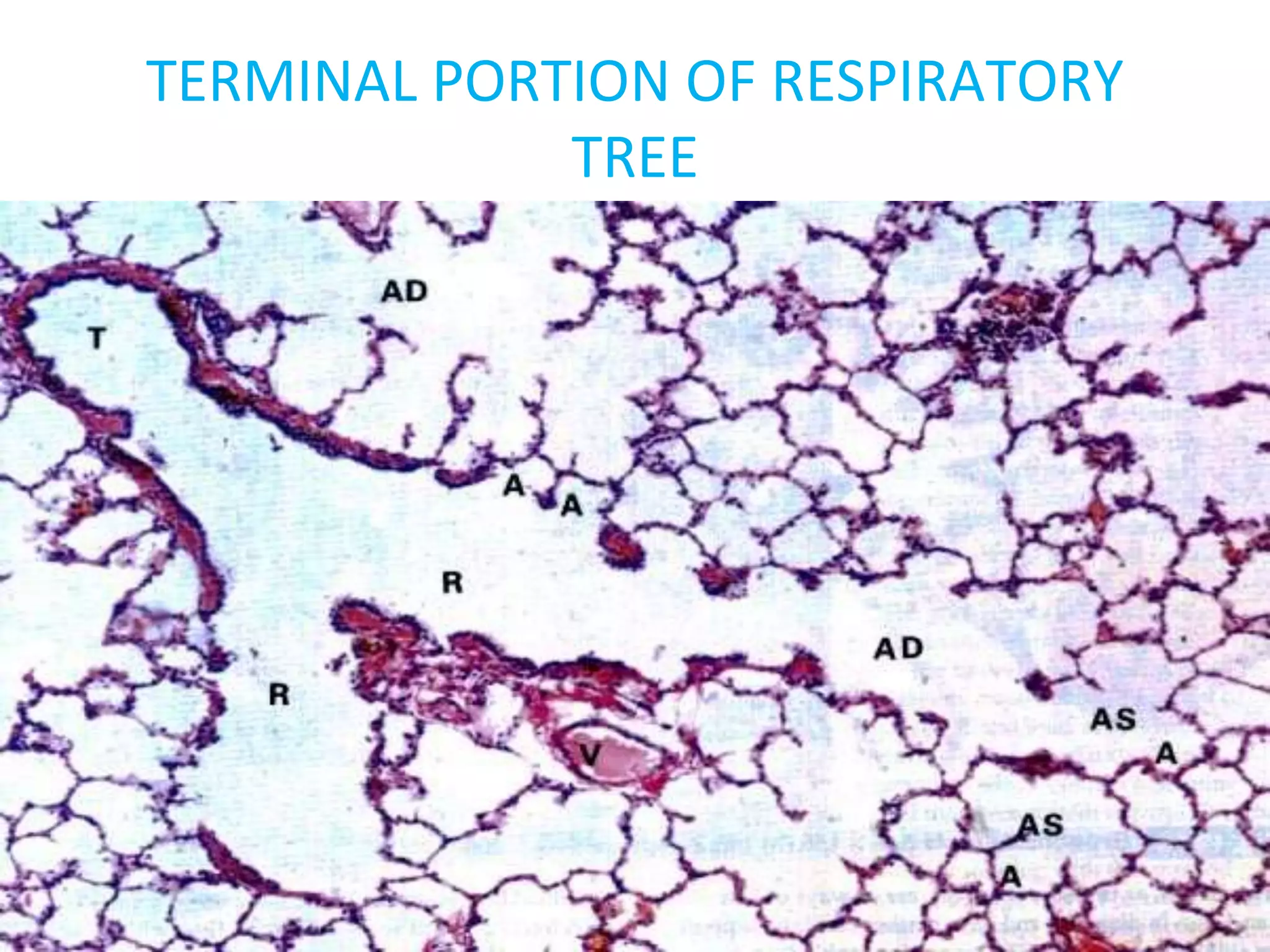
TERMINAL PORTION OF RESPIRATORY
TREE
TYPES OF EMPHYSEMA
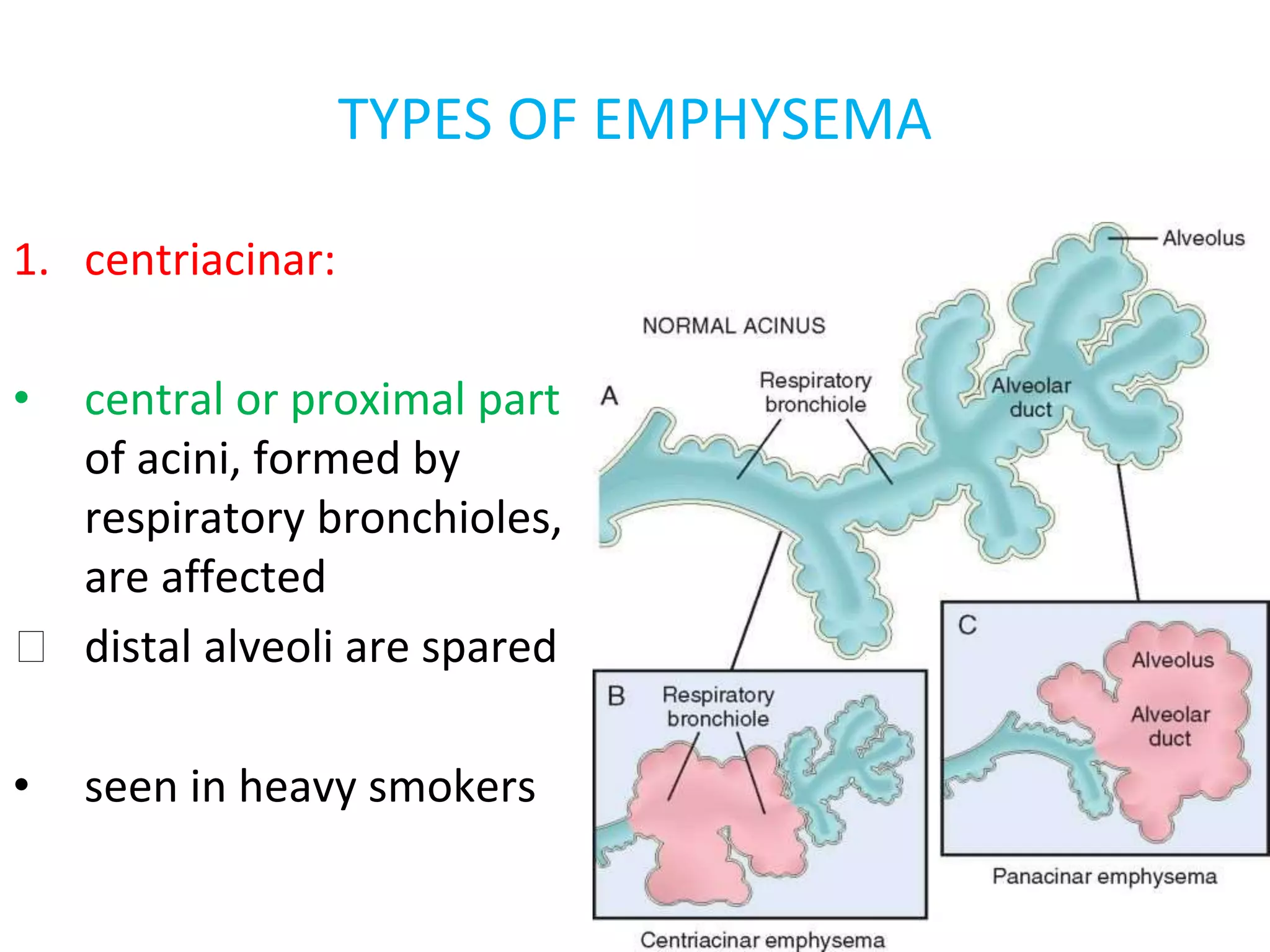
1. centriacinar:
• central or proximal part
of acini, formed by
respiratory bronchioles,
are affected
⮚ distal alveoli are spared
• seen in heavy smokers
TYPES OF EMPHYSEMA
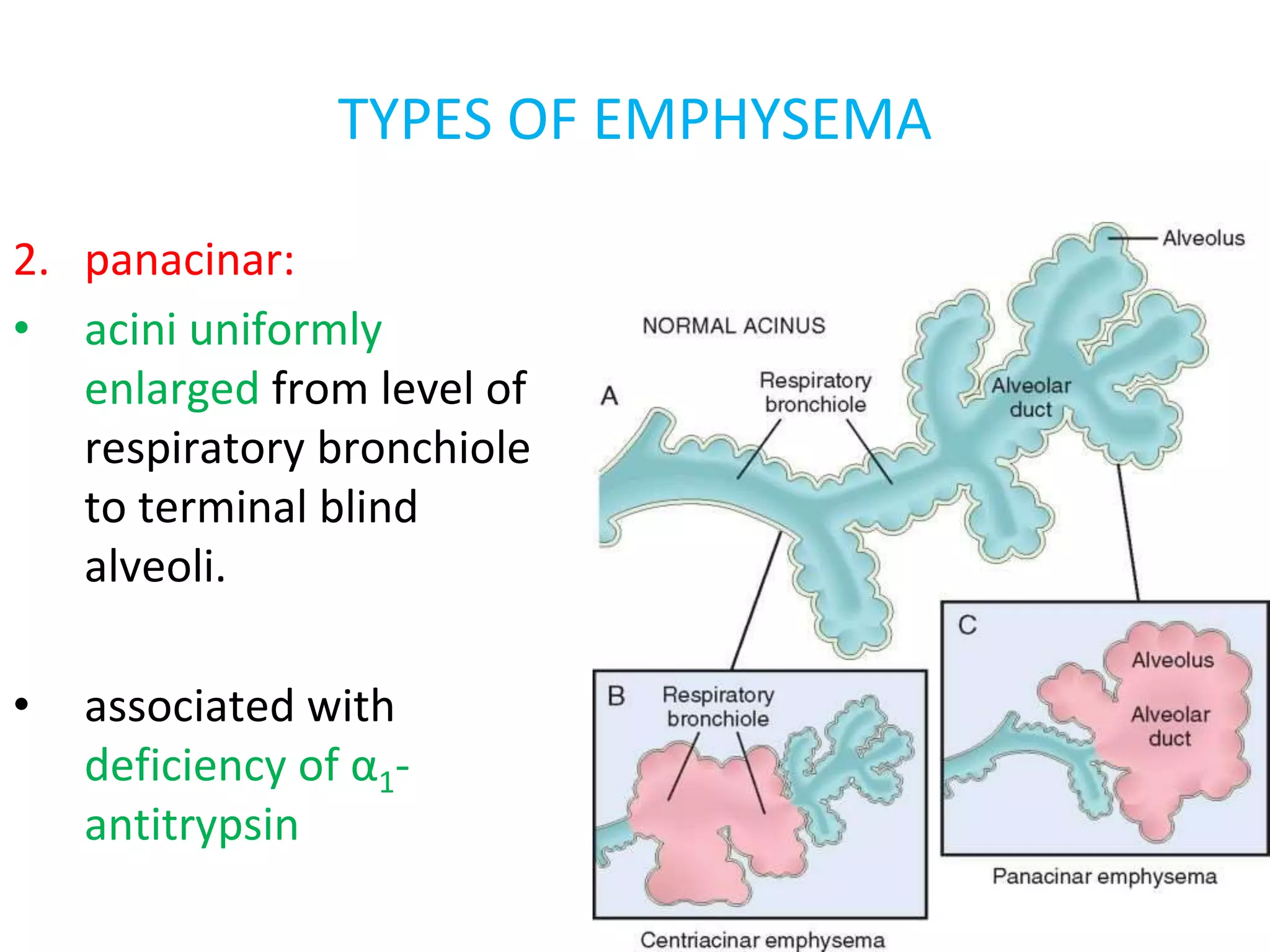
2. panacinar:
• acini uniformly
enlarged from level of
respiratory bronchiole
to terminal blind
alveoli.
• associated with
deficiency of α1-
antitrypsin
TYPES OF EMPHYSEMA
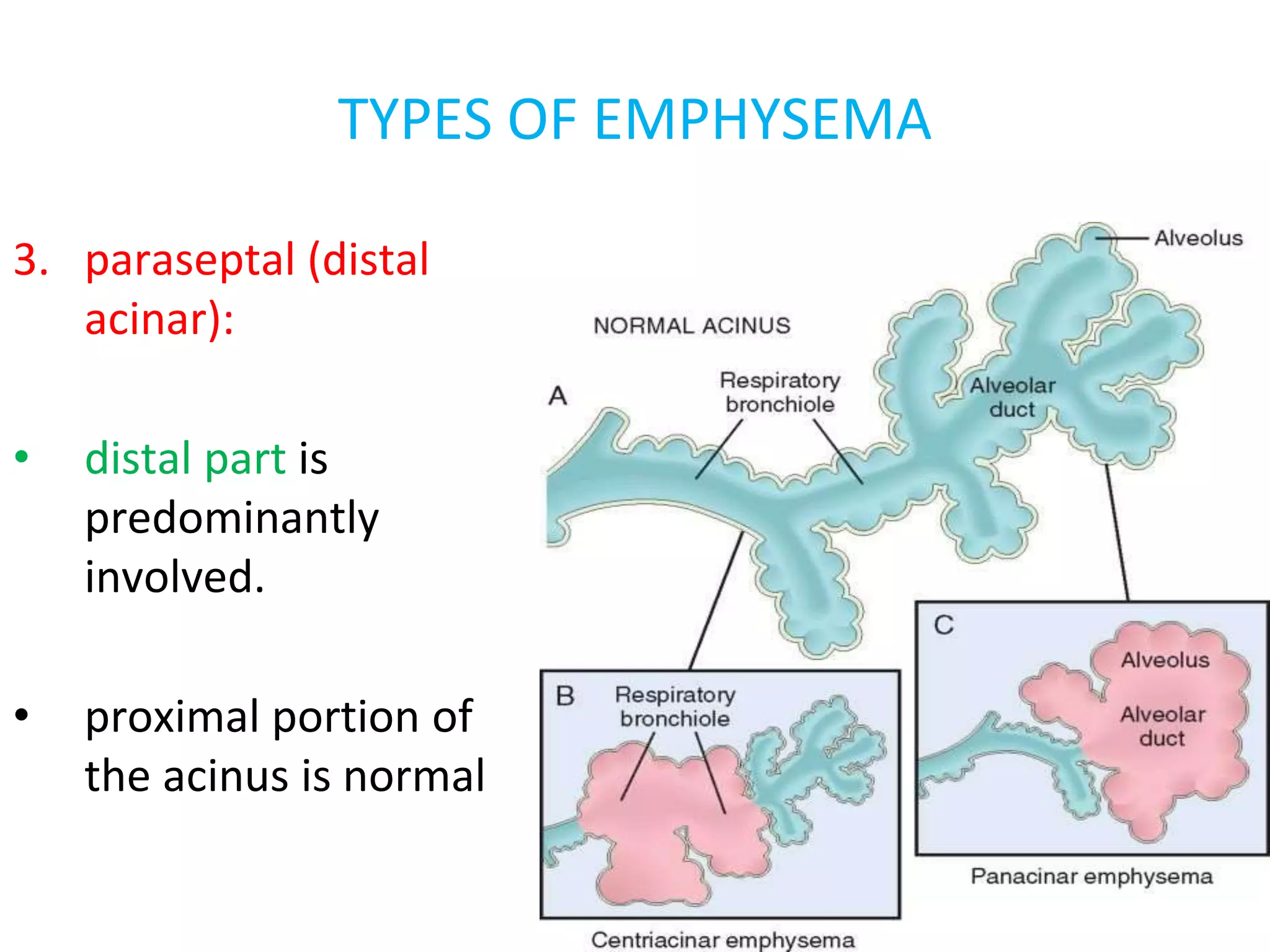
3. paraseptal (distal
acinar):
• distal part is
predominantly
involved.
• proximal portion of
the acinus is normal
TYPES OF EMPHYSEMA
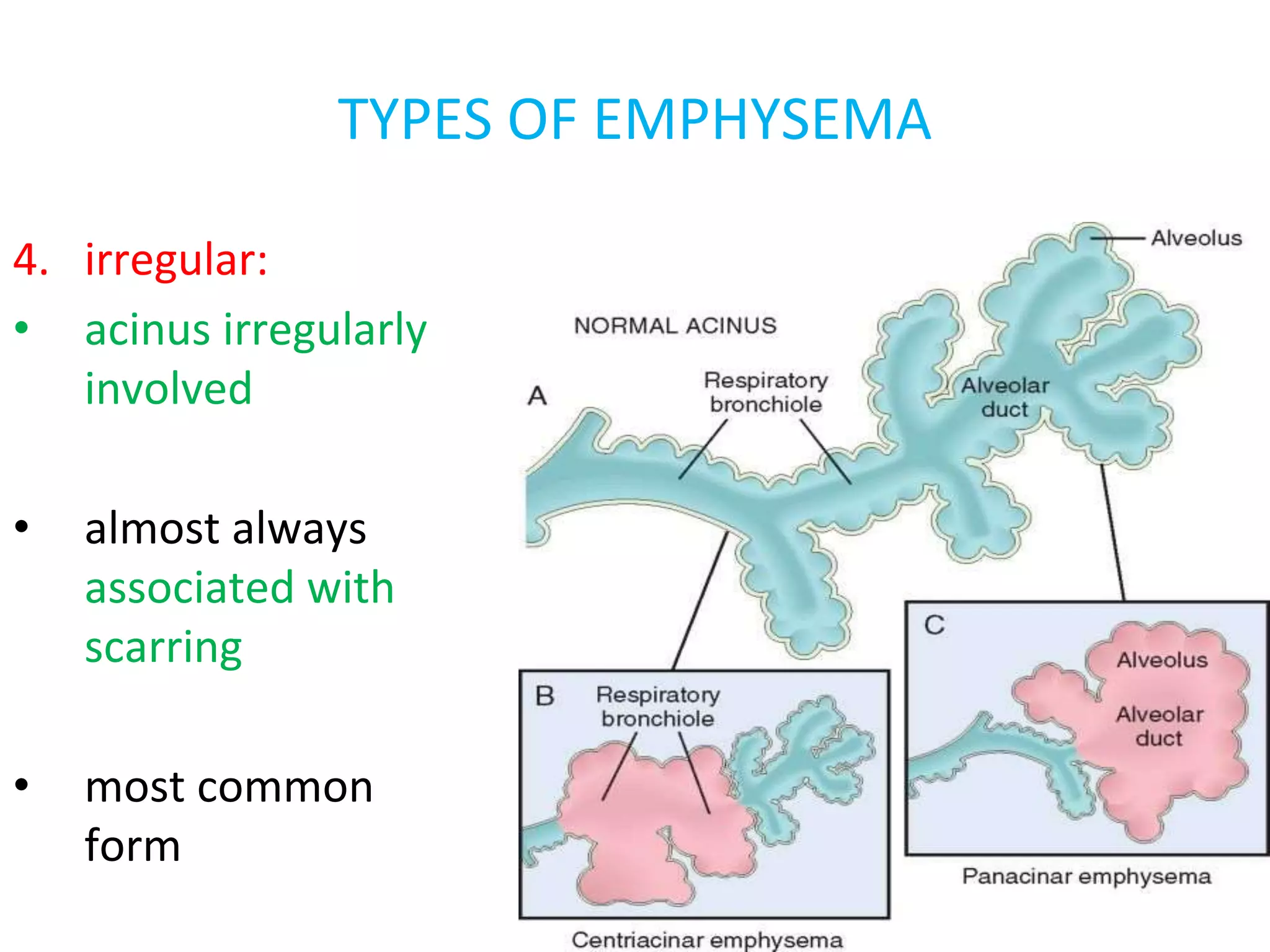
4. irregular:
• acinus irregularly
involved
• almost always
associated with
scarring
• most common
form
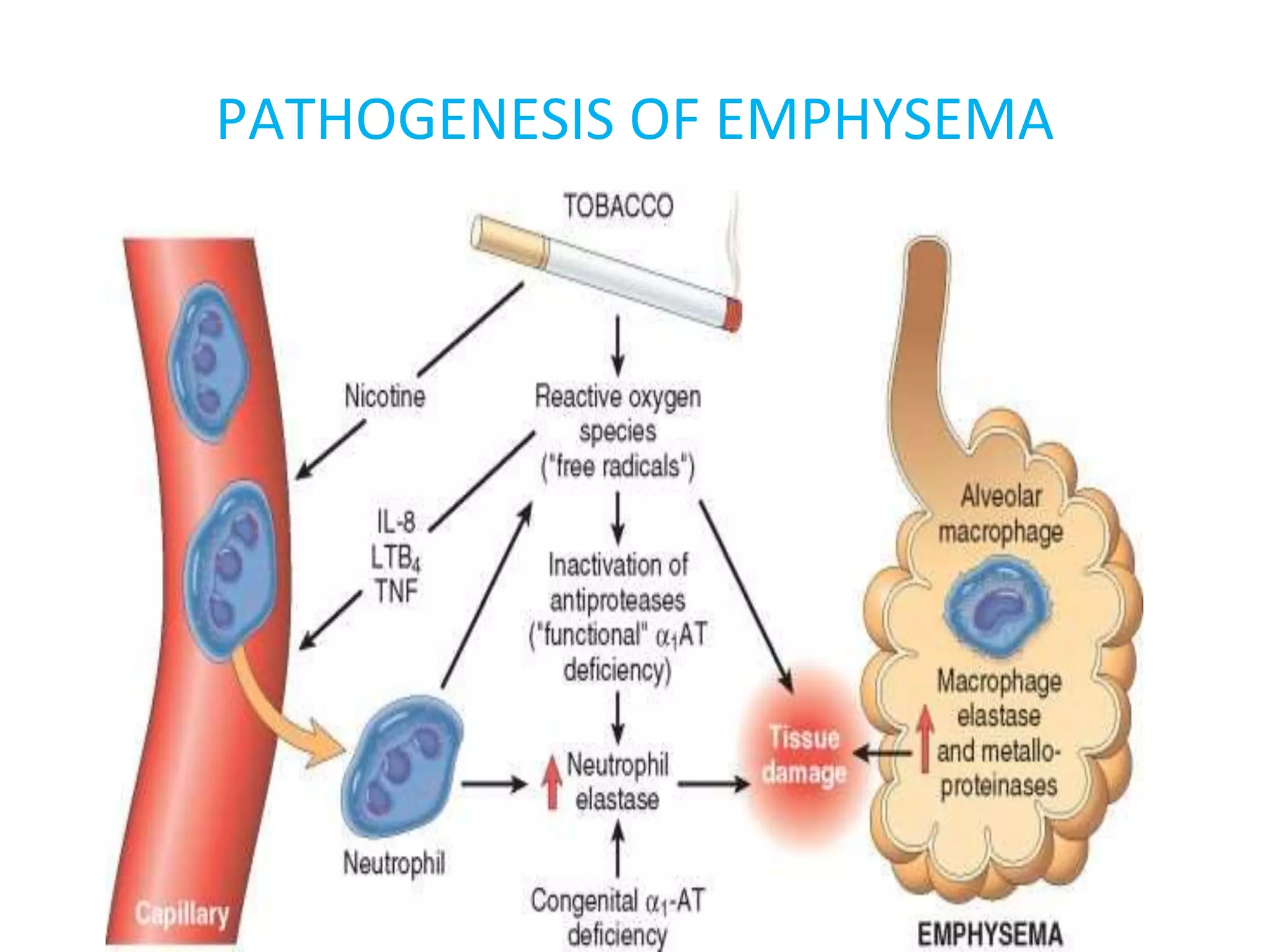
PATHOGENESIS
• emphysema arises as a consequence of 2 critical
imbalances:
1. protease (elastase)- antiprotease imbalance
1. oxidant-antioxidant imbalance
⮚ effects of imbalances lead to tissue damage.
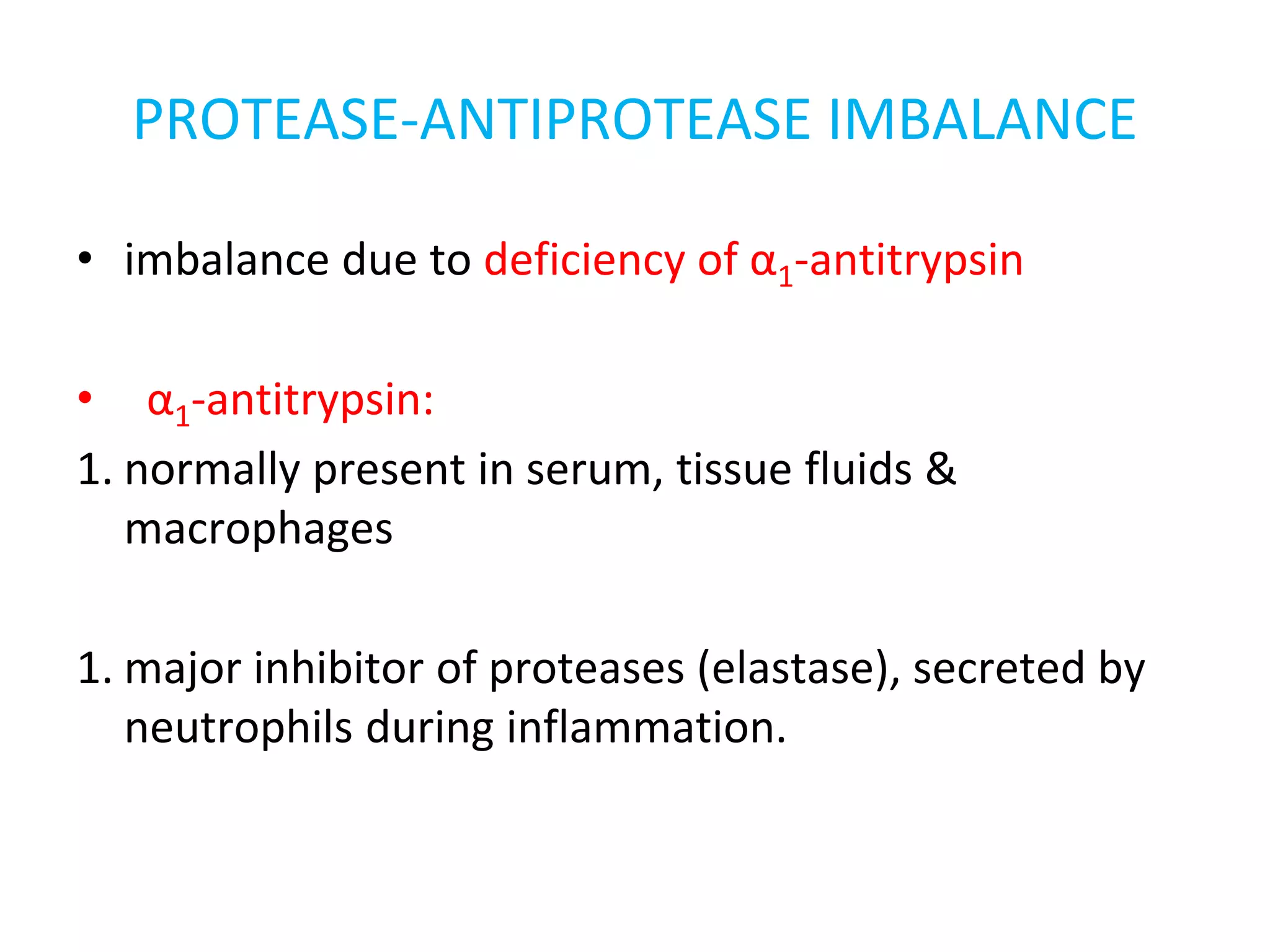
PROTEASE-ANTIPROTEASE IMBALANCE
• imbalance due to deficiency of α1-antitrypsin
• α1-antitrypsin:
1. normally present in serum, tissue fluids &
macrophages
1. major inhibitor of proteases (elastase), secreted by
neutrophils during inflammation.
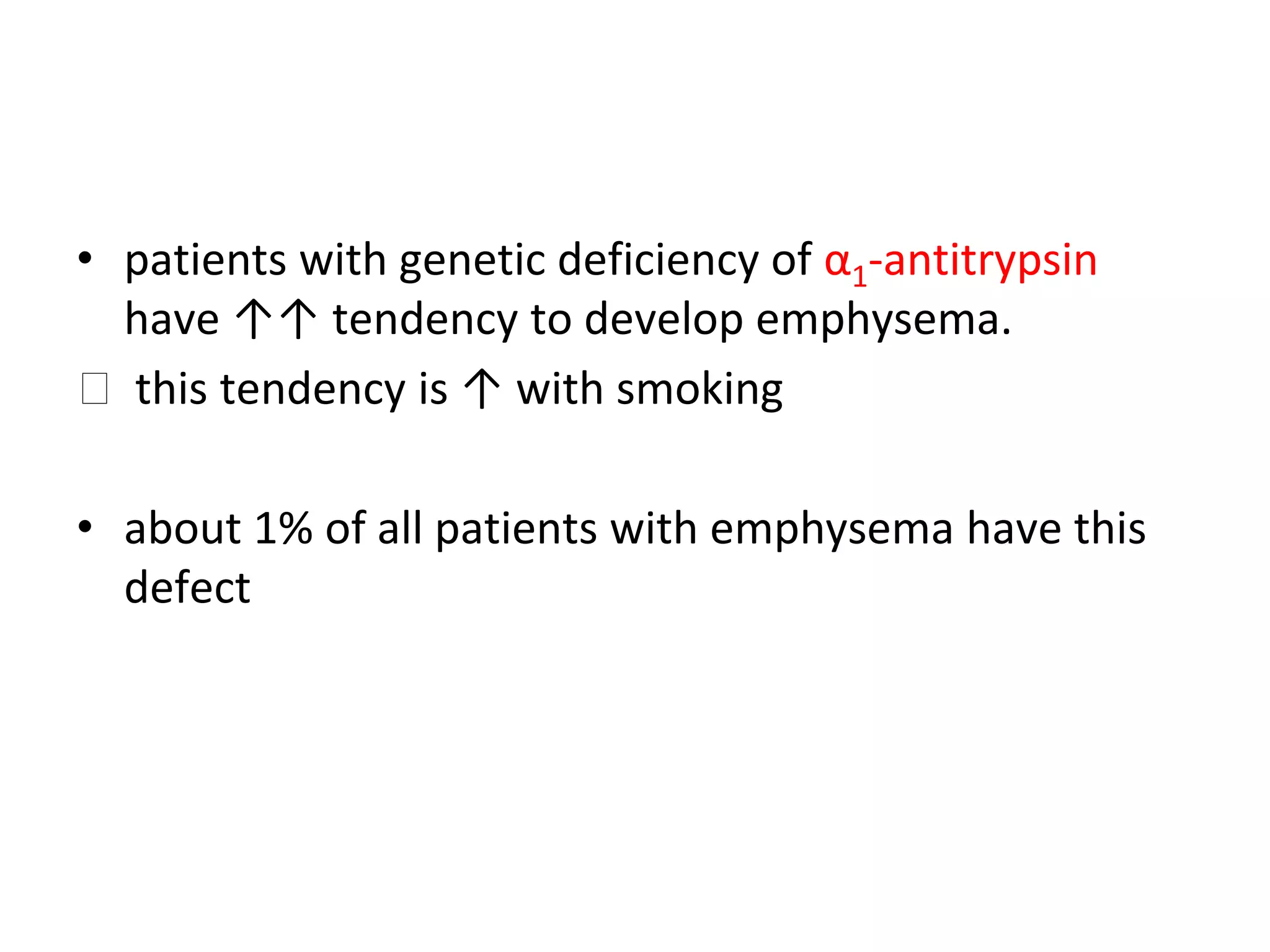
• patients with genetic deficiency of α1-antitrypsin
have ↑↑ tendency to develop emphysema.
⮚ this tendency is ↑ with smoking
• about 1% of all patients with emphysema have this
defect
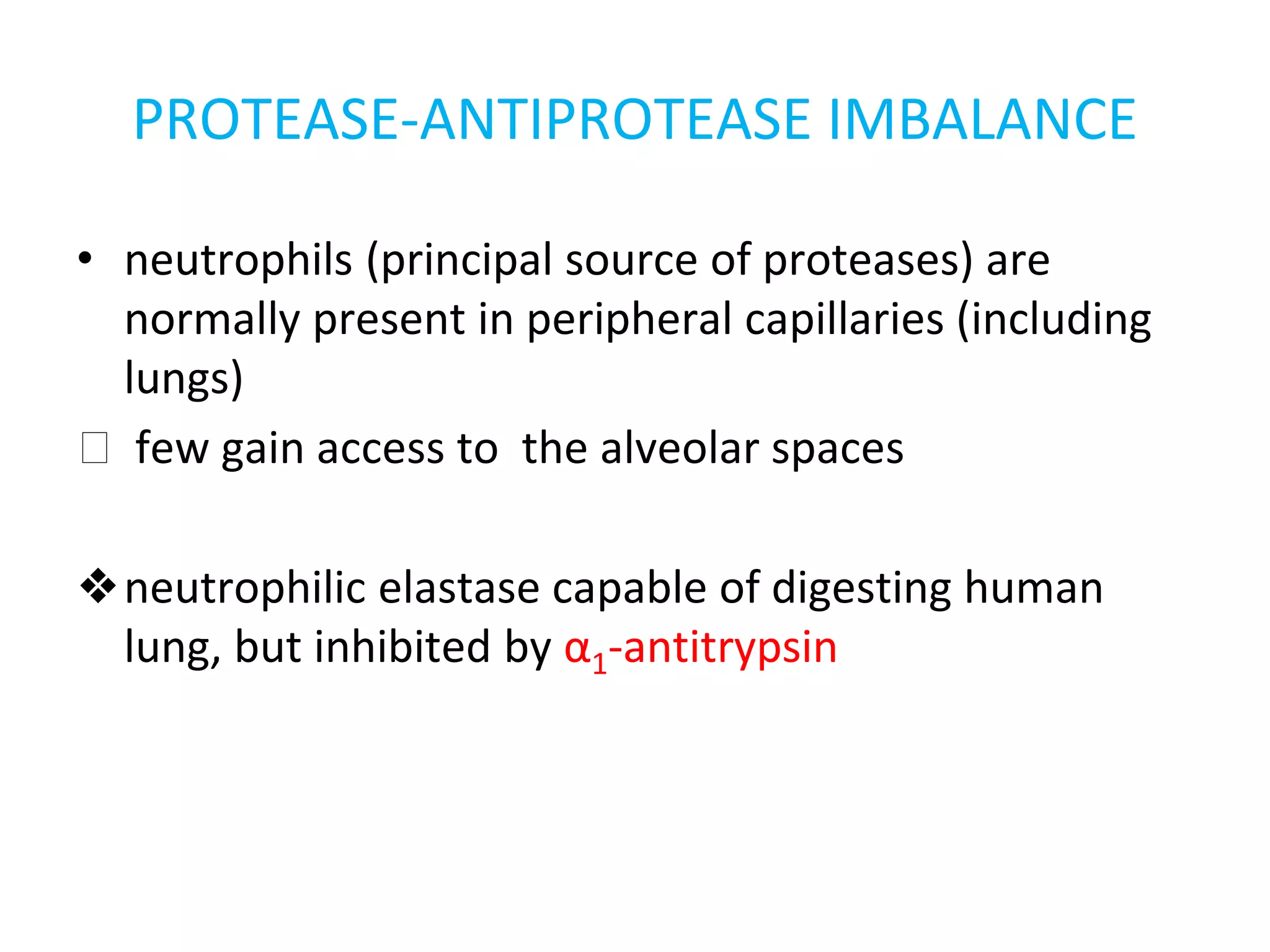
PROTEASE-ANTIPROTEASE IMBALANCE
• neutrophils (principal source of proteases) are
normally present in peripheral capillaries (including
lungs)
⮚ few gain access to the alveolar spaces
❖neutrophilic elastase capable of digesting human
lung, but inhibited by α1-antitrypsin
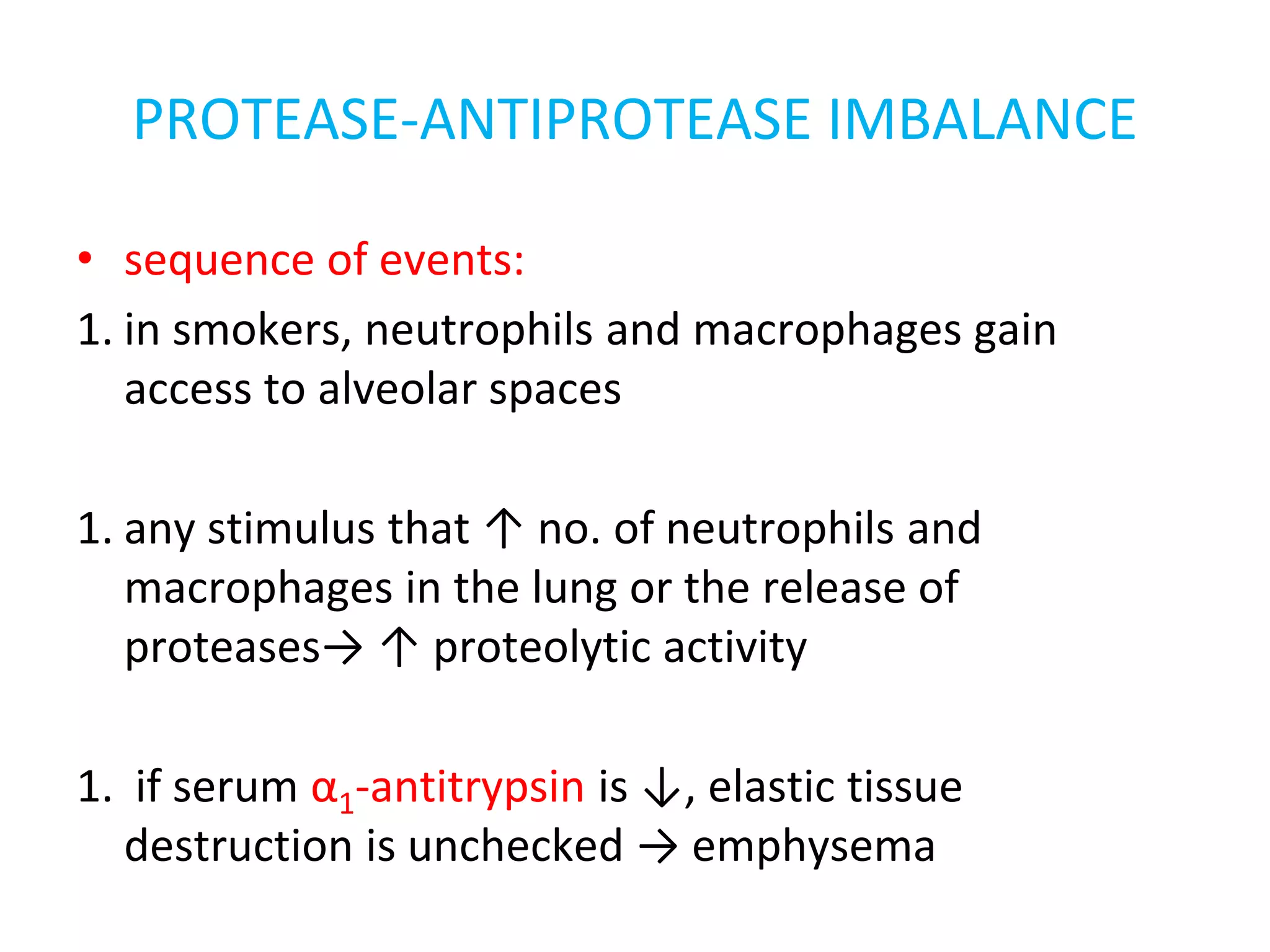
PROTEASE-ANTIPROTEASE IMBALANCE
• sequence of events:
1. in smokers, neutrophils and macrophages gain
access to alveolar spaces
1. any stimulus that ↑ no. of neutrophils and
macrophages in the lung or the release of
proteases→ ↑ proteolytic activity
1. if serum α1-antitrypsin is ↓, elastic tissue
destruction is unchecked → emphysema
PATHOGENESIS OF EMPHYSEMA
OXIDANT-ANTIOXIDANT IMBALANCE
• normally, antioxidants (Eg: glutathione) are present
in the lungs
• tobacco smoke contains abundant free radicals
⮚ smoking releases reactive oxygen species (free
radicals ) which deplete anti-oxidants present
→ inactivate anti-proteases → tissue damage
CLINICAL FEATURES
1. dyspnoea: begins insidiously and is progressive
⮚ expiration prolonged
2. cough
3. weight loss
THANK YOU

Emphysema

  • 1.
  • 2.
  • 3.
    EMPHYSEMA • condition ofthe lung characterized by irreversible enlargement of the airspaces distal to the terminal bronchioles • is accompanied by destruction of their walls without obvious fibrosis.
  • 4.
    TYPES OF EMPHYSEMA 1.centriacinar 1. panacinar 1. paraseptal 1. irregular
  • 5.
    TERMINAL PORTION OFRESPIRATORY TREE
  • 6.
    TYPES OF EMPHYSEMA 1.centriacinar: • central or proximal part of acini, formed by respiratory bronchioles, are affected ⮚ distal alveoli are spared • seen in heavy smokers
  • 7.
    TYPES OF EMPHYSEMA 2.panacinar: • acini uniformly enlarged from level of respiratory bronchiole to terminal blind alveoli. • associated with deficiency of α1- antitrypsin
  • 8.
    TYPES OF EMPHYSEMA 3.paraseptal (distal acinar): • distal part is predominantly involved. • proximal portion of the acinus is normal
  • 9.
    TYPES OF EMPHYSEMA 4.irregular: • acinus irregularly involved • almost always associated with scarring • most common form
  • 10.
    PATHOGENESIS • emphysema arisesas a consequence of 2 critical imbalances: 1. protease (elastase)- antiprotease imbalance 1. oxidant-antioxidant imbalance ⮚ effects of imbalances lead to tissue damage.
  • 11.
    PROTEASE-ANTIPROTEASE IMBALANCE • imbalancedue to deficiency of α1-antitrypsin • α1-antitrypsin: 1. normally present in serum, tissue fluids & macrophages 1. major inhibitor of proteases (elastase), secreted by neutrophils during inflammation.
  • 12.
    • patients withgenetic deficiency of α1-antitrypsin have ↑↑ tendency to develop emphysema. ⮚ this tendency is ↑ with smoking • about 1% of all patients with emphysema have this defect
  • 13.
    PROTEASE-ANTIPROTEASE IMBALANCE • neutrophils(principal source of proteases) are normally present in peripheral capillaries (including lungs) ⮚ few gain access to the alveolar spaces ❖neutrophilic elastase capable of digesting human lung, but inhibited by α1-antitrypsin
  • 14.
    PROTEASE-ANTIPROTEASE IMBALANCE • sequenceof events: 1. in smokers, neutrophils and macrophages gain access to alveolar spaces 1. any stimulus that ↑ no. of neutrophils and macrophages in the lung or the release of proteases→ ↑ proteolytic activity 1. if serum α1-antitrypsin is ↓, elastic tissue destruction is unchecked → emphysema
  • 15.
  • 16.
    OXIDANT-ANTIOXIDANT IMBALANCE • normally,antioxidants (Eg: glutathione) are present in the lungs • tobacco smoke contains abundant free radicals ⮚ smoking releases reactive oxygen species (free radicals ) which deplete anti-oxidants present → inactivate anti-proteases → tissue damage
  • 17.
    CLINICAL FEATURES 1. dyspnoea:begins insidiously and is progressive ⮚ expiration prolonged 2. cough 3. weight loss
  • 18.